Search This Blog

Monday, July 19, 2021

Robinhood warns retail trading slowing, especially in cryptocurrencies

 Stock trading app Robinhood — which is expected to go public as soon as next week — warned of a potential slowdown in trading revenue and new clients as the boom in retail investing starts to decelerate.

“We expect our revenue for the three months ending September 30, 2021, to be lower, as compared to the three months ended June 30, 2021, as a result of decreased levels of trading activity relative to the record highs in trading activity, particularly in cryptocurrencies, during the three months ended June 30, 2021, and expected seasonality,” Robinhood said in an amended prospectus released Monday.

The slowdown is coming off booming levels. The Menlo Park, California-based free-trading pioneer estimates second-quarter 2021 revenue between $546 million and $574 million. This would be a 129% surge from the $244 million in the second quarter of 2020.

However, the company estimates a net income loss between $537 million and $487 million in the second quarter of 2021, compared with a $1.4 billion loss in the first quarter.

Robinhood — which offers equity, cryptocurrency and options trading, as well as cash management accounts — benefits from more speculative trading practices from its clients. Options trading accounts for about 38% of revenue while crypto is 17% of revenue. Plus, margin and stock lending trading levels have been elevated in 2021.

A stagnation in options, trading on margin and crypto — with the price of bitcoin below $30,000 — could hurt Robinhood’s growth as it heads into one of the biggest public debuts of the year.

Robinhood also said it anticipates the growth rate of new clients will be lower in the third quarter of 2021, compared to the second quarter, “due to the exceptionally strong interest in trading, particularly in cryptocurrencies, we experienced in the three months ended June 30, 2021 and seasonality in overall trading activities,” the S1 said.

Robinhood expects its app to have 22.5 million funded accounts — those tied to a bank account — as of the second quarter, up from 18 million total as of the first quarter of 2021.

Robinhood — whose longstanding mission is to “democratize” investing — experienced record levels of new, younger traders entering the stock market during the pandemic. That surge has continued into 2021, marked by frenzied trading around so-called meme stocks.

The company alluded to clients who created accounts around January’s GameStop short squeeze, but perhaps have discontinued trading as the frenzy subsided.

“We experienced strong growth in new customers during the first six months of 2021,” the filing said. “We do not know whether, over the long term, cohorts comprised of these new customers will have the same characteristics as our prior cohorts. To the extent these new customers do not grow their cumulative net deposits or trading frequency on our platform to the same extent as new customers that joined in prior periods, our ability to expand and grow our relationship with these customers will be impacted.”

Robinhood is seeking a market valuation of as much as $35 billion in its upcoming IPO. The stock trading app will attempt to sell its share at a range of $38 to $42 per share.

https://www.cnbc.com/2021/07/19/robinhood-warns-retail-trading-is-slowing-down-especially-in-cryptocurrencies.html

What's Next For The Reflation Trade: 9 Observations From Goldman

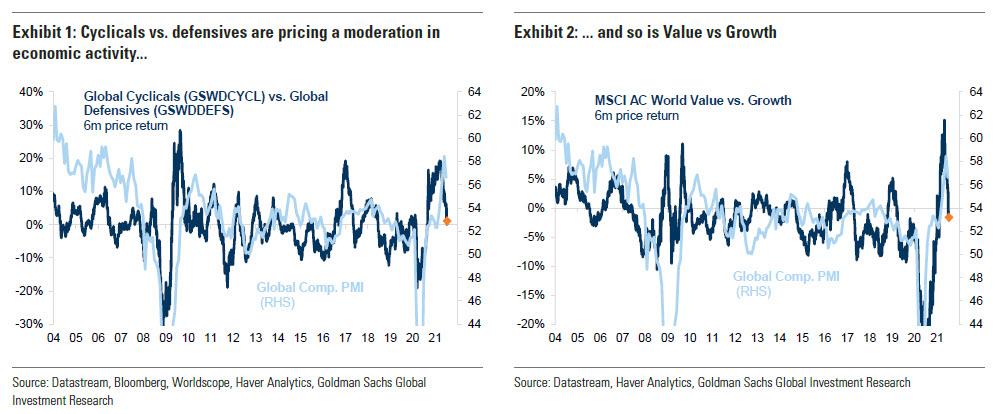
 The rotation back into growth and defensive parts of the market and out of reflation and value names over recent weeks has been swift, raising many questions about where next for the reflation trade that marked the “hope” phase of the equity cycle.

In a note addressing these concerns among the bank's clients, Goldman strategist Peter Oppenheimer writes that much will depend on near term data around growth and inflation, noting that "the cycle that started after the financial crisis was characterized by a powerful secular trend of growth outperforming value and defensive sectors outperforming cyclicals." While extreme relative to the standards of previous cycles, this dominant trend could be explained by a combination of growth scarcity (both in terms of nominal GDP and earnings – particularly outside of the US), ever lower bond yields – increasing the relative valuation of longer duration assets - and the dramatic bifurcation of earnings growth between growth (and predominantly tech stocks) and most of the rest of the market. Several value sectors faced unprecedented headwinds; the move towards zero interest rates (and negative in Europe) and the need to de-lever weighed on the banks while falling commodity prices hampered the energy related stocks.

Below we excerpt form Oppenheimer's note laying out some of the key observations from the Goldman strategist:

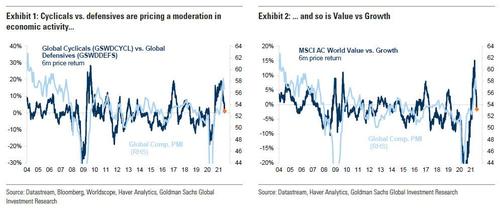
1. The shift towards more cyclical and value leadership that dominated the period from the 2020 March low to the beginning of this year reflected a particularly strong inflection point in growth and inflation expectations following unprecedented policy support and progress on vaccinations. Given that there were record valuation spreads between growth and value parts of the market prior to this inflection point, the shift in confidence had a big impact on market leadership. As Exhibit 1 shows, our baskets of global cyclicals relative to defensives started to outperform on a year over year basis, moving very closely with changes in growth expectations (represented here as the global composite PMI). The recent fading of cyclical outperformance has also coincided with a peak in growth momentum on this metric but would appear to be reflecting an expectation that the global PMI slows to the low 50s. As Exhibit 2 shows, this is also true when we compare global value versus growth.
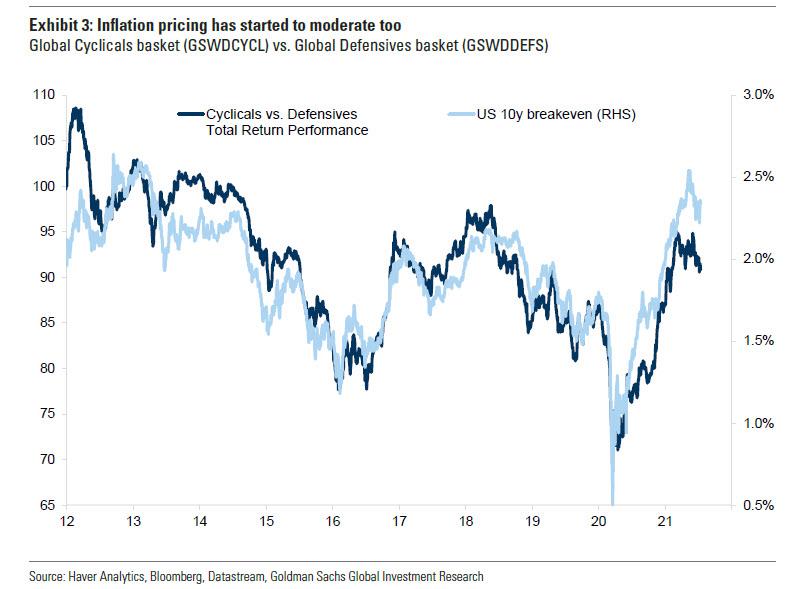
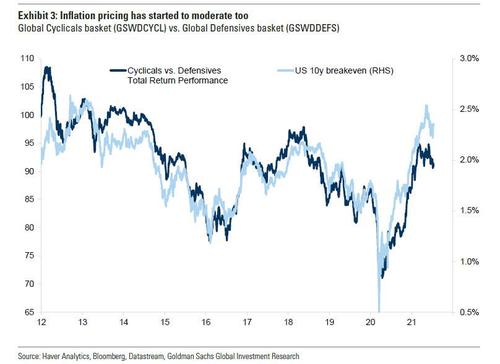
Another key driver of this rotation has been the shift in inflation expectations. As Exhibit 3 shows, the strong outperformance of the cyclical parts of the market also moved closely with inflation expectations which increased sharply in the first phase of the rotation, but has since moderated alongside the peak in growth momentum and also the shift in Fed dot plots.
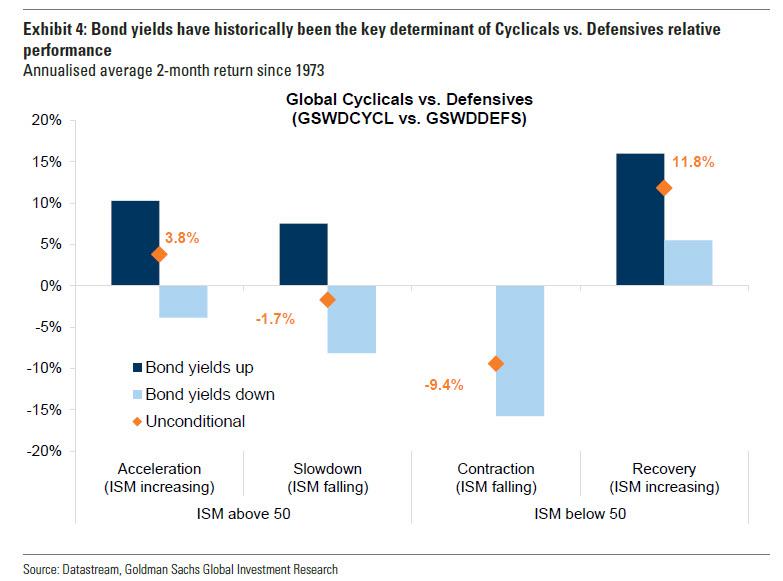
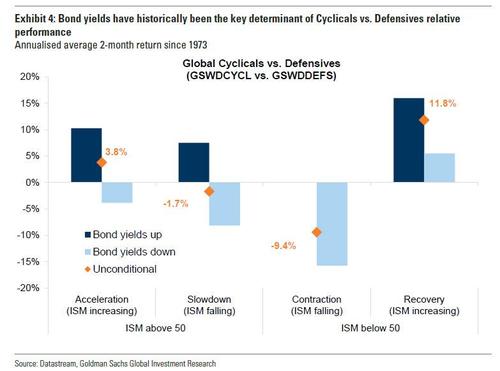
2. As we pass peak growth momentum, a mix of defensive and value areas of the market should continue to perform well and more frequent rotations between the sector styles are more likely now that we are in the “growth phase” of the market cycle. As Exhibit 4 shows, while the despair phase, or period when the ISM is contracting, is consistently negative for cyclicals and positive for defensives, the hope or recovery phase is largely the reverse. This is true irrespective of what is happening to bond yields. The growth phase, broadly consistent with periods when the ISM is above 50 and slowing, is much more ambiguous in terms of leadership and is very dependent on whether bond yields are rising or falling.
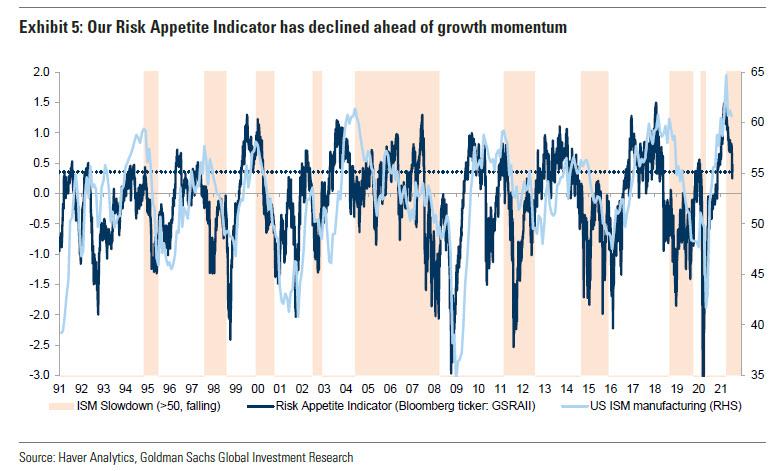
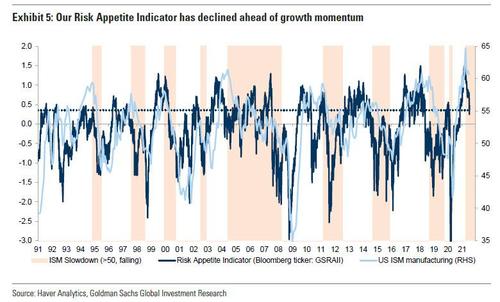
3.  More recently, however, the cyclical and value leadership has not just faded but largely reversed. There have been a number of catalysts. A slowing of US growth momentum and the peaking of all four China PMIs in June together with China’s relatively unexpected 50bp RRR cut last week have raised concerns about a loss of global growth momentum. A sharp acceleration in the delta variant has added to this fear, while the shift in US dot plots has increased the focus of a possible policy error as a consequence of tightening policy too early. These worries have been reflected in the pull-back in Goldman's risk appetite indicator (GSRAII) which is also consistent with an expectation that the manufacturing ISM will slow markedly in coming months (Exhibit 5).
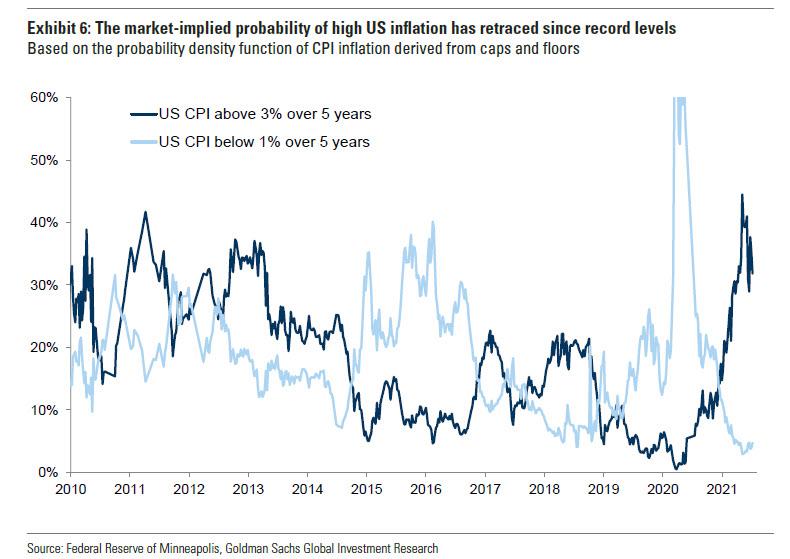
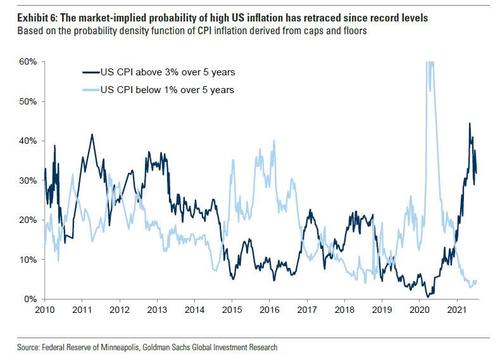
4. Alongside this, we have seen a huge rally in bond markets in recent weeks; US 10 year bond yields have fallen around 15bp and are now back down to 1.2% from 1.7% at the start of April and the 10Y-2Y yield curve has flattened by more than 40bp. The rally has not been confined to the US. German yields are now back down to below -30bp having at one point earlier this year been at -10. Positioning and technicals may have played a part but it is clear that inflation expectations have moderated. As Exhibit 6 shows, the market implied probability of US CPI rising above 3% over 5 years has retraced some of its earlier gains.
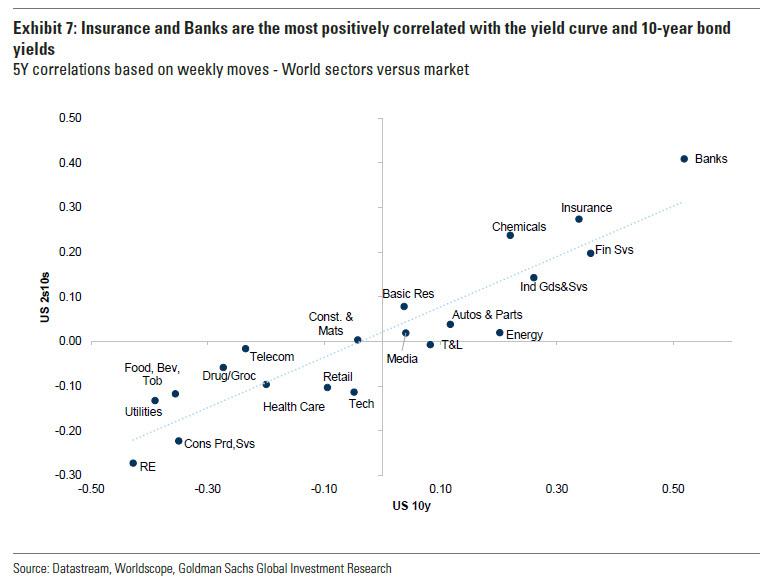
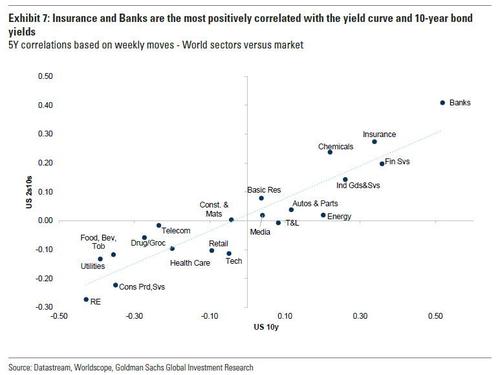
5. Inflation expectations, bond yields and the slope of the yield curve can have a significant impact on sector relative returns, particularly at perceived turning points. As Exhibit 7 shows, classic value areas of the market like banks, basic resources, energy and autos have the highest positive correlation of returns with the slope of the US yield curve and also with US 10 year bond yields. The sharp move lower in these that has occurred over the past few weeks has understandably hit the relative returns of these sectors. But our bond strategists continue to think that these moves have overshot the fundamentals.
6. What can we expect from here? Our view is that in the near term, in the absence of any clarity over the steady state for growth and inflation beyond the current bounce, investors will tend to extrapolate incremental data point, including the current earnings season, and trade the perceived shifts in direction until there is a clearer direction of the medium term trajectory. From conversations with clients, there appears to be no strong consensus on this. Many believe that the cyclical rotation was a short-lived phenomenon driven by a one-off recovery from an unusual recession. Following the sugar rush of stimulus provided by a mix of monetary and fiscal support, we could well go back to a “secular stagnation” environment of slow growth and low interest rates and inflation. This argument is also supported by the fear that higher government debt levels will weigh on future growth should bond yields rise, providing a kind of automatic brake that constrains future growth and inflation. Such an outcome would clearly favour a return to the secular leadership of growth and defensives.

7. The contrary view is that the markets underestimate the inflationary consequences of the current combination of monetary support and fiscal expansion. Despite the arguments of temporary supply bottlenecks driving inflation, the US June core CPI rose by 0.88% month-over-month, a fourth consecutive beat. Used cars and travel/transportation accounted for two-thirds of the increase, but the more persistent and cyclical categories exhibited some strength as well. In coming months, US growth should benefit not only from stronger job creation but also from a positive inventory cycle, following a likely large drawdown in Q2. This narrative is also supported by the expectations that the next few years will be very different from the past cycle. A marginal shift towards more localised supply chains, higher minimum wages and taxation will force higher consumer prices than we have seen before. At the same time policies to support a shift in the energy mix to comply with net zero carbon could add to energy prices paid by industry and consumers. Additionally, a huge boost in carbon neutral investment spending would generate higher material costs and inflation expectations, while increased capex could mop up excess savings, pushing up the level of real yields as well. This outcome would point to a much longer and structural support for cyclical and value parts of the market.

8. In the short term we think the rotation back to defensives and growth has gone too far. Our economists argue that there should be a sizable slowdown as reopening concludes and the fiscal impulse turns negative with spending out of pent-up savings providing only a partial offset (their growth forecast of 2.6% in the US in 2022 and 1.9% in 2023 on a Q4/Q4 basis is now ½-¾pp below the median FOMC projection - see more: Global Views: A Favorable Midyear Report, 6 July 2021), but a much sharper slowdown seems to have already been fully priced in the markets. Furthermore, our rates strategists believe current intermediate and longer maturity yield levels are much too low and do not reflect the macro environment. While they acknowledge that there aren’t any obvious near-term catalysts that will take them back up, they seem to be pricing a pretty adverse outcome and an assumption that BYs are never likely to rise, which we think is wrong - their YE forecast for US 10Y is 1.9%. Given the sharp pullback, we think the asymmetry is getting a lot better for investment in cyclicals/value and our commodity analysts remain positive about commodities.

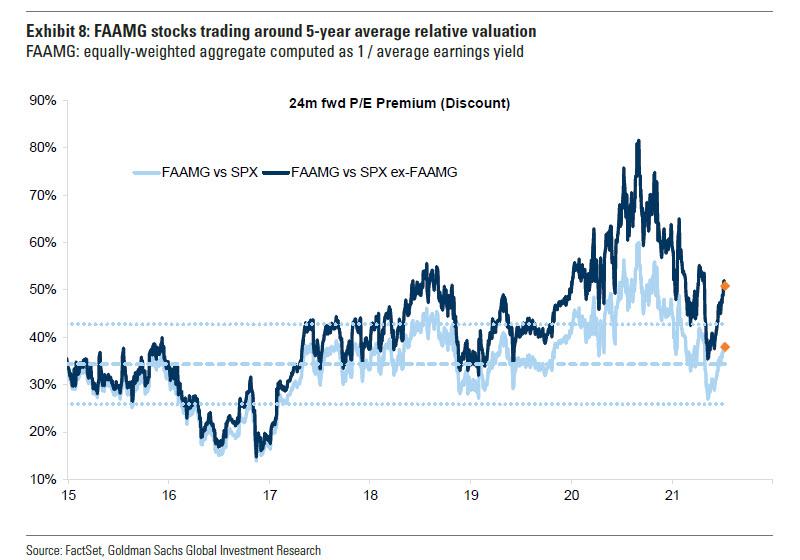
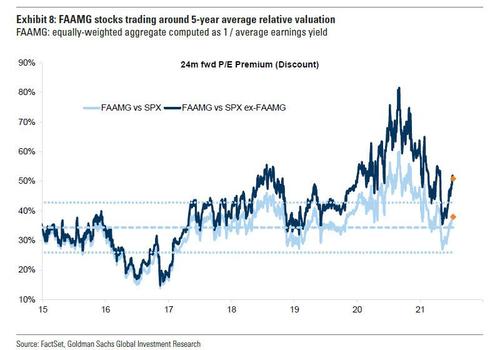
9. Over the medium term Goldman strategists continue to like technology, but their relative valuation has rebounded again and have gone back to pre-pandemic highs. Unprofitable tech, in particular, looks vulnerable to any back up in bond yields which would also likely challenge the renewed outperformance of the US market relative to others.
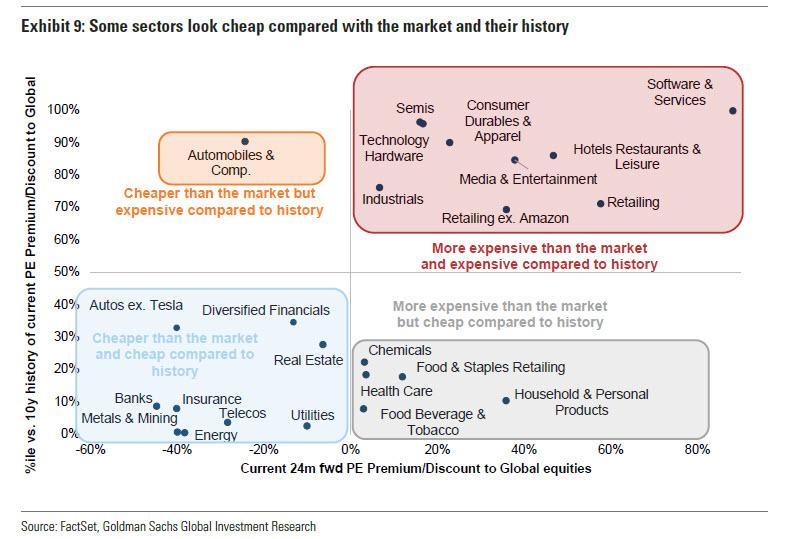
In terms of value, the mix of sectors that look cheap has also shifted over recent months. Exhibit 9 shows the relative valuation based on 24 month forward consensus numbers of the x-axis and the percentile of the relative valuation relative to history on the y-axis. For much of the past cycle the top right would be dominated by mainly long duration growth and defensive sectors while the bottom left would be mainly a mixture of value and growth. In mid June, the cheaper areas were a mixture of deep value (financials, energy mining and autos for example) and some defensive areas like healthcare and consumer staples while the top right was dominated by a combination of long duration technology, like software services, together with many traditional industrial cyclicals.
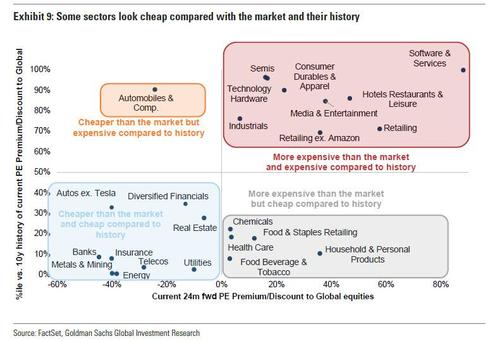
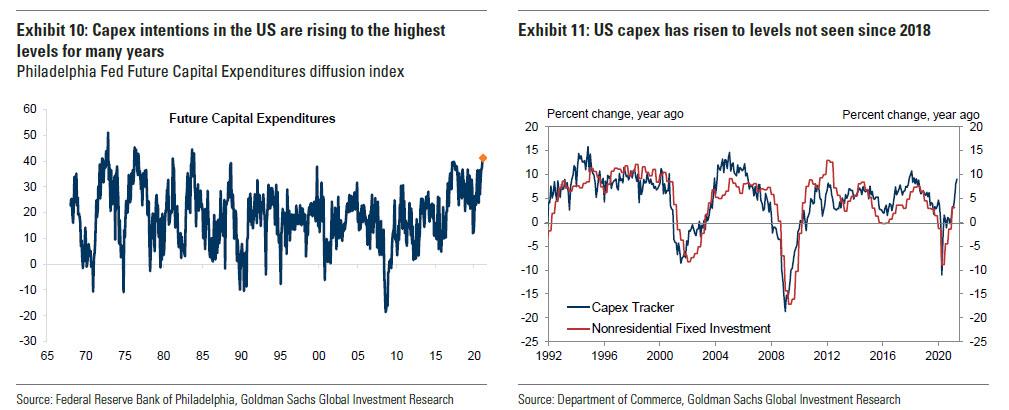
Currently, the same deep value areas remain in the bottom left while some cyclical sectors like industrial and semis have de-rated somewhat and chemicals have moved down from the top right to the bottom right-hand box. Goldman still believes that steeper yield curves will drive another rotation back into some cyclical parts of the market but expect a combination of defensive growth and deep value to offer the best shorter term opportunities. Beyond that, the market will be less dominated by clearly defined by factor and sector leadership in time. The opportunities for market leadership are starting to become more diverse across both sectors and geographies. Technology is becoming a larger component of all industries, while the shift to de-carbonisation is enhancing growth opportunities in the parts of the market that had underperformed for so long. As Exhibit 10 shows, capex intentions in the US are rising to the highest levels for many years, consistent with the readings from our capex tracker.
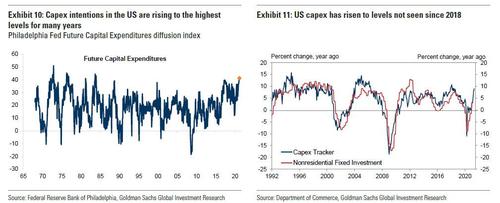
As Goldman concludes hopefully, "the clear distinction between Growth and Value is likely to fade and give way to a greater focus on alpha opportunities and increased sector and geographical diversification."

https://www.zerohedge.com/markets/whats-next-reflation-trade-9-observations-goldman

JPM's Kolanovic: Stop Freaking Out About The Delta Case Spike

 Two weeks ago, when markets were merrily melting up without a worry in the world, and certainly were not paying attention to the recent spike in Delta cases, we showed that unlike in 2020 when covid hospitalizations and deaths promptly followed - with a slight lag - any move higher in new covid cases, now that vast swaths of the population have been vaccinated, there has been a clear decoupling between new cases on one hand, and hospitalizations and fatalities on the other especially since those most at risk from the Chinese virus are protected.

Fast forward to today when the markets are officially freaking out, with the propaganda out in full force...

  • *FAUCI SAYS DELTA VARIANT IS BECOMING MORE DOMINANT
  • *FAUCI SAYS SEEING SIGNIFICANT UPTICK IN INFECTIONS
  • *FAUCI: VACCINATED 'GENERALLY PROTECTED' ALTHOUGH NOT COMPLETELY
  • *FAUCI: NEED TRUSTED MESSENGERS TO PROVIDE CORRECT INFORMATION

... as we get a full-blown rerun of the 2020 narrative, as the Delta variant is now being spun as an entirely new disease and it's only a matter of time before the "trusted messengers" tell those vaccinated that even they have little to no protection against the resurging cases, leading to yet another full blown lockdown and trillions more in stimmies.

Yet while infections may indeed be rising, Fauci purposefully refused to address the real elephant in the room: is there a concurrent surge in hospitalizations and/or deaths: after all, it those that matter - especially if the Delta variant results in a much weaker form of covid as many have speculated - and not the cases outright.

This goes straight to the point we made in our chart above. It's also what JPMorgan's Kolanovic writes in the latest weekly edition of the JPMorgan View. But first, a reminder that at the end of June, JPM's Croatian quant tried to explain why "the Delta Variant does not pose a risk for markets." Clearly that "explanation" has so far failed rather miserable to sooth market nerves which today is crumbling, but worse for Marko, is hammering his favorite value and cyclical stocks which the quant has been so bullish on for the past 6 months.

So what does Kolanovic say today? More of the same, it appears, because in yet another pitch for the reopening/reflation trade (similar to Goldman earlier), he writes that "reopening plays already discount lower levels of mobility and should regain leadership in 2H21", which of course he would say after spending all of the first half making just that argument while bashing the very tech and growth names which have outperformed dramatically in recent weeks.

He goes on: "We think reopening plays could start to do better again, after losing ground in both the US and Europe the last 3 months, supported by above-trend 2H growth and strong consumer fundamentals."

He then shift straight to sell mode, claiming that "Investor nervousness is high at present over the Delta variant and how policymakers will deal with it, but this might end up an opportunity to add to the reopening theme again. Within the JPM call of
above-trend growth in 2H and beyond, the consumer plays a central role. It sports strong balance sheets with elevated savings rates, positive wealth effects and crucially, labor markets are continuing to improve."

Where Kolanovic has it wrong is that while the consumer indeed plays a central role, let's remember that those benefiting from elevated savings rates are just a small fraction of the top 10% of society. The majority of the 90% have already spent their stimmies; as for the 1%, it is they that have mostly benefited from the $2.5 trillion in excess savings as the recent space race between billionaires Branson and Bezos so vividly demonstrates.

Where we do agree with Kolanovic, however, is where he repeats what we said two weeks ago with the chart shown at the top of this post, namely that the "Delta variant is a key risk to the call, but encouragingly the link between the case count and hospitalizations/deaths in the UK and other countries has weakened meaningfully (Figure 1)." In short cases and hospitalizations have decoupled... just as we showed they have even if the government's propaganda spin masters refuse to acknowledge.

Kolanovic then suggests that "policymakers might end up adopting a different approach to tackling the pandemic, rather than reverting to strict mobility restrictions" although such a different approach would make the release of a new round of stimmies much more challenging. And by now everyone knows that the current covid freakout is all about how to usher in another trillion (or more) in fiscal stimulus.

The JPM quant concludes with a reco Hail Mary, saying that "even if the restrictions return, this might not be much of a surprise to the market, as reopening plays have lagged significantly, in effect already discounting lower levels of mobility. Finally, the earnings hurdle rate is far from demanding, where consensus projects that consumer reopening plays’ ’22 EPS will still be as much as 30% below pre-COVID- 19 levels, in contrast to the broader market that should be ahead by 15%"

Here, all we can say is that any "market-moving magic" Marko may have once had appears long gone: not only does the market disagree with Kolanovic that the "delta variant does not pose a risk" as today's rout confirmsbut his beloved value/reopening/cyclical sectors  have gotten hammered in recent weeks. And despite his best efforts to ease nerves that Delta is overblown and that reopening trades will recover, much pain has to pass first because one doesn't just ram through another round of stimmies if the S&P is just 3% below its all time highs, a fact Biden, Powell and Yellen know all too well...

https://www.zerohedge.com/markets/jpms-kolanovic-stop-freaking-out-about-delta-case-spike

ISTH 2021 – Bayer’s haemophilia A gene therapy raises questions

 Bayer/Ultragenyx’s haemophilia A gene therapy BAY 2599023 is supposed to be more durable than other contenders, but based on data presented on Saturday the jury is still out. True, the lower doses tested in the phase 1/2 trial did lead to consistent factor VIII levels, but these are unlikely to represent therapeutic doses. And the highest tested so far, 2x10¹³vg/kg, has spurred liver enzyme elevations. Bayer tried to combat this by using prophylactic steroids, and it was data from two patients treated with this regimen, presented for the first time at the ISTH meeting, that could cause alarm bells. One of these patients experienced severe liver enzyme elevations; it appears that the subject was given famotidine to treat nausea related to steroid treatment, and then had a rise in liver enzymes. The enzymes returned to normal after stopping famotidine, the investigators said. FVIII levels from the two new patients were also not convincing, with one subject's levels declining rapidly. Bayer has already has the go-ahead to start the highest-dose cohort in the trial, testing 4x10¹³vg/kg. Perhaps this will answer the question of whether BAY 2599023, already late to the party, could be a real contender.

From masks to vaccines, Ad Council corrals feds, brands, media into COVID-19 campaigns

 Many of the ads promoting mask-wearing, social-distancing and vaccinations during the COVID-19 pandemic have had one thing in common—the Ad Council.

Working with the Department of Health and Human Services, Centers for Disease Control and two White House administrations, along with hundreds of brands and media partners, the nonprofit marketing agency has been the COVID-19 marketing glue, coordinating cohesive messages all along.

“We were made for moments like this,” said Heidi Arthur, chief campaign development officer at the Ad Council. The organization's model is built on teamwork with "many partners in the communications industry, as well as a network of partners in the nonprofit world who believe in collaboration to get consistent messaging out there.”


The Ad Council's made-for moment began when the pandemic was declared in March 2020. The Ad Council kicked into high gear, immediately reaching out to HHS and the CDC to make sure its first efforts were the correct public health messages to send.

One of its earliest campaigns, “Mask Up America,” debuted a year ago, asking people to slow the spread of COVID-19 by wearing masks. By February of this year, the campaign had racked up 154 million impressions across $4.3 million in donated, earned and shared media, according to the Ad Council.

Meanwhile, media partners and brands from previous health-and-safety campaigns—the Ad Council's iconic work includes the Crash Test Dummies and the "Love Has No Labels" campaign—asked what the group would do when vaccines were ready. And how could they help?

In fact, the marketing group was at work even before the vaccines rolled out. It worked with the National Institute of Allergy and Infectious Diseases, CDC and HHS to create a peer-to-peer campaign in December featuring NIAID chief Anthony Fauci and other medical professionals answering questions for physicians and nurses.

That set the stage for its consumer vaccine education effort, “It’s Up to You,” which at $50 million in contributions and counting is one of the largest public education efforts ever in the U.S.

More than 300 “who’s who” major brands, media partners, celebrities, medical associations and community groups joined in on the work, which began in February and continues today.


The COVID-19 vaccine effort also harkens back to the roots of the Ad Council. One of its first major public health initiatives was a national campaign in the ‘50s to encourage people to get the polio vaccine. Celebrities of the day—including singers Elvis Presley and Ella Fitzgerald, actors Sammy Davis Jr. and Dick Van Dyke, and even sports stars like the Brooklyn Dodgers' Roy Campanella—appeared on then-new TV networks to promote polio vaccines.

Now, for COVID-19 vaccinations, the Ad Council will continue to press its “air and ground game” mix of TV public service announcements and community outreach from trusted local sources as the pandemic and vaccination needs change.

In May, for instance, the campaign targeted young people after vaccines were extended to ages 12 and older. Youth-savvy partners like Instagram, Twitch and TikTok created custom content to answer questions and serve up information to the more than 50% of young adults who were unsure or didn't believe the vaccines' benefits outweighed their risks.

The Ad Council will continue pursuing its goal to find out “what are the top concerns on people’s minds and who are the most trusted voices in their community," Arthur said.

"It's making sure we’re working with the right partners in rural communities and urban communities, speaking to young people—and soon we’ll be talking to parents who are deciding for their kids who are now eligible," she said. "The work is not done."

https://www.fiercepharma.com/marketing/from-masking-to-vaxxing-ad-council-spearheads-covid-19-ad-campaigns-corralling-feds

Adagio seeks IPO to bring COVID-19 antibody to market in 2022

 Adagio Therapeutics has filed an initial public offering to raise money to bring its COVID-19 antibody to market. The IPO will support phase 2/3 clinical trials that Tillman Gerngross’ Adagio is running to position ADG20 for the treatment and prevention of COVID-19.

Adimab-spinout Adagio has succeeded in attracting investor support for its anti-SARS-CoV-2 antibody even as rival assets have come to market and vaccines have curbed the crisis in some countries. The biotech is now aiming to follow up the monster $336 million series C round raised in April with an IPO that will equip it to take ADG20 through to initial commercialization.

Adagio has taken ADG20 into phase 2/3 treatment and prevention clinical trials on the strength of early-phase data. The treatment trial, called STAMP, is enrolling mild-to-moderate COVID-19 patients at high risk of disease progression to generate data to support commercial launch in 2022.

The IPO paperwork reveals Adagio modified the design and conduct of the STAMP trial “exclusively outside of the United States” after the FDA said “it had changed its view on allowing high risk patients to be randomized to placebo.” Adagio now intends to conduct its STAMP treatment trial at sites outside of the U.S., provided overseas regulators support its plans. 


“Applicable foreign regulatory authorities may determine that a placebo-controlled trial would expose patients to unacceptable health risks (for example, if alternative effective therapies become available in these regions during the conduct of the trial), which could delay enrollment of our trial and the authorization or approval of ADG20,” Adagio wrote in its IPO paperwork.

The IPO paperwork pulls back the curtain on other previously hidden aspects of the privately held biotech. For example, Adagio cites its reliance on service provider WuXi as a risk factor, adding that a change to Chinese export procedures delayed a shipment of ADG20 from the supplier late last year.

Adagio also flagged up potential intellectual property issues to the investor community. In October, a “third party claimed that one of its employees should be listed as an inventor on certain of our patent applications claiming SARS-COV-2 binding antibodies or their preparation,” the paperwork states. Adagio believes the claim is “without merit” but warned it “could result in the loss of our exclusive rights in our technology.” 

The broader challenge for Adagio is delivering on its promise of establishing ADG20 as an important part of the treatment toolkit in the postvaccine phase of the pandemic. Adagio argues there remains a need for anti-SARS-CoV-2 antibodies because of the threat of variants, gaps in vaccine coverage and questions over the duration of immunity. Adagio’s focus on an epitope that is found across multiple SARS-like viruses suggests ADG20 could fare better than other antibodies against variants. 

https://www.fiercebiotech.com/biotech/adagio-seeks-ipo-to-bring-covid-19-antibody-to-market-2022

Appeals court sides with CDC, Norwegian Cruise Lines over DeSantis on vaccination rules

 The Centers for Disease Control and Prevention COVID-19 guidelines for cruise lines returning to operation are rules, not suggestions, a federal appeals court ruled Saturday night, reversing a lower court decision in favor of the state of Florida.

The 2-1 decision by the U.S. Eleventh Circuit Court of Appeals judges was a win for the CDC and, by extension, Norwegian Cruise Lines, which filed an amicus brief in this case.

In a separate federal case, NCL has sued Florida Surgeon General Scott Rivkees for the right to require all passengers be vaccinated against COVID-19 once it restarts its Florida cruises Aug. 15.

Taking a loss — for now — is Florida Gov. Ron DeSantis. DeSantis sued the CDC in April, and, exactly a month ago, U.S. District Judge Steven Merryday granted a preliminary injunction that would’ve turned the CDC’s regulations into suggestions on Sunday.

“The CDC protocols at issue here require conventional communicable disease control measures on cruise ships traveling internationally, which is an area of traditional federal jurisdiction,” the U.S. Department of Justice stated in a letter filed Thursday to the Eleventh Circuit Court of Appeals.

“For example, the technical guidance instructs cruise operators to inspect (test) passengers and crew for infection,” the letter continued, “to quarantine exposed persons who are potentially contagious and isolate persons found to be infected; to arrange for the safe disembarkation of such persons; and to take related sanitary measures such as mask wearing and physical distancing to prevent the spread of the virus.”

https://www.miamiherald.com/news/business/tourism-cruises/article252863233.html