A top official at the European Medicines Agency said a decision on whether to recommend that Moderna's COVID-19 vaccine be authorized for children is expected late this week. If approved, it would be the first such license for the shot's use in children globally.
At a press briefing on Thursday, Dr. Marco Cavaleri, the EU drug regulator's head of vaccines strategy, said its expert committee was currently evaluating Moderna's application to extend the use of its coronavirus vaccine for children 12 to 17 years old.
"We expect that the committee will reach a conclusion by the end of next week," he said.
Moderna's vaccine was given the green light for use in anyone 18 and over across the 27-nation European Union in January. It has also been licensed in countries including Britain, Canada and the U.S., but so far its use has not been extended to children. To date, the vaccine made by Pfizer-BioNTech is the only one approved for children under 18 in Europe and North America.
The EMA said last week there was a " possible link " between the vaccines made by Moderna and Pfizer-BioNTech to very rare cases of chest and heart inflammation, mostly in younger adult men. They said the effects were mostly temporary and that the benefits of vaccination still far outweighed the risks of COVID-19.
Last week, European Commission President Ursula von der Leyen said the EU has now delivered enough vaccines to immunize 70% of its adult population and many countries are looking to inoculate children, despite the significantly lower risk they face from COVID-19.
Although Britain's regulatory agency has authorized the Pfizer-BioNTech vaccine for children, its vaccine advisory group has yet to recommend that teens be immunized. Moderna has also filed for its vaccine to be licensed for younger teens and children in the U.S.
Many public health officials say rich countries should donate their vaccines once their adult populations are covered, pointing out that millions of people in developing countries at high risk of the disease, including health workers and the elderly, have yet to receive a single shot.
In June, WHO's vaccines director Dr. Kate O'Brien said that vaccinating children against COVID-19 is "not a high priority" given the extremely limited vaccine supplies globally. While more than 3 billion doses of COVID-19 shots have been administered, fewer than 2% have been in poor countries, where the easier-to-spread delta variant is now fueling explosive surges.
Research conducted at the Sharon Eccles Steele Center for Translational Medicine (SCTM) at the University of Utah's John A. Moran Eye Center explains why people carrying a block of genetic variants strongly associated with the development of age-related macular degeneration (AMD) may develop the disease and identifies a potential therapeutic pathway for slowing or even reversing disease progression.
AMD is a major cause of irreversible blindness worldwide and the leading cause of blindness for Americans aged 55 and over. Following more than 15 years of research that has employed an extensive repository of donated human ocular tissues, scientists found thatHtrA1protein normally increases with age in the eye at the retinal pigmented epithelium (RPE)-Bruch's membrane interface, helping to maintain the normal function of this region. The RPE is a cell layer that delivers nutrients to and removes waste from the retina's light-sensitive photoreceptor cells.
These new data show this is not the case in individuals with AMD-associated risk variants located on chromosome 10. These variants were found to impair expression of the HTRA1 gene by the RPE, resulting in an approximately 50 percent reduction of HtrA1 protein levels at the RPE-Bruch's membrane interface during aging. The failure to produce adequate levels of HtrA1 protein disrupts this key region of the eye and is associated with AMD-associated pathologies, including the deposition of abnormal deposits and the development of abnormal blood vessels.
These findings, coming from the laboratory of SCTM Executive Director Gregory S. Hageman, Ph.D., represent the first explanation of the essential role of HtrA1 in maintaining ocular health and contradict literature previously published by others. They are anticipated to inform the development of novel therapies for chromosome 10-directed AMD.
These research data will appear the week of July 19, 2021, in the Proceedings of the National Academy of Sciences of the United States of America (PNAS): "Chromosome 10q26-Driven Age-related Macular Degeneration is Associated with Reduced Levels of HTRA1 in Human Retinal Pigment Epithelium."
Lead author Brandi L. Williams, Ph.D., said her team found significantly reduced levels of HTRA1 messenger ribonucleic acid (mRNA) in the RPE and secreted HtrA1 protein at the RPE-Bruch's membrane interface. Reduced HTRA1 expression was found to be risk allele-specific, but only in the RPE and not in the neural retina or choroid. Notably, the team also narrowed a large genetic region of AMD-associated chromosome 10 to a much smaller causal region, which likely directs the reduced expression of HTRA1.
"Our findings are significant because they suggest that HtrA1 normally maintains the integrity of the RPE-Bruch's membrane interface during the aging process by, in essence, turning over extracellular material and preventing abnormal deposits—including basal laminar deposits—from accumulating between the RPE and Bruch's membrane," said Williams. "Earlier unpublished SCTM studies documented a significant association between chromosome 10 and the formation of basal laminar deposits. Viewing HtrA1 as protective runs contrary to what one might expect because elevation of HtrA1 protein is thought to be a contributing factor in some diseases such as osteoarthritis."
Access to a unique repository of more than 8,000 pairs of donated human eyes was essential to this study since there are no animal models that accurately mimic the biology of chromosome 10-directed AMD. This critical resource allowed the SCTM team to compare HTRA1 expression in eyes derived from donors with and without chromosome 10-associated risk genotypes.
"We were able to generate these exciting results thanks to our eye donors and their families," said Hageman. "We are so extremely grateful for their precious gifts."
The SCTM team conducted a number of difficult and time-consuming experiments to reach their groundbreaking conclusions, which contradict previously published literature reporting either no difference or elevated levels of HtrA1 in human ocular tissues or blood. Hageman pointed out that "those particular studies employed too few samples and the analyses were performed using neural retina and white blood cells, rather than RPE-Bruch's membrane, which is the primary site of AMD pathogenesis."
"Unfortunately, data generated by prior studies have led to the development and testing of therapies—some of which are currently in human clinical trials—designed to reduce overall levels of HtrA1, an approach that may exacerbate AMD progression," said Hageman. "Our team has been tireless in its pursuit of accuracy, conducting many extremely difficult experiments to generate these data. They persevered year after year, and I couldn't be more excited about the data and the scientific acumen of this talented team."
Williams said the research will have a broad impact.
"These data should be important to the entire field and to patients with this devastating disease," she said, "especially in light of developing therapeutic technologies to correct genes by excising the defected region and repairing it."
SCTM scientists and clinicians are now focused on the development of a therapy for chromosome 10-directed AMD. They have also developed a potential therapy for individuals at risk for AMD due to abnormal genes lying on chromosome 1. Together, chromosomes 1 and 10 account for more than 50 percent of genetic risk for developing AMD.
This is Hageman's second publication in PNAS related to the major genetic underpinnings of AMD. In 2005, a landmark paper revealed that genetic variants and haplotypes in the Complement Factor H and related genes on chromosome 1 predispose individuals to AMD.
"When Dr. Hageman started his AMD-related research nearly 30 years ago, he was a marine biologist who decided to shift gears and investigate AMD at a time when this horrible, blinding disease was simply accepted as something no one could do anything about," said Randall J Olson, MD, Moran Eye Center CEO and Distinguished Professor of Ophthalmology and Visual Sciences. "He didn't accept that. I didn't accept that. Thus, we created the SCTM as a unique academic model designed to quickly turn discoveries into therapies through partnerships with philanthropists and industry as well as national and international scientific collaborators."
A major gene expression study conducted as part of a research and development collaboration with Allergan in 2014 employed various ocular tissues and blood cells from over 700 donors and patients, generated about 9.2 billion data points, and revealed new insights relating to the biology of gene-directed AMD.
"It's clear our approach is working," said Olson, "and that Dr. Hageman and his team have greatly advanced and continue to advance our knowledge about AMD and to develop treatments for it."
More information: Brandi L. Williams el al., "Chromosome 10q26–driven age-related macular degeneration is associated with reduced levels of HTRA1 in human retinal pigment epithelium," PNAS (2021). www.pnas.org/cgi/doi/10.1073/pnas.2103617118
On a sweltering June morning, Novavax CEO and covid vaccine maker Stanley Erck stood on a stage unmasked and did something that would have been unthinkable six months ago: He shook hands with Maryland’s governor.
Erck was with Gov. Larry Hogan to announce Novavax’s global vaccine headquarters ― a campus expected to house laboratories and more than 800 employees. Hogan called Novavax’s future “bright” and marveled that more than 71% of the state’s adults had received at least one shot.
None of those was a Novavax vaccine, which is still unavailable for the American public due to delayed clinical trial results and other difficulties. Hogan, for his part, received his first vaccine dose ― made by fellow biotech upstart Moderna ― in January.
“As you can imagine, we’re eager to receive our own,” said John Trizzino, Novavax’s chief commercial officer and interim chief financial officer. Its two-dose covid vaccine, which showed overall 90.4% efficacy in key U.S. and Mexico trials, has yet to be authorized. “In the meantime,” Trizzino said, “we’ve had to use one of the existing licensed vaccines and we look forward to the booster” made by Novavax.
Looking forward has kept Novavax afloat for decades ― along with its deep ties to grant makers and federal agencies. With its focus on developing vaccines, including for the SARS and MERS pandemics, Erck argues Novavax is “built for this moment.” Still, the 34-year-old startup has never brought one to market.
Novavax’s quest to scale up operations underscores how difficult it can be to launch a vaccine ― even with the formula and technology in hand. So what happened? It has had the financial backing of the U.S. government and full faith of international agencies. Everything took longer than expected: hiring necessary researchers and scientists, getting supplies and transferring its vaccine technology. It didn’t move at warp speed.
America is awash with vaccine options, and Novavax does not plan to file for regulatory authorizations until late July at the earliest. The delay could have dire consequences for people across the globe awaiting a vaccine.
“We’re not making aspirin,” Trizzino said. “We’re making a very complicated biological.”
A Moonshot Goal
A year before the covid pandemic hit, Novavax had a failed late-stage trial on a potential respiratory virus vaccine, after which it cut its workforce and sold off all its manufacturing capabilities. So, when more than $2 billion in federal and international funding landed at its doorstep, Novavax found itself developing both “a vaccine and a company” in 12 months, said Dr. Gregory Glenn, president of research and development.
Novavax’s proprietary secret ingredient is Matrix-M, an immune booster. Executives say the additive ― derived from Chilean soapbark trees ― works so well that less of an antibody-producing antigen would be needed with it in a vaccine. One financial filing said Matrix-M “has the potential to be of immense value.”
Equipped with its recombinant nanoparticle vaccine mixed with Matrix-M, Novavax deployed a core team of employees, dubbed “SuperNOVAs,” to crisscross the globe. They assembled a manufacturing network and shared vaccine technology in India, South Korea, Spain, Japan and the Czech Republic as well as in the United States ― about 20 contract manufacturing and test sites in all.
“This takes time and expertise,” Trizzino said. “You just simply can’t hand over the recipe and then walk away from it and expect you’re going to have a high-quality product.”
Novavax is contracted to form the backbone of the COVAX initiative, having promised 1.1 billion doses starting this year for developing countries. And while President Joe Biden announced the U.S. would donate 500 million doses of the Pfizer-BioNTech vaccine abroad, Novavax is still seen as vital to urgent efforts worldwide to battle the virus and its variants.
Novavax’s moonshot goal of producing 2 billion shots a year increasingly looks like a pipe dream for 2021. “It is very hard to accept that they will make 2 billion doses as they had originally committed. I’m very skeptical,” said Prashant Yadav, a health care supply chain expert and senior fellow at Harvard’s Center for Global Development.
One of Novavax’s biggest challenges, Yadav said, is relying on “so many sites” that aren’t fully under its control, while other manufacturers own their plants. The more places Novavax produces the vaccine, the more challenging it is to make sure the vaccine and its elements are comparable in every place.
When Novavax executives announced another delay in May, the company’s stock plummeted to $121 a share ― down 62% from a high of about $319 in February. As the company’s fortunes rose last year, Novavax executives cashed out tens of millions of dollars in common stock, according to securities filings. Last year, after the company benefited from grants and government contracts, CEO Erck sold $9.3 million in company shares, Glenn sold $14 million, and Trizzino sold $11.3 million.
Those top executives continued selling in 2021. Erck sold more than $22.5 million worth of common stock in early July.
Novavax executives use trading plans, and the sales often appear at the same time each month. In June, after Novavax announced its long-awaited U.S. and Mexico clinical trial results, Glenn sold more than 8,000 shares for $1.5 million. As a measure of the company’s spectacular rise in the pandemic, Glenn purchased 1,000 shares of stock in December 2016 for the price tag of just $1,446.
Novavax spokesperson Amy Speak said the company has programs in place to ensure best practices on stock sales. “Most people, including our executives, sell stock for a wide variety of reasons,” she said, adding that Novavax’s executives have “generally sold a fraction of their overall holdings in the company.”
Charles Duncan, a biotechnology research analyst at Cantor Fitzgerald, called Novavax a “show me” investment in May. “It’s one thing to have a place to make it,” he said. “It’s another thing to be able to make it there and get it certified.”
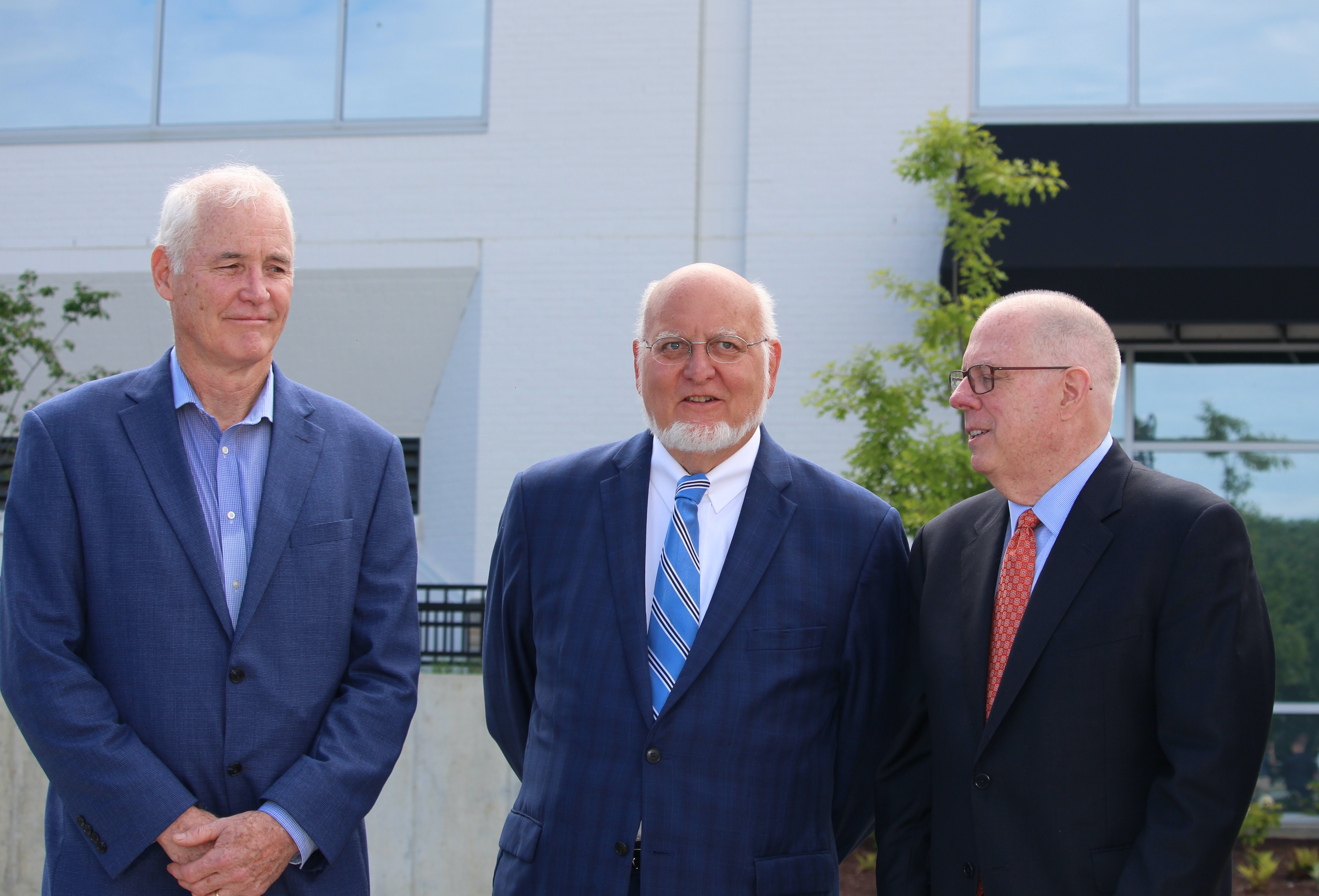
(Left to right) Dr. Gregory Glenn, Novavax’s president of research and development, and Dr. Robert Redfield, former director of the Centers for Disease Control and Prevention, stand with Maryland Gov. Larry Hogan and Novavax CEO Stanley Erck in front of the company’s soon-to-be global headquarters in Gaithersburg, Maryland. (SARAH JANE TRIBBLE / KHN)
‘Hadn’t Heard of Covid-19’
John Kutney, Novavax’s senior director of manufacturing, joined a BioBuzz video in December, in an effort to recruit urgently needed talent. Kutney described the technology transfer as taking a recipe and teaching it to others. With that mission, he has traveled to the Czech Republic, Spain and the United Kingdom as well as Texas, North Carolina and New England.
When Novavax began work on its vaccine in January 2020, “most of us hadn’t heard of covid-19 and we were only beginning to become aware of what was happening in China,” Kutney said. Novavax adapted its established vaccine platform to the new virus and then had to scale and transfer it to larger manufacturing sites, build a global supply chain and develop a regulatory strategy for emergency use.
“These steps would normally take years,” he said.
The key step of transferring Novavax’s vaccine technology can take three to six months, depending on the quality of the partner’s team. Once equipment and raw materials are secured, the teams start with small batches ― first with a 50-liter bioreactor, then a 200-liter and eventually a 2,000-liter bioreactor, checking to make sure the partner operators know the process every step of the way.
“What we’re trying to do here is not easy,” said Fred Shemer, Novavax’s vice president of quality systems and compliance, in the video: “It’s a challenging situation.”
In March 2020, Novavax received the first $4 million of nearly $400 million pledged by the Coalition for Epidemic Preparedness Innovations. CEPI is a global alliance backed by the Bill and Melinda Gates Foundation, which previously supported Novavax with $89 million for a vaccine for a common respiratory virus.
CEPI’s investment jump-started Novavax’s technology transfer to plants across Europe and Asia. It helped Novavax partner with SK bioscience in South Korea and paid for ramping up production at Praha Vaccines, which Novavax eventually bought, in the Czech Republic. It also supported scaling up production of Matrix-M at facilities in Sweden and Denmark.
Operation Warp Speed awarded $1.6 billion in July 2020 to Novavax so it would produce 100 million doses ― one of the largest awards from the Trump administration’s vaccine incubator. It was “kind of a stunning number for us,” Trizzino said. In December, officials bumped the total to $1.74 billion with no changes to the previous contract. Novavax also has a $60 million contract with the Department of Defense for 10 million doses.
Paul Mango, a former senior official at the Department of Health and Human Services, said it wasn’t a “big concern” for the Trump administration that Novavax had no successful vaccine. After all, that was also true for Moderna, which went on to launch its wildly successful mRNA vaccine.
Operation Warp Speed’s personnel resources and financial support would help carry the day. “We thought we could do it,” Mango said.
At the time, Trump officials invested in several vaccine platforms to hedge bets because it wasn’t known what would work, if any. “We didn’t want to put all our eggs in mRNA,” he said. “We didn’t want to put all our eggs in viral vector,” the platform used by Johnson & Johnson and AstraZeneca. Novavax’s technology uses a more established process with a baculovirus grown inside insect cells in a bioreactor.
“It was very important to have that array of technologies,” Mango said. “We had to pick the ones that had the best early results and the ones we thought could go through clinical trials before the spring of 2021.”
Novavax scientists have spent years collaborating with officials at federal agencies such as the National Institutes of Health, National Institute of Standards and Technology, and Walter Reed National Military Center ― sometimes hiring from their ranks. In 2011, Novavax signed a $179 million contract to develop a seasonal and pandemic influenza vaccine with BARDA, the Biomedical Advanced Research and Development Authority.
As concerns about covid-19 rose, Novavax and BARDA began another negotiation, but Operation Warp Speed officials “stepped over the top,” Trizzino said. They asked Novavax what it would take to ramp up large-scale manufacturing, run a 30,000-subject clinical trial and the follow-on trials, and produce millions of doses.
“They said, ‘Do all these things in parallel paths. You don't worry about the funding risk. You do the work and we'll pay for those activities,’” Trizzino recalled.
Troubles in Texas
It was a tall order. Novavax had worked with Emergent BioSolutions and signed a contract for manufacturing in early 2020, but BARDA pushed Novavax to partner instead with Fujifilm Diosynth Biotechnologies and its plants in North Carolina, Texas and the U.K.
In retrospect, Trizzino said, Novavax “dodged a bullet.” Production problems at Emergent’s Baltimore plant led to contamination or suspected contamination of millions of Johnson & Johnson and AstraZeneca doses, and in June federal regulators declared 60 million J&J doses unusable, The New York Times first reported.
Fujifilm’s Texas site, like Emergent’s plant in Baltimore, was set up in the aftermath of the 2009 H1N1 pandemic to better prepare federal officials for the next one. It received $265 million last July to quickly boost manufacturing capacity, according to a federal contract.
The site began production in January but had to slow the cadence of its manufacturing lines for “troubleshooting” during Novavax’s technology transfer process, Fujifilm spokesperson Christine Jackman said. The plant is producing the Novavax vaccine and another undisclosed covid vaccine.
Trizzino said Fujifilm’s site in North Carolina was up and running quickly, but Texas didn’t have as much experience so “it’s taken us a bit longer to ramp that up.” A March inspection by the Food and Drug Administration found overcrowded and unorganized storage areas, a failure to consistently follow cleaning procedures and questions about why there was a backlog of batches, according to documents obtained by KHN in response to a public records request. The backup formed because bulk drug substance was being made faster than the facility could review produced batches, Fujifilm’s Jackman said.
FDA inspectors called Fujifilm’s operations “sub optimal quality,” according to an April response memo written by Gerry Farrell, Fujifilm’s chief operating officer for the facility. He said the criticism resonated and promised a thorough review with fixes completed in April and May.
Novavax and Fujifilm work closely to ensure all batches are reviewed and inspected by both companies’ quality control teams, said Speak, the Novavax spokesperson. The number of doses produced in Texas to date have not met projections. However, responding to federal inspections in Texas has not delayed Novavax’s vaccine development because Fujifilm’s North Carolina plant is the primary supplier of vaccine doses for the initial federal approval, Speak said.
Novavax’s manufacturing process is complicated because the vaccine is made in steps in different places. One plant makes the protein antigen, and another makes the adjuvant. Then the two components go to a final fill-and-finish facility where they are combined into 10-dose vials.
Its Matrix-M relies on quillaja extract from soapbark trees. The extract is also an additive in root beer and Slurpees. Novavax warned investors in its December 2020 financial filings that an inability to secure enough of the extract could delay production and prevent it from meeting “obligations under our various collaborations and supply agreements.” Still, Trizzino said that supply is “not an obstacle to total number of doses.”
Supply shortages have plagued the industry. For Novavax, those supplies included 2,000-liter bioreactor bags, used to culture cells; depth filters for the purification process; and the growth media, which is used to feed the cells.
Not having raw materials forced Novavax to trim the number of test batches that manufacturing lines could run. It has also taken longer to create quality control tests, known as assays, to ensure that vaccines are consistent and establish a standard quality for all subsequent batches. Those delays slowed the company’s ability to properly train operators, Trizzino said.
Novavax is working to reach “a level of comfort that we're able to produce these batches and then go to full capacity,” Trizzino said. Novavax is working to complete the final phases of validating those tests.
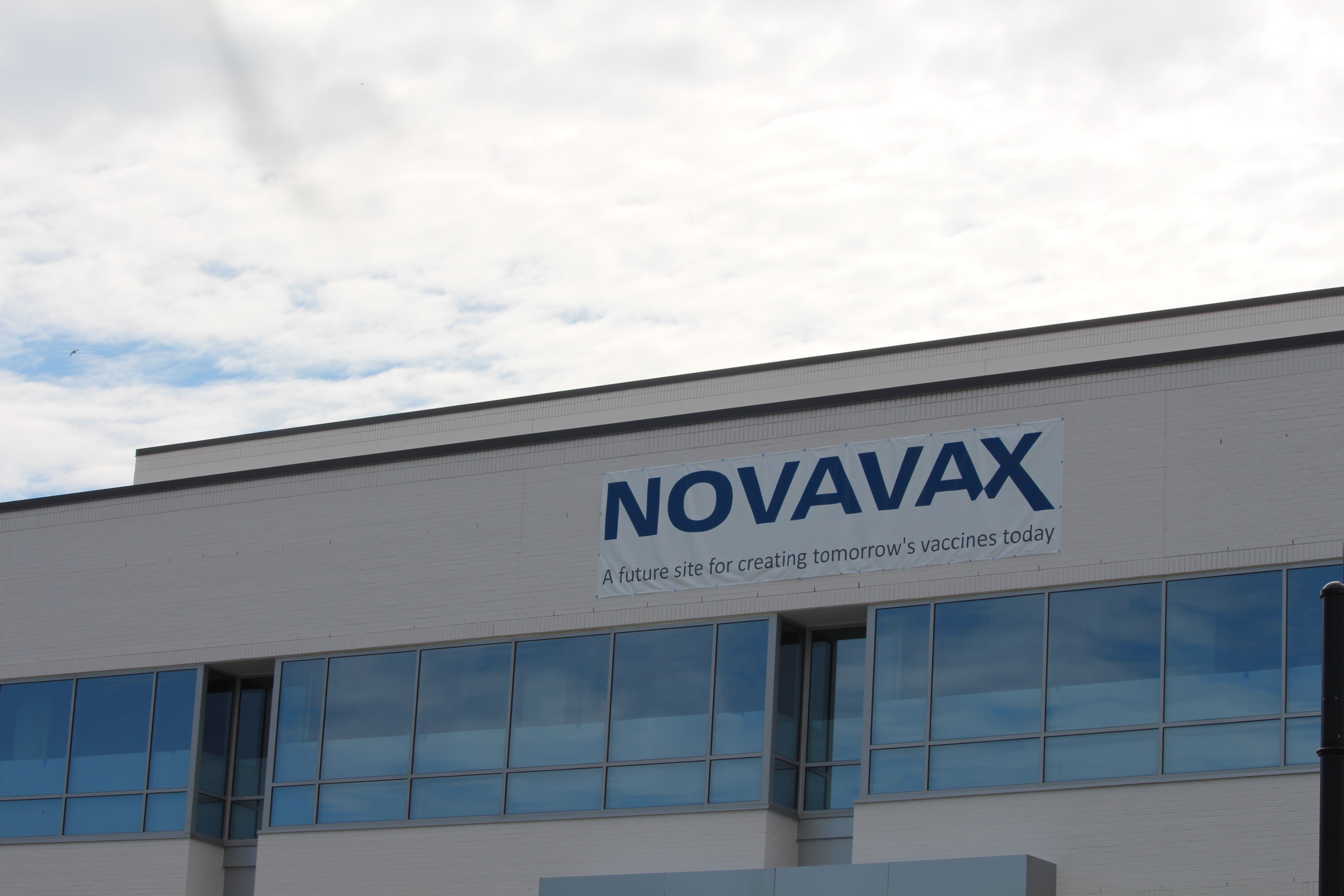
Novavax’s global headquarters in Gaithersburg, Maryland, is now a “blank canvas” but is expected to house research and development, manufacturing and business operations. (SARAH JANE TRIBBLE / KHN)
Too Late?
At the headquarters event, Glenn acknowledged that Novavax is late to the game. But the global demand is still enormous, he stressed.
“We know that 2 billion people worldwide have received at least one shot,” he said, “but there are 6 billion people that need to be inoculated.”
The company is working to prove its vaccine will be useful even after the pandemic is contained. With its Matrix-M adjuvant, Novavax is testing a combined flu and covid vaccine, which is showing strong results in ferrets and hamsters. Novavax is also focused on booster shots.
Novavax joined mix-and-match trials this spring in the U.K. to test whether its vaccine works when paired with Moderna, Pfizer or AstraZeneca’s vaccines. Glenn said the results, so far, have been promising that “we’re going to be able to use our vaccine after other licensed vaccines.”
First, though, “the world has to collectively, as one, really stymie this global pandemic,” said Dr. Dawd Siraj, a University of Wisconsin professor specializing in infectious diseases.
Siraj said Novavax’s delays shouldn’t cast doubt on the quality of the vaccine itself, given the positive trial results it has reported globally.
The shot is a “very good vaccine,” he said, that could help turn the tide in developing countries unable to support their own vaccine development.
“Let us never miss the most important point here,” Siraj added. “Anyone who is getting a vaccine that is approved, the chances of dying, the chances of requiring ICU care, the chances of requiring a ventilator and high-flow oxygen, they almost disappear.”
Amazon.com Inc will stop on-site COVID-19 testing for its warehouse workers, The Information reported on Monday.
In a note circulated through an internal company app, Amazon told its warehouse workers it would discontinue testing after July 30, the report said https://www.theinformation.com/articles/amazon-to-stop-covid-testing-in-u-s-warehouses.
Coronavirus cases in the United States are rising rapidly as the highly contagious Delta variant takes hold and vaccinations lag in several states.
During the pandemic, a large portion of the country's population moved to online shopping following lockdowns to curb the spread of the virus, and Amazon has benefited from it.
The Information, citing the note, said Amazon told its staff safety measures it had previously put in place played an important role in the return to normal.
The company also noted free testing is "widely available" and employees "have many options available to them, including through health providers and public testing sites."
In a blog post published in May, Amazon had said it would rapidly expand its on-site COVID-19 vaccination program for frontline employees across the U.S, in fulfillment centers, delivery stations and AWS data centers.
The US State Department and the US Centers for Disease Control and Prevention (CDC) both issued on Monday (Jul 19) their highest warnings against travel to the United Kingdom because of a rising number of COVID-19 cases in that country.
Each raised the UK to "Level Four," telling Americans they should avoid travel there.
"If you must travel to the United Kingdom, make sure you are fully vaccinated before travel," the CDC said in an advisory, while the State Department said: "Do not travel to the United Kingdom due to COVID-19."
In May, the US government had lowered the UK to a "Level 3" advisory rating.
COVID-19 cases are rising by more than 50,000 a day in the UK and hundreds of thousands of Britons are being asked to self-isolate for 10 days.
The United States since March 2020 has barred nearly all non-US citizens who have recently been in the UK from the United States.
Britain allows American visits but requires a 10-day quarantine on arrival and two COVID-19 tests.
In June, the Biden administration said it was forming expert working groups with Britain, Canada, Mexico and the European Union to determine how best to restart travel safely after more than a year of restrictions.
US and airline officials do not expect the restrictions on UK travelers to be lifted until August at the earliest - and warn it could be pushed back further.
Airlines and others have pressed the administration to lift the restrictions that bar most non-US citizens who have been in Britain, the 26 Schengen nations in Europe without border controls, Ireland, China, India, South Africa, Iran and Brazil within the past 14 days from the United States.
Canada on Monday said it would allow fully vaccinated U.S. tourists into the country starting from Aug. 9 after the COVID-19 pandemic forced an unprecedented 16-month ban that many businesses complained was crippling them.
Inoculated visitors from countries other than the United States will be permitted to enter beginning on Sept. 7. The relaxation depends on Canada's COVID-19 rates remaining favorable, officials said.
"Thanks to the rising vaccination rates and declining COVID-19 cases, we are able to move forward with adjusted border measures," Prime Minister Justin Trudeau said at a news conference in Brampton, Ontario.
Some 50% of Canadian residents are fully vaccinated, and 75% have had one shot, government officials said.
Businesses in Canada and the United States, particularly the travel and airline industries, pushed for an end to restrictions on non-essential travel between the two countries, which were imposed in March 2020 at the beginning of the pandemic.
Since then, the land border has been closed to all non-essential travel. However, the United States has allowed Canadians to fly in, while Canada has not allowed Americans to do the same.
"As Canada moves from recovery into growth, having workable border measures for fully vaccinated travelers is critical for Canadian businesses," said Perrin Beatty, president of the Canadian Chamber of Commerce.
Until now, the United States and Canada had extended the border restrictions month-by-month.
Canadian Public Safety Minister Bill Blair said U.S. officials told him it was likely Washington would extend its land border restrictions, which expire on Thursday, for an additional month.
White House Press Secretary Jen Psaki declined to say whether the United States would follow Canada's lead.
"We are continuing to review our travel decisions and we'll be guided by our public health and medical experts ... I wouldn't look at it through a reciprocal intention," she told a briefing when asked about Canada's decision.
People eligible to enter Canada must have been fully vaccinated at least 14 days beforehand. Children under 12 who are not vaccinated will not be required to quarantine if traveling with their fully inoculated parents.
The government repeated that Canadians should still avoid non-essential travel abroad.
The news should be a boost for Canada's hard-hit airlines which have recovered more slowly from the pandemic than their U.S. counterparts. Ottawa is also lifting the requirement that all travelers arriving by air must spend three nights in a hotel.
Canada's second-largest carrier, WestJet Airlines, said it was operating at 40% capacity in July compared with pre-pandemic levels in 2019.
Calgary-based WestJet said the move was "significant and positive step forward". Shares in Air Canada - the nation's largest airline - were trading down more than 3% in Toronto on Monday amid a broader decline.
Mike McNaney, President and CEO of the National Airlines Council of Canada, whose members include Air Canada and WestJet, welcomed the announcement but said, "we have almost lost the summer travel season."
In a statement, Air Canada said the loosening of the border restrictions was "an important step" and added that it had announced a new summer schedule with up to 220 daily flights between the U.S. and Canada.
Ardelyx, Inc. (Nasdaq: ARDX) 69% LOWER; received a letter from the U.S. Food and Drug Administration (the "FDA") on July 13, 2021, stating that, as part of its ongoing review of the company's New Drug Application ("NDA") for the control of serum phosphorus in adult patients with chronic kidney disease ("CKD") on dialysis, the FDA has identified deficiencies that preclude discussion of labeling and post-marketing requirements/commitments at this time. The letter stated that the notification does not reflect a final decision on the information under review. The company immediately requested a meeting to discuss the deficiencies and was notified by the FDA today that the request for a meeting was denied.