Abiomed (NSDQ:ABMD) today announced that the FDA has granted breakthrough device designation for its Impella ECP expandable percutaneous heart pump.
Danvers, Mass.-based Abiomed designed the Impella ECP heart pump to be compatible with small-bore access and closure techniques. It measures 3 mm in diameter when inserted and removed from the body. It expands in the heart to support the heart’s pumping function and provides a flow greater than 3.5 L/min.
The FDA granted breakthrough device designation based on positive clinical data from the company’s first 21 Impella ECP patients who were treated as part of an FDA-regulated early feasibility study, which was approved in June 2020.
“This is yet another validation from the FDA of the clinical benefits of Impella technology and an affirmation of the innovative nature of Impella ECP which, due to its smaller vascular access size, has the potential to provide even safer procedures and be available to more patients who need hemodynamic support for coronary revascularization,” chief medical officer Chuck Simonton said in a news release.
After struggling for months to persuade Americans to get the COVID-19 vaccine, U.S. health officials could soon face a fresh challenge: talking vaccinated people into getting booster shots to gain longer-lasting protection as the delta variant sends infections soaring again.
As early as Wednesday, U.S. health authorities are expected to recommend an extra dose of the vaccine for all Americans eight months after they get their second shot, according to two people who spoke to The Associated Press on condition of anonymity to discuss internal deliberations.
That means the biggest vaccination drive in U.S. history is about to get even more extensive.
The move is being driven by both the highly contagious variant and preliminary evidence that the vaccine’s protective effect starts dropping within months.
Last week, U.S. health officials recommended boosters for some people with weakened immune systems, such as cancer patients and organ transplant recipients. If the shots are expanded as expected to other Americans, among the first to receive them could be health care workers, nursing home residents and other older people.
Some experts have expressed concern that a new campaign calling for boosters could muddle the public health message and undercut the continuing drive to win over the tens of millions of Americans who are hesitant to get their first COVID-19 shots.
Calling for third doses could discourage people who had been skeptical of the shot’s effectiveness in the first place, Lawrence Gostin, a public health specialist at Georgetown University, warned on Tuesday.
“We have to really make sure that while we’re spending a lot of time and effort on third doses that we don’t undermine our campaign for first vaccinations,” he said. “That’s truly the existential crisis in the United States.”
The booster campaign could also cause ill will toward the United States: Global health officials, including the World Health Organization, have called on wealthier nations to hold off on booster shots to ensure poor countries have enough vaccine for the initial doses.
Dr. Tlaleng Mofokeng, a South African expert advising the United Nations, condemned the move toward booster shots in the U.S., saying it will have the effect of “advancing and deepening the existing inequities” when “there are people who are yet to receive a single shot.”
But White House press secretary Jen Psaki said the question of whether to distribute boosters or help other nations “is a false choice. We can do both.”
She said the U.S. is “far and away” the biggest contributor to the global fight against COVID-19 and will “continue to be the arsenal for vaccines” to the world.
“We also have enough supply, and we have long planned for enough supply, should a booster be needed for the eligible population,” Psaki said.
Booster shots would only begin to be administered widely once the U.S. Food and Drug Administration formally approves the vaccines, which are being dispensed for now under what is known as emergency use authorization. Full approval of the Pfizer shot is expected in the coming weeks.
More than 198 million Americans have received at least one dose of a COVID-19 vaccine, or 70% of those who are eligible, according to the Centers for Disease Control and Prevention. Just under 60% of Americans 12 and older are fully vaccinated.
The vaccination drive has been slower than the Biden administration had hoped for. At the same time, the variant is spreading aggressively through unvaccinated communities and also causing an increasing number of “breakthrough infections” of fully inoculated people.
Studies show the vaccine remains highly protective against severe COVID-19, but results from Israel released last month suggest its effect wanes. Its effectiveness against symptomatic infection peaked at 96% two months after study participants got their second dose. By six months, it was down to about 84%.
Israel, which exclusively administered the Pfizer shot, has been offering a booster to people over 50 to control its delta surge. Researchers are still trying to understand to what extent the breakthrough infections are due to waning immunity or vulnerability to the delta variant.
The new urgency from U.S. officials reflects how quickly the variant has knocked the country back on its heels.
On July Fourth, President Joe Biden proclaimed that the nation was declaring its independence from the virus. But since then, infections, hospitalizations and deaths have increased nationwide, overloading emergency rooms across parts of the South and West.
On Monday, Pfizer and its partner BioNTech submitted data to the FDA to support authorizing a booster shot for the general public. Pfizer said a small study showed people who received a third dose had higher levels of antibodies against several versions of the coronavirus, including the delta variant. The company is working on a larger study.
Dr. William Moss of Johns Hopkins University said more data is needed on whether waning antibody levels lead to hospitalizations and deaths. The antibody research alone is “insufficient to call for booster doses for the general population.”
And Dr. Carlos del Rio, a professor at Emory University’s medical school, said: “Our hospitals are not full of people who were vaccinated six or eight months ago. Our hospitals are full of the unvaccinated.”
Americans who received the earliest doses of Pfizer’s vaccine — mainly health care workers and nursing home residents — are approaching the eight-month mark from when they received their second dose.
“There is a concern that the vaccine may start to wane in its effectiveness,” the director of the National Institutes of Health, Dr. Francis Collins, said over the weekend. “And delta is a nasty one for us to try to deal with. The combination of those two means we may need boosters.”
The Pfizer and Moderna vaccines are administered in two doses. Officials are continuing to collect information as well about the one-shot Johnson & Johnson vaccine, which was only approved in the U.S. in late February, to determine when to recommend boosters.
Moderna's stock cemented its position as the top performer in the S&P 500 for 2021, rising another 7.5% on Tuesday ahead of a meeting between the White House and theCOVID-19 Response Teamset for today in which next steps for boosters are expected to be discussed.
The Centers for Disease Control and Prevention has administered 357,894,995 million doses through Aug. 16, with Pfizer-BioNTech leading Moderna in both administered and delivered doses.
Despite the lead, Moderna stock has locked in annual gains of more than 285%, making it the top annual performer for the broadest measure of the U.S. stock market, even with a slight pullback from hitting its high of $497.17 per share.
Moderna CEO Stephane Bancel told FOX Business earlier this month the company is on track to deliver 1 billion doses this year, with even higher expectations for 2022 depending on confirmed clinical dosages.
"It would be between 2 and 3 billion doses, so I expect we would be able to double the output next year, maybe even triple it" he said.
Additionally, Bancel discussed the company's improving balance sheet.
"We are now sitting on $12.2 billion of cash," he noted, adding that "the board authorized a share buyback of up to $1 billion" as the company reported quarterly results.
Steelmaker Nucor is the S&P 500's second-best performer, with annual gains of 125%.
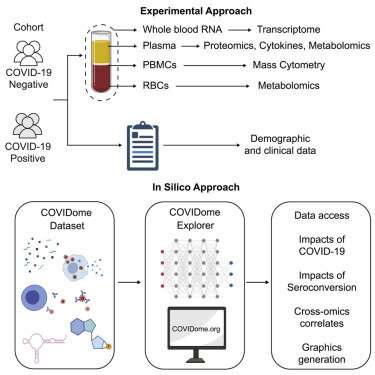
COVIDome Explorer Graphical Abstract. Credit: CU Anschutz Medical Campus
To further accelerate COVID-19 research on a global scale, investigators from the University of Colorado Anschutz Medical Campus have created a multidimensional dataset, known as the COVIDome dataset, derived from hospitalized COVID-19 patients versus negative controls. The team has now launched a public online portal called the COVIDome Explorer to share that data in real time.
Today, a new paper published in the journal Cell Reports detailing how the datasets were generated while explaining how to use the COVIDome Explorer for rapid hypotheses testing, hypothesis generation and real-time discoveries by experts and non-experts.
"Our mission for the COVIDome Explorer is to enable the development of better prevention, diagnostic and therapeutic tools for the clinical management of COVID-19," said Joaquin Espinosa, Ph.D., professor at the University of Colorado School of Medicine and executive director at the Linda Crnic Institute for Down Syndrome on the CU Anschutz Medical Campus. "Although great progress has been made in all these areas, the speed of research for COVID-19 has been hampered by the lack of widely accessible, public datasets that can be analyzed and reanalyzed in real time by anyone."
He adds that they "expect that this online portal will rapidly accelerate COVID-19 data sharing, hypothesis testing and discoveries worldwide."
To create the COVIDome Explorer, experts in different areas of biomedical research across the CU Anschutz Medical Campus created multidimensional datasets in their labs. Those were collected and combined to be shared through the online portal. The datasets include demographics and clinical data, along with matched analysis of the whole blood transcriptome, analysis of the plasma and red blood cell metabolomes, deep immune phenotyping by mass cytometry and seroconversion assays.
The COVIDome datasets and corresponding Explorer were modeled after similar ongoing efforts in the Linda Crnic Institute for Down Syndrome, where members of the COVIDome team previously developed the Human Trisome Project and its TrisomExplorer data portal. Leveraging the leading-edge tools and technologies of the TrisomExplorer, the team was able to create the COVIDome Explorer in a matter of weeks and make it available to the public to help advance COVID-19 research.
"The global health crisis imposed by the COVID-19 pandemic further emphasizes the need for rapid collaboration, open access to manuscripts under review and data sharing," said Thomas Flaig, MD, vice chancellor of research at the CU Anschutz Medical Campus. "Now more than ever, with the rise of the COVID-19 Delta variant and breakthrough infection rates rising, it's critical to have easy and timely access to COVID data to combat the pandemic and advance the best scientific data available."
The paper, which users are encouraged to read, details how to use the online dashboards and links to data files that guide users, such as catalogs of proteins, metabolites, cytokines and immune cells present in each dataset.
For example, to facilitate quick and broad access to the COVIDome dataset, each dataset (after data curation and quality control) is linked at the sample level with a unique identifier, enabling cross-referencing among platforms. Additionally, the COVIDome Explorer hosts six dashboards: Cohort, Transcriptome, Proteome, Cytokines, Metabolome, and Immune Maps. And each dashboard runs within its own isolated and protected environment.
An analysis of the DNA of thousands of people who have been infected with the coronavirus, SARS-CoV-2, and shown a positive test for the disease it causes, COVID-19, shows that they have several DNA characteristics in common. The study, based on samples from the UK Biobank, is detailed in theInternational Journal of Data Mining and Bioinformaticsand could offer up a way to genetically profile individuals for susceptibility to the disease.
Taewan Goo, Kyulhee Han, Catherine Apio, and Taesung Park of Seoul National University in South Korea carried out agenome-wide association studyas well as gene-level association and pathway analyses with common and rare variants of the virus to reveal how certain genetic characteristics associated with some of the body's metabolic pathways are present in those who contracted the disease more often than in those who had not. Moreover, they identified other genetic characteristics, most notably, ones associated with cellular signaling that had not been associated with viral infection previously.
Follow-up work to investigate those pathways may well reveal important pathophysiological factors associated with infection with SARS-CoV-2 and subsequent COVID-19. It might also be used to identify people who are more susceptible to the ravages of the disease than others and so allow them to be advised on protecting themselves better.
As other researchers have suggested, understanding how human genetics influence infectious disease susceptibility might give us the opportunity for better understanding this illness and other emerging infectious diseases. It might also guide us to potential drug targets, risk stratification, and a better understanding of patient response to therapy and vaccination.
More information: Taewan Goo et al, Analysis of COVID-19 genetic risk susceptibility using UK Biobank SNP genotype data, International Journal of Data Mining and Bioinformatics (2021). DOI: 10.1504/IJDMB.2021.116879
"Governor Greg Abbott today tested positive for the COVID-19 virus. The Governor has been testing daily, and today was the first positive test result. Governor Abbott is in constant communication with his staff, agency heads, and government officials to ensure that state government continues to operate smoothly and efficiently. The Governor will isolate in the Governor's Mansion and continue to test daily. Governor Abbott is receiving Regeneron's monoclonal antibody treatment.
"Governor Abbott is fully vaccinated against COVID-19, in good health, and currently experiencing no symptoms. Everyone that the Governor has been in close contact with today has been notified. Texas First Lady Cecilia Abbott tested negative."
With Covid-19 cases and hospitalizations spiking around the country, dreams of a summer like those many us had in mind just a short time ago have faded.
The fully vaccinated have been told to resume wearing masks indoors. Companies and institutions are leveling vaccine mandates. And some municipalities are requiring people to show proof of vaccination to get into restaurants, bars, and gyms.
Confusion abounds about what is safe to do. (For the unvaccinated, there’s no confusion about what’s most important to do: Get immunized.)
To try to cut through the fog, STAT contacted three dozen epidemiologists, immunologists, and other infectious disease experts around the country to see how they are navigating the risk of Covid in these uncertain times. Twenty-eight responded.
STAT didn’t ask these experts to explain how they would advise others. Rather, we asked them to answer 10 questions — saying yes, no or only if masked — about their own willingness to engage in various activities, assuming they were vaccinated.
Their answers suggest that, with the highly transmissible Delta variant spreading, caution prevails. Those who know viruses best aren’t buying many movie tickets, and most aren’t eating indoors in restaurants.
But in other ways, responses diverged. And at least one expert suggested that geography really does matter when it comes to his own comfort level. Naor Bar-Zeev, a statistical epidemiologist at Johns Hopkins Bloomberg School of Public Health, declined to respond to all but one of the questions, saying answers are highly dependent on the circumstances of a place.
“In a place where most people are unvaccinated, or otherwise at high risk, and where there is active transmission, I should act more conservatively and with greater caution, even though I am protected from disease,” he said. “In a place where most people are vaccinated, and there is low transmission, one can be more permissive.”
Let’s unpack their answers.
Of the questions, only one earned a unanimous response: “Would you send your unvaccinated child to school without a mask?”
“Lord, no,” Paul Offit, a pediatric infectious disease specialist at Children’s Hospital of Philadelphia, replied. “NO!!! As a parent and a pediatrician, that is a terrible idea,” wrote Andrew Pavia, chief of pediatric infectious diseases at the University of Utah.
None of 27 people who answered this question expressed a willingness to send an unvaccinated child to school without a mask. Carlos del Rio, a professor of epidemiology and global health at the Rollins School of Public Health at Emory University, said he’d withdraw an unvaccinated child from a school if it didn’t have a mask mandate.
Children under the age of 12 cannot yet be vaccinated as none of the vaccines has been authorized for use in this age group.
The other school-related question — “Would you send your vaccinated teen to school without a mask?” — drew almost as fervent a response, with 24 of 26 saying no.
J. EMORY PARKER/STAT
Ellen Foxman, an immunologist at Yale University, was one of the exceptions. “Yes, if the high school had a high vaccination rate/low Covid transmission rate and my family had no high-risk personal contacts,” she wrote. “If the school required all students and staff to be vaccinated, I would have no problem whatsoever with no masks.”
Pavia gave a nuanced answer for his support for masks for vaccinated teens. “If the vaccinated kids don’t mask, the unvaccinated are unlikely to mask and there is a risk of bullying. Masks for all is much more likely to work,” he wrote.
Michael Osterholm, director of the University of Minnesota’s Center for Infectious Disease Research and Policy, said he not only wouldn’t allow a vaccinated teen to go to school without a mask, he’d demand the teen wear an N-95 respirator. Cloth face coverings aren’t enough to combat Delta, he insisted.
Shane Crotty, an immunologist at La Jolla Institute of Immunology, said he’d send teenagers to school with masks, but would be okay with them taking them off around friends outside of school or during an outdoor lunch break.
When the experts were asked whether they would eat indoors at a restaurant, responses were slightly more mixed. More than half of respondents said no, but six said they would, or would in off-peak hours, and three more said they would do it but would wear a mask when they weren’t eating.
Saad Omer, director of Yale’s Institute for Global Health, said he would eat indoors in a restaurant that required customers to show proof of vaccination. “I generally feel safe indoors in a restaurant as long as underlying community transmission is low and I’m eating with other vaccinated people,” wrote John Brownstein, an epidemiologist and chief innovation officer at Boston Children’s Hospital. “However, I always prioritize eating outside where possible.”
That approach no longer seems viable to Syra Madad, senior director for the special pathogens program in the NYC Health + Hospitals network. “More than 95% of Americans live in areas of high or substantial community transmission so it’s no longer a matter of ‘Yes, I’ll eat indoors if I’m in an area of low community transmission,’” she wrote.
It seems like we’re over DIY hair — or so the answers to the question of whether the experts would go to a hairdresser or a barber shop would suggest.
All but four respondents said they would go to a hair salon or barber at this point even if they didn’t know the vaccination status of other clients. And even one of the four more cautious respondents allowed that she might consider it. “No, but if we are all far apart and there are few people I might with a mask,” said Krutika Kuppalli, an infectious disease physician at the Medical University of South Carolina.
Most people who said yes did so with the caveat that they’d wear a mask. Jesse Goodman, a professor of medicine at Georgetown University, said he would go only if he and everyone else in the place was masked. Akiko Iwasaki, a Yale University immunologist, said she would try to reduce the frequency of visits. But Jeanne Marrazzo, director of the division of infectious diseases at the University of Alabama in Birmingham, was in favor of professional hair care in general.
“I know how careful my hairdresser has been,” Marrazzo wrote. “She also needs financial support; my hair also needs it.”
Would the experts go to the theater to see a film? Seventeen said no.
“Non-essential,” said Shweta Bansal, whose Georgetown University laboratory studies how social behavior affects infectious disease transmission.
Florian Krammer, an immunologist at the Icahn School of Medicine at Mount Sinai, in Manhattan, believes most people who are fully vaccinated are well protected at this point. He would go to see a movie wearing a mask.
Amesh Adalja, an infectious disease physician and a senior scholar at Johns Hopkins Center for Health Security, has a different view on Covid risks than some of the other people STAT polled. He (and others) believe Covid is going to become endemic — we’re going to have to learn to live with it. For fully vaccinated people, Adalja said, the risks even from contracting Covid are pretty low.
“That fact makes me comfortable as a fully vaccinated individual without underlying health problems to resume my pre-pandemic life because I am risk-tolerant and I know that if I am to get a breakthrough infection it is likely to be mild,” he said. Adalja said yes to all but two of STAT’s questions; he would not send an unvaccinated child to school without a mask and would not currently give a second dose of the Johnson & Johnson vaccine.
William Hanage, an epidemiologist in Harvard’s T.H. Chan School of Public Health, said he’d happily skip going to the movies, but his wife enjoys going. So he would go, wearing a mask.
There was almost an even split among the experts to the question of whether they would attend a large outdoor concert or sporting event, with a slight edge going to the “yes” side. Most of the 15 people said they’d do it if masked.
Robert Wachter, the chair of the University of California, San Francisco’s department of medicine, said he’d don a mask “if shouting people [were] at very close range.” Jason Salemi, an epidemiologist at the University of South Florida, said he “would not attend a large outdoor concert right now,” stressing the amount of Covid transmission in his state at the moment.
Move a mass gathering indoors and the answers shift. In response to the question of whether they would go to an indoor wedding or other religious service — one where they did not know the vaccination status of the other attendees — more of the experts said no.
Saskia Popescu, an infectious disease specialist and assistant professor in George Mason University’s biodefense program, for instance, would go to an outdoor concert or sporting event, masked. Even with a mask, she would not attend an indoor wedding or religious ceremony.
Emergency physician Uché Blackstock, founder and CEO of the consulting firm Advancing Health Equity, said she’d forgo indoor and outdoor large gatherings at this point.
We asked two questions about travel: “Would you travel to a part of the United States experiencing a surge in Covid cases?” and “Would you go on a non-essential international trip?” Surprisingly, there was slightly more willingness in the group to travel internationally than to domestic Covid hot spots.
In response to the former, Peter Hotez was succinct. “I’m living it,” said the Hotez, co-director of the Texas Children’s Center for Vaccine Development, based in Houston-swamped Covid-19.
Del Rio, who lives in Atlanta, goes frequently to Miami to visit his son and his son’s family. “I am very careful when I travel,” he said. Since the pandemic began he has twice visited his mother in Mexico, “but at this point I am not going. May go later in the year,” he wrote.
Carl Bergstrom, an evolutionary biologist at the University of Washington, said he wouldn’t travel abroad now. Not because of Covid directly, but because he might get stuck somewhere if travel restrictions were instituted. Hanage and his family vacationed on Cape Cod this year instead of taking a planned trip to Iceland, for the same reason.
Nahid Bhadelia, director of Boston University’s Center for Emerging Infectious Diseases Policy & Research, said she would not travel to an American Covid hot zone if she could avoid it, but would travel internationally, if her destination had a high vaccination rate and a low transmission rate.
Angela Rasmussen, a coronavirus virologist at the University of Saskatchewan’s Vaccine and Infectious Disease Organization, said she would travel to a location in the U.S. having an upswing in Covid transmission, but would do it using precautions. As for international travel, “depends where, but masked,” she said.
Our final question was for the physicians in the group was this: “Would you recommend that patients who received the one-dose J&J vaccine get another dose of vaccine?”
Crotty, the immunologist at La Jolla Institute of Immunology, said yes; he tweeted recently about his support for giving J&J recipients an extra dose of vaccine to cope with the Delta variant. “I have had physicians emailing me thanks about my [Twitter] threads on this,” he said.
Megan Ranney, an emergency physician at Lifespan Health System in Providence, R.I., said she’s waiting for guidance from the Food and Drug Administration. “But in the meantime, I certainly wouldn’t judge anyone who does get another dose.”
And Helen Keipp Talbot, a vaccine researcher at Vanderbilt University, pleaded the Fifth. Talbot is a member of the Advisory Committee on Immunization Practices, which advises the CDC on vaccination policy. “No comment,” was her reply.