Search This Blog

Wednesday, August 18, 2021

Illumina acquires Grail; will hold as separate firm during EC review

 Illumina, Inc. (NASDAQ: ILMN) announced today that it has acquired GRAIL, a healthcare company focused on life-saving early detection of multiple cancers, but will hold GRAIL as a separate company during the European Commission's ongoing regulatory review.
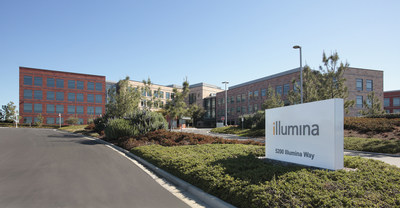
Illumina, Inc. headquarters in San Diego, CA

Illumina, the global leader in DNA sequencing, first announced its intention to acquire GRAIL nearly a year ago, reuniting Illumina with GRAIL four years after it was spun off. GRAIL's Galleri blood test detects 50 different cancers before they are symptomatic. Illumina's acquisition of GRAIL will accelerate access and adoption of this life-saving test worldwide.  

Regulators in the EU are reviewing the transaction, but a decision is projected after the deal expires. GRAIL has no business in the EU, and the company believes that the European Commission does not have jurisdiction to review the merger as the EU merger thresholds are not met, nor are they met in any EU member state. The General Court of the European Union will hear Illumina's jurisdictional challenge later this year. By holding GRAIL separate while proceedings are ongoing, Illumina is positioned to abide by whatever final decision is reached in these legal processes. 

There is no legal impediment to acquiring GRAIL in the US. Illumina is committed to working through the ongoing FTC administrative process, and as always, will abide by whatever outcome is ultimately reached in the US courts.  

The reasons to reunite the two companies are compelling: 

  • The deal will save lives. Cancer kills around 10 million people annually worldwide and 600,000 people in the US alone. Cancers responsible for nearly 71% of cancer deaths have no recommended early detection screening, and most cancers are detected when chances of survival are lower. Illumina feels there is a moral obligation to have the deal decided by a thoughtful and full review by the EU regulators and the US courts. This can only be done if Illumina acquires GRAIL now. Otherwise, the company is locked into a situation where the deal terms will expire before there is a chance for full review; the clock will just run out.

  • Right now, the Galleri test is available but costs $950 because it is not covered by insurance. Reuniting the two companies is the fastest way to make the test broadly available and affordable. Illumina's expertise in market development and access has resulted in coverage of genomic testing for over 1 billion people around the world already. This experience will help lead to coverage and reimbursement for the Galleri test.

  • GRAIL and Illumina have a long history. Illumina formed GRAIL and spun it out in 2016. GRAIL's first employees were part of Illumina, which still owns 12 percent of the company. GRAIL and Illumina are not competitors—this is a vertical acquisition.

  • Based on past experience, when Illumina enters a market, the market expands. When Illumina entered the non-invasive prenatal testing space, prices dropped, reimbursement expanded, the number of providers increased, and more expectant parents had access to testing.

  • Illumina's acquisition of GRAIL is driven by the belief that this test should be available to as many people as possible as quickly as possible. From fighting the COVID-19 pandemic to matching cancer patients to therapies, Illumina's mandate is to save lives and transform healthcare. The first COVID-19 viral sequence was on an Illumina machine and now genomic surveillance has emerged as a critical tool in the global fight against the pandemic, with over 70 countries now using Illumina platforms for COVID-19 variant tracking.

Pfizer Ousts Moderna as Day Trader’s Favorite Vaccine Maker

Move over Moderna Inc., Pfizer Inc. is the new day traders’ favorite Covid-19 vaccine stock. 

Pfizer has climbed about 9% in just five days to a record high, with retail traders snapping up about $63 million of the shares on Tuesday alone, according to data from Vanda Research. The day-trading crowd sold off more positions than they bought in Moderna and BioNTech. 

It marks a sharp change in fortunes. Both Moderna and BioNTech have amassed triple digit gains this year, a rally the $280 billion-valued Pfizer missed out on with a scant 36% gain, despite being the first -- along with BioNTech -- to win authorization for a Covid shot in the U.S. The U.S. announced today that it would start offering booster shots to the already vaccinated in September. 

As Pfizer rallies, BioNTech has tumbled more than 20% from a record high reached on Aug. 9, while Moderna is down roughly 19% from its zenith. All three stocks declined today, with Pfizer reversing early gains.

Pfizer’s stock now trades at an 10% premium to the average analyst price target, compared to 30% for Moderna and 17% for BioNTech.  

The recent closing of the gap may not spell the end of the rally. Wall Street is already adjusting its models with Pfizer getting a new Wall Street high price target of $61 from Cantor Fitzgerald analyst Louise Chen on Tuesday. 

The drugmaker’s “pipeline advancements and product sales continue to exceed our expectations,” she wrote in a note to clients.

https://www.bloomberg.com/news/articles/2021-08-18/pfizer-ousts-moderna-as-day-trader-s-favorite-vaccine-maker


Optum quietly revamps online pharmacy, sells virtual care for cash

 UnitedHealth subsidiary Optum is offering virtual care and discounted drugs to patients who pay with cash, presenting new competition to digital health startups and telehealth providers, according to Insider. 

UnitedHealth said the company's push into direct-to-consumer healthcare is a way to increase access to affordable care. The company, which is the parent of health insurer UnitedHealthcare, now is providing care and prescriptions to those who can't afford health insurance.

The Optum Store, which launched in late 2020, added new healthcare services, including virtual care and pharmacy in June. After a quiet revamp, Optum Store now is offering more than 800 generic drugs at discounted prices for those without insurance, according to the report. 

The move into direct-to-consumer healthcare is UnitedHealth's latest expansion. The company has amassed surgery centers and medical groups in recent years, and it contracts with or employs more than 50,000 physicians.

https://www.beckershospitalreview.com/strategy/optum-quietly-revamps-online-pharmacy-sells-virtual-care-for-cash.html

40 New York counties now at highest level for COVID spread: CDC

 The number of New York counties at the highest level of COVID-19 community spread has hit its highest level yet since the federal government started a transmission tracking system last month.

Forty counties late Monday had reached the "high" level of community spread, according to the U.S. Centers for Disease Control and Prevention, up 18 a week ago.

Another 19 counties are listed has having "substantial" spread. The CDC recommends people should wear masks indoors, even those who are vaccinated, if a county has a high or substantial rate of COVID spread.

"We continue to fight COVID-19 across the state each and every day, but vaccinations are the key to our success and more New Yorkers need to get their shots," outgoing Gov. Andrew Cuomo said in a statement Monday.

Only three counties remained under the threshold where masks indoors were recommended: Clinton, Schuyler and Wyoming.

The CDC recommends indoor mask-wearing in public in places with at least 50 new cases per 100,000 population over the past seven days or a COVID test positivity rate of 8% and above.

COVID cases continued their rise in New York and across the nation.

In New York, cases rose 23% through Sunday compared to the week before, with 29,211 new cases overall, up from 23,694 new cases the week prior.

Still, New York was better than a majority of states: It ranked 35th among the states where coronavirus was spreading the fastest on a per-person basis, a USA TODAY Network analysis of Johns Hopkins University data showed.

New York's seven day average of positive COVID tests was 3.1%. Last year on the same day, it was 0.8%, according to state data.

https://www.stargazette.com/story/news/politics/2021/08/17/new-york-covid-counties-masks/8154409002/

Restaurants sue NYC, De Blasio for indoor dining vaccination mandate

 Mayor Bill de Blasio and the city of New York are facing their first lawsuit from restaurants for the executive order requiring proof of vaccination to dine indoors.

The Independent Restaurant Owners Association Rescue, Max’s Esca, DeLuca’s Italian Restaurant and Pasticceria Rocco are seeking an injunction against de Blasio’s executive order. Two fitness venues, Evolve-33 and Staten Island Judo Jujitsu, were also listed as plaintiffs in the complaint. All of the plaintiffs, excluding Pasticceria Rocco, are based in Staten Island. The lawsuit was filed Wednesday in New York Supreme Court.

Nick Paolucci, press secretary for New York City’s law department, said that the city is reviewing the complaint.

The new policy, which began Tuesday, requires customers to show proof of at least one vaccine dose to engage in a number of indoor activities, like dining, exercising and attending performances. Employees of those venues are also required to be vaccinated. Following a few weeks to transition, enforcement is slated to start Sept. 13.

New York is the first major U.S. city to announce such a mandate, although a number of others, including New Orleans and San Francisco, have followed its lead.

Business owners’ reactions to the executive order have been mixed. The policy was supposed to go into effect on Monday but was delayed until Tuesday after the mayor’s office was slow to roll out more detailed guidelines.

“Overwhelmingly, we are getting support in emails and letters and the occasional whacky email telling us we are violating their constitutional rights,” Starr Restaurants CEO Stephen Starr said on CNBC’s “Squawk Box” Wednesday. “The staff can’t wait.”

Other restaurant owners have expressed concerns about some of their workers threatening to quit if they’re required to be inoculated. Art Depole, who co-owns a Mooyah Burgers, Fries and Shakes franchise with his brother Nick in midtown Manhattan, said in an interview last week that he’s getting pushback from a handful of his employees. And in a tight labor market, replacing those workers is an uphill battle.

https://www.cnbc.com/2021/08/18/restaurants-sue-nycs-de-blasio-for-indoor-dining-vaccination-mandate.html

US COVID-19 cases back to pre-vaccination levels

 For the first time since February, the United States reported more than 900,000 COVID-19 cases last week—with the country represented 20% of global cases—a sign the pandemic surge caused by the Delta (B1617.2) variant has stalled the progress made by an aggressive vaccine rollout that dampened cases this spring and summer.

Cases are on the rise in 46 states, according to USA Today. Hot spots continue in Florida, Louisiana, Texas, Oregon, Hawaii, and Mississippi. Oregon reported 11,564 cases in the week ending Friday, the paper said, topping its December pandemic peak by more than 7.2%.

The United States reported 38,482 new COVID-19 cases yesterday and 382 deaths, according to the Johns Hopkins COVID-19 tracker. The 7-day average of new daily cases is 130,218, according to the Washington Post tracker. New cases have risen 16.8% in the past week, while deaths have climbed by 23.6% and hospitalizations by 14.9%.

In total, the United States has confirmed 36,781,481 cases, including 622,058 deaths.

And the number of children hospitalized in this country is now also at a new pandemic high, with confirmed and suspected pediatric hospitalizations at 1,902 on Aug 14, according to Department of Health and Human Services data, Reuters reports. Though children currently make up about 2.4% of hospitalizations, that percent is expected to climb as people 12 years and older are increasingly vaccinated, leaving younger children vulnerable to Delta.

Only 50.7% of the total US population is vaccinated against the virus, with 72% of Americans over 18 with at least one dose. In total, the Centers for Disease Control and Prevention COVID Data Tracker shows 415,957,645 COVID-19 vaccine doses have been delivered in the country and 356,433,665 have been administered.

Considering added vaccine doses for some

Francis Collins, MD, PhD, director of the National Institutes of Health, told the Associated Press that elderly Americans may get an added vaccine dose as early as this fall. His statements come just a few days after the Food and Drug Administration approved a third dose of mRNA vaccines for moderate and severely immunocompromised Americans.

"There is a concern that the vaccine may start to wane in its effectiveness," Collins said. "And delta is a nasty one for us to try to deal with. The combination of those two means we may need boosters, maybe beginning first with health care providers, as well as people in nursing homes, and then gradually moving forward."

Collins also said any unvaccinated American was currently a "sitting duck" for the Delta variant.

Seven of the country's leading health associations—the Association for Professionals in Infection Control and Epidemiology (APIC), Infectious Diseases Society of America (IDSA), Society for Healthcare Epidemiology of America (SHEA), Society of Infectious Diseases Pharmacists (SIDP), Pediatric Infectious Diseases Society (PIDS), American Industrial Hygiene Association (AIHA), and National Association of School Nurses (NASN)—today called on governors from both red and blue states to put aside politics and promote vaccination.

In an open letter sent to all US governors, the group pleads with state leaders "to set aside differences to support important public health guidance to save the lives of many Americans during the current stage of the pandemic."

The letter urges governors to promote COVID-19 vaccination and make vaccines a condition of employment for healthcare and all government employees, require universal masking indoors, and encourage all school staff and students to conduct school fully masked.

Several Republican governors in states now seeing virus surges have banned mask and vaccine mandates.

https://www.cidrap.umn.edu/news-perspective/2021/08/us-covid-19-cases-back-pre-vaccination-levels

In manufacturing deal, Africa was supposed to catch up on Covid vaccines, now shipped overseas

 At the end of July, the first J&J shots produced in South Africa entered arms, highlighting a flurry of moves meant to get Africa access to sorely needed Covid-19 vaccines.


Those jabs were set to be distributed throughout South Africa, and made available to the African Union. But on Monday, The New York Times reported that most of the vaccines produced in the country haven’t made it to locals, as millions of doses have been exported to Europe.


Aspen Pharmacare and J&J agreed to collaborate for the company’s single-shot vaccine, and the US government dumped $200 million into its plant in Gqeberha to expand production. But J&J has been exporting the millions of doses that were bottled and packaged in South Africa to Europe. The Times spoke with executives at J&J and Aspen, and reviewed South African export records. A stipulation in the contract between the two parties required South Africa to waive its right to export restrictions.


The move was important because the continent of Africa has significantly lagged behind in vaccinating its people. Just 2% of Africans are vaccinated, compared with more than 60% of adults in Europe. J&J’s vaccine could be particularly advantageous in Africa because it’s a single shot, which makes it easier for those living in rural places on the continent to become fully inoculated.


The African Union has ordered 400 million doses for its nations, but very few have arrived on the continent. South Africa alone is waiting for the majority of 31 million doses, and says it has doled out just 2 million, good enough for a 7% vaccination rate.


It’s not the first instance in which biotech has left the region behind. The continent has been edged out for shots by richer countries since the early days of the pandemic. And as countries in Europe and Asia struggled with massive spikes in infections, largely due to variants, vaccines set to be shipped to Africa were diverted elsewhere.


Aspen’s Gqeberha plant was originally booked to manufacture 220 million doses of the J&J jab, but in March, South African President Cyril Ramaphosa upped the country’s goal to 400 million. A May press release from Aspen pledged to make its manufacturing capabilities available to the entire country. Aspen CEO Stephen Saad went on CNN, and proclaimed that more than 90% of the continent’s vaccines were imported, and many of those from India.


Records showed that at least 32 million doses have been shipped, including more than 800,000 doses to Spain in June and July, the Times reports.


At the end of July, BioNTech announced that it will establish mRNA manufacturing in Africa, for the use of vaccines production. When there is less of a need for Covid-19 vaccines, the company will use the sites to pivot to malaria vaccines.


In an interview with Endpoints News Monday, COO Sierk Poetting said that typically, countries that produce the vaccines are the countries that have access to them first. And while it is easier to establish the large, global manufacturing sites and export doses, companies must go local to enable regions-in-need to have their own manufacturing operation and break the vicious cycle.


“I think there’s a way forward with the African Union, and the WHO, and the African CDC, for example, they’re all working on setting up a framework so this all works,  In that sense, it absolutely makes sense to start with big global production sites,” Poetting said. “I think this local manufacturing source is something we need to pursue ASAP, now, because  it will take a little while, and the countries need that.”

https://endpts.com/through-a-manufacturing-deal-africa-was-supposed-to-finally-get-up-to-speed-on-covid-19-vaccines-now-those-have-been-shipped-overseas/