Search This Blog

Saturday, October 23, 2021

Can Intranasal Vaccines Stop Breakthrough COVID?

 The recent surge of COVID-19 in the southern U.S. in summer and early fall was fueled by the rise of the Delta variant storming through the unvaccinated population. But among the cases and hospitalizations were also some vaccinated people with breakthrough infections.

This week, the topic of breakthrough infections garnered even more attention with the passing of Colin Powell. The former Secretary of State was 84 years old and battling multiple myeloma when he died of COVID-19 complications, despite being fully vaccinated. This begs the question of whether there are other types of vaccines that can provide a stronger defense against breakthrough infections for those who are at greatest risk of serious breakthrough COVID-19.

Systemic vaccination may not act quickly enough to respond to the Delta variant. The role of local tissue immunity needs to be emphasized as this is where the ACE2 receptors are located. Once the virus infects the alveolar epithelial cells deep within the lungs, symptoms beyond runny nose will start and, very importantly, the now dominant Delta variant may evade aspects of the immune system.

This is especially true in people who have a weakened immune system -- as was likely the case with Powell. The answer to greater protection from breakthrough COVID-19 may lie in a type of vaccine that hasn't received enough attention to date: intranasal vaccines (INVs).

Intranasal Vaccines

Given the Delta variant with its associated high viral load, systemic vaccinations may not produce enough local tissue immunity in the portals of entry (oral cavity, nasopharynx, lower respiratory tract where ACE2 receptors are predominant in cilia and alveolar type 2 cells). INVs would fill in this gap by generating local tissue immunity.

INVs have proven to be effective against both human and animal respiratory diseases primarily by promoting local respiratory protection. However, there are limited data on the efficacy of INVs against respiratory coronaviruses. In veterinary medicine, the INV against the bovine respiratory coronavirus has shown some efficacy. Since we know veterinary medicine has successfully used nasal vaccines for other viruses for years, why not follow their lead?

The Risk of Breakthrough Infections

INVs may be especially important as we see more and more breakthrough COVID-19. Israeli data during the Delta wave showed declining protection from the Pfizer mRNA vaccine. Was the Delta variant evading the vaccine or was the person's own immune system not fully robust? Or is there inadequate immune activation at local IgA at the portal of entry of the virus in the nasopharynx and lower respiratory tree with systemic vaccination?

Certain populations are at higher risk for breakthrough infections than others. Organ transplant patients don't generate enough B- and T-cell function to produce high neutralizing antibodies. This is well-documented in kidney transplants where 50% of patients had a decent response but the other half remained at risk even after a booster shot. What about many others who may have a compromised immune system? In a U.K. study through June of this year, 4% of the total COVID-19 hospitalizations and deaths were among the country's fully vaccinated population. Those at highest risk included people with Down syndrome, dementia, and Parkinson's or other neurological diseases; bone marrow or solid organ transplant recipients; individuals receiving in-home care; and people with HIV/AIDS, cirrhosis, or who were receiving chemotherapy. For those at high risk, the list includes chronic obstructive pulmonary disease, coronary artery disease, and type 2 diabetes, among others.

Considering the recent case of Powell, what do we know about patients who have multiple myeloma? In one small study of 48 patients (and 104 controls) who received one dose of the Pfizer mRNA vaccine, we saw a low neutralizing antibody response. What would the response have been after a second dose, after a booster? A recent study also suggested poor T-cell responses for many of these patients. While Powell was fully vaccinated against COVID-19, his age and blood cancer put him at much higher risk for serious breakthrough illness.

Preventing Serious Breakthrough Infections

The COVID-19 vaccines currently available continue to offer substantial protection against severe disease and death for most people. Therefore, gaining a thorough understanding of which populations might be at greatest risk of serious breakthrough COVID-19 is key to understanding who may benefit from an INV, if one were to become available. For an at-risk person potentially susceptible to serious infection, the person could get a standardized validated blood test to measure COVID-19 neutralizing antibody, as done in the kidney transplant study referenced above. (A functional measure of T and B cells would provide even more information, but is not practical.)

Then, if the circulating IgG neutralizing antibody level is below a threshold value, that person may be a good candidate for an INV. This approach would supplement the bolstering of local tissue immunity. It's possible that the immune deficit is due to low nasopharyngeal IgA despite high levels of circulating neutralizing antibodies. There is no practical measure available to assess the level of localized immune protection.

Should one of these individuals contract COVID-19 with symptoms, they would also be excellent candidates for receiving an oral antiviral, if authorized.

Broader Roles for INVs

In addition to the role as a supplement to systemic vaccination, INVs could serve a primary role for mass vaccination in areas of the world with large unvaccinated populations. Traditionally they are easier to distribute and to administer -- often only requiring two sprays or two drops in each nostril -- and there are no syringes, needles (and needle phobia), or freezers.

We should encourage the rapid completion of pivotal clinical trials of INVs, many of which are in progress. We need to have more options available, especially for those at greatest risk of breakthrough infections -- and we need more clinical research on specific clinical groups of patients who may be at risk.

Daniel Teres, MD, is a critical care physician and clinical instructor in public health and community medicine at Tufts University School of Medicine in Boston. Diana M. Stone, PhD, MPH, DVM, is a professor at St. George's University School of Veterinary Medicine. Martin A. Strosberg, PhD, MPH, is emeritus professor of political science, healthcare policy, and bioethics at Union College.

https://www.medpagetoday.com/opinion/second-opinions/95212

Namibia suspends use of Russian COVID vax after South Africa flags HIV concerns

 Namibia will suspend the rollout of the Russian Sputnik V COVID-19 vaccine, days after neighboring South Africa’s drug regulator raised concerns about its safety for people at risk of contracting HIV, the Namibian Ministry of Health said on Saturday.

Regulator SAHPRA has decided not to approve the emergency use application of Sputnik V at this time because some studies have suggested that administering vaccines with a type 5 vector – which Sputnik V does – could lead to increased susceptibility to HIV infection in men.

South Africa and Namibia have high HIV prevalence rates.

Namibia’s Ministry of Health said in a statement that the decision to discontinue use of the Russian vaccine was “due to () an abundance of caution that men (who) received Sputnik V may be at higher risk of contracting HIV,” adding that it was taken from SAHPRA. decision in mind.

Jamalia Research Institute, which developed Sputnik V, said Namibia’s decision was not based on any scientific evidence or research.

“Sputnik remains in one of the safest and most effective vaccines against COVID-19 in use globally,” the institute told Reuters, adding that more than 250 clinical trials and 75 international publications have confirmed the safety of vaccines and drugs based on human adenovirus vectors.

Namibia said the suspension would be effective immediately and continue until Sputnik V receives the WHO’s Emergency Use List. But it will offer people who have received a first dose of Sputnik V a second time to complete their course of immunization.

Namibia has received 30,000 doses of Sputnik V as a donation from the Serbian government, but only 115 doses have been given as of October 20.

Namibia also uses COVID-19 vaccines developed by China’s Sinopharm, Pfizer, AstraZeneca and Johnson & Johnson, obtained through a combination of purchases and donations.

So far it has fully vaccinated only about 240,000 of its population of 2.5 million, reflecting the difficulties African countries are facing in securing enough vaccines amid a global rush to get the injections.

https://711web.com/namibia-suspends-use-of-russian-covid-vaccine-after-south-africa-expresses-hiv-concerns/

Don’t give Covid-19 long-haulers the silent treatment

 “Ifeel like I’m getting the silent treatment and it’s killing me,” Pamela Bishop confided in me about her months-long interactions with physicians as she tried to get answers about a strange array of symptoms that have plagued her since recovering from Covid-19.

As Covid-19 survivors and families careen into the months and years ahead, those with long Covid — long-haulers, as they’ve come to be known — face uncertainty and confusion given the array of unexplained and fluctuating symptoms that are remote from their original illness.

Up to one-third of Covid-19 survivors report experiencing long-Covid symptoms three to six months later. Their stories give me an extreme case of déjà vu.

As an ICU physician and scientist who has spent 30 years studying the ways acute illness creates chronic disease, the flippant dismissal that long-haulers often encounter echoes many clinicians’ responses to people living with post-intensive care syndrome (PICS), which is characterized by rapidly acquired dementia, post-traumatic stress disorder (PTSD), depression, acquired weakness and physical disability after being discharged from an intensive care unit. It’s the same stifling that patients with myalgic encephalomyelitis/chronic fatigue syndrome (ME/CFS) and fibromyalgia often describe.

While there’s much in common between people with long Covid and those with ME/CFS and fibromyalgia, one crisp scientific difference is that the problems of long Covid were triggered by infection with a specific, well-defined virus. What SARS-CoV-2 is doing to the human body to cause a chronic illness may be similar to the unknown cause of ME/CFS, for example, but that isn’t yet known. The clear link with SARS-CoV-2 does, however, give researchers a path to pursue.

To be sure, it’s early days for long Covid. There’s no consensus on what it is or how to treat it. But one thing is clear to me: It is essential to legitimize different patterns of chronic suffering that people incur while trying to pick up the pieces of their lives after acute Covid-19 infection.

I hope that patients, clinicians, researchers, and others can work together to create a framework for more constructive conversations and pave a way toward hope and healing for people with long Covid. The stories of three Covid-19 survivors, who are part of the Critical Illness, Brain Dysfunction, and Survivorship support group at Vanderbilt University Medical Center, where I work, highlight distinct categories of chronic disease that can arise in the wake of Covid-19. Ray Fugate has PICS, Pamela Bishop has long Covid, and Carolyn Rogers has PICS plus long Covid. (All three gave me written permission to share the details of their stories in this essay.)

Ray Fugate, who at age 51 almost died of Covid-related blood clots while on a mechanical ventilator, still experiences common PICS problems one year later. He needs to breathe supplemental oxygen, continues to work daily in rebuilding his physical stamina and strength, and has cognitive and mental health issues, though they are improving. The nightmares and anxiety related to his ICU experience are still there, but further in the rearview mirror. Yet that’s only a fraction of what happened to Pamela Bishop and Carolyn Rogers months after their “recovery” from acute Covid-19.

Pamela Bishop never got sick enough with Covid-19 to be admitted to the hospital. At what should be the pinnacle of her career — she has a Ph.D. in educational psychology and founded a research center to study STEM educational programs — she is now completely sidelined because of long Covid.

Bishop is a previously healthy athlete and mother of two who did all the right things to protect her family when, just before vaccines became available, she contracted the virus from her asymptomatic husband. Weeks after her illness, she felt fine and went back to work full time. About three months later, she developed difficultly connecting her thoughts at work and experienced a racing heart, dizziness, and sleep paralysis — problems that fall under a term called dysautonomia, an ill-defined disease of the nervous system. At age 45, Bishop now walks with a cane.

After myriad tests, none categorizing her as having a disease, she had no choice but to take an indefinite medical leave from her job. “After initially getting better, I’ve aged 10 years in 10 months. I’m so confused,” she told me.

Carolyn Rogers became infected with SARS-CoV-2 in the summer of 2020 at age 55. She spent four weeks largely immobilized in an ICU bed, and though she was never on a ventilator, she had delirium for more than two weeks. Afterward, she spent a week in a rehabilitation hospital and then went home to recover. Slowly but surely, recover she did. Her PICS symptoms of extreme muscle and nerve disease improved through physical therapy, which somehow reduced the cognitive impairment she had acquired. Surprisingly, she was able to walk long distances and return to work, thinking for a time that all was back to normal. But four months later the bottom dropped out.

“The problem is that everyone says the virus is gone. Yet my life is upended by a disease that seems unseen to everyone but me. I can’t work my computer anymore or lift a 20-pound box. I feel 10 years older,” Rogers said. “An even bigger problem is that the very people I would normally go to for help don’t believe me and just say I need an antidepressant.”

Rogers’s doctors persist in saying that her newly positive autoimmune tests, joint symptoms, tremors, and racing heart do not hit thresholds that qualify her as having any “real” disease, even though these are listed in the World Health Organization’s (WHO) recently published clinical case definition of post Covid-19 condition. This kind of disconnect leaves Rogers and millions like her hopeless and silenced.

“Peoples’ opinion of me went from trusted and reliable to complainer and confabulator. That hurts.”

Rogers has dual degrees in business and computer science. For more than 15 years she has worked in leadership positions in software and robotics, managing multimillion-dollar contracts along the way. Now she forgets her phone at home, has blackouts in memory, and has made enough costly mistakes at work that demanding responsibilities have been taken away and her days are now filled with mindless menial tasks.

“I can’t spell anymore. If you say you say, ‘See a blue sky,’ I write it down like water, S-E-A, and then B-L-U sky. It’s beyond embarrassing.”

The dilemma for Rogers is that she has two conditions, PICS and long Covid, neither of which she’s been told much about and both of which doctors are still trying to understand.

Among people who get acutely ill with Covid-19 and land in the ICU, more than 90% are discharged with PICS, which can last for months, or even years. The delirium Carolyn experienced increased her chances of developing a type of dementia known as Alzheimer’s disease and related dementias (ADRD), which affects more than 30% of ICU survivors. Other important aspects of PICS include depression and PTSD, as well as debilitating weakness from muscle and nerve problems. Rogers couldn’t climb even two steps when she left the ICU.

Her second set of symptoms, not explained by PICS, is long Covid. She experienced a definitive improvement during the first several months after leaving the hospital, then a few months later experienced a precipitous decline in her cognitive and physical abilities not explained by any acute illness.

Ever since treating my first patient with PICS in the 1990s, a young woman named Teresa Martin whose harrowing story I tell in a new book, “Every Deep-Drawn Breath,” I’ve made it my vocation to identify, study, and improve the lives of ICU survivors. I have cared for thousands of patients with PICS-related dementia, PTSD, depression, and weakness following their ICU stays, and I have never seen in them what is happening to Covid-19 survivors months into recovery.

Long Covid is a distinct problem that was originally conceptualized by patients. It can occur regardless of how ill someone was with their original SARS-CoV-2 infection. As with Bishop and Rogers, symptoms tend to develop about three months later. These include utter exhaustion, shortness of breath, and brain fog that affect everyday life. The symptoms of long Covid tend to come and go, and at times entirely new waves of problems arise without warning.

Rogers descended from one chronic disease (PICS) into another (long Covid), but a neurologist told her she was merely fabricating problems. Another doctor told her she was hysterical and needed a psychiatrist. Rogers told the Covid survivor support group that she feels invisible because no one seems to really see her as a person. Instead, she’s become a set of unexplained problems that no one understands.

Is the virus reprogramming the immune system to speak gibberish, causing dysregulation of many body systems? Many long-haulers talk about aging rapidly, a post-viral problem that has been well-described. HIV, another RNA-based virus like SARS-CoV-2, for example accelerates features of biological aging, in some cases by 10 years — exactly the amount Bishop and Rogers say they’ve aged. Accelerated aging of the immune system is suspected to occur in some people following Covid infection.

The organs in a healthy human body synchronously operate as a harmonious symphony. Elegant cross talk between organs is orchestrated by the profoundly complicated immune system. Early data suggest that in some Covid-19 survivors, the virus causes immunosenescence, a “graying” of these processes, which could explain why Bishop and Rogers have such a different set of problems than Ray Fugate has.

Medicine must always move forward based on facts, of course, but it can’t leave patients behind as clinicians and experts decide whether to “believe” their symptoms. When enough people are going through the same thing, it’s a sign to pay attention and give them a voice.

Instead, many long Covid patients feel stonewalled. Socially isolated. Ghosted. Writing in The Atlantic, journalist Daryl Austin describes what people experience when they are given the silent treatment, and it is exactly how Pamela Bishop and Carolyn Rogers feel about how they were treated. Ray Fugate did not feel this way because he learned about PICS through our survivorship clinic, where Dr. Carla Sevin and Dr. Jim Jackson affirmed and validated his problems. In contrast, people with long Covid are often discredited as the experts of their own disease, which is unintentional yet covert abuse. It would be helpful if we recognized this as a form of testimonial injustice, since being silenced inappropriately causes visceral pain, anxiety, and stress, ultimately exacerbating disease.

The harm extends to healers: I feel gutted and ineffective as a healer when, out of self-doubt, I diminish a patient’s complaints. When doctors don’t understand a disease, their insecurities flare and they get quiet. It leaves patients feeling helpless, alone, and dismissed. This happens with long Covid patients. Talking openly about what I do not know allows me to dive deeply into relationships with my patients. Then the healing begins.

As I work with people who are recovering from Covid-19 and talk with them about what they might expect going forward, I first tell them that everyone wants them to achieve full recovery. Then I tell them about three possible patterns of chronic suffering that have emerged in the pandemic: PICS, long Covid, or a combination of the two. Though each one alone can completely dismantle someone’s life, the combination of these two tempestuous disabilities is especially challenging. First, doctors have a very difficult time distinguishing the two sets of problems from one another diagnostically, and second, the management and recovery from such a quagmire of symptoms is daunting.

I regularly ask people with PICS, long Covid, and the combination what they want from their doctors. They all say the same thing: “I don’t want to have an invisible disability.”

“First, I want someone just to listen,” Rogers says. “Second, I want my doctors to say that I’m not making this up. That I have a very real set of problems even though testing doesn’t confirm or define them. Third, I want them to admit that they don’t understand my chronic disease, and that they won’t abandon me even though they feel uncomfortable not having solutions for me. And lastly, to be assured that researchers won’t stop until we have treatments.”

Meanwhile, there is a lot that can be done for people with long Covid. Approaches to life after being discharged from an ICU have been created for survivors with PICS. The same is being done for long Covid patients by numerous advocacy groups such as Survivor Corps and Patient-Led. Support groups are growing rapidly and must continue to expand, since they provide a lifeline of community and validation for survivors and loved ones. Flexible work schedules are a must.

It’s time to stop reinventing the wheel and living in thought silos. Experts need to learn from people in other fields, joining hands to do a better job understanding illnesses that don’t fit in to perfect boxes.

That has been the plight of ME/CFS and fibromyalgia patients for decades, and those same mistakes must not be repeated. The Ray Fugates, Carolyn Rogers, and Pamela Bishops of the world deserve better.

E. Wesley Ely is a critical care physician, professor of medicine and critical care at Vanderbilt University Medical Center, associate director of aging research at the Tennessee Valley Veteran’s Affairs Geriatric Research, Education, and Clinical Center, and author of “Every Deep-Drawn Breath” (Scribner, September 2021).

https://www.statnews.com/2021/10/22/dont-give-covid-19-long-haulers-the-silent-treatment/

Friday, October 22, 2021

Antithrombotic Therapy Fails to Prevent Stroke in COVID-19

 Anticoagulation and/or antiplatelet therapy with a variety of agents does not prevent acute ischemic stroke (AIS) in elderly patients with COVID-19 and comorbidities, new research suggests.

Since early in the pandemic, COVID-19 has been associated with a hypercoagulable state, and these patients have routinely received antiplatelet and/or anticoagulation therapy, investigators note.

However, results from a cohort study show that "prophylactic antiaggregation" with low-molecular weight heparin (LMWH) or oral anticoagulation "did not statistically reduce stroke risk" in patients with COVID-19, co-investigator Martina Di Pietro, MD, a neurology resident at SS. Annunziata Hospital, Chieti, Italy, told meeting attendees.

The findings were presented at the virtual World Congress of Neurology (WCN) 2021.

Possible Mechanisms of Action

In several previously published studies, the incidence of AIS ranged from 0.9% to 2.7% in those with COVID-19, and the incidence was 1.2% in a pooled analysis of data for 54 cases among 4466 patients, Di Pietro noted.

One of the studies calculated a more than sevenfold greater risk of AIS among patients with COVID-19 compared with patients with influenza (odds ratio, 7.6; 95% CI, 2.3 - 25.2).

Di Pietro noted three mechanisms that may be contributing to the increased risk for AIS accompanying COVID-19: binding of the virus to the ACE2 receptor on blood vessel walls causing vasculitis, cardioembolism, or paradoxical embolism, and the well-known hypercoagulability state that occurs with COVID-19.

She reasoned that if cardioembolism or paradoxical embolism were the cause of the strokes, anticoagulation should have a preventive effect. If platelet hyperaggregability played a role, antiplatelet agents could be beneficial.

Thus, the aim of the current study was to investigate the role of thromboprophylaxis in the primary prevention of cerebrovascular events among patients with COVID-19.

A cohort of 240 of these patients was assessed between March 2020 and March 2021 to evaluate whether previously prescribed antithrombotic prophylaxis protected them from the occurrence of AIS, and in particular, whether antiaggregation or anticoagulation therapy was the more effective prevention strategy.

No Risk Reduction

Of the study participants, all of whom had COVID-19, 11 (4.6%) also developed AIS. Nine of these patients with AIS were women and their median age was 80 years.

The patients had previous cardiovascular risk factors. Nine had severe interstitial pneumonia, four had multiple cerebral infarctions, and two had no evidence of vascular occlusion or arteritis. Among the cardiovascular risk factors, the most common was hypertension, followed by atrial fibrillation, diabetes, cardiopathy, and carotid stenosis.

Participants with AIS received a variety of antithrombotic therapies, including aspirin (n = 3), LMWH plus aspirin (n = 2), a novel oral anticoagulant plus aspirin (n = 1), warfarin (n = 1), and prophylactic doses of LMWH (n = 3). One participant was not receiving any antithrombotic agent.

Five of these patients were discharged home or to another care facility, while the other six died in hospital.

Because prophylactic antiaggregation or anticoagulation therapy failed to reduce risk for AIS in COVID-19, and given the prothrombotic effect from activation of the ACE2 receptor, Di Pietro noted that possibly blocking the binding of SARS-CoV-2 to the receptor could be beneficial.

She also suggested that angiographic and postmortem studies of the cervico-cerebral vasculature may shed light on the role of vasculitis as a potential mechanism of AIS.

COVID-19 or Other Factors?

Commenting on the study for Medscape Medical News, Louise McCullough, MD, PhD, chair of the Department of Neurology at the University of Texas Health Science Center, Houstonnoted that the most important finding was the 4.6% prevalence of AIS among the study cohort.

"But is it due to the COVID itself?" asked McCullough, who was not involved with the research.

She noted that many of the patients had traditional risk factors, such as hypertension, atrial fibrillation, and diabetes, "all of which can lead to stroke." In addition, "these patients were also quite old," she said.

McCullough did not dismiss the idea that COVID-19 itself may lead to stroke, but she said it may just provoke inflammation, which also increases risk for stroke.

She also noted that with only 11 patients who had stroke, and the fact that they received a variety of anticoagulant and antiplatelet agents, it is impossible to assess which may be the best therapy to use.

McCullough said that future studies should use matched samples of patients with equally severe disease, such as with acute respiratory distress syndrome or other pulmonary infections not related to COVID-19, and assess the stroke rate in those patients.

Di Pietro and McCullough have reported no relevant financial relationships.

WCN 2021. Presented October 3-7, 2021.

https://www.medscape.com/viewarticle/961323

FDA Eyes Lowering Recommended Age for PFizer/BioNTech COVID Boosters

  A top U.S. Food and Drug Administration official said on Friday that the agency is considering lowering the recommended age for who should receive booster shots of the Pfizer/BioNTech COVID-19 vaccine to as young as 40 years old, based on data from Israel suggesting the vaccine's efficacy is waning.

Israeli scientists presented "data that seemed compelling in the 40 and up age range," Dr. Peter Marks, Director of the FDA's enter for Biologics Evaluation and Research said, speaking to the agency's Vaccines and Related Biological Products Advisory Committee.

https://www.medscape.com/viewarticle/961024

Rumored Bristol Myers Takeover Sends Aurinia To Record High

Bristol Myers Squibb (BMY) is reportedly interested in acquiring Aurinia Pharmaceuticals (AUPH), according to a report that sent AUPH stock flying.

The large pharma reportedly approached Aurinia to seek a deal, people familiar with the matter told Bloomberg. But no decision has been made yet, and Bristol Myers could still back out of negotiations, they said.

Representatives of the two companies declined comment to Investor's Business Daily.

On today's stock market, AUPH stock surged 26.8% to 28. Shares continued to climb after the close, rising another nearly 8%. Bristol Myers shares sank a fraction to 57.60.

AUPH Stock Flies On Rumored Deal

If successful, the deal would add an approved lupus drug to Bristol Myers' wheelhouse. Aurinia sells Lupkynis, an immunosuppressant used in combination with other treatments to target adults with active lupus nephritis.

The Food and Drug Administration approved Lupkynis in January. In the second quarter, Aurinia reported $6.6 million in revenue. AUPH stock analysts call for the company to hit $13.9 million in third-quarter sales and then $24.2 million in the fourth quarter.

Aurinia also has experimental treatments for autoimmune and nephrology conditions. It has two drugs in preclinical testing. Aurinia plans to ask the FDA for permission to begin human testing of one by the end of 2022. The company expects the other to follow in 2023.

Shares Hit Record High

The late Friday rumor sent AUPH stock to a record high. According to MarketSmith.com, shares have traded above their 50-day line since August.

AUPH stock also has a bullish IBD Digital Relative Strength Rating of 98 out of a perfect 99. This puts shares in the top 2% of all stocks in terms of 12-month performance.

https://www.investors.com/news/technology/auph-stock-pops-before-being-halted-on-reports-of-looming-bristol-myers-takeover/

New Mutated Strain Of Delta Variant In UK Also Has Been Found In US

 A mutated version of the delta variant that has caused panic in the UK has been detected in several states in the US, the CDC revealed this week.

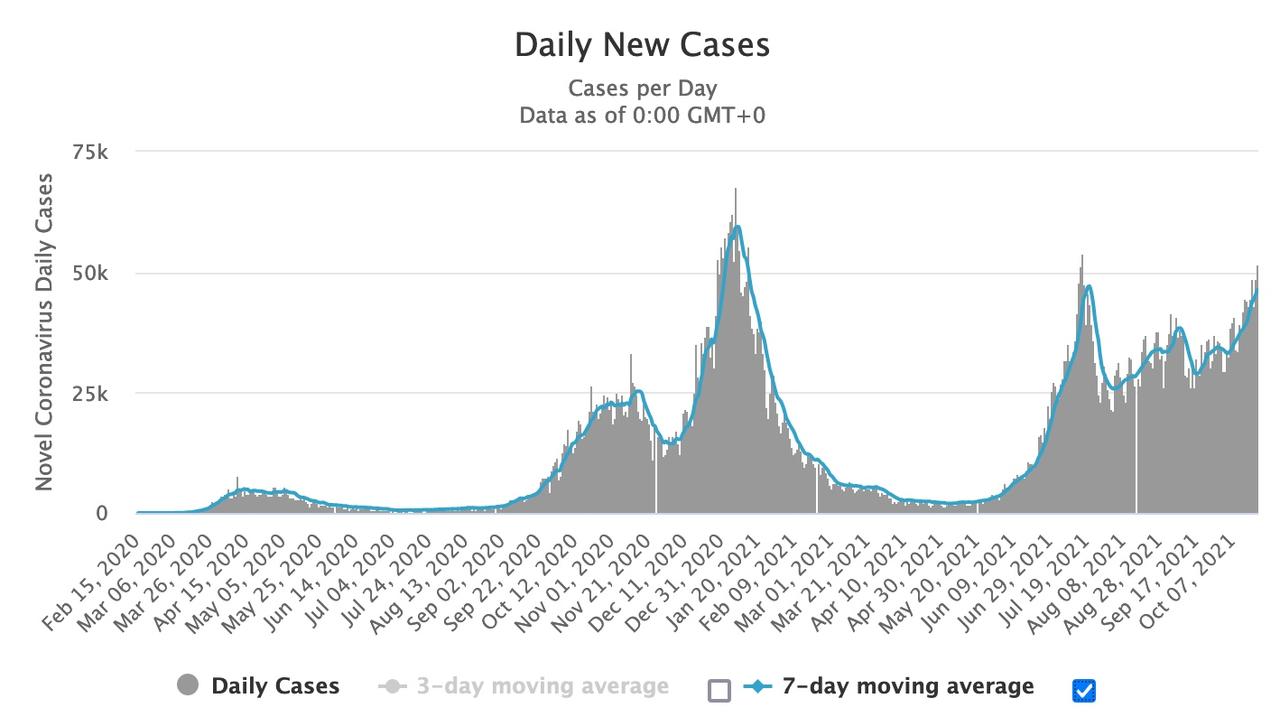
AY.4.2, a subtype of the highly transmissible delta variant which has become informally known as "delta plus", accounted for 6% of all sequenced samples of the virus. Its emergence has coincided with a rebound in COVID cases in the UK.

To be sure, right now, the strain is still rare in the US and accounts for "well below 0.05%" of cases sequenced, the CDC says. So there's no reason to panic.

"At this time, there is no evidence that the sublineage AY.4.2 impacts the effectiveness of our current vaccines or therapeutics," the CDC said. "Vaccination remains the best public health measure to slow the spread of the virus and reduce the likelihood of new variants to emerge."

Around 16,830 AY.4.2 cases have been detected around the world across at least 28 countries, according to data from Outbreak.Info.

Jeffrey Barrett, director of the COVID-19 Genomics Initiative at the Wellcome Sanger Institute in the U.K., told Newsweek on Thursday that it's still unclear whether the subtype is helping drive rising case numbers in the UK.

"We are one of the groups that has observed a [roughy] 10 percent growth advantage compared to other Delta."

"I'd say we can't say for sure yet that that is a true biological advantage, as opposed to a bit of epidemiological 'luck' for this lineage, but the data are now accumulating week-by-week in favor of a small growth advantage."

While the sub-lineage is spreading in the U.K., experts have said AY.4.2 is not necessarily going to outcompete the original Delta variant.

Although AY.4.2 is being monitored in the UK, it hasn't yet been classified as a "variant under investigation" or a "variant of concern" by the WHO.

https://www.zerohedge.com/covid-19/mutated-strain-delta-variant-causing-panic-uk-has-been-found-us