Search This Blog

Sunday, October 24, 2021

Biotech week ahead, Oct. 25

 Biotech stocks posted gains for the second week running, supported by multiple catalysts that included a good start to the big pharma reporting season and broader market strength.

Johnson & Johnson 

 (Get Free Alerts for JNJ) kick-started earnings for the sector with strong quarterly results, buoyed by COVID vaccine revenues. The stock also benefited from the Food and Drug Administration's emergency use authorization for its COVID booster shot. The drug regulator authorized Moderna, Inc.  (Get Free Alerts for MRNA)'s booster dose, as well.

In another positive development, the FDA gave its green light for the use of mix-and-match vaccine regimen, i.e. allowing the use of either Moderna, Pfizer, Inc. 

-BioNTech SE  or J&J booster shots following the administration of another approved vaccine as the primary series.

Sanofi 

 and Regeneron Pharmaceuticals, Inc.  received a regulatory nod for the expanded use of their Dupixent as an add-on treatment for asthma in children.

Ventyx Biosciences, Inc. 

Minerva Surgical, Inc. NASDAQUTRS and Context Therapeutics Inc.  were among the healthcare initial public offerings that were priced during the week.

Here are the key catalysts for the upcoming week:

Conferences

American College of Gastroenterology, or ACG, 2021 Annual Scientific Meeting (hybrid meeting): Oct. 22-27 (in Mandalay Bay, Las Vegas)

American Society of Radiation Oncology, or ASTRO, 2021 Annual Meeting: Oct. 24-27 (in Chicago)

PDUFA Dates

The FDA is set to rule on Eyenovia, Inc. 

's new drug application for MydCombi, a pupil dilation agent for eye examination. The PDUFA date has been fixed for Thursday, Oct. 28.

ANI Pharmaceuticals, Inc. 

 has a tryst with the FDA this week, as the regulator is scheduled to rule on the company's supplemental NDA for purified Cortrophin gel, a purified adrenocorticotropic hormone, for multiple indications including multiple sclerosis, rheumatoid arthritis, and nephrotic syndrome. The decision is expected by the PDUFA date of Friday, Oct. 29.

The FDA is also expected to announce by Saturday, Oct. 30 its verdict on Clearside Biomedical, Inc. NASDAQLSD & Bausch Health Companies Inc. 

's NDA for Xipere (triamcinolone acetonide) as a treatment option for macular edema associated with uveitis.


Clinical Readouts/Presentations

Checkmate Pharmaceuticals, Inc. 

 will present in a live webcast hosted by Jefferies, data on innate immune modulators and vidutolimod (CMP-001). The webcast is scheduled for Tuesday, Oct. 26, between 11am and 12pm.

9 Meters Biopharma, Inc. 

 is scheduled to present at the ACR Meeting, Phase 2 data vurolenatide, its therapeutic candidate in short bowel syndrome. (Tuesday, Oct. 26)

ASTRO Meeting Presentations

Nanobiotix S.A. 

: Updated data from Study 1100, a phase 1 basket study evaluating NBTXR3 activated by radiotherapy in combination with Bristol-Myers Squibb 's Opdivo or Merck & Co., Inc. 's Keytruda in locoregional recurrent or recurrent metastatic head & neck squamous cell carcinoma (Tuesday, Oct. 25, at 5 pm); Phase 1 study of NBTXR3, in combination with Opdivo and Keytruda in advanced cancer patients (Tuesday, Oct. 25, 5 pm), data from the Phase 1 Study of NBTXR3 in locally advanced HNSCC patients (Oct. 26, at 2:15 pm)

Adaptimmune Therapeutics plc 

: results from the Phase 1 radiation sub-study of ADP-A2M4 in solid tumors

Earnings

Tuesday

Eli Lilly and Company 

 (before the market open)

Wednesday

Thermo Fisher Scientific Inc. 

 (before the market open)
Genocea Biosciences, Inc.  (before the market open)
Boston Scientific Corporation  (before the market open)
Alkermes plc  (before the market open)
Bristol-Myers Squibb (before the market open)
BioMarin Pharmaceutical Inc.  (after the close)
Edwards Lifesciences Corporation  (after the close)

Thursday

Merck (before the market open)
Evelo Biosciences, Inc. 

 (before the market open)
Baxter International Inc.  (before the market open)
NovoCure Limited  (before the market open)
Repligen Corporation  (before the market open)
Blueprint Medicines Corporation  (before the market open)
Alnylam Pharmaceuticals, Inc.  (before the market open)
Laboratory Corporation of America Holdings  (before the market open)
Alimera Sciences, Inc.  (before the market open)
Bio-Rad Laboratories, Inc.  (after the close)
PTC Therapeutics, Inc.  (after the close)
Merit Medical Systems, Inc.  (after the close)
LeMaitre Vascular, Inc.  (after the close)
Travere Therapeutics, Inc.  (after the close)
Taro Pharmaceutical Industries Ltd.  (after the close)
ResMed Inc.  (after the close)
CareDx, Inc  (after the close)

Friday

AbbVie Inc. 

 (before the market open)
ImmunoGen, Inc.  (before the market open)
IRadimed Corporation  (before the market open)

IPOs

IPO Pricing

Princeton, New Jersey-based LianBio NASDAQLIAN has filed a preliminary prospectus with the SEC to offer 20.3125 million ADSs (American Depository Shares), representing 20.3125 million ordinary shares at an estimated price range of $15 and $17. The biopharma dedicated to developing medicines for patients with unmet medical needs, with an initial focus on in-licensing assets for Greater China and other Asian markets, expects to list its shares on the Nasdaq under the ticker symbol "LIAN."
Aesthetic medical device company Candela Medical, Inc. is proposing to offer 14.71 million shares in an IPO. The Marlborough, Massachusetts-based company expects to price the offering between $16 and $18. The shares will likely begin trading on the Nasdaq under the ticker symbol "CDLA."
IPO Quiet Period Expiry

Exscientia plc 

https://www.benzinga.com/general/biotech/21/10/23523856/the-week-ahead-in-biotech-oct-24-30-eyenovia-ani-pharma-clearside-medical-fda-decisions-merck-bri

What Do COVID Antibody Levels Really Mean?

 As more people are considering COVID-19 booster shots, some have turned to commercially available antibody tests to help guide their decisions -- but many don't know what to make of the values on their readouts.

Even in the context of reference ranges, there's still one huge problem: there's no definitive titer that guarantees protection just yet.

"The real answer is, we just don't know" that threshold, Nathaniel (Ned) Landau, PhD, a virologist in the department of microbiology at NYU Grossman School of Medicine, told MedPage Today. "It takes time to gather that data, to know what titers people have and what their chance is of getting infected."

Still, researchers are getting closer to that gold standard, and some have offered general context as to what levels may be protective based on the early literature and their own research.

Neutralization Assays: the Gold Standard

An important point to remember is that most commercially available tests -- delivered at the point of care in a clinician's office or performed in a hospital lab -- aren't neutralizing assays, said Clayton Wilburn, MD, of the College of American Pathologists' Clinical Chemistry Committee.

"Antibodies can be detected by those tests, but it doesn't mean they have good activity against the virus," Wilburn, of the University of Vermont Medical Center, told MedPage Today.

The neutralization assay is the gold standard, the researchers said. In these tests, serum from an infected or vaccinated person is diluted to varying levels, then mixed with a set amount of virus. A dilution of 1:100, for instance, means that 50% of virus was still killed when 1 mL of serum was mixed with 99 mL of saline, Landau said.

The more the serum can be diluted and still kill 50% of virus, the better, he explained.

So where do COVID antibodies fall on that scale, at this very early stage in the game?

Based on the literature and on his own research, Landau said natural infection with wild-type virus generally confers a titer of 1:400. With Delta, that gets bumped down to 1:100 -- which is still pretty good, he noted.

Immunity conferred by the mRNA vaccines, on the other hand, typically lands at a titer of 1:1,000 when looking at the original virus, he added.

"It's a lot better," Landau said of vaccinated immunity for the mRNA products. "We don't totally understand why they work so well, but they do."

"One thing," he noted, "is that viruses are really good at messing up the immune system. If you get infected, your antibody production isn't that [streamlined]. But when you get an mRNA vaccine, you don't have all those various parts of the immune response."

He said that titers for the Johnson & Johnson vaccine, at this point, don't appear to be as high as the mRNA products. And protection was certainly diminished for the mRNA products when tested against the Delta variant, he added.

With Delta, mRNA vaccinated immunity falls to a titer of about 1:250.

"We know that [naturally infected] people have been fairly well protected against reinfection ... so that gives you an idea that maybe a titer of 1:100 gives quite good, though not perfect, protection from infection," he said. "So the mRNA vaccines should still give strong protection against variants."

A Different Approach for Commercial Tests

Most of the commercial tests done in doctors' offices and hospitals don't tell us about antibodies' neutralizing capabilities, Landau said.

These typically can tell how much antibody sticks to the spike or nucleocapsid protein, but they don't examine the extra step of killing virus or pseudovirus, he explained.

"Neutralizing antibody tests are more costly and more technically difficult," Landau noted.

"Commercial tests look at overall antibodies that bind to the target, so that can include some with neutralizing capability and some that would not have good neutralizing capability," said Wilburn.

Most of these tests read out positive or negative. While they can provide a numeric value, these values can range from manufacturer to manufacturer. There is no standard across these tests, which are FDA authorized, not approved, experts said. The FDA's most recent update lists a total of 89 such tests.

Still, some researchers have been working closely with those tests for many months now, including Dorry Segev, MD, PhD, of Johns Hopkins Medicine in Baltimore, who has been studying transplant patients -- an immunocompromised population that's been particularly concerned about their levels of protection against COVID.

Segev has published a number of papers on this population, including a study in the Annals of Internal Medicine of 30 transplant patients who received third doses of COVID vaccines, and has correlated neutralization assays with commercial antibody test readouts. He has now studied some 400 transplant patients who've gotten three doses of the vaccine.

He has primarily worked with LabCorp, which reads out positive or negative for spike IgG antibodies (a test is negative if levels are below 0.8 units/mL; you can see a sample report here). The report also provides a numeric value, but only in a generic "units/mL."

Segev said he and his team do see some clear trends in the LabCorp data. They've confirmed that "antibody levels correlate with pseudoviral and live virus neutralization, and the curves are threshold linear."

That means, for LabCorp at least, "until you reach 250 units/mL, you have little evidence of neutralization," he added.

"When you get to 500 or 1,000, it rises in a linear fashion," Segev told MedPage Today. "So 2,000 gives you twice as much neutralizing capability as 1,000 on a LabCorp test."

Segev is confident enough in the data to interpret what it can mean, generally, for protection against COVID.

For levels below 250 units/mL, "you have, at most, a modicum of protection," he noted. Those in the 250 to 500 range who are at low risk of exposure -- working from home, taking precautions -- should get a booster, "but there's no urgency." For those in the 500 to 1,000 range who have some risk of exposure or are more vulnerable to COVID, "then you're in the 'now-is-probably-a-good-time-to-get-boosted' range."

"I suspect if you're over 1,000, and not at high risk, then you're probably good," he said.

He cautioned, however, that there's "not a cutoff at which you are protected or not protected."

"Everyone wants a yes or no. Am I safe or unsafe? Protected or unprotected? That's not how it is," he continued. "You're more protected at 2,500 than at 1,000. It's up to you and your risk of exposure, your risk of severe disease, all of those things together, to know whether you need to be at greater than 1,000 or if 1,000 is fine for you."

True Clinical Utility?

Others are less confident about using commercial antibody testing to guide discussions around boosters.

"When people ask me personally or professionally [about getting a booster], I tell them, if you're in a group that's been told it would benefit from the booster, then get a booster," Wilburn told MedPage Today.

He noted that both FDA and CDC recommended against post-vaccination serology.

The University of Vermont Medical Center doesn't offer commercial antibody testing widely to patients because of its lack of clinical utility, he said. Instead, clinicians there can order those tests if they're investigating suspected long COVID or MIS-C.

"We use it in people who have never had a positive PCR test for COVID, but it's suspected that their symptoms are COVID-related," Wilburn explained. "We're trying to learn if they've had natural infection."

That's another caveat of antibody testing. Commercial tests typically look for either spike or nucleocapsid antibodies. Since vaccines create only the spike protein, vaccinated individuals would turn up negative on a nucleocapsid antibody test, essentially giving them a false result. Being positive for nucleocapsid would only indicate previous natural infection.

Cellular immunity -- B cell and T cell counts -- is another part of the picture when it comes to COVID protection, but antibody tests won't reveal any information about an individual's level of protection on these fronts.

Yet ultimately, antibody titers, proven via neutralization assays, will still be the gold standard, just as they are for other infectious diseases.

We're still some time away from having that definitive information, Wilburn warned.

Companies that will want to say that their assays can correlate antibody measurements to neutralization assays will have to get their data together and file with the FDA to be authorized or approved to make those claims, he noted.

Titers for common diseases like measles, mumps, rubella, and whooping cough have "all been studied for multiple years," he said. "Those assays are set back to those gold standards. [With COVID], we're not at that stage yet."

https://www.medpagetoday.com/special-reports/exclusives/95156

Vertex: Positive Day 90 Data for 1st Patient in Phase 1/2 Trial of Stem Cell Therapy for Type 1 Diabetes

 First patient dosed with VX-880 demonstrated restoration of insulin production and achieved C-peptide of 560 pmol/L in response to Mixed Meal Tolerance Test (MMTT) at Day 90 Visit -

91% decrease in daily insulin requirement and simultaneous robust improvements in glucose control as measured by HbA1c -

Treatment was generally well tolerated -

https://news.vrtx.com/press-release/vertex-announces-positive-day-90-data-first-patient-phase-12-clinical-trial-dosed-vx

Arkansas governor Mandates increasing vaccine hesitancy

 Arkansas Gov. Asa Hutchinson (R) said on Sunday mandates are increasing hesitancy surrounding COVID-19 vaccines.  

"The resistance is hard in some areas and part of it is because of the controversy, because of the mandates. It deepens the resistance and so that's something that we have to overcome," Hutchinson said on CNN's "State of the Union." 

Host Jake Tapper noted that Hutchinson is supportive of employers in his state who want to impose their own mandates and recognizes that such mandates are effective in increasing vaccine rates. Tapper noted, however, that the governor still won't impose such a mandate on state employees who work for him.

"Well, it probably would increase vaccination rates, but it also would increase the resistance of some," the governor said of the possibility of such a mandate. 

"It would in the broader population create that controversy and resistance," he added.

"Government doesn't need to tell them to do that," Hutchinson said, noting that private businesses should be able to impose mandates. "People will make the right decision over time when they get the right information."

The governor, who is vaccinated, added on CNN that he sees vaccines as "our way out" of the pandemic. 

"What works in Arkansas is not the mandate side of it, but it's the education side and having the prerogative to make their own decision without the government telling them what to do," the governor said.

Hutchinson added that there may be a time when the COVID-19 vaccine is mandated in Arkansas schools, "but that time is not now."

Arkansas is in the bottom 10 states in the country for vaccination rates, as 48 percent of its population is fully vaccinated, according to The New York Times.

https://thehill.com/homenews/sunday-talk-shows/578195-arkansas-governor-says-mandates-are-increasing-vaccine-hesitancy?rnd=1635088610

China Warns Covid Outbreak To Worsen In Coming Days

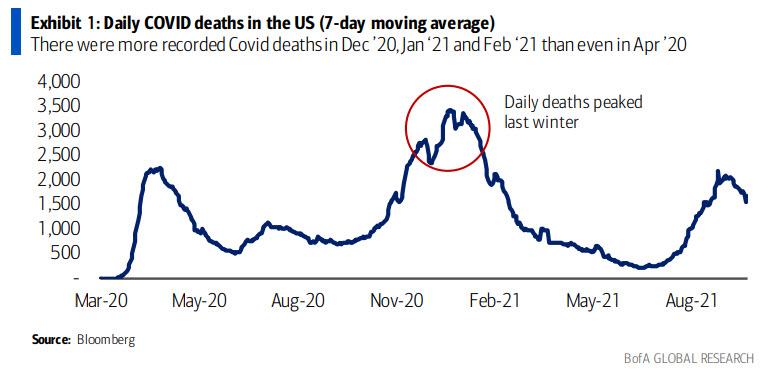
 Any hopes that covid is finally on its way out and won't be used by the establishment to ram through trillions more in stimulus, are about to die a slow, painful death. To be sure, there has been much to the optimistic about: covid cases in the US have plunged in the past month, with hospitalization numbers sliding and daily covid deaths now sharply lower.

This hopeful backdrop prompted Bank of America last week to write that "with the much more transmissible Delta variant now dominant, are we in for another difficult winter? Probably not." It also led JPMorgan's Marko Kolanovic to declare on Oct 6 the de facto end of the pandemic:

Our core view remains that the COVID situation will continue improving driving a cyclical recovery. This will be the case for at least the next  3-4 months given COVID wave dynamics, but most likely also beyond that. We believe that this was the last significant wave, and an effective end to the pandemic.

Alas, not so fast.

Last Friday, Bloomberg issued the first "new wave" covid alert, targeting the UK, and writing that "after 19 months spent attempting to ward off Covid-19 while safeguarding jobs and businesses, the U.K. is heading into winter with a growing problem: The coronavirus is spreading rapidly, just as the economy starts going in the opposite direction."

According to the report, "U.K. cases are accelerating faster than in other western European nations, while deaths have jumped to their highest since March." And while UK government ministers are having to deny they are planning for a new lockdown, "at the same time, economic growth is slowing, inflation is running high, the Bank of England is expected to hike rates soon and households are facing a cost-of-living crisis."

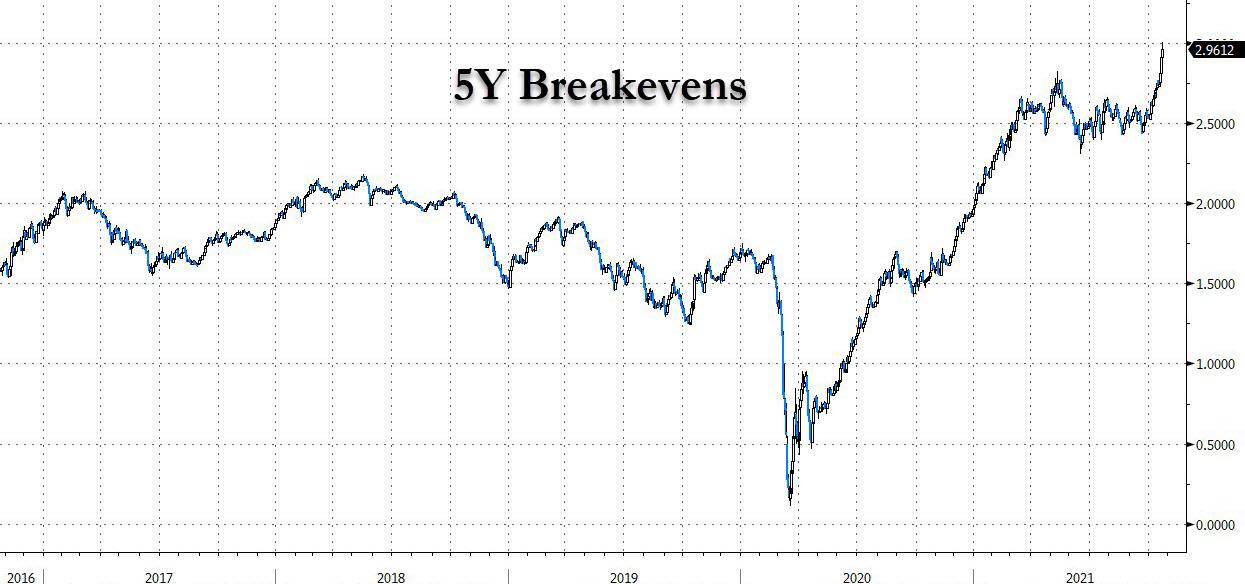
In short, a new wave of covid - whether real or imagined - is about to be unleashed on the UK at the worst possible time, just as the BOE may be about to hike rates in a matter of weeks to offset the UK's soaring inflation with 5Y breakevens hitting the highest level this century.

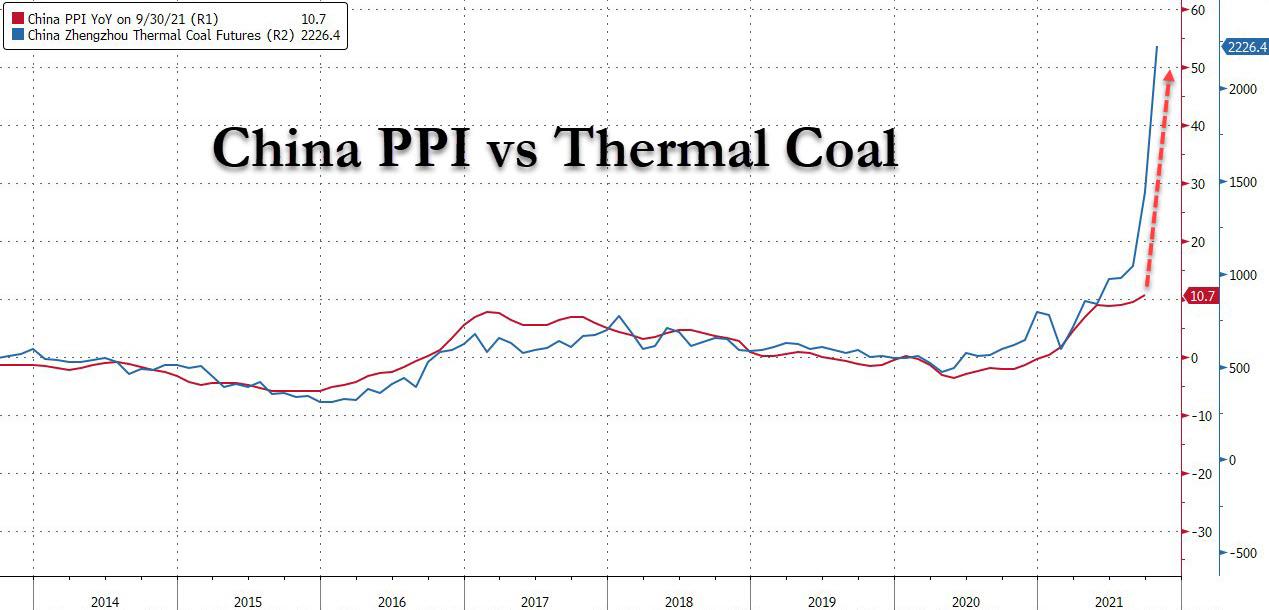
But it's not just the UK: with China's economy rapidly contracting even as its energy crisis has sent commodity prices soaring and threatens to unleash record PPI prints in coming months...

... the world's second largest economy is about to face a far greater threat. According to Bloomberg, a Chinese health official said that the country's new Covid-19 infections will increase in coming days and the areas affected by the epidemic may continue to expand.

Of course, this being China not one statement about anything can be made without lies, and this one was not exception: speaking at a briefing in Beijing on Sunday, Wu Liangyou, an official at the National Health Commission, said that the current outbreak in China is caused by the delta variant from overseas. Right, it's all the foreigners fault. 

Origins aside, the wave of infections spread to 11 provinces in the week from Oct. 17, Mi Feng, spokesman for the commission, said at the briefing. Most of the people infected have cross-region travel histories, Mi said. He urged areas that have been affected by the pandemic to adopt “emergency mode.”

In preparation for the new wave, already some cities in the provinces of Gansu, including its capital Lanzhou, and Inner Mongolia have halted bus and taxi services because of the virus, according to Zhou Min, an official at the transport ministry.

China reported 26 new local confirmed Covid-19 infections on Saturday, including seven in Inner Mongolia, six in Gansu, six in Ningxia, four in Beijing, one in Hebei, one in Hunan and one in Shaanxi, according to the National Health Commission. Another four local asymptomatic cases were reported in Hunan and Yunnan.

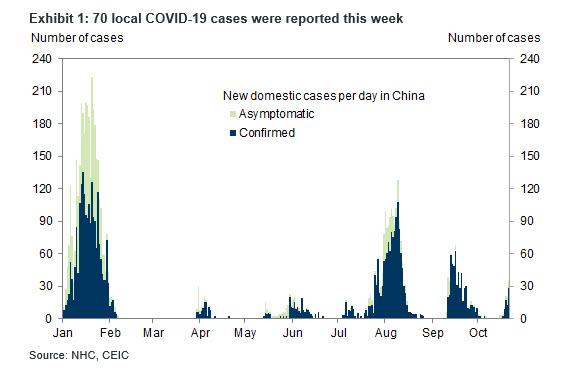
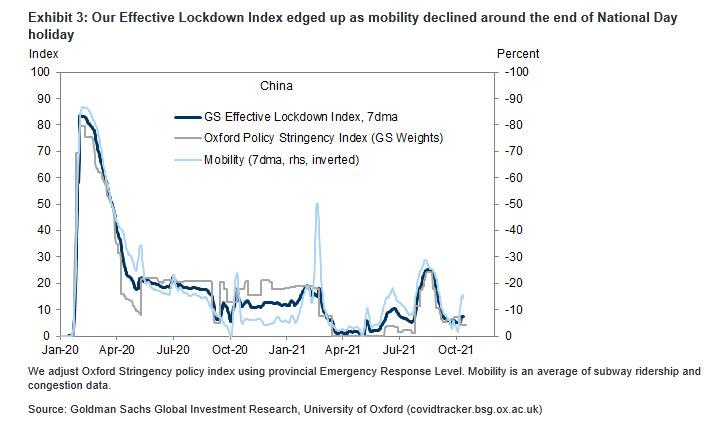
And while the latest wave is still modest, with Goldman counting just 70 local Covid cases reported in the Oct 22 week, for Beijing to take the surprising step of making a public announcement that it's about to get worse, suggests just that: that the "data" is about to show a major spike in local cases.

It also means that China's effective lockdown index is about to take a sharp turn higher.

Meanwhile, the epidemic is also spreading in the capital Beijing, where it has expanded to three districts including Haidian, a scientific hub, Pang Xinghuo, vice head of the Beijing Center for Disease Prevention and Control, said at a briefing Sunday; he added that five new confirmed local Covid cases and an asymptomatic one were reported between Saturday midday to Sunday 3 p.m.

As part of the coming round of lockdowns, Beijing will cancel a marathon originally scheduled for Oct. 31 due to the virus, the Beijing Daily reported. People in cities where infections have been found are banned from visiting or returning to the capital at present, the newspaper said.

Bottom line: while power blackouts lead to a sharp swoon in Chinese output in the early part of the month, it now appears that covid will be blamed for the next round of factory lockdowns, and the result will be even more snarled supply chains only this time the Biden administration will not blame "too much demand" but not enough Chinese supply. The end result, however, will be the same: even fewer goods and even higher prices for virtually everything this holiday season.

https://www.zerohedge.com/markets/emergency-mode-china-warns-covid-outbreak-worsen-coming-days

Saturday, October 23, 2021

Bristol Myers Squibb, after passing on Acceleron, now eyes Aurinia takeout

 It wasn't long ago that Bristol Myers Squibb ran the numbers on potentially buying Acceleron Pharma, but that deal didn't come together, and the biotech eventually sold to Merck for $11.5 billion. Now, BMS has its eyes on another target, Bloomberg reports.

BMS has approached Aurinia Pharma, which makes oral lupus nephritis treatment Lupkynis, about a potential buyout, according to the news service. As of Friday afternoon, Aurinia's market value was about $2.8 billion. BMS could ultimately decide against a potential deal, Bloomberg pointed out.

A BMS representative told Bloomberg the company wouldn't comment on the rumor. A spokesperson for Aurinia declined to comment, according to Bloomberg.

Aside from Lupkynis, Aurinia has two early-stage candidates to treat autoimmune diseases.

The news comes after BMS reportedly engaged in buyout negotiations with Acceleron Pharma. After Merck made an offer to buy Acceleron, the biotech approached "Party A" to gauge its interest, a Securities and Exchange Commission filing recently showed. "Party A" was BMS, Bloomberg reported last week. 

After running the numbers, BMS decided that Acceleron's pulmonary arterial hypertension candidate sotatercept "failed to support an acquisition proposal" at the company's market value, the filing said.

BMS is Acceleron's partner on the FDA-approved anemia drug Reblozyl, and it holds a stake in the company through its prior Celgene buyout. The drugmaker is planning to tender its shares to Merck, Bloomberg reported.

https://www.fiercepharma.com/pharma/bristol-myers-squibb-after-passing-acceleron-now-eyes-aurinia-takeout-bloomberg