Search This Blog

Wednesday, November 17, 2021

HHS reinstates FDA authority over lab-developed tests, COVID diagnostics

 More than a year later, the Department of Health and Human Services (HHS) has rolled back a Trump-era policy that had limited the FDA’s oversight of lab-developed tests, or LDTs, which include a wide range of in vitro diagnostics which, although limited in scope, have grown in use over the past two decades.

LDTs are generally deemed low-risk products that are designed, produced and used within a single laboratory. But they can vary from simple, single-measurement blood tests to complex screeners for genetic mutations. They are employed in settings that scale from small hospitals up to the largest academic medical centers and health systems in the country as well as by certain companies that offer direct testing services.

They have not required the FDA’s clearance, approval or authorization compared to kits that are manufactured and distributed widely for use in independent labs. Yet, they have been steered by draft guidance documents and regulations over their components and the agency’s broader enforcement discretion.

But in August 2020, the Trump administration revoked what authority the FDA had established over LDTs, including requirements that certain COVID-19 tests go through the agency’s emergency review process. 

At that time, HHS published a brief announcement saying that if the FDA wanted to challenge the policy, the regulatory agency would need to pursue a full, formal regulatory rule to reinstate any premarket review of LDTs. The Biden administration has now reversed that move.

“Effective today, HHS no longer has a policy on LDTs that is separate from FDA’s longstanding approach in this area,” HHS Secretary Xavier Becerra said Monday in an equally brief statement, adding that the previous approach had “limited FDA’s ability to address certain problematic COVID-19 tests.”

Meanwhile, members of the industry haven’t appreciated being caught in a regulatory tennis match: In a statement from the national trade group, American Clinical Laboratory Association (ACLA) President Julie Khani said, “Continually shifting regulatory policies creates uncertainty and undermines patient access to lifesaving diagnostics.

“This underscores the clear need for comprehensive diagnostic reform legislation that can provide long-term clarity and continuity for clinical labs and their work to support medical breakthroughs moving forward,” Khani added. The ACLA has previously lobbied HHS and the FDA to limit the agency’s authority to regulate LDTs as medical devices.

This week, the FDA also updated its policies for COVID-19 tests including coronavirus LDTs as well as rapid diagnostics for use in home and healthcare settings.

The agency said it plans to focus its review efforts on emergency authorization requests for mass-produced at-home and point-of-care tests, including for use with or without a prescription, in addition to certain lab-based, high-throughput diagnostics that can screen samples for multiple diseases at once.

“In addition to vaccination efforts, testing remains a cornerstone of the national response to the pandemic and plays a central role in helping Americans get back to work, school and other important activities, particularly as the holiday season approaches,” the FDA’s device center director, Jeff Shuren, M.D., said in a statement

“By focusing our review on these types of tests and helping to ensure that available tests have appropriate oversight, we can better respond to the pandemic as the nation’s testing needs to continue to evolve,” Shuren said.

The FDA also said it would prioritize certain antibody tests that can help quantitatively measure a person’s immunity to the coronavirus as well as diagnostics that are supported by the National Institutes of Health’s Rapid Acceleration of Diagnostics initiative or the Biomedical Advanced Research and Development Authority, better known as BARDA.

To date, the agency has granted emergency authorizations to over 420 tests and mail-in sample collection kits since the beginning of the pandemic. The FDA estimates its recent green lights for over-the-counter diagnostics could result in up to 400 million more tests per month on store shelves by early 2022.

https://www.fiercebiotech.com/medtech/hhs-reinstates-fda-authority-over-lab-developed-tests-covid-diagnostics

Michigan is now worst COVID-19 hot spot in nation

 Michigan catapulted Tuesday to the worst COVID-19 hot spot in the nation, as the seven-day case rate rose to 503.8 per 100,000 residents, according to the U.S. Centers for Disease Control and Prevention. 

Hospitals statewide say they're feeling the pressure as the number of COVID-19 patients has climbed nearly 50% in the last month — from 2,097 patients admitted with confirmed cases of the virus on Oct. 18 to 3,082 on Monday, according to state data

"The current growth in COVID-19 hospitalizations is very concerning," said John Karasinski, a spokesman for the Michigan Health and Hospital Association, which represents all 133 community hospitals in the state. 

"They're seeing a stark increase in hospitalizations in just the past few days. ... We have both this stark surge of COVID-19 patients, but we also have hospitals that have been dealing with staffing challenges and staffing shortages, as well as high volumes of non-COVID patients. And we've been seeing that pent-up demand of non-COVID admissions since this past summer."

That means potentially long waits at emergency rooms, hospitals that have to postpone nonemergency medical procedures and some that can't accept new patient transfers, he said. 

"All of our hospitals are available for all emergencies," Karasinski said, "but we do want to set the expectations for those in the general public that there are high wait times and if they have an issue that may not be an emergency to contact their primary care physician or to go to an urgent care clinic to try to ... balance loads that our hospitals are seeing right now."

Henry Ford Health System had admitted 330 people Tuesday to its five hospitals with confirmed cases of COVID-19. That's an almost 60% increase in the COVID-19 patient census in just the last three weeks, said Dr. Adnan Munkarah, Henry Ford's executive vice president and chief clinical officer.  

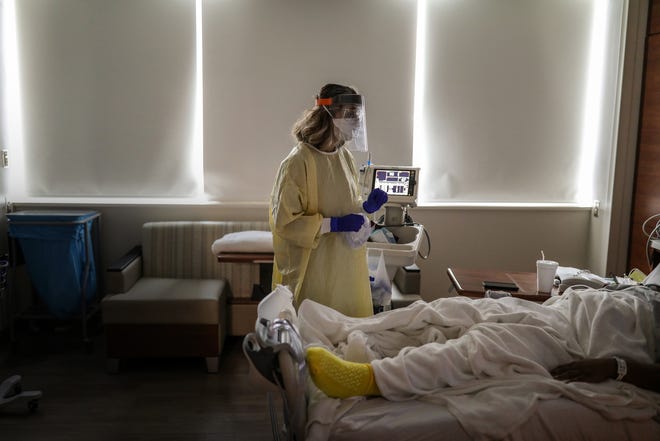
Respiratory therapist Eralda Bendaj, 31, of Wixom, talks with a COVID-19 patient as she performs a home oxygen study to check his blood oxygen levels to see whether he will need oxygen once he is discharged from Beaumont Hospital in Farmington Hills, Mich. on Dec. 17, 2020.

"We were hoping that we would be in a better situation this Thanksgiving than we were last year, especially with the availability of the vaccines," Munkarah said.

"We've been watching with ... trepidation and worry, the number of COVID cases climb and rise throughout our community and around the state. ... The vast majority of the patients continue to be unvaccinated patients. So when we look at general admissions for COVID, 70 to 75% of those patients have been unvaccinated."

Bob Riney, Henry Ford's COO and president of health care operations, said the latest COVID-19 surge has forced the Detroit-based hospital system to postpone some medical procedures.

"There have been a couple of days where we have had to curtail some procedures in a couple of our hospitals because the overall volume, and particularly the growth of COVID, put us at capacity," Riney said. 

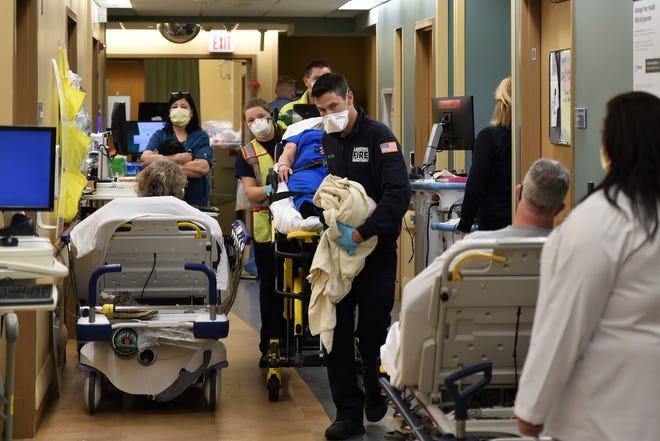
A Lansing ambulance crew weaves a gurney past occupied beds in the hallway in Sparrow’s emergency center.

"We evaluate that on a day-to-day basis and are doing everything we can to make sure that becomes an exception, not by any means the norm."

On the west side of the state, Spectrum Health reported Tuesday that it is seeing the highest rate of positive coronavirus tests of any point in the pandemic. 

Of the 1,000 coronavirus tests processed by the Grand Rapids-based health system on Monday, 22.6% were positive, said Dr. Darryl Elmouchi, president of Spectrum Health West Michigan. 

"Over the weekend, we had 25% positivity and our rolling average seven-day positivity, which is 22.6% within our laboratory, is the highest we've ever seen."

COVID-19 admissions across Spectrum's 14 hospitals climbed to 367 Tuesday, he said, adding that this surge "throws hospitals across our state well over what is a manageable capacity.

"The biggest risk that I think we all run going forward is that more and more patients doesn't mean that there we have access to more and more staff across the state," Elmouchi said.

Dr. Nick Gilpin, Beaumont Health’s director of infection prevention and epidemiology, said Thursday that COVID-19 admissions to the Southfield-based health system's eight hospitals were approaching 400. 

"We're seeing community numbers increase. And I think with more cold weather on the way, with people starting to make plans for the holidays to get together, I think it's an important time just to let everyone know that we've got to stay vigilant," Gilpin said. 

Lynn Sutfin, a spokesperson for the state health department, told the Free Press on Tuesday that the state's COVID-19 trends are being monitored closely. 

"We are continually reassessing our statewide response to the pandemic," she said. "We urge all Michiganders to employ the mitigation strategies that have been proven to work including vaccination, wearing masks, social distancing, washing their hands and getting tested for COVID-19 and staying home if they are feeling ill."

People who've yet to take COVID-19 vaccines, Sutfin said, are fueling coronavirus hospitalizations and deaths.

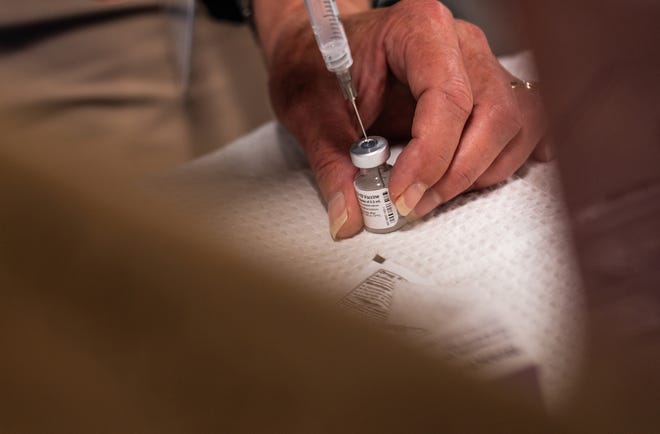
Benzie-Leelanau District Health Department registered nurse Dawn Hynds draws a dose of the Pfizer COVID-19 vaccine during a community vaccination event at Northport Public School in Northport on Sept. 16, 2021.

Statewide, 73% of cases, 69% of hospitalizations and 74% of deaths from the virus have been among people who were unvaccinated or not yet fully vaccinated, she said, from Sept. 27-Oct. 26. 

When people hear about vaccine breakthough cases, Riney said, "it would be easy to draw a false conclusion that ... the vaccines aren't working."  

The average age of fully vaccinated patients at Henry Ford is 10 years older than those who are unvaccinated and hospitalized, Riney said. 

"The majority have some other underlying complex clinical conditions that make them compromised," Riney said. "So the facts really still support that the unvaccinated population is being hit dramatically different than the vaccinated population as it relates to the activity that we're seeing today."

With just 54.1% of the state's population fully vaccinated against COVID-19, Riney said Michigan is vulnerable. 

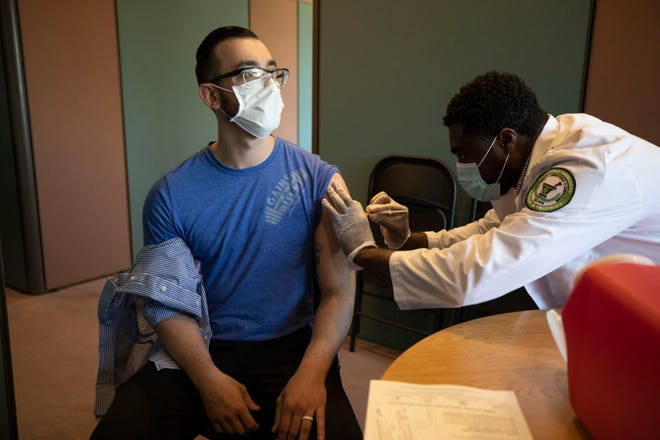
Ford employee Chris Yates receives a COVID-19 vaccination shot at Flat Rock Assembly Plant in Flat Rock on April 19, 2021.

"It's that population that is filling our state's hospitals. And then that allows ... for the virus to live, mutate and persist," he said.

Anyone who is eligible for coronavirus booster shots, hospital leaders say, should get them now. There's a chance eligibility could expand for booster doses in the near future.

The New York Times reported Tuesday that the U.S. Food and Drug Administration and the CDC could authorize boosters for all adults by the end of the week, addressing concerns about waning immunity.

While boosters for all U.S. adults might help cut down on breakthrough infections, it won't come soon enough to help Michigan hospitals in crisis now. 

As of Monday, 10 Michigan hospitals reported they were at 100% capacity:

  • Detroit Receiving Hospital & University Health Center
  • Hurley Medical Center
  • McLaren Flint
  • MidMichigan Medical Center - Gratiot 
  • Munising Memorial Hospital
  • ProMedica Coldwater Regional Hospital
  • Sparrow Eaton
  • Spectrum Health Kelsey Hospital
  • St. Joseph Mercy Chelsea
  • St. Joseph Mercy Livingston Hospital

Twenty more reported they were at 90% or higher capacity:

  • Ascension Providence Hospital Novi
  • Ascension St. Mary's Hospital
  • Beaumont Hospital - Troy
  • Beaumont Hospital - Wayne
  • Beaumont Hospital - Trenton
  • Covenant Healthcare
  • Henry Ford Macomb Hospital
  • McLaren - Macomb 
  • McLaren Greater Lansing
  • McLaren Northern Michigan - Petoskey
  • McLaren Port Huron Hospital
  • Metro Health Hospital  
  • ProMedica CV Hickman Hospital
  • Sparrow Hospital - Lansing
  • Spectrum Health - Big Rapids Hospital
  • Spectrum Health - Blodgett Hospital
  • Spectrum Health - Butterworth Hospital
  • Spectrum Health - Pennock Hospital
  • St. Joseph Mercy Hospital
  • University of Michigan Hospitals & Health Center

  • Since the pandemic began, there have been 1,209,712 confirmed cases of the virus and 22,862 COVID-19 deaths in Michigan, according to the state health department. 

https://www.freep.com/story/news/health/2021/11/16/michigan-now-worst-covid-19-hotspot-nation-hospitals-capacity/8639194002/

Microstent for Cataract Surgery Reduced Need for Glaucoma Meds

 Patients with glaucoma who were treated with a microstent during cataract surgery retained benefits over traditional surgery at 5 years, a randomized study found.

Eyes that were treated with the Hydrus microstent, which is designed to lower eye pressure, were less likely than untreated eyes to need subsequent invasive glaucoma surgery (6.4% vs 2.5%; P=0.022) and more likely to be medication-free (66% vs 46%; P<0.001), reported Iqbal "Ike" Ahmed, MD, of the University of Toronto, during the American Academy of Ophthalmology annual meeting.

In addition, rate of visual field loss was 47% lower with the microstent (P=0.014), he noted.

"These data suggest the Hydrus is affecting the course of the disease," Ahmed told MedPage Today prior to his presentation here. "Results like these have not been seen before in this class of glaucoma interventions. We have seen short-term benefits, but now we are increasing our understanding of long-term benefits because we have 5-year clinical trial follow-up data."

According to Ahmed, microstents are roughly the size of an eyelash and are placed in the eye during open-angle glaucoma surgery. The microstent promotes fluid flow through Schlemm's canal, which helps dispose of aqueous humor by transporting it to blood vessels.

Estimates have suggested that as many as 20% of cataract surgery patients also have glaucoma, Ahmed noted. Use of microstents has become more popular in recent years, especially in the U.S.

"The Hydrus and similar glaucoma stents, notably iStent and iStent Inject, have become preferred surgical options for treating mild to moderate primary open-angle glaucoma in patients with visually significant cataracts," David Rooney, MD, an ophthalmologist in Metairie, Louisiana, told MedPage Today.

"A 2020 Cochrane systematic review identified moderate-certainty evidence that in patients with mild to moderate open-angle glaucoma, Hydrus plus cataract surgery lowers intraocular pressure better than standalone cataract surgery. The Cochrane review also found moderate evidence that Hydrus was more effective than iStent in the short-term lowering of intraocular pressure," Rooney added.

The current analysis is a 5-year follow-up to the HORIZON study, for which 3-year results were published last year. Patients with primary open-angle glaucoma were randomized 2:1 to receive cataract surgery with the Hydrus microstent or surgery alone. At 5 years, 80% of patients (443 of 556) remained in the study.

At the 5-year follow-up, 1.4% of microstent patients experienced device malposition. Obstructive focal peripheral anterior synechiae (PAS) occurred in 5.4% of microstent patients versus none in the surgery-alone group, and non-obstructive focal PAS was more common in the microstent patients (8.7% vs 3.7%). No microstents were removed.

"These procedures are very safe," Ahmed said. "The randomized trials show small incremental risks for microstents beyond cataract surgery alone."

"I would caution other glaucoma surgeons to avoid implanting the device in patients with a history of uveitis. I prefer to block all of my patients before implanting the Hydrus to avoid unwanted movement during the surgery. The most common postoperative complication is focal synechiae obstructing the device's inlet, which often can be treated with a YAG laser," noted Rooney.

As for cost, "microstents are covered by Medicare and most insurance plans," Ahmed said. "The costs range from $1,400 to $1,900, depending on many factors and the area of the country. The procedural cost is offset over time by the reduction in medications, office visits, and future, more invasive, surgeries, as well as other costs to the healthcare system incurred when a patient starts to lose vision."

At my practice, "the Hydrus has become my 'go-to' surgical option for patients with mild to moderate primary open-angle glaucoma and visually significant cataracts," Rooney noted. "In practice, I take my patients off of their antihypertensive drops immediately after Hydrus implantation and monitor whether they still need medication management of their glaucoma, which they usually do not."


Disclosures

Ivantis, maker of the Hydrus microstent, funded the study.

Ahmed disclosed consulting work for Ivantis and various other ties to industry.

Rooney reported no disclosures.

CDC Hasn't Updated COVID Vax Breakthrough Data

 As Americans weigh the risks of holiday gatherings, many are looking for data on COVID-19 breakthrough cases, hospitalizations, and deaths among the vaccinated -- but nationally, that information is not reported in real-time.

In mid-October, the CDC started publishing cases and deaths by vaccination status on its COVID Data Tracker for the first time. But the information was only current as of September 4 -- and the page hasn't been updated since.

In addition, the CDC's page on breakthrough hospitalizations by vaccination status is only current through the end of August.

"It's definitely a problem that here in the U.S., we have not had real-time, reliable data on breakthrough infections," said Leana Wen, MD, a professor of health policy and management at George Washington University. "Why should we be waiting until we see Americans end up in the hospital with breakthrough infections before we take action and recommend boosters more broadly?"

In an emailed statement to MedPage Today, the CDC said it would update its breakthrough case and death data in mid-November, to reflect data through October 2.

Why early October? In its statement, CDC said that's because the data are "reported based on when the patient was tested, not the date they died. Deaths usually occur up to 30 days after diagnosis. This is why CDC allows at least 4 weeks of lag time to link case surveillance data to Immunization Information System (IIS) and vital records data up to a month after the diagnosis."

Yet some states report their data on breakthrough cases, hospitalizations, and deaths in real-time, or at least on a more regular basis.

When asked to clarify their reasoning, CDC did not respond.

David Dowdy, MD, an epidemiologist and associate professor at the Johns Hopkins Bloomberg School of Public Health in Baltimore, said CDC likely reasoned that a breakthrough death today reflects a vaccination status and infection from a month ago, as an infection wouldn't lead to immediate death.

But, Dowdy said, "It should still be possible to present cases and hospitalizations by vaccination status, not instantaneously, but without a four-week lag."

Katelyn Jetelina, PhD, MPH, an epidemiologist at UTHealth School of Public Health in Dallas, said that for researchers, following the numbers in real time is crucial, as is having a way to communicate trends to the public.

"Without a national, coordinated surveillance system that's publicly available, both of those are very difficult to do, and we're basically flying blind right now," Jetelina told MedPage Today.

Guided By the States

Given the lack of national numbers, state-level data provide some insights into breakthrough cases, hospitalizations, and deaths.

A July report from the Kaiser Family Foundation found that 15 states were keeping regular tabs on breakthroughs, and more are doing so now.

In states that have seen recent COVID-19 surges, breakthrough numbers can be substantial. In some cases, breakthrough hospitalizations in particular make up a significant proportion of overall hospitalizations.

Colorado, which is facing a surge of infections, updates its breakthrough hospitalization data daily. As of November 9, current hospitalizations tallied 299 in vaccinated people and 1,127 in unvaccinated or not fully vaccinated people -- thus, about 21% of COVID hospitalizations occurred among the vaccinated in that state.

In New Mexico, which is facing a surge in infections, 14.8% of hospitalizations and 19.6% of cases over a 9-month time period (February 1 to November 8) occurred in fully vaccinated people (and thus, proportions could be higher if focused solely on a more recent time period).

And during North Dakota's peak October surge (the week of October 10), 57 fully vaccinated and 156 unvaccinated people were hospitalized that week, with the vaccinated accounting for about 27% of COVID hospitalizations -- albeit the numbers are small.

During that week, 1,141 new cases in the state occurred in fully vaccinated people, compared with 3,172 in the unvaccinated, translating to 26% of new cases being breakthrough cases.

More to Learn About Breakthroughs

Older age and immunocompromised status increase the risk of a breakthrough infection, as evidenced by the CDC criteria for booster eligibility. Yet neither the CDC nor the states whose breakthrough data MedPage Today reviewed provided information about gender, race, and other demographics for breakthrough cases.

However, Alessandro Sette, DrBiolSci, of the La Jolla Institute for Immunology in California, said breakthrough data shouldn't necessarily influence people's decision to get a booster.

Instead, they should get a booster when they become eligible, regardless of the rate of breakthroughs.

"Even if breakthrough infections did not exist, I feel the recommendation would be to get a booster when you need it," Sette told MedPage Today.

Dowdy said it's also important to remember that vaccines still do an excellent job of preventing serious illness and death. He compared getting COVID-19 after vaccination to getting the flu, with some exceptions.

"We have been willing to have holiday celebrations in the midst of flu season from the very beginning of time, for our country at least," he said. "But at the same time, we are dealing with a new disease that we don't have all the long-term data [for], and we don't know if we're going to be seeing a new wave."

Jetelina added that public tracking of breakthrough infections among those with a booster, too, would be useful.

Updated data, she said, would show the value of the vaccines to the still-hesitant, help science communication, and support regulatory decisions on booster shots for a wider swath of the population.

https://www.medpagetoday.com/special-reports/exclusives/95591

Hemophilia Gene Therapy Looks Like a Winner

 An investigational gene therapy for hemophilia A showed good results in 16 of 18 patients treated in a phase I/II study and followed for up to 4 years, researchers said.

Levels of factor VIII (the clotting factor missing in hemophilia A) were boosted rapidly after administration of the vector-delivered agent, called SPK-8011, and remained elevated in these responders, according to Lindsey A. George, MD, of the University of Pennsylvania in Philadelphia, and colleagues.

Clinical outcomes were also excellent, the group reported in the New England Journal of Medicine. Annualized rates of bleeding events fell by an average of 91.5% from pretreatment baseline (95% CI 88.8%-94.1%) in the 16 responders. Clinicians determined that all 16 no longer needed prophylactic factor VIII infusions, and these were discontinued.

However, the other two patients fell victim to immune responses to the adeno-associated virus (AAV) capsid that served as the vector. These patients showed increases in factor VIII levels initially that dropped off within a few months. George and colleagues were prepared for this possibility and administered glucocorticoids to some participants, either to prevent this immune attack or to shut it down. In these two patients, however, the steroids showed no effect.

Significantly, perhaps, both of these patients also experienced the worst short-term reactions to the treatment. One suffered vomiting, muscle and back pain, and fever shortly after receiving the infusion, which took 3 days to resolve; the other experienced an alanine aminotransferase (ALT) elevation above three times the upper limit of normal and was hospitalized (at the patient's request) for intravenous steroid treatment. This latter reaction was the only one the investigators rated as serious.

Six other patients had transient and mostly milder ALT elevations. George and colleagues attributed these events as signs of cellular immune responses to the AAV capsid protein, which resolved with steroid treatment. Yet the steroids, too, caused problems in four participants, with symptoms including weight gain, edema, irritability, and adrenal insufficiency. Some patients with anti-therapy immune responses received other immunosuppressants such as azathioprine, which the researchers suggested might be the better way to go in the future.

Overall, the researchers determined that SPK-8011 posed "no major safety concerns." The investigators were reserved, though, in their conclusions regarding efficacy, calling the findings "support" for the treatment as "a viable approach for long-term stable phenotypic amelioration of hemophilia A."

Data came from two ongoing studies: one, with recruitment still underway, with an eventual target enrollment of 30 patients; and another with recruitment by invitation, for which the treatment's developer, Spark Therapeutics, hopes to include 100 patients. Spark expects to complete both studies by December 2022, according to the Clinicaltrials.gov listings.

The 18 patients in the study were adult men, ranging in age from 18 to 52, with factor VIII activity below 2% of normal (it was less than 1% in 17 patients). More than a dozen different hemophilia A genotypes were represented. Thirteen were receiving factor VIII infusions on a regular schedule, while the other five took them as deemed necessary.

Four doses were tested in the trial, from 5×10¹¹ to 2×10¹² vector genomes per kg of body weight. The vector was an engineered AAV3 capsid plus a liver-specific enhancer and promoter intended to concentrate the factor VIII genetic payload's expression in hepatocytes.

After dosing, all participants showed substantial factor VIII expression, at least initially. Follow-up ranged from 5.5 to 50.3 months, for a mean of 36.6 months. Mean factor VIII activity at 1 year was 11.0% of normal (range 3.2%-24.8%) among the 15 participants evaluated at that time, using a one-stage assay. With a chromogenic assay, factor VIII activity averaged 6.9% (range 3.0%-14.3%). Higher peak levels were seen with the higher doses, but no dose-response was seen after 1 year.

Twelve patients had follow-up of more than 2 years, and substantial factor VIII in these individuals was maintained, George and colleagues reported. Bleeding events were drastically reduced from baseline: prior to enrollment, annualized rates were 8.5/year, which fell to 0.3/year after dosing. Most had no bleeding events from year 1 onward. Rates of factor VIII infusion showed similar large decreases.


Disclosures

The study was funded by Spark Therapeutics and the National Heart, Lung, and Blood Institute.

Eleven of the report's 19 authors were Spark employees.

Novavax Shares Higher After EMA Begins Evaluating Application for Covid-19 Vaccine

 Novavax Inc. shares were up 6.5% to $181.54 after the company updated on the regulatory progress of its Covid-19 vaccine in Europe.

The biotechnology company said the European Medicines Agency has begun its evaluation of an application for conditional marketing authorization for its Covid-19 vaccine, which would be marketed in the European Union under the brand name Nuvaxovid.

The company said earlier this month it had completed the submission of all data and modules required by EMA for regulatory evaluation of NVX-CoV2373, Novavax's Covid-19 vaccine. The EMA indicated its assessment will proceed under an accelerated timeline, with an opinion issued potentially within weeks, the company said.

Novavax said it expects to submit the complete package to the U.S. Food and Drug Administration by the end of the year.

Also Wednesday, Novavax and vaccine manufacturer Serum Institute of India Pvt. Ltd. said the Philippine Food and Drug Administration granted emergency use authorization for Novavax's Covid-19 vaccine.

The vaccine will be manufactured and marketed in the Philippines by SII under the brand name Covovax.

Because the vaccine is stored with standard refrigeration, it may be transported and stored using the existing vaccine supply chain, potentially increasing access in hard-to-reach areas, the companies said.

"With less than a third of the Philippine population fully immunized, we expect the option for a protein vaccine, built on a well-understood technology platform, to contribute substantially to increased vaccination rates," said Novavax Chief Executive Stanley C. Erck.

https://www.marketscreener.com/quote/stock/NOVAVAX-INC-58256108/news/Novavax-Shares-Higher-After-EMA-Begins-Evaluating-Application-for-Covid-19-Vaccine-37057589/

OSHA Suspends Enforcement Of Vaccine Mandate After Court Block

 By Isabel Van Brugen of Epoch Times,

The Labor Department’s Occupational Safety and Health Administration (OSHA) has suspended the enforcement of the Biden administration’s COVID-19 vaccine mandate for private businesses.

The announcement came shortly after a U.S. appeals court rejected a challenge by the Biden administration on Nov. 12 and reaffirmed its decision to put on hold OSHA’s mandate, which requires that businesses with 100 employees or more ensure that workers either be vaccinated against COVID-19 by Jan. 4, 2022, or be tested weekly and wear a mask.

The Fifth Circuit Court of Appeals in New Orleans stated in an opinion that OSHA’s mandate is “staggeringly overbroad,” and ordered it to “take no steps to implement or enforce the Mandate until further court order.”

The court had previously issued a temporary halt to the mandate on Nov. 6 pending litigation.

“The court ordered that OSHA ‘take no steps to implement or enforce’ the ETS ‘until further court order.’ While OSHA remains confident in its authority to protect workers in emergencies, OSHA has suspended activities related to the implementation and enforcement of the ETS pending future developments in the litigation,” the Labor Department affirmed in a statement in recognition of the court’s ruling.

At least 27 U.S. states, as well as private employers, religious organizations, and other groups, have sued the Biden administration, claiming that it’s exceeding its authority in issuing the mandate.

In the Fifth Circuit Court’s reaffirmation on Nov. 12, it stated that the Biden administration’s vaccine mandate “raises serious constitutional concerns” and “likely exceeds the federal government’s authority.”

The Epoch Times has contacted Biden administration officials for comment.

Meanwhile, White House officials have continued to call on employers to adhere to the vaccine mandate for private businesses after the initial Nov. 6 ruling.

“We think people should not wait,” White House principal deputy press secretary Karine Jean-Pierre told reporters on Nov. 8, responding to a question on whether employers should hold off on requiring employees to be vaccinated after the court put the mandate on hold.

“We say: do not wait to take actions that will keep your workplace safe,” Jean-Pierre said.

“It is important and critical to do, and waiting to get more people vaccinated will lead to more outbreaks and sickness.”

Employers “should not wait” for legal matters to be resolved before adhering Biden’s vaccine requirement, Jean-Pierre added.

“They should continue to go—move forward and make sure that they’re getting their workplace vaccinated,” she said.

https://www.zerohedge.com/markets/osha-suspends-enforcement-vaccine-mandate-after-court-block