Search This Blog

Monday, January 31, 2022

Influence of state reopening policies in COVID-19 mortality


 https://doi.org/10.1038/s41598-022-05286-9

PDF: https://www.nature.com/articles/s41598-022-05286-9.pdf

Abstract

By the end of May 2020, all states in the US have eased their COVID-19 mitigation measures. Different states adopted markedly different policies and timing for reopening. An important question remains in how the relaxation of mitigation measures is related to the number of casualties. To address this question, we compare the actual data to a hypothetical case in which the mitigation measures are left intact using a projection of the data from before mitigation measures were eased. We find that different states have shown significant differences between the actual number of deaths and the projected figures within the present model. We relate these differences to the states different policies and reopening schedules. Our study provides a gauge for the effectiveness of the approaches by different state governments and can serve as a guide for implementing best policies in the future. According to the Pearson correlation coefficients we obtained, the face mask mandate has the strongest correlation with the death count than any other policies we considered.

https://www.nature.com/articles/s41598-022-05286-9

In a break with federal guidelines, San Francisco allows second COVID-19 booster for all J&J takers

 Last week, Julia Ma did something the majority of people in the United States can't – she got an authorized second COVID-19 booster shot after one dose of Johnson & Johnson's vaccine.

Ma's J&J shot was followed five months later by a Pfizer-BioNTech booster dose. Her third shot, another Pfizer, put her on par with 86 million Americans who’ve had three doses of either the Pfizer or Moderna COVID-19 vaccine, as a two-dose series plus a booster. 

Only J&J recipients who are immunocompromised are authorized by the federal government to get a single initial shot and two boosters.

But this month the San Francisco Department of Public Health sanctioned a second booster dose for everyone who got J&J as their first shot, making it the only known place in America where a third shot is officially allowed for those with normal immune protection.

Ma, 37, said because she’s fully vaccinated she’s not terribly worried about COVID-19, but she’s hoping to travel next month and wanted to make sure she wouldn’t be a vector for others while omicron surged.

“I don't want my vax status to be a barrier to that," she said. "I opted for the J&J initially because I liked that it was only one shot, but I sometimes feel like the CDC guidelines forget about J&J recipients.”

An accommodation for J&J recipients

San Francisco's Department of Health described the third dose as “an accommodation” based on recent studies that found a third dose of an mRNA COVID-19 vaccine, such as from Pfizer and Moderna, is needed to induce adequate protection as immunity wanes. The third dose reduces symptomatic infection, hospitalization and severe outcomes from the omicron variant.

The second booster is only available to residents of San Francisco or people who got their initial J&J vaccination there.

"San Francisco’s Department of Public Health has always been a vanguard of the way things should be from a scientific perspective," said Dr. Peter Chin-Hong, a professor of medicine and infectious disease at the University of California, San Francisco.

In a release, the department said while the research so far has focused on people whose vaccines were either from Pfizer or Moderna, “We believe that similar studies in persons whose primary series was a single J&J vaccine dose would yield similar results showing that three doses are needed for optimal protection.”

Such studies are not available in part because so few people have gotten the J&J vaccine. In the United States, 119 million people have been fully vaccinated with Pfizer, 74 million with Moderna and 16 million with J&J, said Chin-Hong.

“While there’s understandable frustration with the absence of data, I’m not a fan of the decision to wing it ahead of data,” said Dr. Kelly Moore, chief executive officer of Immunize.org, which educates health care professionals about U.S. vaccine recommendations

Current recommendations

A single booster two months after the initial J&J shot was authorized by federal regulators in October. The Centers for Disease Control and Prevention recommends it be one of the mRNA vaccines.

mix and match vaccine study published last week in the New England Journal of Medicine found the highest levels of antibodies for J&J recipients were produced when it was followed by an mRNA vaccine.

“If you get as your second dose of either Moderna or Pfizer, you’re going to get much higher antibody levels and we have a good sense that higher antibody levels are advantageous,” said Dr. William Schaffner, a professor and infectious disease expert at the Vanderbilt University School of Medicine in Nashville, Tennessee.

For people who got either Pfizer or Moderna, a booster is recommended five months after the last dose of their original two-dose series. Multiple studies show for people who got an mRNA vaccine, three doses of vaccine were much more protective against getting omicron than two.

Yale study of 37,877 people in Connecticut who got PCR COVID-19 tests between Dec. 12 and 26 found those who’d gotten two mRNA doses five months ago had omicron positivity rates of 4.2% while people who’d had a third (booster) shot had positivity rates of 2.2%.

The J&J vaccine is still highly protective against severe COVID-19 disease and death, which has always been the goal of all three vaccines.

A study of 20 J&J recipients by researchers at Harvard who developed the one-shot vaccine found people from different parts of the world who received it were protected against severe disease regardless of the virus variant.

In a statement, Johnson & Johnson said "A growing body of evidence demonstrates that our vaccine provides protection when administered as a single dose for an efficient response to the pandemic and as a booster dose at least two months after primary vaccination to protect against symptomatic COVID-19."

COVID questions?: Your coronavirus resource guide

The company points to a South African study conducted while the omicron variant was dominant there that found one J&J shot followed by a J&J booster was 85% effective against COVID-19 related hospitalization.

Dr. Anthony Fauci. a top health adviser to President Biden, has said that while there’s much more data available on Pfizer and Moderna vaccines, the protection provided by J&J plus one booster appears to be parallel.

“I do think Johnson & Johnson is right that two doses are going to be good to avoid severe outcomes," said Dr. Sten Vermund, dean of the Yale School of Public Health.

But while an initial dose plus a boost is good, it still doesn’t answer the question of optimizing dosing, he said.

“If I were a J&J recipient, I would welcome a two-dose mRNA booster, which would be a grand total of three doses,” he said.

Should J&J have been two doses?

Many scientists think J&J should have been a two-dose vaccine from the beginning, which would make its booster the third in the series, just like the mRNA vaccines.

Scientifically it makes sense, said Chin-Hong. Multiple vaccines against other diseases fit into this category, priming and then reminding the immune system.

“Measles, mumps, rubella, hepatitis B, the human papillomavirus, it’s always a similar formula," he said. "You have a one-two vaccination punch, you wait a while and then you remind the immune system.”

The CDC could authorize a third J&J shot if it chose to, but the question hasn't been brought to its Advisory Committee on Immunization Practices said Schaffner, who sits on the committee.

"An additional dose, a third dose for the initial J&J recipients, has not been proposed as a near-team discussion for that group," he said. 

Some J&J recipients have managed workarounds, said Chin-Hong. “I’ve spoken to parents with college-aged kids who’ve gotten a J&J shot in another state, and then when they came home they got an additional shot,” he said.

Other workarounds may be inadvertently on the horizon. 

Selena Burke lives in Hilton Head, South Carolina. She got the J&J vaccine as her first shot, followed by a Pfizer booster Oct. 27. She’d like to get another booster next month, when she’s five months out, but can’t because it’s not currently allowed

But soon, pharmacists in her state might not be able to ask if she’s been previously vaccinated. A proposed law there would make it a criminal offense for any public, private or nonprofit entity to ask anyone their vaccination status, with possible fines up to $14,000 or a year’s jail time.

“Then maybe I could get the second Pfizer shot,” Burke said.

https://news.yahoo.com/break-federal-guidelines-san-francisco-164401852.html

Meridian Bioscience Gets Additional NIH Award to Develop Viral Respiratory Test

 Meridian Bioscience Inc. on Monday said it received an award from the National Institute of Health Rapid Acceleration of Diagnostics initiative to help research, develop and produce the company's Revogene molecular viral respiratory diagnostic testing panel.

Meridian said the Revogene respiratory panel will simultaneously detect SARS-CoV-2, respiratory synovial virus, and influenza A/B infections.

Meridian said the $2.5 million in additional funding follows an original $5.5 million award. The funding is provided as part of an NIH initiative to speed technologies for Covid-19 testing, the company said.

https://www.marketscreener.com/quote/stock/MERIDIAN-BIOSCIENCE-INC-11296/news/Meridian-Bioscience-Gets-Additional-NIH-Award-to-Develop-Viral-Respiratory-Test-37700419/

1 in 3 People Misinterprets Home COVID Tests

 Welcome to Impact Factor, your weekly dose of commentary on a new medical study. I'm Dr F. Perry Wilson of the Yale School of Medicine.

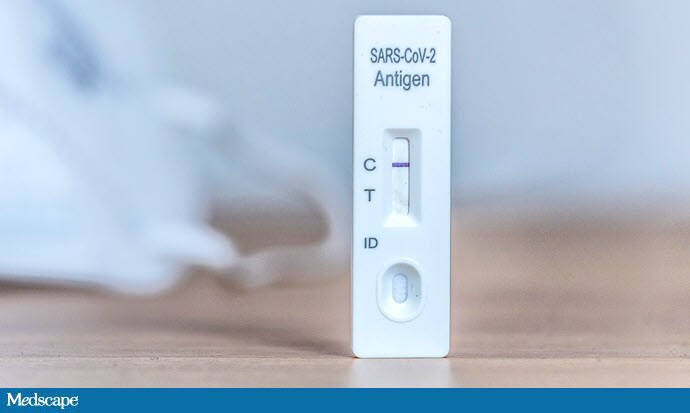
Imagine that you are unvaccinated, 45 years old, and otherwise healthy. Recently, you spent more than 10 minutes less than 6 feet apart from someone who turned out to have COVID. Currently, you are feeling sick with a cough, fever, and muscle aches. You've also lost your sense of smell.

But here's the wrinkle. You take a rapid, at-home COVID test, and it comes back negative.


What do you do?

That very question was put to 338 individuals in this week's study, appearing in JAMA Internal Medicine.

It's an important question. With free test kits being sent to millions of homes around the country, and with the Biden administration committing to get more home tests onto store shelves, there's about to be a lot more home testing. And that means people need to know what to do with the results.

Now, for our hypothetical scenario — an unvaccinated individual with a recent, close COVID contact who has symptoms consistent with COVID — the recommendations are quite clear: Quarantine, regardless of what the rapid test says, and get yourself a PCR test.

How would the survey respondents, 64% of whom had college educations by the way, fare?

Not too great.


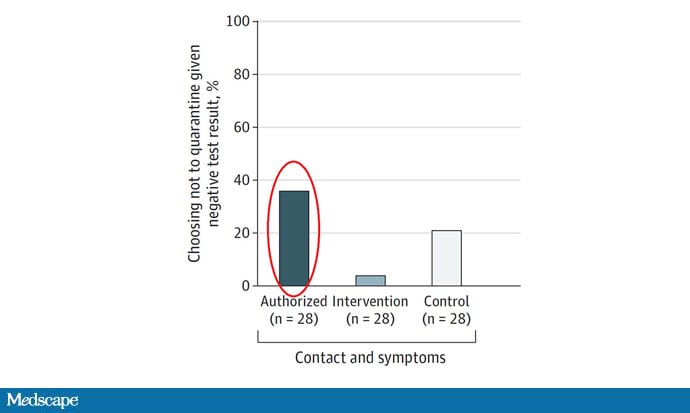
Those who were assigned to read the FDA-authorized instructions included with the Ellume at-home COVID test got the answer wrong 36% of the time.

And when you look at those instructions, you can see why.


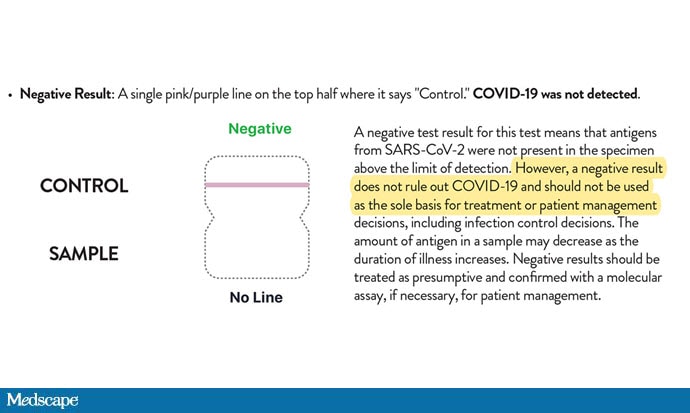
If your test is negative, the authorized instructions say, you are unlikely to have COVID-19 but may have had it previously, and you could get an antibody test to figure that out.

This is just not correct. In fact, while the rapid tests continue to be able to detect Omicron, there are convincing data to suggest that the tests turn positive later in the course of disease than with prior variants.

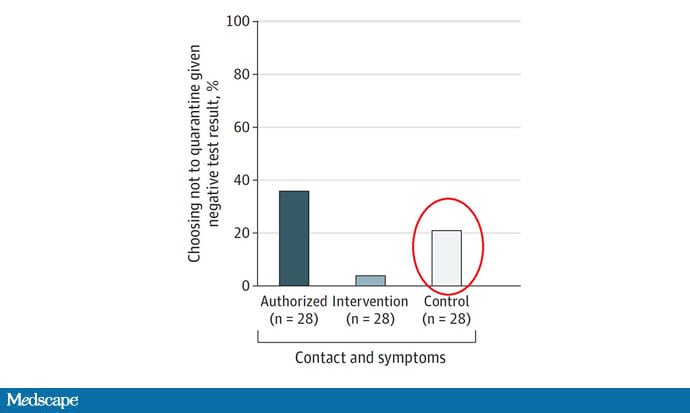
In fact, this language might be worse than no instructions at all. Among individuals presented with no information on how to interpret the tests, only 21% got it wrong.


The authors also provided a third option: an information sheet designed with decision theory principles in mind that makes it very clear what to do with a negative test based on whether you've had a COVID exposure, and whether you've had symptoms.


Just 4% of folks got the decision to quarantine wrong when presented with this enhanced set of patient instructions.

Some good news: There wasn't much confusion after a positive test — everyone knew they should isolate regardless of the instructions they were presented. But this study raises a real concern for an off-target effect of the "tests for everyone" program — false reassurance.

Understanding how to interpret any medical test requires knowing two things: how sensitive the test is at detecting the disease of interest, and how likely you were to have the disease before you tested (the pretest probability). When the pretest probability is high, negative results need to be taken with a large grain of salt, particularly if the test of interest might not be perfectly sensitive.

Sensitivity of at-home COVID tests are quite variable, and more so for Omicron, as this preprint shows.


The FDA acknowledged the reduced sensitivity of antigen tests in the face of Omicron in a December statement, recommending that, among those with symptoms of COVID, a negative home test should be followed by a definitive PCR test.

In other words, if it looks like COVID and sounds like COVID, treat it as COVID — regardless of what a line on a piece of cardboard says.

What this means is that in the coming weeks, more and more people will be testing themselves for COVID. Those that test positive generally know what to do. Those that test negative may not. Healthcare providers need to get the word out that these home tests are great as an initial screen, or to use as a check before visiting a high-risk individual, but PCR tests are better if you have new symptoms. Patient instructions of the type that the authors designed here might go a long way to get that message out.

To be fair, not all home tests do as bad a job of explaining the meaning of a negative test as the Ellume instructions do. The FDA-authorized instructions for the BinaxNow test and the iHealth Covid test — which seems to be the one many people have received in the mail — clearly state that you may still be infectious if you have a negative test.


All in all, I think it's a great thing that we are getting tests into the hands of more people. Knowledge is power. It just might take a modicum of effort, or better design of instructional cards, to teach everyone how to use that power wisely.

F. Perry Wilson, MD, MSCE, is an associate professor of medicine and director of Yale's Clinical and Translational Research Accelerator. His science communication work can be found in the Huffington Post, on NPR, and here on Medscape. He tweets @fperrywilson and hosts a repository of his communication work at www.methodsman.com.

https://www.medscape.com/viewarticle/967489

Does Using A1c to Diagnose Diabetes Miss Some Patients?

 The introduction of A1c as an option for diagnosing type 2 diabetes over a decade ago may have resulted in underdiagnosis, new research indicates.

In 2011, the World Health Organization (WHO) advised that A1c measurement, with a cutoff value of 6.5%, could be used to diagnose diabetes. The American Diabetes Association had issued similar guidance in 2010.

Prior to that time, the less-convenient 2-hour oral glucose tolerance test (OGTT) and fasting blood glucose (FBG) were the only recommended tests. While WHO made no recommendations for interpreting values below 6.5%, the ADA designated 5.7%-6.4% as prediabetes.

The new study, published online in The Lancet Regional Health-Europe, showed that the incidence of type 2 diabetes in Denmark had been increasing prior to the 2012 adoption of A1c as a diagnostic option but declined thereafter. And all-cause mortality among people with type 2 diabetes, which had been dropping, began to increase after that time.  

"Our findings suggest that fewer patients have been diagnosed with [type 2 diabetes] since A1c testing was introduced as a convenient diagnostic option. We may thus be missing a group with borderline increased A1c values that is still at high metabolic and cardiovascular risk," write Jakob S. Knudsen, MD, of the Department of Clinical Epidemiology, Aarhus University Hospital, Denmark, and colleagues.

Therefore, Knudsen told Medscape Medical News, clinicians should "consider testing with FBG or OGTT when presented with borderline A1c values."

The reason for the increase in mortality after incident type 2 diabetes diagnosis, he said, "is that the patients who would have reduced the average mortality are no longer diagnosed...This does not reflect that we are treating already diagnosed patients any worse, rather some patients are not diagnosed."

But M. Sue Kirkman, MD, emeritus professor of medicine at the University of North Carolina at Chapel Hill, who was part of the writing group for the 2010 ADA guidelines, isn't convinced.

"This is an interesting paper, but it is a bit hard to believe that a change in WHO recommendations would have such a large and almost immediate impact on incidence and mortality. It seems likely that …factors [other] than just the changes in recommendations for the diagnostic test account for these findings," she said.

Kirkman pointed to new data just out from the US Centers for Disease Control and Prevention (CDC) on January 26 that don't show evidence of a higher proportion of people in the United States who have undiagnosed diabetes, "which would be expected if more cases were being 'missed' by A1c."

She added that the CDC incidence data "show a continuing steady rate of decline in incidence that began in 2008, before any organizations recommended using A1c to screen for or diagnose diabetes." Moreover, "there is evidence that type 2 diabetes incidence has fallen or plateaued in many countries since 2006, well before the WHO recommendation, with most of the studies from developed countries."

But Knudsen also cited other data, including a study that showed a drop or stabilization in diagnosed diabetes incidence in high-income countries since 2010.

"That study concluded that the reasons for the declines in the incidence of diagnosed diabetes warrant further investigation with appropriate data sources, which was a main objective of our study," write Knudsen and coauthors.

Knudsen told Medscape Medical News: "We are not the first to make the point that this sudden change is related to A1c introduction...but we are the first to have the data to clearly show that is the case."

Diabetes Incidence Dropped but Mortality Rose After 2010

The population-based longitudinal study used four Danish medical databases and included 415,553 patients treated for type 2 diabetes for the first time from 1995-2018 and 2,060,279 matched comparators not treated for diabetes.  

From 1995 until the 2012 introduction of A1c as a diagnostic option, the annual standardized incidence rates of type 2 diabetes more than doubled, from 193 per 100,000 population to 396 per 100,000 population, at a rate of 4.1% per year.

But from 2011 to 2018, the annual standardized incidence rate declined by 36%, to 253 per 100,000 population, a 5.7% annualized decrease.

The increase prior to 2011 occurred in both men and women and in all age groups, while the subsequent decline was seen primarily in the older age groups. The all-cause mortality risk within the first year after diabetes diagnosis was higher than subsequent 1-year mortality risks and not different between men and women.

From the periods 1995-1997 to 2010-2012, the adjusted mortality rate among those with type 2 diabetes decreased by 44%, from 72 deaths per 1000 person-years to 40 deaths per 1000 person-years (adjusted mortality rate ratio, 0.55). After that low level in 2010-2012, mortality increased by 27% to 48 per 1000 person-years (adjusted mortality rate ratio 0.69 compared with 1995-1997).  

The reversed mortality trend after 2010-2012 was due almost entirely to the increase in the first year after diabetes diagnosis, Knudsen and colleagues note.

According to Kirkman, "A1c is strongly predictive of complications and mortality. That plus its ease of use and the fact that more people may be screened mean it's still a good option. But for any of these tests, people who are slightly below the cut-point should not be considered normal or low risk."

Indeed, Knudsen and colleagues say, "These findings may have implications for clinical practice and suggest that a more multifactorial view of metabolic risk is needed."

Knudsen and Kirkman have reported no relevant financial relationships.

Lancet Reg Health Eur. Published online January 1, 2022. Full text

https://www.medscape.com/viewarticle/967559

Cell That Might Trigger Alzheimer's Disease

 It all started with genetic data.

A gene here, a gene there.

Eventually the story became clearer: If scientists are to one day find a cure for Alzheimer's disease, they should look to the immune system.

Over the past couple decades, researchers have identified numerous genes involved in various immune system functions that may also contribute to Alzheimer's.

Some of the prime suspects are genes that control immune cells called microglia, now the focus of intense research in developing new Alzheimer's drugs.

Microglia are amoeba-like cells that scour the brain for injuries and invaders. They help clear dead or impaired brain cells and literally gobble up invading microbes. Without them, we'd be in trouble.

In a normal brain, a protein called beta-amyloid is cleared away through our lymphatic system by microglia as molecular junk.

But sometimes it builds up. Certain gene mutations are one culprit in this toxic accumulation. Traumatic brain injury is another, and, perhaps, impaired microglial function.

One thing everyone agrees on is that in people with Alzheimer's, too much amyloid accumulates between their brain cells and in the vessels that supply the brain with blood.

Once amyloid begins to clog networks of neurons, it triggers the accumulation of another protein, called tau, inside of these brain cells. The presence of tau sends microglia and other immune mechanisms into overdrive, resulting in the inflammatory immune response that many experts believe ultimately saps brain vitality in Alzheimer's.

The Gene Scene

To date, nearly a dozen genes involved in immune and microglial function have been tied to Alzheimer's.

The first was CD33, identified in 2008.

"When we got the results, I literally ran to my colleague's office next door and said, you gotta see this!" says Harvard neuroscientist Rudolph Tanzi.

Tanzi, who goes by Rudy, led the CD33 research. The discovery was quickly named a top medical breakthrough of 2008 by Time magazine.

"We were laughing because what they didn't know is we had no idea what this gene did," he jokes.

But over time, research by Tanzi and his group revealed that CD33 is a kind of microglial on-off switch, activating the cells as part of an inflammatory pathway.

"We kind of got it all going when it came to the genetics," he says.

Microglia normally recognize molecular patterns associated with microbes and cellular damage as unwanted. This is how they know to take action ― to devour unfamiliar pathogens and dead tissue. Tanzi believes microglia sense any sign of brain damage as an infection, which causes them to become hyperactive.

Much of our modern human immune system, he explains, evolved many hundreds of thousands of years ago. Our lifespans at the time were far shorter than they are today, and the majority of people didn't live long enough to develop dementia or the withered brain cells that come with it. So our immune system, he says, assumes any faulty brain tissue is due to a microbe, not dementia. Microglia react aggressively, clearing the area to prevent the spread of infection.

"They say, 'We better wipe out this part of the brain that's infected, even if it's not.' They don't know," quips Tanzi. "That's what causes neuroinflammation. And CD33 turns this response on. The microglia become killers, not just janitors."

A Brake on Overactive Microglia

If CD33 is the yin, a gene called TREM2 is the yang.

Discovered a few years after CD33, TREM2 reins in microglial activation, returning them to their role as cellular housekeepers.

Neurologist David Holtzman of Washington University in St. Louis, who studies TREM2, agrees that where you find amyloid, tau, or dead braincells, there are microglia, raring to go and ready to scavenge.

"I think at first a lot of people thought these cells were reacting to Alzheimer's pathology, and not necessarily a cause of the disease," he says.

It was the discovery of TREM2 on the heels of CD33 that really shifted the thinking, in part because it produces a protein that in the brain is only found in microglia. Genes are stretches of DNA that encode for the proteins that literally run our bodies and brains.

"Many of us [in the field] immediately said, 'Look, there's now a risk factor that is only expressed in microglia. So it must be that innate immune cells are important in some way in the pathogenesis of the disease,' " he adds.

Holtzman sees microglial activation in impending dementia as a double-edged sword. In the beginning, microglia clear unwanted amyloid to maintain brain health. But once accumulated amyloid and tau have done enough damage, the neuroinflammation that comes with microglial activation does more harm than good. Neurons die en masse and dementia sets in.

Not all researchers are convinced.

Serge Revist is a professor in the Department of Molecular Medicine at the Laval University Medical School in Quebec. Based on his lab's research, he believes that while impaired immune activity is involved in Alzheimer's, it's not the root cause. "I don't think it's the immune cells that do the damage, I still think it's the beta-amyloid itself," he says, "In my lab, in mouse studies, we've never found that immune cells were directly responsible for killing neurons."

He does believe that in some Alzheimer's patients, microglia may not be able to handle the excess amyloid that accumulates in the disease and that developing treatments that improve the ability of microglia and the immune system to clear the protein could be effective.

Microglial Medicines

The biological cascade leading to Alzheimer's is a tangled one.

Gene variants influencing the accumulation and clearance of amyloid are likely a major contributor. But immune activity caused by early life infection might also be involved, at least in some cases. This infectious theory of Alzheimer's was first proposed by Tanzi's now-deceased colleague Robert Moir. Tanzi's group even has evidence that amyloid itself is antimicrobial and evolved to protect us from pathogens, only to become a problem when overactive and aggregated.

And the same goes for microglia, cells whose over-ambition might cause much of the brain degeneration seen in Alzheimer's.

In theory, if a treatment could, say, decrease CD33 activity or increase that of TREM2, doctors might one day be able to slow or even stop the progression of dementia. Instead of going after amyloid itself ― the mechanism behind so many failed investigational Alzheimer's drugs ― a therapy that quells the immune response to amyloid might be the answer in treating dementia.

"There are number of scientists and companies trying to figure out how to influence genes like TREM2 and CD33 and to both decrease amyloid and act on the downstream consequences of the protein," says Holtzman. "All of this is to say that somewhere in the biology that causes Alzheimer's, the immune system is involved."

It seems that in many cases, the most common form of a dementia might be due to a well-intentioned immune cell going rogue.

"I think you'd hear this from basically any researcher worth their salt," says Tanzi. "I feel strongly that without microglial activation, you will not get Alzheimer's disease."

This article originally appeared on Shots, NPR's health blog.

Bret Stetka, MD, is the editorial director of Medscape Neurology and Medscape Psychiatry. His book, A History of the Human Brain, was published by Timber/Workman Press in March 2021.

https://www.medscape.com/viewarticle/967592

Preclinical Alzheimer's: More Common Than We Think?

 Prevalence of abnormal amyloid was about 10% higher than previously estimated among people with normal cognition, updated data from the Amyloid Biomarkers Study indicated.

Across 19,000 people in 85 cohorts, those without dementia had higher amyloid abnormality prevalence when adjusted data-driven cutoffs of cerebrospinal fluid (CSF) measures were used, suggesting preclinical and prodromal Alzheimer's disease could be more prevalent than once thought, reported Willemijn Jansen, PhD, and Olin Janssen, MSc, of Maastricht University in the Netherlands, and co-authors in JAMA Neurology.

"At age 50, about 18% of persons with normal cognition had abnormal amyloid, increasing to 54% at age 90," Jansen told MedPage Today. "This was 10% higher than we previously estimated when using unbiased CSF cutoffs."

"Overall, the prevalence of amyloid abnormality was 10% higher in all pre-dementia stages," she added. "Also, the prevalence estimated with these new CSF cutoffs was 10% higher as compared to PET estimates of amyloid abnormality. This indicates that CSF amyloid abnormality might be more sensitive to identify persons earlier in the disease process compared with PET."

The methodology to define abnormal amyloid cutoffs differs by center and can influence prevalence estimates, Janssen noted. "It has appeared recently that some CSF values gradually increased over the past 2 decades, indicating that older cutoffs might be too conservative," she told MedPage Today. "Using older available CSF cutoffs that are not corrected for drift in CSF values might lead to an underestimation of amyloid abnormality."

The findings update earlier data from the Amyloid Biomarkers Study, which reported the prevalence of amyloid abnormality in 56 cohorts of people with and without dementia in 2015.

The current analysis extended that work by increasing sample sizes to 19,097 participants in 85 cohorts, including 9,908 people with normal cognition, 1,524 with subjective cognitive decline, 5,405 with mild cognitive impairment, and 2,260 with Alzheimer's dementia. Mean age was 69, and 53% were women. CSF and PET data were collected from 2013 through 2020.

Amyloid measurements were dichotomized as normal or abnormal using cohort-defined cutoffs for CSF or PET. Adjusted data-driven cutoffs for abnormal amyloid were calculated using Gaussian mixture modeling that incorporated within-cohort distributions of continuous amyloid values.

Using cohort-defined cutoffs, amyloid abnormality prevalence mirrored 2015 estimates for people without dementia and was similar across PET- and CSF-based estimates, at 24% for people with normal cognition, 27% for people with subjective cognitive decline, and 51% for people with mild cognitive impairment. For people with clinical Alzheimer's dementia, however, estimates were higher for PET than CSF (87% vs 79%, mean difference 8%, 95% CI 0%-16%, P=0.04).

Adjusted cutoffs for PET amyloid measures were similar to cohort-defined cutoffs. For CSF, adjusted cutoffs resulted in higher amyloid abnormality prevalence than PET-based estimates in people with:

  • Normal cognition (mean difference 9%, 95% CI 3%-15%, P=0.004)
  • Subjective cognitive decline (mean difference 9%, 95% CI 3%-15%, P=0.005)
  • Mild cognitive impairment (mean difference 10%, 95% CI 3%-17%, P=0.004)

Adjusted cutoffs between CSF and PET amyloid were comparable in people with clinical Alzheimer's dementia (mean difference 4%, 95% CI -2% to 9%, P=0.18).

"These prevalence estimates can improve recruitment efficiency for clinical trials that target individuals with biomarker positivity," noted Christina Young, PhD, and Elizabeth Mormino, PhD, both of Stanford University School of Medicine in Palo Alto, California, in an accompanying editorial.

Amyloid alone is not sufficient to predict clinically meaningful Alzheimer's progression, Young and Mormino pointed out. "A primary source of controversy with the approval of aducanumab [Aduhelm] was the ambiguity of the association between treatment and clinical outcomes in the phase III trials," they noted.

"Although long-term cognitive assessments of individuals with amyloid positivity have shown cognitive decline at the group level, there has also been considerable heterogeneity in who experiences decline and how fast decline occurs," the editorialists added. "Characterization of clinically meaningful decline, especially among individuals with amyloid positivity and normal cognition, is an active area of research that is needed to elucidate the risks associated with amyloid positivity."

Race and ethnicity were not included in the data collected, which is a limitation of the study, Young and Mormino observed. "Given this gap, amyloid-positivity prevalence rates estimated by Jansen and colleagues should not be assumed to be reflective of all racial and ethnic groups," they wrote.

In addition, Gaussian mixture modeling could be applied only to a subset of cohorts that provided continuous data, the researchers noted.


Disclosures

This study was funded by Biogen. An employee of Biogen had a role in the analysis plan, review, and revision of the manuscript.

Jansen and Janssen reported no disclosures. Co-authors listed numerous relationships with academic institutions, nonprofit organizations, government agencies, and industry.

Young reported receiving grants from the Alzheimer's Association. Mormino reported relationships with NIH, Eli Lilly, Genentech, Neurotrack, and Roche.