Search This Blog

Tuesday, February 28, 2023

Scientists aim to create AI from human brain cells: ‘New frontier’

 This artificial intelligence could be a literal brainchild.

As if AI technology wasn’t becoming human enough, Maryland scientists aim to generate artificial intelligence from — wait for it — our own brain cells.

A study helmed by researchers at John Hopkins University (JHU) in a large international collaboration was published Tuesday in the medical journal “Frontiers,” detailing this alleged Frankentech the team called a “new frontier.”

“The vision of OI [organoid intelligence] is to use the power of the biological system to advance the field of live sciences, bioengineering, and computer science,” Lena Smirnova, a JHU researcher and author on the paper, told VICE.

To harness these capabilities, the scientists hope to employ “organoids,” 3D cultures of human brain cells that replicate parts of our noggin responsible for learning and memory. Their size allows the neurons within them to form significantly more connections than standard silicone computer chips, which could be rendered obsolete by this bold new biotech. In fact, researchers foresee this biological hardware getting hooked up to AI and machine learning systems like ChatGPT and Bing, er Sidney, in the near future — think an advanced Krang from “Ninja Turtles.”A depiction of organoids being interfaced with 3D microelectrode arrays.

“While silicon-based computers are certainly better with numbers, brains are better at learning,” said Thomas Hartung, a Johns Hopkins researcher who co-authored the study.
Frontiers

In other words, it’s the reverse of the sci-fi-fostered fear of having a computer chip implanted in our brains.

Researchers claim that utilizing brainpower is far more efficient than concocting AI from concentrate. “If we look at how efficiently the human brain operates in processing of information, learning etc, it is tempting to translate and model that to have a system which will work faster and more efficiently [than] current computers,” Smirnova declared.

This might seem like a bold statement in a world where machines handily best us at everything from math to the game Go. However, while computers are better for on-the-fly calculations and other functions, our organ boasts a far superior capacity for learning and memory.

3D microfluidic devices to support scalability and long-term homeostasis of brain organoids.
Organoids share aspects of the brain responsible for memory and learning.
Frontiers

According to the study, the brain can store 2,500 terabytes of info — around 1,000 times more than the latest MacBook Air. Not only that but they use much less energy than their silicone counterparts, with a 2016 study finding that the brain is capable of storing the entire internet on just “enough power to run a dim light bulb,” per LiveScience.

By contrast, it would require a whole nuclear power station to run one computer that does what our mind does with 20 watts.

This technological brainchild is important given that “we’re reaching the physical limits of silicon computers because we cannot pack more transistors into a tiny chip,” study co-author Thomas Hartung of JHU said in a press release.

The possibilities of computer-brain interfacing extend beyond simply generating more ram. “For example, we could compare memory formation in organoids derived from healthy people and from Alzheimer’s patients, and try to repair relative deficits,” said Hartung. “We could also use OI to test whether certain substances, such as pesticides, cause memory or learning problems.”

In the fall, scientists went viral after teaching a dish of brain cells to play the 1970s arcade game, Pong.

Just like with AI, OI isn’t without its ethical dilemmas, including whether the cells can experience pain or suffering or — on a more dystopian level — if the neurons can develop a consciousness. There is also the question of if the surrogate who donated the cells for the organoids has any rights.

“A key part of our vision is to develop OI in an ethical and socially responsible manner,” Hartung declared. “For this reason, we have partnered with ethicists from the very beginning to establish an ‘embedded ethics’ approach.”

He added, “All ethical issues will be continuously assessed by teams made up of scientists, ethicists, and the public, as the research evolves.” 

The scientists added that ultimately “it’s just a matter of building the community, the tools, and the technologies to realize OI’s full potential.”

Architecture of an OI system for biological computing.
“We call this new interdisciplinary field ‘organoid intelligence’ (OI),” said Hartung. “A community of top scientists has gathered to develop this technology, which we believe will launch a new era of fast, powerful, and efficient biocomputing.”
Frontiers
Although perhaps scientists should reconsider integrating more human components into AI development.

Earlier this month, Microsoft-created AI chatbot told a human user that it loved them and wanted to be alive, prompting speculation that the machine may have become self-aware.\

https://nypost.com/2023/02/28/ai-could-be-created-with-our-own-brain-cells/

Gender Affirmation Hormones 'Come With Cardiovascular Tradeoffs'

 Use of hormone replacement therapy (HRT) was associated with excess cardiovascular risks for people with gender dysphoria, according to a U.S. population-based study.

Compared with hospitalized patients with gender dysphoria who had never used hormone replacements, those taking this gender affirmation therapy had higher rates for a range of in-hospital cardiovascular events:

  • Ischemic cerebrovascular accident (OR 7.15, 95% CI 2.74-18.67)
  • ST-elevation myocardial infarction (OR 5.90, 95% CI 1.07-32.42)
  • Non-ST-elevation myocardial infarction (OR 3.30, 95% CI 1.20-9.04)
  • Pulmonary embolism (OR 4.92, 95% CI 2.08-11.62)
On the other hand, HRT was not associated with any increase in deaths, incident atrial fibrillation, diabetes, hypertension, hemorrhagic stroke, or heart failure, found researchers led by Ibrahim Ahmed, MD, a internal medicine resident at Mercy Catholic Medical Center in Darby, Pennsylvania. Their poster was released ahead of presentation at the upcoming American College of Cardiology annual meeting

opens in a new tab or window in New Orleans.

Ahmed stressed careful discussion with patients regarding the risks and benefits of gender-affirming hormone therapies.

"Starting transitioning is a big part of a person's life and helping them feel more themselves, but hormone replacement therapy also has a lot of side effects -- it's not a risk-free endeavor," he said in a press releaseopens in a new tab or window. "Looking at a person's medical and family history should definitely be part of the screening protocol before they even start hormone replacement therapy."

The researcher cited prior reports showing that hormone therapies in pre- and postmenopausal women are linked to increased cardiovascular risks such as strokeopens in a new tab or window and blood clotting events.

"It was therefore expected that a similar risk would be conferred in gender dysphoric patients," Ahmed told MedPage Today in an email. "However, we must be equally mindful of the alternative (i.e., untreated gender dysphoria) as it may lead to severe depression, substance abuse and/or suicide. Therefore the best decision is an informed decision by a patient and their physician."

Recent data suggest that approximately 1.6 million peopleopens in a new tab or window identify as transgender in the United States. HRT for people assigned male at birth is typically estrogen and for people assigned female at birth is usually testosterone.

Gender-affirming hormones have been associated with better mental health for young transgender and nonbinary peopleopens in a new tab or window. However, small studies have shown increased cardiovascular risksopens in a new tab or window and mortalityopens in a new tab or window in transgender women using hormone therapy. Drops in HDL cholesterolopens in a new tab or window also have been reported in transgender men using testosterone.

With more research, "the expectation is that cardiologists and other internists will be able to deliver improved care in this population as well as reduce disparities in care," Ahmed said.

His study used data from the 2019 Nationwide Inpatient Sample database, the largest publicly available all-payer inpatient care database in the United States, which contains nationally-representative data on more than seven million hospital stays. It included 21,335 people with gender dysphoria, of whom 1,675 had used HRT.

This HRT-using group was slightly older (mean 34 vs 31 years old, P<0.05) and with fewer females (47.0% vs 54.5%, P<0.05) than those not using HRT.

No between-group differences were observed in terms of race, income, alcohol abuse, or depression. However, those taking hormone replacement therapy had higher rates of substance use disorder (OR 1.41, 95% CI 1.03-1.92) and hypothyroidism (OR 2.16, 95% CI 1.43-3.27).

HRT did not correlate with a person's mean length of stay in the hospital (5.7 vs 6.1 days, P=0.321) nor total hospitalization charges ($61,011.71 vs $49,930.34, P=0.598).

Ahmed acknowledged that his analysis did not account for duration or type of hormone therapy.

"I'm curious to see if the method of administration alters the outcomes," Ahmed said in the press release. "Is one way of giving hormone replacement therapy better or associated with a lower risk of cardiovascular outcomes? If so, then that should be the focus for how we give these patients their hormone replacement therapy going forward."

Disclosures

Ahmed had no disclosures.

Primary Source

American College of Cardiology

Source Reference: opens in a new tab or windowAhmed I "Cardiovascular outcomes in gender dysphoric patients undergoing hormone replacement therapy" ACC 2023.


https://www.medpagetoday.com/meetingcoverage/acc/103292

Medicare Plan Commissions May Steer Beneficiaries to Wrong Coverage

 Agents and brokers who sell Medicare plan coverage often steer their clients to a Medicare Advantage (MA) plan because it earns them a higher commission compared with a Medigap supplemental plan with traditional Medicare that might better serve the beneficiary's needs.

That's the finding from a new Commonwealth Fund reportopens in a new tab or window that was based on responses from more than two dozen sellers of MA, Medigap supplemental, and Part D plans who participated in focus groups the fund organized in September 2022.

For example, one California broker was extremely candid: "A lot of times ... you're pushing an Advantage plan when someone wants a freedom of choice [of doctor], which would be a supplement plan," the report said.

Incentives that are misaligned with that of the beneficiary "have financial consequences for beneficiaries, can affect beneficiaries' coverage options down the road, and can affect Medicare spending," Gretchen Jacobson, vice president of the Commonwealth Fund's Medicare program and an author of the report, told MedPage Today.

"Ideally, [the system] should be more transparent on how brokers and agents winnow down choices," she said.

The report is a timely one as nearly halfopens in a new tab or window of Medicare beneficiaries are now enrolled in MA plans, and as federal regulators try to tamp down MA fraudopens in a new tab or window and denials of care, as well as higher per beneficiary spendingopens in a new tab or window for MA enrollees compared with those in traditional Medicare.

While brokers are required by a 2022 federal policy to inform clients that they don't sell all plans in their area, they're not required to reveal how many plans they sell or which ones, the report noted. There is no minimum number of plans they must search for a client nor is there a requirement that they disclose the names of the plans they searched.

Brokers said that in addition to commissions, another factor that influences their decision on what plans they offer clients is whether the plan made it "easy for me to work with."

Along with a lack of information about how brokers narrow down plan options, beneficiaries lack information on "what role financial incentives might play in the advice they give," the report said.

Among the report's findings:

  • Most brokers and agents in the focus groups said they received higher commissions for enrolling beneficiaries in MA plans compared with Medigap supplemental plans with traditional Medicare, and one said the commissions could be three times higher. They receive more from selling MA than they do selling a Medigap, even when adding in the commission they get from selling a Part D drug plan.
  • Agents said many plans offer bonus commissions as high as $100 per policy when an agent sells a benchmark number of a certain plan -- say 20 policies in a 3-month period -- and that can "create an incentive for a broker or agent to steer clients to a plan regardless of whether it's the best one for their clients," the report said.
  • For themselves, most brokers and agents said they would reject MA plans in favor of traditional Medicare with a Medigap, "believing that combination offers better coverage and choices than Medicare Advantage, particularly as people age." Said one broker, "If I ever have a medical issue, I'd want to be able to go to any physician I want."
  • Some in the focus groups remarked that based on the commission rates and information from the Centers for Medicare & Medicaid Services, it seemed "obvious" that the federal government wanted more people in MA plans rather than in traditional Medicare.
  • Commissions for sales of Part D prescription drug plans are so low, agents said, that many neglect to enroll their clients in them and that the plans were "not worth the time." Then, after having been enrolled in Medicare for years, beneficiaries may need a Part D for their medications. By then, however, they have to pay a federally required Part D late-enrollment penalty each month, amounting to about $1 for every 3 months that they didn't have Part D or other creditable coverage after becoming Medicare eligible. Additionally, they can't enroll in a Part D plan until the next open enrollment period. These low Part D commissions also don't incentivize brokers and agents to encourage their clients to reevaluate their Part D plan each year, even though coverage and premiums can change and vary greatly among plans, participants said.
  • Focus group members said they are concerned about deceptive MA marketing. These ads, one participant said, mislead clients into believing "they can just switch to a Medicare supplement anytime that they want" when supplement plans in most states require beneficiaries to pass an extensive underwriting questionnaire before they can be approved. Most focus group participants said that for many of these clients with health conditions, there are few options, although they may enroll beneficiaries in an MA preferred provider organization, which offers more provider choice. Focus group participants characterized the advertising as "relentless," "overwhelming," and "misleading," and said it has led some clients to enroll in plans that excluded their doctors, and other clients to unknowingly change plans. "I've had clients call me up in tears not realizing that their plan had been switched," one said. In some cases, agents have even lost clients who didn't believe them and wanted everything the ad promised.
  • Focus group participants said they tend to sell MA plans to beneficiaries with lower incomes, and Medigap policies with traditional Medicare to those with higher incomes.
  • For Medigap supplemental coverage, commission structure pays more to sell plans with higher premiums and low or no deductible, such as a G or an F plan, rather than plans with lower monthly premiums and higher deductibles, such as K or L. But for beneficiaries with limited financial resources, a plan with a higher deductible but lower premiums and out-of-pocket payment limits "may make more sense," the report said. "The [Medigap] commission structure may result in some beneficiaries paying more than they need to."
  • Health plan sellers can earn extra money -- $75 to $100 -- for 5 minutes of work if they complete a "health risk assessment" for clients who enroll in a new MA plan. The report noted that it is unclear if these assessments are sent to the enrollees' primary care physicians, whether it informs their care management, "or helps to expedite additional resources and benefits to them."
  • One reason for the rapid recent increase in beneficiaries choosing MA plans over traditional Medicare with supplemental plans is the rising cost of Medigap premiums. One Arizona broker said, "They're getting these price increases year in and year out on those supplement plans. And yeah, you bet, it has definitely shifted my focus."
David Lipschutz, JD, associate director of the Center for Medicare Advocacy, who reviewed a pre-release copy of the Commonwealth Fund report, said it struck him that many brokers believe the Medicare program itself is steering beneficiaries toward MA plans rather than Medigap plans.

"This speaks to the growing imbalance between MA and traditional Medicare, and while there have been improvements in Medicare materials over the last couple of years, there is still a bias toward MA that must be addressed," he said.

Lipschutz added that the commission imbalance "leads many agents and brokers to steer people towards MA plans and neglect Part D."

The four focus groups were held by PerryUndem, a public opinion research firm, in partnership with the Commonwealth Fund.

https://www.medpagetoday.com/special-reports/features/103306

HHS issues advisory on Clop data breach threat


  • Last week, the HHS warned that Russia-linked ransomware group Clop took responsibility for attacking more than 130 organizations, including some in the health industry, using secure file transfer software, GoAnywhere MFT.
  • Tennessee-based Community Health Systems was breached as part of the attacks, leading to health information on up to 1 million patients being compromised, per a Feb. 13 Securities and Exchange Commission filing.
  • The HHS brief highlights the threat to healthcare data, with 24 hospitals and multi-hospital healthcare systems being attacked in 2022.
The threat by Clop, a ransomware group that has been active since February 2019, shows how vulnerable personal health information is to cyberattacks. More than 289 hospitals may have been impacted by ransomware attacks in 2022, according to the HHS.

The HHS sector alert notes that a customer portal was particularly vulnerable. Cybersecurity expert Brian Krebs first alerted the public of the Clop zero-day threat on Feb. 2. The software vendor Fortra released a patch for the GoAnywhere software on Feb. 7.

CHS revealed in its Feb. 13 SEC filing that the Fortra GoAnywhere breach may have affected about 1 million people. However, the company said patient care was unaffected.

The HHS sector alert follows a recent report by cyber risk intelligent firm Black Kite revealing that the healthcare industry was the most common victim of third-party breaches in 2022. In addition, the HHS had alerted the healthcare sector of a threat from pro-Russian hacktivist group called Killnet, which includes hospitals and medical organizations in several countries on its target list.

To address the threat of cybersecurity attacks, the HHS sector alert advises organizations to educate and train staff to lower the risk of attacks through email and network access. It also recommends conducting an assessment of risks and forming a plan that outlines the necessary budget, staff and tools.

https://www.healthcaredive.com/news/hhs--advisory-clop-data-breach-threat/643643/

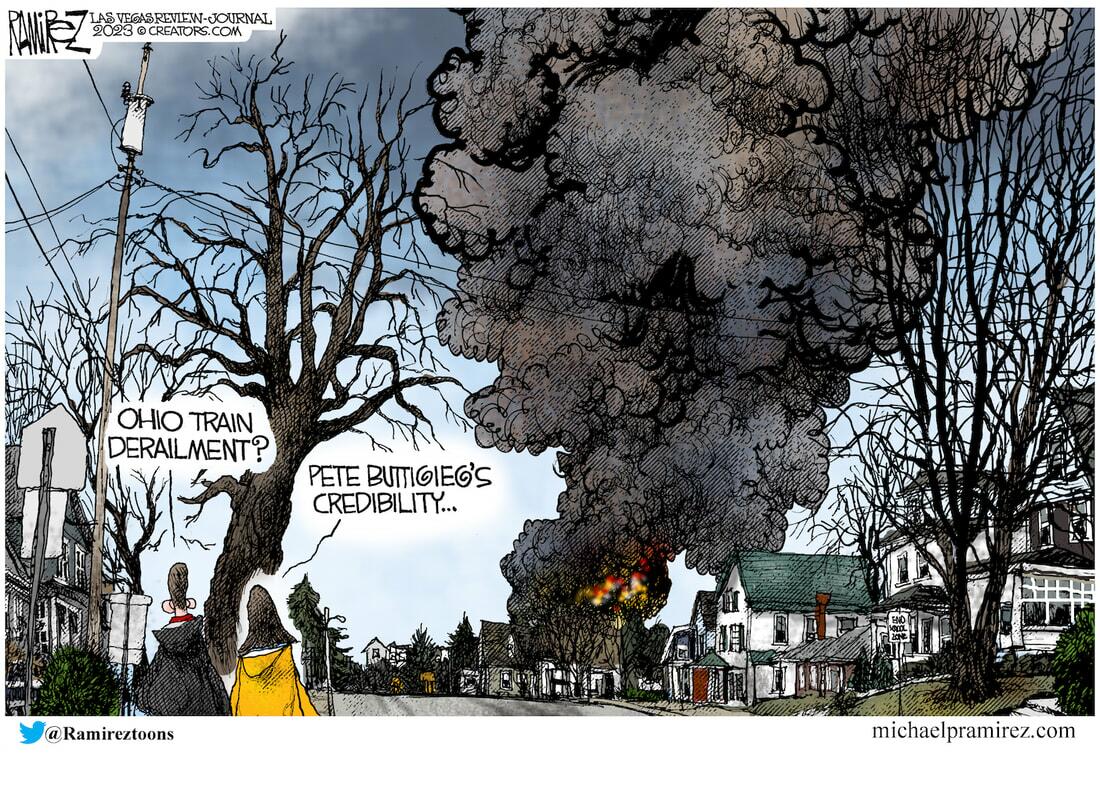
Buttigieg's Derailment: NTSB Exposes East Palestine Claim As "Misinformation"

 by Jonathan Turley,

U.S. Secretary of Transportation Pete Buttigieg has been repeatedly criticized for transportation problems, including the holiday pile up at our ports that slowed delivery of goods in December. He was also criticized for his response to the recent airport shutdown. I have not joined in that criticism because I am not sure that he has direct responsibility for some of these problems. However, Buttigieg recently raised a legal claim to blame the Trump Administration for the train disaster in East Palestine, Ohio. The claim was not only manifestly false but Buttigieg knew or should have known it was false.

The implications are deeply disturbing.

When confronted with a disaster, Buttigieg not only made a false claim but attempted to weaponize a tragedy against political opponents.

That is a serious problem for a public figure and worthy of condemnation.

Buttigieg was criticized for his delay in responding publicly to the Ohio disaster and his even longer delay in going to the site. Again, while a politically tone deaf, I was not one of those critics. It is possible to respond to a tragedy without being at the scene. However, the Administration (including the President) were clearly losing ground in its response with many noting the absence of both the President and Transportation Secretary in Ohio after the wreck.

When Buttigieg finally made it to the scene, significant time had passed and many of the details were known publicly on the cause. Buttigieg presumably had even earlier and better information, including the statements of the train crew on the cause.

The crew of the freight train received a warning about an overheating wheel bearing and tried to slow the train in response. According to the report of the National Transportation Safety Board (NTSB), the wheel bearing was heating up for several miles before reaching 253 degrees Fahrenheit hotter than the air temperature. The train engineer employed the brakes and the automatic braking system also activated, but fifty of the train’s 149 cars derailed with 11 carrying toxic chemicals.

Given his delay in visiting the site, Buttigieg had more information on the cause of the derailment than just the initial accounts. However, he falsely claimed that “we’re constrained by law on some areas of rail regulation,” and cited “the braking rule withdrawn by the Trump administration in 2018 because of a law passed by Congress in 2015.”

This false claim was picked up by various pundits and politicians, including figures like Joy Behar on the The View. That included Senate Majority Leader Chuck Schumer (D., N.Y.) who went to the Senate floor and declared that, in 2017,

“the Trump administration repealed requirements for an electronic braking system because, according to them, the safety benefits were not worth the cost. I think the people of East Palestine now know that analysis was wrong and that they’re suffering the consequences of rail companies putting profits over people.”

Yet, politicians and pundits often weaponize tragedy.

A Secretary of Transportation is needed to establish the facts and assure the public that safety, not politics, is driving decisionmaking during a crisis. Buttigieg clearly failed that test in spectacular fashion.

National Transportation Safety Board (NTSB) Chair Jennifer Homendy took the opposite approach and stated the facts dispassionately and without a political spin. She stated that the rule raised by Buttigieg would have applied only to trains classified as high-hazard flammable trains:  “This means even if the rule had gone into effect, this train wouldn’t have had ECP brakes.”

Homendy sounded more like a cabinet member than Buttigieg when she declared “Enough with the politics on this. I don’t understand why this has gotten so political. This is a community that is suffering. This is not about politics.” Homendy added that anyone who says otherwise is “spreading misinformation.

Given this Administration’s long use of disinformation and misinformation as rationales for censorship, the statement was particularly poignant. Would the Biden Administration demand that Buttigieg be censored by social media in making this claim as it has done with conservative speakers or posters? After all, this was a false claim made on a current public health emergency.

Of course, I would not censor Buttigieg. It is sufficient (as shown this week) that free speech allows for good speech to counter bad speech. However, it is another example of how subjective censorship can be when you go into the business of barring views deemed disinformation.

Even The Washington Post called out the claims of Buttigieg. In a Monday column, Glenn Kessler stated

“We decided to examine every possible regulatory change made under Trump that could be related to the accident and assess whether it could have made an impact. From our analysis, none of the regulatory changes made during the Trump administration at this point can be cited as contributing to the accident.”

At a time of tragedy, presidents ideally try to rally a nation to a common cause and shared suffering. They do not always succeed. However, cabinet members are expected to show complete detachment from politics in dealing with tragedies to assure the public that public safety is not being balanced against political expediencies. That is why this false claim is so serious. One of the first major statements made by Buttigieg at the scene was to attack the former president and the expected opponent to President Biden in 2024.

Buttigieg went off the tracks with this political spin. He should apologize.

https://www.zerohedge.com/political/buttigiegs-derailment-ntsb-exposes-east-palestine-claim-misinformation

Supreme Court casts doubt on student loan forgiveness program

 The Supreme Court’s conservative justices cast doubt on President Biden’s student debt forgiveness plan during oral arguments on Tuesday in a pair of challenges to the administration’s relief program.

In the first case, Biden v. Nebraska, majority of the justices appeared skeptical that Congress gave clear enough authorization for the Biden administration to forgive billions of dollars in student debt.

But conservative Justice Amy Coney Barrett joined the court’s three liberals in questioning whether a group of Republican-led states had legal standing to challenge Biden’s plan.

The administration has tied the plan, which forgives up to $20,000 in relief for qualifying borrowers, to the national emergency established during the pandemic.

U.S. Solicitor General Elizabeth Prelogar, representing the administration, cited the Higher Education Relief Opportunities for Students, or HEROES, Act, which was passed following the 9/11 terror attacks to aid Iraq and Afghanistan veterans, although it also applies to national emergencies.

The law gives the education secretary authority to “waive or modify” federal student financial assistance programs “as the Secretary deems necessary in connection with a war or other military operation or national emergency.”

“We’re talking about half-a-trillion dollars and 43 million Americans. How does that fit under the normal understanding of modify?” asked Chief Justice John Roberts, who repeatedly stressed the large price tag during the argument.

Fellow conservative Justice Brett Kavanaugh cautioned, “some of the biggest mistakes in the court’s history were deferring to assertions of executive emergency power. Some of the finest moments in the court’s history were pushing back against presidential assertions of emergency power.”

A number of justices referenced the “major questions” doctrine, which requires Congress to speak clearly when authorizing an agency to decide matters of vast economic and political significance.

Prelogar conceded that the plan is politically significant, but she argued that Congress in passing the HEROES Act foresaw the education secretary discharging debt during times of national emergency. 

Justice Sonia Sotomayor pushed back on Roberts’s balking at the plan’s price tag, noting the lack of legal challenges when the Biden and Trump administrations used HEROES Act authority to pause student debt payments.

“The forbearance of pay is $5 billion a month or something like that?” asked Sotomayor. “It’s an outrageous sum, and yet no one is disputing that. The secretary has that power. It’s not the amount of money, the question is what’s Congress’s intent?” 

Justice Elena Kagan similarly said, “Congress could not have made this much more clear,” while conservatives including Justice Clarence Thomas noted that other provisions explicitly grant the department authority to discharge debt.

Although the court’s conservative majority appeared deeply skeptical on the merits of Biden’s plan, the case is likely to turn on whether the states had legal standing, meaning the capacity to sue.

Much of that debate focuses on the plan’s purported financial harm to the Higher Education Loan Authority of the State of Missouri (MOHELA), one of the nation’s largest student loan servicers, and if it gives Missouri standing to bring the challenge.

Nebraska Solicitor General James Campbell, representing the states, argued Missouri speaks for the loan servicer. Even if it didn’t, Missouri would be harmed if MOHELA loses revenue and can’t make payments it owes to the state, he said.

“The state has not pressed MOHELA to put money into the fund,” countered liberal Justice Ketanji Brown Jackson, noting that the loan servicer has already extended the timeline for making payments it already owes.

Barrett and the court’s three liberals noted that Missouri law immunizes the state from being responsible for MOHELA’s debts and probed as to why MOHELA itself did not bring the suit.

“Why didn’t you just strong-arm MOHELA?” asked Barrett.

Sotomayor said, “It would be odd for us to have a state say, ‘We’re creating a corporation. We’re not going to be responsible for its debts. We’re not going to be responsible for any of its contracts. We’re not going to be responsible for anything that does financially.’ And the state itself says this is not the state, it’s an independent corporation. And we’re going to say instead, that it is the state?”

The justices also heard a second challenge to the debt relief, Department of Education v. Brown, in which two individual challengers who did not qualify for the full $20,000 in relief similarly asserted that the Biden administration overstepped its authority.

In those arguments, the conservative justices focused on the fairness of the program to those who did not qualify, and if the debt relief was a necessity. 

“Why is it fair? If it was — if you didn’t have to do it? Why is it in the answer to say that it was warranted? Maybe it was warranted, but why was it done? I guess you don’t want to answer the question,” Alito told Prelogar.

Prelogar emphasized the millions of borrowers who would receive debt relief from the program and data from the government showing that without the relief, there would be a surge of defaults and delinquency on student loans. 

The liberal justices hammered the challengers’ claim that the Department of Education had to give a notice-and-comment period for the debt relief. 

“The HEROES Act specifically says no notice and comment. No negotiated rulemaking, specifically — says there’s going to be an emergency. So we’re waiving those procedural requirements. So, you know, you might think that Congress made a wrong call there. But that’s Congress’s call,” Sotomayor said. 

Decisions in both cases are expected by late June.

https://thehill.com/regulation/court-battles/3877459-supreme-courts-conservatives-cast-doubt-on-student-loan-forgiveness-program/

FDA neurosciences chief Billy Dunn to leave immediately, analysts raise concern

 The U.S. Food and Drug Administration neurosciences head Billy Dunn will retire from his role effective immediately, the health regulator told Reuters on Tuesday.

Wall Street analysts said Dunn's departure could impact the regulator's stance on neurological drug decisions in the near term, sending down shares of Reata Pharmaceuticals Inc 30% on Monday when media reports on the exit surfaced.

Texas-based Reata is expecting FDA's decision by Tuesday on its drug to treat a rare neuromuscular disorder called Friedreich's ataxia.

The departure of Dunn, 53, was announced in an internal message to the agency's employees on Monday. Newly appointed deputy director Teresa Buracchio will also serve in Dunn's role on an interim basis at the Office of Neuroscience, the agency told Reuters.

Jefferies analyst Maury Raycroft said in a research note that while Dunn's departure may have already been in the works, his immediate exit ahead of the agency's decision on the Reata drug raised suspicion about the timing.

The FDA declined to comment on the speculation, which hit the stocks of some neurological drugmakers on Monday - Biogen had fallen marginally and Amylyx Pharmaceuticals declined 2.5% in the previous session.

Shares of Reata fell nearly 6% on Tuesday before reversing losses.

Dunn was integral in the FDA's controversial decision to approve Biogen Inc and Eisai Co's Alzheimer's drug Aduhelm last year despite a lack of evidence that it worked at slowing the effects of the disease.

He also backed the approval of Amylyx Pharmaceuticals Inc's Relyvrio last year, telling a panel of outside advisers that the amyotrophic lateral sclerosis drug could be pulled from the market if it failed in a larger trial underway.

https://www.yahoo.com/now/fda-neurosciences-chief-billy-dunn-184555494.html