Search This Blog

Monday, March 6, 2023

ACC 2023 – Merck’s oral cholesterol lowerer shows mid-stage promise

 Merck & Co’s cardiovascular franchise is coming into focus as the group looks for new growth drivers to replace its aging megablockbuster Keytruda. And two pillars of its heart push scored today at the American College of Cardiology meeting.

One of these projects, the oral PCSK9 inhibitor MK-0616, puts this drug class back on the agenda after previous commercial disappointments. Today, a phase 2 study met expectations and the group is quickly pushing into phase 3 with both a lipid-lowering and cardiovascular outcomes trial slated to start this year.

This could be bad news for Novartis, which paid $10bn for the Medicines Company and its long-acting therapy Leqvio, but has seen sales underwhelm so far. The Swiss group recently played down the threat from Merck’s oral rival, but the risk of impending competition could give investors jitters, particularly with the readout of Leqvio’s cardiovascular outcomes study delayed from 2024 to 2026.

Analysts are currently pencilling in a 2026 launch for MK-0616, although outcome data are likely to emerge later. 

PCSK9 promise

Three injectable PCSK9 inhibitors are approved: Amgen’s Repatha, Sanofi and Regeneron’s Praluent, and the aforementioned Leqvio. The first two products are given once monthly or every two weeks, while Leqvio is administered twice yearly.

Hopes were once high for this class of drugs, but they have not lived up to expectations, with the route of administration thought to be a factor – although high price tags also did not help.

Merck hopes to revive the space with MK-0616. As Joerg Koglin, vice-president of global clinical development, puts it: “Can we come up with a risk/benefit profile that compares very well to injectables and then have the advantage of an oral that is much more accessible and might reach a broader patient population?”

In the phase 2 dose-ranging trial, presented at ACC today and simultaneously published in the Journal of the American College of Cardiology, Merck achieved this goal. MK-0616 was dosed at 6, 12, 18 or 30mg per day, and the primary efficacy endpoint was LDL cholesterol lowering at week eight. Before the readout, Mizuho analysts had set a target of a 40-60% reduction from baseline.

Handily, MK-0616-treated patients showed placebo-adjusted LDL-C lowering of 41.2-60.9%, with a dose response. This is in line with the other PCSK9s, and not far off the roughly 65% LDL-C lowering in phase 1 that first triggered excitement around this project.

LDL lowering with PCSK9-targeting therapies
Product/projectCompanyDescriptionStudyLDL lowering
MK-0616Merck & CoOral PCSK9Ph26mg: 41%
12mg: 56%
18mg: 59%
30mg: 61%
PraluentSanofi/RegeneronSC PCSK9 MAbOdyssey Long Term 58%
RepathaAmgenSC PCSK9 MAbDescartes55%
Leqvio (inclisiran)NovartisSC PCSK9 RNAi therapyOrion-10 & 1151-52%
All data placebo adjusted; Repatha, Praluent & Leqvio + background statins, MK-0616 + range of statin therapy (~60% of pts on statins); SC=subcutaneous; Source: product labels & ACC.

Just as important will be MK-0616’s tolerability profile. Here, Mizuho was looking for a treatment-related discontinuation rate of under 3%. Again, the study achieved this, with 2% of MK-0616-treated patients discontinuing due to adverse events, versus 1% in the placebo group.

While there were more serious adverse events with MK-0616 – eight across the dose groups, compared with none in the placebo group – none of those were deemed drug-related, according to Merck's Koglin.

The most common adverse event was Covid-19; the next most common were diarrhoea and dyspepsia, but Koglin says these gastrointestinal events were all mild and did not lead to discontinuations. He concedes that GI side effects will be closely watched in phase 3.

Merck plans to take MK-0616 into pivotal development in the second half of this year, with a cholesterol-lowering trial – which will support a filing if all goes well – starting around the same time as a cardiovascular outcomes trial.

Koglin says the outcomes trial could include primary as well as secondary prevention patients, but that this is something that will have to be ironed out with regulators. It is notable that Repatha and Praluent’s outcomes studies only enrolled a secondary prevention population.

If the project succeeds, Berenberg analysts reckon it could sell $5bn at peak – bullish considering the entire PCSK9 class brought in around $2bn last year. Price will be an important factor, but Merck is yet to disclose any plans here.

https://www.evaluate.com/vantage/articles/events/conferences/acc-2023-mercks-oral-cholesterol-lowerer-shows-mid-stage

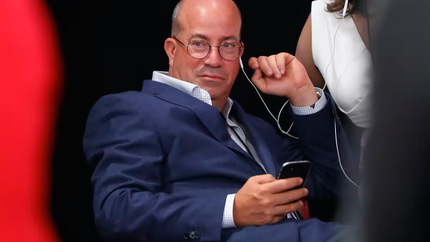
Ex-CNN President Jeff Zucker Ordered Staff To Ignore Lab-Leak Theory

 Former CNN president Jeff Zucker ordered network employees not to investigate the Covid-19 lab leak theory because he considered it a "Trump talking point," a "well-placed" CNN insider told Fox News Digital on Monday.

The 'theory' was recently bolstered by a Department of Energy finding that a lab-leak was the most likely origin for the virus, while FBI Director Christopher Wray confirmed last week that his agency believes the same.

"People are slowly waking up from the fog," the insider told Fox. "It is kind of crazy that we didn't chase it harder."

Throughout Zucker's tenure as CNN's chief, he pulled what was once widely seen as a straight-news organization to an anti-Trump operation. CNN bent over backwards to knock down what former President Trump and members of his administration said lending credibility to the lab-leak theory, as the White House was deemed a nemesis by the network. -Fox News

Fox News notes that on March 28, 2020, CNN's Oliver Darcy published a story with the headline:"Here’s how to debunk coronavirus misinformation and conspiracy theories from friends and family."

"While the coronavirus pandemic has isolated family and friends inside their homes, it has in many cases increased online or over-the-phone communication with loved ones," Darcy wrote. "But, in some cases, relatives and friends share poor information – whether it is bad science related to how to prevent the virus, debunked rumors about cities being put on lockdown, or conspiracy theories about the origins of Covid-19. While any strain of misinformation is not ideal, misinformation related to a public health crisis has an especially dangerous element to it," he continued.

CNN host Fareed Zakaria notably said that "the far right has now found its own virus conspiracy theory" while discussing the lab-leak theory.

And on Feb. 18, 2020, CNN insisted that it was "possible, yet unlikely, that the lab was connected to the start of the outbreak."

Meanwhile, during an interview with Dr. Anthony Fauci - who we recently learned ordered the fabrication of the 'Proximal Origins' paper ruling out the lab-leak - CNN's John Vause called the lab-leak theory "misinformation."

Fauci responded that "theories that are not based on evidence and facts often can really mislead people."

A CNN headline from April 2020 reading "Nearly 30% in the US believe a coronavirus theory that’s almost certainly not true" was based on a Pew Research poll taken at the time. 

"Its origin is up for debate, but it wasn’t made in a lab," CNN reported. "There’s still much we don’t know about the coronavirus pandemic, but virus experts agree on one piece of its origin story: The virus likely originated in a bat, not in a Chinese lab." -Fox News

CNN directly politicized the issue once again on May 5, 2020, when now-fired Chris Cillizza, wrote the headline "Anthony Fauci just crushed Donald Trump’s theory on the origins of the coronavirus," in which he noted that Trump "has been making the case that the coronavirus originated not in nature but in a lab in Wuhan, China," but that Fauci's natural origins claim was more accurate.

"Now, before we play the game of ‘he said, he said’ remember this: Only one of these two people is a world-renowned infectious disease expert. And it’s not Donald Trump," wrote Cillizza. "In short, Fauci’s view on the origins of the disease matters a whole lot more than Trump’s opinion about where it came from."

"Especially because, outside of Trump and his immediate inner circle, most people in a position to know are very, very skeptical of the Trump narrative that the virus came out of a lab – whether accidentally or on purpose."

And of course, it was more than just CNN...

Medicare to expand CGM coverage to more Type 2 diabetes patients

 Medicare will cover continuous glucose monitors for a broader group of patients, starting in April, according to an updated policy published by the Centers for Medicare and Medicaid Services. 

The policy change included broader language and also came earlier than expected, making it a “welcome surprise,” and could double the market for the devices, J.P. Morgan analyst Robbie Marcus wrote in a research note.

Dexcom and Abbott Laboratories had expected coverage to start in mid-year. 

In an earlier draft of coverage guidelines, CMS had suggested covering the devices for people with diabetes who take daily insulin, or who have a history of problematic hypoglycemia. Now, the policy includes people with non-insulin treated diabetes and a history of recurrent level 2 or at least one level 3 hypoglycemic event.

“At first glance, it seems that the finalized CMS language is broader and no longer includes daily insulin language,” Marcus wrote. 

The policy change could open up a bigger opportunity for broader coverage by commercial insurers over the next year or two, he added. 

Currently, just 25% of people with Type 2 diabetes who are intensive insulin users (taking multiple shots per day) use a CGM. Covering people who take basal (daily) insulin could double the U.S. market opportunity of about 2 million people with Type 1 diabetes and 2 million people with Type 2 diabetes who are intensive insulin users, a group currently covered by CMS, Marcus wrote.

Dexcom executives expected the expanded group of users to contribute about 1% of the company’s 2023 revenue, they said in a recent earnings call. That amounts to roughly 12,000 patients, William Blair analyst Margaret Kaczor wrote in a research note.

Assuming the policy goes into effect on April 16, and Dexcom is able to accelerate its commercial efforts accordingly, it could add at least another 5,000 patients, she added.

“While Abbott provides less detailed guidance for its Libre franchise, similarly we believe that the segment can now grow faster than expected,” Kaczor wrote.

https://www.medtechdive.com/news/Medicare-CGM-coverage-Dexcom-abbott-ABT-DXCM/644019/

How effective are bivalent Covid vaccine boosters? Offitt v. Marks and Califf


Bivalent Covid-19 Vaccines

TO THE EDITOR

Citing preliminary immunogenicity results and one study on effectiveness, Offit (Feb. 9 issue)1 argues in his Perspective article that the bivalent boosters against SARS-CoV-2 omicron subvariants BA.4 and BA.5 as well as the ancestral strain should not be deployed throughout the entire population. Key available evidence that was omitted by Offit suggests otherwise.

Davis-Gardner and colleagues, as well as others, found that the bivalent boosters had better immunogenicity against emerging variants, including BQ.1.1 and XBB, than did the monovalent boosters.2 Coronavirus disease 2019 (Covid-19) has taken a tremendous toll on the entire population and resulted in more than 7500 hospitalizations and 1100 deaths in the United States among persons 18 to 49 years of age between September and December 2022 alone, according to the Centers for Disease Control and Prevention. Several studies indicate that the bivalent boosters are clinically effective in reducing the incidences of symptomatic disease, hospitalization, and death across the age spectrum, including among persons 18 to 49 years of age who had been vaccinated previously.3-5 Given the excellent safety profile of the vaccines, which is similar to that of the influenza vaccine among persons 6 months of age or older, the totality of the available evidence supports the vaccination of all currently eligible persons with updated Covid-19 vaccines as an important public health intervention.

Peter W. Marks, M.D., Ph.D.
Robert M. Califf, M.D.
Food and Drug Administration, Silver Spring, MD

No potential conflict of interest relevant to this letter was reported.

This letter was published on March 1, 2023, at NEJM.org.

RESPONSE

The author replies: Marks and Califf reference a study by Davis-Gardner and colleagues1 that showed that a bivalent vaccine containing the ancestral strain of SARS-CoV-2 plus the BA.4 and BA.5 subvariants had improved immunogenicity as compared with the monovalent ancestral booster against BQ.1.1 and XBB.1. Specifically, this bivalent vaccine resulted in levels of neutralizing antibodies against BA.1.1 and XBB.1 that were 1.5 times and 2.6 times, respectively, those that were observed with the use of the monovalent booster. Neither of these increases, however, is likely to be clinically significant.

Representatives of Moderna found that a bivalent booster vaccine containing BA.1 that induced a level of neutralizing antibodies that was higher than that with the monovalent vaccine by a factor of 1.75 did not result in significantly better protection against Covid-19 in two prospective, randomized, controlled studies.2,3 Marks and Califf correctly note that bivalent boosters have enhanced protection against symptomatic disease in 18-to-49-year-olds, at least in the short term. However, the protection against hospitalization that was afforded by bivalent boosters, which is the goal of this vaccine, was limited to people over 65 years of age4 and those with a median age of 76.5 Booster administration should be targeted to the groups most likely to be hospitalized — specifically, persons who are elderly or immunocompromised, have multiple coexisting conditions, or are pregnant.

Paul A. Offit, M.D.
Children’s Hospital of Philadelphia, Philadelphia, PA

Since publication of his article, the author reports no further potential conflict of interest.

This letter was published on March 1, 2023, at NEJM.org.

https://www.nejm.org/doi/full/10.1056/NEJMc2301323

Surgalign Update on Restructuring, Confirms Prior 2022 Revenue Guidance

 Company on track to achieve target cash savings of $30 - $35 million in 2023 vs 2022; expects to report 2022 revenue of approximately $82.0 million and end the year with a cash balance in excess of $16 million

https://finance.yahoo.com/news/surgalign-provides-corporate-restructuring-initiatives-133000085.html

Bellerophon in $5 Million Registered Direct Offering

 Bellerophon Therapeutics, Inc. (Nasdaq: BLPH) (“Bellerophon” or the “Company”), a clinical-stage biotherapeutics company focused on developing treatments for cardiopulmonary diseases, today announced that it has entered into a subscription agreement with a life sciences-focused institutional investor to sell, in a registered direct offering, 718,474 shares of common stock at a price of $2.00 per share and 1,781,526 prefunded warrants at a price of $1.99 per pre-funded warrant for total gross proceeds of approximately $5 million, before deducting estimated offering expenses. The offering is expected to close on March 7, 2023, subject to the satisfaction of customary closing conditions.

https://finance.yahoo.com/news/bellerophon-therapeutics-announces-5-million-133000677.html

University warns of TikTok drinking trend after 28 ambulances called to off-campus parties

 The University of Massachusetts is warning about a TikTok drinking trend after 28 ambulances were summoned to off-campus parties.

Students were observed Saturday carrying jugs with a mixture of alcohol, electrolytes, flavoring and water, dubbed “blackout rage gallons,” or “BORGs,” in a binge-drinking trend gaining traction on TikTok, officials said.

There were so many calls for ambulances for student alcohol intoxication that neighboring agencies stepped in to help, officials said. The Amherst Fire Department said none of the cases were life-threatening. UMass Police reported two arrests for underage drinking.

UMass officials said this is the first time the university has observed widespread use of BORGs at off-campus parties.

In a statement, the university said the weekend’s events will be assessed and steps will be taken to improve alcohol education. Incoming students already learn about the physiological and medical risks of binge drinking.

The weekend’s festivities are known among UMass students as the “Blarney Blowout,” an annual unsanctioned event related to upcoming St. Patrick’s Day, local media reported.

https://thehill.com/homenews/3885384-university-warns-of-tiktok-drinking-trend-after-28-ambulances-called-to-off-campus-parties/