Search This Blog

Saturday, July 8, 2023

Long COVID Patients Turn to Doctors for Help With Disability Claims

 As millions of Americans face another year of long COVID, some are finding they are unable to return to work or cannot work as they did before they got sick and are turning to doctors for help with documenting their disability.

For those who can return to work, a doctor's diagnosis of long COVID is key to gaining access to workplace accommodations, such as working flex hours or remotely. For those who cannot work, a note from the doctor is the first step to collecting disability payments.

With no definitive blood tests or scans for long COVID that could confirm a diagnosis, some say doctors may feel uncomfortable in this role, which puts them in a tough spot, said Wes Ely, MD, MPH, co-director of the Critical Illness, Brain Dysfunction and Survivorship (CIBS) Center at Vanderbilt University, Nashville, Tennessee.

Doctors typically are not taught to deal with vagueness in diagnostics.

"Long COVID falls straight into the grey zone," he said. There are no tests and a long list of common symptoms. "It makes a lot of doctors feel super insecure," he said.

Now, patients and their advocates are calling for doctors to be more open-minded about how they assess those with long COVID and other chronic illnesses. Although their disability may not be visible, many with long COVID struggle to function. If they need help, they say, they need a doctor to confirm their limitations — test results or no test results.

Better documentation of patient-reported symptoms would go a long way, according to a perspective published in June in the New England Journal of Medicine (NEJM).

"There's a long history of people with disabilities being forced to ask doctors to legitimize their symptoms," said study author Zackary Berger, MD, PhD, Johns Hopkins School of Medicine, Baltimore, Maryland. Berger believes doctors should learn to listen more closely to patients, turn their narratives into patient notes, and use the new International Classification of Diseases 10 (ICD-10) code, a worldwide system for identifying and generating data on diseases, when they diagnose long COVID. He also thinks doctors should become advocates for their patients.

The Americans With Disabilities Act (ADA) allows employers to request medical proof of disability, "and thereby assigns physicians the gatekeeping role of determining patients' eligibility for reasonable accommodations," according to the NEJM analysis. Those accommodations may mean a handicapped parking space or extra days working remotely.

Without a definitive diagnostic test, long COVID joins fibromyalgia and ME/CFS (myalgic encephalomyelitis/chronic fatigue syndrome), which lack biomarkers or imaging tests to support a diagnosis, they write.

"These diagnoses are therefore contentious, and government agencies, employers, and many physicians do not accept these conditions as real," they write.

Physicians make a good faith effort in trying to understand long COVID, but both doctors and the courts like to see evidence, said Michael Ashley Stein, director of the Harvard Law School Project on Disability. Stein and others say that doctors should listen closely to their patients' descriptions of their symptoms.

"In the absence of agreed-upon biomarkers, doctors need to listen to their patients and look for other [indications] and other consistent evidence of conditions, and then work from there rather than dismiss the existence of these conditions," he said.

Ely said he and others were taught in medical school that if it doesn't come up on a diagnostic test, there's no problem. "I am absolutely complicit," he said. "I'm part of the community that did that for so many years."

Ely agreed that the demand for clinical test results does not work for long COVID and chronic diseases such as ME/CFS. People come in with complaints and they get a typical medical work-up with labs, he said, and the labs look normal on paper.

"And [the doctors is] thinking: 'I don't know what is wrong with this person and there's nothing on paper I can treat. I don't know if I even believe in long COVID.'"

At the same time, patients might need support from a doctor to get accommodations at work under the ADA, such as flexible hours. Or doctors' notes may be required if a patient is trying to collect private disability insurance, workers compensation, or federal disability payments through Social Security.

The US Centers for Disease Control and Prevention guidelines on diagnosing long COVID, updated last December, point out that normal laboratory or imaging findings do not rule out long COVID.

In addition, 12 key symptoms of long COVID were identified in May by scientists working with the RECOVER Initiative, the federal government's long COVID research program. These symptoms include fatigue, brain fog, dizziness, gastrointestinal symptoms, loss of or change in smell or taste, chest pain, and abnormal movements.

Still, patients with long COVID seeking help also face the "disability con," a term coined by the second author of the NEMJ article, Doron Dorfman, a professor at Seton Hall Law School in Newark, New Jersey.

"Nowadays, when people think disability, they immediately think fraud," he said.

Dorfman thinks the perception that many people are faking disabilities to gain an unfair advantage is the biggest barrier for anyone seeking help. The disability system is "preventing people who deserve legal rights from actually obtaining them," he said.

He urged doctors to believe their patients. One way is to try to "translate the person's narrative into medical language."

His co-author Bergman did not agree with the argument that doctors cannot diagnose without tests.

"Any clinician knows that lab tests are not everything," he said. "There are conditions that don't have specific biomarkers that we diagnose all the time." He cited acquired pneumonia and urinary tract infections as examples.

Benefits lawyers have taken note of the complexities for people with long COVID who seek help through the ADA and federal disability program.

One law firm noted: "The government safety net is not designed to help an emerging disease with no clear diagnosis or treatment plans. Insurance carriers are denying claims, and long-term disability benefits are being denied."

About 16 million working-age Americans have long COVID, according to an update of a 2022 report by the Brookings Institute. Up to 4 million of these people are out of work due to the condition, the study found. The research is based on newly collected US Census Bureau data that shows 24% of those with long COVID report "significant activity limitations."

Ely said he sees progress in this area. Many of these issues have come up at the committee convened by the National Academy of Science (NAS) to look at the working definition of long COVID. NAS, a Washington research group, held a public meeting on their findings on June 22.

https://www.medscape.com/viewarticle/994115


Friday, July 7, 2023

CDC Cutting Money to States for Childhood Vaccine Programs

 The CDC is cutting money for state childhood vaccination programs, according to KFF Health News, which cites an agency email it obtained.

The cut comes from a federal immunization grant, given in the last year, that supports childhood vaccines. Agencies are reporting the cut amounts to 10% or more of their previous year’s award. 

It’s a "significant change to your budget," said the email, which was dated June 27 and signed by two CDC officials, KFF reported. 

The email was sent to "immunization managers" who are public health officials that direct state, territorial, and local programs to promote vaccinations for measles, chickenpox, and other infectious diseases.

"There will be no easy solution for this," said the CDC email. "We know that this change will require some tough decisions."

CDC spokesperson Kristen Nordlund told KFF, "The budgetary impact is still being worked out."

The budget cut will affect programs that identify communities vulnerable to disease outbreaks, said Claire Hannan, executive director of the Association of Immunization Managers. 

The CDC reported that during the COVID-19 pandemic, fewer children were vaccinated than in previous years. In the 2021-2022 school year, for example, about 93% of the nation’s kindergarteners received each of the MMR (measles, mumps, and rubella), DTaP (diphtheria, tetanus, and acellular pertussis), polio, and varicella vaccines. That was down from a 94% vaccination rate during the 2020-2021 school year and from 95% coverage during the 2019-2020 school year.

"Now is not the time to reduce federal support for routine childhood vaccine administration," said Mark Del Monte, CEO of the American Academy of Pediatrics, in the KFF article. "We need to make sure every child remains fully up to date on their vaccinations as we approach back-to-school season, and that requires sustained investments in the vaccine delivery system."

Sources:

KFF Health News: "CDC to Reduce Funding for States’ Child Vaccination Programs."

CDC: "Vaccination Coverage with Selected Vaccines and Exemption Rates Among Children in Kindergarten — United States, 2021–22 School Year."

https://www.medscape.com/s/viewarticle/994117

FDA Updates Information on Dermal Filler Risks

 On July 6, the Food and Drug Administration updated its informational webpage on dermal fillers to reflect the risk of delayed-onset inflammation near dermal filler treatment sites.

Along with a list of common reactions such as bruising, redness, swelling, and pain, the webpage now includes language to inform the public and health care providers about reports of delayed-onset inflammation that have been reported to occur near the dermal filler treatment site following viral or bacterial illnesses or infections, vaccinations, or dental procedures.

According to an FDA spokesperson, the update is based on several sources of information, including postmarketing data from adverse event–reporting databases, such as the Manufacturer and User Facility Device Experience (MAUDE) for devices and the Vaccine Adverse Event Reporting System (VAERS) for vaccines, published literature, and recommendations from federal agencies and professional societies.

"More specifically, the site was updated to include certain risks of using dermal fillers such as swelling and bruising as well as some less common risks such as inflammation — swelling or redness near the dermal filler injection site — following viral or bacterial illnesses or infections, vaccinations, or dental procedures," the spokesperson said.

The announcement about the update also states that "typically, the reported inflammation is responsive to treatment or resolves on its own."

Other less common risks from dermal filler use listed on the website include bumps in or under the skin (nodules or granulomas) that may need to be treated with injections, oral antibiotics, or surgical removal; infection; open or draining wounds; a sore at the injection site; allergic reactions; or necrosis.

Meanwhile, rare risks from dermal filler use that have been reported to the FDA include severe allergic reactions (anaphylactic shock) that require immediate emergency medical assistance; migration (movement of filler material from the site of injection); leakage or rupture of the filler material at the injection site or through the skin (which may result from a tissue reaction or an infection); the formation of permanent hard nodules; and injury to the blood supply after an unintentional injection into a blood vessel, resulting in necrosis, vision abnormalities (including blindness), or stroke.

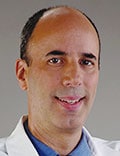
Dr Lawrence Green

Lawrence J. Green, MD, of the department of dermatology at George Washington University, Washington, who was asked to comment about the FDA update on dermal fillers, said that the agency "is doing its job by making consumers aware of all possible complications [common and uncommon], as it does when it creates a package insert for a medication. Fortunately, however, comprehensive reviews published in the peer-reviewed dermatology literature show delayed inflammation to be a very rare event. So, while it is important for dermatologists during informed consent — prior to filler — to discuss that redness and/or nodules after infection/vaccinations, etc. are possible, it is important to add that based on the data, they are also highly unlikely."

Sue Ellen Cox, MD, a dermatologist who practices in Chapel Hill, N.C., said that she was glad to see separate sections of recommendations geared to patients and health care providers. For example, the website recommends that patients seek a physician in the field of dermatology or plastic surgery to perform procedures that use dermal fillers. "These are not procedures to be done in an unsupervised spa setting," said Dr. Cox, a past president of the American Society for Dermatologic Surgery and one of the task force authors of recommendations on preventing and treating adverse events of injectable fillers.

"It also makes the point of using products that are acquired from FDA-approved manufacturers, not products sold online or bootlegged from other countries. Finally, it goes into detail about the importance of in-depth knowledge of anatomy, which is crucial for safe injections and reviews potential complications such as intravascular events and hypersensitivity reactions. The administering physician should have extensive knowledge regarding how to treat any potential problems that arise."

Dr. Green disclosed that he is a speaker, consultant, or investigator for many pharmaceutical companies. Dr. Cox disclosed that she has been a clinical investigator for many injectable companies including AbbVie, Galderma, Revance, and Chroma.

Healthcare professionals, patients, and others can report adverse events related to dermal fillers and other medical devices to the FDA at 800-FDA-1088 or on the MAUDE website.

https://www.medscape.com/s/viewarticle/994127

Companies Forge Ahead In Developing Nausea-Free Alternatives To Wegovy

 Novo Nordisk A/S's 

 hugely popular Weight-loss drug Wegovy has helped people achieve the goal of shedding weight, but many have discontinued it due to severe nausea and side effects.

According to the prescribing information, 44% of patients taking the weekly injection experienced nausea, and 30% experienced vomiting - the guidance for healthcare professionals approved by 

The obesity market's growth potential has attracted attention from investors seeking improved weight-loss drugs with fewer side effects.

Several small biotech companies are developing alternative weight-loss drugs without the side effects of nausea.

Danish Antag Therapeutics told Reuters that the ballooning obesity market has improved its fundraising prospects, and it hopes to close a Series A funding round of €30 million by the end of 2023 to begin its Phase 1 study.

In May, another biotech company, Switzerland-based Aphaia Pharma, launched the Phase 2 trial of its daily glucose formulation, which is mixed with water. Phase 1 data showed that it curbs appetite by restoring the natural release of GLP-1 and other hormones without causing nausea.

Novo Nordisk, Eli Lilly And Co 

, and other major pharmaceutical companies are also working on developing second-generation weight-loss drugs. However, these drugs, like GLP-1s, still cause nausea based on recent trial data.

The interest in the obesity market could significantly increase the number of biotech firms working in this area in the coming years.

https://www.benzinga.com/general/biotech/23/07/33144741/investors-seek-improved-weight-loss-drugs-companies-forge-ahead-in-developing-nausea-free-alterna

Sullivan hints construction workers could have brought in cocaine to Situation Room

 National Security Advisor Jake Sullivan hinted Friday that the cocaine could have come from construction workers, as the area of the White House where it was found is being renovated. 

Sullivan was asked at Friday's press briefing if he had any national security concerns after a bag of the drug was found Sunday near the Situation Room.

He revealed that the coke's proximity to the Situation Room wasn't a problem, because the space hasn't been in use. 

https://www.dailymail.co.uk/news/article-12276731/Sullivan-hints-construction-workers-brought-cocaine.html

Why Shares of CareDx Are Jumping

 Shares of transplant diagnostics company CareDx (CDNA 20.55%) were up more than 20% as of 12:20 p.m. ET on Friday after a decision by the Centers for Medicare & Medicaid Services (CMS) that could favor more diagnostic tests. The healthcare stock is still down by about 12% year to date.

CareDx specializes in testing services and products to help transplant patients, and is a leading provider of genomics-based information for transplant patients. Sales of its tests are keenly affected by the CMS's decisions in terms of approvals and pricing for diagnostic tests. For example, CareDx management withheld its annual guidance because it said it was waiting for updated pricing from the agency. 

A key trend that could help all diagnostic companies came on Thursday when CMS contractor Novitas Solutions, in response to pressure from the federal agency, changed its mind and decided it would continue to cover a host of non-invasive genetic cancer tests. That could signal an opening for all diagnostic testing companies.

Also on Thursday, Biodesix, another data-driven diagnostics company, announced that the CMS had approved its Nodify CDT test as an Advanced Diagnostic Laboratory Test (ADLT), possibly signaling the CMS will cover other such tests, including those marketed by CareDx. There had been concerns that the Medicare Billing Article revisions would curtail coverage of non-invasive post-transplant tests.

CareDx is coming off a difficult first quarter. Its revenue fell 3% year over year to $77.3 million, and it booked a net loss of $23.7 million, compared to a loss of $19.6 million in the same period a year ago. The lone bright spot in the report was that the company saw record testing volume for its AlloMap and AlloSure tests for heart transplants, with roughly 49,000 tests, up 17%, year over year. 

https://www.fool.com/investing/2023/07/07/why-shares-of-caredx-are-jumping-friday/

TG Therapeutics stock rises as Cantor touts Briumvi sales

 TG Therapeutics (TGTX) added ~6% pre-market Friday after Cantor Fitzgerald projected strong Q2 2023 sales for its multiple sclerosis drug

https://seekingalpha.com/news/3986212-tg-therapeutics-stock-rises-cantor-touts-briumvi-sales