Search This Blog

Sunday, August 27, 2023

Neuroactive Steroids Face Hurdles on the Path to Bigger Markets

 Ever since the first neuroactive steroid was approved by the FDA in 2019, new neuroactive steroids to treat neuropsychiatric disorders are entering the drug development pipeline. However, the most advanced of these novel drugs have moved forward in fits and starts, such that progress for this class of therapeutics has been unevenly distributed.

Known as brexanolone, the first neuroactive steroid was marketed by Sage Therapeutics to treat postpartum depression in pregnant women via intravenous injection. This was followed by Marinus Pharmaceuticals’ ganaxolone, which was approved in March 2022 for treating cyclin-dependent kinase-like 5 (CDKL5) deficiency disorder (CDD) in patients two years of age and older.

Then in August 2023, the FDA approved Sage and Biogen’s zuranolone for treating postpartum depression via oral capsule. At the same time, however, the regulatory agency issued a complete response letter for zuranolone in the treatment of major depressive disorder. In the letter, the FDA specified that there was not enough proof of efficacy for the drug in this much more common indication and that additional trials may be needed.

To account for not achieving efficacy endpoints in its Phase III MOUNTAIN trial of major depressive disorder, Sage has increased zuranolone dosing to 50 mg to achieve better outcomes in the follow-up WATERFALL Phase III trial. However, according to the WATERFALL trial results, there was a significant presence of sedation adverse effects in the treatment trial arm compared to placebo, a risk that would likely be magnified if the dose increases beyond that point. Because Sage and Biogen are financially seeking cost-cutting measures, the two collaborating companies are hesitant to pursue another major depressive disorder trial for now, though Sage is planning Phase III trials for treatment-resistant depression, generalized anxiety disorder, and bipolar depression.

Meanwhile, Marinus Pharmaceuticals is moving forward with its neuroactive steroid program, but with similarly spotty success. Ever since the company achieved its first FDA approval for ganaxolone in March 2022, for example, the company has been investigating the use of ganaxolone for treating other neuropsychiatric disorders such as refractory status epilepticus.

In June 2022, Marinus chose to expand the eligibility criteria for its Phase III RAISE trial to include patients previously treated with IV anesthesia as well as patients transferred from other hospitals or treated in the emergency room. However, in August 2023, Oppenheimer downgraded Marinus’ outlook partly due to this expansion in eligibility criteria.

While Marinus’ outlook for refractory status epilepticus may be less bleak than Sage’s outlook for major depressive disorder, Marinus’ outlook is also more unpredictable. In refractory status epilepticus, Marinus runs the risk of having its Phase III trial data compromised by confounding data if too many underlying causes of refractory status epilepticus such as acute brain injury, stroke, trauma, or infection affect the final interpretation of trial results. Given that Marinus’ RAISE trial results have been delayed to Q1 2024, the unknowns behind the final trial analysis may unnerve the investment community. Marinus is also looking into Phase III trials for ganaxolone in tuberous sclerosis complex via the TrustTSC trial.

As the only major companies with neuroactive steroids in late-stage trials at this point in time, Marinus and Sage/Biogen intend to break into lucrative markets. The market size for postpartum depression is approximately $5.1 billion while the market size for status epilepticus is projected to be approximately $4.7 billion by 2030.

Regardless of the risks that neuroactive steroids face in continuing development, the existing progress has already yielded positive results for treating specific subsets of neuropsychiatric disorders such as postpartum depression and CDKL5 deficiency disorder. But it remains a question whether this new class of drugs will be more broadly applicable in the neuropsychiatric space.

https://www.biospace.com/article/opinion-neuroactive-steroids-face-hurdles-on-the-path-to-bigger-markets/

FDA Action Alert: BMS, Outlook and BiolineRx

 The FDA is facing down three upcoming target action dates in the next two weeks, including one in myelodysplastic syndrome and another in wet age-related macular degeneration (AMD).

Read below for more.

BMS Pushes to Expand Reblozyl’s Label

By Aug. 28, the FDA will release its verdict on Bristol Myers Squibb’s supplemental BLA, proposing Reblozyl (luspatercept-aamt) as a treatment option for anemia in adult patients with low- to immediate-risk myelodysplastic syndromes (MDS) without prior use of erythropoiesis-stimulating agents (ESA).

Reblozyl is a recombinant fusion protein that works by binding several ligands under the TGF-β superfamily. In turn, this suppresses the Smad2/3 signaling pathway, which leads to an increase in the number and quality of mature red blood cells. The treatment was first authorized in November 2019 for anemia in beta-thalassemia.

In April 2020, Reblozyl also won approval as a treatment for anemia in lower-risk MDS, but only patients who had failed a prior round of ESA treatment were eligible to receive it. In BMS’s sBLA, which the FDA accepted and granted priority review in May 2023, the company proposed making Reblozyl accessible even for ESA-naive patients.

BMS backed its bid for label expansion with data from the Phase III COMMANDS study, an open-label and randomized trial that compared Reblozyl with the ESA epoetin alfa in the front-line setting for MDS.

Results from the study, which were presented at the 2023 ASCO Annual Meeting last May, demonstrated that 58.5% of Reblozyl-treated patients achieved transfusion independence, compared with 31.2% of those who received epoetin alfa.

There were slightly more safety signals in the Reblozyl arm, including eight patients who dropped out due to toxicities, as opposed to four withdrawals in the epoetin alfa group, but death and progression to acute myeloid leukemia were similar between treatment arms.

BMS acquired Reblozyl when it bought Celgene in 2019 and is developing and commercializing the therapy in collaboration with Merck, which acquired Acceleron, Celgene’s partner in Reblozyl’s development, in September 2021.

Outlook Awaits Verdict in Wet AMD

A day after its BMS decision is on the calendar, the FDA is scheduled to release its verdict on Outlook Therapeutics’ BLA for ONS-5010 in the treatment of wet AMD.

If approved, Outlook expects ONS-5010, an investigational ophthalmic formulation of bevacizumab, to have 12 years of regulatory exclusivity in the U.S. and could eliminate the need to use off-label and unapproved intravitreal bevacizumab from compounding pharmacies, according to the company.

Bevacizumab, sold by Genentech under the brand name Avastin for the treatment of several cancers, is a VEGF inhibitor that works by blocking the interaction of the protein with its cell surface receptors. This prevents the growth of blood vessels, thereby cutting off a tumor’s supply of nutrients and oxygen.

In eye diseases, however, bevacizumab is often used on an off-label basis, meaning that it is being administered without the FDA’s specific approval.

“We estimate that approximately 50% of the millions of anti-VEGF injections in ophthalmology are off-label compounded bevacizumab that is administered with no FDA-approved labeling,” Outlook president and CEO Russell Trenary said in the company’s press release announcing the FDA’s acceptance of its BLA.

Outlook’s bevacizumab formulation meets the regulator’s criteria for intravitreal biologics, the company said. Its BLA is supported by data from the NORSE clinical program, which includes three trials looking at the safety and efficacy of the investigational formulation as compared with Genentech’s Lucentis (ranibizumab), an approved wet AMD treatment.

Overall, the studies showed that Outlook’s formulation was safe and could elicit significant vision improvements, according to the company, which is also seeking approval for its bevacizumab formulation in Europe.

BioLineRx Proposes Aphexda for Stem Cell Mobilization

Next week, on or before Sept. 9, the FDA will decide on BioLineRx’s NDA proposing Aphexda (motixafortide) as a stem cell mobilization agent for patients with multiple myeloma scheduled for autologous stem cell transplantation (ASCT).

In multiple myeloma, as in many other blood cancers, ASCT is part of the standard treatment regimen, often used alongside high-dose chemotherapy.

To eliminate the cancer cells from the body, patients with multiple myeloma are exposed to systemic aggressive treatments, including chemotherapy and whole-body radiation therapy. However, these also often end up damaging healthy stem cells. ASCT replenishes these cells and helps the body make healthy blood cells.

Before stem cells can be harvested from the body, they must first be mobilized, a process by which the stem cells are drawn into the bloodstream from the bone marrow. This is usually achieved through chemotherapy itself or with the use of colony stimulating factors (CSF).

In its NDA, BioLineRx presented data from the Phase III GENESIS trial, which assessed the effect of adding Aphexda to granulocyte-CSF on stem cell mobilization. Just one round of add-on Aphexda in a single apheresis session mobilized the optimal number of stem cells in around 90% of patients, who were then able to proceed directly to transplantation. In comparison, only 10% of patients who received granulocyte-CSF with placebo reached a similar level of stem cell mobilization.

These data suggest that Aphexda has the potential to “become the standard of care in the multiple myeloma transplant setting,” BioLineRx CEO Philip Serlin said in a statement announcing the NDA’s acceptance.

https://www.biospace.com/article/fda-action-alert-bms-outlook-and-biolinerx/

Promising Vertex Pain Med Points to New Era for Analgesics

A medication called VX-548, developed by Vertex Pharmaceuticals, proved superior to placebo in two small Phase II clinical trials for two types of post-surgical pain, according to a study published in The New England Journal of Medicine in early August.

Though the effect was modest, “these trials represent an early foray into an exciting new class of drugs in a difficult field,” Mark Wallace, a physician at UC San Diego’s division of pain medicine who was not involved in the research, wrote in an accompanying editorial. The medication heads now to two Phase III trials with 1,000 participants each, plus an open-label study with 250 participants.

The results couldn’t come at a better time, as the opioid epidemic continues to ravage the U.S., with 50,000 people dying each year from overdose, and 10 million abusing the highly addictive medications annually. The U.S. Department of Health and Human Services (HHS) officially declared opioid abuse a public health emergency in 2017, but until there is a safe and effective alternative to opioids, acute and chronic pain present a silent scourge of their own.

“There is an immense unmet need for new pain medications, even without the opioid epidemic,” Stephen Waxman, a Yale neuroscientist who penned another editorial accompanying the recent NEJM study, told BioSpace.

At least one other firm is pursuing the same target as Vertex, while others are exploring different pain-blocking approaches. “There hasn’t been a new class of pain medicine in more than 20 years,” Vertex spokesperson Heather Nichols told BioSpace in an email. “We believe we could redefine the treatment of pain with the first new mechanism of action in decades.”

Meanwhile, other companies are looking to make opioids themselves safer by removing their addictive qualities.

Vertex Therapeutic Helps Quell Acute Pain

Vertex researchers zeroed in on two distinct, repeatable sources of pain: bunionectomy (a type of foot surgery) and abdominoplasty (tummy tuck), both of which necessitate analgesic medication for acute, post-operative pain. The design allowed for a homogenous patient population, where specific pain was triggered by the same injury.

A total of 274 participants were enrolled in the bunionectomy trial, and 303 participants in the abdominoplasty trial. Participants rated their pain at 19 time points on a scale of zero (no pain) to 10 (the worst pain one can imagine). This led to an overall score known as sum of the pain-intensity difference, or SPID, a measurement the FDA recommends as a primary endpoint in acute pain trials.

Though a moderate dose of VX-548 did not show a significant improvement over placebo, a high dose did. In fact, the high dose acted rapidly, within the first hour of treatment. At 48 hours, the high dose offered more patients at least a 30% reduction in the score on the pain rating scale than placebo did.

Side effects such as nausea, headaches or constipation were mild or moderate, and temporary. Participants on the high dose were less likely to stop medication early because they felt it wasn’t helping than patients on placebo or given a common painkiller that combines hydrodocone bitartrate and acetaminophen.

The new molecule is the end result of decades of research into peripheral voltage-gated sodium channels, often referred to as NaV channels, which are found in sensory neurons outside the brain and are responsible for detecting painful or noxious stimuli. There are nine different types of voltage-gated sodium channels in the body (NaV1.1 to NaV1.9); Vertex’s new medication targets NaV1.8, which is expressed exclusively in sensory neurons of the peripheral nervous system and not the brain.

Researchers have raised concerns about the results, including the fact that the trials were small, and that a higher (thus more effective) dose of acetaminophen/oxycodone was not tested.

Nonetheless, Waxman, whose work on peripheral voltage-gated sodium channels has been widely published, pointed out that the study was a proof-of-concept trial. “It wasn’t necessarily a home run,” he told BioSpace, “but it showed that blocking peripheral gated sodium channels does reduce pain, without central nervous system side effects and without addictive potential.”

Waxman added that he is hopeful that these findings will eventually lead to broadly effective treatments for chronic pain as well. Vertex is already conducting a Phase II trial on diabetic neuropathy, with a study completion date in spring of 2024.

Other Approaches in Development for Pain Management

Vertex is not alone in its quest. “It’s been a race for the holy grail,” commented Waxman. “In 2006, we established very clearly that NaV1.8 is a major controller of the repetitive firing of pain signaling in neurons and if you could block it you would reduce pain.”

In Finland, Orion Pharmaceuticals is working on developing a non-opioid pain therapy dubbed JMKX000623 that also blocks the NaV1.8 sodium channel. This experimental therapy is in Phase I trials. 

And here in the U.S., Virpax Pharmaceuticals is looking at other pain targets and approaches. One of its new analgesics is a liposomal, long-acting, injectable formulation of bupivacaine, a potent local anesthetic similar to lidocaine. It is intended for post-operative pain management and Virpax is developing the formulation in conjunction with the U.S. Army, which is studying its potential in battlefield wounds. The company is also planning Phase I safety trials on two intranasal sprays that would target pain centers in the brain—one is a peptide called enkephalin, and the other, a pharamaceutical-grade cannabidiol.

Meanwhile, in an entirely different approach, biotech startup Ensysce Biosciences has developed a novel chemistry that modifies how opioids are released when taken in order to make them safer. The platform, called TAAP (trypsin activated abuse protection), uses the body’s own digestive enzyme, trypsin, to trigger release of the opioid. That means the pills won’t work if they crushed in order to be snorted or injected—the kind of recreational abuse that is common. The opioid can only be activated in the stomach in the presence of trypsin.

In addition, overdose protection is ensured by adding a tiny amount of trypsin inhibitor to every dose. “If you take the prescribed amount, the amount of trypsin inhibitor is negligible so nothing happens,” explained chemist Lynn Kirkpatrick, CEO at Ensysce Biosciences. “But if you take more than you should, there is enough inhibitor to shut down the activation.”

The company’s molecule is called PF614 and is currently in Phase II clinical trials, and fast tracked by the FDA. It is a prodrug of oxycodone, with a safety profile similar to other traditional opioids, but a 12-hour half-life once ingested, which is longer-acting than current opioids.

“We are talking to the FDA about Phase III plans,” Kirkpatrick told BioSpace. If all goes as planned, she said, the company might have an NDA submitted to the agency by 2025.

https://www.biospace.com/article/promising-vertex-pain-med-points-to-new-era-for-analgesics/

Republicans In Nine Florida Counties Adopt Resolution Calling For Ban Of COVID Vaccines

 by T.J. Muscaro via The Epoch Times (emphasis ours),

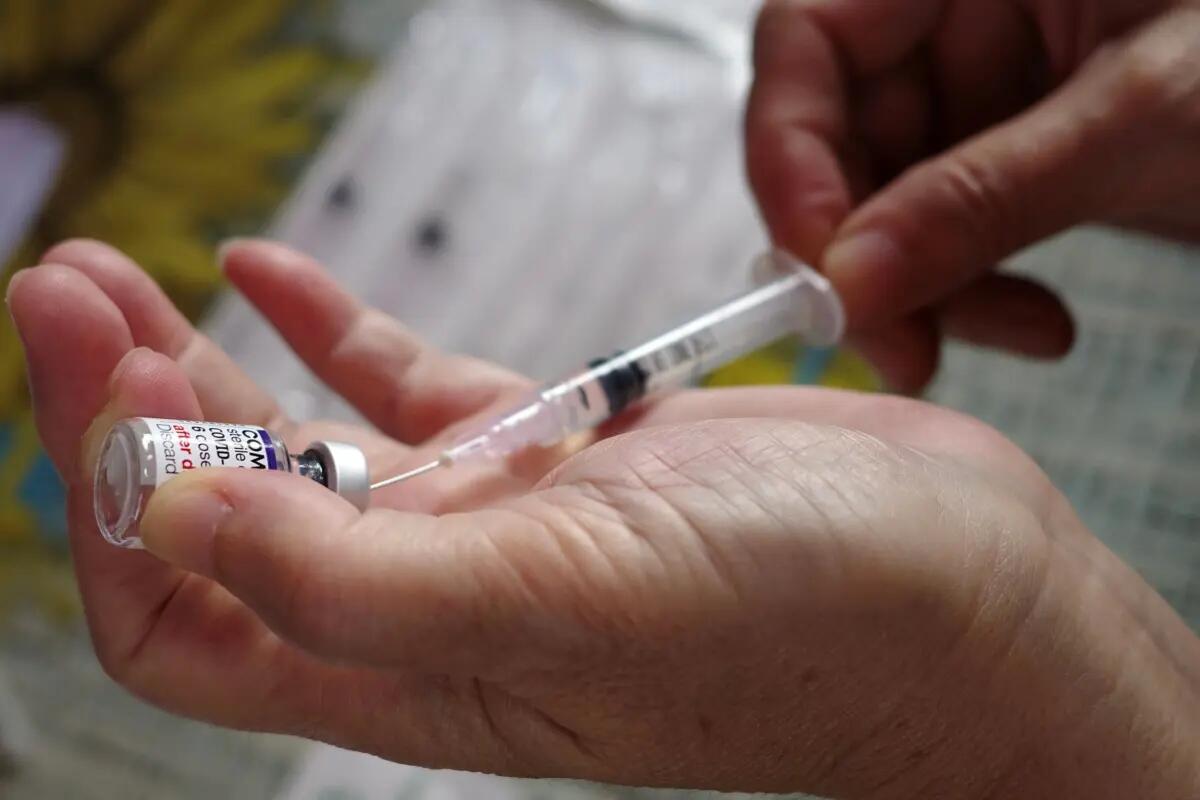
A movement is gaining momentum to pressure Florida Gov. Ron DeSantis, county sheriffs, and the Florida Legislature to ban COVID-19 vaccines and all other mRNA vaccines in the state.

Republican executive committees in nine Florida counties—the local arms of the Republican Party of Florida—have adopted a resolution asking Mr. DeSantis and lawmakers to prohibit the sale and distribution of the vaccines in Florida.

The 83-page resolution also asks state Attorney General Ashley Moody to immediately seize all remaining vaccine supplies and conduct a forensic analysis of them.

The so-called "Ban the Jab" resolution adopted by the local Republican executive committees was written by psychotherapist Joseph Sansone.

It was adopted first by local-level GOP officials in Lee County, which includes Ft. Myers. It was then adopted by the committees in Collier, Lake, Santa Rosa, Seminole, St. Johns Hillsborough, and Brevard Counties. Franklin County became the ninth county to pass it on Aug. 19.

"On behalf of the preservation of the human race, the Lee County Republican Party calls upon Gov. DeSantis and the state legislature to prohibit the sale and distribution of Covid injections and all mRNA injections in the state of Florida, and for the state Attorney General to immediately seize all Covid injections and mRNA injections in the state of Florida and have a forensic analysis conducted," the committee said in voting to adopt the resolution.

The resolution includes more than 140 exhibits of evidence that the authors say point to the independent findings of biomedical professionals and others concerned about vaccines.

None of the executive counties responded to The Epoch Times' request for further comment.

The CDC declined to comment. The Republican Party of Florida, Pfizer, Moderna, and the FDA did not respond to requests for comment from The Epoch Times.

Accusations Against the Vaccine

The resolution adopted by GOP officials across the state includes a statement from Francis A. Boyle, the human rights lawyer and international law professor credited with writing the Biological Weapons and Anti-Terrorist Act of 1989. That legislation established the U.S. Code's current bioweapon definition. 

Mr. Boyle described the vaccines as "COVID frankenshots" and alleged that they are "existentially dangerous."

It also cites a coalition of 17,000 physicians and medical scientists gathered in May 2022 for what they called the Global COVID Summit.

That summit decided to "recognize that the disastrous COVID-19 public health policies imposed on doctors and our patients are the culmination of a corrupt medical alliance of pharmaceutical, insurance, and healthcare institutions, along with the financial trusts which control them.”

The resolution also cites the national Vaccine Adverse Event Reporting System (VAERS), which chronicles reports of adverse reactions to vaccines including COVID-19 vaccines.

Following the COVID-19 vaccine rollout, there was a reported 1,700 percent increase in VAERS reports and a 4,400 percent increase in reported "life-threatening conditions," according to Florida's own VAERS data.

In total, more than 41,000 adverse-effect VAERS reports were filed in Florida in 2021 and more than 9,000 in 2022.

The Governor's Actions

Mr. DeSantis, currently running for the Republican nomination for president, already has taken measures to push back against vaccine mandates in the state.

He persuaded the Florida Supreme Court to impanel a grand jury in December 2022 to determine if any crimes were committed during the vaccine’s rollout.

In May, he signed four medical freedom bills.

Senate Bill 252 prohibits discrimination based on vaccination status and bans vaccine passports.

House Bill 1387 bans gain-of-function research in the state of Florida.

Senate Bill 1580 guarantees freedom of speech protections for physicians and medical professionals, such as protection for whistleblowers and the ability to object to participating in any treatments.

And Senate Bill 238 link provides protection against discrimination based on health care choices by keeping any investigations on the matter confidential. 

Gov. Ron DeSantis (L) announced Florida's new surgeon general, Dr. Joseph Ladapo, on Sept. 21, 2021. (Courtesy of the Florida Governor's Office)

Florida Surgeon General Dr. Joseph Ladapo has been critical of the federal government's pressure for citizens to submit to COVID-19 vaccines.

Healthcare professionals should always communicate the risks of a medical intervention to their patients in a manner that is clinically appropriate and meets standards of ethical practice," he said during a round-table discussion with Mr. DeSantis in December 2022.

"President Biden and Big Pharma have completely prevented that from happening—it is wrong.

“With these new actions, we will shed light on the forces that have obscured truthful communication about the COVID-19 vaccines.”

Dan Berger contributed to this report.

https://www.zerohedge.com/political/republicans-nine-florida-counties-adopt-resolution-calling-ban-covid-19-vaccines

China approves 37 retail funds to help revive market

 China's securities regulator approved the launch of 37 retail funds over the weekend, part of government efforts to revive a stock market struggling for lift-off in an ailing economy.

The move comes on top of a slew of measures to shore up the market, including a stamp duty cut, slower pace of IPOs and lower margin financing requirements.

The newly-approved funds, which will guide fresh capital into the market, include 10 exchange-traded funds (ETFs) that track the small-cap CSI 2000 Index and seven tech-focused ETFs, according to the China Securities Regulatory Commission (CSRC) website.

The remaining 20 products are innovative mutual funds that for the first time charge investors floating fees, to be pegged to fund size, performance, or holding period.

The CSRC has vowed to fast-track ETF approvals, and guide asset managers to lower management and trading fees, along with several other market-friendly measures.

China's bluechip CSI300 Index surged more than 5% at the open on Monday, but is still down roughly 6% from an April peak.

China's leaders vowed late last month to boost investor confidence and reinvigorate the stock market - the world's second largest - which has been reeling as the post-pandemic recovery flags and a debt crisis in the property market deepens.

In an editorial on Monday, the official China Securities Journal said that recent support measures underline authorities' determination to stabilise the capital market, whose sound operation is essential to China's economic recovery.

"A vibrant capital market is key to stabilizing people's expectations and increasing confidence," the editorial said.

"Policymakers' resolve to revive the market and boost confidence must not be underestimated."

https://www.marketscreener.com/quote/index/TOPIX-INDEX-61714390/news/China-approves-37-retail-funds-to-help-revive-market-44708557/

Si-Bone top pick at Morgan Stanley

The investment bank said it selected SI Bone for its top picks list in part for the company's “multi-pronged growth story"

https://seekingalpha.com/news/4006586-morgan-stanley-bullish-on-si-bone-downgrades-stevanato-integra-agiliti?source=feed_sector_healthcare

Dr. Jay Bhattacharya: Biden Admin's Push For Everyone To Get New COVID Vax 'Irresponsible'

 by Nathan Worcester and Jan Jekielek via The Epoch Times (emphasis ours),

President Joe Biden's comments that all Americans will "likely" be advised to get a new COVID vaccine as new variants spread through the country are "irresponsible," according to Stanford University Professor of Medicine Dr. Jay Bhattacharya.

“I signed off this morning on a proposal we have to present to the Congress, a request for additional funding for a new vaccine—that is necessary, that works," Mr. Biden told reporters in South Lake Tahoe, California, on Aug. 25.

"And tentatively, not decided finally yet, tentatively it is recommended—it is likely to be recommended—that everybody get it, no matter whether they got it before," he added.

Dr. Jay Bhattacharya, professor of medicine at Stanford University and one of the co-authors of the Great Barrington Declaration, in Hartford, Conn., on Feb. 17, 2023. (Tal Atzmon/The Epoch Times)

Since early July, COVID-19 hospitalizations have been on the rise domestically, with three new variants of the disease spreading across the country. The uptick has resulted in some businesses, schools, and hospitals reinstating mask mandates.

Multiple drug companies, including Pfizer, Novavax, and Moderna, have introduced new vaccines they say will be effective against the EG.5, or ERIS, variant of COVID-19.

"It never occurred to me that an American president would be the number one spokesperson for a pharmaceutical company, but here we are," Dr. Bhattacharya told The Epoch Times.

"It's irresponsible to make this kind of public health advice for the entire American public in the absence of excellent randomized trial evidence, which has not been produced by the pharmaceutical companies," he added.

"The FDA [Food and Drug Administration] never asked for them to produce them," Dr. Bhattacharya said, referring to vaccines targeting the new COVID variants.

The Standard professor said that authorities are incorrectly treating COVID booster shots " just like the flu vaccine, that you just update it from year to year."

President Joe Biden leaves after attending a pilates class in South Tahoe, Calif., on Aug. 25, 2023. (Mandel Ngan/AFP via Getty Images)

But, in contrast with the COVID-19 injections, for flu vaccines "there's a long track record where the safety record of the vaccine is understood," Dr. Bhattacharya said.

"Not requiring randomized trial evidence for updating the vaccine is irresponsible. It's using a different mechanism than the flu vaccine. You can't extend the experience you have with the flu vaccine to this vaccine," he said.

The professor also picked up on President Biden's comment that everyone will likely be advised to take the new vaccine "no matter whether they got it before."

"Here where they're saying is, essentially like it's amnesty—We're all going to be treated as if we're unvaccinated with regard to this vaccine," Dr. Bhattacharya said.

According to CNBC, Centers for Disease Control and Prevention (CDC) officials told reporters Thursday that the vaccines are expected to become available to the public in mid-September, though they are still pending approval from the FDA.

An independent CDC advisory committee is scheduled to meet on Sept. 12 to vote on recommended guidelines for eligibility for the new COVID-19 jabs.

During the press briefing, CDC and FDA officials advised that both agencies intended to urge Americans to get an updated COVID-19 shot, as well as the flu shot and the recently approved RSV (respiratory syncytial virus) vaccine produced by GlaxoSmithKline.

Vaccination is going to continue to be key this year because immunity wanes and because the COVID-19 virus continues to change,” a CDC official said.

Dr. Paul Marik of the Front Line COVID-19 Critical Care was scathing in his response to the president's announcement.

"It's insanity," he told The Epoch Times.

"I think the vaccines have failed, and this is untested," he added.

"Making a new vaccine against a new variant which is untested makes no sense," Dr. Marik continued, saying that he "can't see any group of patients who would benefit from a vaccine."

"We need to know more information," he added.

Samantha Flom contributed to this report. 

https://www.zerohedge.com/political/dr-jay-bhattacharya-biden-admins-push-everyone-get-new-covid-vaccine-irresponsible