Search This Blog

Wednesday, October 4, 2023

Forget Simplicity, Give Us Truth

 In the United States, Covid vaccine policy continues to be out of step with the world and out of touch with the people. If the CDC wishes to regain trust, they should make honesty, not simplicity their guiding principle.

Once again, a new Covid vaccine has debuted, and once again, the Center for Disease Control (CDC) has issued a recommendation that baffles me. The CDC asserts that all Americans older than six months should get the jab.

Nevermind that we have no clinical data on this new shot. Nevermind that the risk of Covid is markedly age-dependent. Nevermind that for a healthy teen who already had Omicron, for example, the risk of severe Covid from current strains must be miniscule. Everyone needs the shot, period.

Of course, we are not the only country developing Covid policy. So, how does the CDC’s recommendation compare with policy from our peer nations in Europe?

  • Germany: Recommended for people 60+ and those with high-risk conditions.

  • England: Recommended for people 65+ and those with high-risk conditions.

  • France: Recommended for people 65+ and those with high-risk conditions.

  • Denmark: Recommended for people 65+ and those with high-risk conditions.

Clearly, on the question of Covid booster policy, the United States continues to be an outlier.

What is the rationale for the CDC’s one-size-fits-all recommendation? Why is our policy so much more aggressive than that of Europe? Why advocate for a booster even to those who are very unlikely to benefit?

One rationale that has been proffered for the CDC’s blanket recommendation is that we need a simple message. For example, The Atlantic quotes Dr. Anthony Fauci as saying “‘I would recommend it for everyone’ for the sheer sake of clarity.”

Apparently, many high-risk Americans previously passed on Covid boosters, because they were confused. I guess we have a ton of 72 year-olds who are unsure if their age is greater than 65 (correct answer: it is).

For argument’s sake, let’s take this at face value, and assume that the desire for a simple message is the reason for the CDC’s aggressive Covid vaccine recommendation. By prioritizing simplicity over clinical utility, the CDC has fashioned a recommendation that will be ignored by most, and the organization will continue to lose credibility.

My predictions: The great majority of Americans will ignore the CDC and forgo the booster. Not only will their blanket recommendation not move the needle on vaccine uptake, it will paradoxically discourage vaccination, because people will consider the recommendation overzealous and reflexively dismiss the shot. More problematic, the majority of US physicians will ignore the CDC, and recommend the booster only to high-risk patients. If I am right, this is a huge problem: Do we really want doctors ignoring the advice of the CDC?

If the CDC wishes to regain credibility and trust, they should prioritize honesty over simplicity. A first step would be to provide a frank (and simple) recounting of the history of Covid vaccines — a remarkable medical achievement whose image was unfortunately tarnished by media hype and misplaced hope.

This is just fantasy, but following is the message that I would love to hear from the CDC:

In early 2020, the world was hit by a terrible and frightening pandemic. Fortunately, the pharmaceutical industry sprang into action. We hoped that they could rapidly produce a vaccine that would stop people from dying of Covid.

Incredibly, they exceeded our expectations, quickly developing vaccines that performed exceptionally well in clinical trials. In fact, the trials were so successful, that a new hope was born: the vaccines would stop people from acquiring Covid, stop people from spreading Covid, and stop the virus in its tracks.

Led by this new hope, we encouraged all Americans to get vaccinated. Vaccination was no longer a question of personal risk reduction, but a civic obligation to end the pandemic. Unfortunately, this second, bigger hope was dashed — the viral waves continued to crash, and we all got sick, regardless of our vaccination status.

Thankfully, the original promise held true: the vaccine continued to offer protection from severe disease. But clearly, we have needed to lower our expectations of what these vaccines can do.

As we have scaled back our expectations, so too have we scaled back our recommendations — we now recommend a Covid vaccine booster to people aged 65 and older, and for those younger patients who have medical conditions that place them at increased risk for complicated Covid infection. If you are uncertain whether you are at high risk, please consult a physician.

If you are not high-risk, but would nevertheless prefer to have a booster, please do so. There continues to be significant uncertainty around Covid and Covid vaccines, and in areas of medical uncertainty, personal preference should guide decision making.

No, I am not holding my breath that Dr. Fauci will emerge from retirement to deliver the above speech. So for now, I’ll be looking to Europe for my vaccine recommendations.


I'm a primary care doc in NYC with Weill Cornell Medicine. 

https://sensiblemed.substack.com/p/forget-simplicity-give-us-truth

Germs thrive in these body ‘hot spots’: Study finds ‘grandma hypothesis’ true

 Grandma knows best.

A recent study published in the journal Frontiers in Microbiology found that certain places on the body are “hot spots” for germs and unhealthy bacteria.

Scientists at George Washington University in Washington, DC, tested what they dubbed “the grandma hypothesis” — named for grandma’s warnings to clean behind your ears and in between your toes.

The team had set out to analyze the skin microbiome of healthy people. The microbiome — the community of microbes living on or in the human body — plays a role in your overall health, and its composition varies across dry, moist and oily regions of the skin.

Keith Crandall, director of GWU’s Computational Biology Institute and professor of biostatistics and bioinformatics, recalled his grandmother always instructing the kids in his family to “scrub behind the ears, between the toes and in the belly button.”

He noted that these areas of the body are typically washed and cleaned less than other parts of the body, such as arms and legs, and could potentially host different kinds of bacteria.

Close-up of a real person, real life senior adult man who has been wearing protective face masks for more than a year because of the Covid-19 coronavirus pandemic pulling his ear away from his head to show the chapped and raw peeling skin condition behind the ear where coarse elastic loops holding the masks in place constantly scrape his skin.
Scientists at George Washington University tested what they dubbed “the grandma hypothesis” — named for grandma’s warnings to clean behind your ears and in between your toes.
Getty Images/iStockphoto

Researchers noted that that when “trouble-making” microbes dominate the microbiome, they can alter bacteria behavior in a way that is detrimental to human health. If the microbiome shifts toward the destructive microbes, it can result in skin diseases such as eczema and acne, Crandall said in a university press release.

To test if grandma is indeed correct, he teamed up with Marcos Pérez-Losada, an associate professor of biostatistics and bioinformatics at GWU’s Milken Institute School of Public Health, to create an innovative genomics course and enlisted students to help them see if there was any truth to the theory.

A group of 129 undergraduate and graduate students collected their own data by swabbing specific oily and moist hot spots — behind the ears, between the toes and in the navel — as well as dry areas such as calves and forearms for control samples.

Closeup of female feet with itchy skin affected by fungal infection
A group of 129 undergraduate and graduate students collected their own data by swabbing specific oily and moist hot spots.
Getty Images/iStockphoto

Students were then taught how to extract and sequence the DNA in their samples to compare the microbes in the oily areas to those in the control spots.

The group found that a person’s forearms and calves — which are often more thoroughly cleaned — had a greater diversity of microbiomes, making them a potentially healthy collection, compared to samples taken in the “hot spots.”

Researchers found the grandma hypothesis to be true, and the results showed that keeping up cleaning habits can change the microbes on the skin and, thus, alter health status, Crandall said.

This study was one of the first to test the diversity of sites across the skin microbiome in healthy adults, including a previous study from the same team.

Crandall added that the study of how microbes on the skin lead to health or disease is in its early stages, and that this could be a pinpoint for future findings.

https://nypost.com/2023/10/03/germs-thrive-in-these-body-hot-spots-study-finds-grandma-hypothesis-true/

GAO: Antiviral Drugs: Economic Incentives and Strategies for Pandemic Preparedness

 Fast Facts

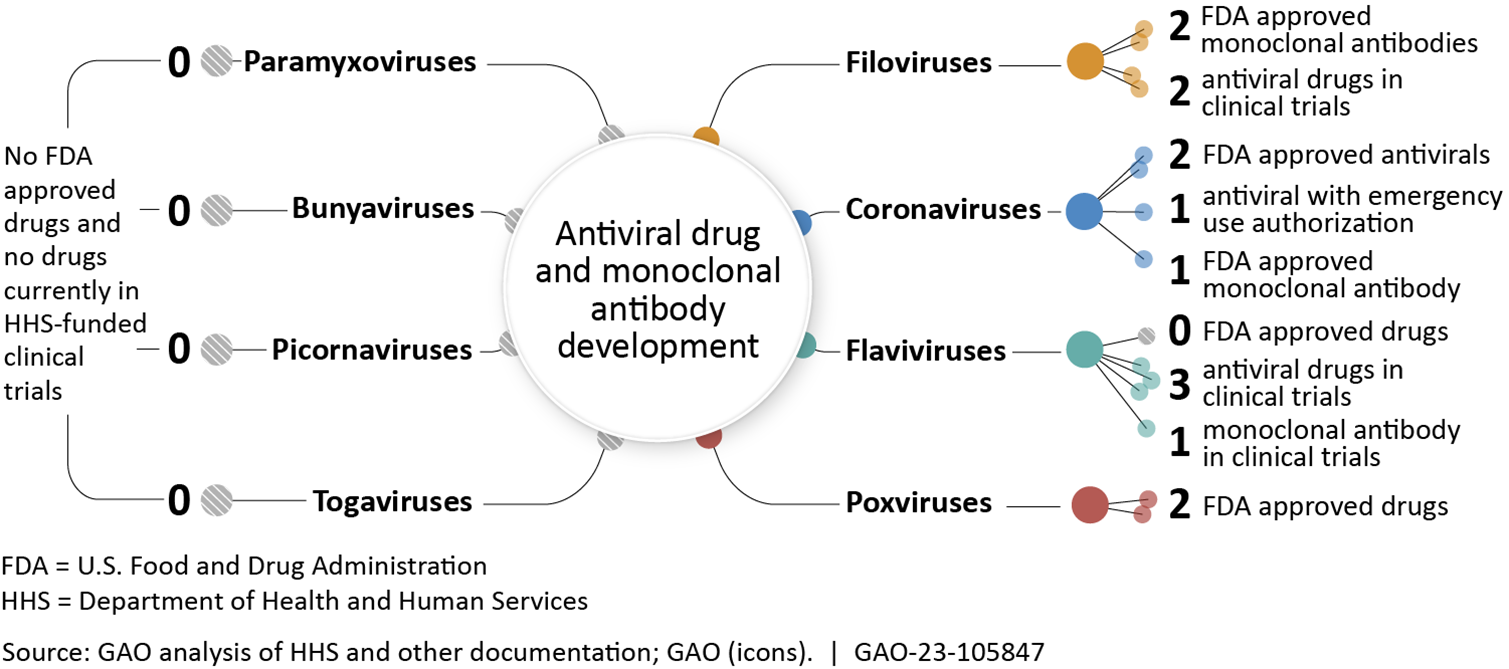
Scientists have predicted that another pandemic is likely. They've identified the viruses that might cause it—although the Department of Health and Human Services told us that few antiviral drugs for those viruses have been approved or are in HHS-funded clinical trials.

Our panel of experts suggested several ways for policymakers to incentivize the development of these antiviral drugs, such as research grants or commitments to buy the drugs once they're approved.

This report covers incentives and policy options to help develop antiviral drugs now, should policymakers want to invest in these drugs to prepare for a future pandemic.

An image of two medical professionals sitting in a lab. One is working at the computer, examining notes. The other is preparing samples to be viewed under a microscope.

Reissued with Revisions Sep 29, 2023
The report distributed the morning of September 29th, 2023 was revised to list congressional committees as the addressees on the highlights page.
Skip to Highlights
Highlights

What GAO Found

Antiviral drugs help the body fight off harmful viruses and can ease symptoms and shorten the length of an infection. Some of these drugs can be broadly acting—that is, they can treat infections from multiple viruses. This makes them especially valuable in a future pandemic where the viral threat is unknown in advance. Some scientists predict that viruses are most likely to be the source of the next pandemic because they are able to spread rapidly and because there are fewer treatment options for viruses.

The National Institutes of Health (NIH) has identified several viral families that have potential to cause future pandemics. However, as of May 2023, no known drugs for a number of these viral families had been approved or were in clinical trials funded by the Department of Health and Human Services (HHS), according to HHS. GAO identified a number of technologies to speed antiviral drug development, such as using artificial intelligence to identify drug candidates.

State of Drug Development for Viral Families with High Potential to Cause Future Pandemics

Note: Monoclonal antibodies are lab-produced proteins that can be used to treat or prevent viral infections. Graphic refers to clinical trials funded by either the Biomedical Advanced Research Development Authority or the National Institute of Allergy and Infectious Disease within the Department of Health and Human Services (HHS).

Experts GAO spoke with noted that a number of factors complicating the market’s efficient functioning make it unlikely that market forces alone will induce the development of antiviral drugs at levels that would maximally benefit society and aid future pandemic preparedness. However, policymakers could use several mechanisms to incentivize investment in antiviral drugs. “Push” mechanisms, such as research grants, can incentivize early research, while “pull” mechanisms, such as purchase commitments, can incentivize the production of completed antivirals.

In 2022, the White House issued the National Biodefense Strategy and Implementation Plan, which called for the development of two novel antiviral drugs. Experts GAO spoke with also identified a number of approaches to guide the use of economic incentives. These approaches include developing (1) a number of antiviral drugs to the point of phase 1 clinical trials, which could be less costly than developing fully approved drugs; (2) a wide range of antiviral drugs that act against different parts of the viral lifecycle; and (3) broadly acting antiviral drugs for a wide range of pathogens.

GAO identified three policy options that may help to spur antiviral drug development. These policy options are provided to inform policymakers—including Congress, federal agencies, state and local governments, academia, industry, and international organizations—about potential approaches and actions to address gaps highlighted in this technology assessment. Policymakers would need to consider how to align these potential actions with existing federal programs and initiatives. See below for a summary of policy options as well as related opportunities and considerations.

Policy Options to Facilitate the Development of Antiviral Drugs for Future Pandemics

Policy optionOpportunitiesConsiderations

Create a strategy to focus on developing diverse antiviral drugs to respond to pandemics caused by the most dangerous pathogens (report p. 33).


Policymakers could ensure focus on pathogens and pathogen families, such as flaviviruses and bunyaviruses, that are most likely to cause severe future pandemics, with an emphasis on pathogen families for which no drug candidates are currently in clinical trials.

  • Designing hypothetical pandemic scenarios could help identify the relative likelihoods that an outbreak could quickly become severe and widespread, indicating which antiviral drugs may need to be stockpiled and which need to be developed only to the point of phase 1 clinical trials.

  • Focusing attention on viral families with no drug candidates in clinical trials could spur research and development.

  • Developing drug candidates through phase 1 clinical trials would provide information on the initial safety profile and side effects of different doses in advance of potential pandemics.
  • Not every possible pandemic scenario can be considered, and a pathogen that may cause a future pandemic might not appear on current lists of potential pandemic pathogens.

  • It is difficult to predict how a novel pathogen may travel across populations. Therefore, assessing the stage to which each drug candidate should be developed and how much manufacturing might be needed may also be difficult.

Assign to a new or existing entity the authority to lead, implement, and be accountable for identifying and developing antiviral drugs for pathogens or pathogen families of greatest risk (report p. 34).


Policymakers could ensure that this entity has authority and accountability for making decisions and allocating resources to implement a strategy for addressing pathogens and pathogen families informed by pandemic scenarios and the risks they present.

  • A single, centralized entity could direct strategic investments for pandemics, increase communication across federal agencies and with drug developers, and facilitate greater accountability for more effective allocation of resources and response to the spectrum of pandemic threats.

  • A single entity that is explicitly accountable for pandemic preparedness and response could effectively mitigate pandemic risks and enhance government efforts to deal with uncertain but likely pandemic risks. When multiple entities share fragmented responsibilities, no one entity is accountable for the ultimate success of the effort.
  • Because authorities among HHS entities vary, designating an entity with responsibility and authority may require new directives or legislation.

  • To be effective, any entity with such authority for identifying and developing pandemic antiviral drugs would need to coordinate or align its efforts with related efforts, such as the development of vaccines, diagnostics, and surveillance.

Implement economic incentives to develop antiviral drug candidates and spur new drug-development technologies (report p. 35).


Policymakers could use various push and pull economic incentives to encourage the development of pandemic antiviral drugs, based on the economic costs of scenarios, scientific opportunities, and pathogen priorities. They could also consider other policy priorities, such as drug accessibility.


Policymakers could use economic incentives to stockpile certain drugs in advance as well to ensure sufficient manufacturing capacity.

  • Economic incentives could address the identified challenges related to critical market failures that have limited investment in pandemic antiviral drugs. Through such actions, economic and societal costs from viral pandemics could be meaningfully reduced.

  • Manufacturing capacity for pandemic antiviral drugs may be useable for similar antiviral drugs with an existing commercial market.

  • New drug development technologies spurred by investment in pandemic antiviral drugs may allow for the treatment of nonpandemic infectious diseases, especially diseases caused by pathogens in the same family as those targeted for antiviral development.
  • Periodic updates to evaluations of pandemic risks would be needed to guide the deployment of economic incentives for new antivirals and drug development technologies and the extent of investment needed as new pandemic pathogens arise.

  • Evidence of the full range of potential pandemic costs may be unavailable or insufficient for precise determinations of the level of investment needed to achieve certain levels of preparedness.

Source: GAO. | GAO-23-105847

Why GAO Did This Study

Pandemics impose large human and economic costs on society. According to the World Health Organization, almost 7 million people died worldwide during the COVID-19 pandemic. The International Monetary Fund estimates that by 2024, COVID-19 will have reduced global economic output by $13.8 trillion relative to prepandemic forecasts. Scientists have predicted that another pandemic is highly likely.

The CARES Act included a provision for GAO to report on the federal response to the COVID-19 pandemic. This report discusses incentives and strategies to enhance antiviral drug investment.

GAO reviewed economic and scientific literature relevant to these areas. GAO also interviewed stakeholders and experts with perspectives on the science and economics of antiviral drug development, including those at HHS. In addition, GAO convened, with assistance from the National Academies of Sciences, Engineering, and Medicine, a 2-day meeting of 16 experts.

GAO is identifying policy options in this report.

For more information, contact Michael Hoffman at (202) 512-2700, HoffmanME@gao.gov or Candice Wright at (202) 512-6888, WrightC@gao.gov.


Reissued with revisions on Sept. 29, 2023

The report distributed the morning of September 29th, 2023 was revised to list congressional committees as the addressees on the highlights page.

Investors Fuel Fountain of Youth Research with Longevity Company Funding

 While the wonders of modern medicine helped to double global life expectancy between 1920 and 2020, human health span has not followed the upward trend. Today, more than ever, people are living more years in poor health. The call to develop therapeutics that interfere with aging, helping people live not only longer but healthier lives, is increasing.

So it isn't surprising that, even in the current economy, some up-and-coming longevity-focused biotech companies are managing to snag funds to push closer to the clinic with therapeutics that have the potential to transform how we age.

New Kids on the Block

In early September, California-based Rejuvenation Technologies posted $10.6 million in seed financing, led by Khosla Ventures, a firm headed by businessman and entrepreneur Vinod Khosla. Another $4.6 million in grant money brings the company’s initial funding to more than $15 million.

Rejuvenation is looking to rewind the body’s molecular aging clock by targeting telomere shortening. The biotech’s platform is built around optimized telomerase mRNA encapsulated in custom tissue-targeted lipid nanoparticles. Its first target will be fibrotic lung diseases and liver cirrhosis—both conditions primarily diagnosed in people over 50.

Another startup out of Cambridge, founded by a neurosurgeon, is harnessing human pluripotent stem cells for their regenerative capabilities. Clock.bio broke out of the gates with $4 million in hand to pursue a validated “short cut” to reading the genetic codes specific to rejuvenation inside human cells, CEO Markus Gstöttner told BioSpace. In the next 12 months, Gstöttner said the company should be able to identify the most relevant genes to target new pathways to treat age-related disease.

Clock.bio doesn’t yet have a target identified, as that will come with its genome decoding process. The company’s aim is to “extend healthspan by 20 years based on biomarkers of aging” in a Phase III trial by the end of this decade, Gstöttner said.

Why Now

In the current economy, attracting investors is no small feat. Yet progress in the longevity field is vital not only for society but also for the global financial burden, according to a cost-benefit analysis from Sarah Constantin, previously executive director at Longevity Research Institute, which suggests that “aging research could be comparable or superior in cost-effectiveness to the most cost-effective global health interventions.”

Perhaps reflecting this need, the longevity sector is projected to be worth at least $600 billion by 2025, according to Bank of America analysts.

The gap between lifespan and health span—the period of a person’s life when they’re generally in good health—is estimated at around 9 years.

For Rejuvenation, the time was right to enter this space due to the convergence of knowledge and tools. The knowledge around the effect of telomere shortening on aging and age-related disease is not new. However, the mRNA technology the company will utilize has finally had its kinks worked out, contended CEO John Ramunas.

“The challenge is delivery and that was what held us up for a few years,” Ramunas told BioSpace. It was breakthroughs in 2019 and 2021 that brought “ways to deliver messenger RNA with this efficiency and tolerability that it is now ready for the clinic,” he said.

Khosla Ventures, the primary driver of Rejuvenation’s seed round, is invested in three other longevity companies, one of which, Loyal, focuses on extending the lifespan of large dog breeds. Rubedo is targeting senescent cells, which accumulate with age and taint healthy cells leading to stem cell exhaustion and chronic inflammation.

Ramunas pointed to Khosla’s interest as a driving factor in the company’s successful seed round. Vinod Khosla has been a name in the longevity space—and telomeres—since his involvement in funding Geron in the 1990s, when it was focused on modifying human aging by way of telomerase activity. As a leader in the space, his participation means something to other investors, Ramunas said.

“We’re diversifying our strategies by backing various innovative approaches,” Shernaz Daver, Khosla’s head of marketing, told BioSpace in an email.

Clock.bio’s lead investor is BlueYard Capital, a firm that backs founders “at the earliest stages.” Its biology arm invests in companies that can help humanity “live long and prosper,” according to its website.

For some funds, Clock.bio and Rejuvenation are still a little too early stage. For instance, Sourav Sinha, a partner and head of strategy for Longevity Vision Fund (LVF), told BioSpace that LVF is a “science first fund” that typically invests at later stages of growth at companies’ Series B and Series C funding rounds, as well as crossover rounds.

Any investment the firm makes is in companies that are not targeting a symptom but leveraging deep science with a platform that can “interrogate and prosecute” the longevity pathways, Sinha said. The majority of the fund’s investments are in companies either approaching the clinic or already in clinical trials.

A key factor for any longevity biotech looking to pull in investors is a pipeline targeting age-related diseases rather than attempting to target aging as a whole, aging research expert Alex Zhavoronkov wrote in Forbes. “Good news is that if the drug works in aging, it will work in some of the age-related diseases,” he stated.

Market Outlook

Over the past five years, investors have shown an increased interest in the longevity space, with investment peaking in 2021 at a record-breaking $7.65 billion. 2022 financing came close to that high at $6.94 billion, pumped up from a $3 billion investment in Altos Labs, presumed to be by Jeff Bezos.

2023 has been a rough go for biotech investments across the board, and the longevity space is no exception. According to a report from Longevity.Technology, the first quarter of 2023 brought in $233 million over 20 deals for longevity-focused companies, in contrast to the previous quarter, which saw more than $1.2 billion in investments. The second quarter of this year posted a small uptick to $282 million, with another 20 deals struck.

It can be hard to pinpoint the potential market size for a successful longevity therapeutic. Studies are “all over the map,” Daver said. “One solid way to look at this is to see the statins market since it is effectively used as a longevity drug, namely for reducing cardiac risk. Most of them are off-patent, but it’s still $15 billion a year in sales.”

Constantin summed up the market potential this way: “If you like high-risk, high-return, cost-effective lifesaving projects,” then aging research is an especially good investment “because the level of existing funding is so low, and the size of the impact of success is so high.”

https://www.biospace.com/article/investors-fuel-fountain-of-youth-research-with-longevity-company-investments/

Pharma Companies Form Coalition to Fight FTC Antitrust Overhaul

 Pharma giants including AbbVie, Amgen, Gilead, Merck and Novartis have helped to form a new 31-member industry coalition, the Partnership for the U.S. Life Science Ecosystem, that plans to push back against a proposed overhaul of federal antitrust guidelines and advocate for “pro-innovation” mergers and acquisitions in the sector.

In Wednesday’s announcement about the formation of the Partnership for the U.S. Life Science Ecosystem (PULSE), the pharma-backed coalition said that the Federal Trade Commission’s new approach to antitrust enforcement “runs counter to long-standing precedent that has guided pro-innovation M&A for decades.” The group also warned that if the “flawed approach” to M&A review and enforcement goes forward it “would undermine the dynamic ecosystem responsible for many of the world’s most innovative and important treatments.”

The Department of Justice (DOJ) and FTC in July 2023 released new draft merger guidelines in a significant shift in their approach to examining mergers in industries including the pharma sector. Among the 13 proposed principles for reviewing mergers is a key principle that mergers should not substantially increase concentration in already highly saturated markets.

In addition, previously the FTC’s antitrust enforcers primarily focused on direct competition. However, the updated guidelines now consider how companies leverage their negotiating power.

DOJ and FTC earlier this summer also proposed changes to the premerger notification and review process as well as the form that companies must complete. These new requirements could add two to three months to the deal-review timetable. However, the agencies contend that the new filing rules will allow them to “more effectively and efficiently screen transactions” for antitrust concerns.

Amgen, a founding member of PULSE, was sued by the FTC in May 2023 to stop the company from acquiring Horizon Therapeutics, though an agreement was reached allowing the acquisition to proceed in September. The $27.8 billion deal was by far the largest of its kind in 2022.

Biotech executive Andrew Pannu, with a background in investment banking, private equity and corporate development, told Biospace last month that the case suggests the Biden administration is taking a closer look at the industry’s rebating practices. The FTC’s concern was that Amgen could pressure pharmacy benefit managers into favoring Horizon treatments by offering rebates on its own drugs which can be used in a complementary way.

PULSE contends that “deterring pro-innovation M&A would obstruct the many complementary relationships across the life sciences ecosystem, stalling treatments and cures for patients while risking jobs, wages and economic growth in every state.” The coalition’s strategy is for its members to “collectively highlight the importance of shared efficiencies and expertise that companies leverage across the development process through M&A” and to “provide real-world insight into the economic importance and benefits of M&A within local communities and to broader growth and development.”

https://www.biospace.com/article/pharma-companies-form-coalition-to-fight-ftc-antitrust-overhaul/

Labcorp to acquire Baystate Health's outreach laboratory business

 Collaboration to improve access and enhance affordable, high-quality healthcare services for underserved communities across Massachusetts

https://www.prnewswire.com/news-releases/labcorp-and-baystate-health-announce-strategic-relationship-for-diagnostic-laboratory-services-301947592.html