Search This Blog

Monday, February 5, 2024

Regeneron Looks to Target Weight Loss Market with Muscle-Preserving Antibodies

 Regeneron is gearing up to jump into the highly lucrative obesity market with a Phase II trial for its muscle-conserving antibodies slated for the middle of 2024, the company revealed Friday during its fourth-quarter and full-year 2023 earnings presentation.

“Despite all the enthusiasm surrounding GLP-1 agonist for obesity, it has been increasingly recognized that the profound weight loss is accompanied by substantial muscle loss accounting for up to as much as 40% of the weight loss,” Regeneron CEO George Yancopoulos said during Friday’s call with investors.

Yancopoulos called the risk of muscle atrophy “potentially irretrievable” and “catastrophic,” with the possibility of triggering “major public health concerns in the future.”

While Regeneron will be up against market leaders Novo Nordisk and Eli Lilly in the obesity space, its approach is more an attempt at synergy than direct competition. The New York-based pharma is developing two monoclonal antibodies—trevogrumab and garetosmab—which it aims to test in combination with incretin-based therapies, such as semaglutide and tirzepatide.

Trevogrumab targets and inhibits myostatin which is a negative regulator of skeletal muscle, while garetosmab binds to activin A, also a key player in muscle deterioration. By blocking both pathways, Regeneron’s antibodies could potentially boost the quality of weight loss in patients by preserving lean muscle in patients taking GLP-1 receptor agonists, according to the company’s presentation.

Regeneron expects to start enrolling obese patients in the Phase II study in mid-2024, pending findings from a safety and tolerability study of high-dose trevogrumab in healthy volunteers.

Both Novo and Lilly have also begun to try to address muscle atrophy in their already-dominant obesity franchises. In July 2023, Lilly bought Versanis for $1.925 billion gaining access to bimagrumab, which also blocks the activin and myostatin cascades to preserve muscle mass during weight loss.

Novo dropped $255 million in January 2024 to license from Swiss biotech EraCal Therapeutics an oral pill designed to suppress appetite and control body weight.

Regeneron reported total revenue of $3.43 billion in the fourth quarter of 2023, representing a slight 1% improvement from the same period the prior year. Full-year revenues, however, jumped 8% from $12.17 billion in 2022 to $13.12 billion in 2023.

Much of the slowdown in the fourth quarter was attributed to Regeneron’s COVID-19 drug Ronapreve (casirivimab/imdevimab). In the quarter, Regeneron only received $2.1 million gross profit payments from Roche in connection with Ronapreve sales, compared to $396.4 million during the same period in 2022.

Regeneron’s fourth-quarter results and obesity plans come shortly after it announced that it had acquired full development and commercialization rights to 2seventy bio’s pipeline of immune cell therapies, including the biotech’s discovery and manufacturing facilities. Regeneron will fold these acquired assets into a new R&D unit—Regeneron Cell Medicines—focused on oncology and immunology.

https://www.biospace.com/article/regeneron-looks-to-target-lucrative-weight-loss-market-with-muscle-preserving-antibodies/

King Charles Diagnosed With Cancer

 King Charles has been diagnosed with a form of cancer, says Buckingham Palace.

It is not prostate cancer, but was discovered during his recent treatment for an enlarged prostate

The type of cancer has not been revealed, but according to a palace statement the King began "regular treatments" on Monday.

Buckingham Palace says the King "remains wholly positive about his treatment and looks forward to returning to full public duty as soon as possible".

A Statement from Buckingham Palace

During The King’s recent hospital procedure for benign prostate enlargement, a separate issue of concern was noted. Subsequent diagnostic tests have identified a form of cancer.

His Majesty has today commenced a schedule of regular treatments, during which time he has been advised by doctors to postpone public-facing duties. Throughout this period, His Majesty will continue to undertake State business and official paperwork as usual.

The King is grateful to his medical team for their swift intervention, which was made possible thanks to his recent hospital procedure. He remains wholly positive about his treatment and looks forward to returning to full public duty as soon as possible.

His Majesty has chosen to share his diagnosis to prevent speculation and in the hope it may assist public understanding for all those around the world who are affected by cancer.

Although he will pause his public events, the King, 75, will continue with his constitutional role as head of state.

Prince William has his fingers crossed (or uncrossed) as he is due to return to royal duties on Wednesday for the first time since his wife, Princess Kate, had abdominal surgery last month.

Catherine, 42, spent 13 nights at the London Clinic following the surgery and is not expected to return to royal duties for several weeks.

Queen Camilla has been the most senior royal still in action, carrying out a series of solo events last week, including in London, Bath and Cambridge.

US And Iranian Attacks In The Middle East Threaten Major Oil Price Rises

 By Simon Watkins of OilPrice.com

  • The ability of either the U.S. or China – or even both working together – to contain Iran’s response to the attacks on its military proxies may have disappeared with the latest U.S. attacks on them.

  • The U.S.’s toleration of increased oil flows from Iran to China also meant that Beijing was relatively content to use its huge influence in the Middle East to further keep political tensions down.

  • A stricter sanction regime on Iran and less Iranian oil for China may result in higher oil prices this year.

Until a few days ago, two key factors had kept oil prices down since the beginning of the Israel-Hamas War on 7 October 2023. The first was the exceptionally accomplished diplomacy of U.S. Secretary of State Antony Blinken and his team in preventing the direct involvement of more Middle Eastern states in the conflict. The second was that the White House has been choosing to disregard a dramatic rise in illegal oil exports from Iran to China since Russia invaded Ukraine on 24 February 2022. Irrespective of whether oil enters the global market legally or illegally it nonetheless satisfies a demand and helps to dampen down prices. In the case of this second factor, the U.S.’s toleration of increased oil flows from Iran to China also meant that Beijing was relatively content to use its huge influence in the Middle East to further keep political tensions down. However, the latest military strikes by Iranian proxy forces on U.S. targets that caused the death of three American service personnel, and the subsequent retaliation by Washington against several of Tehran’s military proxies, may mean that this second factor will be taken out of the oil price equation. And if that happens, oil prices could rocket.

According to one source who works closely with Iran’s Petroleum Ministry and another who works in the European’s Union’s energy security complex – both exclusively spoken to by OilPrice.com within the last month – as from 12 December 2023 to 18 January this year Iran was producing between 4.6-4.9 million barrels per day (bpd). This has subsequently dropped to an average of around 4.2-4.5 million bpd. This compares to official figures of 2.99 million bpd. Subtracting the oil used domestically and in the manufacture of other products, Iran has been exporting around 1.80-1.95 million bpd of crude during that period, and for several months before the figure was only slightly less.

Most of this additional oil goes to China through the various methods of sanctions avoidance analysed in full in my new book on the new global oil market order. Suffice it to say here, part of this involves just switching off a ship’s automatic identification systems (AIS) transponder, making the vessel more difficult to track. Another part involves simply lying about a ship’s final destination in the freight documentation and in the vessel’s voyage plan. This standard Iranian sanctions-avoidance measure was openly acknowledged in 2020 by its former Petroleum Minister, Bijan Zanganeh, when he said: “What we export is not under Iran’s name. The documents are changed over and over, as well as [the] specifications.” Additionally, transfers at sea in territorial waters of Malaysia and Indonesia have proven another popular way for Iran to move oil ultimately to China. As Iran’s then-Foreign Minister, Mohammad Zarif, stated in December 2018 at the Doha Forum: “If there is an art that we have perfected in Iran, [that] we can teach to others for a price, it is the art of evading sanctions.”  

From China’s side, the system of quietly buying sanctioned Iranian oil has worked flawlessly for years and continued to work in the same way now, as also analysed in depth in my new book on the new global oil market order. As also highlighted by me in an article for OilPrice.com back on 3 August 2020, multiple reports that Iran’s oil exports to China had fallen to zero overlooked the rather important fact that people with something massive to lose if they tell the truth frequently choose to lie instead. The reports also overlooked a key technical fact that any and all crude oil imports to China from Iran can be held in ‘bonded storage’. Put simply: crude oil that goes into ‘bonded storage’ is not put through China’s General Administration of Customs (GAC) at all – and is not even recorded as having been ‘paid for’ - and consequently does not appear on any GAC documentation. This meant – and still means - that China can import as much Iranian oil as it wants without the oil appearing in any import figures and without, as far as the letter of the law is concerned, China breaking any U.S. sanctions.

This long-time collusive misrepresentation of the size of Iranian oil flows to China has particularly suited both the U.S. and China – and the world, in fact – since Russia’s invasion of Ukraine. Vicious spikes in oil and gas prices in the immediate aftermath of the February 2022 invasion caused energy-price-fuelled inflation to spiral out of control. For the U.S.’s key allies that are net energy consumers in the West and East this threatened power shortages and major economic recessions if not dealt with quickly. It was at this point that the White House quietly resumed talks in earnest with Iran on a new iteration of the ‘nuclear deal’, as also analysed in depth in my new book on the new global oil market order. Part of those talks was a further easing up in U.S. focus on the issue of sanctioned Iranian oil exports. For China, this understanding with the U.S. on Iranian oil flows is extremely important for the prospects of its ongoing economic recovery from three years of Covid.

For one thing, China can still buy Iranian oil for at least a 30 percent discount to the Brent oil price benchmark through the all-encompassing ‘Iran-China 25-Year Comprehensive Cooperation Agreement, as first revealed anywhere in the world in my 3 September 2019 article on the subject and also analysed in full in my new book on the new global oil market order. Additionally, the economies of the West remain its key export bloc, with the U.S. still accounting for over 16 percent of China’s export revenues on its own. According to the senior E.U. energy security source spoken to exclusively by OilPrice.com recently, economic damage to China would dangerously increase if the Brent oil price remained over US$90-95 pb for more than one quarter of a year. Indeed, Beijing’s lack of appetite for an outright superpower showdown in the Middle East right now was signalled clearly by the recent visit to the U.S. of its President, Xi Jinping – his first in six years.

A similar range for the oil price is also what is wanted by the U.S. and has informally been in place since the presidency of Donald Trump, as also detailed in my new book. The floor of the range is US$40-45 pb of Brent, as it is seen as the price at which U.S. shale oil producers can survive and make decent profits. The ceiling of the range is regarded as US$75-80 pb of Brent for two reasons – one political and one economic, although they are linked. The political reason is that since the end of World War I in 2018, the sitting U.S. president has won re-election 11 times out of 11 if the economy was not in recession within two years of an upcoming election. However, if it was in recession in this timeframe, then only 1 sitting president has won out of 7 times (although even the 1 is debatable). The economic reason is based on longstanding estimates that every US$10 pb change in the price of crude oil results in a 25-30 cent change in the price of a gallon of gasoline, and every 1 cent that the average price per gallon of gasoline rises removes more than US$1 billion per year in consumer spending. Historically, around 70 percent of the price of gasoline is derived from the global oil price. 

However, the ability of either the U.S. or China – or even both working together – to contain Iran’s response to the attacks on its military proxies may have disappeared with the latest U.S. attacks on them. Similarly, the willingness of the U.S. to tolerate the ongoing sale of major flows of sanctioned oil from Iran may be over. If the dampening effect of these Iranian oil flows is removed from the oil market, then this would likely lead to an oil price rise to around US$102 per barrel, according to World Bank estimates of a ‘small disruption’ (0.5 million bpd - 2 million bpd loss of supply) in the oil market. If a major increase in risk in the Middle East as U.S. and Iran-backed attacks continue leads to a ‘large disruption’ (6 million bpd -8 million bpd) in oil supply then the World Bank forecasts a 56-75 percent increase in oil prices to between US$140 and US$157 a barrel.

https://www.zerohedge.com/energy/us-and-iranian-attacks-middle-east-threaten-major-oil-price-rises


Houthis Vow 'Escalation' Despite US Strikes, Could Sabotage Western Internet Cables In Red Sea

 Despite more weekend rounds of US heavy strikes on Houthi positions in Yemen, the militant group aligned with Iran is vowing more attacks on vessels in the Red Sea. As we previously detailed, the US-led coalition attempting to protect the vital transit waterway launched dozens of fresh missile and airstrikes, with most of them coming on Saturday against at least 36 targets. 

A Houthi spokesman, Yahya Saree, responded soon after on Sunday, saying "These attacks will not deter us from our moral, religious and humanitarian stance" in support of Palestinians in Gaza. He vowed that it won't pass "without response and punishment."

Additionally, Bloomberg has cited members of the Houthi political council to say the group now considers that there's "open war" and that its military capabilities remain undeterred - though this isn't the first time the Shia group has declared 'war' on Israel and its backers since Oct.7. 

Yet a separate Houthi official has said the goal of disruption of regional trade as revenge for Israel's crimes in Gaza will continue "no matter the sacrifices it costs us" and vowed escalation, according to Fox. Mohammed al-Bukhaiti's statement said further, "The US-British coalition’s bombing of a number of Yemeni provinces will not change our position, and we affirm that our military operations against Israel will continue until the crimes of genocide in Gaza are stopped and the siege on its residents is lifted, no matter the sacrifices it costs us."

Washington is at the same time saying more strikes are on the horizon:

"We intend to take additional strikes, and additional action, to continue to send a clear message that the United States will respond when our forces are attacked, when our people are killed," White House National Security Adviser Jake Sullivan told NBC’s "Meet the Press" program on Sunday.

Meanwhile, the Houthis are touting that they have more tricks up their sleeve and ways to "punish" the Western coalition and those supporting Israel. 

"Telecom firms linked to the UN-recognized Yemen government have said they fear Houthi rebels are planning to sabotage a network of submarine cables in the Red Sea critical to the functioning of the western internet and the transmission of financial data," The Guardian reports.

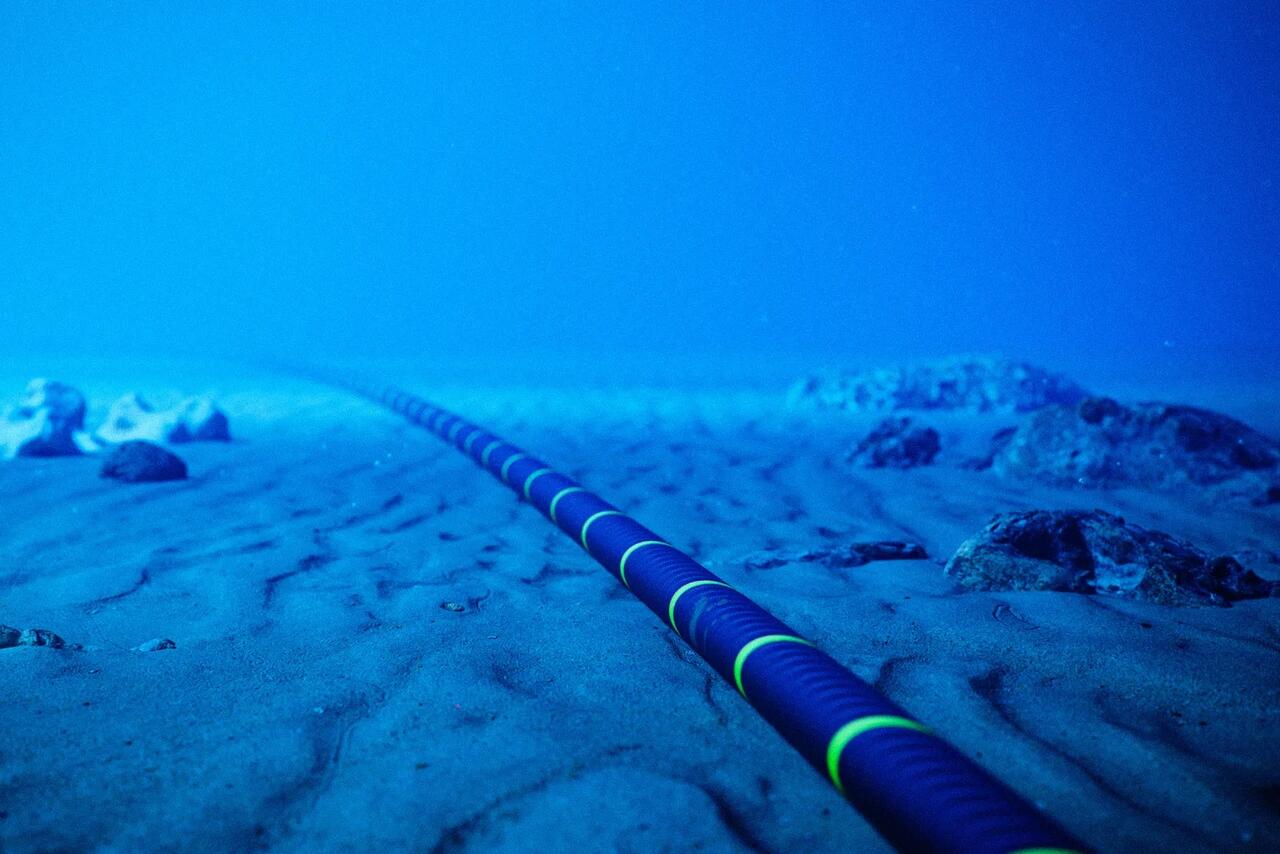
Underwater telecom cables connect the globe. Getty Images

According to the specific Houthi threat:

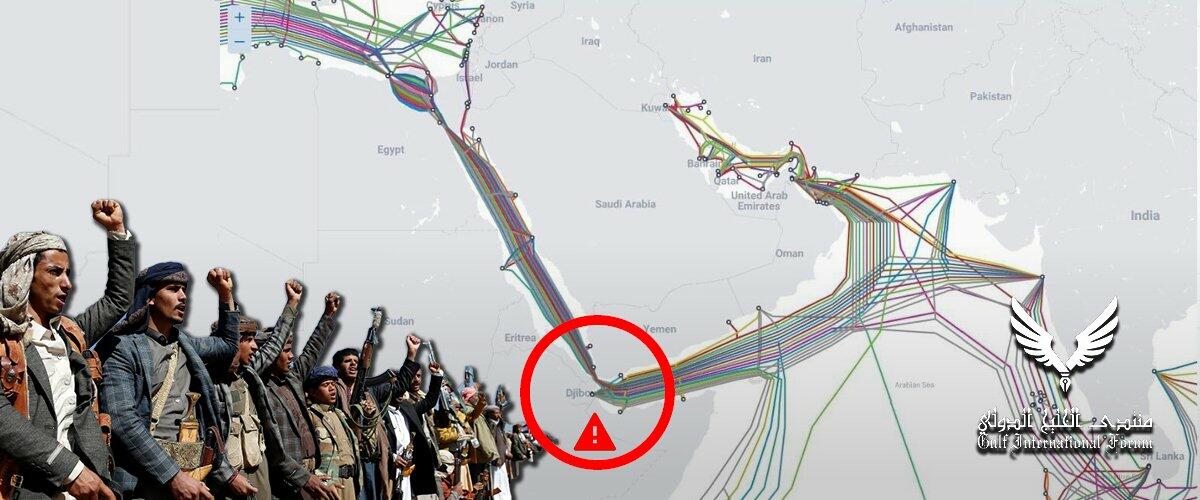
The warning came after a Houthi-linked Telegram channel published a map of the cables running along the bed of the Red Sea. The image was accompanied by a message: “There are maps of international cables connecting all regions of the world through the sea. It seems that Yemen is in a strategic location, as internet lines that connect entire continents – not only countries – pass near it.”

Yemen Telecom said it had made both diplomatic and legal efforts during the past few years to persuade global international telecom alliances not to have any dealings with the Houthis since it would provide a terrorist group with knowledge of how the submarine cables operated. It has been estimated that the Red Sea carries about 17% of the world’s internet traffic along fiber pipes.

Any potential operation to sever the submarine cables, but which are sometimes no thicker that a garden hose, would likely be a sophisticated deep underwater technical campaign, but is widely believed within the realm of possibility given the Houthis' determination thus far.

One security analyst told The Guardian that the "cables have been kept safe more due to the Houthis’ relative technological underdevelopment than for a lack of motivation."

Images and threats have been circulating on Houthi Telegram channels.

Speaking of the cables, the report notes that "One of the most strategic is the 15,500-mile (25,000km) Asia-Africa-Europe AE-1 that goes from south-east Asia to Europe via the Red Sea."

If already the Houthis have no fear of launching anti-ship missiles at US and UK Navy destroyers, then certainly they could have their eyes next set on sabotaging the globe's internet infrastructure, and it's likely on a matter of time.

https://www.zerohedge.com/geopolitical/houthis-vow-escalation-despite-us-strikes-could-sabotage-western-internet-cables-red

IDEXX Laboratories sees 2024 revenue above estimates

  IDEXX Laboratories on Monday forecast annual revenue slightly ahead of Wall Street estimates after reporting better-than-expected quarterly sales, benefiting from higher demand for its companion animal health diagnostic services.

IDEXX sees revenue for the full year to be between $3.93 billion and $4.04 billion, the midpoint of which is above analysts' estimates of $3.97 billion, according to LSEG data.

The company sees full-year 2024 profit to be between $10.84 per share and $11.33 per share. It reported a profit of $10.06 for the full year 2023.

Piper Sandler analyst David Westenberg viewed the forecast as positive but said patient visits haven't completely picked up.

Visits to veterinary clinics were disrupted due to pandemic-led lockdowns and staffing shortages in the past few years.

"We think IDEXX will continue to keep its dominant position in pet diagnostics, though we don't think end-market patient volume headwinds are over," Westenberg said. IDEXX said it benefited from high customer retention and strength in its veterinary software, services and diagnostic imaging systems, supported by a continued shift to cloud-based products.

https://finance.yahoo.com/news/idexx-laboratories-sees-2024-revenue-124529262.html