Search This Blog

Monday, March 11, 2024

Over 80% Of Tattoo Inks Contain Unlisted Substances That Can Cause Organ Damages, Allergies: Study

 by Naveen Athrappully via The Epoch Times (emphasis ours),

The vast majority of tattoo inks sold in the United States are contaminated with unlisted ingredients that can cause serious health issues, including organ damages, according to a recent study.

The study, published in the Analytical Chemistry journal on Feb. 22, investigated nine different brands of tattoo ink common in the United States, from minor to major brands.

Out of the 54 inks of the nine brands analyzed by researchers, 45 (83 percent) were found to contain “unlisted additives and/or pigments,” the study stated.

Major, unlisted adulterants include polyethylene glycol, propylene glycol, and higher alkanes. Many of the adulterants pose possible allergic or other health risks.”

Over half of the inks contained unlisted polyethylene glycol, which causes organ damages following repeated exposure. Fifteen inks contained propylene glycol, a potential allergen. Some contained a compound called 2-phenoxyethanol that posed health risks to nursing infants while other inks were contaminated with an antibiotic used to treat urinary tract infections.

Taken together, the results from this study highlight the potential for a significant issue around inaccurate tattoo ink labeling in the United States,” the study stated.

The research was unable to identify whether unlisted ingredients were added unintentionally or whether the manufacturer was provided with contaminated materials. It is also unknown whether the manufacturer incorrectly labeled the inks.

Risks associated with tattooing usually focus on skin cancer and reaction to the pigments. However, ink additives can be dangerous as well, including having negative impacts beyond the skin. If a person with a tattoo starts experiencing reactions, unlisted ingredients can make it challenging to ascertain what reaction is happening and why it is occurring.

We’re hoping the manufacturers take this as an opportunity to reevaluate their processes, and that artists and clients take this as an opportunity to push for better labeling and manufacturing,” said John Swierk, an assistant professor of chemistry at Binghamton University who is also an author of the study.

Tatto Ink Regulation

It was only recently that regulation on tattoo ink was introduced in the United States. In late 2022, Congress passed the Modernization of Cosmetics Regulation Act (MoCRA), allowing the U.S. Food and Drug Administration (FDA) to regulate tattoo inks for the first time, including regulating labeling practices.

Before the Act was passed, tattoo inks were considered to be cosmetic and not subject to regulations. “The FDA is still figuring out what that is going to look like and we think this study will influence the discussions around MoCRA,” Mr. Swierk stated.

This is also the first study to explicitly look at inks sold in the United States and is probably the most comprehensive because it looks at the pigments, which nominally stay in the skin, and the carrier package, which is what the pigment is suspended in.

The study only focused on substances present in quantities of 2,000 parts per million (ppm) or more, which are usually considered to be high concentrations.

However, in Europe, even substances in the range of just two ppm are considered by authorities when assessing risks. As such, the tattoo inks could contain even more potentially toxic substances than what the study has found.

Tattoo Ink Risks

A 2021 study on tattoo inks conducted in the European Union arrived at similar conclusions. It analyzed 73 tattoo inks in the market, investigating labels as well as ingredients.

The study found that “ninety-three percent of the bought tattoo inks violated European, legal requirements on labeling.”

“Fifty percent of the tattoo inks declared at least one pigment ingredient incorrectly,” authors wrote. “Sixty-one percent of the inks contained pigments of concern, especially red inks.”

Main metals detected in the inks included iron, aluminum, titanium, and copper, most of which were in green or blue inks“The levels of iron, chromium, manganese, cobalt, nickel, zinc, lead, and arsenic were found to covary significantly.”

Researchers of the study called on tattoo ink manufacturers to follow regulations and minimize the presence of nickel and chromium impurities to prevent allergy and toxic reactions among users.

A December 2016 retrospective study looked at 493 health complications resulting from tattooing among 405 individuals. They identified 184 cases of allergic reactions, 53 instances of bacterial infections, and 46 psycho-social complications.

The U.S. Food and Drug Administration (FDA) has asked people to “think before you ink.” Multiple research studies have “reported that some inks contain pigments used in printer toner or in car paint,“ the agency stated, adding that it ”has not approved any pigments for injection into the skin for cosmetic purposes.”

After receiving a tattoo, the person may see some redness, swelling, or warmth on the skin. If the tattooed area does not heal or if there is a rash forming in the region, the FDA advises people to contact their healthcare professional. This is especially true if they develop a fever.

More aggressive infections may cause high fever, shaking, chills, and sweats. Treating such infections might require a variety of antibiotics—possibly for months—or even hospitalization and/or surgery. A rash may also mean you’re having an allergic reaction. And because the inks are permanent, the reaction may persist,” the FDA warned.

“Scar tissue may form when you get a tattoo, or you could develop ‘granulomas,’ small knots or bumps that may form around material that the body perceives as foreign. If you tend to get keloids—scars that grow beyond normal boundaries—you may develop the same kind of reaction to the tattoo.”

https://www.zerohedge.com/medical/over-80-percent-tattoo-inks-contain-unlisted-substances-can-cause-organ-damages-allergies

Promising New Wearable Could Retrain the Brain After Stroke

A new and deceptively simple advance in chronic stroke treatment could be a vibrating glove.

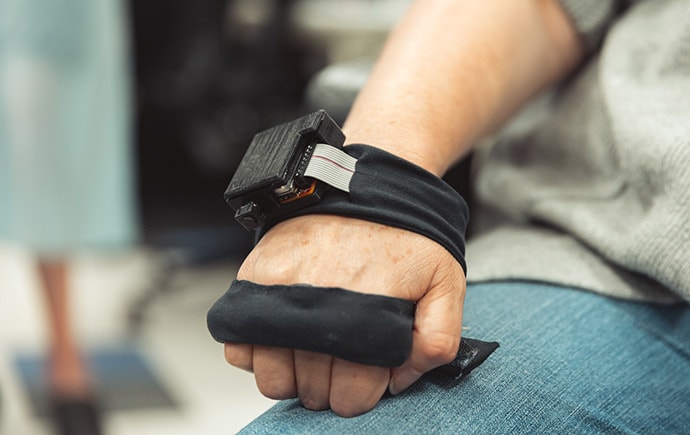
Researchers at Stanford University and Georgia Tech have developed a wearable device that straps around the wrist and hand, delivering subtle vibrations (akin to a vibrating cellphone) that may relieve spasticity as well as or better than the standard Botox injections.

"The vibro-tactile stimulation can be used at home, and we're hoping it can be relatively low cost," said senior study author Allison Okamura, PhD, a mechanical engineer at Stanford University, Stanford, California.

For now, the device is available only to clinical trial patients. But the researchers hope to get the glove into — or rather onto — more patients' hands within a few years. A recent grant from the National Science Foundation's Convergence Accelerator program could help pave the way to a commercial product. The team also hopes to expand access in the meantime through larger clinical trials with patients in additional locations.

The work builds on accumulating research exploring vibration and other stimulation therapies as treatments for neurological conditions. Other vibrating gloves have helped reduce involuntary movement for patients with Parkinson's. And the University of Kansas Medical Center, Kansas City, Kansas, will soon trial the Food and Drug Administration-approved vagal nerve stimulator, an implantable device intended to treat motor function in stroke survivors. Okamura noted that devices use "different types of vibration patterns and intensities," depending on the disease state they target.

photo of a vibrating glove
The device delivers vibro-tactile stimulation — subtle vibrations, akin to a vibrating cell phone — to the fingers, hand, and wrist.

Spasticity often develops or worsens months after a stroke. By then, patients may have run out of insurance coverage for rehabilitation. And the effectiveness of Botox injections can "wear out over time," Okamura said.

In a clinical trial, patients wore the device for 3 hours a day for 8 weeks, while doing their usual activities. The researchers continued testing their spasticity for 2 more weeks. Symptom relief continued or improved for some patients, even after they stopped using the device. More than half of the participants experienced equal or better results than another group that only received regular Botox injections.

Vibro-Tactile Stimulation May Rewire Brain

The device originated at Georgia Tech, where Okamura's postdoctoral research fellow Caitlyn Seim, PhD, was using vibro-tactile stimulation (VTS) to teach people skills, such as playing the piano, using touch-feedback training. The team decided to target spasticity, which VTS had helped in previousstudies of in-clinic (non-wearable) devices.

How does the device work? The researchers point to neuroplasticity, the ability of neurons to create new synapses or strengthen existing ones in the brain.

"The stimulation is sending additional sensory signals to the brain, which helps the brain interpret and reconnect any lost circuits," Okamura said.

Spasticity is driven by "an imbalance in the excitatory drive to the muscles,” she continued. This can lead to worsening contractions, until a hand closes into a fist or a foot curls up. (The team has also done preliminary research on a similar device for foot spasticity, which they hope to continue developing.) Previous studies by Okamura and others suggest that vibration stimulation may prevent these contractions, both in the short and long term.

"Immediately, we do see some softening of the muscles," Okamura said. "But in our longer-term study, where we compared to Botox, I also think that the vibration may be retraining the brain to send inhibitory signals. And that can restore balance that's lost due to the damaged neural circuits from a stroke."

When the team did a separate study comparing the effects of muscle and skin stimulation, they hypothesized that the vibration could be having a biomechanical effect on the muscle. Instead, they found that stimulating the skin had a greater impact — a "somewhat unexpected" result, Okamura said. That led them to the brain.

"Stimulating the skin is really about creating sensory signals that get sent to the brain," Okamura said, "which is why we think it's actually a brain-retraining effect and not a direct biomechanical effect."

What's Next?

The researchers are seeking funding for longer-term clinical studies to find out if effects persist beyond 2 weeks. They also want to explore how long and often patients should wear the glove for best results.

The researchers also want to study how movement might enhance the effects of the device.

"One of the treatments for spasticity — medications aside, this vibration machine aside — is more exercise, more passive range of motion," said Oluwole Awosika, MD, associate professor at the University of Cincinnati College of Medicine, Cincinnati, Ohio, who was not involved in the study. "It would have been nice to have a control group that didn't get any of this stimulation or that was only encouraged to do 3 hours of movement a day. What would the difference be?"

Awosika also wondered how easy it would be for stroke patients without in-home assistance to use the device. "Sometimes wearing these devices requires someone to put it on," he said.

Of course, if all goes well, patients wouldn't have to deal with that forever. "The dream would be that you reach true rehabilitation, which is no longer needing the device," Okamura said.

https://www.medscape.com/viewarticle/promising-new-wearable-could-retrain-brain-after-stroke-2024a100044f

Smoking Cessation Before Age 40 Years Brings Great Benefits

 Chronic smoking remains a major cause of premature mortality on a global scale. Despite intensified efforts to combat this scourge, a quarter of deaths among middle-aged adults in Europe and North America are attributed to it. However, over the past decades, antismoking campaigns have borne fruit, and many smokers have quit before the age of 40 years, enabling some case-control studies.

Among those abstainers who made the right choice, the excess mortality attributable to smoking over a lifetime would be reduced by 90% compared with controls who continued smoking. The estimated benefit is clear, but the analysis lacks nuance. Is smoking cessation beneficial even at older ages? If so, is the effect measurable in terms of magnitude and speed of the effect? An article published online on February 8, 2024, in The New England Journal of Medicine Evidence provided some answers to these questions.

Four-Cohort Meta-Analysis

The study was a meta-analysis of individual data collected within four national cohort studies that were linked to each country's death registry. Two of these studies were nationally representative. The National Health Interview Survey involved a sample of US citizens living in the community, aged 20-79 years, who were included annually in the cohort between 1997 and 2018. The second, the Canadian Community Health Survey, included subjects in the same age group, with samples analyzed between 2000 and 2014.

In Norway, three cohort studies conducted between 1974 and 2003, in which participants aged 25-79 years were included, were combined to form the Norwegian Health Screening Survey. These were the Counties Study (1974-1988), the 40 Years Study (1985-1999), and the Cohort of Norway (1994-2003), respectively. The fourth cohort was established through recruitment via the UK Biobank, with adults aged 40-73 years invited to participate in the survey. The data analysis ultimately covered a relatively heterogeneous total population of 1.48 million adults, all from high-income countries and followed for 15 years. It relied on the Cox proportional hazards model applied to each study, considering smoker vs nonsmoker status, as well as the time elapsed since smoking cessation (less than 3 years, between 3 and 9 years, or at least 10 years). Statistical adjustments made in the context of multivariate Cox analysis considered age, education, alcohol consumption, and obesity.

Excess Mortality Confirmed

At the end of follow-up, 122,697 deaths were recorded. The comparison of smokers and nonsmokers confirmed smoking-related excess mortality, with adjusted hazard ratios (HRs) estimated at 2.80 for women and 2.70 for men. Smoking shortened life expectancy in the 40- to 79-year-age group by 12 years for women and 13 years for men, in terms of overall mortality. In terms of smoking-attributable specific mortality, the corresponding figures reached 24 and 26 years, respectively. Respiratory diseases ranked highest in both sexes (HR, 7.6 for women and 6.3 for men), followed by cardiovascular diseases (HR, 3.1 for women and 2.9 for men) and cancers (HR, 2.8 for women and 3.1 for men).

The Earlier, the Better

Smoking cessation halves overall excess mortality. Above all, quitting before age 40 years brings overall mortality back to the level of nonsmokers as early as the third year after quitting. The excess mortality decreases even more as the cessation period is prolonged, even after age 40 years. Thus, cessation ≥ 10 years in smokers aged 40-49 years almost cancels out overall excess mortality (−99% in women, −96% in men). The trend is almost as favorable in the older age group (50-59 years), with corresponding figures of −95% and −92%, respectively.

Long-term survival increases in the early years after cessation, especially if it occurs at a younger age, but the benefit remains tangible even in older smokers. Thus, cessation of less than 3 years, effective in patients aged 50-59 years, reduces overall excess mortality by 63% in women and 54% in men. In patients aged 60-79 years, the figures are −40% and −33%, respectively.

Naturally, the earlier the cessation, the greater the number of years gained. It is 12 years for cessation before age 40 years, reduced to 6 years for cessation between 40 and 49 years, and 2.5 years when it is even later (50-59 years). These quantitative results are approximate, given the methodology (a meta-analysis) and some heterogeneity in the studies, as well as the multitude of potential confounding factors that have not all been considered. Nevertheless, the results probably contain a kernel of truth, and their optimistic implications should be highlighted to encourage smokers to abstain, even older ones. Better late than never, even if the benefit of cessation is maximal when it occurs as early as possible, knowing that a minimum of three years of cessation would be sufficient to gain years of life.

https://www.medscape.com/viewarticle/smoking-cessation-before-age-40-years-brings-great-benefits-2024a10004k8

China Planted Mystery Devices On Cranes Used In US Ports, Could Seize Control Remotely

 by Andrew Thornebrooke via The Epoch Times (emphasis ours),

Top Republicans from multiple House committees are sounding the alarm on a series of mysterious devices that appear to have been implanted into container cranes used throughout the U.S. port system by China.

The lawmakers say that numerous modems with no known function were uncovered from ship-to-shore (STS) cranes, which are used to unload cargo at the nation’s largest ports.

All of the cranes in question were manufactured by Shanghai Zhenhua Heavy Industries (ZPMC), a subsidiary of the state-owned China Communications Construction Co.

Relatedly, the lawmakers noted that ZPMC’s manufacturing facility is located adjacent to China’s most advanced ship-making facility, where the regime builds its aircraft carriers and houses advanced intelligence capabilities.

In a letter (pdf) addressed to the president and chairman of ZPMC, the lawmakers demand to know the purpose of the cellular modems discovered on crane components and in a U.S. seaport’s server room that houses firewall and networking equipment.

These components do not contribute to the operation of the STS cranes or maritime infrastructure and are not part of any existing contract between ZPMC and the receiving U.S. maritime port,” the letter said.

“The Committees have serious concerns that this proximity to the [Chinese military’s] main shipyard provides malicious CCP [Chinese Communist Party] entities, including its intelligence agencies and security services, with ample opportunity to modify U.S.-bound maritime equipment, exploit it to malfunction, or otherwise facilitate cyber espionage thereby compromising U.S. maritime critical infrastructure.”

U.S. Coast Guard Rear Adm. John Vann, who leads the Coast Guard’s Cyber Command, told reporters last month that there were over 200 China-manufactured cranes operating across U.S. ports and regulated facilities.

At that time, Coast Guard cyber protection teams had assessed the cybersecurity or hunted for threats on 92 of those cranes, he said.

The discovery comes amid an ongoing congressional investigation into the operation of cranes manufactured in China and operating at U.S. ports.

Though the investigation is still ongoing, the committees identified serious concerns regarding ZPMC’s relationship with the CCP, particularly given the recent discovery of Chinese malware on vital infrastructure related to the port system.

As part of another cybersecurity investigation, some of the modems in question were also found to have active connections to the operational components of the STS cranes, suggesting they could be remotely controlled by a device no one previously knew was there.

Speaking to reporters last month, White House Deputy National Security Adviser Anne Neuberger said the cranes were designed to be serviceable from a remote location, which leaves them open to such exploitation.

By design, these cranes may be controlled, serviced, and programmed from remote locations,” Ms. Neuberger said. “These features potentially leave [China]-manufactured cranes vulnerable to exploitation.

As such, the letter suggests that every U.S. seaport with ZPMC cranes could already be, or is at risk of being, compromised by the CCP.

Retired Army Col. John Mills told The Epoch Times that the cranes were effectively an extension of the CCP’s global cybercrime operation, which could be used during an invasion of Taiwan to sow chaos in the United States.

“Those container cranes are not cranes,” Mr. Mills said. “They’re IP endpoints on a worldwide intelligence collection system.”

To that end, he said that the cranes’ operational and safety features could likely be overridden remotely. This would allow the CCP to potentially trick one of the giant cranes into shifting its counterbalance in such a way that would cause it to crash into ships or containers in the nation’s busiest ports.

Complicating the issue all the more, he said, was the fact that the niche nature of the cargo cranes and their programming means it is unlikely a tailored cyber response to secure the systems will be created anytime soon.

To counter the threat in the long term, he added, the United States would need to ensure that it manufactured such vital equipment in its own territory.

As things play out, they’re [the CCP] going to start initiating the hitting of target sets in cyber. The port cranes are a perfect example,” Mr. Mills said.

“This is the importance of making things here. If you want to reduce the Chinese threat, start making things here.”

https://www.zerohedge.com/geopolitical/china-planted-mystery-devices-cranes-used-us-ports-could-seize-control-remotely

I was minutes from death after taking ‘Barbie drug’ — everyone needs to be warned

 Dying to look all dolled up nearly cost this mom her life. 

Edith Eagle, a 47-year-old stepmother of four, was rushed to the hospital in April 2023 after snorting a $32 self-tanning nasal spray, known as the TikTok-viral “Barbie Drug,” in the hopes of securing a haute hue ahead of a family vacation to the Canary Islands. 

“I could’ve died that day,” Eagle, a chef and wedding venue owner from the UK, explained to Kennedy News and Media. “I will never again buy anything like this again — especially from the internet.”

Edith Eagle was minutes away from dying after using the TikTok-viral “Barbie drug” nasal spray tanner in April.Kennedy News and Media

Wanting a faux glow, the Gen Xer purchased a bottle of the bronzing booster Melanotan. 

It’s a largely illegal drug that’s been touted online as a fake tan alternative in the wake of the ever-buzzy “Barbiecore” craze —  which has prompted wannabe pinups to pursue cosmetic procedures like “Barbie nose” rhinoplasty and “plastic package” upgrades to their private parts. 

Folks who’ve used Melanotan to enhance their looks are reportedly at higher risk of developing skin cancer, kidney disease and erectile dysfunction

But Eagle, who reportedly was encouraged to try the tanning substitute by her stepdaughter, Kayla Fox, wasn’t aware of the life-threatening dangers she faced. 

“Kayla suggested getting a nasal tanning spray to me as a way to get a quick tan,” said Eagle. “We get tanned quite quickly anyway on holiday and were going away to Fuerteventura [in the Canary Islands].

“So I Googled it and saw it pop up online and ordered it,” she continued. “I like being tanned because I prefer not using makeup. I always liked looking fresh-looking with a tan.”

Eagle was initially delighted with how well the DIY darkener did the trick. 

Eagle and her stepdaughter were pleasantly surprised with their chocolatey tints after using the spray.Kennedy News and Media

“On the first day, we were so brown, I’ve never experienced anything like it,” gushed the brunette. “I was very tanned after one day.”

And although she admittedly found it odd that the spray’s ingredients weren’t listed on its label, Eagle was tickled pink with her Barbie-like look. 

But things quickly took a dark turn after just 24 hours of sun-kissed sexiness. 

“The next morning, I woke up and realized I couldn’t breathe properly,” said Eagle. “I then noticed I was completely swollen.

“I was so out of breath and had to concentrate so much on breathing. It was really difficult to breathe,” she recalled. 

“My neck was so swollen that my necklace was tight. I was just swollen everywhere,” added the mom. “I realized it must be an allergic reaction.”

The mom’s delight quickly turned to dread after her body swelled owing to the “poison” in the product.Kennedy News and Media

Eagle was transported to a nearby emergency room, where healthcare providers immediately plied her with steroids to quell the spread of poison throughout her body. 

“I’ve never had an allergic reaction in my whole life to any foods or anything,” said Eagle. “I think it was definitely the spray.

“There’s no ingredients on the bottle — you don’t know what you’re putting in the body.”

She credits fast-moving hospital workers with saving her life. 

“I wouldn’t be standing here if the hospital staff hadn’t acted so quickly,” a grateful Eagle told Kennedy News. “I was rushed straight through. It was so frightening.”

In the months since the harrowing incident, Eagle and Fox have discovered a community of folks online who also allegedly faced near-death due to Melanotan. 

Eagle and her family have taken to social media, warning other beauty wannabes against using the viral nasal spray tanner.Kennedy News and Media

“I’ve seen other people have reactions to the spray like me on social media and their symptoms are the exact same,” said Eagle. 

Her stepdaughter has even issued a virtual advisory against the too-good-to-be-true nose juice. 

“Please don’t use nasal tanners as this is what they can do to you,” read Fox’s warning post. “Poisoned my stepmum’s body and she’s had an allergic reaction. Stay away from them. The poison has been building up over time. They are so dangerous for some people.”

Eagle is additionally urging others to steer clear of the nasal nightmare. 

Eagle blames herself for using the product without knowing its contents.Kennedy News and Media

“It was frightening for my family to see me like that,” she said. “I feel grateful to be alive.

“Please don’t make the same mistake as me,” Eagle begged. 

“If this can save someone’s life then I would rather suffer for anyone else before they make a stupid decision like me!

“I blame myself.”

https://nypost.com/2024/03/11/lifestyle/i-was-minutes-from-death-after-taking-barbie-drug-everyone-needs-to-be-warned/