Multiple bands and musicians scheduled to perform at the South by Southwest (SXSW) festival are pulling out because of the U.S. Army’s “super sponsorship” of the event, and America’s ongoing support of Israel’s war on Hamas.
The Belfast, Ireland-based rap trio Kneecap — the most recent departure — called the relationship “depraved” in light of the war in Gaza.
“We cannot in good conscience attend an arts festival that has the U.S. Army as a ‘super sponsor’ and is platforming RTX (formerly Raytheon), Collins Aerospace and BAE Systems, the very companies selling the weapons that have murdered 31,000 Palestinians, over 21,000 of them women and children,” the group said in a statement on X, formerly known as Twitter.
Kneecap joins other slated SXSW performers like Lambrini Girls, Scowl, Gel, Okay Shalom, Squirrel Flower and Sprints in pulling out of the event to protest.
The artists were set to perform at the festival in Austin, Texas from March 11-16. The festival typically attracts over 300,000 people each year, and Kneecap said backing out will have “a significant financial impact” on the group.
“But it isn’t an iota of hardship when compared to the unimaginable suffering being inflicted every minute, every day on the people of Gaza,” Kneecap said.
Lily Macieira and Phoebe Lunny of Lambrini Girls, a Brighton-based band, said on social media that their boycott of SXSW was necessary to avoid “becoming totally inauthentic” in their claims of solidarity with Palestine.
“We were considering going to the festival and protesting on stage, but there isn’t a way to do that doesn’t feel performative or inherently exploitative,” they said.
“There’s always a right thing to do and it’s almost never as complicated as the establishment wants you to believe. And sometimes it costs you a dream, but a dream is a dream and not a life,” Brooklyn-based artist Okay Shalom said in a statement to social media announcing her departure from SXSW.
“A music festival should not include war profiteers. I refuse to be complicit in this and withdraw my art and labor in protest,” Ella Williams, also known as Squirrel Flower, said in her social media statement.
The U.S. is currently the foremost supplier of weapons to Israel, and several of those systems are being deployed in the conflict. President Biden has become increasingly critical of the civilian toll of the war, and said last week he expects a “Come-to-Jesus meeting” with Israeli Prime Minister Benjamin Netanyahu.
“This war has taken a greater toll on innocent civilians than all previous wars in Gaza combined,” Biden said during the address. Biden called on Israel to “do its part” to facilitate aid in the region.
The Hill has reached out to the U.S. Army for comment.
In a statement to BBC, the US Army said it was “proud to be a sponsor of SXSW, and to have the opportunity to showcase America’s Army… explore new ideas and insights, and create dynamic industry partnerships.”
The Biden administration is expected to soon issue a strategy for placing charging infrastructure for electric freight trucks in strategic and busy corridors, two sources told The Hill.
One source said that the strategy could be announced on Tuesday.
Proponents of this approach argue that it could allow for more infrastructure to be available where a lot of trucking occurs, possibly making it easier for companies to invest in electric trucks rather than gas-powered trucks.
Officials from the Transportation Department and Energy Department did not immediately provide comments.
The anticipated announcement comes as the administration is also slated to soon issue a rule requiring a greater share of new heavy-duty trucks to be electric. In 2032, it could result in 35 percent of medium-heavy duty truck sales and 40 percent of heavy-heavy duty truck sales being electric.
The rule is currently under White House review and is scheduled to be finished this month — though the schedule is not always followed.
Criticism that the trucking industry has had of that rule has included that it underestimates the costs and feasibility challenges of building up significant truck charging infrastructure — a complaint the anticipated strategy may aim to combat.
The whistleblower that publicly raised doubts aboutBoeing's production standardswas reportedly found dead, South Carolina officials said.
The Charleston County Coroner's Office told the BBC that John Barnett, 62, died from a self-inflicted wound on Saturday. According to the BBC, Barnett was cross-examined by Boeing's lawyers and his own attorney days before he died.
The court planned for Barnett to answer more questions on Saturday, but he did not appear as planned.
The BBC reported that he was later found dead in his truck, which was parked in a hotel parking garage.
Barnett was employed by Boeing for over three decades before retiring in 2017. He worked as a quality control engineer at the company.
In 2019, Barnett told the BBC that Boeing would rush to get its 787 Dreamliner jets off the production line, compromising safety.
He alleged the emergency oxygen systems that were made for 787 Dreamliners had a failure rate of 25%. This meant that a quarter of 787 Dreamliners had the potential to rapidly lose oxygen if the cabins were suddenly decompressed, suffocating passengers.
Barnett said that he had encountered these issues when he began working at Boeing's North Charleston plant in 2010. He reportedly raised his concerns to his managers, but did not see them take any action.
Boeing 787 Dreamliners are built at the aviation company's North Charleston, South Carolina, assembly plant on May 30, 2023. (JULIETTE MICHEL/AFP via Getty Images / Getty Images)
The Federal Aviation Administration reviewed Boeing in 2017 and ordered the company to take action, which corroborated some of Barnett's allegations.
Boeing told FOX Business that the company was saddened by Barnett's death.
"We are saddened by Mr. Barnett’s passing, and our thoughts are with his family and friends," Boeing's statement read.
Israel has continued signaling that it is preparing to launch a major new operation against Hezbollah in southern Lebanon following months of tit-for-tat escalation.Some 80,000 Israeli residents whose homes are near the border have remained evacuated since October and November, and are essentially internally displaced. Because of this, pressure has mounted on Israeli leaders to do something that would allow their return, and ensure the security of Israel's north.
Israeli media, particularly YNet Newsreported on Sunday that the Israel Defense Forces (IDF) is preparing "contingency plans" for a wide-scale attack on Lebanon. Israeli Army Northern Command head Major General Ori Gordin in a meeting with settler leaders from northern Israel stated, "We are preparing contingency plans to launch an attack in Lebanon. Our commitment, mine, is to change the security situation so that the residents can be returned home."
YNet further unveiled plans to initiate the army's "Operation Steady Anchor" which aims to protect civilians during the expected escalation in fighting. Hezbollah is widely estimated to possess over 150,000 rockets - some of which can likely reach Haifa and Tel Aviv.
The operation involves setting up dozens of mass shelters utilizing fortified abandoned buildings and underground parking garages. This is to protect civilians in the instance of a mass Hezbollah rocket barrage. The shelters will be equipped to allow families to take refuge anywhere from a few hours to up to several days.
In another key sign of Tel Aviv's war preparations, the IDF has been conducing a logistics supply drill focused on its northern bases and positions, and in preparation for a Lebanon offensive This has included practice runs delivering ammo, equipment, water, and fuel to simulated "maneuvering forces" operating in southern Lebanon.
Meanwhile, Army Chief Herzi Halevi has reportedly ordered Brig. Gen. Chico Tamir, the former deputy commander of the northern corps, to draw up "several possible plans for a ground operation in Lebanon."
Veteran Middle East war correspondent Elijah Magnier reports Monday from the Lebanese side that "Hezbollah (and allies) is training and preparing for a possible war with Israel above and below ground."
Attacks by Hezbollah have continued to be daily, also amid Israeli return fire. On Sunday a major Israeli airstrike hit a home in south Lebanon's Khirbet Selm, killing a family of five, including three Hezbollah members.
Last month, an op-ed inForeign Policy predicted that a broader Israel-Hezbollah war is inevitable. "It is likely that there is going to be a war between Hezbollah and Israel within the next six to eight months," wrote Steven Cook, senior fellow for Middle East and Africa studies at the Council on Foreign Relations.
Cook said, "Still, it is not hard to imagine a moment at which the Iranians loosen the reins on their primary proxy. As Hezbollah leader Hassan Nasrallah made clear in an early January speech remembering the life and work of Maj. Gen. Qassem Suleimani—the IRGC Quds Force commander who the United States killed in a drone strike in early 2020—the Iranians have put significant time, energy, and resources into the development of so-called axis of resistance."
A bigger war in Lebanon would very likely also spill over into Syria and Iraq as well, where US occupying forces have already come under frequent drone and rocket attack, though these instances have been less frequently in the last few weeks.
JPMorgan Chase CEO Jamie Dimon on Tuesday urged the Federal Reserve to wait past June before cutting interest rates, arguing the central bank needs to shore up its inflation-fighting credibility.
"I think they have to be data-dependent. If I were them, I would wait," Dimon said at the Australian Financial Review business summit via a livestream from New York.
"You can always cut it quickly and dramatically. Their credibility is a little bit at stake here. I would even wait past June and let it all sort it out."
Dimon said the U.S. economy was doing well and that it was in a boom phase, though he was seeing a "little bit" of a bubble in equity markets right now.
In September 2022, Food and Drug Administration (FDA) officials arrived at an imposing, glass-dominated research complex at the City University of New York (CUNY). They planned to review records and practices in a lab run by pharmacologist Hoau-Yan Wang, who had been involved in clinical tests for an experimental Alzheimer’s drug. Two years earlier Wang and his colleagues had analyzed samples of patients’ blood and cerebrospinal fluid from a key trial of the drug, called simufilam, developed by Wang’s longtime collaborator Cassava Sciences.
At first a CUNY official denied entry to the inspectors and security guards escorted them off the premises. When CUNY granted them access to the lab 2 days later, the FDA staff found a litany of problems with that old work.
Wang, the inspectors noted, never performed routine calibration of his equipment or completed verification experiments to ensure the tests were “accurate, sensitive, and [conducted] with appropriate precision.” And, they reported, he used improper statistical tests that “resulted in inaccurate determination of sample concentrations.” On a 10-point scale, with 10 being the worst score, the findings amounted to an eight, says Jerry Chapman, a senior quality expert at Redica Systems who reviewed the inspection report for Science. (Redica has collected and cataloged nearly 1 million such reports and guides clients on FDA compliance.)
“Essentially, the FDA said, ‘You can’t trust any of this.’ But the company used the results” nevertheless as evidence of the drug’s efficacy, says University of Southern California neuroscientist Lon Schneider, who also reviewed the report forScience. Indeed, Cassava publicly reported the trial’s finding as positive and the results helped pave the way for phase 3 trials of the drug, which are now underway.
The FDA report, disclosed under the Freedom of Information Act, raises new questions about the credibility of claims by Wang and Cassava about simufilam, a drug that has long been under scrutiny. (The report was requested by a person trying to profit if Cassava’s share price declines, and shared with Science by his colleague. They are among several so-called short sellers whom the company has sued for defamation.) Because of previous questions about basic and clinical research supporting the drug, the company faces ongoing federal investigations by the Department of Justice and, reportedly, the Securities and Exchange Commission, class-action lawsuits by investors, and calls by some in the scientific community for ongoing simufilam trials to be halted.
FDA and CUNY declined to comment about the report. So did Wang, through his attorney.Cassava said in a statementthat the CUNY lab was not required to be compliant with FDA’s Good Laboratory Practices (GLPs) for its “exploratory research.” (The analysis of trial samples is considered clinical, not exploratory, research under FDA’s definition, however; moreover, GLPs don’t apply to clinical work.) The company also said the work from Wang’s lab had been “validated” by subsequent academic work elsewhere.
Wang’s earlier preclinical work underpinning plans to test simufilam in people was already under fire. For example, last year, a CUNY panel concluded that 20 of his papers—some co-authored by Lindsay Burns, a leading Cassava scientist—contained “evidence highly suggestive of deliberate scientific misconduct by Dr. Wang,” according toa report obtained by Science. University investigators could not prove their suspicions, according to the report, because of “long-standing and egregious misconduct in data management and record keeping by Dr. Wang.”
The newly released FDA inspection report suggests Wang’s work on clinical trial samples was also flawed. His measurements were crucial to Cassava’s hopes for simufilam, a compound that is supposed to counter the effects of a misfolded protein in Alzheimer’s disease. In May 2020, the company had announced disappointing results for a phase 2 study of the drug. It failed to lower levels of key markers of the disease: tau, a protein linked to brain cell “tangles,” and beta amyloid, which forms infamous sticky “plaques” in the brain. The company’s stock lost three-quarters of its value overnight.
Hoau-Yan Wang CITY UNIVERSITY OF NEW YORK
In a press release a few months later, Cassava rejected those disappointing results, suggesting a contractor had analyzed patient samples improperly. The company offered better news from a 28-day study of 64 Alzheimer’s patients, including a group given a placebo. This time, simufilam sharply reduced tau, beta amyloid, and other biomarkers. Cassava’s share price immediately more than doubled, and some biotech analysts became more optimistic about the drug’s prospects.
It is not clear why FDA waited 2 years to investigate how Wang handled those samples—or why they only looked at that study, given that Wang tested samples for other Cassava studies. Whatever the reason, the inspectors found concerns that went beyond poor laboratory practice. A key problem, they wrote, involved how Wang handled “outlier” data. For each patient sample, he ran three tests for levels of tau and other biomarkers, then discarded any reading that diverged sharply from the others. That practice is accepted, but the criteria for doing so should be set in advance, the FDA inspectors noted. Wang told investigators that he didn’t use clearly defined criteria. Instead, he “based it on his judgement.”
Wang agreed he had made errors, according to the FDA report, and rechecked the rest of the data, finding no more anomalies. “However, our independent review of the same spreadsheets identified several additional examples affected by similar errors,” the inspectors wrote, noting 15 such cases. Wang “agreed with our findings,” they added.
The CUNY scientist later told the officials that he corrected all the errors and emailed updated data to a person whose identity was redacted in the report—presumably someone at Cassava. Cassava declined to comment on why it had not updated reports on Wang’s work with the corrected figures, saying that they “resulted in no material change to the data.”
Even the corrected figures remain suspect, according to the report, because of Wang’s lack of regular equipment calibration and other lapses. Echoing the CUNY report on problems in Wang’s basic studies, FDA inspectors said the scientist had not retained original Western blot films, needed to audit the accuracy of some biomarker results. Wang said he discarded them as “cumbersome to maintain,” the report noted. Nor did he maintain records about how blood and fluid samples were stored, tracked, or tested. His lab was unlocked and computers unprotected by passwords.
CUNY didn’t reply to Science’s requests to explain why its guards initially denied FDA inspectors access to Wang’s lab. Michael de la Torre, chief executive of Redica, called the rejection “extraordinary” for a U.S. facility. Nor would the school say whether Wang had been reprimanded or penalized in any way for the findings by the FDA inspectors.
Cassava’s critics say the FDA findings reinforce concerns that human tests of simufilam are not well supported. “This report extends a pattern of data that lack rigor and reliability, and further undermines my confidence in any clinical trial results from this program,” says neuroscientist Matthew Schrag. The Vanderbilt University professor, who previously identified what he said were problematic data from the company and Wang, reviewed the FDA report for Science, working independently of his institution. “As I’ve said before, I think that the simufilam clinical trials should be shut down,” he concluded.
FDA would not say whether its inspection findings would affect the agency’s review of the phase 3 trials of simufilam, normally the last set of safety and efficacy tests before the agency decides whether to approve a drug. Schneider says the FDA document shows that nothing can be concluded from the tests run in Wang’s lab. It is “a damning report,” he says.
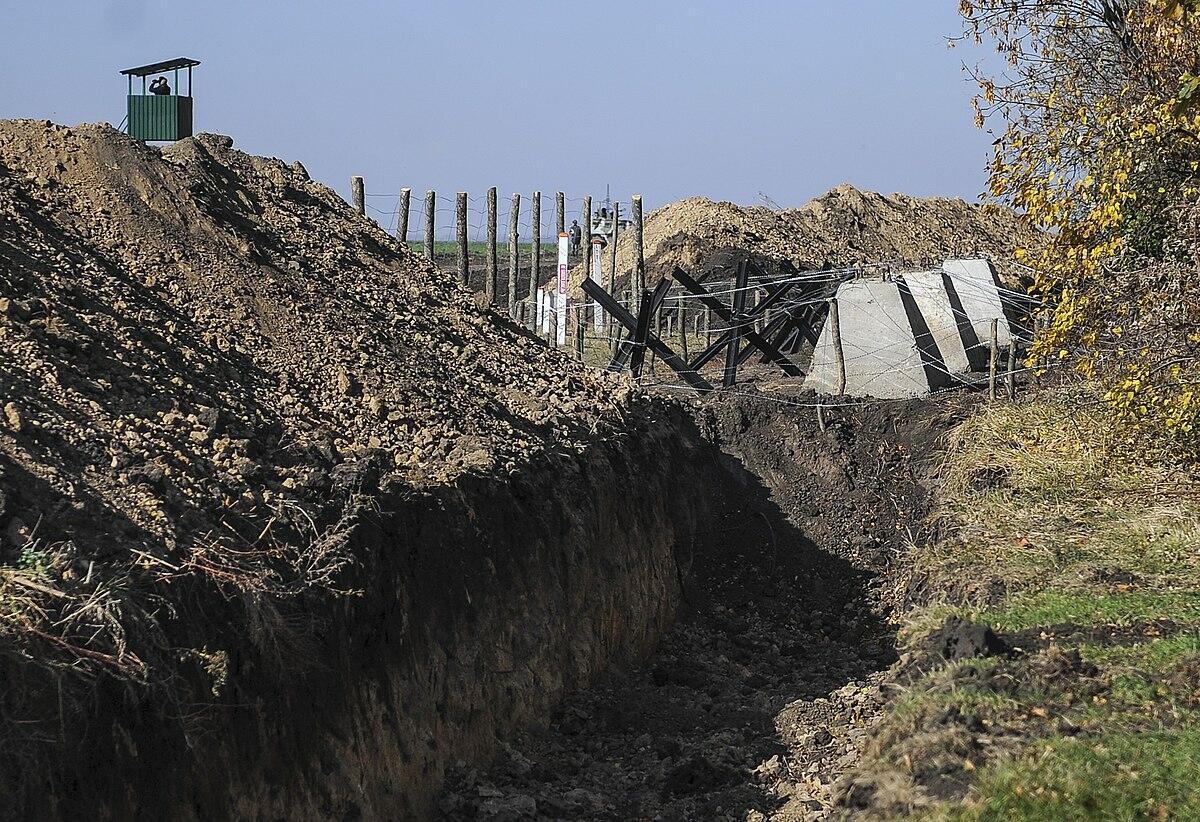
Ukraine's President Zelensky has more or less indicated he's ready tobuild the wall—to borrow the old Trump phrase...
He announced on Telegram Monday that he has ordered the construction of some 2,000 kilometers of fortifications in order to solidify the front lines with Russian forces. He touted the good "pace of construction of new defense lines."