Search This Blog

Wednesday, April 17, 2024

It's Not Rate Hikes That Are "Sparking An Economic Boom", It's The Fiscal Stimulus

 By Michael Every of Rabobank

The Polybius Crisis

Take a step back (in time), and see that our neoliberal, debt-addled, was-lower-for-longer global system is not just in a Polycrisis but a Polybius Crisis - referring to the ancient Greek historian.

MethodologyPolybius was first to argue ‘consider your source’: today, media and markets still spout and swallow propaganda. He argues we can’t look at history in just one area, as what happens everywhere effects what is going on everywhere else: but modern markets have monomanias for one asset class, geography, and ideology: markets-first neoliberalism.

Yet while 2024 opened with talk of 7 Fed cuts, then 6, 5, 4, 3, and 2, it just saw calls that US rate cuts are needed to lower inflation (because of the slump in housing supply that recent US data won’t help); chatter of 2 rate hikes; and now Bloomberg asks, ‘What if the Fed’s Hikes Are Actually Sparking an Economic Boom?’ Is neoliberalism in crisis, or is this a new copium given Fed Chair Powell just said he’s prepared to keep rates steady “as long as needed”?

Bloomberg notes that high rates = stimulus is an MMT heresy, but huge budget deficits mean high rates put more cash into people’s pockets (as they take it from others’). Yet it’s fiscal deficits, not rate hikes, that do that trick, another neoliberal shibboleth. (And an MMT one: Stephanie Kelton argues rate hikes contribute to the deficit, so cutting them would lower it… as if supply-side inflation and speculation with new liquidity aren’t connected to rates.)

Meanwhile, trade and FX are next. Perhaps-future US Treasury Secretary Lighthizer mocks the argument the US saves too little because Americans are profligate; (correctly) says low savings / large US trade deficits are caused by foreign industrial policy; forcing the trade deficit to narrow means savings would rise; and wants low corporate taxes, low regulation, subsidies, tariffs, and a “sensible” trade policy to fight mercantilism. If you don’t understand that throws global markets into a tailspin, like the economists Lighthizer mocks, you don’t understand that system.

On security: Polybius would not be surprised that today we have a failing global security architecture because US National Security Advisor Sullivan doesn’t say ‘Si vis pacem, para bellum’, but ‘Quaeso, sume prandium meum argentum!’ (“Please, take my lunch money!”) That approach was always going to lead to a Ukraine-Russia war, or similar; an Israel-Iran clash; and, in parallel and conflating with both, Taiwan-China tensions.

There is now frenetic activity to try to moderate any Israeli counterstrike on Iran to prevent a regional conflagration; Daniela Gabor tweets from the IMF/World Bank spring meeting, “geopolitical conflict is paralyzing everything… including on climate finance.”; and ECB President Lagarde says rate cuts are coming provided there are no inflation shocks(!) As I asked yesterday, ‘who leads and who is led?’ It’s no longer central banks.

On politics: Polybius argues societies start as ochlocracy (mob rule); a strong leader starts monarchy (rule by one: the ‘spare’ gets a Netflix deal); power turns this to tyranny (‘democracy’, says the Ivy League); an elite revolution sets up aristocracy (rule by the best); they also lose virtue, and we get oligarchy (‘neoliberalism’ to everyone but economists); they get overthrown by the people for democracy (rule by the majority: ‘tyranny’ says the Ivy League); but people lack virtue, so this turns to ochlocracy; and the cycle restarts. Polybius argues it’s best to combine monarchy, aristocracy, and democracy.

However, as we loom closer to the EU and US elections, and what populism may emerge, he’d probably repeat: “…enticing and corrupting the common people in every possible way… they have made the populace ready and greedy to receive bribes, the virtue of democracy is destroyed, and it is transformed into a government of violence and the strong hand. For the mob, habituated to feed at the expense of others, and to have its hopes of a livelihood in the property of its neighbours, as soon as it has got a leader sufficiently ambitious and daring… produces a reign of mere violence. Then come tumultuous assemblies, massacres, banishments, redivisions of land; until, after losing all trace of civilisation, it has once more found a master and a despot.” (Or ‘decolonisation’ as they call it at US Ivy League schools and on social media.)

On Great Power struggles: Polybius notes in less than a lifetime Rome went from city-state to the master of the world by winning the Punic Wars vs. Carthage. History can sometimes move fast:

  • He speaks of the importance of fate – big things can ‘just happen’: today, we price out term premia from yield curves, and think they won’t.
  • Rome defeated Carthage after humiliating defeats to Hannibal due to its strategic depth and the superiority of the Roman constitution.
  • Its checks and balances prevented any one part of the state from dominating others; and “when we see good customs and good laws prevailing among certain people, we confidently assume that, in consequence of them, the men and their civil constitution will be good also, so when we see private life full of covetousness, and public policy of injustice, plainly we have reason for asserting their laws, particular customs, and general constitution to be bad.”
  • In Carthage, “nothing is disgraceful that makes for gain”; in Rome, “nothing is more disgraceful than to receive bribes and to make profit by improper means… The Carthaginians obtain office by open bribery, but among the Romans the penalty for it is death.”
  • The most important difference for the better which the Roman commonwealth appears to me to display is in their religious beliefs.”
  • Carthage employed foreign mercenaries; the Romans didn’t (at first). “The result is that even if the Romans have suffered a defeat at first, they renew the war with undiminished forces, which the Carthaginians cannot do. For, as the Romans are fighting for country and children, it is impossible for them to relax the fury of their struggle; but they persist with obstinate resolution until they have overcome their enemies.”
  • Rome’s focus on “Carthago delenda est” (Carthage must be destroyed) proved the rallying point for their society in the end.
  • Polybius argues Carthage’s constitution couldn’t overcome that “There is in every body, or polity, or business a natural stage of growth, zenith, and decay… so far as the strength and prosperity of Carthage preceded that of Rome in point of time, by so much was Carthage then past its prime, while Rome was exactly at its zenith, as far as its political constitution was concerned. In Carthage therefore the influence of the people in the policy of the state had already risen to be supreme, while at Rome the Senate was at the height of its power: and so, as in the one measures were deliberated upon by the many, in the other by the best men, the policy of the Romans in all public undertakings proved the stronger; on which account, though they met with capital disasters, by force of prudent counsels they finally conquered the Carthaginians in the war.”

A glance at Polybius underlines our Western neoliberal crisis. Consider his comments on good laws and customs in an election year where the leading US presidential candidate is in a New York courtroom charged with a crime some legal experts say is a misdemeanour, but with a stack of serious cases elsewhere, as allegations of double standards are thrown; and as Belgium tried to ban a political meeting involving former UK PM Truss and Nigel Farage for being dangerously ‘far right’: dangerously far out, maybe. Or look to Polybius’s views on corruption, as it spreads; religion, as religiosity falls; and on mercenaries, as the West’s willingness to fight for their own country evaporates, according to survey data, just as the need to fight grows more urgent.

Yet while Rome and the US both rose to power within a lifetime, the former went on for a great many more, becoming an empire that took more than 650 years to fall in the West, and another millennium in the East. Time may be on the West’s side yet. Could Western checks and balances help it find a new rallying cry like “something construenda est”? And as importantly, what is ‘Team Carthage’ doing? There are two sides to every Great Power struggle.

To summarize, however, reading biased reports not objective analysis; monomaniacal reports not broader thinking; ignoring the Classical world’s lessons on realpolitik; that how we run societies has been an issue for thousands of years, not since 2016; and that Great Power struggles are always with us, ensures you will swept away in a Polybius Crisis. Ancient wisdom isn’t perfect; but it’s arguably a lot better than relying on a contemporary world’s decided lack of wisdom.

“NEOLIBERALISM DELENDA EST'

https://www.zerohedge.com/political/its-not-rate-hikes-are-sparking-economic-boom-its-fiscal-stimulus


Excused Juror Reveals Selection Process For Trump’s 'Hush-Money' Trial

 by Jack Phillips via The Epoch Times (emphasis ours),

A juror who was excused from serving on the Manhattan trial of former President Donald Trump provided details about the questions potential jurors were asked.

Kara McGee told media outlets outside the courtroom on Tuesday that she was dismissed but said she believes she could be impartial, adding still that it would be “very difficult for anyone really in this country to not come to this without prior opinions.”

“We all have prior opinions on the defendant, unless you’ve been living in a cardbox,” she said, adding that she was excused because of her job in the cybersecurity sector.

Regarding her personal feelings on President Trump, the woman said, “I’m not a fan.” The main reason why, she said, is because of how she believed he handled the COVID-19 pandemic response.

But Ms. McGee provided some insight on the questions that were asked of the jurors.

“One of which is: Do you have opinions about the ability for a former sitting president to be tried in a court of law? Which I think the way people answered that showed how they felt about case,” she said. “The other one was: Do you have any opinions about legal limits for campaign finance donation amounts? Which I believe was another one that was kinda meant to gauge feelings about the particular case,” she added.

As of Wednesday morning, seven jurors have been selected with five more slots remaining. The judge has indicated that he will choose about six extra jurors to serve as backups.

Responding to the jury-selection process, President Trump wrote on Wednesday: “I thought STRIKES were supposed to be ‘unlimited’ when we were picking our jury? I was then told we only had 10, not nearly enough when we were purposely given the 2nd Worst Venue in the Country. Don’t worry, we have the First Worst also, as the Witch Hunt continues!”

The former president is on trial for allegedly falsifying payments that were made during the 2016 campaign meant to bury potentially negative stories about him. Prosecutors say that he delivered $130,000 to former lawyer Michael Cohen to deal with a story about an alleged affair with adult actress Stormy Daniels, whose real name is Stephanie Clifford, which the former president has denied.

In court papers, President Trump’s lawyers have argued that the payments were legitimate expenses. He’s pleaded not guilty to the charges, which are felonies, and said it’s an attempt to denigrate his 2024 presidential chances.

Before entering the court on Tuesday, President Trump described the judge, Juan Merchan, as a “Trump-hating” official who “shouldn’t be on this case.” Earlier, he said that the judge is “conflicted” because his daughter works as a consultant for the Democratic Party and has had high-profile clients including Vice President Kamala Harris.

It’s a trial that is being looked upon and looked at all over the world ... they’re looking at, analyzing it. Every legal pundit, every legal scholar said this trial is a disgrace,” the former president added.

The judge has refused to recuse himself in the case. On Monday, Judge Merchan again said he wouldn’t recuse himself and added that the matter will not be considered again until an appeals court renders a decision.

Also Monday, Judge Merchan told President Trump that he has to show up in court every day it’s in session, adding that “there will be an arrest” if he doesn’t. It means that the former president will not be able to hold many campaign events, including in many key battleground states, for the next several weeks.

Former president Donald Trump visits a bodega store in upper Manhattan where a worker was assaulted by a man in 2022 and ended up killing him in an ensuing fight in New York on April 16, 2024. (Spencer Platt/Getty Images)

The former president visited a New York City bodega where a man was stabbed to death, with the aides saying he chose the store because it has been the site of a violent attack on an employee, a case that resulted in public criticism for the Democratic district attorney, Alvin Bragg, now prosecuting him.

The visit was President Trump’s first campaign appearance since his criminal hush money trial began, making the presumptive GOP nominee the first former president in U.S. history to stand criminal trial.

They want law and order ... every week they’re being robbed,” the former president said of businesses in New York, as he tried to compare his prosecution with what happens on New York streets. “You know where the crime is? It’s in the bodegas.”

“Papito Trump is coming. Yeah!” said one passerby ahead of the former president’s arrival. Another woman who spoke to The Associated Press said that the former president “speaks the truth,” making reference to illegal immigration. “I think that he will make a difference,” she added.

“I love this city,” the former president told reporters after emerging from the store. “We’re going to straighten New York out.”

The Associated Press contributed to this report.

https://www.zerohedge.com/political/excused-juror-reveals-selection-process-trumps-hush-money-trial-all-have-prior-opinions

Sanctuary Cities Set Migrant Sex Offenders Free Instead Of Handing Them Over To ICE

 Long painted as safe havens of humanitarianism by the establishment media, sanctuary cities are slowly being exposed for the underlying hypocrisy that motivates their policies.  Red states such as Texas and Florida have been very effective in pulling back the curtain, using the busing of illegals to sanctuary cities as a tool to force Democrats to stand by their own open borders principles (or abandon them out of convenience). 

As we witnessed when Ron DeSantis flew a few dozen illegals to the elitist neighborhoods of Martha's Vineyard, wealthy leftists were quick to buy cheap take-out food for the migrants and pose with them for the news cameras.  Then, when the media was done with their propaganda segments the residents kicked those same migrants out of town within 48 hours and shipped them to the nearest military base.  One of the richest enclaves in the entire US and they refused to stand by their supposed convictions for more than two days; not one migrant was allowed to stay or work in Martha's Vineyard.

Democrats were so embarrassed by the incident that they tried to have DeSantis sued and charged with "human trafficking."  The Martha's Vineyard incident marked the beginning of a surge in migrant buses to cities like New York and Washington DC.  All it took was ten thousand to fifteen thousand illegals to overwhelm city welfare programs and subsidies.  Mayors in both metro areas have called for a declaration of emergency and federal aid, including National Guard troops.  In the meantime, the media blames conservative states for the disaster even though it is the sanctuary status of these cities that makes the crisis possible.   

The message being sent is that the political left needs media cover for their policies because their policies constantly fail (or succeed in being destructive, depending on how you look at it).  They simply never intended for the surge of illegals to land on their doorstep.  One area that is consistently damaging to the progressive image is the catch and release of numerous illegal migrant criminals who go on to harm innocent American citizens.  The growing list of incidents surrounding migrant crime is creating a PR nightmare for Democrats. 

People are starting to ask - If Democrats knowingly release dangerous migrant offenders onto the streets, are Democrats then accountable for the people those migrants go on to harm?  For example, Haitian migrant Cory Alvarez, who was arrested for raping a 15 year old girl with disabilities in Massachusetts, entered the United States using the Biden administration’s CHNV parole program.

This program allows Cubans, Haitians, Nicaraguans, and Venezuelans to fly into the U.S. after they’ve supposedly been vetted and have a sponsor in the U.S.  Clearly the vetting process is non-existent and the flights are designed to allow illegals to bypass any existing border protections and claim "asylum", thus making them semantically "legal."  CHNV frequently transports migrants to sanctuary cities where they can avoid scrutiny by ICE.  But the problem goes further...

A Colombian child sex offender in the US illegally was released onto the streets by California authorities rather than sent for deportation, due to sanctuary state laws.  The criminal, who’s identity has not been revealed publicly, was convicted of unlawful sexual intercourse with a minor and sentenced to four years in prison in December 2022, according to Immigration and Customs Enforcement (ICE).  Fifteen months later he was freed by San Bernardino County and a request from ICE to be notified of his release was not honored.

The migrant traveled across the country to Boston, MA where he was finally apprehended by ICE agents.  Agents are frequently forced to work around sanctuary laws in Boston as well, recovering multiple migrant sex offenders daily and deporting them without the help of the city. 

In the span of only two weeks in February 2024, ICE apprehended at least 275 illegals with sex offense convictions during a nationwide operation.  Imagine how many are still living within our borders because of sanctuary status.

Sanctuary cities are run by local governments that have vowed to refuse to work with federal immigration authorities in any capacity, and some have even set out to obstruct or sabotage ICE agents in the apprehension of dangerous suspects.  But what can be learned from the trend of blue cities catching and then releasing the very worst kinds of criminals on the planet simply because they are migrants?

It's interesting that Democrats are usually so rabid about federal government control and intervention in most areas of American society, but when it comes to securing the border and vetting foreign immigrants, one of the few jobs that the feds should be doing today, leftists suddenly oppose federal presence.  The lesson here is that progressives are not willing to negotiate their open border agenda in the slightest, even to prevent child victimization.  This forces us to ask an important question:  If they aren't willing to compromise to protect the most vulnerable of American citizens, why should conservatives compromise with them on overall immigration?   

https://www.zerohedge.com/political/santuary-cities-set-migrant-sex-offenders-free-instead-handing-them-over-ice

NYC lawmakers make last-ditch effort to keep congestion pricing from happening

 As the clock ticks down to the start of congestion pricing in New York City (slated to start two months from Monday), there's a last-ditch push to repeal the controversial tolling plan.

But will the eleventh-hour legislative maneuver even work, or will it be too little too late?

On Staten Island, New York State Assemblyman Michael Tannousis called on his colleagues in Albany to repeal the congestion pricing toll set to be imposed on drivers.

"I implore you, reach out to senators and sign on to this bill," Tannousis said.

He and other fellow Republicans think opposition is growing.

"I guarantee you more than half the Democrats are opposed but are afraid to say it publicly," said Rep. Nicole Malliotakis.

But the MTA does not seem phased.

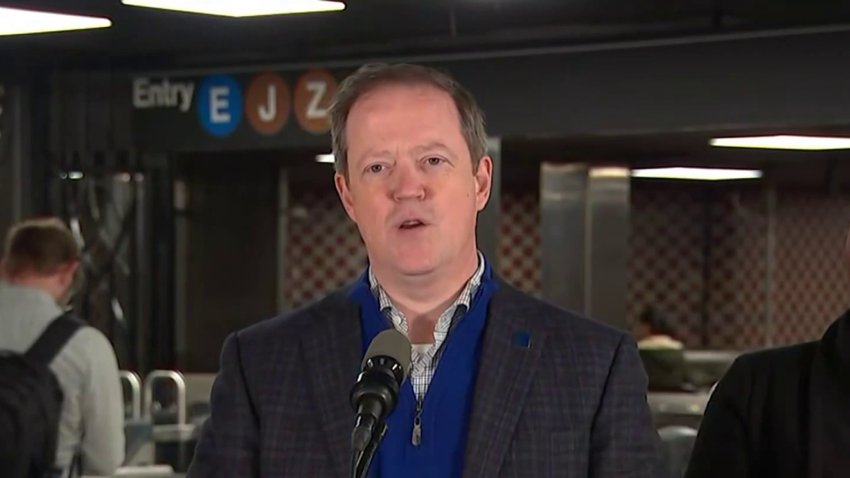
"I have a lawn chair in front of my apartment for any congestion denier to see what it’s like in Hell’s Kitchen every day," said NYC Transit President Rich Davey, reminding opponents of the projected $15 billion in revenue that congestion pricing is expected to generate.

That money would pay for construction projects like revamped subway stations — or elevators, which are still needed at hundreds of stations.

On Monday, transit officials showed off new electric vans for disabled riders, who have testified that they're tired of getting stuck in traffic. 

"one of the difficulties we have is that our trips are long," said accessibility advocate RueZalia Watkins.

Still, those looking to repeal the plan remain skeptical that tolls will pay for what the MTA promises. But transit officials say future improvements depends on congestion pricing.

"If they have better ideas on how to make investments like these," Davey said. "I'm sure they don't."

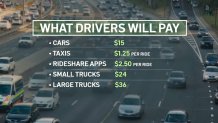
In March, a majority of the MTA board voted congestion pricing, greenlighting the controversial plan that will charge cars $15 to enter Manhattan below 61st Street and hit trucks with even higher tolls starting in just a few months.

Only one of the 12 board members opposed the proposal.

That approval, essentially a rubberstamp of "clarifications" like exemptions, given the plan itself was approved last year, means congestion pricing can begin following a 60-day public information campaign and a concurrent 30-day testing period.

All 108 toll readers are already installed and ready to go, positioning the MTA to begin collecting as soon as June 15. Federal judges on either side of the Hudson River could still block the plan, though the MTA expects that not to be the case.

The board overwhelmingly voted in favor of the plan in December, saying charging drivers to enter a swath of Manhattan would contribute millions of dollars to the aging, cash-strapped transit system. The MTA has said the plan will deliver $15 billion that will help pay for new trains and signals, as well as other fixes to modernize the aging system.

Get details on the planned exemption list here — like school buses, commuter buses and essential government vehicles owned by the city.

"We are not talking about commissioners' vehicles, not elected officials' vehicles. They are not exempt," said MTA Deputy Chief of Policy Juliette Michaelson.

Not exempt? New Jersey drivers, though lawsuits could change theoretically change that. But those seem like longshots.

The toll will not be in effect for taxis, but drivers will be charged a $1.25 surcharge per ride. The same policy applies to Uber, Lyft and other rideshare drivers, though their surcharge will be $2.50.

Despite what MTA officials say were overwhelming public comments "in favor" of congestion pricing by a 2-to-1 margin, a number of groups have stood in opposition.

Taxi advocates have blasted the plan, calling it "a reckless proposal that will devastate an entire workforce."

Public hearings earlier in March paved the way for Wednesday's vote. For its part, the MTA has insisted that it is merely implementing a state law aimed at cleaning the air and modernizing mass transit.

New Jersey Gov. Phil Murphy -- who long shared his opposition to the measure given that many of his constituents would be impacted by congestion pricing given that they work in Manhattan -- shared his discontent with the final decision, saying in a statement: "This is far from over and we will continue to fight this blatant cash grab. The MTA’s actions today are further proof that they are determined to violate the law in order to balance their budget on the backs of New Jersey commuters. We will continue to avail ourselves of every option in order to protect residents on this side of the Hudson from an unfair tolling scheme that discriminates against New Jerseyans, especially lower and middle-income drivers."

MTA president slams out-of-town lawmakers fighting congestion pricing
News 4's Andrew Siff reports.

How does congestion pricing work?

Congestion pricing will impact any driver entering what is being called the Central Business District (CBD), which stretches from 60th Street in Manhattan and below, all the way down to the southern tip of the Financial District. In other words, most drivers entering midtown Manhattan or below will have to pay the toll, according to the board's report.

All drivers of cars, trucks, motorcycles and other vehicles would be charged the toll. Different vehicles will be charged different amounts — here's a breakdown of the prices:

  • Passenger vehicles: $15
  • Small trucks (like box trucks, moving vans, etc.): $24
  • Large trucks: $36
  • Motorcycles: $7.50

The $15 toll is about a midway point between previously reported possibilities, which have ranged from $9 to $23.

The full, daytime rates will be in effect from 5 a.m. until 9 p.m. each weekday, and 9 a.m. until 9 p.m. on the weekends. The board called for toll rates in the off-hours (from 9 p.m.-5 a.m. on weekdays, and 9 p.m. until 9 a.m. on weekends) to be about 75% less — about $3.50 instead of $15 for a passenger vehicle.

Drivers will only be charged to enter the zone, not to leave it or stay in it. That means residents who enter the CBD and circle their block to look for parking won't be charged.

Only one toll will be levied per day — so anyone who enters the area, then leaves and returns, will still only be charged the toll once for that day.

The review board said that implementing their congestion pricing plan is expected to reduce the number of vehicles entering the area by 17%. That would equate to 153,000 fewer cars in that large portion of Manhattan. They also predicted that the plan would generate $15 billion, a cash influx that could be used to modernize subways and buses.

MTA fare hikes and congestion pricing decisions are pending
An MTA fare increase is likely to come sooner than expected to public transportation. Tracie Strahan reports.

Can I get a discount?

Many groups had been hoping to get exemptions, but very few will avoid having to pay the toll entirely. That small group is limited to specialized government vehicles (like snowplows) and emergency vehicles.

Low-income drivers who earn less than $50,000 a year can apply to pay half the price on the daytime toll, but only after the first 10 trips in a month.

While not an exemption, there will also be so-called "crossing credits" for drivers using any of the four tunnels to get into Manhattan. That means those who already pay at the Lincoln or Holland Tunnel, for example, will not pay the full congestion fee. The credit amounts to $5 per ride for passenger vehicles, $2.50 for motorcycles, $12 for small trucks and $20 for large trucks.

Drivers from Long Island and Queens using the Queens-Midtown Tunnel will get the same break, as will those using the Brooklyn-Battery Tunnel. Those who come over the George Washington Bridge and go south of 60th Street would see no such discount, however.

Public-sector employees (teachers, police, firefighters, transit workers, etc.), those who live in the so-called CBD, utility companies, those with medical appointments in the area and those who drive electric vehicles had all been hoping to get be granted an exemption. They didn't get one.

UFT President Michael Mulgrew, one of the lead plaintiffs in a federal lawsuit again congestion pricing, said following the MTA approval that now it's the courts' job to step in.

"Now that the MTA board has voted, it is going to be up to the courts to prevent the huge environmental injustice that threatens families outside the Manhattan congestion zone, including communities that are already suffering some of the worst air pollution and asthma rates in the country," Mulgrew said.

https://www.nbcnewyork.com/traffic/transit-traffic/ny-lawmakers-last-ditch-effort-stop-congestion-pricing-plan/5323535/

Many New Yorkers have dire outlook on economy, are considering leaving: Marist

 More than half of New Yorkers in a new poll say they think their economy is getting worse, prompting many to consider leaving the state.

The new Marist poll found 51 percent of surveyed New Yorkers described the economy as getting worse right now. Thirty-one percent said the economy has stayed the same, and 18 percent said they believe it is getting better, according to the survey.

Views on the economy were split along party lines, with 71 percent of surveyed Republicans saying the economy was getting worse and 37 percent of Democrats saying the same. An overwhelming majority of respondents, 81 percent, said the cost of living in the state is not very affordable.

Despite negative outlooks on the economy, 61 percent of respondents said they plan to stay in the state over the next five years. Another 37 percent of respondents said they will be moving out of New York within the same time period, including many who cited economic reasons.

Fifty-eight percent of those planning to leave New York said the economic reasons were why they were moving. Twenty-five percent cited the quality of life as a reason for leaving, 13 percent cited taxes, 9 percent cited politics and 4 percent cited jobs.

“When it comes to the economy in New York State, the status quo is not acceptable,” Lee M. Miringoff, director of the Marist Institute for Public Opinion, said in a statement. “This translates into a continued desire to leave the state.”

The poll was conducted among 1,408 New York adults April 8-10 and has a margin of error of 3.1 percentage points.

https://thehill.com/homenews/state-watch/4600728-many-new-yorkers-have-dire-outlook-on-economy-are-considering-leaving-poll/

Outset Medical, U.S. Renal Care Agree to Accelerate and Grow Home Dialysis

 Outset Medical, Inc. (Nasdaq: OM) (“Outset”), a medical technology company pioneering a first-of-its-kind technology to reduce the cost and complexity of dialysis, and U.S. Renal Care, the largest privately held kidney care provider in the United States, announced today a multi-year agreement to help accelerate home hemodialysis in the U.S.

Studies show patients with end-stage kidney disease (ESKD) are healthier mentally and physically dialyzing at home, more likely to be employed and maintain more control of their daily activities. Yet, just 3% of the ESKD population currently performs home hemodialysis, in large part due to historically complicated systems that made it too difficult to undertake or sustain. Under the multi-year agreement, U.S. Renal Care can utilize Outset’s Tablo Hemodialysis System as a home dialysis option throughout the 33 states in which it provides care. Patients dialyzing with Tablo report that the system is easy to learn and operate in their home. Expanding treatment options in the communities served by U.S. Renal Care will aid in meeting the growing demand of dialysis patients seeking treatment at home.

https://www.biospace.com/article/releases/outset-medical-and-u-s-renal-care-announce-multi-year-agreement-to-accelerate-and-grow-home-dialysis-across-the-u-s-/