Union bosses are a significant financial booster of the Democratic party, sending billions of dollars of union dues to Democratic candidates every campaign cycle.
To keep the gravy train rolling for the 2024 election cycle, Senate Democrats have introduced a new bill that would give bureaucrats and union bosses sweeping new power over workplaces. Republicans should continue their strong record of defending worker freedom by opposing this bill.
The bill targets companies that use so-called “quotas,” framing attempts by employers to evaluate employee performance as inherently anti-worker. Despite the scary narratives progressives peddle, tracking employee performance is a common business practice, and employers use these metrics to ensure employees are operating safely and efficiently.
The Warehouse Worker Protection Act treats “quotas” as one-size-fits-all, ignoring that performance metrics vary between companies.
It also grows the size and scope of the federal government, creating a new sub-agency within the Department of Labor called the “Fairness and Transparency Office.” The new entity will deploy bureaucrats to monitor workplaces that measure employee metrics.
A new labor regulator is redundant — at the federal level alone, employers are regulated by the DOL and countless other entities, including the National Labor Relations Board and the Federal Trade Commission.
The bill undermines decades of consensus by overturning Congress’s prohibition on the Occupational Safety and Health Administration regulating ergonomics in a manner “substantially similar to” the Clinton administration.
A bipartisan majority of lawmakers repealed the Clinton ergonomics standard in 2001 through a Congressional Review Act measure — including Sen. Arlen Specter (D-Penn.), whose track record on labor issues was staunchly pro-union.
The Warehouse Worker Protection Act’s revived ergonomics standard would impose a massive financial burden on employers and allow union safety representatives to retrofit workplaces for maximum union benefit.
Several provisions of the act are blatant handouts to organized labor. In contrast to decades of employment law, the bill creates a new unfair labor practice charge for targeted employers that imposes an employee quota that “significantly discourages or prevents or is intended to significantly discourage or prevent” employees from exercising their rights to unionize.
This would lead to a slew of workplaces becoming unionized through card checks when paired with the National Labor Relations Board’s recent decision, which mandated that employers must recognize and bargain with unions without holding an election if the NLRB determines that the employer has committed an unfair labor practice.
Another provision imposes a “union walkaround” rule that will lead to further union infiltration of non-unionized workplaces. The new “fairness” sub-agency can inspect workplaces and privately interrogate employees. The bill would force employers to allow union organizers to tag along with government inspectors, even going so far as to allow the new subagency to “select representatives of a labor organization … to conduct outreach to workers about the investigation.”
Some provisions, like one that imposes restrictions on new technology that could improve workplace safety, are simply self-defeating.
Supporting the Warehouse Workers Protection Act would run counter to the Republican conference’s strong track record of defending worker freedom.
Republicans successfully passed a Congressional Review Act measure that would nullify Biden’s job-killing joint employer rule, a measure Biden vetoed.
Rep. Kevin Kiley (R-Calif.) and Sen. Bill Cassidy (R-La.) are building support for their measure to nix Biden’s independent contractor rule, which imposed stifling new restrictions on freelancing.
House Education and Workforce Chairman Virginia Foxx (R-N.C.) called on Acting Labor Secretary Julie Su, the architect and enforcer of Biden’s anti-worker regulations, to resign at a recent hearing.
Instead of embracing big government bills like the Warehouse Workers Protection Act, lawmakers should focus on other proposals expanding worker freedom.
Sen. Tim Scott (R-S.C.) and Rep. Rick Allen’s (R-Fla.) Employee Rights Actupdates labor law to benefit all American workers, not union bosses. There would be broad Republican support for a Congressional Review Act measure to nullify OSHA’s new “walkaround” rule allowing OSHA inspectors to bring union organizers to workplace inspections.
The Warehouse Workers Protection Act represents unwarranted government micromanagement of workplaces. While Democrats will line up and vote for it to deliver for their union boss donors, there is no reason for Republicans to put their fingerprints on this massive expansion of government power.
Tom Hebert is director of Competition and Regulatory Policy at Americans for Tax Reform and executive director of the Open Competition Center.
Chinese companies won bids to explore five Iraqi oil and gas fields on Saturday in a licensing round for hydrocarbon exploration that was primarily aimed at ramping up gas production for domestic use.
An Iraqi Kurdish company also took two of the 29 projects up for grabs in the three-day licensing round across central, southern and western Iraq, which for the first time includes an offshore exploration block in the country's Arab Gulf waters.
Iraq aims to lure billions of dollars of investments to develop its oil and gas sector as it looks to ramp up local petrochemicals production and end imports of gas from neighbouring Iran that are currently key to producing power.
More than 20 companies pre-qualified for the licensing round, including European, Chinese, Arab and Iraqi groups.
There were notably no U.S. oil majors involved, even after Iraqi Prime Minister Mohammed Shia met with representatives of U.S. oil firms during an official visit to the United States last month.
Five bids were won on Saturday by Chinese companies.
Zhongman Petroleum and Natural Gas Group (ZPEC) took the northern extension of the Eastern Baghdad field, in Baghdad, and the Middle Euphrates field that straddles the southern Najaf and Karbala provinces, the oil ministry said.
China's United Energy Group Ltd won a bid to develop the Al-Faw field in southern Basra, while ZhenHua won a bid to develop Iraq's Qurnain field in the Iraqi-Saudi border region and Geo-Jade won a bid to develop Iraq's Zurbatiya field in the Wasit.
Two oil and gas fields were taken by Iraq's KAR Group - the Dimah field in eastern Maysan province, and the Sasan & Alan fields in Iraq's northwestern Nineveh province - the ministry said.
Around 20 more projects are open for bidding on Sunday and Monday.
Falah Al-amri, the Iraqi prime minister's advisor for oil and gas issues, said the government hoped the new projects would raise oil production to 6 million barrels per day by 2030 from around 5 million now.
The government also wants the projects to produce enough natural gas so that, along with plans to all-but eliminate gas flaring by 2030, Iraq could end imports.
"Its too early to talk about (gas) exports. We want to get self-sufficient," Al-amri told Reuters.
Iraq, OPEC's second-largest oil producer after Saudi Arabia, at one time had targeted becoming a rival to the Gulf Arab kingdom with output of over a tenth of global demand.
But its oil sector development has been hampered by contract terms viewed as unfavourable by many major oil companies as well as recurring conflict and political paralysis.
A mouth rinse used to identify oral microbiome composition could serve as an early-detection tool for gastric cancer, new evidence suggests.
Researchers found distinct bacterial composition differences in patient samples that point to the potential for oral microbial signatures to be used as biomarkers for assessing gastric cancer risk.
"Too many patients are being diagnosed too late. There are no formal screening guidelines for gastric cancer, and more than half of patients with gastric cancer do not receive a diagnosis until their cancer is already at an advanced stage," said Shruthi Reddy Perati, MD, a general surgery resident at Rutgers University Robert Wood Johnson School of Medicine in New Brunswick, New Jersey.
Detecting gastric cancer now generally requires an invasive procedure, such as endoscopy. Therefore, a noninvasive "swish and spit" test could be more accessible and allow for more widespread screening, Perati said at a May 8 press briefing during which her research (Abstract 949) was previewed for Digestive Disease Week (DDW) 2024.
Gastric cancer, also known as stomach cancer, is the fourth most common cause of cancer-related death in the world. The United States can expect 26,890 new cases and 10,880 deaths from this type of cancer in 2024, the American Cancer Society estimates.
Microbial Signatures Found
Perati and colleagues collected oral rinse samples from 98 patients: 30 known to have gastric cancer , 30 with precancerous gastric conditions (pre–gastric cancer), and 38 control participants without pre-gastric or gastric cancer. Sixty-two percent were women, 32% were Hispanic, 31% had diabetes, and 18% were smokers.
The researchers analyzed the samples for alpha and beta diversity and conducted differential analysis using the framework called analysis of compositions of microbiomes.
They found distinct differences between the oral microbiomes of the healthy group and those of the groups with gastric cancer and pre–gastric cancer. In addition, the microbiomes of participants with cancer and of those with precancerous conditions were similar.
The results suggest that the microbiome changes may occur as soon as the stomach environment starts to undergo changes that can eventually turn into cancer.
"The oral microbiome may serve as a window into the composition of the stomach environment," Perati said.
The investigators created a screening model to detect the most relevant 13 bacterial genera that differed between the control group and the gastric cancer and pre–gastric cancer groups. The tenfold cross-validation model demonstrated good ability to discriminate using bacteria alone (area under the curve [AUC], 0.74) and was further improved with the addition of clinical variables, including demographics and comorbidities (AUC, 0.91), the researchers noted.
Additional Considerations
The microbiome can vary between people and within the same individual over time. Probiotics, antibiotics, and diet can lead to changes in the microbiome, Perati said.
When asked how these changes could affect the accuracy of an oral rinse test, Perati said "it's known that, in general, dietary modifications can have an impact on the diversity and the prevalence of certain bacteria throughout the GI tract."
Though variance is expected, we're hoping to see that the differences in the microbiome composition between the malignant groups and the control groups are more significant than those lower-level background changes due to dietary modifications, for example, she added.
The research is in its early days, and the results need to be validated in a larger study, Perati said.
Still, the study "has huge implications that could eventually lead to the development of noninvasive and accessible early screening for gastric cancer," she said.
Perati reported no relevant financial relationships. The study was independently supported.
The Association of American Physicians and Surgeons (AAPS) has filed an amicus brief in the Supreme Court of Ohio to defend children against transgender operations. The AAPS brief supports the Saving Ohio Adolescents from Experimentation Act and the Save Women’s Sports Act, enacted in January as H.B. 68 by overriding the governor’s veto.
Ohio Attorney General David Yost filed an action in the highest Ohio court to rein in an overly broad injunction against this law, as issued last month by a county court in Columbus, writes AAPS general counsel Andrew Schlafly. AAPS sides with the Ohio Attorney General and with enforcement of this legislation, which continues to be blocked by the lower court.
“The Ohio Constitution embodies natural law,” AAPS’s brief observes, and “natural law stands against creating special transgender rights.” This brief points out that the “strongest judicial ruling against slavery prior to the Civil War was expressly based on natural law, and was rendered by the Ohio Supreme Court.”
“Children cannot provide informed consent for transgender operations that mutilate them,” Jane Orient, M.D., states as executive director of AAPS. The brief argues that transgender operations on children further violate the requirement of medical ethics to do no harm.
“H.B. 68 embodies the natural law principle of self-defense for the benefit of children against transgender procedures. H.B. 68 is analogous to laws against statutory rape, which no one would claim are unconstitutional,” AAPS’s brief explains.
“Natural law is the basis for many fundamental rights,” Mr. Schlafly states. “Natural law is justice inherent in all humans and manifest in notions of equity, the right of self-defense, and the ban on cruel and unusual punishment.”
The Ohio Constitution and medical ethics “support the protections of children and female athletes embodied in H.B. 68. Far from justifying an injunction against this law, the Ohio Constitution requires upholding it,” the brief concludes.
The Supreme Court of Ohio posts the filings online, in Yost v. Holbrook (No. 2024-0551).
Founded in 1943, the Association of American Physicians and Surgeons is a pro-patient association of physicians in the practice of private medicine. Its motto means “all for the patient.”
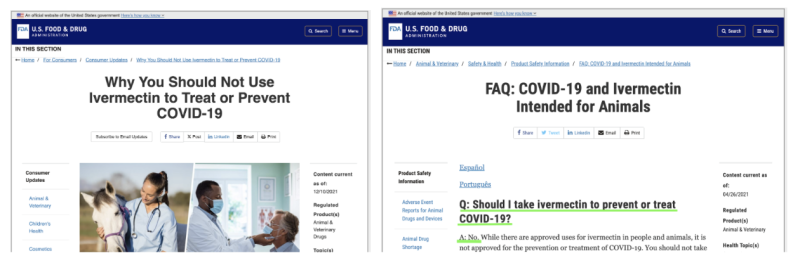
In the wake of the FDA settling a lawsuit brought against it for wantonly and aggressively smearing ivermectin, the agency has deleted its postings. That’s good, but we shouldn’t forget how egregiously it mischaracterized the drug, ignored copious evidence in its favor, and portrayed its proponents as dangerous crackpots.
Prescribers who advocated for alternate treatments like ivermectin or hydroxychloroquine were mocked online by America’s “trusted journalists” as being part of a “right-wing conspiracy” and labeled “hucksters.” Those who didn’t demure to the Covid mRNA or other Big Pharma treatment narratives were banned, fired, and spoken harshly about around the world and into the reaches of the stratosphere in what seemed like coordinated messaging.
Many clinicians lost their jobs – at best. At worst, their reputations, practices, finances, and careers were shattered. If that was not bad enough, after losing their jobs, state medical and pharmacy boards initiated legal proceedings against their licensure, singling out their “off-label” Covid treatments, despite other off-label treatments being a near-ubiquitous component of pharmacy and medical practice.
For generations and especially during the Covid pandemic, professionals depended on these “elite” medical groups. Some of them have existed for around 170 years and have around $150 million to $1.2 billion in assets, so they clearly had the history, personnel, and wherewithal to objectively examine published data. Even beyond that, the AMA has several floors in a skyscraper in Chicago and the APhA’s Constitution Avenue’s “landmark headquarters” is so luxuriant that it is advertised and utilized as a wedding venue.
Of course, that extravagance was paid for by millions of pharmacists, physicians, and benefactors who expected these organizations to act as a checksum and ensure excellent clinical practice standards. These medical organizations have a duty to honor their histories, responsibilities, and ethical duties to better the human condition through verified scientific evidence. Instead, they appeared to outrageously abandon their obligations from their lofty positions of respect, comfort, money, and power.
APhA, ASHP, and AMA Clinical Declarations Now Indefensible:
On March 22, the FDA rightly acquiesced and agreed to remove their anti-ivermectin postings due to 1) a lawsuit filed against them and 2) the impossible task of having to defend themselves with an overwhelming amount of data disagreeing with not only dispensing medical recommendations, but the published data backing their Covid-19 use (e.g., see below).
With that gone, the APhA, ASHP, and AMA assertions suddenly have no leg upon which to stand.
Several non-FDA links within their press releases have (unsurprisingly) also quietly vanished with no explanation. NIH references are slated to be shut down, on top of multiple FDA and CDC links already no longer working.
Ivermectin Mechanism of Action, History and Evidence:
The broad antiviral mechanism of action of ivermectin is complicated and may partially involve blocking the uptake of viral proteins, but the bottom line is that it has been shown to yield positive results in a variety of published results for Covid-19. Had APhA, ASHP, and AMA pharmacists and physicians independently examined the data, (as I, just one drug-safety analyst without fancy headquarters, have done) rather than simply parroting now-deleted narratives of others, they would have learned that ivermectin works as an antiviral.
It has an extensively proven track record of being not just safe – but astonishingly safe for a variety of viral diseases. This is not breaking or fringe science; it has been known for years. Ivermectin is such a safe and effective drug that back in 2015 it was the first drug for infectious disease associated with a Nobel Prize in 60 years.
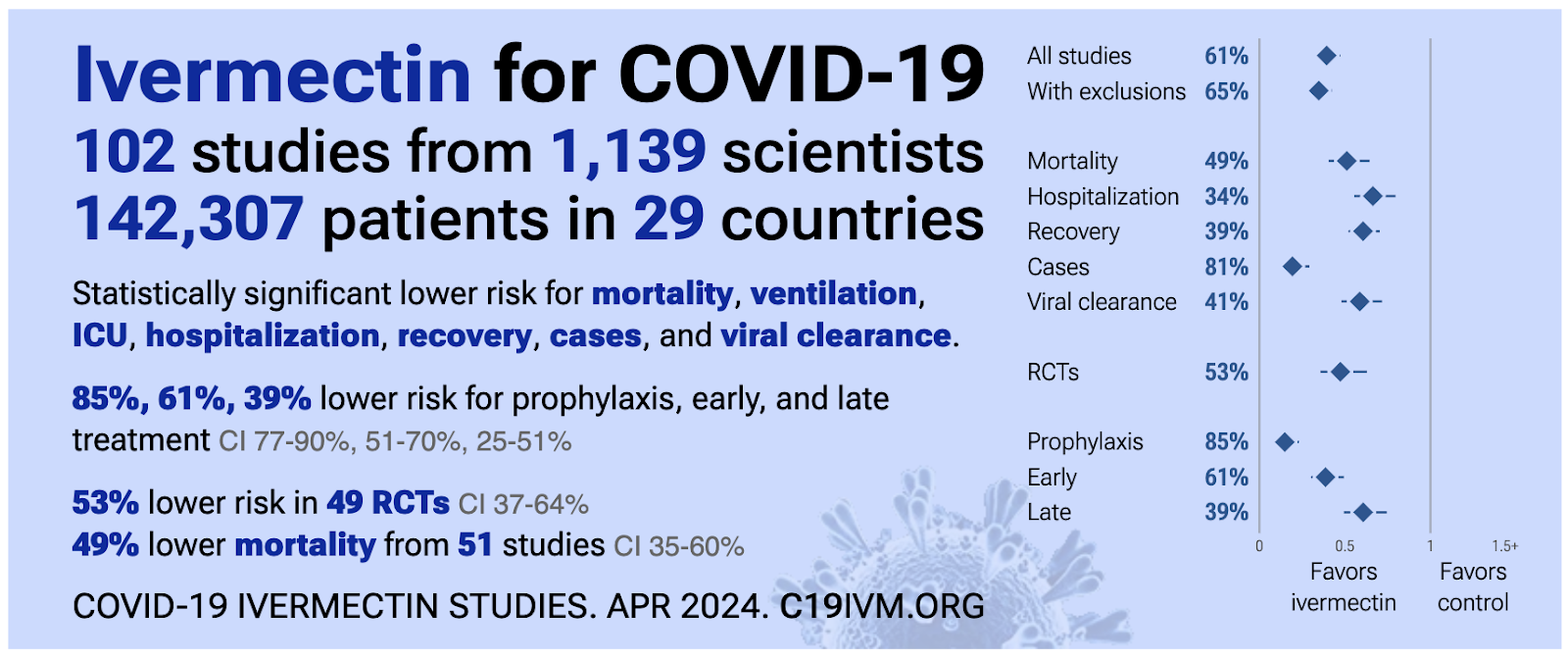
While I have stacks of electronic files and printed materials, dog-eared and food/drink-stained, there is a most elegantly presented meta-analysis website designed by some brainy and web-savvy scientists detailing over 100 studies from over 1,000 different scientists, involving over 140,000 patients in 29 countries describing the benefit and safety of ivermectin for Covid-19 treatment. It actually appears to be more extensive than Cochrane’s outdated review of ivermectin which only examined 14 trials – and excluded seven of them from consideration.
According to these data, consisting of smaller international publications that include real-world findings and small observational studies, ivermectin shows a statistically significant lower Covid-19 risk as detailed in the image above.
The less-positive findings associated with late treatment/viral clearance/hospitalization data cohort were associated with delayed administration. That is because any late-state use of antiviral pharmacology tends to be ineffective after hundreds of millions of viral replications have taken place – whether it’s cold sores, influenza, AIDS, or Covid-19.
ASHP, APhA, and AMA Press Releases Contradict Available Data and Clinical Practice Standards:
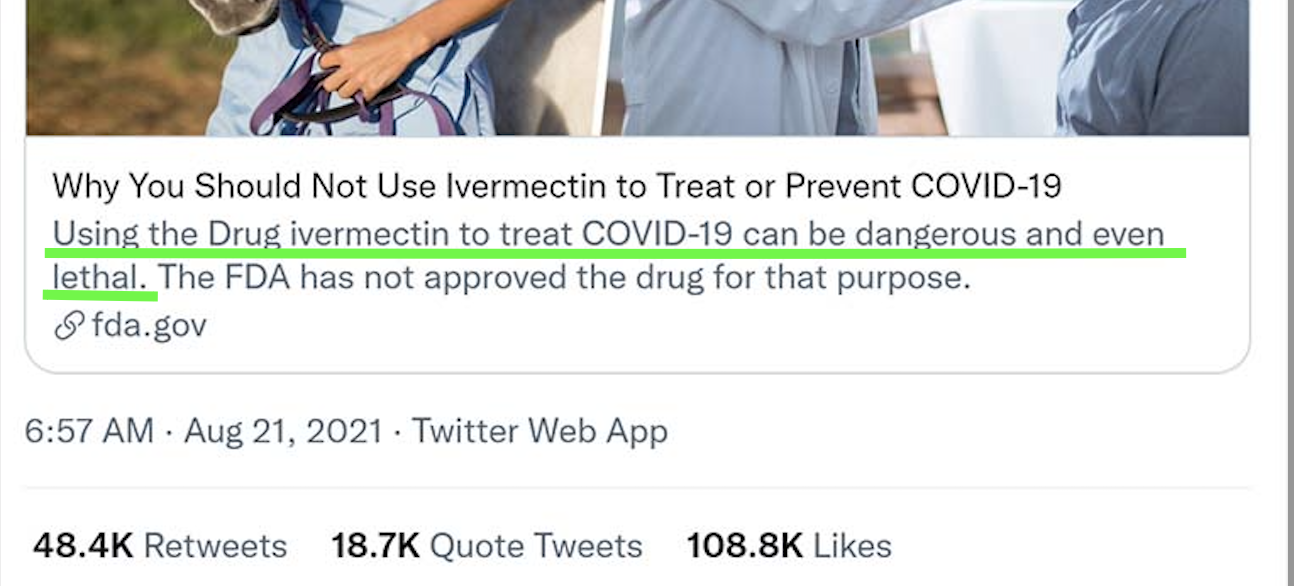
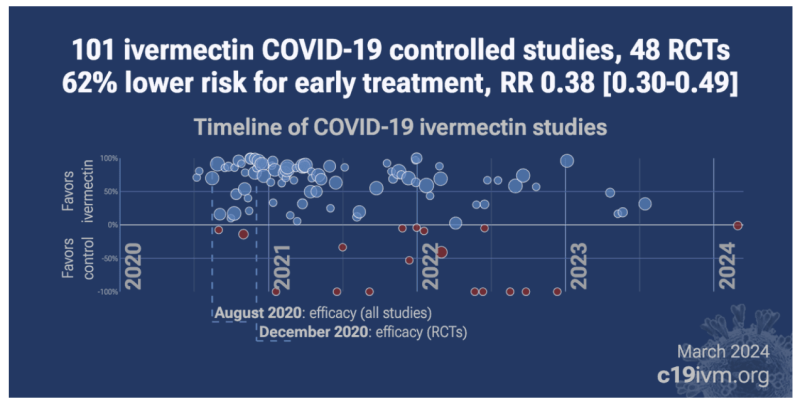
When the FDA scolded Americans not to use ivermectin for Covid-19, on April 25, 2021, there were 43 different published manuscripts showing its potential benefit. Around three months later, on August 21, the FDA released its infamous horse/cow tweet which implied that ivermectin was only for animals, not humans. This “doubling down” occurred as an additional 20 studies had subsequently been written detailing additional benefits for Covid-19. See the timeline below:
In the picture shown above, the BLUE circles shown are studies which detail positive ivermectin study findings and the RED circles are negative. Negative data exists, but the positive ivermectin findings outnumber them both in study quantity and study size (illustrated by the circle sizes), according to meta analysis data published at: c19ivm.org.
Multiple APhA/ASHP/AMA statements ignored published scientific and clinical evidence. Specifically, statements declaring the: “Use of ivermectin for the prevention and treatment of COVID-19 has been demonstrated to be harmful to patients” (bold emphasis theirs) are objectivelyinaccurate. I do not know on what basis those statements were made. The recommendation to healthcare professionals to “…counsel patients against use of ivermectin as a treatment for COVID-19, including emphasizing the potentially toxic effects of this drug” represents a departure from pharmacist and physician practice standards.
The absurdity of the latter statement is quite outrageous. Pharmacists and physicians know that all drugs have “…potentially toxic effects” so if they applied the standard of “emphasizing potentially toxic effects” while discussing every prescribed medication, few if any patients would ever take any of their medications. The APhA/ASHP/AMA discriminatory hostility towards ivermectin was not only clinically unjustified and irresponsible; it was – as far as I know – without precedent.
Why were federal agencies’ and professional organizations’ talking points against ivermectin not backed by independent, original APhA/ASHP/AMA data examinations? That question needs to be thoroughly probed with regard to potential regulatory capture within these groups.
Both then and now, those FDA webpages, postings, and tweets were not just biased. They were irresponsible in their denigrating ivermectin as an off-label treatment, which is why they are now gone.
The question is, who was worse? The FDA for overstepping its congressional authority in not just making medical recommendations, but making recommendations ignoring data, or the servile “independent” elite professional organizations exuberantly echoing a narrative?
Prescient or not, here is an excerpt of the expert panel congressional testimony to the Covid Select House Oversight Committee, explaining the FDA’s disparaging ivermectin versus promoting mRNA injections using an automobile analogy, delivered just one day prior to the FDA’s yielding to physicians’ lawsuit to remove its postings denigrating ivermectin:
Despite FDA Settlement and Data Abundance, the Press is Still Anti-Ivermectin
Even after the FDA’s about-face, on March 26, 2024, a Los Angeles Times journalist published a column calling the removal of FDA tweets “groundless” unilaterally declaring ivermectin is still “conclusively shown to be useless against COVID-19,” comparing ivermectin to “snake oil,” and describing those who advocate for it as “purveyors of useless but lucrative nostrums” …whatever that means. (Regarding the ‘lucrative’ claim, it is worth noting that since ivermectin is generic and inexpensively available, it is not ‘lucrative’ to anyone.) It also referenced ivermectin lacking “scientific validation,” even though the above-cited data abundantly indicates otherwise.
Regarding the FDA’s choice to settle its lawsuit disparaging ivermectin, the FDA’s Center for Drug Evaluation and Research leadership isn’t “shooting itself in the foot” as the Times says. It seems that the FDA is indirectly attempting to prevent further embarrassment likely because it now realizes that its ivermectin assertions were wrong and outdated with every passing day. But where does that leave the APhA, ASHP, or AMA who heavily relied on these now deleted FDA links in their press releases?
The APhA, ASHP, AMA Response to the FDA’s Removal of Postings Used in Press Releases? An Embarrassing Silence:
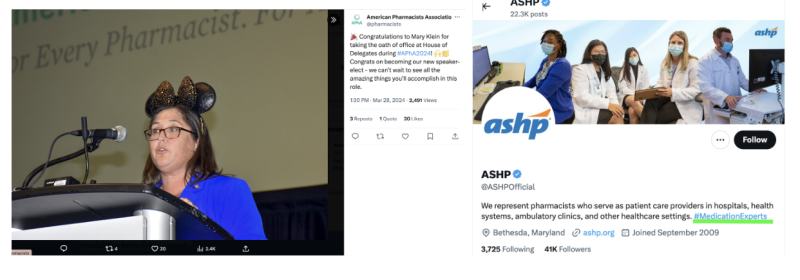
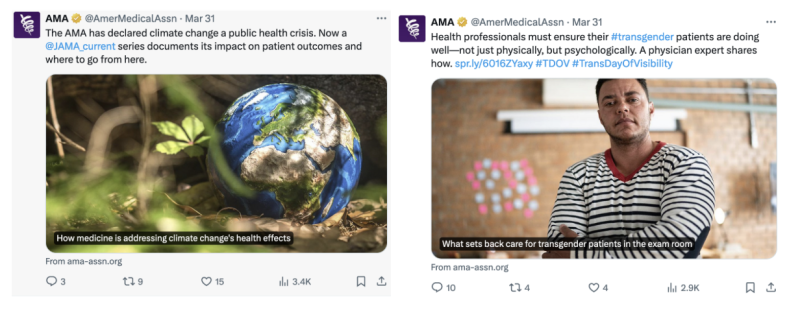
Over a month later, and as of this publication date, none of these organizations have a single thing to say about their previous press releases quoting the now-removed FDA articles and tweets. In fact, here is an indication of their concerns: one week after the FDA acquiesced to remove its postings in ivermectin, APhA’s newly elected speaker chair and pharmacist Mary Klein is “happy danc[ing]” and giving her official acceptance speech wearing Mickey Mouse ears. ASHP’s (A/K/A “#MedicationExperts”) still shows its official page with clinicians wearing ineffective, unnecessary surgical masks despite the pandemic having ended well over a year ago and Cochrane reviews indicating that this sort of masking is almost certainly ineffective. AMA officials are making multiple posts on transgender issues and declaring climate change a public health crisis, – all while fully ignoring its impactful, incorrect, inappropriate statements on ivermectin.
Take a look:
The APhA, ASHP, and AMA have remained conspicuously silent on this topic while focusing their newsfeeds on everything but. To this day, their press releases remain online, with multiple dead links to government agencies. In blindly backing incorrect narratives pointing to removed web pages, they are now all alone in their ivermectin declarations.
Bottom line: ivermectin was and is safe, and more than likely effective for Covid when timed and dosed correctly, and under medical supervision, despite what was declared by organizations and federal officials. In fact, ivermectin’s general antiviral activity might even be helpful for bird flu (avian influenza) in animals and humans, in lieu of another novel adverse-event-ridden “warp speed” mRNA “vaccine” with an endless boondoggle of boosters.
The past and current record on ivermectin needs tobe set straight. We know there is an important (but untransparent) list of who is responsible for misrepresenting published data, but will anyone be held accountable?
Dr. David Gortler, a 2023 Brownstone Fellow, is a pharmacologist, pharmacist, research scientist and a former member of the FDA Senior Executive Leadership Team who served as senior advisor to the FDA Commissioner on matters of: FDA regulatory affairs, drug safety and FDA science policy. He is a former Yale University and Georgetown University didactic professor of pharmacology and biotechnology, with over a decade of academic pedagogy and bench research, as part of his nearly two decades of experience in drug development. He also serves as a scholar at the Ethics and Public Policy Center
A judge found Thursday that Beach Boys founder and music luminary Brian Wilson should be in a court conservatorship to manage his personal and medical decisions because of what his doctor calls a "major neurocognitive disorder."
"I find from clear and convincing evidence that a conservatorship of the person is necessary," May said at the brief hearing. The judge said that evidence shows that Wilson consents to the arrangement and lacks the capacity to make healthcare decisions.
May appointed two longtime Wilson representatives, publicist Jean Sievers and manager LeeAnn Hard, as his conservators.
There were no significant objections raised.
Two of Wilson's seven children, Carnie and Wendy Wilson from singing group Wilson Phillips, asked through their attorney that all the children be added to a group text chain about their father, and that all be consulted on medical decisions. The judge granted the stipulations.
The two daughters had asked for a delay in the process at an April 30 hearing while issues were worked out, but it was clear at the hearing that consensus had been reached.
A doctor's declaration filed with the petition in February said Wilson has a "major neurocognitive disorder," is taking medication for dementia, and "is unable to properly provide for his own personal needs for physical health, food, clothing, or shelter."
Sievers and Hard have had a close relationship with Wilson and his wife for many years. In a report, Robert Frank Cipriano, an attorney appointed by the court to represent Wilson's interests, said Wilson acknowledged the need for the conservatorship, and said he trusts the judgement of the two women.
Cipriano's report to the court said he visited Wilson at his "impeccably well maintained residence in Beverly Hills," where he lives with two daughters and a long-term live-in caregiver.
Wilson can move around with help from a walker and the caregiver, Cipriano said, and he has a good sense of who he is, where he is, and when it is, but could not name his children beyond the two that live with him.
He said Wilson was "mostly difficult to understand and gave very short responses to questions and comments."
Cipriano said he approved of the conservatorship, mostly because of Wilson's general consent.
Wilson, his seven children, his caregiver, and his doctors were consulted before the petition was filed, according to a family statement at the time. It said the decision was to ensure "there will be no extreme changes" and that "Brian will be able to enjoy all of his family and friends and continue to work on current projects."
Judges in California can appoint a conservator for a person, their finances -- referred to as the estate -- or both, as was the case with Britney Spears. Spears' case brought attention -- much of it negative -- to conservatorships, known in some states as guardianships, and prompted legislative changes. Wilson's case is closer to the typical traditional use of a conservatorship, which very often is installed for an older person in irreversible mental decline.
The Wilson petition did not seek a conservator of the estate because his assets are in a trust, with Hard as a trustee.
Deeply revered and acclaimed as a co-founder, producer, arranger, and chief songwriter of the Beach Boys and a masterful innovator of vocal harmony, Wilson struggled with mental health and substance abuse issues that upended his career in the 1960s.
He was inducted into the Rock & Roll Hall of Fame in 1988 along with his bandmates, including his brothers Carl and Dennis and his cousin Mike Love.
The chance of new-onset thyroid disease after administration of mRNA COVID-19 vaccines was rare, but still noteworthy, according to a meta-analysis.
There were 77 cases of thyroid-related autoimmune diseases among people with no history of an autoimmune disease prior to receiving the COVID-19 vaccine, with 38 cases of Graves' disease (GD) and 39 of subacute thyroiditis (SAT), reported Vikram Gill, MBBS, of St. Peter's University Hospital/Rutgers University in New Brunswick, New Jersey.
Additionally, these autoimmune diseases occurred more often in women than in men, "about a 2-1 breakdown, which is what we would expect as women tend to have more autoimmune disease overall than men," Gill said at a poster presentation at the American Association of Clinical Endocrinologyopens in a new tab or window annual meeting.
Specifically, 10 men were diagnosed with GD as were 28 women, while 13 and 26, respectively, were diagnosed with SAT. The average ages of men and women who developed post-vaccination autoimmune diseases were 41 and around 44, respectively.
"Our study doesn't mean that these vaccines are not efficacious or are dangerous...it just means that these autoimmune disease may rarely emerge," Gill said. "These patients did not have any autoimmune disorders before getting their vaccinations."
Gill and co-author Hongxiu Luo, MD, also of St Peter's, searched for articles reporting GD and SAT following COVID-19 mRNA vaccinations from 2019 to November 2023.
They found that a GD diagnosis happened about 40 days after the first dose, with SAT emerging sooner, at about 11 days after the first jab. In the group with GD, over half developed hyperthyroidism symptoms after the first dose of mRNA vaccine, while around 45% showed symptoms after dose 2. Roughly 5% showed signs after the third dose. In the SAT group, almost 54% showed hyperthyroidism symptoms after dose 1, as did about 44% after dose 2, and around 5% after dose 3.
"Interestingly, positive anti-TPO [anti-thyroid peroxidase] was only seen in five out 32 patients who were tested (15.6%), and 32 patients (74.4%) were negative for anti-TPO. Eleven out of 33 patients who were tested (33.3%) were positive for anti-Tg [antithyroglobulin], 22 patients (66.6 %) were negative," Gill and Luo wrote.
Even if these vaccine-associated autoimmune diseases are not common, providers should be aware of these ties, Gill advised, adding that "the incidence is highest for the first dose."
Samarth Virmani, MBBS, of Houston Methodist Hospital, told MedPage Today that the study was "interesting" and could inform vaccine development.
"While COVID now is somewhat in the past, this kind of study will help act as a basis for future vaccines that may come out in future pandemics," said Virmani, who was not involved in the study.
Disclosures
Gill and Virmani disclosed no relationships with industry.