Search This Blog

Saturday, January 18, 2025

Trump Unveils "Official" MemeCoin Late Friday; 12 Hours Later It Is Up 16,000% To $30 Billion

 Just hours after Gary Gensler left the SEC headquarter for the last time in his life...

... Trump showed the world what an outsized role crypto, and certainly memecoins, will have in his administration.

After nearly a year of frenzied speculation which of the dozens of Trump-linked memecoins the 47th president will pick as his own, just before 10pm ET on Friday night - and just two days before his inauguration as the 47th president of the United States - Trump stunned the world when he unveiled on his Truth Social and X accounts, his “official” meme coin, TRUMP...

... which in the 12 hours since its unveiling has surged to a $30 billion market capitalization, roughly three times bigger than Trump's other momentum chasing venture, DJT (whose market cap is $8.7 billion and has roughly the same amount of revenue or cash flow as the meme coin) as part of an exponential move that has seen its market cap rise (and occasionally fall) by a billion dollars every few minutes.

“My NEW Official Trump Meme is HERE! It’s time to celebrate everything we stand for: WINNING! Join my very special Trump Community. GET YOUR $TRUMP NOW,” Trump wrote on his social media platform.

The token started trading at an opening price of $0.1824, but within 12 hours had jumped over 15,000%, trading at roughly $30 as of 10:00am ET, 12 hours after its launch. Its market cap stood at ~$30 billion at the time.

Initially, the crypto community initially voiced concerns about the token’s legitimacy, with some warning of a possible hack or social engineering scheme. According to blockchain engineer cygaar, the project’s official website mirrors those of Trump’s previous NFT collections and suggested that “either this is the greatest cyber heist of all time, or this is legitimate.” However, as Trump’s posts remained online, and with Polymarket data suggesting only a 10% chance of account compromise, skepticism began to subside, pushing the price of the token further up.

The token’s explosive growth has also drawn concerns regarding its allocation.

“80% of the token supply is locked in a multisignature wallet, amounting to $3 billion controlled by the creator, who also added $40 million in liquidity,” Conor Grogan, head of product business operations at Coinbase, said in a post on X, adding that the project was seeded with millions of dollars of funds from Binance and Gate, two exchanges that don’t serve US customers. Other analysts noted that 80% of the token’s circulating supply is allocated to Fight Fight Fight LLC and CIC Digital LLC, entities linked to the Trump Organization, with only 20% of the supply split equally between public investors and liquidity.

While Trump controls the vast majority of the tokens, they remain locked which means the US president is unlikely to "rug" millions of his most ardent fans... at least for now.

Meanwhile, amid the panicked buying frenzy, the market value of the token is now $30BN, meaning it has surpassed such veteran cryptocurrencies as TRON, Avalanche, Chainlink and Shiba Inu.

Separately, while the Solana-linked memecoin has pushed the market cap of Solana - a cryptocurrency conceived with the purpose of create such shitcoin pump and dump schemes - to a record $118 billion, there has been an offsetting drain in the price of Ethereum, which has served as the primary source of liquidity, and whose market cap has dropped by 5% overnight, losing about $240BN in value.

TRUMP's launch comes as the president-elect continues to align himself with cryptocurrency initiatives. Once an outspoken crypto-skeptic, he made a U-turn during his election campaign and pledged to reshape the US cryptocurrency landscape to make the country the “crypto capital of the planet.” Paul Atkins, Trump’s pick to chair the Securities and Exchange Commission (SEC), is expected to spearhead these efforts. A known crypto advocate and former SEC commissioner, Atkins will replace Gary Gensler, who has been criticized for his crackdown on the industry.

Finally, while many are delighted to jump on board of the biggest momentum trade in history which is eclipsing even such social media phenomena as Gamestop and AMC, some such as Bloomberg ETF guru are voicing skepticism that this particular foray by Trump "seems exploitative" and is an "unforced error in the making".

Whether he is right or not will depend on how long before this particular bubble bursts.

https://www.zerohedge.com/crypto/trump-unveils-official-memecoin-late-friday-12-hours-later-it-16000-30-billion

Tether Stablecoin To The Rescue Of US Treasury

 by Brian Darling via RealClearPolicy.com,

I always counsel to go in with eyes open when investing in cryptocurrencies (as somebody who has made some good and some terrible investments). With that caveat, it is important to recognize that cryptocurrencies are an amazing advance in the way people conduct commerce and should be embraced by all Americans, the business community and government.

One politician who is a skeptic of crypto is Sen. Elizabeth Warren (D-MA). She recently presented a list of questions to Treasury Secretary-Designate Scott Bessent this week in advance of his Jan. 16 confirmation hearing before the Senate Finance Committee. Sen. Warren seems to believe that a federal government holding $36 trillion in national debt should shy away from a type of cryptocurrency called “stablecoin” because of risk. The question is a great opportunity for an education of the American people into the cryptocurrency markets to better understand why they are so popular with both average Americans and investment giants.

Stablecoins are a category of cryptocurrency that bridges the gap between innovation and security.

The “stable” in the term refers to the fact that these cryptocurrencies have a unchanging value against the U.S. dollar.

These stablecoins are backed by reserves of fiat currency, like the U.S. dollar, and with an array of other cryptocurrencies used as collateral.

One question Sen. Warren has is whether Secretary-Designate Bessent believes that if stablecoin company Tether becomes a “significant holder of U.S. Treasuries,” could it “present risks to the stability of the Treasury market if [Tether] experiences a run?”

Warren’s questions create a good opportunity for education around USDT, Tether’s stablecoin, and the benefits it drives for the hegemony of the U.S. dollar, maintaining the U.S. dollar as the world’s reserve currency, and creating demand for U.S. debt instruments – all good news for the global U.S. Treasury market.

The senator’s questions also invite additional conversation around the incoming Trump administration’s need to work with Congress to create meaningful regulatory frameworks for stablecoins and other blockchain technologies for the benefit of the American public. Any regulatory framework should be crafted so as not to be putative and to aid an expansion that encourages good actors in the space to innovate and expand.

Tether’s positive role in the modern financial landscape for citizens and nation-states is significant. Because of the way USDT is structured and operates, it is arguably the only blockchain-based solution that promotes the future of the U.S. dollar as the primary global reserve currency. This serves as a national security interest in keeping the U.S. government solvent and is a way to stop many countries from ditching the U.S. dollar as a reserve currency.

In terms of the U.S. debt market, Tether is already a significant holder of U.S. Treasurys – the 18th largest, in fact, at more than $102 billion. Far from posing a threat to the Treasury market, this long position demonstrates Tether’s critical role as a liquidity provider and allows broader expansion of and participation in the American economy. 

And in terms of deposit risk – what Sen. Warren appears worried about – Tether, unlike most U.S. banks, is overcollaterized. The total dollar value of Tether’s reserve assets exceeds the global U.S. dollar-denominated amount of USDT stablecoins issued. This ensures that anyone wishing to “cash in” their USDT has reserves available to support the transaction - always. The same can’t be said of your local bank.

Furthermore, more than 400 million people now use USDT around the world. This reduces the concentration risk that comes from having very few but highly concentrated holders of U.S. debt (like, say, China), which minimizes the risk of large sell-off events. Holding USDT diffuses risk to U.S. debt markets globally, because for every Argentinian, Turk, or Brazilian holding USDT, Tether buys the equivalent in U.S. debt.

Tether serves to reinforcing the U.S. dollar’s dominance in world markets. Despite persistent global speculation about the longevity of the dollar as the world’s reserve currency – driven in large part by the emergence of geopolitical conflicts, diverging economic interests, and the freezing of dollar-denominated assets – Tether has appeared committed to supporting the dollar’s impact and relevance in the global economy. 

Tether has demonstrated that it is not a threat, but rather a crucial partner in reinforcing the U.S. dollar’s continuing dominance for the benefit of both the American public and the global financial system. Further cementing this important role is Tether’s demonstrated willingness to voluntarily work with U.S. and international law enforcement agencies to stop the commission of crimes by known criminals and suspected bad actors.

Once confirmed, Secretary Bessent should use this understanding to work with skeptics like Sen. Warren and members on both sides of the aisle.

Together, they can create needed regulatory and policy solutions for emerging technologies that will benefit the American people and preserve American dollar dominance into the future. 

Brian Darling is the president and founder of the firm Liberty Government Affairs. He was Senior Communications Director and Counsel for Senator Rand Paul and a former senior fellow in government studies at The Heritage Foundation.

https://www.zerohedge.com/crypto/tether-stablecoin-rescue-us-treasury

Hochul’s Congestion Tax Killed the City of Dreams

 Every day, when the bell rings at her middle school in Queens, young Tendas packs her school bag and heads to her dance studio to pursue her New York Dream. For up to 15 hours a week, Tendas – or “Das” as her parents affectionately call her per the Tibetan custom of combining the first and last name – hones her dance skills with 49 other girls in her competitive group. She’s hard to motivate but energetic – her mother, Jean Hahn, says she bounces off walls during vacations. Dance is her outlet: She loves to compete with her groups, which have won awards at competitions. She hopes to attend a performing arts high school, and she receives English tutoring on the side to improve her grades.

But thanks to Kathy Hochul’s newly implemented congestion tax, Tendas’ family may no longer be able to afford her dancing aspirations.

New York City residents like the Hahn family already endure living in one of the most expensive cities in the world. They have also weathered draconian COVID lockdowns that forced other middle-class families to flee the city. Now, Tendas’ father – a technician at a hospital in lower Manhattan – is being charged $9 a day for commuting on one of America’s most unkempt streets. Due to his work schedule, public transportation is not an option.

“It’s grueling, easily doubling the commute time when you’re doing an off-hour shift and coming home at midnight,” Mrs. Hahn said. “There’s a reason why he drives – his job is physically taxing. So when he’s on his feet all day – to add this additional time until he gets home, he misses out on sleep, which he needs for his job to perform.”

Almost a third of workers in the city commute from outside. Among these are middle-class workers who are the Big Apple’s backbone. They populate Manhattan’s 22 police precincts, 48 firehouses, 363 public schools, and 470 health facilities, including Bellevue, NYU Langone, Mount Sinai Beth Israel, and VA Hospital. These New Yorkers cannot live on the island because of its untenable cost of living but are the ones who awarded the city its epithet, “the city that never sleeps.”

New York City’s governing class is openly punishing middle and working-class residents who cannot sacrifice their jobs for the environment. Hochul’s congestion tax could be the final blow to many locals’ New York Dreams.

“For my family, it’s a quality of life issue, and taking a hit on maybe what we’ll be able to provide for our child,” Hahn said of the new congestion pricing. “But I know for other families, because I have extended family members that are working class, that it’s almost existential, because now they have to change their livelihood,” she said.

Affected New Yorkers include congestion zone residents with access to the heart of NYC’s subway system. Take Holli Porreca, a union stagehand grip who lives on the Lower East Side. She has many subway options, but her contractual work demands unique hours and equipment she can’t haul on public transportation.

“A typical day for me might start in Staten Island shooting a prison scene on Law and Order and end in a chase scene on Long Island. I need to transport myself and my tools to both locations,” she said. “I don’t think there’s any way that I can change my commuter plan. I take my car because it’s necessary.”

Porreca lives in a Housing Development Fund Corporation (HDFC) apartment, which she is thankful for owning. She still worries for other working-class Manhattanites in her neighborhood, however. “You know, a plumber who’s renting, maybe a rent-stabilized apartment down the street, suddenly has a $600 a month cost of living increase just to get his work van home, and that person might be forced to move,” she said.

“It seems pretty clear that the state is depending on people not being able to change their commuter style because otherwise, how would they be raising $15 billion in revenue from all the tolls?”

Porreca is right. The congestion tax is an assault on stagehand grips, firefighters, plumbers, and other skilled trades workers with tight budgets and no other means of commuting. Make no mistake: It’s also an assault on other middle-class New Yorkers who now must bargain their peace of mind by taking the subway. 

New Yorkers are paralyzed by fear from the recent subway crime wave that shocked the nation over the holidays. Days before Christmas, a Guatemalan illegal migrant burned a sleeping subway rider to death on the F train.

Since then, two New Yorkers were slashed at Grand Central, with one sustaining injuries to the throat, an assailant left a man with critical injuries after shoving him into the train tracks, a middle-aged man was stabbed in the neck while waiting for the C train on 50th street, two more stabbings occurred on New Year’s day, and an MTA worker was also stabbed after a “verbal altercation” with another man.

MTA CEO Janno Lieber mocked New Yorkers who cite these crime stories as participants in “grievance politics.” But that can’t explain why New Yorkers drive to work 100 hours a year rather than taking public transport.

The lack of safety has kept NYC subway revenue from rebounding to pre-pandemic levels. Eighty-two percent of New Yorkers rated subway safety during the day as good or excellent in 2017. In 2023, only 49% believed the same. In 2017, 46% of New Yorkers rated nighttime subway safety as excellent or good, but by 2023, that number plummeted to just 22% – a 52% decrease.

Residents no longer want to brave a treacherous late-night commute after a long workday. Hochul’s new congestion tax forces New Yorkers to choose between a roof over their heads or safety – a gamble no American should make.

Public officials have taken advantage of New York pride for too long, and the new congestion tax may be the final straw for many. For families like Jean’s, the congestion tax will rob her daughter of an essential creative outlet and future possibilities. For working-class union workers like Porreca, who lived in NYC for 20 years, the unavoidable tax could force them out of Manhattan.

Until recently, natives and longtime residents willingly dealt with the higher cost of living because the city’s invisible curriculum offered cultural competence and an inspiring landscape of opportunities. But now, Hochul’s congestion pricing may have dealt the final blow to NYC’s other epithet – The City of Dreams.

New Yorkers are second-guessing whether the punishment is worth NYC’s dwindling promise.

Daniel Idfresne is a junior at Syracuse University. He’s a Young Voices Social Mobility Fellow and interned for “The Story with Martha MacCallum.” He has written for the New York Post, Newsweek, and The Free Press. Follow him at X.com: @danielidfresne

https://www.realclearpolitics.com/articles/2025/01/18/hochuls_congestion_tax_killed_the_city_of_dreams_152219.html

The Great Dumbing Down of American Education

 America’s universities may be a disgrace, but the deeper problems with our education system lie with grades K-12. Higher education still ranks as a U.S. strength that other countries might admire—but our grade schools might even be inadequate for poor, developing countries.

The most recent National Assessment of Educational Progress, known as The Nation’s Report Card, found that barely a quarter or less of students are proficient in reading, and even less are proficient in math, geography, and U.S. history. U.S. 4th and 8th graders are performing worse not only compared to East Asian countries, but also to such places as Poland, the U.K., South Africa, Turkey, and Sweden, all of which have boosted their scores.

Some of this can be blamed on the pandemic, but not all of it can. According to the National Center for Education Statistics, between pre-pandemic 2019 and 2023, the average score for 4th graders on standardized math tests dropped by 18 points, while scores for 8th graders declined by 27 points. Overall, some 40% of all U.S. public school students fail to meet standards in either math or english, up 8% from pre-pandemic levels.

The lockdowns may have accelerated the deterioration in testing, but scores have been dropping since 2015, and have continued to decline since the pandemic ended. In math, the OECD’s 2018 Program for International Student Assessment found that 36 countries outperformed the United States, including China, Russia, Italy, France, Finland, Poland, and Canada. This backs up the notion, recently expressed by Trump advisor Vivek Ramaswamy, that American kids lack the skills to compete with foreign workers.

But we are not just talking about elite skills. A recent federal survey suggests that 28% of Americans now occupy the lowest level of literacy, up from 19% in 2017. Schools have abandoned phonics and other effective approaches for “whole language” and other trendy theories, producing a population where 60% of 4th graders are poor readers. Attempts by parents to learn what their kids are actually experiencing in school creates problems, including the possibility of incurring large financial costs; in states like California, it is actually illegal for schools to inform parents about their children’s gender issues.

Progressive educrats have reasons to fear disclosure at a time when we are seeing the first reduction of the average American IQ in 100 years while China dominates STEM fields. In the lower grades, it’s now common to hear talk of “zombie schools,” which happens when more than 20% of a school’s pupils are “chronically absent.”

California’s K-12 system, which serves nearly six million students, fails to educate the majority: less than half meet national standards for literacy, and only one-third for math. No surprise then that many parents and some states are looking at alternatives, notably school choice and charter schools. This year alone 20 states expanded their charter programs. Overall, publicly funded charter schools have doubled since 2005, while the student count has grown by more than threefold. These schools have consistently outperformed their traditional public school rivals.

Yet, better performance seems barely a priority for many who run public schools, particularly in the deepest blue states. In California, charters are under unremitting attack. The Los Angeles Unified School District is working overtime to prevent new charters while harassing those that already exist. All this despite a plurality of Californians who think that their schools are getting worse.

The biggest losers are the students, particularly minorities. According to the latest California testing results, only 36% of Latino students met or exceeded state adopted ELA proficiency. Only 22% met or exceeded proficiency standards in math. The harsh reality is that nearly 70% of black students failed to meet state standards for english language arts in the 2021-2022 school year, while about 84% didn’t meet math standards.

A similar pattern can be seen in states such as Illinois, whose state system rivals California for failure. Under its clueless, well-fed, and ultra-rich governor, JB Pritzker, himself a product of expensive private schools, Illinois has dismantled much of its fledgling charter program. And why? Quality education is clearly not the issue. The Land of Lincoln boasts 53 schools where not one student can do grade level math and 30 where none can meet that standard in english. Despite increases in spending per student since 2019, there’s been apparently little effect on students.

The Windy City’s teachers are so clueless that they want a 9% raise this year, and this in a city with profound fiscal issues, as the Illinois Policy Institute has reported

Douglass Academy High School has 35 students enrolled for the 2023-24 school year in a building with a 900-student capacity. With a 64% absentee rate, there are often more staff than students, none of whom test to national standards. And to make sure students get the whole “authentic” Chicago experience, the city’s public school district is working to replace police officers with school personnel. You can look forward not just to a subpar education but to increasing odds of getting mugged, robbed, or shot.

To make matters worse, public education is being further weakened by ideologies that are widely adopted in education programs, and often backed by teachers unions. Turning schools into indoctrination camps helps legitimize, on the basis of “social justice” ideology, lower academic standards. California students may underperform, but the state is mandating climate education for students whose knowledge of science is sketchy at best.

After all, progressive indoctrination does not require imparting a broad knowledge of the past, or even the basics of science or mathematics. California instead has rejiggered its math curricula to emphasize not high achievement but “social justice.” In some ways we are going back to the kind of education perfected in Stalin’s Russia, or, going further back, the kind that Medieval scholars embraced.

The results of this ideological orientation now seep into daily education. The basic point taught in California classrooms is that America is hopelessly racist and oppressive. Following the socialist orientation of their leaders, unions back an approach to education that stridently embraces anti-capitalist and anti-Western activism.

California’s adopted ethnic studies program, shaped by Critical Race Theory, is openly anti-Zionist, largely dismisses Jews as white oppressors, and views Israel as a cruel colonialist power. In California’s new social studies curriculum, all whites, no matter their origins, are portrayed as enjoying “white privilege.” In this worldview, groups like Jews, the Irish, and other European immigrants did not suffer discrimination but instead indulged their “white privilege,” which might have come as a surprise to our immigrant forebears.

The impact of such approaches to education was most evident in last year’s anti-Israel agitation. Schools allowed teachers to hang anti-Semitic posters in their classrooms and use curriculum created by pro-Hamas groups. In one school, students physically intimidated a teacher who attended a pro-Israel rally, forcing her to lock herself in her office.

Indoctrination is being pushed most aggressively in largely minority areas, where education levels are historically poor. The Santa Ana Unified School District months ago adopted an ethnic studies program that many Jews consider openly biased against Israel. It claims the country practices “settler colonialism,” calls Zionism “a nationalist, colonial ideology,” and condemns the “creation and expansion of Israel as a Jewish state in historic Palestine.” Fortunately, the program is now being challenged in the courts.

Like the tragic children of Gaza, California’s youth, who are primarily minorities, are being groomed to hate Israel, along with the people who live there. San Francisco has experienced anti-Israel walkouts in ten high schools that were organized by an advocacy group with access to student addresses. In Oakland teachers held an unauthorized teach-in, reports the New York Times; the materials they suggested be taught included a coloring book for elementary students with a Palestinian character who says, “A group of bullies called Zionists wanted our land so they stole it by force and hurt many people.”

All this indoctrination would be less terrifying if the schools were equipping kids for the future. But it does students little good when many school districts have rejiggered their math curricula to emphasize “social justice.” Chinese and Indian students face enormous political pressures, but their leaders still want their students to perform, particularly in math and science.

These ideological projects are undermining education across the West. So when will parents and the politicians they elect begin to stand up for young students? They must be willing to confront well-financed, militant, and politically powerful teachers unions and their political satraps. Allowing the educrats to ruin a whole generation of students would be a disaster, not only for our children but for Western societies as a whole.

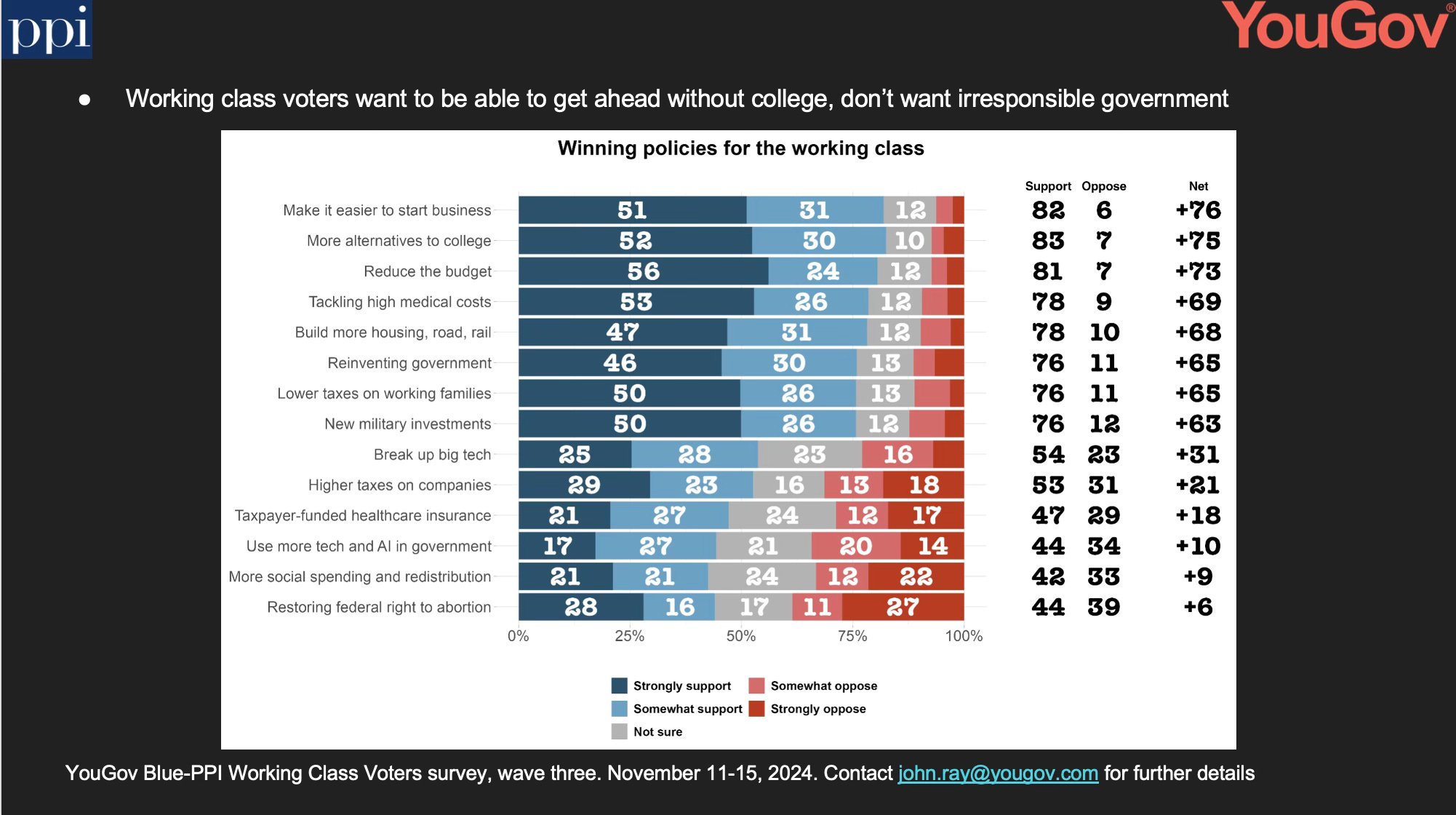
There are certainly some signs of pushback. Many students are rejecting the pedagogy that seeks to steer them into four-year colleges and are looking for skills-based alternatives. Since 2010 undergraduate enrollment has dropped from 18.1 million to 15.4 million. Over the past decade 500 U.S. private schools have closed, three times the rate of the previous decade.

People are looking elsewhere for opportunity. A recent Gates Foundation study found a steadily decreasing interest among those under 30 in four-year colleges and a greater interest in trade schools, particularly in working class families. Americans have more faith in two-year colleges, where over 40% of all undergraduates are enrolled, than in four-year schools. As the number of carpenters, electricians, and plumbers grow, so too do vocational schools, which are up 15% since 2019. According to the Labor Department, there are at least 750,000 unfilled jobs in the nation’s factories.

Technology, notably artificial intelligence, seems certain to reduce the demand for many positions students are studying for, not only in computer science but finance, human resources, management, and even creative work. College degrees already have been losing value for decades while 40% of recent college graduates are underemployed, notes the New York Fed.

Besides the challenges inherent with the adoption of artificial intelligence, the current generation is being pushed into a marketplace where they have to compete with technology talent from abroad, an indirect result of a weakening competitive system. The Chinese, Indians, and Israelis would never allow their systems to deteriorate to the level where their own children could not fill coveted blue- or white-collar professions.

Today’s students are unprepared for the future, and so is the United States. Unless this dumbing down is somehow reversed, America’s road to permanent mediocrity will be well assured.

 is a Presidential Fellow in Urban Futures at Chapman University and a Senior Research Fellow at the Civitas Institute at the University of Texas at Austin.

https://americanmind.org/salvo/the-great-dumbing-down-of-american-education/

DEI, corruption behind LA fire catastrophe: whistleblower

by Michael Shellenberger 

Many say that the catastrophic fires ravaging Los Angeles weren’t the fault of Governor Gavin Newsom and LA Mayor Karen Bass. Fires are inevitable in Los Angeles, and the water ran out because no water system could withstand that many fires simultaneously, they add.

But LA firefighters themselves disagree. They say the reason they arrived too late to stop the fires from becoming catastrophic was because of severe budget cuts. The Fire Department did not pre-deploy fire engines to strategic locations, and helicopters arrived half an hour too late to put out the Palisades. “That [Santa Ynez] reservoir being closed did not allow helicopters to drop and suck water up from five minutes away,” a new firefighter whistleblower, the third who has come forward, told me. “Instead, they had to fly 10 to 15 minutes away to go get water somewhere else.” The problem is that the LA Fire Department is one of the most severely understaffed of America’s 10 largest cities. It has less than a single firefighter per 1,000 residents compared to Chicago, Dallas, and Houston, which have twice as many. “ In 1960, our city population was 2.5 million, and we had 112 fire stations. In 2020, our city population was 3.9 million, and we had 106 stations,” a representative of LA’s firefighters ’ union testified last month. “That's 1.4 million more people and six fewer fire stations.” This undermines the Department’s ability to respond to emergencies. “In 2020, the average emergency response time was seven minutes and 53 seconds, nearly double the NFPA recommendation.” Part of the problem is that the number of homeless fires in LA doubled between 2020 and 2023 to an astonishing 38 per day. They start dangerous fires in many ways, including by breaking through the sidewalk into the city’s electrical system, which can result in explosions and death. Still, many say, it is wrong to blame homelessness for LA’s fires. They are victims of trauma and poverty. But the research is unequivocal. Over half of all fires that the LA Fire Department responds to are set by a homeless person. "There were two huge explosions, and when I looked out my apartment window, I saw plumes of black smoke," a resident told NBC-Los Angeles. "People are literally dying in the streets, in tents burning down around them.” And the evidence is clear: leaving homeless people on the street makes them three times more likely to die than people required to come inside to sleep in shelters. The third firefighter whistleblower says the firefighters are being put in danger by budget cuts. “Even last week,” the person said, “I wanted to work and I was told, ‘Sorry dude, we don't have a seat for you to fill because there's not enough apparatuses,’” meaning fire engines or other equipment. One hundred fire engines and other apparatus are currently out of service because the city cut the Fire Department’s budget, and it couldn’t afford to hire mechanics to fix equipment. “We have a crack about halfway down our water tank. Half of our [engines and other] apparatuses are broken. They were sending rookies, new probationary firefighters, out to the field last year with no department-required brush jackets.” The firefighters lack life-saving equipment. “We were running out of electrodes to do EKGs,” the person said. “We've been running out of gloves. We've been running out of drugs, you name it. There's been ambulances that have been having to steal stuff or borrow stuff from the hospitals just to stay available.” At the meeting last month, the president of the city’s firefighters union warned, “If we cut one position, if we close one station… the residents of Los Angeles are going to pay the ultimate sacrifice, and someone will die.” All this and yet Los Angeles is one of the richest cities in the world. Eighty-four of America’s richest 400 people live in California, and LA is home to 26 billionaires who collectively possess a net worth of approximately $185 billion. “It kills us when we see holes in the system,” said the whistleblower, “and we aren’t able to do the job we expect of ourselves, and if we had the appropriate resources and staffing, I don’t think any of the fires were inevitable. I know for a fact it would not be what it is. We saw my particular fire engine in maintenance for a year and a half.” Some politicians are demanding reform.  ”There are large swaths of the city with no emergency response resources available,” said Councilmember Traci Park, who urged more funding for firefighting last year. “ I think that people are rightly upset, not only that this happened, but there is a sense that we as local leaders needed to do more for them. I feel like I let them down, and I've been screaming about it from the day I came in.” As such, the problem is not poverty, it is severe mismanagement and bad governance. Not only is the city’s mismanagement to blame for LA’s disastrous response to the fire, but it’s also responsible for the city’s ongoing homelessness disaster. Why is that? Part of the reason is the city’s Diversity, Equity, Inclusion (DEI) programs. “The city will only purchase from vendors that support DEI,” said the firefighter. “So we'll go with a vendor that we have to pay twice as much, or the shipment may take twice as long, in order for it to be a DEI vendor rather than the vendor who has it at half the price and can get it to us tomorrow.” The whistleblower said that DEI programs put firefighters and the public in danger. “I personally witnessed in my own drill tower them making and passing women just to get their [female quota] numbers even though they didn't have to meet all the criteria the men did....”

Austria To Nuke 20% Of Green Subsidies In $6.5 Billion Savings Plan

 Austria is set to eliminate roughly 20% of all subsidies related to climate change initiatives, as negotiators trying to form a nationalist-conservative government seek to avoid a budget reprimand from the European Union, Bloomberg reports.

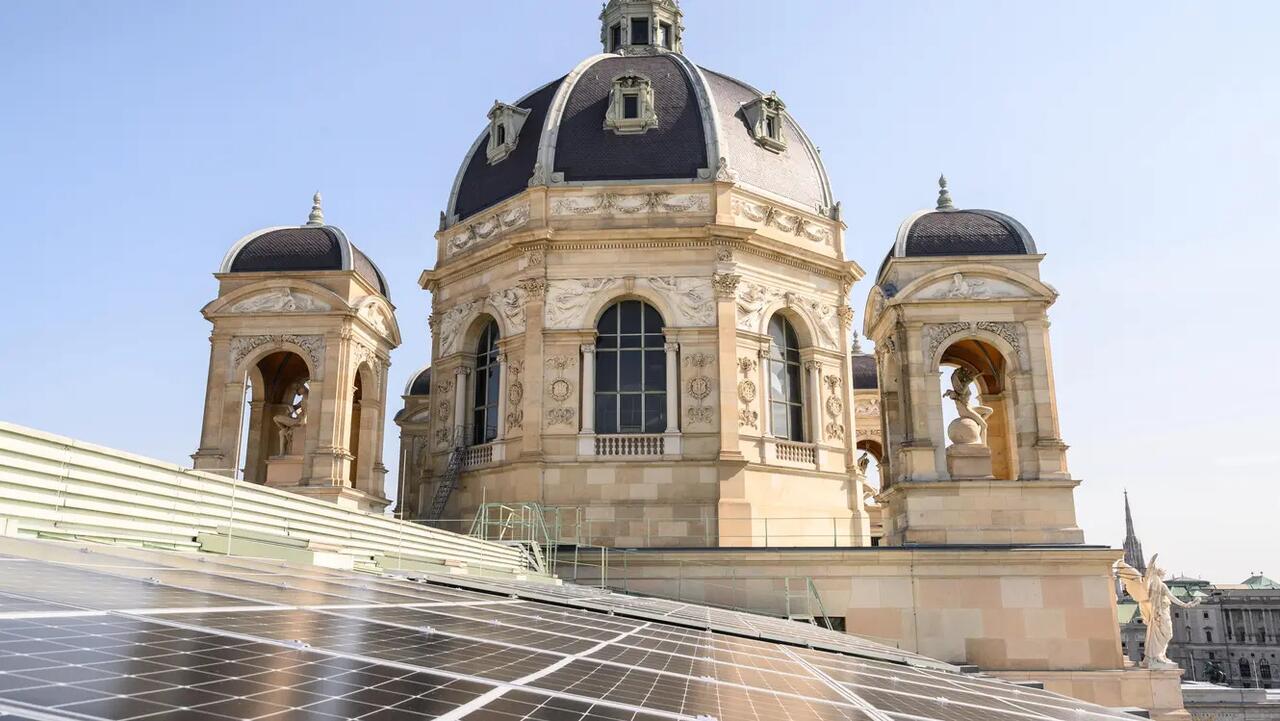
Solar panels at the Natural History Museum Vienna

The EU's so-called 'excessive-deficit' procedure would limit Austria's budget independence, according to a Thursday statement from Freedom Party representative Hubert Fuchs.

As part of a €6.4 billion ($6.58 billion) budget saving program for 2025, the government would cut €1.6 billion of payouts compensating households for a carbon tax, and slash about €500 million in subsidies introduced to help the economy adopt emissions-free technologies.

The government would also eliminate tax incentives to buy electric vehicles and install solar panels, as coalition negotiators seek €435 million in additional dividends from state holdings that include a minority stake in energy company OMV AG.

Most of the measures on the chopping block were introduced by the previous conservative-green government, however with Austria's economy in its longest recession since World War II - and may contract again in 2025 if budget steps hurt growth, according to the Wifo research institute.

Meanwhile, Austria's Fiscal Advisory Council anticipates needing to slash costs by more than €12 billion by 2028, which comes as Fitch lowered Austria's AA+ rating to "negative" on Jan. 10, pointing to political instability and persistent deficits which exceed the EU's 3%-of-output limit.

https://www.zerohedge.com/geopolitical/austria-nuke-20-green-subsidies-65-billion-savings-plan

Nuclear-Free Germany Forced To Import Expensive Nuclear Power As Election Looms

 by Thomas Brooke via Remix News,

Germany is importing huge volumes of nuclear-generated electricity due to recent unfavorable weather for renewable energy production — placing the left-wing government’s decision to shut down Germany’s nuclear power plants firmly under the spotlight in the lead-up to next month’s federal elections.

Rather than producing its own clean nuclear energy, Berlin is importing electricity from France at a far higher cost this week as winter grips the nation with colder temperatures, overcast skies, and weak winds drastically reducing solar and wind power generation.

“Friday is a very weak day. There will also be little wind on Saturday. Monday will be almost a total loss for wind energy. Tuesday will also be difficult. The high-pressure system is extremely stable,” warned weather expert Karsen Brandt from Donnerwetter.de, as cited by Bild.

With high energy demand but insufficient green electricity, Germany’s grid operators have had to resort to importing energy at a premium — primarily from France, where nuclear power plants are running at full capacity.

Germany still had its own nuclear production facilities until April 2023, but the left-wing federal government under Social Democrat (SPD) Chancellor Olaf Scholz, supported by the Greens, shut them all down. The move was highly controversial, at a time when energy prices were sky-high due to the ongoing conflict in Ukraine and European nations were attempting to wean themselves off Russian gas.

Just five weeks before the federal election, the SPD-Green government’s energy policy is under intense scrutiny, with supply risks and skyrocketing prices fueling growing criticism.

Energy expert Prof. Manuel Frondel of the RWI Institute described the situation bluntly.

“By phasing out nuclear power and coal, we have become heavily dependent on foreign countries and accepted higher supply risks.”

This strategic miscalculation is not new. Similar shortages in December saw Germany’s electricity prices surge to record highs, with some businesses forced to halt production due to unaffordable costs. This led to electricity prices on the exchange soaring more than tenfold, reaching as high as €1,156 per megawatt-hour.

Carsten Brzeski, chief economist at ING Diba, warned that prices could continue to rise, despite nuclear imports from France.

“I assume that prices will keep increasing. This does not immediately impact all consumers, as many have fixed-price contracts. However, those on dynamic pricing models will feel the effects.”

Although Brzeski does not expect prices to exceed €1,000 per megawatt-hour, the ongoing volatility remains a serious concern.

With just five weeks until the federal election, the SPD-Green government’s energy policy is facing growing backlash. The decision to shut down nuclear power while depending on expensive imports from France is increasingly viewed as a policy failure, especially as electricity shortages become more frequent.

Opposition leaders have long criticized the decision, including Alternative for Germany (AfD) co-leader Alice Weidel who has pledged to reverse the policy and revitalize Germany’s nuclear energy sector.

Branding wind turbines “windmills of shame” during a recent X Spaces conversation with U.S. billionaire Elon Musk, Weidel vowed to return to nuclear energy and build more coal power stations.

“They switched off the last nuclear power plant to even more create a shortage of energy, so either you must be very stupid or you just hate your own country,” Weidel said of the current administration.

Musk expressed alignment with the AfD’s positions, particularly on energy policy. “Germany should really keep its nuclear power plants running. I think that’s extremely important,” he said.

https://www.zerohedge.com/political/nuclear-free-germany-forced-import-expensive-nuclear-power-election-looms