Search This Blog

Tuesday, April 8, 2025

Panama's comptroller office to sue over renewal of CK Hutchison contract

 Hong Kong conglomerate CK Hutchison Holdings deprived Panama of more than US$1.3 billion through a decades-old ports concession that was “negotiated against the Republic”, Panama’s comptroller general said Monday, citing the results of a sweeping financial audit.

Presenting the findings at a press conference in Panama City, Anel Flores said the contract signed in 1997 with Hutchison’s Panama Ports Company (PPC) ran counter to national interests, and accused former officials of favouring private interests over the state.

“Those Panamanians negotiated for themselves, not for the Republic of Panama,” Flores said. He called the concession “abusive” and said the amounts paid to the state were little more than “a tip”.

Appeals Court Clears Way For DOGE To Access Data At 2 Agencies

 by Jack Phillips via The Epoch Times,

A divided federal appeals court panel on April 7 ruled that the Department of Government Efficiency (DOGE) can access records in two federal agencies, reversing a lower court order.

In a 2–1 opinion, the U.S. Court of Appeals for the Fourth Circuit panel lifted the injunction imposed by U.S. District Judge Deborah Boardman in Maryland that barred DOGE from accessing personal records in the Education Department and the Office of Personnel Management (OPM).

The Virginia-based appeals court also voted 8–7 against taking up the issue “en banc,” in which all judges on the court would decide.

Boardman’s order in March also restricted DOGE’s access to the Treasury Department. An injunction issued by another district judge in New York that blocked the organization’s access to Treasury data remains in effect.

Groups including the American Federation of Teachers sued to prevent DOGE personnel from reviewing data such as Social Security numbers, birth dates, addresses, income, citizenship status, and student loans for millions of Americans. They argued that DOGE’s access would violate federal laws including the Privacy Act of 1974.

On March 24, Boardman ruled that DOGE could not access data within the three agencies and barred agency officials from handing over any personal identifying information to DOGE.

“Enacted 50 years ago, the Privacy Act protects from unauthorized disclosure the massive amounts of personal information that the federal government collects from large swaths of the public,” Boardman wrote.

“Those concerns are just as salient today. No matter how important or urgent the President’s DOGE agenda may be, federal agencies must execute it in accordance with the law. That likely did not happen in this case.”

Individuals affiliated with DOGE were given access to systems that contain personal information, including Social Security numbers, banking information, home addresses, dates of birth, and other data such as citizenship and marital status, according to Boardman’s order.

The Department of Justice (DOJ), arguing on behalf of DOGE and the sued agencies, said that the plaintiffs lack standing to file a lawsuit and are not likely to succeed on the merits of their legal challenge.

“Plaintiffs lack standing because they have not suffered any cognizable ... injury” and have engaged merely in speculation that “has not shown that they likely face imminent irreparable harm,” government attorneys argued.

“[The] equities and the public interest support permitting the government to exercise its lawful authority to hire employees and give those employees access to systems as required for their job duties,” the DOJ attorneys said.

The appeals court’s April 7 order sided with the DOJ, agreeing that the plaintiffs appear to lack standing.

“I am deeply skeptical that the district court remained within its discretion when finding that the plaintiffs were likely to prevail. ... and with such certainty that they were likely to succeed overall,” Fourth Circuit Judge G. Steven Agee wrote for the majority.

“In light of the plaintiffs’ multiplicative problem, the government has made a strong showing that it will prevail on the merits.”

Created by President Donald Trump via executive order, DOGE is tasked with downsizing the federal government and finding fraud, waste, and abuse.

The organization has faced several lawsuits in recent months. 

A separate federal judge in March blocked DOGE’s access to Social Security Administration databases on similar privacy grounds.

“The DOGE Team is essentially engaged in a fishing expedition at SSA, in search of a fraud epidemic, based on little more than suspicion,” U.S. District Judge Ellen Hollander wrote on March 21.

Meanwhile, some courts have ruled in favor of the Trump administration and DOGE. 

In late March, an appeals court lifted an order blocking DOGE from recommending cuts to the U.S. Agency for International Development, which the administration has sought to break up.

https://www.zerohedge.com/political/appeals-court-clears-way-doge-access-data-2-agencies

US Supreme Court Sides With Trump (For Now) In Fired Federal Worker Case

 by Jack Phillips via The Epoch Times (emphasis ours),

The U.S. Supreme Court on Tuesday rejected a move to bring back federal workers who were fired by the Trump administration, handing a win to President Donald Trump as he works to downsize the government.

The U.S. Supreme Court in Washington on Feb. 10, 2025. Madalina Vasiliu/The Epoch Times

Trump asked the high court to intervene after a lower court judge ordered the administration to reinstate thousands of probationary workers to their jobs after they were terminated earlier this year.

Tuesday’s emergency ruling by the Supreme Court, presented to Justice Elena Kagan, is not final and is stayed pending the disposition of an appeal in the U.S. Court of Appeals for the 9th Circuit.

Should certiorari be denied, this stay shall terminate automatically,” the unsigned order said. “In the event certiorari is granted, the stay shall terminate upon the sending down of the judgment of this Court.”

The lower court “injunction was based solely on the allegations of the nine non-profit-organization plaintiffs in this case,” it continued. “But under established law, those allegations are presently insufficient to support the organizations’ standing.”

The high court’s order will keep employees in six federal agencies on paid administrative leave for now.

Supreme Court Justices Ketanji Brown Jackson and Sonia Sotomayor wrote that they would have denied the Trump administration’s petition to deny the lower court order.

Although Sotomayor did not explain why she would deny the petition, Jackson wrote that the Trump administration did not provide arguments showing urgency to compel the Supreme Court to intervene.

A group of unions that are challenging the Trump administration’s move to fire the workers argued that other courts have allowed federal employees to be reinstated or blocked related decisions, according to court papers submitted to the Supreme Court earlier this month.

“The Government illegally fired tens of thousands of public servants, significantly degrading crucial services on which the public and members of Respondent organizations rely,” the petition said. “The Government makes no showing of any irreparable harm and just told the district court that it has already substantially complied with the preliminary injunction.”

They also contended that the administration was incorrect in arguing “that no one can challenge the illegal mass firing of federal employees” by the Office of Personnel Management (OPM), which effectively is the federal government’s human resources arm, and attempted to refute claims that “the only way to challenge termination of federal employees is by individual employee claims” before the Merit Systems Protection Board.

Trump administration lawyers submitted their appeal to the Supreme Court after a San Francisco-based 9th Circuit Court judge granted the unions’ request to have the government take back thousands of probationary workers in the departments of Veterans Affairs, Agriculture, Defense, Energy, Interior, and Treasury.

In part, the Trump administration argued that courts lack the authority to block “federal workplace reforms at the behest of anyone who wishes to retain particular levels of general government services.”

The administration has said that the agencies themselves directed the firings and they “have since decided to stand by those terminations,” Solicitor General D. John Sauer told the court on behalf of the administration.

A second lawsuit, filed in Maryland, also resulted in an order blocking the firings at those same six agencies, plus roughly a dozen more. That order only applies in the 19 states and the District of Columbia that sued the administration.

The Justice Department is separately appealing the Maryland order.

https://www.zerohedge.com/political/us-supreme-court-sides-trump-ffor-now-fired-federal-worker-case

IRS To Provide Illegal Immigrants' Data To ICE Under New Agreement

 The IRS has reached an agreement with the Department of Homeland Security (DHS) to share the personal information of illegal immigrants who have filed tax returns.

The Internal Revenue Service Building is seen, Feb. 20, 2025 in Washington.
Tasos Katopodis/Getty Images

According to a new court filing, "DHS can legally request return information relating to individuals under criminal investigation, and the IRS must provide it," meaning that ICE would be able to check the names and addresses of illegal immigrants against IRS taxpayer records.

"Each request will attest that [redacted] information will only be used by officers and employees of ICE solely for the preparation for judicial or administrative proceedings or investigation that may lead to such proceedings," reads the memorandum of understanding (MOU).

According to a Treasury Department official, "The bases for this MOU are founded in longstanding authorities granted by Congress, which serve to protect the privacy of law-abiding Americans while streamlining the ability to pursue criminals. "After four years of Joe Biden flooding the nation with illegal aliens, President Trump's highest priority is to ensure the safety of the American people."

Consistent with IRS privacy protection laws, specifically Internal Revenue Code Section 6103, the Treasury Department is committed to protecting the taxpayer data of lawfully abiding persons, the official said.

However, Section 6103 has a criminal exemption. This exemption obligates the IRS to assist law enforcement in the pursuit of criminals and will be used against any migrant who has overstayed for more than 90 days as part of the carveout. -ABC News

Border Czar Tom Homan tells Axios that the deal is about protecting social security from illegals who are collecting benefits using social security numbers.

"This is about protecting social security for American people," he said, adding "Illegal aliens use the social security numbers of American people everyday."

A senior DHS official told ABC News that under the Trump administration, "the government is finally doing what it should have all along: sharing information across the federal government to solve problems."Information sharing across agencies is essential to identify who is in our country, including violent criminals, determine what public safety and terror threats may exist so we can neutralize them, scrub these individuals from voter rolls, as well as identify what public benefits these aliens are using at taxpayer expense."

"Biden not only allowed millions of illegal aliens to flood into our country -- he lost them due to incompetence and improper processing," the official said. "

According to the Bipartisan Policy Center, illegal immigrants have contributed $25.7 billion in Social Security taxes using borrowed or fraudulent Social Security numbers.

https://www.zerohedge.com/political/irs-provide-illegal-immigrants-data-ice-under-new-agreement

The Five-Year Anniversary Of COVID Lockdowns

 by Jennifer Sey via The Brownstone Institute,

We are just at about the 5-year anniversary of lockdowns. In the Bay Area, where I lived at the time that Covid took over the hysterical media’s every utterance, lockdowns went into effect on March 16, 2020. 

The official line now is that lockdowns in California and the Bay Area continued until mid-May. 

The reality is they went on much longer. 

Public schools were closed until September 2021. 
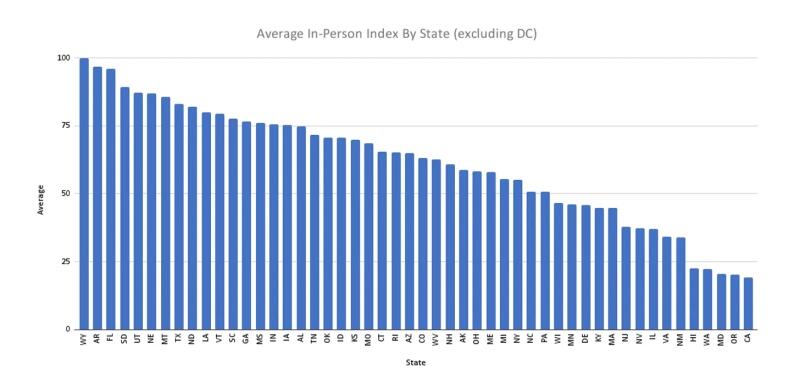
Playgrounds in San Francisco were closed until October 2020. Let that sink in. Outdoor playgrounds were closed for 7 months. Once opened, they closed again, then reopened. While open (in the beginning) these were the rules: you could only stay for 1/2 hour, no eating, no drinking water (because 2-year-olds would need to remove their masks to do so), line up for the activities/climbing structures, kids (toddlers!) always 6 feet apart, if your child cries you have to leave (they might spew droplets and Covid). Sounds like fun, right?

Basketball hoops were boarded over and stayed that way for well over a year. Some longer because they were just forgotten about.

Skate ramps at skate parks were filled with sand.

Restaurants didn’t open until September 30. 

They’d open, then close again, then open again, at the whim of the red/orange/green system implemented by the city’s public health bureaucrats. 

Once the city’s parks opened, people were forced to sit in chalk circles to maintain distancing.

It was truly the dumbest time. 

I could go on. But I won’t. 

Along with all of these constantly changing ridiculous rules, the citizens of San Francisco were encouraged to rat out their neighbors through a special 311 hotline set up for precisely that purpose. See something say something 2020 version had all the virtue-signaling and intrigue of 2001’s launch campaign, but this time people were encouraged to turn in their friends and neighbors rather than suspected terrorists. 

See someone entering a neighbor’s home that doesn’t live there? Text the number! See people from different households mixing outside at the park, text the number! See someone maskless or a child playing at a playground with yellow caution tape around the swings? Text the number! And sure enough, a police officer who couldn’t be bothered to help with the heroin addict vomiting on your doorstep would be happy to interrogate you about who was inside your apartment. And ticket you if you dared exercise beyond a one-mile radius outside your home. 

And people did it! The citizenry of San Francisco took great pride in turning in their friends and neighbors for perceived violations. And I learned that the vast majority of people I’d considered “my people” for decades would have been snitches for the Stasi and pointed directly to where Anne Frank and her family hid in Amsterdam. 

As I’ve written about extensively, my husband and I resisted and shouted and raged about all of this from day 1. And we paid a heavy price. We left San Francisco in February 2021, a city I’d lived in and loved for over 30 years. We lost friends and I lost my professional reputation as one of the best in the business — a reputation that I’d spent decades building. And despite my rightness about it all, my good standing has not been restored. 

I won’t forgive these psychopaths/pathetic cowards/aggressive virtue-signaling conformists. Ever. 

And now, on the eve of the 5-year anniversary of the lockdowns, there is a book about to come out about how wrong it all was. Sort of. 
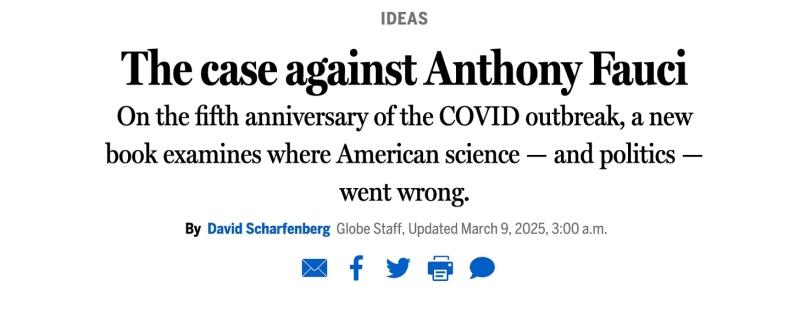
By this account/review of the book, public health officials failed to follow pre-pandemic guidelines. And not only that, they censored and silenced anyone who might have reminded the public of that. People like Fauci — Fauci first and foremost, in fact — squelched any dissent, took down anyone who challenged (who could forget the “swift and devastating takedown” of Jay Bhattacharya?) and the press and academics failed to hold them to account. 

You might think I’d be happy that a book like this is coming out. I’m not. 

I find it enraging, in fact. According to the review in the Boston Globe, experts betrayed the actual science. And the system failed. 

But the reviewer says the authors are a bit “overwrought” in their telling of what happened. And they offset their critique with a series of “Yeah buts…” such as Trump said we should all drink bleach. He didn’t. Their list of yeah buts is short but meant to leave room for “Well, we did the best we could given the Trumpian brand of crazy.” 

In my view, the book leaves way too much room for an Emily Oster-type view that We need a pandemic amnesty because we all did the best we could. 

The authors themselves admit to bleaching their groceries. Is there any indictment of themselves, or do they train their ire only at Fauci? A little introspection about how wrong they were would be nice and go a long way in giving permission to others to do the same. But I doubt they do that (I’ll admit I’ve not read it, only this review).

It reminds me of what USA Gymnastics did regarding Larry Nassar, the infamous pedophile who abused over 500 athletes. At first, they denied it. When they couldn’t any longer, they did the whole “one bad apple” defense. He’s gone! We did our part! The sport is perfect without him! No. The sport is toxic. The training environment is abusive. And Nassar was able to abuse for three decades because the whole thing was rotten to the core, and the institutions (USAG, USOPC) covered for him. 

Covid was not a one-man problem. And Fauci being out of a job doesn’t solve what went wrong. 

And the fact is, the mainstream view is still largely centered on the idea that the Covid alarmists were mostly right. Sure schools could have opened sooner, but other than that, Fauci and his ilk were right about everything. This view is best represented by the alarmist to beat all alarmists, David Wallace-Wells with his New York Times piece just a few weeks ago called: The Covid Alarmists Were Closer to the Truth than Everyone Else. 
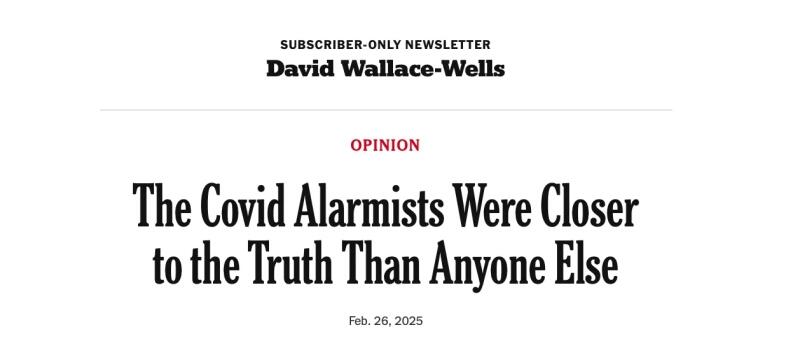
Wallace-Wells bemoans the current situation that “Covid minimizers and vaccine skeptics now run the country’s health agencies, but the backlash isn’t just on the right. Many states have tied the hands of public health authorities in dealing with future pandemic threats, and mask bans have been put in place in states as blue as New York.”

To that I say: Thank fucking goodness. 

But I do not trust it won’t happen again. 

Wallace-Wells is screeching that it must, in fact, only harsher, longer, “better.”

We’ve seen the attempt at a similar media/public health panic with Bird flu. And before that, monkeypox. We’ve seen schools closed for all manner of reasons, from migrants being housed in public schools to eclipses and “bad air.” School closures are a “tool in the tool box” now, and it’s not a good one. 

The alarmists continue to insist that we need to do better next time — lock down harder and sooner and implement more censorship. And there have been no apologies. None to people like me (not to be too self-centered, but you’ll pardon using me as an example) who lost our lives as we knew them. For saying everything just a few years too soon. We are not un-canceled. We are still heretics who may have been right but for all the wrong reasons. And the Faucis of the world may have gotten some stuff wrong but for all the right reasons. They are still the good people, and we are still the bad ones in the court of public opinion and the mainstream media. 

There are glimmers of hope. Dr. Jay Bhattacharya is one. He was one of the authors of the Great Barrington Declaration in October 2020 which advocated for basic principles of pre-pandemic planning: Don’t shut down the world; protect the vulnerable and let everyone else live their lives; don’t shut down the economy for it will lead to crushing inflation (correct) and starvation in third world countries; it will lead to child abuse, and child marriage and decimation of the most vulnerable. Correct on all counts. 

As Dr. Jay has said: lockdowns were trickle-down epidemiology and “the lockdowns, if they were to benefit anybody, [. . .] benefited members of the laptop class who actually had the wherewithal to stay home, stay safe while the rest of the population served them.” Basically, lockdowns benefitted the rich and ruined the poor and the vulnerable, the class they were purported to save. 

Jay was right. And now he will be the director of the National Institutes of Health, the organization that orchestrated the swift and devastating takedown of him in 2020. It does feel like a bit of redemption for us all. 

Notably, in his confirmation hearing, he was not asked a single question by the Democrats about his views on lockdowns, which were formerly considered “contrarian.” A win? I’d say so. They knew this line of questioning was a loser. 

But I’m left feeling very little comfort. 

People like me have received no apology. We are not released from our canceled status. We are left to make our own way, still ousted from the mainstream despite having been right. 

And the book blames Fauci to shield everyone else in the machine from blame. And Fauci is gone now, so it would seem to suggest we’re safe. 

I’m left with the feeling that we have not scratched the surface of all the blame that must be laid down. Not out of vengeance but accountability. And as a way to clearly signal: These people failed to do their jobs. This can never happen again. 

The vast majority of people who led lockdowns at the state and local level are still in their jobs despite having failed miserably. The vast majority of journalists who spread fear and failed to hold power to account are still in their roles (Apoorva Mandavilli?). The people who made sure schools would remain closed are still in power — Randi Weingarten at the top of that list. And now Randi is moaning about the harms to poor children if the Department of Education is shuttered. She certainly didn’t care about poor children back in 2020-2021. She is a politician and a hypocrite of the highest order. 

We are not done. Not by a long shot. What went wrong was EVERYTHING. And I, for one, won’t stop shouting about it until that is acknowledged, apologized for, and until those people who did the wrong thing over and over again are defanged and declawed.

Republished from the author’s Substack

https://www.zerohedge.com/covid-19/five-year-anniversary-covid-lockdowns

AbbVie Rinvoq cleared for giant cell arteritis in EU, ahead of US

 AbbVie has picked up another indication for its JAK inhibitor Rinvoq in the EU, becoming the first approved oral therapy for giant cell arteritis (GCA), an autoimmune disease affecting the arteries.

The green light from the European Commission – the eighth for Rinvoq (upadacitinib) in the EU – comes ahead of a decision on the new use for the drug in the US, where it was filed around the same time last year.

It also extends the treatment options for patients which have focused on Roche's anti-IL-6 antibody RoActemra/Actemra (tocilizumab) as a once-weekly injectable option, in combination with steroids, which was approved in Europe for GCA in 2018.

GCA is caused by inflammation of large and medium-sized arteries, most often in the head, but also in the aorta and its branches, and can cause symptoms like headache, jaw pain, stroke, and changes in vision – including abrupt sight loss.

It affects around 20 people per 100,000 per year and is most common in white women aged over 50, although men with the disease are more likely to develop visual symptoms.

Until RoActemra's approval, the only approved treatment consisted of high doses of oral steroids, which play a role as an effective emergency treatment option to prevent damage such as vision loss, but often cannot maintain long-term disease control and can have serious side effects.

Rinvoq offers a more convenient option for patients, based on the results of the phase 3 SELECT-GCA trial, which compared the drug to placebo, both given in combination with a steroid regimen that tapered off over 26 weeks. All told, 46.4% of patients taking the JAK inhibitor achieved sustained remission from week 12 through week 52 compared to 29.0% of those in the placebo group.

There was also a significant reduction in disease flares with AbbVie's drug, while patients taking the JAK inhibitor had lower cumulative steroid exposure and almost twice as many experienced sustained complete remission over a year's follow-up, 37.1% versus 16.1%, respectively.

AbbVie's chief scientific officer, Roopal Thakkar, said that the availability of Rinvoq is an important advance for GCA patients, who tend to be from "a particularly vulnerable population due to older age and frequent comorbidities."

Rinvoq is a key growth driver for AbbVie, with sales rising more than 50% to $5.1 billion last year, and its lengthening list of uses has prompted the company to raise its sales projections for the drug to more than $11 billion in 2027.

The drug is also approved to treat several diseases, including rheumatoid arthritis, atopic dermatitis, and inflammatory bowel disease, with five more, including GCA, coming down the pipe. It is being studied in phase 3 trials for alopecia areata, hidradenitis suppurativa, Takayasu arteritis, systemic lupus erythematosus (ALE), and vitiligo.

https://pharmaphorum.com/news/rinvoq-cleared-giant-cell-arteritis-eu-ahead-us

EU due to meet with pharma today to discuss tariffs

 European Commission President Ursula von der Leyen is scheduled to meet with EU pharma leaders today about how to respond to US tariffs, as fears build that levies specifically targeting the drug industry are on the way.

Along with senior figures from pharma manufacturers, trade organisations including EFPIA, Europabio, and Medicines for Europe have indicated they are attending the gathering, according to a Reuters report, which suggests that one topic of discussion will be how to encourage more production of medicines within Europe.

The pharma industry around the world breathed a collective sigh of relief when the tariffs were announced last week, after it emerged that it was among a handful of sectors that would be exempted from the goods covered by the measures.

Any hope that the reprieve would be long-lived was quickly dashed, however, as President Donald Trump indicated that tariffs on pharma would be on the way, leading to fears that a previously discussed 25% rate on medicines will eventually be introduced with a gradual ramp-up.

"Pharma is going to start coming in, I think, at a level that we haven't really seen before," Trump said in remarks made aboard Air Force One after the announcement. "We are looking at pharma right now," he added.

In the meantime, it seems that some important pharma components like raw materials and ingredients, lab equipment, and primary and secondary packaging components like syringes will not come under the scope of the exemption, meaning that US-based companies are likely to see a near-term hit on the cost of manufacturing.

Meanwhile, the economic fallout from the tariffs continues to build, with stock exchanges around the world seeing sharp declines that have been dismissed by Trump as a necessary short-term hit in pursuit of his longer-term goals.

"Sometimes you have to take medicine to fix something," he said, in response to a legitimate question from a reporter yesterday asking about the "pain threshold" for US consumers facing price rises – calling it a "stupid" question – and insisted that the measures would make the US "wealthy like never before."

Meanwhile, the boss of financial giant JP Morgan, Jamie Dimon, has warned that the outcome of tariffs will be to drive the US economy towards recession and potentially even stagflation – the crippling combination of low or negative economic growth with high inflation and rising unemployment.

Many of the countries affected by the tariffs are still formulating their responses, but China has now announced tit-for-tat levies on the US, accusing the Trump administration of blackmail and "unilateral bullying practice." Trump has immediately responded with a threat to add another 50% to the rate levied on Chinese goods entering the US, taking the total to 104%.

China also filed a lawsuit with the World Trade Organization (WTO), saying it would "fight to the end" in the emerging trade war. The EU has reportedly said it will apply a 25% levy on some US goods after a proposal of a zero-for-zero rate on industrial goods received a cold response from the US administration.

Outsourcing upside?

The tariffs on pharma could, however, provide a short-term opportunity for companies providing outsourcing services like contract research and manufacturing, according to a Bloomberg report.

It has suggested that suppliers like Lonza, Thermo Fisher Scientific, Catalent, and Fujifilm Diosynth Biotechnologies are looking at ramping up capacity to serve companies that look to reshore these activities to the US in the interim before they can set up new facilities of their own.

Tariffs haven't prompted the development – other factors like the BIOSECURE Act that attempted to block US companies working with Chinese suppliers had already fired a warning shot across the bow of US industry – but Trump's actions have lent some urgency to their preparations, said Bloomberg. However, limited free capacity in the CDMO sector could be a bottleneck for this shift.

https://pharmaphorum.com/news/eu-due-meet-pharma-today-discuss-tariffs