by Brandon Smith via Alt-Market
This past week after Donald Trump’s “Liberation Day” announcements the Dow Jones Index plunged by around 4000 points and the global panic was palpable. Social media was rife with nervous naysayers on both sides of the aisle – The leftists are panicking but also cheering because they think crashing markets will turn into public support for the woke commie brigade. A contingent of conservatives are panicking too, but I’ll get to that in a moment…
My response? Finally this farce of a market is facing a correction and smacking people in the face with five fingers of reality! I applaud the event because it’s something that needed to happen years ago. Most skeptics are wrong on the tariff issue, mainly because they think the stock market matters. It doesn’t. People are also terrified of tariffs because they think globalism matters. It doesn’t.
This position might upset those who are heavily invested right now, but I would argue they are missing the macro picture and they need to look at the situation from a position of inevitability. Tariffs and the end of globalism are a necessary outcome. Here’s why we shouldn’t fear the Reaper…
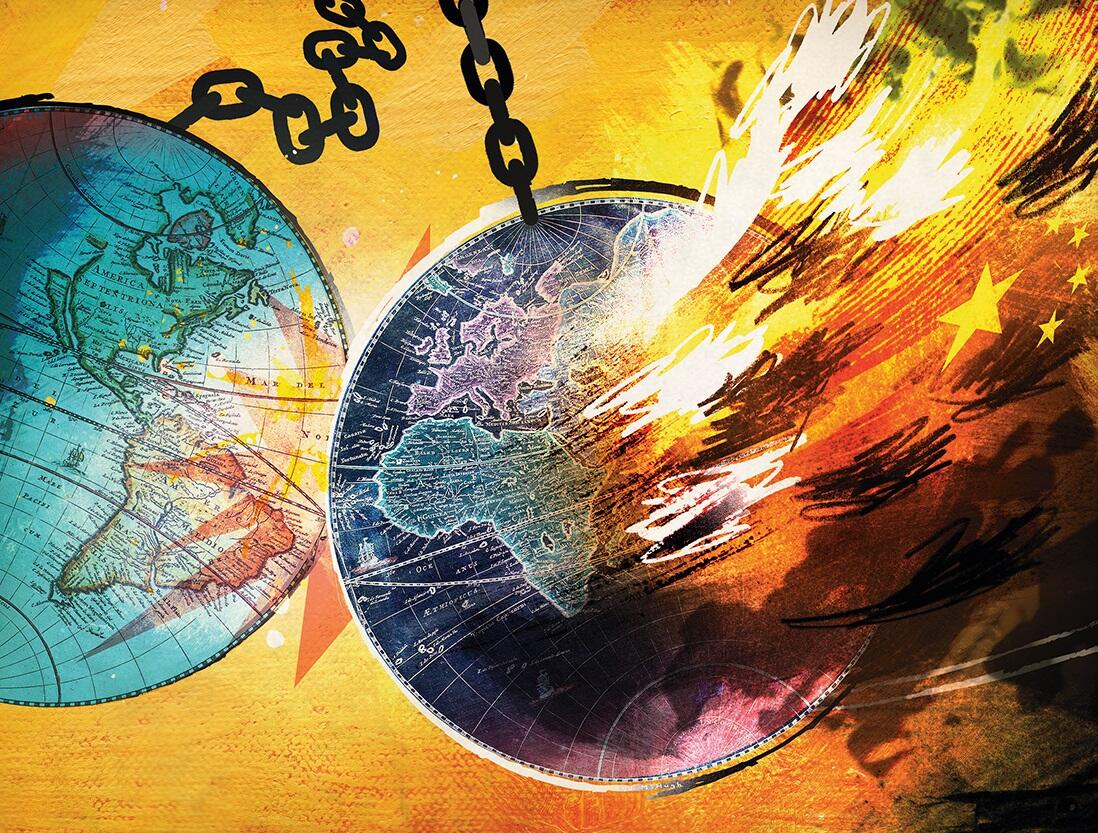
Stocks Are Irrelevant Until Market Manipulation Ends
The narrative on social media (from critics on both sides) is that Trump is unwittingly destroying the US economy to spite foreign trading partners because they’re getting more out of us than we’re getting out of them. I can’t speak to Trump’s motives because I’m not a psychic, but I can say that it’s impossible for Trump to destroy the economy. Why? Because it was already destroyed over the past two decades (some would argue longer) by the Federal Reserve and previous administrations.
The economy was in dire straits when Biden left office. Nothing has really changed except stocks are no longer being propped up artificially (we’ll see how the Fed reacts).
In every instance since the crash of 2008 when the markets have shifted into correction territory, the central bank has stepped in to prevent a natural reversal. They print tens of trillions of dollars in fiat from thin air and then pump it into banks and international corporations in order to kick the can down the road for a little while longer.
The Dow Jones gained over 15,000 points in less than four years after the initial covid crash in 2020 (this is unheard of in a normal economy). ALL of these gains are connected directly to stimulus programs and subsequent inflation initiated by the Federal Reserve (cycled through the Yen carry trade and stock buybacks, among other pathways). They have been manipulating stocks into a condition of perpetual inflationary gains – But a reckoning has arrived in the shape of stagflation and it’s killing America slowly.
If stocks cannot survive without a constant flow of recycled fiat to prop them up, then the markets are not real. I suggest that the Dow Jones needs to undergo at least another 10,000 points in decline before valuations are grounded in some kind of reality, and that’s being generous. Some deflation is necessary to bring back affordability.
An economy based on inflation, illusion and comfortable ignorance is a nuclear bomb waiting to explode. There are many conservatives that understand this problem well, but even some of them are freaking out today because they also prefer to avoid facing the consequences of the farce being exposed.
They should know better.
I’ve been hearing Republican and Libertarian commentators decry the “Everything Bubble” for a long time, but many of these people cling like barnacles to the fantasy that there’s a silver bullet solution. Crypto is going to save us (no it’s not). Winning elections is going to save us (no it’s not). Revolution is going to save us (not in the short term). Gold is going to save us (again, not in the short term). There is no scenario in which we can avoid the pain of a financial reformation. There is no silver bullet solution, so stop waiting around for one to materialize.
Stocks Are Not An Indicator Of Economic Health
Stocks are not a leading indicator of economic health and it’s hard to find an instance when a crash has ever been the direct cause of a crisis rather than a symptom of something bigger. Stocks are, in fact, a trailing indicator of problems that should have been noticed long ago.
In nearly every major stock crash in modern history (including the crash of 1929) there were sufficient signs that the economy was in decay, but those signs were dismissed. If you’ve been waiting for a crash to tell you that it’s time to take a closer examination of our nation’s financial health then you’ve been blind.
Most People Don’t Care About The Markets
The wealthiest 10% of Americans own 93% of all stocks. Only 21% of American families own any shares directly. Another 40% own at least some shares indirectly through retirement programs, but their holdings are tiny – Nearly insignificant. Who actually cares about stocks? The vast majority of the populace does not. They might see stock indexes as an indicator of economic stability (this is an incorrect assumption), but they aren’t scrambling to adjust their portfolios right now.
In terms of market players, global corporations and banks benefit most from government and central bank interference in equities, not Joe Dirt or Jane Dirt just scraping by month-to-month, hoping for a modest house and a tiny stipend in a 401K. Is this a terrible indictment of “capitalism” and free markets? No. My point is that most of the people freaking out about tariffs and the markets are generally people who have large investments, or a political agenda.
There are those that claim that “all of us” should care about stocks because when companies lose value in their shares they end up firing employees in order to make up the difference. This argument presumes that these companies weren’t going to do that anyway. Deflation is not the only bogeyman out there. Inflation also leads to layoffs as we’ve been seeing the past few years. Artificially inflated stocks are NOT a shield against mass job losses.
Tariffs Are Not A Tax On The Citizenry, They’re A Tax On Global Corporations
I’m getting a little tired of people constantly defending international conglomerates as if they are victims. On the libertarian side of things there are number of well meaning skeptics that suggest tariffs are “unconstitutional” because they symbolize taxation without representation. This is incorrect. Tariffs are not a tax on the public. They are not a tax on foreign economies. They are a tax on global corporations and the foreign goods they import.
As I noted last month in my article ‘Trade War: Tariffs Are Needed To Defeat Globalism But They Come With A Cost’, the Libertarian side of the liberty movement tends to worship corporations and globalism as the ultimate expression of free markets. Somewhere along the line they were conned.
Corporations are socialist constructs that only exist with government charter and special protections. The market bailouts are a perfect example of how corporations that should have been allowed to fail were kept alive because of their partnership with the government.
Frankly, I do not care that they’re getting taxed for importing foreign goods and exporting American jobs. That’s a good thing. If they want to void the tax, all they have to do is bring manufacturing and jobs back to the US. It’s not as if they don’t have options.
Americans can also buy from smaller locally sourced producers to avoid price hikes. Suddenly, the playing field in which international companies get an unfair advantage is a little more level and competition returns. THAT’S a free market, as opposed to what we have today.
Globalism Is Not Inevitable
Tariffs might seem like a crude weapon against the machinations of globalism – As so many skeptics repeat like parrots: “Trump is using an ax when he should be using a scalpel…Squawk!!”.
This isn’t about Trump, so let’s set him aside for a moment. Instead, consider what globalism really is: A system which pretends to benefit humanity while quietly bleeding as much wealth as it can from the middle class. It then places that cash in the coffers of a tiny percentage of elites. Globalism is a wealth and property transfer machine.
The direct result is a historic wealth gap that has put 30% of all cash in the hands of 1% of the population. The bottom 50% of the populace holds a laughable 2.6% of global wealth, and the problem is only getting worse.
In terms of “free trade” and the supply chain, interdependency makes all nations weak by forcing them to rely on other countries for key resources and base necessities. They’ve set up a system which makes it hard to walk away. Freedom from globalism means isolation from preestablished supply chains.
For those that say tariffs are an attack on our allies and trading partners, this is foolish. First, a lot of these countries are NOT our allies. Europe in particular is becoming more totalitarian by the day, throwing people in jail for online speech and political opponents in jail for wanting to stop mass immigration. Why should we be allies or trading partners with people who would happily destroy every value we hold dear?
Furthermore, why has the American consumer become the cash cow for the rest of the world? Why are other countries so reliant on us to buy their products? The narrative is that Americans MUST continue to consume outside exports and remain dutiful pay-pigs because if we don’t that means we’re declaring war? Yeah, I think not.
Finally, if tariffs don’t work or they’re a destructive practice, then why do so many countries place tariffs on American goods? They’re allowed to enforce a trade balance, but we’re not?
Globalism Is A Cancer And It Must Be Allowed To Die
What critics are truly afraid of is the death of globalism. Not because they particularly adore the ideology; a lot of them hate globalism and what it represents. Rather, they are afraid because they’re addicted to the meager comfort that the system provides and they know that independence (detoxification) comes with pain.
It means hard work and sacrifice, but also living through a generational struggle that asks a lot of us while there’s no guarantee we’ll ever see any benefits in our lifetime. Americans today are increasingly less concerned with the world their children might inherit. They only seem to care about their immediate happiness. Some Americans would sacrifice everything including their freedoms just to avoid dealing with an uncomfortable crisis event.
If stock markets don’t matter, guess what? Your happiness REALLY doesn’t matter.
This one is for the survival of the species, folks. Eventually the wave we’re coasting on is going to crash to the shore. Globalism is a cancer on our world. Either we step up and kill it or we will suffer more each decade while our children grow up with no inkling of what prosperity means.
Yes, Conservatives Will Be Blamed – News Flash: They Were Going To Blame Us Anyway
Conservatives and liberty advocates will be blamed for any economic instability that results from Trump’s economic policies. I’ve been warning about this FOR YEARS. I warned about it at the beginning of Trump’s first term back in 2016. I said that Trump will be called the “next Herbert Hoover”, that his tariffs would be tied to chaos in markets and probably the dollar. I warned that, by extension, all conservatives will be scapegoats for a crisis that the globalists actually created.
Back then I believed that the liberty movement’s most important job was to ensure that blame is placed on the central banks, international corporations and NGOs. Now, I’m not so sure that optics matter anymore. The establishment is going to blame us regardless and people will believe them or disagree with them based purely on political allegiance, not on facts. If the end result is the death of globalism then it’s worth the risk.
There will be uncertainty and the enemy will try to take advantage of the crisis and public fear to promote their one world system and a one world digital currency. This simply means they’ll have to be removed from the equation before they can use the situation to take more power. Interpret that however you like.
Of course, maybe all of this is premature. The majority of foreign governments are already rushing to the negotiating table to offer more beneficial trade policies. Maybe Trump’s tariffs will be short lived, the panic will be fleeting and manufacturing will flourish in America again. It’s certainly possible, but again, not without some pain in the short term.
My suspicion is that the tariff issue is just one of many “crisis” scenarios that will play out over the next few years. And the more globalism is derailed the more the elites will try to retaliate. We have to be willing to endure it and press forward. Even if tariffs succeed in bringing back domestic production, the global order will still be disrupted dramatically in the process. We can shriek in fear over it, or, we can view it as an opportunity to cleanse America and the world of a parasitic system that has been plaguing us for decades.
https://www.zerohedge.com/economics/tariff-freak-out-why-so-many-people-cling-cancer-globalism


