Search This Blog

Saturday, June 14, 2025

"FCC Complaint Filed”: X Users Slam CBS Acting As PR Megaphone For 'No Kings' Color Revolution

 Leftist propaganda outlet CBS is now playing PR agent for the dark money-funded 'No Kings' color revolution, disguising its promotion as a report on protest 'merchandise'—which, it notes, is conveniently cropping up for sale on Amazon, Temu, and other online retailers.

CBS reports:

Hundreds of t-shirts, hats, signs and posters are for sale across the internet alluding to the demonstrations. On China-based Temu.com, a seller shipping goods from a U.S.-based warehouse offers a t-shirt reading "No Kings in America" and featuring the statue of liberty and American flag for $5.20.

On Amazon, a search for No Kings yielded 1,000 results. Much of the merchandise available on the e-commerce giant's site is printed on demand, meaning not in stock. Sellers print t-shirts or make the goods as soon as they are ordered to avoid sitting on unwanted inventory.


By the end of the report, the leftist propaganda outlet informs readers about today's nationwide protests and directs them to the 'No Kings' website.

On Friday, Government Accountability Institute President Peter Schweizer published a report linking the rogue NGOs behind the 'No Kings' front operation—directing the broader color revolution effort—as receiving a "$114.8 million from the Arabella dark money network and how these professional protest organizations use tax dollars as a force multiplier.

Also on Friday, U.S. Congressional Republicans, led by Oversight Committee Chairman James Comer (R-KY), launched a formal investigation into dark money NGO networks tied to a China-based billionaire that is suspected of funding far-left color revolutions in the U.S. with alleged ties to the Chinese Communist Party. 

CBS' X post was heavily ratioed, with many users disgusted by the media outlet's promotion of "radical left destabilization campaigns."

Paging FCC Commissioner Brendan Carr… What's your take on this?

https://www.zerohedge.com/political/fcc-complaint-filed-x-users-slam-cbs-acting-pr-megaphone-no-kings-color-revolution

'No Kings' Terror? Fake Cop Assassinates Minnesota Dem Who Blocked Health Care for Illegals

 A man posing as a police officer carried out a politically motivated attack in Minnesota, fatally shooting Democratic state representative Emerita Melissa Hortman and her husband, Mark, in what Gov. Tim Walz called "an act of targeted political violence." The gunman also wounded another Democratic lawmaker and that lawmaker's wife.

"Our state lost a great leader, and I lost the dearest of friends. Speaker Hortman was someone who served the state of Minnesota with grace, compassion, humor, and a sense of service," Gov. Walz told reporters at an early morning news conference, adding, "She was a formidable public servant, a fixture and a giant in Minnesota. She woke up every day determined to make this state a better place. She is irreplaceable and will be missed by so many."

The second politically motivated attack targeted State Senator John Hoffman and his wife, both of whom were shot multiple times and required surgery, according to Walz.

According to law enforcement officials, the gunman attempted to assassinate Hoffman and his wife, Yvette, roughly 90 minutes after killing Hortman and her husband.

"The unidentified suspect, who had a list of other targets, fled on foot after engaging in a firefight with officers outside Hortman's home," ABC News reported. 

Dan Bongino, the FBI deputy director, wrote on X that the federal agency "is fully engaged on the ground in Minnesota and is working in collaboration with our local and state partners." 

President Donald Trump issued a statement condemning the violence: "Such horrific violence will not be tolerated in the United States of America. God Bless the great people of Minnesota, a truly great place."

The plot thickened after the Minnesota State Patrol disclosed on X that law enforcement found 'No Kings' flyers inside the suspect's vehicle.

"The photo is of flyers inside the vehicle of the suspect in today's shootings," the Minnesota State Patrol said. 

And the plot thickens a whole lot more... 

The connection. 

The politically charged attacks unfolded on the same day Democrats launched their 'No Kings' color revolution against the sitting president of the U.S. 

https://www.zerohedge.com/political/fake-cop-assassinates-minnesota-lawmaker-targeted-political-violence

'Meta has reportedly eased cannabis search restrictions'

 Meta (META) adjusts its content moderation, now allowing searches for marijuana & cannabis on Facebook & Instagram.

https://seekingalpha.com/news/4458174-meta-has-reportedly-eased-cannabis-search-restrictions

FDA Denies Pfizer's (PFE) Label Expansion for Talzenna in Prostate Cancer

 Pfizer Inc. (PFEFinancial) encountered a notable obstacle when the U.S. Food and Drug Administration (FDA) declined to broaden the approved usage of its PARP inhibitor, Talzenna. While Talzenna remains on the market for treating a specific genetic type of prostate cancer, its application for patients with non-HRR mutations was not approved. This decision underscores the regulatory challenges pharmaceutical companies face in expanding treatment indications.

https://www.gurufocus.com/news/2927373/fda-denies-pfizers-pfe-label-expansion-for-talzenna-in-prostate-cancer

What is Pisces? New UK stock market for buying shares in private companies


A new type of stock market will open in the UK later this year, allowing investors to trade shares in privately-owned companies — as opposed to those that are publicly owned and listed, for example on the London Stock Exchange (LSE).


Referred to as Pisces — which stands for a Private Intermittent Securities and Capital Exchange System — the first trading could begin on the new stock market in the next few months after the Financial Conduct Authority (FCA) approved the rules around it.


The FCA hopes the move will support the UK economy by giving more choices to the investment community and attracting new funds for growing businesses.

Although Pisces has already officially launched, trading cannot begin until companies who will act as operators start their platforms, which are subject to licences.

With more companies choosing to stay private for longer, the new trading system was created to give investors access to businesses they otherwise could not fund, and to allow those holding shares in private businesses the chance to cash out.


That can be as a result of shares being given as part of an employment package, for example, or by being an investor in an earlier round of private fundraising — which isn’t always accessible to private investors.
Operation

Pisces is set up in the FCA’s sandbox environment to allow for experimentation on what works, what is required and what best practice will turn out to be.

The plan is for around a five-year developmental phase, during which time testing and adjusting will take place with the framework, ahead of permanent rules being established in 2030.

While Pisces is the framework for the stock exchange itself, individual operators will operate the ability to trade — comparative to now, for example, in how people with an investing Isa on an app or with their bank go through them to buy or sell companies or funds listed on the LSE.
(Getty Images)

Those operators will have flexibility on the type of private companies they list; the FCA expect some may operate by size or industry, or perhaps on timing of share sales.

Shares may be available to buy quarterly or annually in different private companies, for example, or during set windows according to their need.

Caution

While the new private stock market is largely welcomed, investors will need to be aware of the additional risks which may be involved, compared to putting money into listed companies.

Legislation exists to demand retail investors have a certain amount of knowledge before parting with their money, but this includes being “self-certified” according to investing experience.

Additionally, while public stock markets are heavily regulated — one of the reasons companies stay private instead of floating — the idea for this sandbox platform is to stay similar to private market processes and laws.

As a result, for example, the process known as insider trading will not apply in the same way, potentially leading to an imbalance of information between those privately investing and institutional, professional investors.


Emma Reynolds, economic secretary to the Treasury, said: “Pisces is a great example of industry, regulators and the government working together to go further and faster on innovative reforms to strengthen UK capital markets, supporting economic growth and putting more money in people’s pocket as part of our Plan for Change.

“I welcome the FCA's announcement, which follows our legislation and opens Pisces to industry. This also builds on our announcements on a Stamp Taxes on Shares exemption for Pisces transactions, and on employees retaining the tax advantages on eligible shares traded.”


Simon Walls, executive director of markets at the FCA, added: “This bold design rebalances risk, but it is bold risk taking that made the UK the leading financial centre it is today. The new platforms will give investors greater access and confidence to invest in exciting new companies, while early backers and employees can sell up and invest again.

“Pisces is the latest step in the FCA’s wide-ranging reforms to the UK’s markets to boost growth and competitiveness.”
Stepping stone

Dan Coatsworth, investment analyst at AJ Bell, noted that in an ideal world, Pisces would operate as a first step toward broader aims for both businesses and stakeholders.

“Pisces could help private companies get used to the idea of slices of their business being owned by different people. It might act as a stepping stone towards a public stock listing, getting them used to regular financial reporting, transparency as a business, and understanding that a company is run for the best interests of shareholders, not the board of directors,” he said.


“It could also encourage their staff to develop a saving and investing habit. One of the biggest stumbling blocks for private company share ownership is that staff are often put off by the general inability to sell those shares at regular intervals. A lot of private companies won’t offer the ability for staff to trade shares, meaning some people are stuck owning the equity until the business either lists on a public market or there is an internal event where they can sell down.

“In theory, Pisces could improve liquidity by allowing private company shares to be traded at more regular, albeit intermittent, intervals.”

While there have been comments from some quarters that Pisces could effectively replace some markets such as the UK’s AIM, Mr Coatsworth does not expect that will be the case - and will also not play an “immediate role” in the government’s plan to develop an investing culture in the country.

https://uk.finance.yahoo.com/news/stock-market-shares-private-companies-091613590.html

Issues On The G7 Agenda: The Big Topics Albanese And Trump Could Discuss

 by Crystal-Rose Jones via The Epoch Times,

Australian Prime Minister Anthony Albanese has a full plate ahead of him if he secures a face-to-face meeting with U.S. President Donald Trump at the upcoming G7 summit.
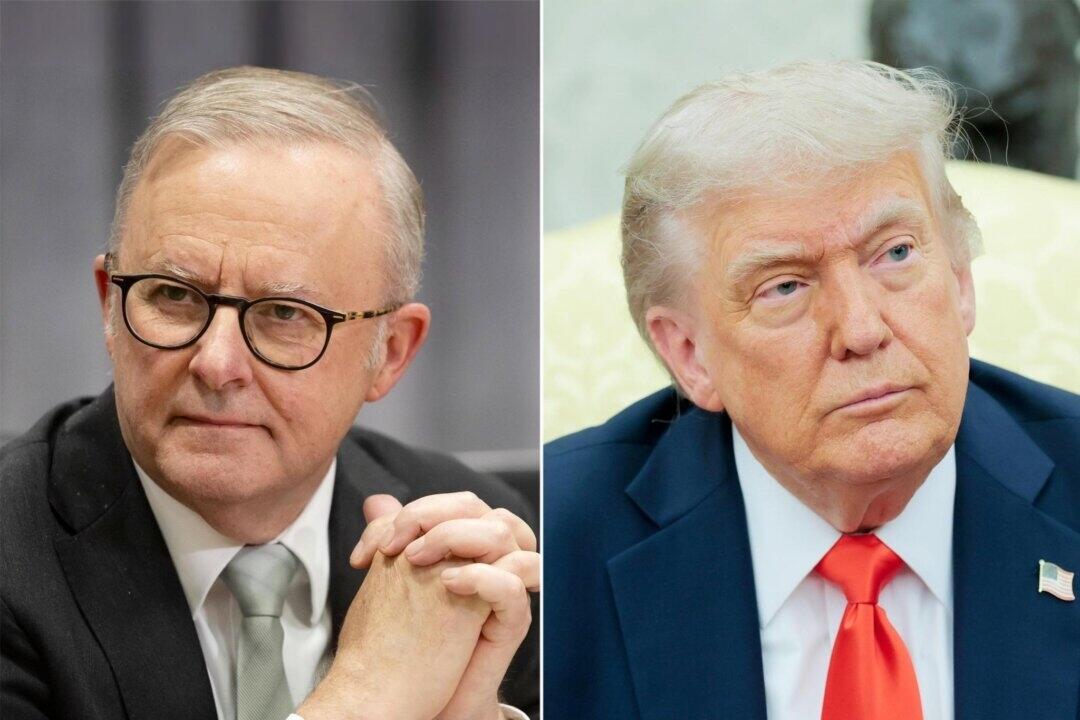
The forum, which will run from June 15 to 17 in Canada, serves as a high-profile political and economic forum for key nations to discuss global issues.

While a meeting is yet to be confirmed between the leaders, Deputy Nationals Leader Kevin Hogan says Australia’s leader faces an expanding laundry list of negotiations.

“It’s vital PM Albanese uses the G7 to make Australia’s case directly to President Trump,” he said on X.

While global tariffs that impact Australian beef exports are high on the agenda, it’s not the only elephant in the room.

‘Liberation Day’ Tariffs on Aussie Beef

Trump’s “Liberation Day” tariffs implement a baseline 10 percent tariff on all Australian exports to America, and are likely the most pressing matter.

Australia and the United States have a free trade agreement, so the tariffs are not in response to any levy Australia may have implemented on U.S. goods.

Rather the tariffs are likely targeting biosecurity rules and fees that producers say have stonewalled U.S. beef imports trying to enter the country.

Under its rules, Australia refuses to take raw U.S. meat products without assurance that the cattle is produced entirely within the United States, with the Australian government concerned that Mexican and Canadian born livestock are also used.

The tariffs are a major concern for Australia given it exports about $2.9 billion (US$1.89 billion) of beef to the United States annually—the biggest beef exporter to America.

Yet Prime Minister Albanese has said Australia’s biosecurity laws are not up for negotiation, potentially limiting the scope of any discussion.

Tariffs on Steel, Aluminium

Earlier this month, Trump doubled tariffs on steel and aluminium imports from 25 to 50 percent.

“In my judgment, the increased tariffs will more effectively counter foreign countries that continue to offload low-priced, excess steel and aluminium in the United States market and thereby undercut the competitiveness of the United States steel and aluminium industries,” the president said.

Australia only exports a small percentage of steel and aluminium to the U.S. so the issue will not be as pressing.

Further, Australia’s largest steel producer, BlueScope, already has a factory in the United States.

Increasing Defence Spending

Australia’s slow increase to its defence spending has also raised eyebrows in the states.

Only two weeks ago did U.S. Defense Secretary Pete Hegseth call on Australia to up its military spending to 3.5 percent of GDP in response to an aggressive Beijing.

Defence spending currently sits at 2.03 percent in the 2024-25 financial year with a plan to reach 2.3 percent by the end of the decade.

Australia’s Defence Minister Richard Marles has acknowledged the request, while Albanese has been reticent to pledge anymore funding given the already strained state of the nation’s finances (much of the budget is devoted to welfare services).

AUKUS Deal Under Review

Will the AUKUS agreement sink or swim?

It all depends who you ask, with some onlookers concerned (or gleeful) at the prospect of it being annulled, while others like Minister Marles remaining confident the Pentagon’s recently announced review into the deal is nothing unusual.

Marles believes Australia will continue its role in AUKUS, and that nuclear subs will be delivered.

If Albanese and Trump meet, it will likely become a talking point.

Australia’s Tough Approach on Israel

The Australian Labor government’s icy approach to Israel could also be a major sore point between the nations.

Israel and the U.S. remain historic allies, while the Albanese government has taken more obvious steps recently to distance Australia from the Middle East’s only democracy.

The U.S. has reprimanded Australia on two occasions—once after Australia denied a visa to a pro-Israel tech blogger, and more recently after two elected Israeli ministers were sanctioned over their beliefs about the disputed Palestinian territories.

In both instances, representatives of the U.S. government urged Australia to reconsider its actions.

‘Unfair’ Treatment of US Big Tech Firms

Australia’s regulations and taxes on Big Tech firms could be a major focus from the U.S. perspective.

Australia, like the European Union, has a swathe of laws aimed at taxing multinational revenue, which the United States feels targets their companies disproportionately.

These include the Diverted Profits Tax, the Undertaxed Profits Tax, and the News Media Bargaining Code.

The latter forces tech firms like Google and Meta to pay media outlets for displaying their content—effectively propping up the revenue streams for several major news companies.

Tech companies have urged Trump to intervene, complaining of a US$140 million annual loss.

Further, the U.S. government’s “One Big Beautiful Bill Act” could impose a 5 percent levy on U.S.-based income or capital gains for Australian taxpayers or companies, in response to what it deems are “unfair” taxes on its companies.

Hollywood Down Under

Eclectic landscapes, skilled production crews and enticing tax incentives have all made Australia an attractive destination to film big Hollywood productions, and it’s been happening for a while.

From the decades-old Matrix to this year’s Captain America: Brave New World, Hollywood seems to love filming in Australia.

But that love may not be so reciprocal, at least not from the U.S. government.

U.S. Trade Representative Jamieson Greer believes offshore Hollywood movie production is a drain on the U.S. economy, and a 100 percent tariff on American movies filmed outside the U.S. is in the works.

While Australia isn’t the only nation offering tax breaks to lure Hollywood productions, the issue could become one more talking point between the two leaders.

https://www.zerohedge.com/geopolitical/7-issues-g7-agenda-big-topics-albanese-and-trump-could-discuss

Israel Proclaims Total Air Superiority Over Iranian Capital Area As War Intensifies

 Overnight has seen the continual trading of tit-for-tat missile salvos between Israel and Iran, with Israeli fighter jets busy over western Iran, where they've claimed to have achieved complete domination of the skies after taking out anti-aircraft missile batteries.

Images of large-scale destruction have emerged from both capitals, with Israeli authorities saying at least four citizens have been killed - though casualty figures could be much higher amid an ongoing emergency response - and Iran says Israeli attacks have killed at least 78, including women and children, and wounded over 320 others.

Destruction in Rishon Lezion following an Iranian ballistic missile attack, which killed at least two and injured dozens more, TOI.

Israel has shared footage of successful aerial attacks on Iran's ballistic missile launchers in some cases, while the IDF has announced that 70 Israeli Air Force fighter jets participated in the overnight operation in Tehran to establish "aerial freedom of action" over the Iranian capital

Some 40 sites were targeted, including air defense systems, IDF Spokesman Brig. Gen. Effie Defrin has said. Israeli jets were able to fly over and around the capital for some two-and-half hours.

"The dozens of aircraft are flying freely over Tehran, thanks to the opening blow that removed the threat of Iranian air defense systems," he declared. Characterizing this as the deepest operation the Israeli Air Force (IAF) has ever been involved in over Iran, he announced:

"Tehran is no longer immune; the capital is exposed to Israeli strikes."

Israeli jets have yet to strike all of Iran's nuclear facilities, and Prime Minister Netanyahu has warned that this could continue for several days more. There is serious damage reported at Natanz nuclear site. There have been conflicting reports over whether there is any radiation or chemical contamination at the site.

Some sections of the Isfahan site have been damaged, the IDF has said, while the other key site of Fordo has yet to be targeted.

Important, Israel says that nine nuclear scientists have been killed as a result of Friday aerial operations. Clearly Israel is going for leadership decapitation of military and nuclear programs.

Impact scene from Tel Aviv:

Still, even with Iran's military capabilities now being steadily degraded, the Islamic Republic has to some degree shown it can regroup and hit back. Israeli media has described a state of panic on the streets, and in some cases residential areas have been demolished:

Israelis on Saturday described the fear, chaos and confusion as several Iranian missiles slammed into houses and apartments in central Israel overnight, causing widespread destruction, killing three people and wounding dozens.

Warning sirens sent millions of people rushing for safe rooms and bomb shelters as Iran fired several waves of missiles in response to Israeli strikes on its military leadership and nuclear program. While the IDF said most were intercepted, several missiles — apparently armed with large explosive warheads — slammed into homes in Tel Aviv, Ramat Gan and Rishon Lezion.

“We shut the door, started watching the news through the computer, and suddenly there was a boom so loud that the whole building teetered,” Tali Horesh, resident of a Tel Aviv high-rise that was hit Friday night, told the Ynet news site.

Meanwhile President Trump has been nowhere to be seen, and certainly hasn't faced reporters' questions on where the United States stands in all this.

Is Israel committed to full war for regime change in Iran at this point?

developing...