Search This Blog

Monday, June 23, 2025

Exelixis' blockbuster hopeful beats Bayer drug in pivotal cancer trial

 A combination featuring Exelixis’ experimental drug zanzalintinib has beaten Bayer’s gastrointestinal cancer med Stivarga in a phase 3 trial. The overall survival win moves Exelixis a step closer to its ambition of turning the oral tyrosine kinase inhibitor into a $5 billion-a-year product.

Exelixis is developing zanzalintinib as the successor to its flagship oncology medicine Cabometyx. By improving attributes including pharmacokinetic half-life, the company has designed a molecule that it believes can win approval in a range of diseases and blast past Cabometyx’s peak sales. The phase 3 colorectal cancer trial was a key early proving ground for zanzalintinib.

Investigators randomized 901 patients to receive Stivarga or zanzalintinib in combination with Roche’s checkpoint inhibitor Tecentriq. Overall survival in previously treated non-microsatellite instability-high metastatic colorectal cancer was significantly longer on the combination than on Stivarga.

William Blair analysts said in a note to investors that the hit on the trial’s co-primary endpoint ensures a “meaningful commercial opportunity for the budding franchise.” The patient population covered by the endpoint represents the largest commercial opportunity open to zanzalintinib, according to analysts, who estimated risk-adjusted U.S. peak sales of $875 million.

The analysts will be looking out for relative and absolute risk reduction when the full results are shared, because “these metrics could help us ascertain the clinical meaningfulness of the survival benefit.” But the available results are positive, leading investors to send Exelixis’ share price up 12% to about $45 on Monday.

Exelixis will, however, need to rack up more clinical wins to deliver its major vision for zanzalintinib. The biotech expects GI cancers, including colorectal tumors, to account for 45% of the $5 billion in sales it hopes to generate in 2033. GI cancers accounted for 10% of Cabometyx sales last year, making the indications central to Exelixis’ ambitions to improve on the $1.8 billion generated by its current product.

The biotech’s pursuit of the phase 3 colorectal cancer population could put it in competition with drugs including Amgen’s Lumakras, Bayer’s Stivarga, Taiho Oncology’s Lonsurf and Takeda’s Fruzaqla.

https://www.fiercebiotech.com/biotech/exelixis-blockbuster-hopeful-beats-bayer-drug-pivotal-cancer-trial-sending-stock-25

Lilly eyes global approval filings as once-weekly insulin candidate takes clinical victory lap

 With detailed readouts from a suite of late-stage trials now on tap, Eli Lilly is heading to regulators in pursuit of a green light for its once-a-week insulin asset efsitora alfa.

Lilly on Sunday provided a comprehensive look at positive results from its QWINT-1, QWINT-3 and QWINT-4 studies, which assessed efsitora in Type 2 diabetes patients using insulin for the first time, those who previously used daily basal insulin and those who previously used daily basal insulin and mealtime insulin, respectively.

Efsitora—which would allow diabetes patients to cut back on more than 300 insulin injections per year if approved—helped patients achieve noninferior A1C (blood sugar) reduction versus daily basal insulin in all three studies, helping the clutch of trials meet their primary endpoints, Lilly said.

With those winning results in hand, Lilly says it plans to take its efsitora data package to global regulatory agencies by the end of this year. Overall, Lilly has unveiled positive readouts from five different trials in the QWINT program, which kicked off in 2022.

The momentum behind efsitora comes as Lilly’s chief metabolic medicine rival Novo Nordisk has struggled to win clearance for its own once-weekly insulin in the U.S. That said, Novo’s drug, known commercially as Awiqli, already boasts approvals in territories like Europe, Canada, Japan and Australia.

Breaking down the results, efsitora helped reduce patients’ A1C by 1.31% versus 1.27% for insulin glargine at the QWINT-1 study’s 52-week mark. In QWINT-3, efsitora reduced A1C by 0.86% at Week 26 and in QWINT-4 by 1.07% over the same time frame, compared to 0.75% for insulin degludec and 1.07% for insulin glargine, respectively.

Lilly also unveiled results from several key secondary endpoints in QWINT-3 and 4. In the former trial, efsitora patients’ glucose levels were in range 62.8% of the time during the four weeks leading up to Week 26 of the study, compared to 61.3% of the time for those on insulin degludec.

In QWINT-4, meanwhile, efsitora helped 39.5% of patients achieve an A1C less than 7% at Week 26 without nocturnal hypoglycemia, compared to 36.6% of patients receiving insulin glargine.

For QWINT-1, Lilly says it titrated efsitora to four fixed doses at four-week intervals, as needed for blood glucose control. In QWINT-3 and 4, efsitora was given via traditional insulin dosing with adjustments according to each patient’s glucose level, the company explained.

Efsitora’s safety in the three studies was on par with insulin glargine and insulin degludec, which are among the most commonly used daily basal insulins, Lilly noted in its release.

In the QWINT-1 study, patients on efsitora experienced roughly 40% fewer hypoglycemic events—when a person’s blood sugar drops too low—compared to insulin glargine, Lilly pointed out.

Meanwhile, at the QWINT-1 study’s 52-week mark, the estimated combined rates of severe or clinically significant hypoglycemic events per patient-year of exposure was 0.50 with efsitora versus 0.88 with insulin glargine. For QWINT-3, those results clocked in at 0.84 with efsitora versus 0.74 with insulin degludec at 78 weeks, while the QWINT-4 results came in at 6.6 with efsitora versus 5.9 with insulin glargine at 26 weeks.

"Building on Lilly's legacy of innovation in insulin therapy, once-weekly efsitora may offer a significant advancement for people with type 2 diabetes who need insulin by eliminating over 300 injections per year," Jeff Emmick, M.D., Ph.D., Lilly’s senior vice president of product development, said in a statement.  "These results reinforce the potential for once-weekly efsitora to help reduce the overall burden of insulin therapy through a simplified treatment approach”

Across the QWINT program, Lilly has looked at efsitora’s performance in more than 3,000 Type 2 diabetes patients. QWINT-1 enrolled 795 participants versus 986 for QWINT-3 and 730 for QWINT-4.

Lilly presented the latest trio of readouts over the weekend at the 85th American Diabetes Association Scientific Sessions in Chicago. The results from QWINT-1 were also published in The New England Journal of Medicine, while data from QWINT-3 and 4 have made their way into The Lancet, according to Lilly.

The detailed look at QWINT-1, 3 and 4 follows a succession of positive readouts from the program since last May, when Lilly first revealed that the QWINT-2 and 4 studies had met their A1C noninferiority endpoints. QWINT-2 was specifically designed to assess whether the use of GLP-1 medicines for diabetes like Mounjaro or Novo’s Ozempic could weigh on efsitora’s efficacy.

Lilly is betting big on efsitora’s potential to both improve treatment for patients already using daily insulin and encourage new patients to start using the medication.

“Imagine 313 fewer injections per year,” Paul Owens, VP of global brand development for insulins and glucagon at Lilly, said of the drug’s promise in an interview with Fierce Biotech last year. “We believe it has the potential to really improve adherence … and for some, the innovation of a simple, once-weekly approach to dosing could really mean the difference between starting the treatment and not.”

Diabetes patients have been grappling with daily insulin dosing for nearly a century, and those repetitive injections in response to blood glucose tests can become a “huge burden” for people living with the disease, Owens said at the time.

Though Novo Nordisk beat Lilly to the punch launching its weekly insulin product Awiqli overseas, Lilly now appears poised to take the lead in the U.S.

Last July, the FDA rejected Novo’s application for the product, which is also known as insulin icodec. Novo credited the rejection to “requests related to the manufacturing process and the type 1 diabetes indication.” At the time, Novo cautioned that it didn’t expect to resolve the issue by the end of 2024.

The snub followed an unfavorable vote from an FDA advisory committee, which largely revolved around questions about icodec’s potential to cause low blood sugar.

Ultimately, seven of 11 panelists agreed that the data Novo presented were not sufficient to conclude that the benefits of icodec outweighed the risks for adults with Type 1 diabetes.

https://www.fiercepharma.com/pharma/lilly-eyes-global-approval-filings-once-weekly-insulin-candidate-takes-clinical-victory-lap

'Eli Lilly drug bimagrumab saves muscle mass when added to Novo's Wegovy'

 New Eli Lilly (LLY) data shows combining bimagrumab with Novo Nordisk's Wegovy (semaglutide) boosts fat loss while preserving muscle mass.

https://seekingalpha.com/news/4460981-eli-lilly-drug-bimagrumab-saves-muscle-mass-when-added-novo-nordisk-wegovy

Revolution Medicines Breakthrough Tag for Daraxonrasib in Metastatic Pancreatic Cancer


  • Breakthrough Therapy Designation based on promising early clinical evidence observed with daraxonrasib in patients with pancreatic ductal adenocarcinoma (PDAC)

  • RASolute 302, a Phase 3 registrational study of daraxonrasib in patients with previously treated metastatic PDAC, expected to substantially complete enrollment this year

WidePoint Contract for Device as a Service (DaaS) Support for Federal Health Research Agency

WidePoint Corporation (NYSE American:WYY) has secured a one-year, $110,000 contract to provide Device as a Service (DaaS) management and support for a Federal health research agency. The contract focuses on streamlining device deployment and lifecycle management for health research technologies. WidePoint will manage Apple products and supporting hardware, while Windows devices will be handled by a partner. The company's Intelligent Technology Management System (ITMS) platform will provide oversight, automation, and reporting capabilities. This contract represents the first of several potential DaaS opportunities in collaboration with WidePoint's Fortune 500 partner, offering services including reliable support, streamlined procurement, help desk support, secure asset disposition, and real-time device status monitoring.

LA County Sheriff's Dept Deletes Post Calling Iran Strikes 'Tragic' After Backlash

 by Aldgra Fredly via The Epoch Times,

The Los Angeles County Sheriff’s Department apologized on Sunday for a social media post that expressed condolences to people affected by bombings in Iran following U.S. strikes on Iranian nuclear sites on June 21.

The now-deleted post on the social media platform X read, “Our hearts go out to the victims and families impacted by the recent bombings in Iran.”

The department also referred to the incident as a tragic event.

The department said in the post that it would increase patrol checks at places of worship and other sensitive locations, though there had been no known threats detected in Los Angeles County.

The original post appeared to have been deleted from X but the version on Facebook remained.

It has since been edited to remove the reference to Iran.

The department issued a formal statement on June 22 apologizing for the post, acknowledging that it was “offensive and inappropriate,” while affirming its focus on protecting public safety.

“This post was unacceptable, made in error, and does not reflect the views of Sheriff Robert G. Luna or the Department. As a law enforcement agency, we do not comment on foreign policy or military matters,” it said.

The department said it has initiated an internal review to determine how the post was created and published.

It added that steps are being taken to tighten social media oversight protocols to ensure that any future posts align with the department’s standards moving forward.

“We fully recognize that the words and messages we share carry weight,” it stated. “We are committed to learning from this failure and to prevent such incidents from occurring again.”

A satellite view shows an overview of the Fordow complex, after the United States struck the underground nuclear facility, near Qom, Iran, on June 22, 2025. Maxar Technologies/Handout via Reuters

The now-deleted post came on the heels of President Donald Trump’s announcement on June 21 that the United States had struck three Iranian nuclear facilities amid the exchange of missiles and drone attacks between Israel and Iran.

Iranian Foreign Minister Abbas Araqchi condemned the strikes and warned of “everlasting consequences,” but did not reveal the extent of the damage or whether there were any casualties.

The DHS issued a bulletin under the National Terrorism Advisory System on June 22, warning of “a heightened threat environment” in the United States.

The DHS said, “Low-level cyber attacks against US networks by pro-Iranian hacktivists are likely, and cyber actors affiliated with the Iranian government may conduct attacks against US networks.”

It stated that Iran also has “a long-standing commitment” to target officials it holds responsible for the death of Qasem Soleimani, an Iranian military commander killed by the U.S. military in January 2020 during Trump’s first term.

“Multiple recent Homeland terrorist attacks have been motivated by anti-Semitic or anti-Israel sentiment, and the ongoing Israel-Iran conflict could contribute to US-based individuals plotting additional attacks,” the DHS stated.

The bulletin on the increased threat environment is set to expire on Sept. 22.

California Gov. Gavin Newsom stated on social media that the state is “actively monitoring for any potential impacts” in the aftermath of the U.S. airstrikes on Iran.

“While there are no specific or credible counter threats we are aware of at this time, we urge everyone to stay vigilant and report suspicious activity,” Newsom stated on June 21.

https://www.zerohedge.com/geopolitical/la-county-sheriffs-dept-deletes-post-calling-iran-strikes-tragic-after-backlash

New York To Build Gigawatt Nuclear Power Plant, Backed By Trump-Era Reforms

 New York is going to build the first major new US nuclear-power plant in more than 15 years, in what the Wall Street Journal described as "a big test of President Trump's promise to expedite permitting for such projects." 

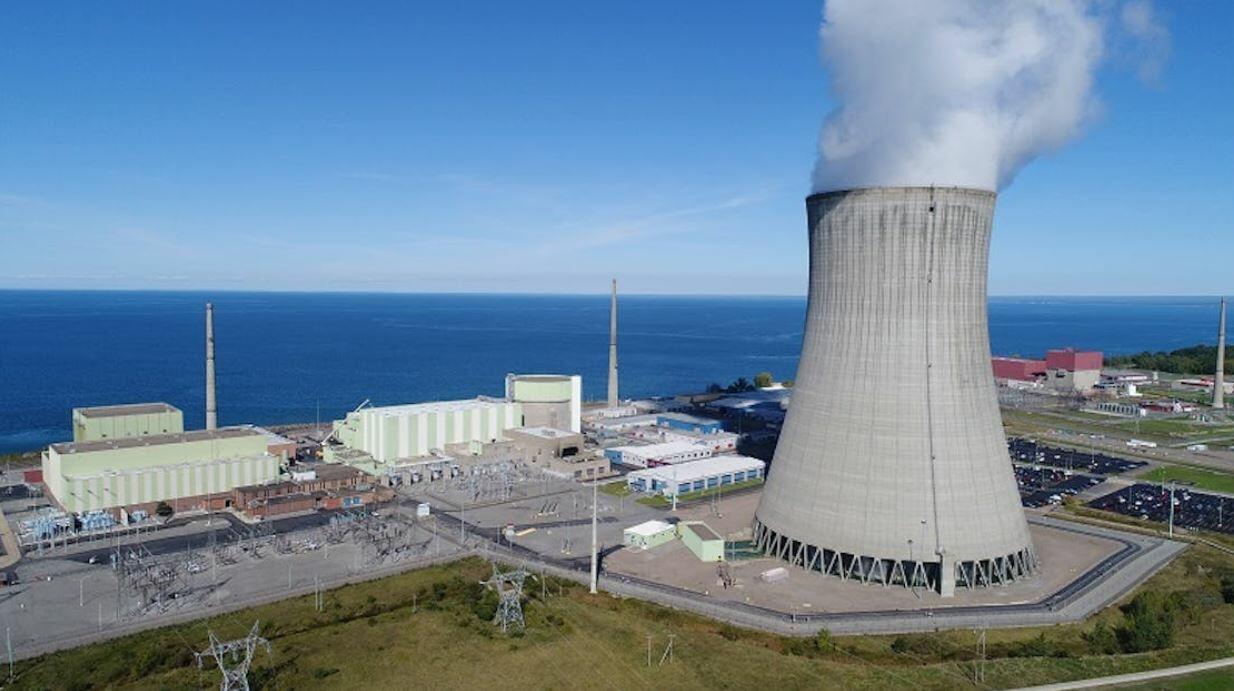
Constellation Energy nuclear-power plant in Oswego, N.Y.

Governor Kathy Hochul told the outlet that she has directed the New York Power Authority, the state’s public electric utility, to add at least 1 gigawatt of new nuclear-power generation to its portfolio - enough to power approximately one million homes.

“I’m going to lean into making sure that every company that wants to come to New York and everyone who wants to live here will never have to worry about reliability and affordability when it comes to their utility costs,” Hochul said.

The proposed facility will be sited somewhere in upstate New York. The New York Power Authority, established nearly a century ago by then-Governor Franklin D. Roosevelt—will determine the plant’s location and reactor design. Hochul noted that the state may develop the project on its own or in partnership with private industry.

The announcement offers one of the first real-world tests of executive orders signed by President Donald Trump in May to accelerate development of nuclear energy projects. Those orders call for overhauling the Nuclear Regulatory Commission (NRC), streamlining project licensing, boosting domestic fuel supplies, and making federal land available for military or data center reactors.

Hochul, who has prioritized energy infrastructure since taking office in 2021, said she has persistently advocated with Trump to streamline nuclear permitting. She credited recent discussions between the two for the lifting of a stop-work order on a major offshore wind project and the revival of two stalled natural-gas pipeline developments.

Why does it take a decade?” she asked. “That’s why no one is doing it; the barriers are too high.

Only five new commercial reactors have been brought online in the U.S. since 1991, insufficient to offset the wave of plant retirements. Nuclear capacity has declined by more than 4 percent from its 2012 peak, while solar and natural gas have surged. Federal projections forecast further shrinkage in nuclear capacity, even as many plants seek license extensions. Nuclear currently provides about 19 percent of U.S. electricity.

The closure of Indian Point, located about 40 miles from Manhattan and once responsible for 25 percent of New York City’s electricity, underscored the consequences of losing baseload nuclear power. When Indian Point was shuttered in 2021 over safety and environmental concerns, the state turned to fossil fuels to fill the gap, undermining its broader climate goals.

There was no Plan B,” Hochul said.

In recent years, nuclear energy has gained new traction as a politically viable bridge between fossil fuels and renewables. Tech companies building energy-intensive AI data centers have been especially eager to see nuclear capacity expanded.

Despite lingering concerns over radioactive waste and nuclear accidents, proponents argue that nuclear remains the only scalable, emissions-free power source capable of running 24/7.

Hochul cited Microsoft’s push to restart the undamaged unit at Pennsylvania’s Three Mile Island as evidence that public opinion has shifted. The infamous 1979 partial meltdown at that site virtually halted U.S. nuclear expansion for decades.

“That is a place now where the community around it has overcome that traumatic experience,” she said. “That’s a real signal to the rest of the country that the time has come.”

Potential locations for New York’s new reactor include sites near the state’s three existing plants, all owned or majority-owned by Constellation Energy. The project may involve one large reactor or a series of smaller units.

Constellation and state officials are already collaborating on a federal grant to explore expanding the Nine Mile Point Clean Energy Center in Oswego. New York is also in talks with Canadian authorities to learn from Ontario’s initiative to build four small modular reactors, factory-built designs that could lower costs and shorten construction timelines.

At the same time, New York is studying the costly lessons of Plant Vogtle in Georgia, where two new reactors began construction in 2009 but were not completed until 2023 and 2024. Their final price tag exceeded $30 billion, more than double the original estimate.

As New York steps back into the nuclear arena, the project could become a proving ground not just for the state’s energy strategy, but for Trump’s deregulatory blueprint as well.

Keep an eye on: LEU, CCJ, NNE, OKLO and SMR

https://www.zerohedge.com/energy/new-york-build-1gigawatt-nuclear-power-plant-backed-trump-era-reforms