by James Varney
On July 11, Energy Secretary Chris Wright and Wyoming’s top elected officials were in the Cowboy state celebrating something that last happened when Dwight Eisenhower was president and the Brooklyn Dodgers won the World Series: The United States opened a rare earth mine.
Ramaco’s Brook Mine in Ranchester, Wyoming, is the first such domestic mine in 70 years. The Trump administration is touting it as part of a critical effort to free the U.S. from China’s stranglehold on the minerals and elements that are essential components in products ranging from smartphones and electric vehicles to advanced medical devices, oil refining, and missile guidance systems.
“We are going to get those rare earth elements that are going to break our dependence on China,” Wright said.
Energy Secretary Chris Wright says American mines "are going to break our dependence on China."
AP
Wright’s shovel and hard-hat photo op in Wyoming, like the Pentagon’s recent $400 million stock purchase in an extant California mining project, reflect the Trump administration’s commitment to finding more rare elements like dysprosium, neodymium, and praseodymium – along with common graphite, copper, and nickel – that comprise the U.S. Geological Survey’s “list of critical minerals.”
But unshackling American mining could prove to be neither swift nor certain. Today, the timeframe for mining permits is already so long that even cutting it in half would push new ribbon cuttings beyond the end of Trump’s second term. That, along with concerns that a different administration could reapply the brakes to opening new mines, has deterred private investment. It doesn’t help that the U.S. has seen its mining engineering corps age. Perhaps most importantly, China’s dominance in processing these minerals once they are extracted from the ground makes its commanding position even stronger.
“It’s not only mining,” said Daniel O’Connor, the chief executive and co-founder of the Rare Earth Exchanges website. “Downstream are magnets, batteries, missile systems, Kevlar. Think of it like gasoline, and it all comes from China.”
Well aware of Trump’s intent, China has recently tightened restrictions on rare earth exports, moves that come just a month after Trump claimed a deal on the precious materials had been struck with Beijing. Whatever deals are hammered out, the U.S. faces a daunting challenge because it is far behind in the race. “No realistic difference can be made in at least the next 10-15 years to supply,” said Peter Bryant, chairman of the consulting firm Clareo who also leads Key Minerals Forum, an informal Washington-based group that advises Congress members on global mining issues.
O’Connor echoed that assessment. “This is all going to take longer than they’re saying.”
Supply Chain Headwaters
Right now, it takes more than seven years to secure a permit for mining something other than coal or gravel on public land.
A formidable panoply of federal agencies and regulations awaits any new mining effort. While the overarching legislation is ancient – the General Mining Law of 1872 – modern times require an environmental impact statement under the National Environmental Policy Review Act (NEPA). That generally takes three to five years to complete.
Following that, would-be miners must navigate the Endangered Species Act, consultations with Native American tribes, water rights and discharge permits through the National Pollutant Discharge Elimination System, and finally, a public comment period.
Running the entire regulatory gauntlet takes, on average, seven to 10 years unless the project faces litigation, in which case the process takes more than a decade and carries the corresponding lawyers’ bills.
“The green groups have been using NEPA for more than a decade to get uncertainty and make it expensive if you apply,” said H. Sterling Burnett of the Heartland Institute, a group that favors traditional sources of energy production. “They can always come back and say, ‘You didn’t look at X,’ or ‘You didn’t do Y,’ or cite ‘ancillary impacts’ of climate change.”
Lawsuits and protests, such as the one pictured against the Dakota Access oil pipeline, have slowed development of some natural resources in the U.S..
AP
Ramaco’s Brook Mine illustrates some of the challenges. In 2011, the company bought the Wyoming property about 70 miles south of where Custer made his last stand, and planning for the mine began the following year. The first permit application was filed in 2014. The mine was initially envisioned as a coal source. It wasn’t until 2016 that Ramaco noticed it had valuable commodities co-mingled with the coal, especially “heavy” rare earths like gallium and scandium.
More regulatory hurdles awaited, and final approval came in 2020, according to the company’s executive vice president, Mike Woloschuk.
Production is only now ramping up at Brook Mine, and the company forecasts that it will not have solid supplies of rare earths coming until 2028-2029 – provided everything continues to run smoothly.
“Our mine permit was for a 2 million tons per year production level,” Woloschuk said. “We have now been asked by the government to consider both accelerating our commercial timeframe to produce rare earth element oxides. We would expect this production increase to be in the range of 7 to 10 million tons per year.”
Goosing the System
As Wright’s appearance in Wyoming makes clear, the Trump administration is trying to remove some of the industry’s obstacles. On Jan. 20, Trump’s first day in office, he declared a “national energy emergency,” and issued an executive order on March 20 titled “Immediate Measures to Increase American Mineral Production,” invoking the wartime powers contained in the Defense Production Act of the Korean War era.
In April, the Interior Department said it would use its emergency authorities to accelerate critical minerals projects. Later that month, the government identified new projects on the Federal Permitting Improvement Steering Council dashboard, which the administration said would boost predictability for the permitting review process.
Interior also announced emergency procedures in April, which it hoped will expedite reviews and approval of various energy projects, including mines, and in June, Trump directed agencies to streamline the funding processes for the same projects. On June 26, Interior took steps to jumpstart offshore mineral production, too.
Unsurprisingly, perhaps, the administration’s maneuvers have been warmly received by the National Mining Association.
“Ramping up American mining is a national security imperative, and President Trump’s strong action recognizes that, NMA president and chief executive Rich Nolan said. “By encouraging streamlined and transparent permitting processes, combined with financing support to counter foreign market manipulation, we can finally challenge China’s mineral extortion.”
Minnesota Rep. Pete Stauber has introduced legislation to make it easier to open and run mines.
AP
Republicans in Washington who support Trump’s mining agenda are also moving. Minnesota Rep. Pete Stauber, chairman of the House Committee on Natural Resources, has introduced legislation he said will codify many of Trump’s executive maneuvers. Stauber said the time from first planning a mine and having one built and producing can take nearly three decades, and that reforming that “is just a first step.”
“Our country’s broken and duplicative permitting process has prevented many responsible mining projects across the nation from moving forward,” he said. “The U.S. has the most arduous permitting process in the world.”
To succeed, this kind of commitment will have to last longer than Trump, experts say. Even in the best-case scenario, the U.S. will probably not be able to counter China’s dominance of the market on its own.
“We’ll have to rely on securing supply from allied and friendly countries,” said Peter Bryant of the Key Minerals Forum.
Got Rare Earths?
The goal, Trump has insisted, is to liberate U.S. supply chains from Chinese dominance. And that dominance is pronounced: China is the top producer of 30 of the 50 minerals the U.S. considers critical, and of 90% of the 17 that comprise rare earths. From that position atop the mineral pyramid, China has taken equity stakes in mining operations globally and has manipulated the market of supply and demand.
For example, China can undercut new supply sources by briefly flooding the market with a mineral, lowering the price and making the new venture less attractive. Or China can go in the other direction, as it has recently, imposing sharp limits on supplies available to U.S. companies, crimping manufacturing production and making it much more expensive.
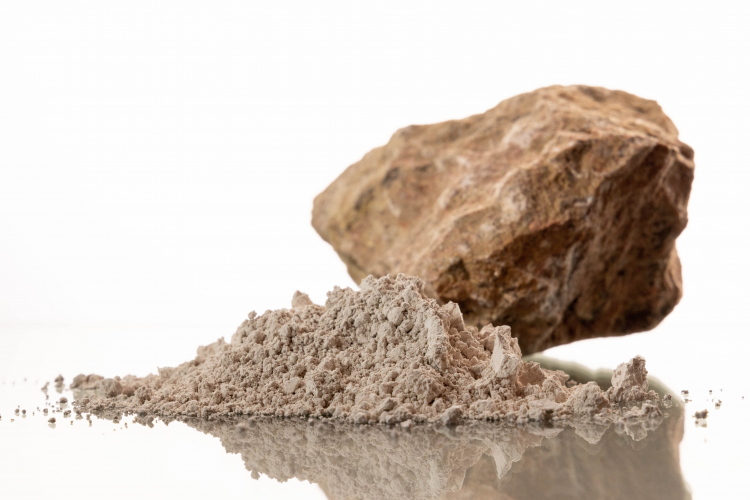
Neodymium-praseodymium, or NdPr, is used to produce advanced magnets.
Business Wire
One problem is that the extent of America’s potential rare earth deposits is unclear. The Interior Department, which manages 245 million acres of public lands and 700 million acres of sub-surface mineral estates, is required by statute to provide “recurring” mapping and assessments of what minerals and elements might lie under U.S. soil.
“I’m not sure those surveys have been done for years,” said Thomas Pyle, president of the American Energy Alliance.
The Geological Survey’s “global rare earth element occurrence database” appears to have most recently been updated in February 2022. In May, the Geological Survey announced $5 million for state consortiums to find the needed critical minerals out of “materials left over from mining at active and legacy sites,” and a mapping project known as Earth MRI is ongoing. Neither scientists nor public affairs specialists with the Geological Survey responded to emails and voice messages seeking comment.
Several experts told RealClearInvestigations, however, that such searches would likely prove productive. Historically, the U.S. has found what it needed, such as rich sources of aluminum, iron, and other necessary elements during wartime.
“Exploration is expensive, so we only do it when we are actively looking for something,” said Andrea Brickey, a professor at the South Dakota School of Mines and Technology. “If we want to look for something, we have the tools to help us evaluate potential exploration sites.”
Despite prescient warnings between world wars, the U.S. failed to keep atop its mineral supplies and production.
“It should be ‘map, baby, map,’” said Ann Bridges, a former commodities trader who now writes about energy. “We know we have a lot – it’s the same mountain range, basically, from Chile to Canada and we need to tap it, but we stopped.”
One complicating factor, as Ramaco’s Brook Mine experience showed, is that these valuable rare earths are comingled with other rock and strata. That makes discovery of rich veins more difficult, requiring expertise and expense to extract the precious commodities.
“From publicly disclosed data, there are only a handful of rare earth deposits in the U.S.,” Woloschuk said. “All of them except the Brook Mine are hard rock deposits. Hard rock deposits are typically more complicated to process, and they contain significant levels of radioactive elements such as uranium and thorium, which become environmentally challenging.”
Overall, however, the mood seems confident, with Bridges, Burnett, and Brickey all noting supplies under U.S. land – or that coupled with supplies from allies like Canada and Chile – will prove extensive.
Flip Side of the Green New Deal?
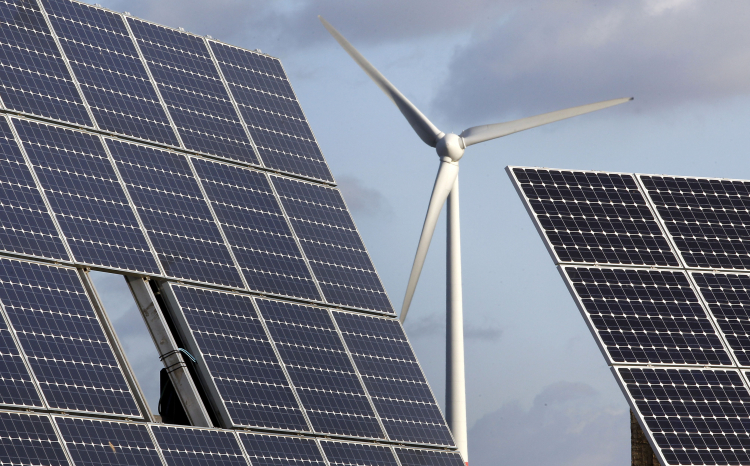
Rare earth metals are crucial for making electricity created by solar panels available to businesses and homes.
AP
There seems to be a growing, bipartisan consensus that whatever the U.S. subterranean supply may be, it won’t be cheap to dig it up. While such projects align with Trump’s directive to produce abundant, affordable energy, government spending here could represent the flip side of the Biden administration’s spending on green energy initiatives.
In other words, the federal government would still be operating as an equity investor in energy projects, picking which firms may benefit from taxpayer largesse. Not everyone is comfortable with that arrangement, necessary as it may be.
“Yes, that is a problem,” said Mark Mills, executive director of the National Center on Energy Analytics. “Fortunately, there is bipartisan agreement on mining, unlike, say windmills. But even if we remove the political and regulatory impediments, it takes many years and many billions of dollars to build significant new mining capacity.”
Others are skeptical that the U.S. has the time or the political will to enhance America’s domestic supplies.
“We’re 10 years away from where we need to be, even if Trump did a warp speed kind of thing on this,” Rare Earth Exchanges’ O’Connor said. “It’s all going to take longer than they’re saying.”
In July, the Defense Department’s $400 million stock purchase of MP Materials, amounting to a 15% stake, marks one significant mining investment. The company’s Mountain Pass operation in California makes it the biggest current domestic player in the rare earth minerals race. Mountain Pass is expected by 2028 to supply the Pentagon with rare earth mineral products – especially magnets - at a fixed price. It is the largest move defense has made so far, and it won’t be the last, a department official told RCI.
“By leveraging preferred equity, loans, price floors, and other approaches, [DoD] is ensuring access to critical defense capabilities while also sharing the risk inherent in a commercially dominated market space,” an Air Force official said who requested not to be named.
Environmental groups have opposed many mining operations and support heavy regulation because they often involve the massive destruction of mountains and forests, releasing a significant amount of toxins and leaving a scar on the land visible from a long distance. Mining is an inherently dirty business – a whole lot of dirt and rock needs to be moved to get to the gems. “Roughly 1,000 tons of rock dug up to get one ton of copper, for example,” said the national center’s Mills. “That’s the nature of geology, and the ratio is similar or far worse for most minerals.”
Neither the Sierra Club nor the Natural Resources Defense Council responded to a request for comment on recent developments.
The Chinese Vise
The Energy Act of 2020 requires the U.S. to update its list of “50 critical minerals” every three years, but for now, the 2022 list is still in force. At that time, the U.S. relied on imports for more than 50% of its supply for 47 of the 50, and the supply of 17 of them relied exclusively on imports.
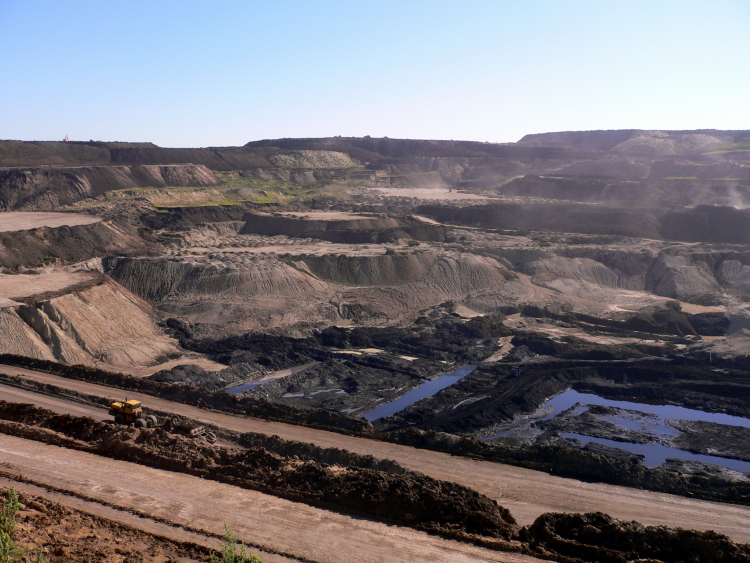
China is America's main supplier of rare earth metals and dominates the mineral supply chain.
Herry Lawford - Wikimedia
The much-ballyhooed “rare earths” are a subset of that 50 list, and while China is still the main U.S. supplier of them, the U.S. has slightly improved its rare earth trade balance, going from 100% imported in 2020 to 80% in 2024.
“The fact remains that China dominates important mineral supply chains,” the American Energy Alliance said.
And it’s not clear whether the U.S. currently has the engineering wherewithal it will need to build and manage this new mining and processing sector. Only a handful of schools still turn out mining experts – the days of Columbia University or the University of California at Berkeley leading the field are long gone, and today the industry is facing what it calls a “gray tsunami” as top experts age out of the field, Professor Brickey said.
“We’re down to about 13 accredited schools now,” she said. “We could face a massive shortage of mining engineers in the next decade. Unfortunately, this affects the workforce, especially in a field where you could potentially be looking at multiple decades to get a big profit.”
All told, despite the mining push of the Trump administration and moves to reduce regulations to create more certainty for investors, the future pace and success of rare earth extraction in the U.S. remains decidedly uncertain.
“As long as the Democratic Party hates mining, it is difficult to continually move forward on mining domestically,” the Institute for Energy Research’s Pyle said. “And the irony of that is they are the ones pursuing an all-electric economy. As long as China controls the global market for them, it would mean increased dependency on China for our economy. Not exactly a good national security strategy.”\
https://www.realclearinvestigations.com/articles/2025/08/06/americas_critical_mining_industry_finds_itself_in_a_deep_hole_1127188.html