by The Bureau's Sam Cooper,
In Mexico’s Yucatán Peninsula, Canadians have been dying violently — a pattern pointing to the rise of a global narco-kingpin, born not in Sinaloa, Jalisco, or Cancún, but in Thunder Bay, Ontario.
In January 2022, two men were gunned down in the lobby of the Hotel Xcaret, just south of Playa del Carmen. The victims were Vancouver’s Cong Dinh — long known to police as a money launderer within Chinese networks moving synthetic narcotics into the United States and bringing cocaine from Mexico back to Canada — and Toronto’s Thomas Cherukara, both 34. Six months later, in June 2022, two more Canadians, including one on Interpol’s wanted list for fraud, were found stabbed to death in a Playa del Carmen condominium. In December 2023, Montreal’s Samy Tamouro, connected to the Hells Angels, was shot dead inside a Cancún gym. A year later, another Hells Angels associate, Quebec fugitive Mathieu Bélanger — a high-ranking cocaine trafficker wanted on firearms charges — was sprayed with bullets in broad daylight as he climbed into a new Jeep SUV at a Playa del Carmen shopping plaza, the sicarios tearing off on a motorcycle as bystanders scattered.
To North American vacationers, the warning signs may have seemed like background noise: bulked-up men with Quebecois or northeastern accents drifting through wine shops or nightclubs along the strip. But to U.S. investigators, the influx of suspiciously wealthy Canadians and a spate of killings mapped something larger — the ascent of Ryan Wedding, the former Canadian Olympic snowboarder turned fugitive, now on the FBI’s Ten Most Wanted list.
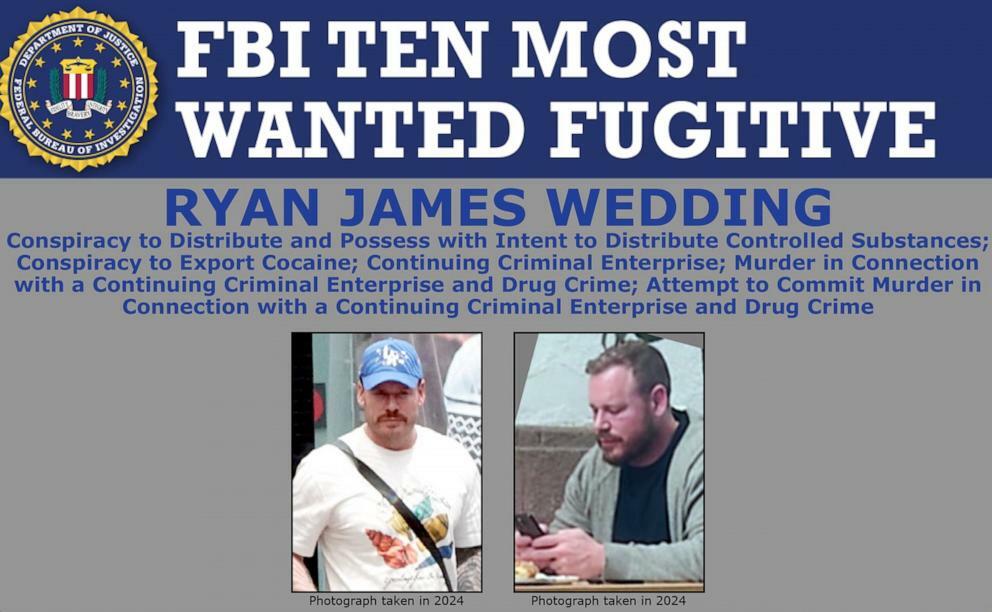
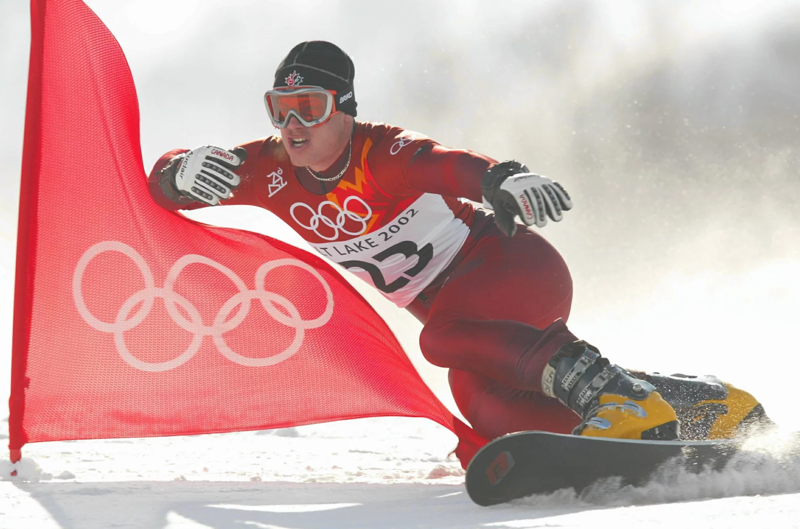
“Over the last three or four years there’ve been Canadians killed in the Yucatán. And we all know they’re tied to drug trafficking — Greater Toronto and Montreal,” a senior U.S. investigator said. “A fair number of Quebecers too — bikers. They all work in Mexico. But somehow Ryan Wedding got all these people to work together.”
The source described the Cancún area as a “haven for Canadian organized crime — mid- to high-level drug dealers coordinating with Mexican counterparts to bring stuff into Canada.”
“I think he just rose above all of that,” the investigator said. “Whether it was through violence or just the people he knew, Wedding became the single point of contact for any Canadian who wanted to bring drugs back up into Canada from Mexico.”
Investigators say massive shipments from Wedding’s network continue to flood into Canada through Indo-Canadian commercial trucking firms, while fentanyl precursors flow south from Vancouver on the same trucking platforms.
“You see it at the Rainbow Bridge and the Port Huron–Sarnia crossing — though it’s not in the news much,” an American investigator said. “But then you hear: 680 kilos of coke seized one week, 300 kilos the next. And that’s just Ontario — there’s just as much going into Alberta and B.C., and even through the Akwesasne lands into Quebec.”
And this has persisted, even escalated, after Canadian police announced a series of arrests in October 2024 — including that of Wedding’s alleged lieutenant, Andrew Clark, a 34-year-old from Wasaga Beach, taken down in a dramatic operation near Guadalajara by the Mexican Navy. Clark is charged by the U.S. government with four murders, all in Ontario, which investigators allege were part of Wedding’s crimes on U.S. soil.
But a senior U.S. source insisted there has been a troubling lack of RCMP collaboration in probing Wedding’s networks. Not only did the RCMP stonewall DEA requests six years ago to crack down on the Canadian trucking routes Wedding ran through the United States, as The Bureau recently reported, but there was also a lack of cooperation in targeting his violent cells inside Canada — where associates, competitors, and even an innocent Indo-Canadian family in Caledon, Ontario, mistakenly linked to a trucker from Wedding’s network, were brutally executed.
“We tried to work with RCMP on Wedding too, and they said, ‘No,’” a source aware of probes from three separate U.S. agencies said. “And it’s like — he’s killing Canadian citizens. He’s killed God knows how many. And you still don’t want to cooperate because of whatever grievance. But the RCMP threw up roadblocks. You’ve got to get past those things because Canadians are dying.
Just in the Greater Toronto Area alone, people were falling once a week. Especially when the heat was getting closer to this guy, he started killing all the people he knew. And I think there were seriously missed opportunities.”
In fact, shipments from Wedding’s network appeared to accelerate after Canadian police trumpeted their sweeping investigation in October 2024, the source said.
“If you peel back the layers, the organization still functions at the same level, if not more,” they said. “So what are you really doing? You have some headlines that Andrew Clark, the number-two guy in the organization, got arrested. But after he got arrested — literally, after they took down that investigation and arrested people between Canada and the U.S. — the next day Wedding has 250 kilos landing in Toronto. We laughed amongst ourselves. You have to do more than disrupt them. You have to dismantle them financially, or dismantle the personnel. Just seizing drugs and holding press conferences isn’t changing anything.”
In response to detailed questions from The Bureau regarding allegations that the RCMP has stonewalled the DEA on drug investigations involving transnational networks, the Canadian force insisted that it cooperates with U.S. agencies.
Some Canadian officials contend there is growing recognition that Canada and the United States must cooperate more effectively, and that their legally and culturally distinct systems demand more officers trained to bridge the divide. There is broad agreement that Canadian judicial rules such as Stinchcombe and Jordan create significant hurdles, and serious efforts are underway between Ottawa and Washington to repair law-enforcement ties. Others argue the deeper obstacle is not legal but political: an absence of will in Ottawa to confront networks considered too politically sensitive to touch.
One Canadian veteran, directly aware of U.S. concerns with Canada’s lack of capacity or will to tackle the Chinese state–linked money-laundering and fentanyl precursor supply networks in Vancouver — at the top of the cartel networks that Wedding’s trucking routes employ — said, “During the 2010s and up to the current time, American law enforcement agencies and other foreign allies have purposely left the RCMP out of significant investigations rather than deal with delays and excuses from the RCMP.”
“Information linked to high-level transnational criminal organizations, compiled by Canada’s allies in the Five Eyes group, has purposely been held back from the RCMP,” they added. “Partner countries and agencies believe the RCMP will only hinder investigations with unrealistic disclosure requests or by stalling out of fear of making a decision. This has allowed criminal groups to grow stronger and become more entrenched in Canada.”
This starts to explain how a Canadian — and not just any Canadian, but a former Olympic athlete — can rise to become a globally significant kingpin dealing not only with the Sinaloa Cartel, but also with its main rival, the Jalisco New Generation Cartel.
The fact that Wedding is still alive — whether protected in a fortified Mexican enclave or moving in disguise through South America or elsewhere — underscores one point, according to well-placed Canadian and American investigators. Wedding is highly trusted by the most powerful drug suppliers in the world, and his access to Canada’s critical infrastructure — and, really, its reputation and institutions as a G7 nation — has provided irreplaceable value to Mexico’s murderous, multibillion-dollar drug cartels.
“His networks are so extensive, I would say globally,” a senior U.S. source said. “Wedding’s got global reach, which is kind of surprising for a Canadian dude to have that.”
That assessment — and the questions it raises — should force Canadians to confront realities that go far beyond one Olympian’s improbable rise. The Bureau’s investigation, drawing on patterns from numerous court filings and on Canadian and American experts with direct knowledge of his operations, finds that Ryan Wedding’s power reflects how Canada’s ports, highways, transportation corridors, and banks have become indispensable to cartel supply chains and their powerful partners — including Iranian security services, terrorist financiers, and, above all, structures linked to the Chinese Communist Party.
An analysis of cases linked to Wedding underscores this trajectory: from his early post-2002 Olympic ventures — including a B.C. Bud growing business and dealings with Iranian underground bankers moving Mexican cocaine up the coast from Los Angeles to Vancouver — to the explosive Operation Harrington probe in the mid-2010s. That investigation revealed Wedding’s network transporting cocaine from Venezuela’s Margarita Island — a hub where Hezbollah and Iranian security operatives intersect with the Sinaloa Cartel and networks tied to indicted Venezuelan President Nicolás Maduro’s alleged narco-terror cells — up the Atlantic coast by ship into Halifax.
The same patterns, though land-based, appear in recent Canadian probes such as Alberta’s Project Cobra, Toronto police’s Project Brisa, and Project Pelican out of Mississauga headquarters. Collectively, they show Wedding coordinating industrial-scale shipments of hard drugs — believed to amount to thousands of kilos weekly — with the assistance of Indo-Canadian semi-trailer companies.
And several U.S. and Canadian police sources added that Ryan Wedding’s direct ties to notorious B.C.-bred, Asia-based gangsters like James Riach of the Wolfpack Alliance — a hybrid Canadian gang comprised of Hells Angels, Middle East terror and Iranian security–linked gangsters, and Mexican cartel traffickers — place Wedding within the senior networks associated with the Chinese chemical–supplied fentanyl superlabs in Western Canada cited in President Donald Trump’s reasons for maintaining 35 percent tariffs on Canada.
“Canada has an appetite, but not that much of an appetite.”
Wedding’s story is that of a gifted networker, navigating personal and criminal alliances with the same foresight a downhill racer uses to plot a perilous course. His ties to strategically positioned women — whether cultivated by his own design or facilitated by more powerful matchmakers from Mexico or Iran — clearly accelerated his rise into the global narco-crime world.
In 2009, Wedding stood trial in California after a sting operation in which he flew from Vancouver to Los Angeles to buy 24 kilograms of cocaine. Convicted in the cocaine-trafficking conspiracy, he was sentenced to prison in Texas. It was there, in 2011, that he married an Iranian-Canadian woman from Vancouver, later tied through court records to major underground banking transactions between Vancouver and California. After their divorce, he entered a new relationship with a woman from Mexico.
“Part of his claim to fame was getting in with his girlfriend who was tied to Cartel Jalisco New Generation, and that was his plug to open doors to import all the cocaine and meth and whatever else into Canada,” a senior U.S. source said.
But Wedding’s birthplace — Canada — is the more decisive factor. Experts in both the United States and Canada liken the Sinaloa Cartel’s decision to build encryption-technology infrastructure in Vancouver and clandestine lab networks across Western Canada to an international mining conglomerate choosing between Colombia and Venezuela: whether criminal or corporate, excellent management will select the jurisdiction with the most favorable regulatory structure. In this sense, Canada has become one of the most fertile ecosystems for cultivating and enabling transnational organized crime networks.
What distinguished Wedding, U.S. sources confirmed to The Bureau, was his uncanny ability to connect Canada’s domestic underworld — from bikers and Quebec street gangs to Indo-Canadian trucking clans — with transnational supply and finance networks tied to the Sinaloa Cartel, Iranian state-linked launderers in Vancouver, and Chinese precursor suppliers. By the time Mathieu Bélanger was cut down in Playa del Carmen, Wedding had already consolidated his position at the apex of this ecosystem, transforming Canada into both a saturated drug market and a global transshipment hub.
Police in Montreal, where Wedding lived in the mid-2010s before an RCMP informant penetrated his network in the Project Harrington probe, have made compelling economic arguments that explain the cartel infiltration, without naming Wedding.
They say Mexican cartels have revolutionized the province’s drug economy, displacing the traditional hierarchy long dominated by the Sicilian mafia and outlaw biker gangs such as the Hells Angels. Rather than dealing only with entrenched syndicates, the cartels have exploited Canada’s fragmented underworld by supplying a wide range of street gangs and criminal factions outside the control of traditional organized crime.
The effect is visible in the market: with traditional intermediaries removed from the supply chain, cocaine is now so plentiful that its value has collapsed to an all-time low of about $20,000 per kilo. In the early 2000s, when the Sicilian mafia and bikers maintained tight control, the median price was closer to $45,000. “This means that a street gang member who has become rich in recent years can buy as much as the big organizations,” Commander Francis Renaud said in a story from La Presse, regarding the murder of Mathieu Bélanger.
A crucial piece missing from the Quebec police assessment — which focused on cartel infiltration without naming Wedding or his state-adjacent partners — is the geopolitical dimension: the ties of Iranian crime figures and encryption technology hubs to Wedding’s networks. A report by former U.S. State Department official David Luna cites findings from Operation Harrington concerning Jahanbakhsh Meshkati, a Wedding associate who was executed in Vancouver in August 2014, around the time Wedding fled Montreal for Mexico. Meshkati was central to Iranian-backed encryption technology companies that safeguarded communications and laundered money for Sinaloa Cartel boss Joaquín “El Chapo” Guzmán’s Vancouver-based networks.
“Cases have highlighted how Canadian nationals and underground currency exchanges have helped Iran evade sanctions and assisted in the laundering of funds for terrorist financing operations of both Hezbollah and Hamas,” Luna’s 2023 report says. “Police investigations and wiretaps have also revealed high-profile Iranian criminal networks controlling the Vancouver port, and other Canadian ports, and partnering with Hells Angels and Mexican cartels.”
“Meshkati was also known for his ‘encrypted BlackBerry businesses’ and had access to Halifax Port,” the report says, “where military personnel were compromised in a massive cocaine importation ring.”
While Wedding continues to draw headlines in Canadian media — perhaps because of the extraordinary arc of a Canadian Olympian turned narco kingpin — his deep ties to Indo-Canadian traffickers across the country, suggesting he is implicated in virtually every major drug shipment entering Canada, remain little understood.
“You have the East Indians pretty much cornering the entire commercial trucking market,” one U.S. source said, adding that there was awareness in American investigations that in Canada, “they were giving visas and commercial truck licenses to people who weren’t qualified.”
Provincial data underline the risks. Ontario’s Provincial Police reported that 2022 was the highest year in more than a decade for collisions involving transport trucks, while British Columbia recorded a 62 percent jump in 2023 fatalities involving “heavy vehicles.”
A CBC Marketplace hidden-camera investigation and a leaked internal memo alleged bribery, forged documents, and lax oversight tied to commercial testing at DriveTest centres and some trucking schools. Ontario’s Auditor General has separately flagged gaps in enforcement and weak performance measurement in the province’s driver training and examination systems.
“It is just insane the number of commercial trucking companies that are owned by East Indians who all go to the U.S., pick up contraband, and bring it back to Canada,” the source said. “It doesn’t sound like a very complicated modus operandi, but we’re talking thousands of kilos of drugs a week.”
Investigators believe nearly all of those trucking drug pickups — often in Los Angeles or Sacramento — carried Wedding’s fingerprints.
The scale of the smuggling, they said, is evident in seizures that barely make the news.
“They’re all his,” a source said. “In fairness, it’s not that hard to get drugs from Mexico into the U.S. And he consolidated that. And the amounts he had set up — both sides. West Coast. Greater Toronto Area. Some out through Miami, the East Coast.”
The economic factor raised by Quebec police — that cartels working directly through Wedding have cut out the traditional intermediary biker and Italian mafia groups, slashing cocaine street prices in Canada by more than half — may also miss a larger point. The flooding of low-cost cocaine into Canada, while almost certainly damaging the nation through increased consumption, is also driving the export of hard drugs from Canada as a transshipment point. Canada, it seems, is viewed as less suspect than Mexico, Panama, or Margarita Island, and shipments flow onward to higher-value markets in Europe, Asia, Australia, and New Zealand.
“Canada has an appetite, but not that much of an appetite,” a senior U.S. investigator said. “It’s not staying in Canada, all of it. A lot is being shipped out to ports in Montreal over to Europe, especially the cocaine, because the price of cocaine in Europe is four, five, even six times higher than in North America. And the meth is going out west — obviously to Australia.”
Of course it’s right.
The Bureau has drilled into the cross-border flows of precursor chemicals through Vancouver, identifying lab networks and Port of Vancouver fentanyl precursor seizure cases where Canada’s domestic fentanyl problem simply cannot account for the volume. One striking piece of evidence not involving a seizure, but a drug-dealing plan, is a U.S. sting operation centered on Opinder Singh Sian, a senior Indo-Canadian gangster who reportedly is a prominent member of the Brothers Keepers. This ultra-violent gang operates as a key proxy for the Sinaloa Cartel in Canada, interoperable with Latin American cartels and Chinese Communist Party–linked chemical suppliers.
In 2023, a dramatic undercover operation captured by a DEA informant from cartel networks — known as the “Queen” — recorded a thick-accented Chinese trafficker dining with Sian and the informant in a Vancouver café, casually promising that he could ship 100 kilograms of fentanyl precursors per month from Vancouver to Los Angeles, using a trucking company fronted by his Indo-Canadian associate.
When The Bureau put the broader pattern to a U.S. national security source — precursors flooding into Vancouver, far beyond Canada’s capacity to consume them, then redirected south into the United States or in completed fentanyl pills shipped outward to Australia and New Zealand — the source confirmed the logic. “It’s well documented that the precursor chemicals coming into Canada are many times more than any legitimate domestic use — even including addiction treatment. So where’s it going?”
The 2022 killing of Cong Dinh in Playa del Carmen further reinforces the pattern. Announcing a $50,000 reward for his warranted capture in 2019, Supt. Keith Finn of the RCMP said Dinh’s network was “moving ecstasy and marijuana south to the U.S. and cocaine north to Canada,” with affiliates in California, Mexico, Australia, Vietnam, and across Canada.
Another figure connected to the same network, Richard Yen Fat Chiu — a Vancouver-based trafficker of Chinese synthetic narcotics — had previously been convicted in Massachusetts in 2002 for conspiracy to distribute and possess heroin. He was murdered in Colombia in 2019; on June 20 of that year, his body was found stabbed and burned near Cúcuta, a key smuggling hub on the Venezuelan border. Chiu had been under investigation in probes tied to Chinese state-linked Triads and a massive underground bank operating out of Richmond, B.C. That shadow system funneled cartel drug proceeds through hundreds of Chinese accounts, linking Canadian fentanyl networks to laundering pipelines stretching across Latin America and Mexico.
Taken together, the deaths of Canadian gangsters in the Yucatán — and Chiu’s killing on the Colombia–Venezuela border — illustrate how Canada-based organized crime groups, from domestic biker gangs to Vietnamese and Chinese networks and their Canadian affiliates, have become essential nodes in the global narcotics economy.
Asked directly if The Bureau’s reporting was correct — that cartel networks tied to Canada’s new global actors, including the former Olympian Ryan Wedding, are moving fentanyl and its precursors south into the United States even as cocaine flows north through U.S. highways into Canada — former DEA chief Derek Maltz did not hesitate. “Yeah, of course it’s right,” he said.
Maltz pointed to the DEA’s collaboration with the Australian Federal Police and AUSTRAC, the anti–money laundering watchdog, in targeting major methamphetamine shipments routed through Los Angeles as a shipping hub. That same route surfaced in the DEA’s probe of Vancouver-based Indo-Canadian trafficker Sian, who was caught moving meth from Los Angeles to Australia while sourcing fentanyl precursor chemicals directly from China, with Vancouver serving as a central node in the global scheme.
“I’m dealing with Australia now because we worked on Project Sentry, and with AUSTRAC on the Sinaloa Cartel’s laundering,” Maltz said. “They’re getting inundated in Australia with cocaine. Same with New Zealand. And now, of course, they’re getting hit with fentanyl shipments. And I believe — I don’t have proof of this — that a lot of it’s coming from these Canadian production operations.”
https://www.zerohedge.com/geopolitical/seriously-missed-opportunities-canada-roadblocked-us-probes-cocaine-snowboarder


