Commonly used by physicians in emergency departments and intensive care units as a physical examination adjunct for rapid bedside diagnostic testing and for procedural guidance,[1] portable ultrasound has been making its way into the hands of emergency medical technicians (EMTs) and paramedics on ambulances and helicopters in the United States and abroad.[2]
In North America, 4% of emergency medical services (EMS) systems use ultrasound and 20% are considering implementing ultrasound within their systems.[3] The most common uses for prehospital ultrasound are the Focused Assessment with Sonography for Trauma (FAST) and assessment of pulseless electrical activity arrest.[3] With education and training, paramedics and EMTs can obtain images of sufficient quality.[4,5] However, whether this improves outcomes for patients is unclear.
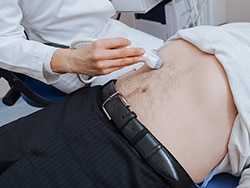
There is no standardized training for paramedics or EMTs in the use of ultrasound, leading to great variability in curricula published in the literature. For specific ultrasound skills, such as image acquisition for abdominal trauma (FAST), a 1-day training course may be sufficient.[6] A 6-hour FAST training program has been published.[7]Alternatively, a comprehensive multimodal 2-month training course has also been proposed to train paramedics to perform the Extended Focused Assessment with Sonography for Trauma (eFAST).[8] For identification of pericardial effusion, pneuomothorax, and cardiac standstill, a 1-hour lecture has been trialed among EMT and paramedic students, and a 2-hour program has also been used to train paramedics for these indications.[9,10] A systematic review of training courses for paramedic prehospital ultrasound has shown that FAST ultrasound examination can be taught in 6-8 hours and that pleural ultrasound can be taught in 25 minutes.[11] For the other uses of ultrasound in the field, training programs have not been published in the literature.
Costs of and Funding for Ultrasound Equipment and Training
The primary barrier to ultrasound use in the field is the cost of the equipment and training. SonoSite’s NanoMaxx portable ultrasound device, designed for field use, costs $8000-$11,000 per unit.[12] SonoSite’s iVIZ portable ultrasound product costs around $10,000 per unit.[13] EMS systems derive 70% of their revenue from Medicare and Medicaid reimbursements for transports (and there is no reimbursement for patients who refuse transport or who are pronounced dead in the field).[14] The reimbursement rates from Medicare (eg, $412 per transport in San Francisco) and Medicaid (eg, $146 per transport in San Francisco) do not cover the costs of providing the transport.
Without additional funding sources, such as through taxation or donations, which many EMS services do not have access to, EMS systems struggle just to keep ambulances in service.[15] Ultrasound is a capital expenditure that EMS systems cannot afford, even before accounting for training and maintenance costs. Without evidence for improvement in patient outcomes with the use of ultrasound, EMS medical directors may find it hard to advocate for the wider use of prehospital ultrasound.
Other barriers to prehospital ultrasound use are not as obvious. Obtaining ultrasound images in a moving ambulance does not appear to be a barrier.[16]Acquisition of ultrasound images does not delay medical care.[17] However, a recent prospective observational study of prehospital ultrasound in patients with respiratory distress identified barriers not mentioned in prior studies.[18]These barriers fall into three categories:
- Technical (software deficiencies, insufficient battery capacity, image transmission difficulties);
- Clinical (patient acuity too high or transport time too short to obtain images); and
- Provider-related (images of insufficient quality).
The authors concluded that with existing technology, prehospital ultrasound in their setting did not meet thresholds for feasibility.[18]
Diagnostic and Procedural Uses of Ultrasound
Ultrasound is used in the field for numerous diagnostic and procedural applications (Table). As previously mentioned, the most common use is assessment of trauma as part of the FAST.[3,19] This is an example of a diagnostic application of ultrasound. Ultrasound can identify pulmonary edema associated with congestive heart failure and can be used to differentiate acute dyspnea due to heart failure versus chronic obstructive pulmonary disease through identification of a comet tail sign.[20,21]
Table. Uses of Prehospital Ultrasound
| DIAGNOSTIC | PROCEDURAL |
|---|---|
| Identify pulmonary edema | Confirmation of endotracheal tube placement |
| Differentiate CHF versus COPD | Confirmation of gastric tube placement |
| Identify abdominal or thoracic trauma (FAST and eFAST) | |
| Identify pneumothorax | |
| Identify pericardial tamponade | |
| Identify long-bone fractures | |
| Augment neurologic exam to identify stroke | |
| Augment trauma triage in MCIs | |
| Identify cardiac standstill in PEA cardiac arrest | |
| Identify causes of shock and volume status | |
| Identify fetal viability before perimortem cesarean section and in peripartum cardiac arrest | |
| CHF = congestive heart failure; COPD = chronic obstructive pulmonary disease; eFAST = Extended Focused Assessment with Sonography for Trauma; MCI = mass casualty incidents; PEA = pulseless electrical activity | |
It can also be used in the field to monitor response to continuous positive airway pressure in patients with acute decompensated heart failure.[22,23]Ultrasound can be used to identify tension pneumothorax,[24,25,26,27]pericardial tamponade,[28,29] long-bone fractures,[30,31] stroke,[32,33] fetal viability before perimortem cesarean section,[34] and causes of shock[35] and to determine cardiac output.[36]
FAST ultrasound exam has been used in mass casualty incidents as well to augment trauma triage protocols.[37] In the tactical EMS setting, ultrasound can identify cardiac standstill, pericardial tamponade, pneumothorax, volume status, fractures, and abdominal injury.[38]
Ultrasound can be used to help confirm success of procedures. Specifically, it can aid in confirming endotracheal tube placement[39,40] and gastric tube placement.[41] Although ultrasound is widely used in emergency department settings for obtaining peripheral intravenous access, its use in prehospital intravenous access has not been studied.
Despite the many uses of ultrasound by EMTs and paramedics in the field, there are no known beneficial outcomes for patients. Even though the most common use of prehospital ultrasound is the FAST, there is no known benefit of prehospital ultrasound of the abdomen or thorax in trauma patients.[42]There is also no known benefit in mass casualty incident triage.[34]
At the same time, there is a paucity of research. Although it is clear that EMTs and paramedics can be trained to obtain and interpret ultrasound images, more research is needed to determine the benefits of prehospital ultrasound on patient outcomes. Such evidence would go a long way in garnering support for wider adoption of prehospital ultrasound.

No comments:
Post a Comment
Note: Only a member of this blog may post a comment.