- Amid ongoing news from federal agencies about changing COVID-19 vaccine recommendations, the replacement of the Centers for Disease Control and Prevention’s vaccine advisory committee members (ACIP), and re-examination of the federal childhood vaccine schedule, there is confusion among the public about U.S. vaccine policy. While half of the public thinks Department of Health and Human Services (HHS) Secretary Robert F. Kennedy Jr. has made “major” (26%) or “minor” (26%) changes to vaccine policy in the U.S., the other half either say they “don’t know enough to say” (40%) or say no changes have been made (7%). At least three in ten adults across demographic groups and party identification say they don’t know enough about the recent changes from Kennedy to vaccine policy to describe them. In addition, half (48%) of parents are not sure if federal health agencies are currently recommending that healthy children receive a COVID-19 vaccine this fall or not.
- Once told about the changes to U.S. vaccine policy, the public is divided by partisanship in whether they think these changes will make people safer or less safe. About two in ten adults, including 41% of Republicans, think these changes will make people safer while about one-third of adults, including most Democrats (62%) and four in ten independents (41%) say they will make people less safe. Another third of adults (31%) say they “don’t know enough to say” as to whether the recent changes to U.S. vaccine policy will make people safer or not, and about one in ten say the changes won’t make a difference.
- Most of the public (59%) say they will either “definitely not” or “probably not” get the COVID-19 vaccine this fall – including about six in ten Republicans who say they will “definitely not” get the vaccine. Older adults and Democrats are much more likely to report that they will get the COVID-19 vaccine. About four in ten Black adults and Hispanic adults say they plan to get the COVID-19 vaccine as do 37% of White adults.
- With most of the public reporting that they will not get a COVID-19 vaccine this fall, few are worried about the availability of the vaccine or whether it will be covered by insurance. One-third (33%) of adults are concerned that COVID-19 vaccines won’t be available to them this fall, while a third (34%) of insured adults are also worried that their insurance won’t cover a shot. Concern about availability and coverage are tied to vaccine intention, with those who plan to get the vaccine much more likely to be concerned that it might not be available to them (66%), including specific demographic groups who are more likely to get vaccinated such as older adults and Democrats.
- Personal doctors or health care providers remain the most trusted source for information about vaccines among asked sources, with eight in ten (83%) adults who say they trust their own doctor at least “a fair amount.” Smaller shares of the public, but still majorities trust their local public health department and the U.S. Centers for Disease Control and Prevention, or CDC, to provide information on vaccines, though the share who say so has been steadily in decline since September 2023. Fewer continue to say they trust HHS Secretary Robert F. Kennedy Jr. to provide information on vaccines, with about four in ten (37%) saying they trust him at least a fair amount, unchanged since his appointment in April of this year.
- About half of the public have confidence in agencies like the CDC and Food and Drug Administration (FDA) to ensure the safety and effectiveness of vaccines approved for use in the U.S. (49%), while less than half say they have at least some confidence in the agencies to make decisions based on science rather than the personal views of agency officials (42%), or act independently, without interference from outside interests (37%). Democrats continue to be more confident in federal health agencies than Republicans to ensure the safety and effectiveness of vaccines.
Awareness of Changes to Vaccine Policy
Since his appointment as Secretary of Health and Human Services, Robert F. Kennedy Jr. has made several headlines about changing vaccine recommendations, leaving many confused about the scope of changes to U.S. vaccine policy and unsure of how these changes might affect people.
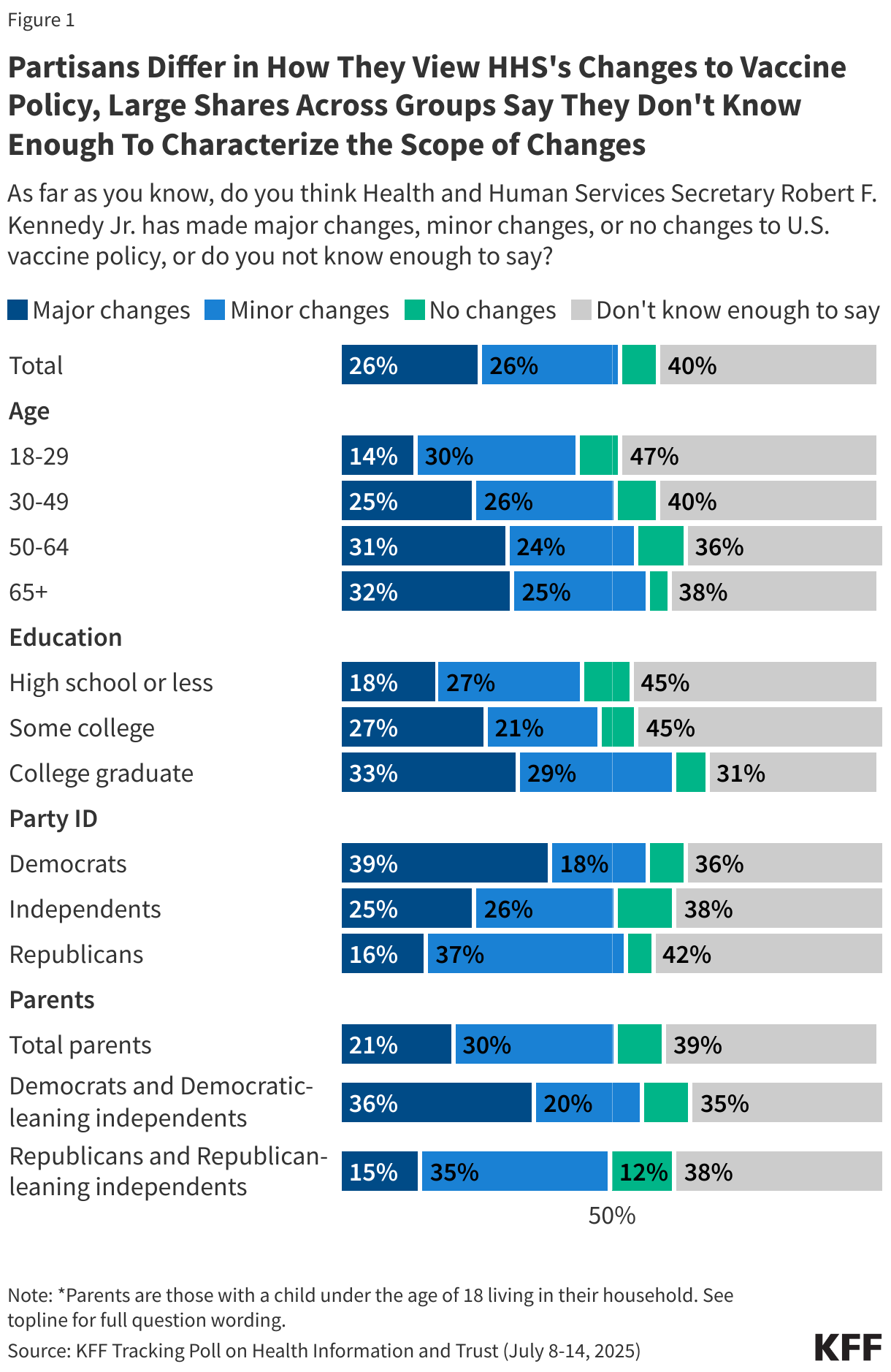
About half (52%) of the public are aware that RFK Jr. has made changes to U.S. vaccine policy, with about a quarter describing them as “major changes” (26%) or “minor changes” (26%). Four in ten adults say they don’t know enough about the changes to say whether they are “major” or “minor.” In addition, another 7% are unaware that changes have been made.
Whether the public views the changes as “major” or “minor” is largely partisan, with Democrats more likely to say they are “major” changes while Republicans describe them as “minor” changes. About four in ten (39%) Democrats say the changes that have been made to U.S. vaccine policy are “major,” compared to a quarter (25%) of independents and one in six (16%) Republicans. Nearly four in ten Republicans describe the changes as “minor,” compared to a quarter of independents and 18% of Democrats.
Young adults and those without a college degree are more likely to report that they don’t know enough about the issue to say whether or not the Secretary of HHS has made changes to vaccine policy. About half of those ages 18-29 (47%) and those without a college degree (45%) report that don’t know enough to say about changes to vaccine policy, compared to smaller shares of older adults and those with a college degree or higher.
With RFK, Jr. focusing attention on the childhood vaccine schedule, about half of parents are aware that changes have been made but the other half of parents are either unaware that changes have been made (9%) or report they don’t know enough to say (39%). Similar to all adults, how parents described the scope of the changes is largely partisan with Democratic-leaning parents describing them as major changes, and Republican-leaning parents describing them as minor changes.
Partisans Differ in How They View HHS's Changes to Vaccine Policy, Large Shares Across Groups Say They Don't Know Enough To Characterize the Scope of Changes
As far as you know, do you think Health and Human Services Secretary Robert F. Kennedy Jr. has made major changes, minor changes, or no changes to U.S. vaccine policy, or do you not know enough to say?
.png)
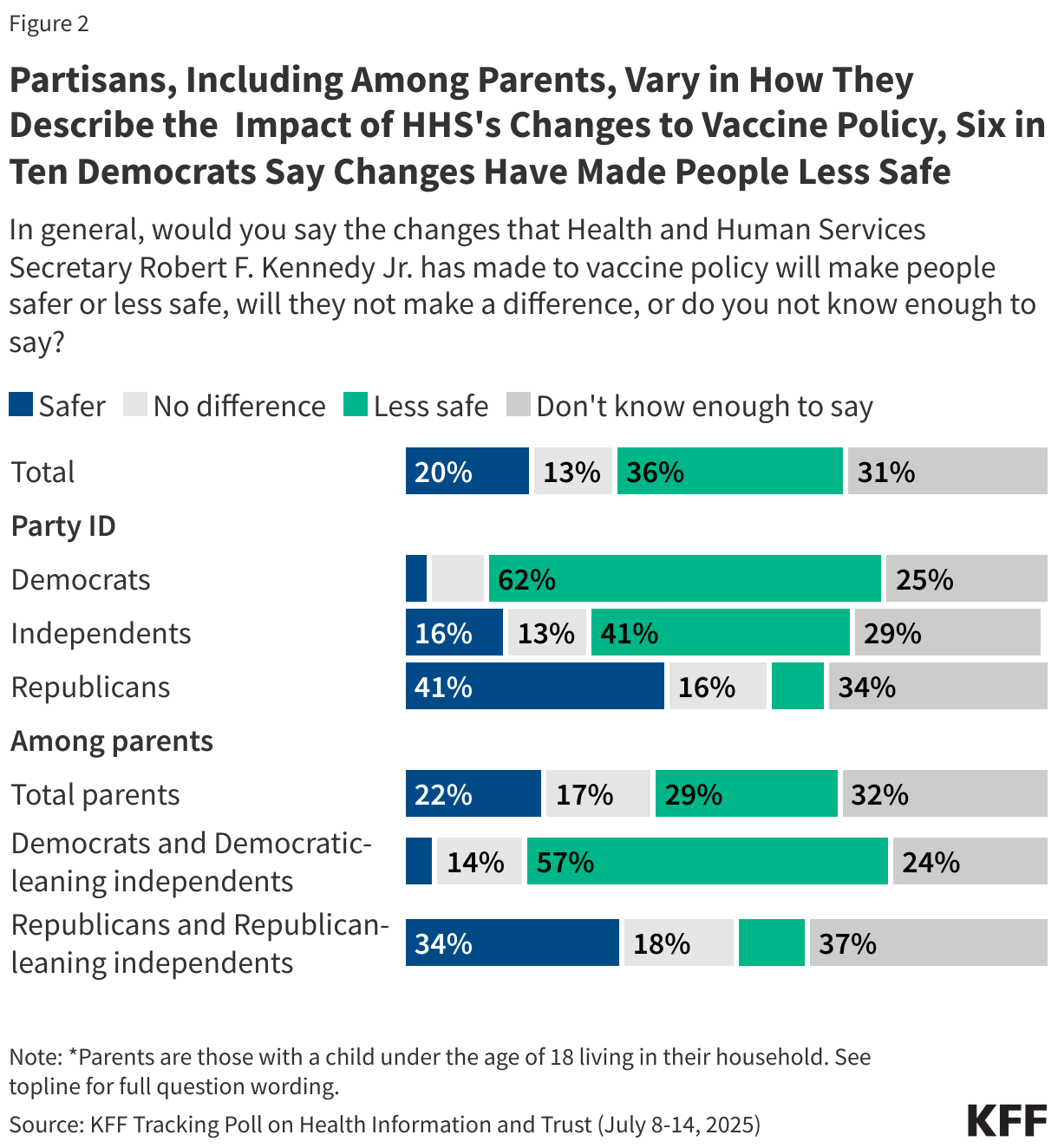
In light of the recent changes to policy, a third (36%) of the public say the changes that HHS Secretary Robert F. Kennedy Jr. has made to vaccine policy will make people less safe while a smaller share (20%) say the changes to vaccine policy will make people safer. Similar to overall awareness of the changes, a substantial share (31%) say they don’t know enough about the recent changes to say whether they will make people safer or less safe. An additional one in ten (13%) say the changes will not make any difference.
Once again, views are largely partisan, including among parents. Pluralities of Democrats and independents say the changes RFK Jr. has made to vaccine policy will make people less safe, including six in ten (62%) Democrats and four in ten (41%) independents. However, Republicans are split, with similar shares who say the policy makes people safer (41%) and that they don’t know enough to say (34%).
Parents are also split, with a third (32%) who don’t know enough to say and three in ten (29%) who say these changes will make people less safe. Another quarter (22%) of parents say it’ll make people safer, while one in six (17%) say it won’t make a difference. Parents who are Democrats or Democratic-leaning independents are more likely to say the changes will make people less safe, while Republican-leaning parents are more likely to say the changes will make people safer.

No comments:
Post a Comment
Note: Only a member of this blog may post a comment.