Veeva Systems Inc. (NYSE:VEEV) presented its Q2 2026 financial results on August 27, 2025, showcasing continued strong performance with total revenue reaching $789 million, up 17% year-over-year. The company’s stock closed at $286.54, rising 2.61% on the day, and continued to climb 1.19% in after-hours trading, reflecting positive market reception to the results.
The quarterly performance builds on Veeva’s strong momentum from Q1, when the company surpassed analyst expectations and saw its stock surge by over 15%. The life sciences cloud software provider continues to demonstrate resilience and growth despite macroeconomic uncertainties in the healthcare sector.
Quarterly Performance Highlights
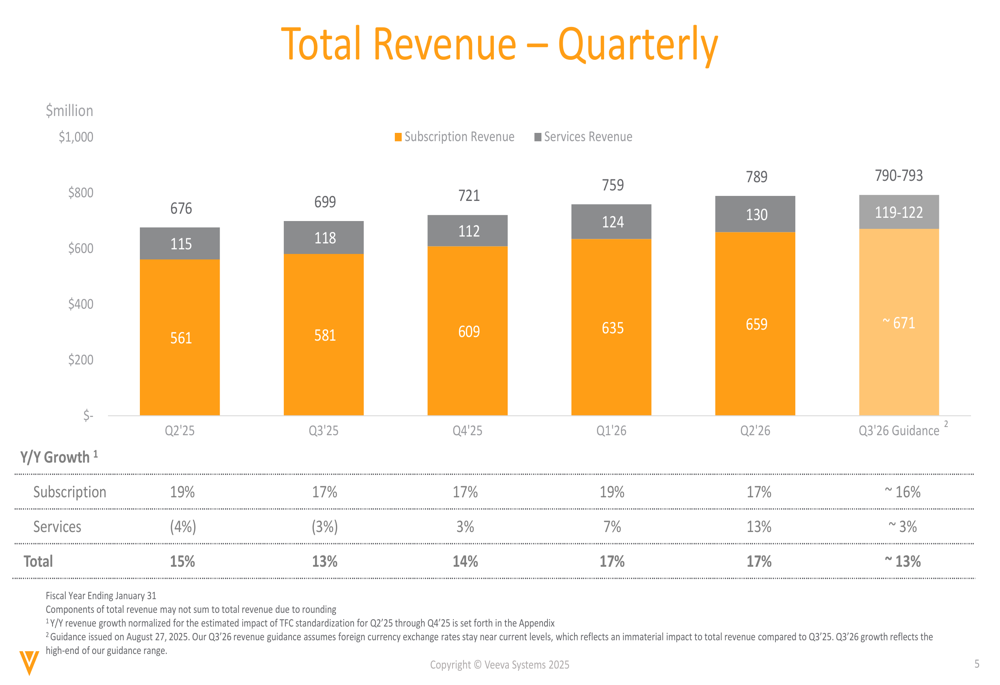
Veeva’s Q2 2026 results revealed robust growth across key financial metrics. Total revenue reached $789 million, representing a 17% increase from the $676 million reported in Q2 2025. This growth was primarily driven by subscription revenue, which grew 18% year-over-year to $659 million, while services revenue increased by 13% to $130 million.
As shown in the following chart of quarterly revenue:
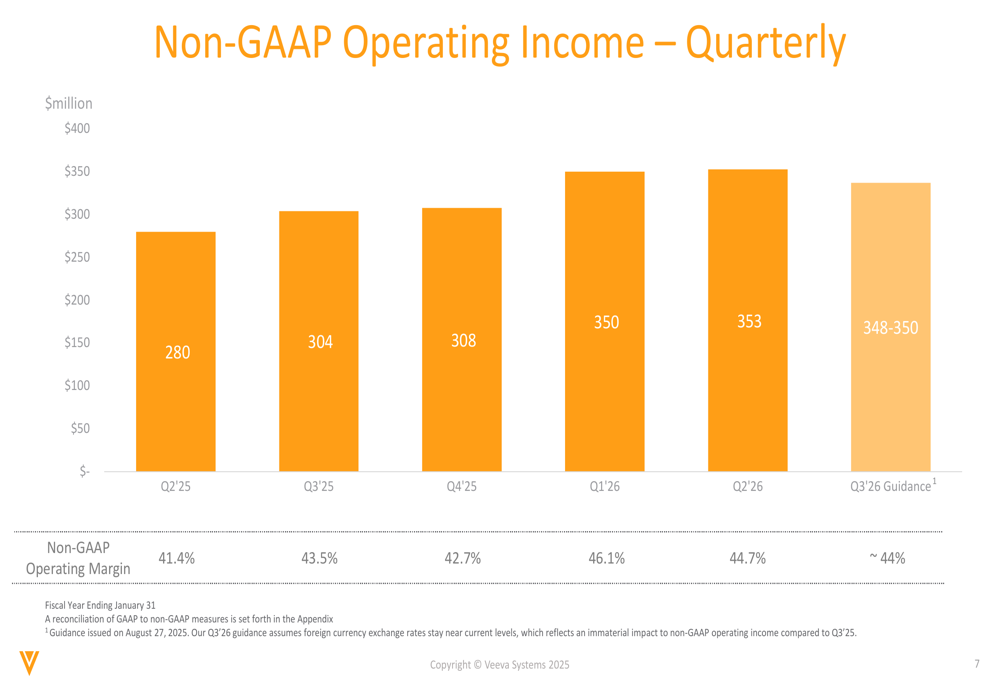
The company’s profitability metrics showed significant improvement as well. Non-GAAP operating income for Q2 2026 reached $353 million, up 26% from $280 million in the same period last year. This resulted in a non-GAAP operating margin of 44.7%, an impressive expansion from 41.4% in Q2 2025.
The quarterly operating income trend demonstrates Veeva’s ability to scale efficiently:
Detailed Financial Analysis
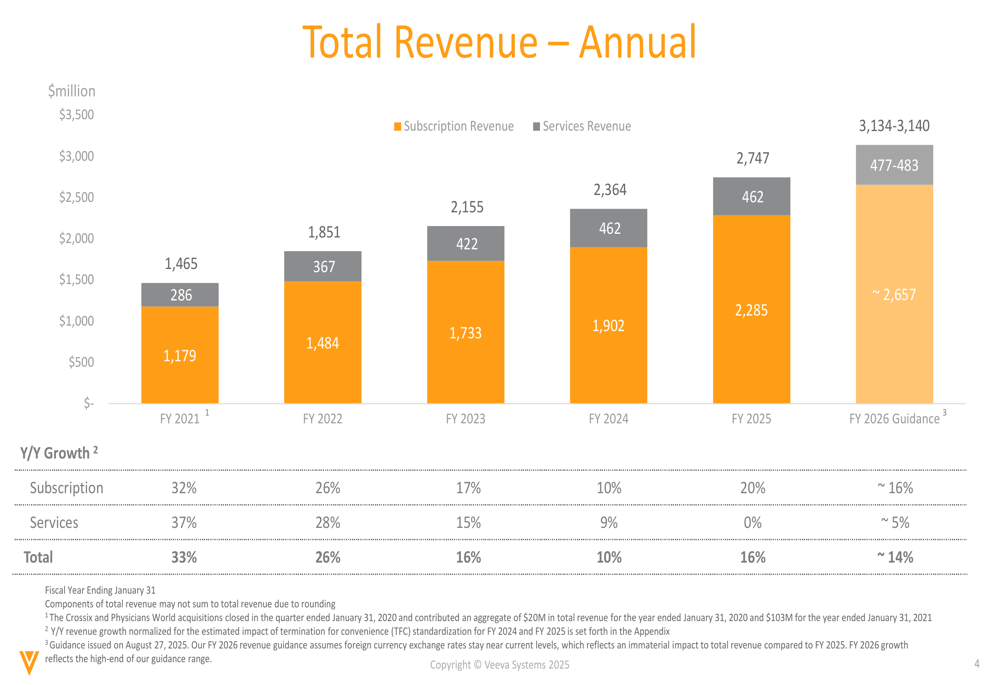
Looking at Veeva’s longer-term performance, the company has maintained consistent growth in annual revenue over the past several years. From FY 2021 to the FY 2026 guidance, total revenue is projected to grow from $1.47 billion to approximately $3.14 billion, representing a compound annual growth rate of over 16%.
The following chart illustrates this sustained revenue growth trajectory:
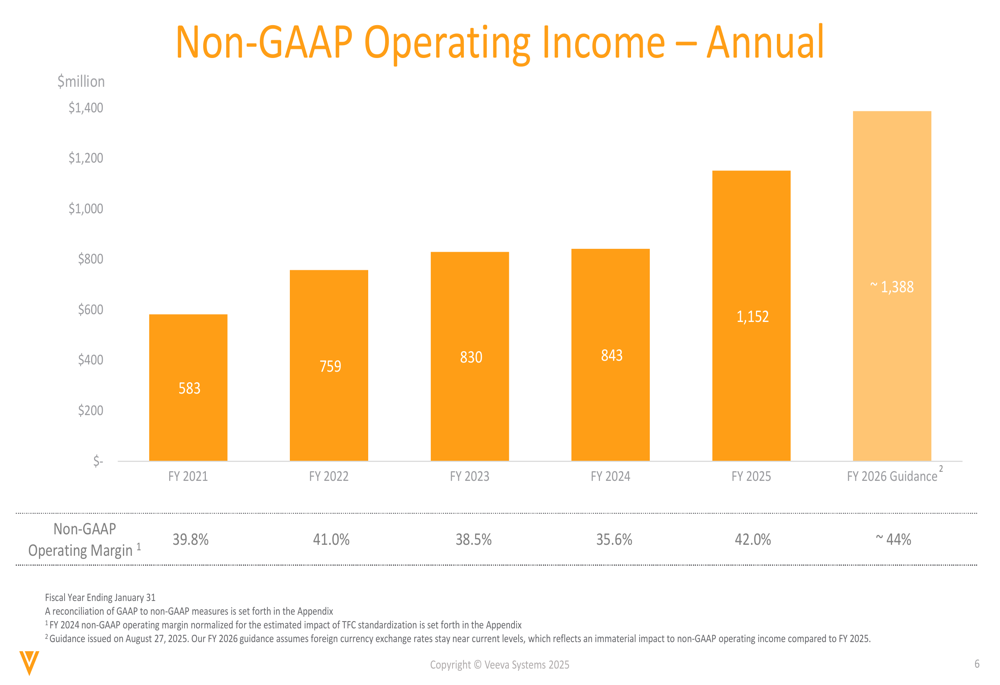
Similarly, Veeva’s non-GAAP operating income has shown strong growth, expected to reach approximately $1.39 billion in FY 2026, up from $583 million in FY 2021. This represents an improvement in operating margin from 39.8% to around 44% over this period.
The annual operating income trend demonstrates the company’s increasing profitability:
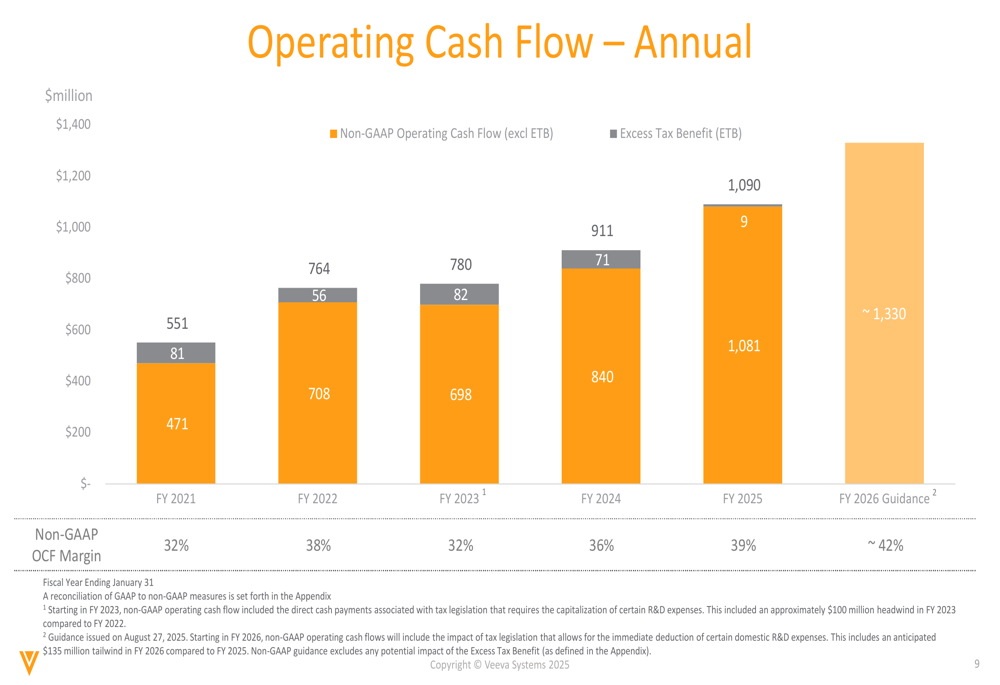
Cash flow generation has also been impressive. Non-GAAP operating cash flow is projected to reach approximately $1.33 billion in FY 2026, representing a margin of about 42%, up from 32% in FY 2021. This improvement reflects Veeva’s efficient business model and strong customer relationships.
The following chart shows the company’s cash flow performance:
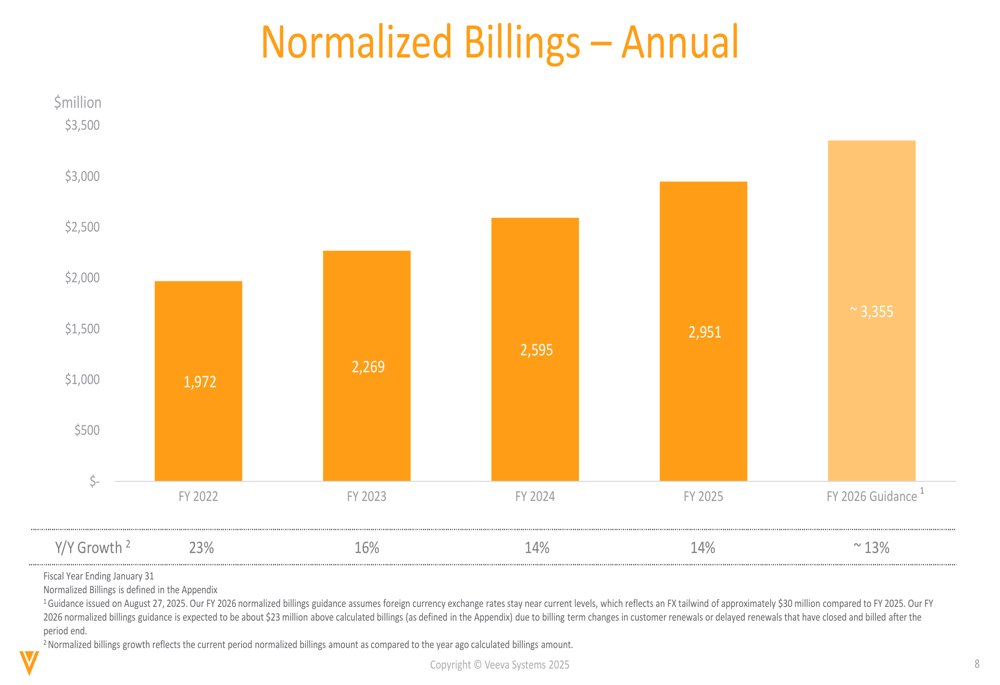
Normalized billings, an important forward-looking indicator of business momentum, are expected to reach approximately $3.36 billion in FY 2026, representing about 13% year-over-year growth.
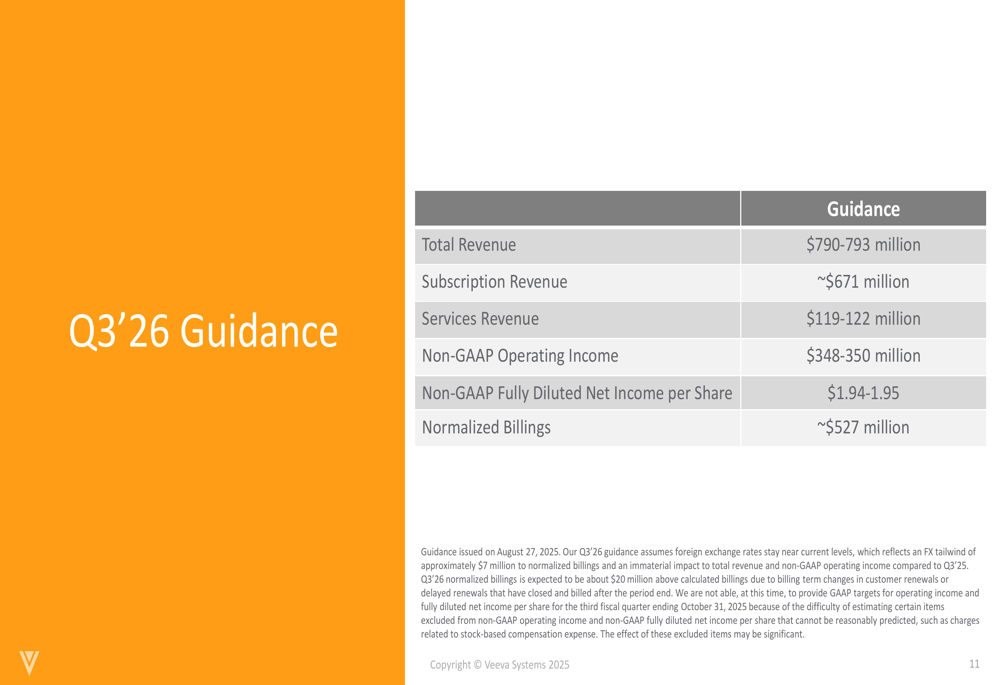
Veeva provided comprehensive guidance for both the upcoming quarter (Q3 2026) and the full fiscal year 2026. For Q3, the company expects total revenue between $790-793 million, with subscription revenue of approximately $671 million and services revenue between $119-122 million. Non-GAAP operating income is projected to be between $348-350 million, maintaining the strong 44% operating margin.
The detailed Q3 2026 guidance is presented below:
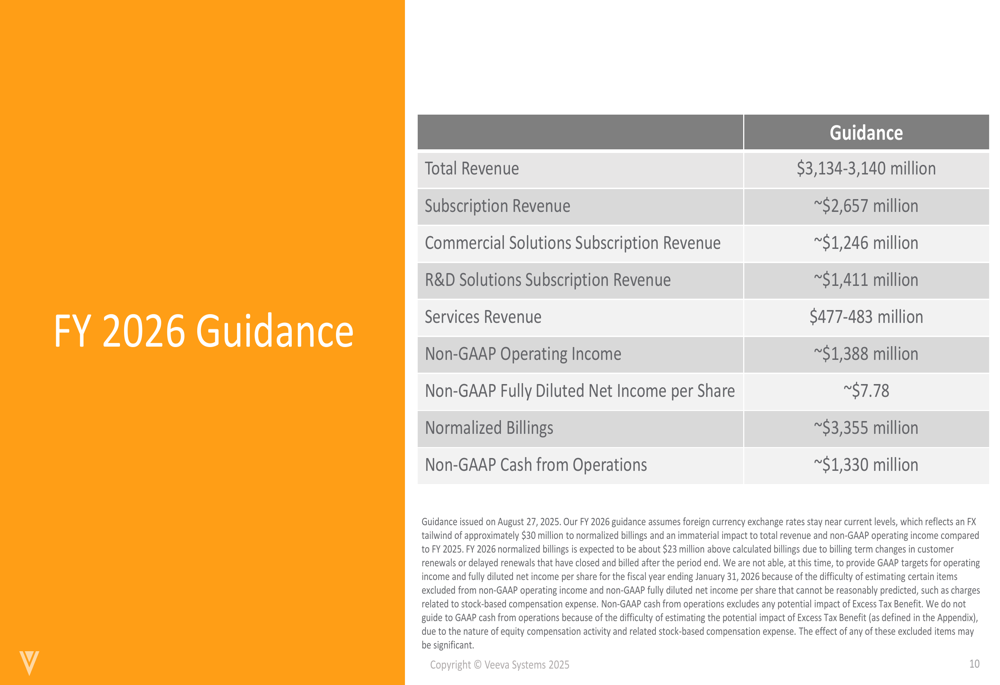
For the full fiscal year 2026, Veeva expects total revenue between $3,134-3,140 million, representing approximately 14% year-over-year growth. This includes subscription revenue of about $2,657 million, split between Commercial Solutions ($1,246 million) and R&D Solutions ($1,411 million). Non-GAAP operating income is projected to be approximately $1,388 million, with non-GAAP earnings per share of around $7.78.
The comprehensive FY 2026 guidance is shown in the following table:
Strategic Initiatives
An important strategic change highlighted in the presentation is Veeva’s standardization of Termination for Convenience (TFC) rights for customers with multi-year ramping deals. This change, implemented as of February 1, 2023, reflects the company’s shift toward longer contract durations.
While this accounting change affects the timing of revenue recognition, Veeva emphasized that it does not impact cash flows, billings, or the expected total revenue from multi-year deals. The company provided normalized growth rates to help investors understand the underlying business momentum without the effects of this accounting change.
This strategic evolution in contract structure demonstrates Veeva’s confidence in its product offerings and customer relationships, as it increasingly secures longer-term commitments from clients. The standardization also provides more consistency in how customer contracts are structured and recognized, potentially reducing complexity for both Veeva and its customers.
Conclusion
Veeva Systems’ Q2 2026 results demonstrate continued strong execution and financial discipline. With 17% revenue growth, expanding margins, and robust cash flow generation, the company appears well-positioned to maintain its leadership in providing cloud software solutions to the life sciences industry.
The positive market reaction to these results, coming after the strong performance in Q1 2026, suggests investors are confident in Veeva’s ability to deliver on its growth targets and financial projections for the remainder of fiscal year 2026 and beyond.
Full presentation:

No comments:
Post a Comment
Note: Only a member of this blog may post a comment.