Search This Blog

Wednesday, May 30, 2018

Growth hormone might completely transform treatment for stroke survivors


Less fatigue and better recovery of cognitive abilities such as learning and memory. These may be the results of growth hormone treatment after a stroke, an experimental study of mice published in the journal Stroke suggests.
“We hope that this work can pave the way for clinical studies involving the use of human growth hormone as treatment in the rehabilitation phase after a stroke,” says Jorgen Isgaard, professor of endocrinology at Sahlgrenska Academy, University of Gothenburg, Swden, who also serves as a professor at the University of Newcastle, Australia.
Treatment and rehabilitation after a stroke is a challenge, both for the victims and those around them. Recovery often involves a long and difficult process to repair the speech function, memory, the ability to think and concentrate and more. Worry, anxiety and severe fatigue are also common among those who have survived a stroke.
The current study is based on research conducted in collaboration between the universities of Gothenburg and Newcastle. The results show a link between growth hormone and improved cognition after a stroke as well as the possible mechanisms that may be responsible.
The fact that growth hormone generally has positive effects on cognition after brain damage has been found in previous studies. On the other hand, this is the first time the effect of growth hormone is being tested after a stroke, and the results are regarded as being very positive.
The mice in the study, all with induced strokes, were treated with either an infusion of growth hormone or with placebo for four weeks. In the last week of treatment, they were tested individually in separate cages with touch screens.
The animals were exposed to visual symbols in different combinations in which a correct pressure with a paw on the screen gave a reward in the form of a sugar solution. The mice that received the growth hormone performed correctly in 8 out of 10 cases, compared with 6 out of 10 for the control group. After conclusion of the experiments, researchers also analyzed a number of growth factors and biomarkers in the injured area of the brain.
“The most important new finding is that growth hormone improves cognition after a stroke compared with controls. If this finding holds true for humans, it can lead to a breakthrough in terms of treatment that facilitates rehabilitation and quality of life after a stroke,” says Jorgen Isgaard.
Growth hormone was also found to promote plasticity in the brain. The treatment led to higher levels of markers that reflect, among other things, the formation of new blood vessels, repair of nerve damage and reduced loss of brain tissue compared to controls.
Now researchers hope to secure more funding to begin clinical trials and examine whether growth hormone treatment can also be successful if some time has passed after the onset of a stroke.
“This has the potential to completely transform the treatment of people who survive a stroke,” says Jorgen Isgaard.

Researchers uncover the cause of rheumatoid arthritis

A team of researchers led by Osaka University have identified the cellular network involved in initiating and maintaining rheumatoid arthritis.
Credit: sciencepics/Shutterstock.com
The researchers suggest that this network can be targeted using a novel immunotherapeutic approach that will reduce joint inflammation.
In a mouse model of the disease, the team found out how Th17 cells interact with other cells at the site of inflammation to influence the production of inflammatory molecules called cytokines.
Chronic inflammatory disorders such as the autoimmune disease rheumatoid arthritis involve the action of various cytokines produced by the immune system. One such cytokine is IL-17, which is produced by TH17 cells.
Although TH17 cells are known for the role they play in autoimmune disease, researchers have been unclear on how they control other inflammatory cells.
As reported in the journal Immunity, Keiji Hirota and colleagues have now shown that the inflammatory cytokine GM-CSF is essential for the development of arthritis in mice.
The team found that GM-CSF produced by both stromal cells in the connective tissue and T cells contributed to joint inflammation in the animals, but only stromal cell-derived GM-CSF was required to initiate arthritis.
“We also showed that stromal cells secreted GM-CSF in response to stimulation by IL-17 from inflammatory Th17 cells,” says Hirota.
In addition, the study found that GM-CSF was secreted by a group of innate immune cells, the cells involved in non-specific defense mechanisms.
These cells expanded in number within inflamed joints in response to the production of IL-17 by Th17 cells and other inflammatory cytokines. This contributed to the development and maintenance of rheumatoid arthritis in the mice.
Our findings outline an inflammatory network controlled by autoimmune Th17 cells and involving stromal cells and innate immune cells, which leads to the onset and development of autoimmune arthritis.”
Shimon Sakaguchi, Co-Author
When the researchers removed the cells that produce GM-CSF from the joint lining (synovium), they observed a significant reduction in the severity of arthritis.
“This suggests the usefulness of developing such a novel immunotherapeutic approach that targets the cellular network to reduce chronic joint inflammation,” concludes Sakaguchi.

LivaNova comments on reconsideration of its coverage for therapy


LivaNova PLC issued a statement in regard to the U.S. Centers for Medicare & Medicaid Services’ publication of a tracking sheet to reconsider its National Coverage Determination for the Company’s Vagus Nerve Stimulation Therapy System for Treatment-Resistant Depression: LivaNova has been engaged with CMS on this important issue and submitted a letter to CMS requesting a formal reconsideration of the NCD for VNS Therapy for patients with TRD. The Company is encouraged that CMS has taken this initial step, which may provide access to this important therapy for TRD that has been a Medicare non-covered indication for more than a decade. A change in the Medicare coverage status of VNS Therapy for TRD that ensures adequate patient access to this important therapy would be a positive outcome for patients and physicians. The posting of the National Coverage Analysis tracking sheet has opened the 30-day public comment period. Interested parties may comment on the NCA tracking sheet until June 29 as CMS brings greater attention to this important public health issue. Over the last decade, a significant body of new evidence has emerged showing that the addition of VNS Therapy is effective in reducing symptoms in patients with TRD. We look forward to working with CMS as they consider a change in Medicare coverage

AbbVie cut by Credit Suisse on competitive concerns


AbbVie Inc ABBV 3.56%‘s stock is up 51 percent year-over-year, but its lifeblood may be draining.

The Rating

Credit Suisse analysts Vamil Divan and Michael Morabito downgraded AbbVie to Underperform and lowered their price target from $104 to $89.

The Thesis

The analysts attribute AbbVie’s run to Humira legal settlements and tax reform coupled with high pipeline expectations.
“The first two points have played out but we see pipeline enthusiasm now being stretched, at best limiting room for further upside over the next 12 months,” Divan and Morabito wrote in a note.
They identify long-term fundamental concerns, particularly with emerging competition limiting Humira’s longevity.
The fourth-quarter entry of biosimilars in Europe is seen to catalyze “rapid erosion” of Humira sales, while U.S. earnings are to be stunted by impending biosimilar competition, decreased ability for AbbVie to increase prices, the impact of copay accumulator programs, and action to work around “rebate traps” ahead of rival emergence.

FDA OKs First Artificial Iris


The US Food and Drug Administration (FDA) has approved the first artificial iris for use in adults and children with congenital aniridia or iris defects due to other reasons or conditions, such as albinism, traumatic injury or surgical removal due to melanoma.
The CustomFlex Artificial Iris (HumanOptics AG) is a surgically implanted device made of thin, foldable medical-grade silicone and is custom-sized and colored for each individual patient. The prosthetic iris is held in place by the anatomical structures of the eye or, if needed, by sutures.
“Patients with iris defects may experience severe vision problems, as well as dissatisfaction with the appearance of their eye,” Malvina Eydelman, MD, director of the Division of Ophthalmic, and Ear, Nose and Throat Devices at the FDA’s Center for Devices and Radiological Health, said in a news release.
“Today’s approval of the first artificial iris provides a novel method to treat iris defects that reduces sensitivity to bright light and glare. It also improves the cosmetic appearance of the eye in patients with aniridia,” said Eydelman.
Congenital aniridia, a rare genetic disorder in which the iris is completely or partially absent, affects about 1 in 50,000 to 100,000 people in the United States.
The safety and effectiveness of the CustomFlex Artificial Iris was shown primarily in a non-randomized clinical trial of 389 adult and pediatric patients with aniridia or other iris defects.
More than 70% of patients reported a significant decrease in light sensitivity and glare as well as an improvement in health-related quality of life following implantation of the device. In addition, 94% of patients were satisfied with the artificial iris’ appearance, according to the FDA.
The study showed low rates of adverse events associated with the device and surgical procedure.
Complications associated with the CustomFlex Artificial Iris included device movement or dislocation, strands of device fiber in the eye, increased intraocular pressure, iritis, adhesion of the iris to the cornea or lens, and the need for secondary surgery to reposition, remove or replace the device.
Complications associated with the implant procedure included increased intraocular pressure, blood leakage in the eye, cystoid macular edema, secondary surgery, corneal swelling, iritis, and retinal detachment.
The CustomFlex Artificial Iris should not be used in eyes with any of the following conditions: uncontrolled or severe chronic uveitis, microphthalmus, untreated retinal detachment, untreated chronic glaucoma, cataract caused by rubella virus, rubeosis, certain kinds of damaged blood vessels in the retina, and intraocular infections. It is also contraindicated for patients who are pregnant.
The CustomFlex Artificial Iris had a breakthrough device designation and was approved through a premarket approval application (PMA), which is the most stringent type of device marketing application and generally required for high-risk devices.

Nasal ‘Contact Lens’ May Help in Fight Against Obesity


A soft device inserted in the nose to cut an individual’s ability to smell may lead to significant reduction in body weight and a loss of appetite for fattening foods, according to the results of a pilot study presented here at the European Congress on Obesity (ECO) 2018.
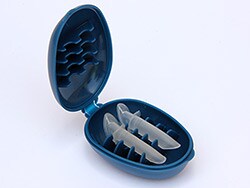
The device, which will be marketed under the name NozNoz (Beck Medical), is a wearable nasal insert that inhibits an individual’s sense of smell without affecting the ability to breath.
It is designed to fit the anatomy of the nose and act as a physical barrier, changing airflow in the nose by directing it into the lower respiratory tract and thus bypassing the olfactory system.
Likened to a nasal “contact lens,” the device is designed to be worn up to 12 hours a day and then disposed of after 2 weeks. It will be marketed as a wellness, not medical, device and will be available direct to consumers.
In the current study of 65 obese adults, researchers found that those who wore the device while eating a hypocaloric diet had significant reductions in weight and body mass index (BMI) compared with controls. In addition, they also significantly reduced their consumption of sweet foods and beverages and showed a reduction in insulin levels.
Speaking at a press conference, study presenter Dror Dicker, MD, Hasharon Hospital, Rabin Medical Center, Petah Tikva, Israel, said that the device “is one of the solutions we can use” to help combat obesity.
He added: “It’s not a medication, it’s very easy to use, and it helps the lifestyle intervention to lose weight and not to regain [it].”
Session co-chair Gabriella Segal Lieberman, MD, head of the Israeli Center for Weight Management at the Sheba Medical Center, Tel HaShomer, Ramat Gan, Israel, who was not involved in the study, told Medscape Medical News that “olfaction is important in weight management.”
She said, “It’s much more important in rodents than it is humans beings, but I think it’s important in human beings and it’s interesting to explore that field.”  However, she pointed out that the control in the trial, which consisted of daily saline drops in the nose, “was not really a control group…and I was wondering if just sticking something up your nose wouldn’t affect things other than smelling.”
Segal Lieberman also cautioned against overinterpreting the findings. “The bottom line is important. If you lose weight with a device and lose less weight without it, that’s impressive in itself…. But if you’re talking about mechanisms and you’re trying to imply that the mechanism is via affecting the olfactory system, I’m not sure that this study is really proving that. It’s more like a proof of concept.”

Benefit Only in Younger Patients

During his presentation, Dicker explained that addressing obesity via olfaction is plausible given previous data. For example, studies have shown that food odors and an individual’s sense of smell can significantly influence how much they eat and their dietary preference. Moreover, olfaction is linked to hormonal and peptide expression, while leptin, insulin, and ghrelin levels have affected olfactory sensitivity.
Dicker also pointed out that being overweight or obese has been linked to altered sensitivity to smells and higher appetite stimulation upon exposure to food odors.
The researchers therefore sought to determine whether using the nasal insert could not only reduce an individual’s sense of smell but also reduce their body weight, alter their dietary preferences, and improve metabolic dysfunction.
They recruited individuals aged 18 to 65 years who had a BMI of 30 to 43 kg/m2. Participants were excluded if they were pregnant or had diabetes, high blood pressure, thyroid dysfunction, or other medical conditions.
After a brief run-in period, the participants were randomly assigned to the device group or the control group, who put saline drops in their nose. Participants in the device group were instructed to wear the nasal device in both nostrils every day for 5 to 12 hours a day.
Both groups were assigned to a hypocaloric diet, which reduced their intake by 500 kcal per day, and were required to keep a food diary. Participants also completed an eating preferences and habits questionnaire, in addition to which blood samples were taken at baseline and at the final visit, from which cholesterol, triglyceride, glucose, and insulin levels were determined. The researchers also used the samples to calculate insulin resistance by using homeostatic model assessment.
The device and control groups were well matched, with a mean baseline BMI of approximately 36 kg/m2 and a mean age of 50 to 52 years. Fifty-seven percent of the participants were male.
A total of 65 individuals competed the study, including 37 in the device group and 28 in the control group. The nasal device significantly decreased individuals’ ability to smell (P < .001), with no difference in change in olfaction among those in the control group.
Overall, both groups lost weight during the study, with no significant difference between the two groups after 14 weeks, at a mean weight reduction of 6.6% in the device group and 5.65% in the control group.
However, Dicker pointed out that previous studies have shown that olfaction declines with age, typically starting around 50 years of age. When the researchers restricted their analysis to the 29 participants age 50 years or younger, they found that the device was associated with significantly greater weight loss (7.7% vs 4.0%; < .01).
These changes were accompanied by significant reductions in BMI among individuals aged 50 years or younger, from a mean of 35.9 kg/mto 33.1 kg/m2in the device group vs 36.5 kg/mto 35.0 kg/m2 in the control group (< .01).
Surprisingly, the team saw that, across all ages, the device was associated with significantly less sugar consumption (= .015), less artificial sweetener consumption (P = .02), and reduced consumption of sweet beverages (= .001) compared with the control group.
In each comparison, the decrease was greater among individuals age 50 years or younger using the device, who also consumed significantly fewer alcoholic beverages than control participants (= .000).
Participants in the device group also had significant reductions in insulin levels over baseline (= .015), which was not seen in the control group. There was a trend for a difference in insulin change between the two groups (= .08).
Dicker told the press conference that they are not sure how exactly the device works, “but we just opened a window to an area that wasn’t really researched.” He said that they would like to follow up with functional MRI studies, but they hypothesize that, by blunting olfaction, they are blunting the effect of hormones on appetite.
Dicker told Medscape Medical News that the device was highly acceptable to patients.  He said it was “easy to persuade” the participants to try the device “because obese patients want to lose weight, but we had a percentage of dropout like every other obesity trial [of] around 50%”.
However, he pointed out that only 16% dropped out because of the device itself, with the remaining dropouts related to follow-up and visits.
Beck Medical Funded the study. Adva Beck is the entrepre­neur and main shareholder in Beck Medical Ltd. Elhanan Greenberg serves as advisory to Beck Medical, E.N.T Head and Neck Surgery Specialist, and is a shareholder.
European Congress on Obesity (ECO) 2018. Abstract O8.2. Presented May 25, 2018.

FDA clears Pfizer’s Xeljanz for ulcerative colitis


The U.S. Food and Drug Administration said on Wednesday that it had approved Pfizer Inc’s drug, Xeljanz, to treat adults with moderate-to-severe active ulcerative colitis.
The effectiveness of Xeljanz in treating ulcerative colitis was shown in three controlled clinical trials, including two trials that showed the drug caused disease remission in about 17-18 percent of the patients.
The drug is already approved by the FDA to treat rheumatoid arthritis and psoriatic arthritis.
Xeljanz is expected to bring in sales of $2.16 billion in 2019, according to Thomson Reuters I/B/E/S. It had generated sales of $1.35 billion in 2017.
Ulcerative colitis is a chronic, inflammatory bowel disease that affects the colon and causes recurrent flares of abdominal pain and bloody diarrhea.
More than 900,000 people suffer from the disease in the United States, according to the FDA.