Search This Blog

Thursday, June 7, 2018

Translate Bio to Present Preclinical Cystic Fibrosis Therapy Data


 Translate Bio, a leading messenger RNA (mRNA) therapeutics company developing a new class of potentially transformative medicines to treat diseases caused by protein or gene dysfunction, today announced an oral presentation at the 41st Annual European Cystic Fibrosis Conference taking place in Belgrade, Serbia, from June 7-10, 2018.
Presentation Title: Development of a CFTR mRNA therapy capable of treating lung disease in all patients with cystic fibrosis
Date and Time: June 7, 2018 at 5:00 p.m. CET
Session title: Pharmacology and genetic tools for CF basic research correction
Presenting Author: Ann Barbier, MD, PhD, Chief Medical Officer
Abstract number: WS09.1
The full abstract can be found at https://www.ecfs.eu/belgrade2018.
About MRT5005
MRT5005 is the first clinical-stage mRNA product candidate designed to address the underlying cause of CF by delivering mRNA encoding fully functional cystic fibrosis transmembrane conductance regulator (CFTR) protein to the lung epithelial cells through nebulization. MRT5005 is being developed to treat all patients with CF, regardless of the underlying genetic mutation. In 2015, the FDA granted orphan drug designation to MRT5005 for the treatment of CF.
About Cystic Fibrosis
Cystic fibrosis is the most common fatal inherited disease in the United States, affecting more than 30,000 patients in the U.S. and more than 70,000 patients worldwide. CF is caused by genetic mutations that result in dysfunctional or absent CFTR protein. This defect causes mucus buildup in the lungs, pancreas and other organs. Mortality is primarily driven by a progressive decline in lung function. According to the Cystic Fibrosis Foundation, the median age at death for patients with CF was 29.6 years in 2016. There is no cure for CF. CFTR modulators that are currently marketed or in clinical development are effective only in patients with specific mutations, and patients still experience pulmonary exacerbations and a progressive decline in lung function, which represents a significant unmet need.
About Translate Bio
Translate Bio is a leading mRNA therapeutics company developing a new class of potentially transformative medicines to treat diseases caused by protein or gene dysfunction. The Company’s MRT platform is designed to develop product candidates that deliver mRNA carrying instructions to produce intracellular, transmembrane and secreted proteins for therapeutic benefit. The Company believes that its MRT platform is applicable to a broad range of diseases caused by insufficient protein production or where production of proteins can modify disease, including diseases that affect the lung, liver, eye, central nervous system, lymphatic system and circulatory system. The Company’s two lead programs are being developed as treatments for CF and ornithine transcarbamylase (OTC) deficiency. For more information about the Company, please visit www.translate.bio .

ArQule to Present Clinical Data for its Blood Cancer Inhibitor


ArQule, Inc. (Nasdaq: ARQL) today announced clinical data from the company-sponsored ARQ 531-101 Phase 1 dose escalation study in subjects with relapsed or refractory hematologic malignancies will be presented on June 15, 2018 at the EHA Congress in Stockholm, Sweden. ARQ 531 is an orally bioavailable, potent and reversible inhibitor of both wild type and C481S-mutant Bruton’s tyrosine kinase (BTK).
Presentation Details
Friday, June 15, 2018: Chronic lymphocytic leukemia and related disorders – Clinical
Title: A Phase 1 Dose Escalation Study of ARQ 531 in Selected Patients with Relapsed or Refractory Hematologic Malignancies
Location: Poster area
Time: 17:30-19:00 CET
Abstract Code: PF355
About BTK and ARQ 531
Bruton’s tyrosine kinase, BTK, is a therapeutic target that has been clinically proven to inhibit B-cell receptor signaling in blood cancers. ARQ 531 is an orally bioavailable, potent and reversible BTK inhibitor. Biochemical and cellular studies have shown that ARQ 531 inhibits both the wild type and C481S-mutant forms of BTK. The C481S mutation is a known resistance mechanism for first generation irreversible BTK inhibitors. In preclinical studies, ARQ 531 has demonstrated good oral bioavailability as well as favorable pharmacokinetic, pharmacodynamic and metabolic properties.

Cancer Diagnosis Linked to Elevated Risk for Diabetes


Cancer development was tied to an increased risk of later type 2 diabetes, South Korean researchers reported.
While this elevated risk was highest during the initial 2 years following a diagnosis of cancer, risk of type 2 diabetes persisted throughout the 10-year follow-up period (adjusted HR 1.35, 95% CI 1.26-1.45, P<0.001), according to Yul Hwangbo, MD, of Sungkyunkwan University in Seoul, and colleagues.
Among the large cohort of Korean individuals, the excess risk for diabetes development also varied according to cancer type — notably highest for pancreatic cancer, the group wrote in JAMA Oncology, but significant for eight other types as well:
  • Pancreatic: HR 5.15 (95% CI 3.32-7.99)
  • Kidney: HR 2.06 (95%CI 1.34-3.16)
  • Liver: HR 1.95 (95%CI 1.50-2.54)
  • Gallbladder: HR 1.79 (95%CI 1.08-2.98)
  • Lung: HR 1.74 (95% CI 1.34-2.24)
  • Blood: HR 1.61 (95%CI 1.07-2.43)
  • Breast: HR 1.60 (95%CI 1.27-2.01)
  • Stomach: HR 1.35 (95%CI 1.16-1.58)
  • Thyroid cancer: HR 1.33 (95% CI 1.12-1.59)
“The increased risk of diabetes after cancer may be related to cancer-management interventions,” the authors explained, adding how corticosteroid use may be one possible explanation for this association.
“Corticosteroid use is associated with hyperglycemia and with diabetes development, a process mediated primarily by reduced insulin sensitivity,” they wrote, highlighting that corticosteroid use is commonly used throughout cancer treatment including in “the prevention of chemotherapy-induced emesis and hypersensitivity, the management of brain metastasis and metastatic spinal cord compression, the control of hematologic cancers, and the reduction of cancer-related fatigue, and improvement of quality of life.”
Other possible mechanisms behind this association may be due to exposure to chemotherapy agents, such as L-asparaginase, total body irradiation, and immunosuppressive agents like calcineurin inhibitors, and tamoxifen, which may cause hyperglycemia and subsequent risk for type 2 diabetes.
This study included a nationally representative group of around 500,000 adults from South Korea appearing in the National Health Insurance Service-National Sample Cohort. Among these individuals — all of whom were free from cancer and type 2 diabetes at baseline — 15,130 developed cancer and 26,610 developed diabetes during the 10-year follow-up.
Although most cancer types were associated with an increased risk for type 2 diabetes development, some cancers types were not, including uterine, ovarian, colorectal, head and neck, esophageal, and prostate cancers. The development of testicular and brain cancers also trended towards a slightly increased risk for diabetes, however these associations were not statistically significant.
Hwangbo’s group also reported that there was no significant association between the amount of annual medical visits, including inpatient and outpatient visits, with the risk for diabetes after cancer.
Because information on cancer and diabetes diagnoses were only based on claim information, the authors warned that diabetes cases may have been underestimated. They also did not obtain information on cancer stage.
In addition, people with cancer have more frequent contact with healthcare providers, and therefore a surveillance bias may be at play, but the authors excluded diabetes cases that occurred within the first 31 day following a cancer diagnosis to help account for this.
“Physicians should remember that patients with cancer develop other clinical problems, such as diabetes,with higher frequency than individuals without cancer, and should consider routine diabetes screening in these patients,” the authors wrote.
The study was supported by the Korean Ministry of Health and Welfare.
Hwangbo and co-authors disclosed no relevant relationships with industry.

P&G: Activist Peltz says his reorg plan under ‘very serious consideration’

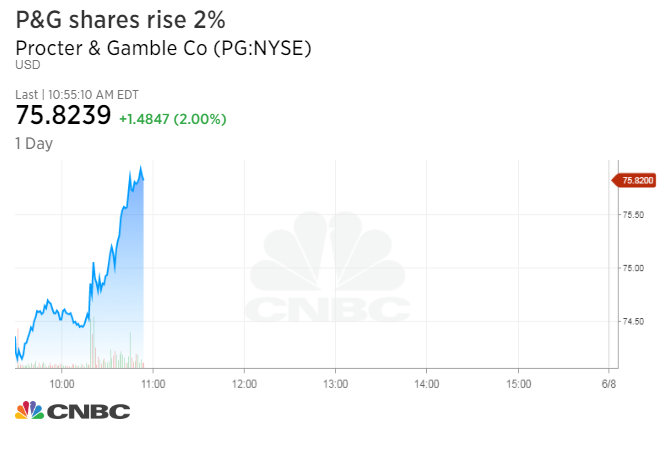
  • Shares of Procter & Gamble rise 2 percent Thursday after Trian Partners’ Nelson Peltz indicates his proposal for reorganizing the company is gaining traction.
  • “It’s really under very serious consideration,” Peltz says of Trian’s white paper, which describes how P&G could improve its business.
  • Peltz is speaking Thursday at The Deal conference in New York City, run by CNBC’s “Mad Money” host Jim Cramer.
Nelson Peltz
Nelson Peltz
Shares of Procter & Gamble rose 2 percent Thursday after Trian Partners’ Nelson Peltz indicated his proposal for reorganizing the company was gaining traction.
“It’s really under very serious consideration,” Peltz said of Trian’s white paper, which describes how P&G could improve its business with measures such as reorganizing the company into three autonomous units, developing local brands and increasing external talent.
Peltz joined P&G’s board in March after a vigorous proxy fight last year that he initially lost by a narrow margin, before the consumer goods giant eventually agreed to appoint the activist to its board. He was speaking Thursday at The Deal conference in New York City, run by CNBC “Mad Money” host Jim Cramer.
Peltz said the board has been very welcoming since it’s clear shareholders don’t want business as usual. He added that his goal is to create an ownership mentality in P&G’s boardroom, and that the proposed structure calls for direct accountability, rather than the lack of responsibility prevalent in older, previously very successful companies.
Trian took a $3.5 billion stake in Procter & Gamble early last year.

FDA wants social media giants to help crack down on illegal opioid marketers


The FDA’s latest crackdown targets pharmacies hawking illegal opioids online. The agency issued warning letters this week to nine online pharmacies that run 53 websites selling drugs with suspect monikers like “Roxycodone” and “Tramadol Generic.”
Many of the websites shut down one day later, but at least one—OneStopPharma.org—was still operating Thursday morning.
While legitimate FDA-approved pharma opioid makers had long quit marketing to consumers and even doctors, the illegal online pill-pushing remains rampant. And the FDA is trying to enlist the online platforms that host or display ads from the fly-by-night pharmacies.
Facebook and Twitter are among the digital and social media companies FDA Commissioner Scott Gottlieb is pressuring for help. He has invited those companies, among others, to participate in its “FDA Online Opioid Summit” set for June 27.

“The internet is virtually awash in illegal narcotics, and we’re going to be taking new steps to work with legitimate internet firms to voluntarily crack down on these sales,” Gottlieb said in a statement announcing the crackdown on online marketers. The summit is aimed at finding “new ways to work collaboratively” with the social and tech companies “to address these issues.”
Purdue Pharma quit marketing its opioid drug Oxycontin to doctors earlier this year, while other opioid makers—including Endo, Teva, Allergan and Johnson & Johnson’s Janssen unit—had all stopped marketing opioids before Purdue’s announcement, with some backing off several years ago.

KaNDy’s menopause drug could be better than hormone replacement therapy


New women’s health biotech KaNDy Therapeutics—rumored to have attracted buyout interest from Allergan—has just reported data on its lead product that could enhance its allure.
The phase 1b/2a trial of NT-814 for the treatment of menopause symptoms has hit the mark, with reductions in the frequency and severity of hot flashes and night-time awakenings that suggest it could be an effective alternative to hormone replacement therapy.
NT-814 acts as a dual neurokinin-1,3 receptor antagonist and is thought to work by changing the activity of estrogen-sensitive neurons in the hypothalamus area of the brain, alleviating vasomotor symptoms (VMS) without having to administer hormones themselves.

While still undoubtedly of value to some women with VMS, HRT has fallen out of favor after being linked to an increased risk of breast cancer, heart disease, stroke and blood clots in the Women’s Health Initiative (WHI) study reported more than 15 years ago.  Later analyses pointed to a much better risk:benefit ratio for younger menopausal women (aged 50 to 59), but there is still resistance to go down the HRT route for VMS.
The problem is there is no real alternative to HRT available yet—although KaNDy thinks it is on course to address that with NKT-814, which will start a phase 2b trial later this year.
In the 76-patient phase 1b/2a trial, the frequency of VMS was cut by 62% from baseline compared to 24% with placebo in the first seven days, with the effect increasing to an 84% reduction for the drug versus 37% in the control group in week two.
That puts its efficacy on a par with historical data with HRT, which caused around a 75% reduction in hot flashes in a meta-analysis of clinical trials, but with a much quicker onset as HRT can take “weeks or months” to kick in, according to KanDy’s clinical advisor Richard Anderson, who is professor of reproductive science at the University of Edinburgh in Scotland.
By the second week, KaNDy’s drug also reduced the severity of hot flashes by 50% compared to 16% for placebo, and nighttime awakenings were cut 81% versus 32%, respectively.
“These are very promising results which suggest that NT-814, a novel once daily treatment taken orally, may offer women with debilitating symptoms of the menopause, a real alternative to…HRT,” said Professor Anderson.
Given the sheer scale of demand for ways to alleviate menopausal symptoms, the new results are a big boost for KaNDy, which was formed last year as a spin-out from U.K. biotech NeRRe Therapeutics—itself a spin-out from GlaxoSmithKline—and is led by Mary Kerr, Ph.D.
There’s speculation the results could also flush out more suitors for the company, along with Allergan’s rumored interest, amid what Kerr has said is a growing interest in women’s health by the drug industry.
Last year, Astellas agreed a $500 million upfront deal to buy Belgian biotech Ogeda on the strength of midstage data for its selective neurokinin-3 antagonist fezolinetant candidate on menopausal hot flashes, with another $300 million in the offing if the program meets clinical and regulatory milestones.
There have also been IPOs in recent months for endometriosis drug developer Myovant and ObsEva, a reproductive health specialist.

Gottlieb at BIO 2018: 40 Gene Therapy Approvals by 2022


Scott Gottlieb_Edi_Albert H Teich
Dr. Scott Gottlieb / Albert H. Teich / Shutterstock
As the 2018 BIO International Convention wraps up in Boston today, it kicked off with a fireside chat with Dr. Scott Gottlieb, Commissioner of the U.S. Food and Drug Administration (FDA)Gottlieb was interviewed by Jim Greenwood, president and chief executive officer of BIO.
In a wide-ranging discussion, Gottlieb said he expects the FDA to approve 40 gene therapies by 2022 and might see cures for diseases like sickle cell anemia within 10 years. He also noted that there are complexities in gene therapy that are related to product issues as compared to clinical issues, which is requiring the agency to approach approvals differently. Gottlieb indicated that agency will publish six guidance documents regarding gene therapies soon.
In terms of drug pricing, Gottlieb said there should be a balance between access and innovation.
Another hot topic they touched on was patient-focused reimbursement. This might be more appropriately called “pay-per-results,” and has been an area of interest in healthcare since at least 2011, if not longer. One example is Novartis Kymriah, which has a U.S. price tag of about $475,000 and a UK price tag of about $700,000. But Novartis has put into place a sort of “money-back guarantee,” where if patients do not respond to the treatment in the first month, Novartis will refund the money.
Gottlieb told Greenwood that the FDA is working on a formal structure to solicit patient input, which will allow the agency to develop a guidance framework.
And it seems like there can’t be any discussion of the drug industry these days without touching on the opioid epidemic. Gottlieb indicated he didn’t want a system that creates obstacles for patients who really do need opioids, but the agency is looking at getting tougher on online sales and working with reputable online sites. This would require the use of both civil and criminal functions on any new actions.
An individual in the audience asked what the clinically significant endpoint for a new drug that prevents addiction versus treating existing addiction would be. Gottlieb responded that it would qualify for breakthrough therapy designation and would receive a high level of attention from the agency’s reviewers. Also, clinical efficacy could be established with a small sampling of targeted patients.
As the day proceeds, Sue Desmond-Hellman of the Bill & Melinda Gates Foundation and Penny Heaton of the Gates MRI would have a fireside chat, and there will be a “start-up stadium” event titled, “Empowering the Cutting-Edge Companies of Tomorrow, Today.”
The afternoon’s Super Session is headlined, “Scientific American WorldVIEW: Biotechnology’s Promise in a Changing Landscape.”
In a statement, Penny Heaton said, “As we enter the last day of Convention programming, I feel more motivated than ever by the biotech industry’s sense of urgency in developing and delivering innovative, life-saving cures and vaccines. As an organization, we’re working to ensure that life-saving vaccines are developed for those who need it most. I’m especially looking forward to advancing the discussion about how we leverage translational medicine, during my fireside chat today.”