Search This Blog

Thursday, August 16, 2018

Bayer Brings No Relief to Einhorn


A top stock pick of hedge-fund manager David Einhorn was stung this week by the loss of a crucial case in California, the latest potential setback for the billionaire investor.
Shares in Bayer AG fell sharply on Monday after Monsanto Co. — which the German chemical company recently acquired — was ordered to pay $289.2 million in a landmark lawsuit over whether exposure to two of its weed killers caused cancer. The ruling by a California state jury on Friday found that Monsanto’s Roundup and Ranger Pro products presented a “substantial danger” to consumers, and that the St. Louis-based company knew — or should have known — the potential risks they posed.
Bayer is among the top recent holdings at Mr. Einhorn’s Greenlight Capital, according to a client update reviewed by The Wall Street Journal.
Bayer and four other holdings — Brighthouse Financial Inc., General Motors Co., gold and Green Brick Partners Inc. — were Mr. Einhorn’s top five positions standing to benefit from a rise in price, according to the document.
Greenlight Capital has had a rough few years, with investors pulling money from the firm. A fund that roughly tracks Greenlight’s flagship strategy fell 18.2% this year through the end of July, according to the recent update sent to clients.
“Over the past three years, our results have been far worse than we could have imagined, and it’s been a bull market to boot,” Mr. Einhorn wrote in a separate recent letter. “Right now the market is telling us we are wrong, wrong, wrong about nearly everything.”
Separately Tuesday, Greenlight released its latest 13-F filing, which disclosed the firm’s positions at the end of the second quarter.
In the filing, Greenlight Capital said it slashed its positions in Twitter Inc. and Apple Inc. from the end of the first to second quarter of this year. Both technology stocks have risen this year. Greenlight’s current positions couldn’t be learned.
The firm dropped its Apple stake by about 77%, from 628,100 shares at the end of the first quarter to 142,100 at the end of the second quarter, the filings show.
The firm slashed its Twitter position by about 36%, from about 2.5 million shares at the end of the first quarter to about 1.6 million shares at the end of the second quarter, the filings show.
Bayer, whose shares are down about 10% since last Friday, said Monday that the jury’s verdict was “at odds with the weight of scientific evidence, decades of real world experience and the conclusions of regulators around the world.” It also noted that the verdict remains subject to post-trial motions and an appeal.
Mr. Einhorn has been pushing a bet that shares in Tesla Inc., the carmaker run by Elon Musk, will fall. Tesla shares rose last week after Mr. Musk tweeted that he had “financing secured” for a deal to take Tesla private at $420 a share. In the last week, shares have fallen back and recently traded at about $354.
The value of an investment in Mr. Einhorn’s main fund was down 11.3% at the end of 2017 from the end of 2014. The S&P 500 rose 38.3%, including dividends, in the same period. The average stock-focused hedge fund gained 18.3% in the period, according to HFR, a firm that tracks hedge funds.

Bayer to be ‘actively involved’ in Monsanto defense with integration


Bayer (BAYRY) announced this morning that the integration of Monsanto into the Bayer Group can begin following the completion on Thursday of the divestment by Bayer to BASF (BASFY) of certain Crop Science businesses with a total sales volume of around 2.2 billion euros. Bayer already became the sole owner of Monsanto Company on June 7, 2018. “One of the requirements of the U.S. Department of Justice was that Bayer and Monsanto remain separate companies and continue to operate separately until completion of these divestments to BASF, and that has now taken place,” the company said. Bayer added: “As regards the glyphosate verdict in California on August 10, 2018, Bayer believes that the jury’s decision is at odds with the weight of scientific evidence, decades of real world experience and the conclusions of regulators around the world that all confirm glyphosate is safe and does not cause non-Hodgkin’s lymphoma. The National Institutes of Health recently reaffirmed glyphosate does not cause cancer. The U.S. Environmental Protection Agency, the European Food Safety Authority, the European Chemicals Agency and other regulators around the world have also concluded that glyphosate can be used safely. The jury’s verdict is just the first step in this case, and it remains subject to post-trial motions in the trial court and to an appeal, as announced by Monsanto. As this case proceeds, Bayer believes courts ultimately will find that Monsanto and glyphosate were not responsible for Mr. Johnson’s illness. Due to the aforementioned requirements imposed by the U.S. Department of Justice, Bayer did not have access to detailed internal information at Monsanto. Under these conditions, Bayer was not permitted to influence matters relating to Monsanto’s business, and its ability to actively comment on them in detail was extremely limited. Today, however, Bayer also gains the ability to become actively involved in defense efforts in the glyphosate trials and any other legal disputes, such as potential claims for damages in connection with the product Dicamba.”

Big media companies want a piece of health care too


First, it was the tech giants. Apple Inc. APL, +7.41% with Apple Health. Alphabet Inc. GOOGL, -0.36% GOOG, -0.28% with Google Fit.
It was just a matter of time before traditional media companies decided they too wanted a piece of a market estimated by the Centers for Medicare and Medicaid Services to be worth more than $3 trillion.
Comcast Corp. CMCSA, +2.07% which already provides broadband and networking solutions to health-care organizations, has been looking to expand its reach in the health-care space for some time. The company first got involved through Comcast Ventures, its venture capital arm, and then began collaborating with health care organizations on small projects. In 2015, Comcast worked with Kaiser Permanente Northwest to help launch the managed care company’s now-defunct My Pregnancy app, and in 2017, the cable giant collaborated with the University of California Davis to produce a series of health and nutrition videos.
Now, Comcast is working on a 50/50 joint venture with Philadelphia-based health insurer Independence Health Group, the parent of Independence Blue Cross.
The plan is this: Create a patient-centered digital platform that leverages Independence’s health expertise and Comcast’s direct connections with almost 60 million residential clients. The platform should theoretically help people take better charge of their health by providing an easy way to communicate with their medical providers, review what they need to do before and after operations and more.
Comcast and Independence’s relationship goes back decades. Comcast has been one of Independence’s largest customers since 1993, and Independence has invested in Comcast’s Ventures arm in the past. The two companies began volleying the idea of creating a digital health platform back and forth a couple of years ago, according to Don Mathis, general manager of growth at Comcast NBCUniversal.
“In health care, we saw a massive market,” he said.

Thanks to cord cutting, many media companies are concerned about growth, said Sri Velamoor, a partner at McKinsey who specializes in the digital health space. “These companies are looking at all of their assets and thinking: ‘How can we re-leverage this to drive growth in adjacent markets where our ability to engage consumers in their homes is a premium?’” he said.

Comcast isn’t the first media company to see potential in the health-care space. Cox Communications Inc. has also been exploring the space for several years. In 2015, Cox announced it was partnering with Cleveland Clinic to launch Vivre Health, a joint venture that would provide in-home health-care services via broadband. That same year, Cox acquired telehealth company Trapollo.
Vivre was supposed to help the cable and broadband company expand its reach into health care, but Cox eventually pulled out. “It was a mutual decision to move in a different direction,” a Cox spokesman told MarketWatch.
He said the company is focused on growing Trapollo, which provides remote patient monitoring services, something Mathis said Comcast is also considering doing in the future.
Comcast and Independence are still considering several models for generating income from their joint venture. A platform that helps people manage their health issues should cut costs in the long run, which should draw risk-bearing health plans, insurers and providers in as partners, said Brian Lobley, president of commercial and consumer markets at Independence Blue Cross.
But many hospitals and health systems already provide online portals patients can use to access their records and message their health-care providers, said Erik Gordon, clinical assistant professor at University of Michigan’s Ross School of Business. He is doubtful about big media’s ability to bring anything exciting or new to the space. Comcast and Cox are also looking at an increasingly crowded and competitive digital health space, he said.
“I probably get pitches from four or five startups a week,” said Gordon.

Despite the volume of digital health initiatives, there’s still no dominant player in the space, likely due to the complexities and many moving parts of the American health-care system, Gordon said.
In some ways, media companies are uniquely positioned to tackle the space, said Dan D’Orazio, CEO of health-care research firm Sage Growth Partners. The biggest issue facing digital health platforms is the lack of engagement. When it comes to hospital-specific patient portals, adoption rates have historically been low, hovering between 10% and 15%, he said. That’s something media companies may be equipped to change.
“If you think about the core competencies of a media company and how media has gone from traditional cable to cord cutting to over-the-top to mobile, these companies are experts — in theory — at reaching people and engaging people,” he said.
“They’ve been studying behavior and content for years. They have the infrastructure. They have a lot of intelligence in the area,” he said.

Amazon eyes UK insurance comparison sites


Amazon.com Inc (NASDAQ: AMZN) is sounding out some of Europe’s top insurance firms to see if they would contribute products to a UK price comparison website in what would be a major foray by the U.S. online retail giant into the region’s financial services.
Three industry executives told Reuters they had held talks with Amazon about the possible launch of a site. One said the talks were part of several discussions Amazon is having with insurers. A second said there were no imminent launch plans.
While it was not immediately clear what type of insurance would be sold on any Amazon site, home and motor policies are popular sellers on existing UK price comparison sites.
“As Amazon becomes a larger part of the home, whether it’s products delivered to the home, security monitoring, home services like Wi-Fi installation, you can make the case that insurance is the next logical step for this company,” said Morningstar analyst R.J. Hottovy.
The industry sources declined to be named as the talks are confidential. Amazon declined to comment.
An Amazon price comparison website for insurance products would be a potential challenge to existing UK sites given the U.S. company’s cutting-edge technology, reach and loyal customer base.
Two of the most high profile are comparethemarket.com which shows products from insurers including AXA , Hastings and eSure ; and GoCompare , which lists insurance from firms such as Santander (NYSE: SAN) and LV= [LV.UL].
In response to the prospect of Amazon launching a rival service, shares in Moneysupermarket (NYSE: MONY), GoCompare and Admiral , which runs the confused.com site, were down between 1.6 percent and 4.6 percent on Thursday.
A UK insurance site would also build on Amazon’s existing products in Europe offering extensions to manufacturers’ warranties, a service known as Amazon Protect.
While Amazon’s loyal customer base and reach would probably prove attractive to some insurers happy to cede some of their premiums to Amazon to expand sales, the potential for premiums to be forced lower through competition could deter others.
One of the industry sources said the comparison site model fitted Amazon’s strategy of offering a range of products, as opposed to partnering with one firm.
A price comparison website in particular could also be used to help drive traffic to its other marketplaces, Hottovy said.
It was not immediately clear what financial arrangements Amazon would strike with insurers if it were to go ahead.
Tech-rival Google launched a financial services comparison site in the United Kingdom and the United States in 2016 but shut it down after only a year due to low traffic.
REGULATORY BURDEN
In the United States, Amazon has a joint venture with insurer Berkshire Hathaway and JP Morgan(NYSE: JPM) aimed at slashing U.S. healthcare costs. It also offers a small business loan program.
In Europe, Amazon has had a partnership with The Warranty Group since 2016 to offer the warranty extensions. It also offers co-branded credit cards in the United Kingdom and Germany although it does not lend money of its own.
In a sign of potential expansion plans, Amazon began to place job ads last year for staff for a new insurance business in Europe, without giving details.
While Chinese tech giants Alibaba (NYSE: BABA) and Tencent <0700.HK> have large finance arms, leading Western tech firms have taken a more cautious approach to heavily regulated financial services, which often have hefty capital requirements.
A comparison site, however, would let Amazon give its customers access to insurance from a variety of providers while avoiding that level of regulatory burden, industry sources said.
The use of comparison websites to buy motor and home insurance is more prevalent in the United Kingdom than Europe or the United States.
Some insurers rely heavily on comparison websites for sales. UK insurer Hastings , for example, told Reuters it sells 90 percent of its motor policies through such sites.
Rival car insurer Admiral also relies on websites for sales and would be open to joining any Amazon site, its chief financial officer, Geraint Jones, said.
“If it establishes a comparison site then I suspect Admiral will be interested in being a member, potentially. Price comparison is the main source of distribution of our products and we’ll await with interest what they do,” Jones told Reuters.

U.S. seed sellers push for limits on Monsanto, BASF weed killer


 America’s two biggest independent seed sellers, Beck’s Hybrids and Stine Seed, told Reuters they are pushing U.S. environmental regulators to bar farmers from spraying dicamba weed killer during upcoming summers in a potential blow to Bayer AG’s Monsanto Co.

Limiting spraying of the chemical to the spring season, before crops are planted, would prevent farmers from using the herbicide on dicamba-resistant soybeans that Monsanto engineered. The seeds are sold by companies including Beck’s and Stine.
Last summer, after farmers planted Monsanto’s dicamba-resistant soy seeds en masse, the herbicide drifted onto nearby farms and damaged an estimated 3.6 million acres of non-resistant soybeans, or 4 percent of all U.S. plantings.
Problems have not gone away. As of July 15, the University of Missouri estimated that more than a million acres of non-resistant soybeans were hurt by dicamba. Homeowners who live near farms have also complained of damage to their trees and flowers.
The U.S. Environmental Protection Agency (EPA) is now weighing such complaints as part of a high-stakes decision on the herbicide’s future.
Bayer bought Monsanto and its portfolio of dicamba-resistant Xtend brand soy seeds for $63 billion this year in a deal that created the world’s largest seed and pesticides maker.
St. Louis-based Monsanto sells dicamba herbicide, along with rivals BASF SE and DowDuPont Inc. Monsanto and BASF said farmers need dicamba to kill tough weeds and that the chemical can be used safely. DowDuPont declined to comment.
Monsanto is banking on Xtend soybean seeds to dominate soy production in the United States, the world’s biggest producer. They are seen as a replacement for the company’s Roundup Ready line of seeds, engineered to tolerate the weed killer glyphosate, which has lost effectiveness as weeds develop their own tolerance to the chemical.
EPA approval for dicamba to be sprayed on resistant crops expires this autumn. The agency could extend its approval, with or without new restrictions on use, or take dicamba off the market. Seed companies expect a decision in the coming weeks.
Most complaints about dicamba drifting would stop if the EPA restricted its use to killing weeds in fields before crops are planted, Beck’s Hybrids told the agency in a July 27 letter seen by Reuters.
“Anybody that sprays it, you have issues with the volatilization,” CEO Sonny Beck said in an interview on Wednesday, referring to the chemical vaporizing and drifting.
Though his company profited from selling more than a million bags of Xtend soybean seeds this year, Beck said he worried that continued problems with the chemical could give the agriculture sector a bad reputation among consumers.
Restricting use would also help prevent weeds from developing resistance to dicamba, he said.
New limits would be another headache for Bayer, following its acquisition of Monsanto.
Last week a California jury ruled Monsanto must pay $289 million in damages in the first U.S. lawsuit over alleged links between glyphosate and cancer. Monsanto denies glyphosate causes cancer.
Earlier this month, a Brazilian judge suspended the use of products containing glyphosate.
MONSANTO EXPECTS EPA NOD
Monsanto has blamed U.S. field damage from dicamba largely on improper applications by farmers and says mandatory training helped this year.
Inquiries to the company about dicamba problems dropped to about nine per million acres of dicamba-resistant crops planted, down from about 40 inquiries per million acres last year, said Ryan Rubischko, who heads the company’s dicamba portfolio. He said Monsanto expects the EPA to extend its approval for dicamba.
In a sign the company is concerned, however, Monsanto has asked seed sellers to contact the agency to express support for the product, according to an email the company sent this week that was seen by Reuters. The email noted others had encouraged the EPA to add restrictions on dicamba or prevent sales.
Monsanto likened those efforts to an “uninformed vocal minority” in the email. Rubischko confirmed the company had asked dicamba users to give positive feedback to regulators.
The EPA did not respond to requests for comment.
The agency has held weekly phone calls with agriculture officials in farm states this summer to assess dicamba damage. Agency officials also visited farms in Tennessee, Missouri and Arkansas to see damaged crops first-hand, according to tour participants.
Farther north, Monsanto funded a study by University of Wisconsin researchers that showed dicamba hurt non-resistant soybeans that were covered with plastic when the chemical was sprayed on nearby Xtend soybeans after planting.
Stine Seed has told the EPA in writing and conversations that dicamba should not be sprayed on top of growing soybeans to control weeds, CEO Harry Stine said in an interview on Tuesday. The herbicide has damaged fields of Stine soy seeds by drifting, he said.
Stine Seed is preparing to launch products that will compete with Xtend soy and also works with Monsanto on seed technology.
“I’ve been doing this for 50 years and we’ve never had anything be as damaging as this dicamba situation,” Harry Stine said. “In this case, Monsanto made an error.”

Trump pushes U.S. lawsuit against drug companies over opioids


 U.S. President Donald Trump on Thursday again pressed U.S. Attorney General Jeff Sessions to sue drug companies over the nation’s ongoing opioids crisis.

“I’d like to bring a federal lawsuit against those companies,” Trump said during a meeting of his Cabinet at the White House.

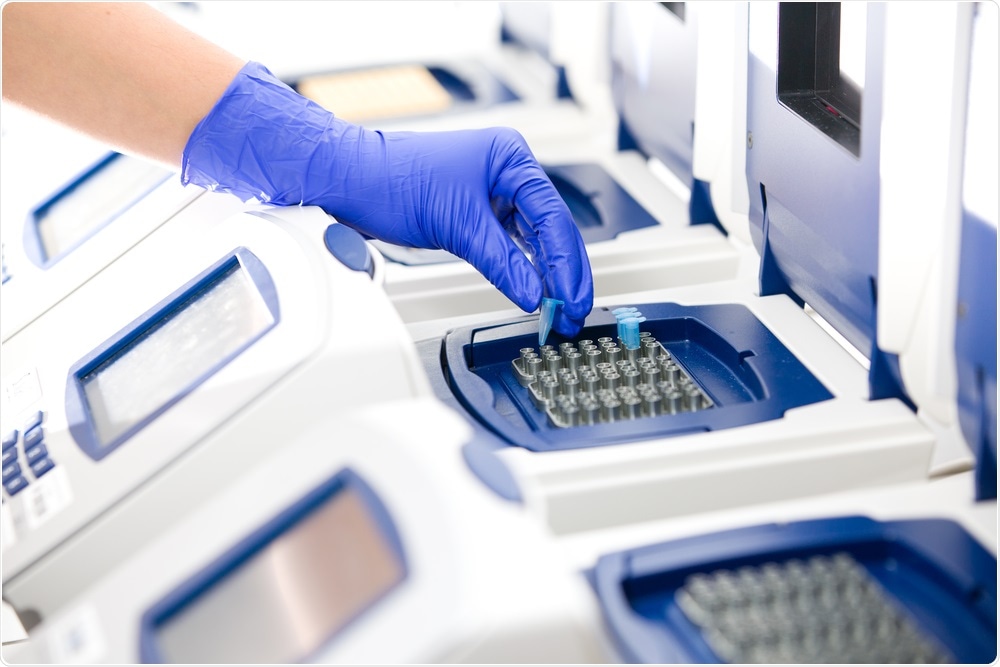
Advice against universal genomic screening of newborns


A new report from the Hastings Center has advised against the genomic sequencing of all newborns, a venture that researchers and clinicians have been debating since the cost of sequencing began to decrease.
Image Credit: Vit Kovalcik / Shutterstock
Although genomic sequencing could potentially facilitate a lifetime of individualized care, the editors of this new report advise that the sequencing of all newborns should not be pursued and that parents should not use the sequencing to screen their babies.
Genomics is a powerful tool, but the results it returns are still not fully understood and have not been proven to advance health outside of very specific clinical situations.”
The report advises that targeted or genomic sequencing be used in the clinic to aid the diagnosis of a newborn who is displaying symptoms, as this approach could end the search for a diagnosis.
However, applying genome-wide sequencing of newborns as a public health screening tool could generate results of unknown significance that clinicians do not know how to manage.
Such genetic data could cause unnecessary distress and result in health resources being used for unneeded monitoring.
The cost of implementing universal sequencing would also stretch the operating expenses of state-funded newborn screening programs, undermining the effectiveness of their operations, says the report.
The article was written by members of the University of California San Francisco Newborn Sequencing in Genomic Medicine and Public Health Ethics and Policy Advisory Board, which is made up of scholars and researchers in a number of fields including genomics, bioethics and clinical medicine.
The recommendations are the result of a four-year interdisciplinary investigation funded by the National Institutes of Health to explore the ethical and policy issues surrounding the possibility of performing genomic sequencing on newborns.
The recommendations embrace the use of genomics to aid in the diagnosis of sick newborns, but they draw a sharp distinction between that kind of focused clinical use and population screening.”
Josephine Johnston, The Hastings Center
The report is called “Sequencing Newborns: A Call for Nuanced Use of Genomic Technologies” and is the lead article in “The Ethics of Sequencing Newborns: Recommendations and Reflections,” a special report from the Hastings Center.