Search This Blog

Monday, August 20, 2018

Self-healable electronic skin system from reconstructable conducting network


Abstract

Electronic skin devices capable of monitoring physiological signals and displaying feedback information through closed-loop communication between the user and electronics are being considered for next-generation wearables and the ‘Internet of Things’. Such devices need to be ultrathin to achieve seamless and conformal contact with the human body, to accommodate strains from repeated movement and to be comfortable to wear. Recently, self-healing chemistry has driven important advances in deformable and reconfigurable electronics, particularly with self-healable electrodes as the key enabler. Unlike polymer substrates with self-healable dynamic nature, the disrupted conducting network is unable to recover its stretchability after damage. Here, we report the observation of self-reconstruction of conducting nanostructures when in contact with a dynamically crosslinked polymer network. This, combined with the self-bonding property of self-healing polymer, allowed subsequent heterogeneous multi-component device integration of interconnects, sensors and light-emitting devices into a single multi-functional system. This first autonomous self-healable and stretchable multi-component electronic skin paves the way for future robust electronics.
Nature Nanotechnology (2018) Download Citation

Fitbit Launches Charge 3 Fitness Tracker


 Fitbit (NYSE: FIT), the leading global wearables brand, today announced Fitbit Charge 3™, the latest evolution of its best-selling Charge family of devices.iiCharge 3 features an elevated, premium swimproof design with a touchscreen display, 15+ goal-based exercise modes, essential smart features to stay connected to what matters most, up to 7 days of battery life, and Fitbit’s most advanced sensor and algorithm technology in a tracker. Charge 3 is available for presale today at Fitbit.com for $149.95 USD, with global retail availability starting October 2018.
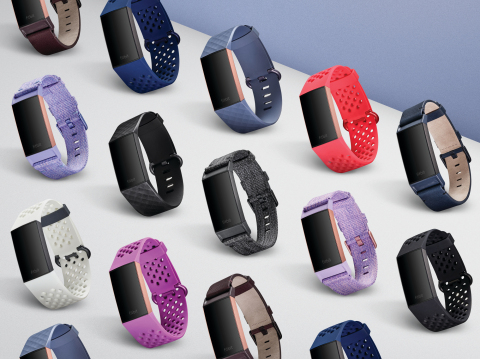
Fitbit launches Charge 3, the number one fitness tracker, now better than ever with advanced health  ... Fitbit launches Charge 3, the number one fitness tracker, now better than ever with advanced health and fitness features, premium, swimproof design and smart functionality, shown here with a range of new accessory bands for endless style options. (Photo: Fitbit)
Fitbit’s Charge family of products is the most popular of Fitbit’s lineup, with 35 million devices sold to date. According to Fitbit research, of adult consumers who considered buying a wearable in the last year, 42% wanted a tracker versus 36% who wanted a smartwatch – due to the slimmer design, easy-to-use features, streamlined experience and price point.iii Further, IDC estimates shipments of fitness trackers will continue to comprise a significant portion of the overall wearables category for the next several years.iv Trackers also make up the majority of wearable sales in major global markets like Australia, Great Britain, Japan, Singapore and Spain.v
“With Charge 3, we are building on the success of our best-selling Charge franchise and delivering our most innovative tracker, offering an extremely slim, comfortable and premium design, along with the advanced health and fitness features our users want. Charge 3 gives existing users a compelling reason to upgrade, while also allowing us to reach new users who want a sleeker, more affordable wearable in a tracker form factor,” said James Park, co-founder and CEO of Fitbit. “Our commitment to consumer choice and ability to meet the demand of millions of users by offering a range of products, from trackers to smartwatches, will enable us to expand our share of the overall wearables market.”

Fitbit Charge 3 is the first wearable with an inductive button, which includes new patent-pending technology that provides a streamlined, swimproof design, increased space in the device to add more sensors plus a larger battery with up to 7 days of use, and more effortless interaction while maintaining the performance expected from our most advanced fitness tracker.

Charge 3 also delivers the most advanced health and fitness features found on a Fitbit tracker to date. With more than nine trillion minutes of heart rate data tracked,vi Fitbit has enhanced its 24/7 PurePulse® heart rate technology for even greater accuracy during exercise compared to Charge 2, and provides a better measure of calorie burn and resting heart rate to optimize workouts and help uncover health trends.vii The addition of a relative SpO2 sensor – a first for a Fitbit tracker – allows for the potential to estimate changes in blood oxygen levels and help track new health indicators, like sleep apnea.
Additional health and fitness features include:
  • Goal-based exercise modes: Choose from 15+ exercise modes like bike, swim, run, weights and yoga; set a goal for calories burned, distance or duration, and see real-time stats, progress and celebrations on device when you reach your goal.
  • Water resistant to 50M: Wear in the shower, rain, pool or ocean. See real-time duration on your wrist with Swim Mode, or use SmartTrack® automatic exercise recognition to see laps and pace in the Fitbit® app post-swim.
  • Go the distance: Stay motivated with Connected GPS from your phone for real-time pace and distance on device, plus Run Detect with auto pause and auto stop (coming soon).
  • Female health tracking: Gain a deeper understanding of your menstrual cycle by using the Fitbit app to log your period and ovulation (coming soon), record symptoms and compare cycle trends over time. With all your health and fitness stats in one place, you can better manage your health; easily see where you are in your cycle in the on-device dashboard.
  • Information at a glance: Easily navigate the new personalized, on-device dashboard to see daily activity stats and health metrics like female health tracking; hydration, sleep and weight (coming soon).
  • Personalized insights: Know yourself to improve your health with new dynamic insights about your activity, heart rate, nutrition and sleep to help you reach your goals with positive reinforcement and tips to course correct when needed (coming soon in the Fitbit app).
  • Social motivation: Connect to one of the largest health and fitness social networks in the world, with more than 25 million active users for added motivation to reach your goals when you engage with friends, family and others through Feed, Groups and Challenges in the Fitbit app.viii
  • 24/7 guidance and motivation: Stay on top of all your daily activity and get a more complete picture of your overall health with features like automatic exercise recognition, Reminders to Move, Relax guided breathing, sleep tracking with Sleep Stages and Sleep Insights, and more.

Fitbit helps millions of users better understand their sleep patterns and the lifestyle habits than can impact them. Fitbit was the first wearable brand to offer sleep tracking and has built one of the largest databases of sleep over the past nine years with more than 7.5 billion nights tracked.ix Fitbit also introduced Sleep Stages and Sleep Insights based on heart rate variability to give you an even more in-depth understanding of sleep quality.
“Fitbit continues to harness its data to give users actionable insights into their health and wellness. For example, we’ve found that 1 in 4 people get significantly more sleep on weekends than weekdays, which implies they are trying to make up for reduced sleep during the week.xWe can deliver insights to these users through the Fitbit app to make them aware of how this behavior affects their well-being and suggest how to set up a sleep schedule,” said Shelten Yuen, VP of Research at Fitbit. “In the future, we hope to provide more guidance to our users to reduce the risk of disease so they can become the healthiest versions of themselves.”
Fitbit continues to make advancements in sleep and is announcing a new Sleep Score beta from Fitbit Labs that will be available to Fitbit users later this year. Using key metrics tracked by any Fitbit device with advanced 24/7 PurePulse heart rate tracking, Sleep Score will provide a nightly score to help give you a more complete picture of your overall sleep quality and what factors affect it.
In addition, for devices with a relative SpO2 sensor, including Charge 3, Fitbit Ionic™ and Fitbit Versa™, Fitbit will test the tracking of breathing disruptions, which can be indicators of health issues such as allergies, asthma or sleep apnea.
“With the Fitbit Labs Sleep Score beta, we’re pioneering an intuitive way for people to understand their sleep. It’s an example of how we are continually evolving the health experience for our users,” Yuen added.
Separately, Fitbit will continue to develop and clinically validate FDA regulated software as a medical device for various health conditions including sleep apnea and atrial fibrillation. Fitbit is one of nine companies in the FDA’s digital health software precertification pilot program, which is designed to streamline the approval process for software as a medical device.

Black Lung Disease Sees Significant Resurgence


Reported cases of the most aggressive and deadly form of black lung disease increased sharply during the past 2 decades, despite large declines in the number of coal miners working in the U.S. during the period, according to researchers.
Analysis of data collected by the U.S. Department of Labor from 1970 to 2016 under the Federal Black Lung Program identified 4,679 cases of progressive massive fibrosis (PMF). A total of 2,374 cases were identified during the 21-year period between 1996 and 2016, surpassing the 2,205 cases identified during the first 26 years of the program, reported Kirsten Almberg, PhD, of the University of Illinois Chicago and National Institute for Occupational Safety and Health (NIOSH), and colleagues.
The increases occurred despite the fact that the number of coal miners working in the U.S. declined by more than two-thirds between 1979 and 2016, they noted in the Annals of the American Thoracic Society.
While the PMF case totals were reported at the 2018 American Thoracic Society meeting in San Diego, Almberg told MedPage Today that the full report provides new information about PMF trends.
The analysis revealed that more than four out of five (84%) PMF cases reported from 1970 to 2016 occurred among miners working in central Appalachia, with 28.4% of cases occurring in West Virginia, 20.2% occurring in Kentucky, 20.0% occurring in Pennsylvania, and 15.3% occurring in Virginia.
The biggest increase in PMF cases by state occurred in Virginia, with an average increase of 31.5% annually over the study period.
Miners and former miners reporting PMF ranged in age from 27 to 93 years, and the average age was 61 years.
“We believe what’s driving this increase, especially in central Appalachia, is overexposure to dust and changes in mining practices that produce finer dust particles and may also alter the mineralogic characteristics of that dust,” Almberg said. “The leading hypothesis is that there has been higher exposure to silica in recent decades, which is more toxic to the lungs.”
Current mining practices, such as surface mining, typically expose miners to high levels of rock dust, including crystalline silica dust. Since it has become profitable to sort coal from rock in recent decades, this is increasingly part of the mining process.
Almberg told MedPage Today that reductions in allowable dust exposures in U.S. coal mines, which went into effect in 2014, should have a positive impact on PMF cases moving forward if mining companies fully comply with the regulations.
“With the reduction in permissible dust levels we would expect to see decreases in all [black lung] disease categories — both simple and severe — but only time will tell,” she said. “This is why it will be important to maintain rigorous surveillance programs that include both active and former coal miners.”
A recent indictment brought against eight former employees of a now bankrupt coal mining company in Kentucky illustrates the potential ongoing threat to workers.
The indictment by the Western Kentucky District U.S. Attorney charged the employees of Armstrong Energy coal company with falsifying dust monitoring samples in two of its mines, placing dust monitors in clean rooms instead of mining areas, and engaging in other practices designed to circumvent federal restrictions on coal dust exposures.
“What the grand jury is charging and what the United States will prosecute is lying and cheating by a coal company to prevent the appropriate testing of this dust to protect miners,” U.S. Attorney Russell Coleman said at a July 11 press conference in Owensboro, Kentucky.
The study was funded by NIOSH and the Alpha Foundation for the Improvement of Mining Safety and Health.

Anticonvulsant With Opioids Tied To Higher Mortality


Treatment with pregabalin (Lyrica), an anticonvulsant also approved for several forms of chronic pain, was associated with an increased risk for opioid-related death when co-prescribed with opioids, Canadian researchers reported.
Among some 6,500 residents of Ontario with opioid prescriptions — including 1,417 who subsequently died from an opioid-related cause — concomitant exposure to pregabalin and opioids was associated with significantly increased odds of opioid-related death compared with exposure to opioids alone (adjusted OR 1.68, 95% CI 1.19-2.36), reported Tara Gomes, MHSc, PhD, of the Institute for Clinical Evaluative Sciences (ICES) and St. Michael’s Hospital in Toronto, and colleagues.
A high dose of pregabalin (defined as >300 mg/d) was associated with substantially increased odds of opioid-related death relative to no pregabalin exposure (adjusted OR 2.51, 95% CI 1.24-5.06). A low or moderate dose (≤300 mg/d) was associated with relatively lower, but still significantly increased, odds of opioid-related death (adjusted OR 1.52, 95% CI 1.04-2.22), they wrote in the Annals of Internal Medicine.
Pregabalin and opioids may lead to a potentially life-threatening interaction similar to one previously observed with gabapentin (Neurontin) and opioids, the researchers suggested.
Pregabalin can be sedating and may augment central nervous system (CNS) depression in patients receiving opioids. “There is an important drug interaction between opioids and pregabalin that can lead to increased risk of fatal overdose, particularly at high doses of pregabalin,” Gomes told MedPage Today. “Clinicians should consider carefully whether to prescribe opioids and pregabalin together. If they decide that both medications are clinically appropriate, they should start with low doses and monitor their patients closely.”
Pregabalin ranked as one of the 10 best-selling drugs in 2017, and the use of gabapentinoids (gabapentin and pregabalin) tripled in the U.S. from 2002 to 2015.
New prescribing patterns “as healthcare practitioners begin to explore new pain management paradigms” in response to the opioid crisis may have led to this increase, observed Douglas Throckmorton, MD, and Janet Woodcock, MD, both of the FDA in Silver Spring, Maryland, in an accompanying editorial.
“These drugs are approved to treat certain forms of neuropathic pain and seizures, and pregabalin is approved to treat fibromyalgia. Increased clinical use, much of which seems to be for painful conditions beyond the approved indications, has recently been linked to higher rates of misuse and abuse,” they wrote.
FDA reports suggest the number of patients receiving gabapentinoids with opioid analgesics or benzodiazepines has increased, with more than half of patients concurrently dispensed both a gabapentinoid and an opioid analgesic, added Throckmorton and Woodcock. “Clinicians who may seek to minimize opioid dosing by co-prescribing alternative medications could thus be inadvertently introducing new risks,” they said.
Because more than half of Ontario residents who start pregabalin therapy also are prescribed an opioid, this research has important clinical implications, Gomes noted.
“Currently the product monograph for pregabalin does not include a warning regarding its use with opioids,” she said. “In contrast, this warning does exist for gabapentin, another drug within this class. Given this emerging evidence, regulators should consider requiring a similar warning for pregabalin.”
From a regulatory perspective, more research about the consequences of combining CNS-active drugs is needed, Throckmorton and Woodcock noted. “The U.S. Food and Drug Administration is implementing processes to support such work and engaging in initiatives to determine what changes, if any, are needed to address the labeling concerns raised by Gomes and colleagues,” they wrote.
“As we move forward in this work, we need to keep in mind that both gabapentinoids and opioids have an appropriate role in pain management,” they noted. “As we work to better understand potential interactions, we also need to try to avoid inadvertently increasing prescription drug use or abuse through future regulatory actions.”
The study included Ontario residents, ages 15 to 105, who received publicly-funded opioid prescriptions from August 1997 to December 2016. The 1,417 who died of opioid-related causes (cases) were matched by age, sex, and other characteristics to 5,097 surviving individuals also receiving opioids (controls). Case patients were more likely to have recently been prescribed other CNS depressants, receive more medications annually, and have more comorbidities than control participants. Statistical results reflected multivariable adjustment.
The study was supported by the Ontario Ministry of Health and Long-Term Care.
Gomes and co-authors disclosed relevant relationships with Lundbeck, Indivior, Mundipharma, Opiant, D&A Pharma, BioProject, Kinnov Therapeutics, Novartis, Eli Lilly, Novo Nordisk, Allergan, and Celgene.
Throckmorton is the deputy center director for regulatory programs at the FDA Center for Drug Evaluation and Research (CDER). Woodcock is the CDER director. They disclosed no relevant relationships with industry.
  • Reviewed by Robert Jasmer, MD Associate Clinical Professor of Medicine, University of California, San Francisco and Dorothy Caputo, MA, BSN, RN, Nurse Planner

W. R. Berkley forms Berkley Healthcare


W. R. Berkley announced the formation of Berkley Healthcare, comprised of Berkley Healthcare Professional Underwriters and Berkley Healthcare Financial Lines, to provide a broad array of products and services to all types of healthcare providers. Berkley Healthcare Professional Underwriters provides customized, comprehensive professional liability solutions, while Berkley Healthcare Financial Lines will offer a suite of coverages, including director’s and officer’s liability, employment practices liability, errors and omissions and cyber liability. The healthcare sector currently represents 18% of U.S. GDP and is vitally important to our economy. Berkley Healthcare, working alongside BerkleyMed, will bring additional solutions to this growing and evolving industry. Gregg A. Piltch has been appointed president of Berkley Healthcare. In this new role, Mr. Piltch will be responsible for overseeing and coordinating additional and enhanced product offerings. The appointment is effective immediately.

NMC Health profits jump 19% as revenues rise


NMC Health, the Abu Dhabi-based healthcare operator, reported on Monday a 19.3 per cent increase in its net profit for the first half of 2018 as revenues jumped.
The company’s profits reached $116.7 million (Dh429 million) up from $97.8 million in the same half of 2017. Revenues rose 20 per cent in the same period to reach $932 million in the first six months of this year.
NMC Health, which is listed on the London Stock Exchange, said it continued to benefit from the introduction of mandatory health insurance in Dubai and increased growth in its hospitals in Sharjah.
The company also saw growth from its acquisition of CosmeSurge, a cosmetics business, as well as the acquisition of minority stakes in other companies, particularly in Fakih IVF.
In April 2018, NMC issued $450 million worth of convertible bonds in order to bring in more funding. The company said the bonds represent “the first step in realigning the group’s balance sheet, in line with its status as a member of the large cap FTSE 100 index.”
Prasanth Manghat, chief executive officer of NMC Health, said the new financing arrangements provide “a very strong financial base from which to continue to grow the business.”
“While we continue to apply strict criteria to our expansion opportunities, this backdrop gives us confidence in addressing any future funding requirements to support our ambitious growth plans,” he said in a statement.
“We therefore see continuing good growth potential across different parts of the group in 2019 and beyond, and remain confident in the long-term prospects of the business as we enter the second half of 2018.”
NMC said its healthcare division remained its primary driver of growth in the first half of the year, with revenues from the division up 25.8 per cent year-on-year to $706 million.

Vital Therapies initiated at Cantor Fitzgerald


Vital Therapies initiated with an Overweight at Cantor Fitzgerald