Search This Blog

Saturday, October 5, 2019

The Real Impact Of Drug Price Legislation On Biopharmaceutical R & D

As outcry around drug prices rages, arguments continue to surface that limiting corporate revenues via price controls will have little impact on biopharmaceutical innovation. The latest salvo comes from academics at Rutgers Law School. In an article published by STAT, the authors claim that the industry grossly overstates the impact of price controls, likening the industry to Aesop’s boy who cried wolf.
“Big Pharma has cried Innovation Wolf every time Congress seeks to address its shenanigans. And the legislators keep coming to defend it. That has got to stop. It is past time for the industry to be called to account on using its get-out-of-jail-free innovation card to avoid reasonable legislation. As we get closer to the finish line of passing legislation addressing product hopping and other games, the cries about threats to innovation will grow louder and more urgent. But the industry’s history needs to be remembered. Consumers’ lives depend on it.”
One can argue that consumers’ lives have been saved by innumerable breakthroughs made by the biopharmaceutical industry in AIDS, cancer, infectious diseases, heart disease, etc., etc. But what about their rant about biopharma playing the “innovation card”? What’s the true impact that price controls could have on R&D?
The following account is a dramatic demonstration of what happens when R&D budgets get significantly cut. In late 2006, Pfizer learned that a potentially major new cardiovascular drug, a drug that essentially remodeled patients’ lipoprotein profiles, had no effect in prolonging the lives of people with heart disease. This drug had been expected to be a key driver of future revenues and propel Pfizer’s growth over the coming decade. These clinical results were devastating and led the CEO to decide that the company had to be “right sized” based on decreased future projected revenues. In other words, budgets across the entire company had to be cut – including that of R&D.
At the time, I was in charge of global R&D from the initial discovery stage through regulatory approval. My budget was just under $5 billion. (Pfizer’s overall corporate R&D budget was close to $8 billion, but this number included the R&D budgets of other divisions, the costs of post-marketing clinical trials, research expenses for outside investments, etc.) Going into 2007, R&D was seeking a 10% increase. That’s a pretty hefty number based on a $5 billion base. However, this increase was needed to maintain the ongoing programs, many of which were in key – and expensive – clinical trials. However, given the new reality, no budgets were being increased. Instead, R&D was told to cut its budget by 10%. So, instead of the initial vision of about $5.5 billion to run a global organization of approximately 13,000 people and a portfolio of over 100 compounds in various stages of development, we now had to figure out how to manage with $1 billion less.
I imagine the response of many would be “Big deal!” Large companies are inefficient and unwieldy. Certainly there must be plenty of fat that can be cut. Actually, for us there wasn’t. In 2000 and then again in 2004, Pfizer made major acquisitions, first Warner-Lambert Parke-Davis and then Pharmacia. In each case, to justify to shareholders the wisdom of these mergers, “synergies” had to be found; that is, the organization had to remove overlap and cut programs after vigorous prioritization processes. As a result, a lot of cost cutting had already taken place. Sure, there are always cuts that can be made. But simple changes were not going to provide $1 billion in savings.
It became pretty apparent that to meet Pfizer’s needs, R&D was going to not just drop programs but also eliminate “bricks and mortar” – research sites and the jobs of scientists who worked in these labs. Smaller sites were the obvious choices including two in France and one in Japan. But, this didn’t provide nearly enough savings. Eventually, we decided to close the legacy Parke-Davis labs in Ann Arbor, Michigan and eliminate that site’s 2,200 jobs. Coming at a time when the auto industry was experiencing its own economic issues in Michigan, this closure generated serious concerns across that state.
So, what does this have to do with proposals such as the government setting drug prices, cutting back patent life on drugs or even going so far as allowing “march in rights” to compel companies to license their patents to the government? Biopharmaceutical companies invest 15 – 20% of their top lines revenues into R&D – a number that’s higher than any other industry. Any legislation designed to cut drug prices will impact every biopharmaceutical company. Such legislation would theoretically have a meaningful impact on company revenues. Otherwise, why bother enacting such laws. Let’s say that such actions reduce a company’s revenues by 10%. Interestingly, that’s the same number I had to deal with – and look at the impact that had on cities around the world. Now, envision that on a global scale.
Certainly, innovation didn’t dry up at Pfizer when the episode described above occurred. In fact, over the years, Pfizer has rebounded pretty well. However, at the time, these closures had a dramatic impact on the R&D organization. A significant number of programs were dropped and fewer scientists were available to exploit the opportunities for new drug discovery and development. A 10% budget cut in R&D across the board for the biopharmaceutical industry would be felt not just in the U.S. but around the world. There will still be innovation – but significantly less of it. Ironically, this is a time when we should be increasing R&D given the enormous opportunities that exist for new medicines and cures. Instead, industry critics are proposing to go in the opposite direction.
By all means, let’s continue to look for ways to have affordable drugs. But some of the schemes being bandied about, if enacted, will have an “Ann Arbor” like effect in many parts of the country. It is also important to remember that over the years advances in new drugs have saved us way more in hospital costs than have been spent on drugs. New medicines may be the best levers we have in reducing overall healthcare costs.
https://www.forbes.com/sites/johnlamattina/2019/10/02/the-real-impact-of-drug-price-legislation-on-biopharmaceutical-r–d/#4d19fa722ba2


10 Steps To Make Healthcare Available To Everyone

A week ago, world leaders gathered at the United Nations and approved a new declaration on universal health coverage, committing themselves to achieving universal access to care by 2030 and reaffirming the right to health for everyone, without distinction.
While many countries have made the important step of including the right to health in their national constitutions already, too many people around the world are still unable to access high quality and affordable care.
The American tech giant Cisco Systems recently partnered with the Southeast Asia office of ACCESS Health International to explore how policymakers can use digital technologies to deliver on their promise to provide access to quality care for all. For many countries the challenge isn’t one of intention, but rather implementation. Lifestyle changes, aging populations, and the related increases in chronic diseases mean that countries trying to achieve universal health coverage must provide an increasing amount of care with the same overall pool of resources.
In the Southeast Asia region, for example, there is a remarkable level of political commitment to universal health coverage. Yet, despite this commitment, only two ASEAN countries have achieved the goal. Digital technology offers new opportunities to overcome the challenges in achieving high quality, affordable and accessible care.
While digital technology encompasses thousands of initiatives, our research focused on three main technologies with high potential and demonstrated impact – telemedicine, health information systems, and tracking and notifications. We looked at countries in the Southeast Asian region and showed how they could bring high quality and affordable access to health for all through these technologies.
Based on our research, we developed a ten-point action plan governments can follow to leverage digital technologies to achieve universal health coverage. After reading them, I encourage you all to download the full report and share widely. Universal health coverage is attainable if we and our leaders demonstrate the commitment and make good on our actions.
10-Point Action Plan
Establish head of state mandate. A head of state mandates the necessary funding and cross-ministry coordination for eHealth in national development plans.
Build the national digital infrastructure. Governments must invest in the necessary telecommunications infrastructure that underlies an eHealth strategy.
Invest in human capital. Governments and the private sector share a mutual interest in and responsibility for training medical personnel and civil servants in technology capabilities and applications.
Develop a regulatory and legal framework. Parliament or the national assembly cements a mandate for digitizing healthcare in national legislation, protecting patients and enabling innovation.
Appoint an eHealth government agency. A centralized agency is best positioned to coordinate national eHealth projects across ministries; across district, provincial, and federal levels of government; and with patient associations, medical associations, and businesses.
Define an impact measurement framework. Quality, affordability, and cost-savings metrics should be built into every digital health intervention from the early stages of planning and extending to an assessment of health outcomes.
Lead a multi-sectoral strategy. An effective eHealth strategy requires a Ministry of Health-led approach that is transparent and multi-sectoral, including a clear vision for how the government will work with the private sector and a willingness to work with non-traditional partners.
Enable private sector innovation. The government should work with and empower the private sector to innovate, share knowledge, and deliver efficient healthcare services.
Adopt a lens of equity. Technology investments and policies should strive to create equality and not focus primarily on urban areas or high-income groups.
Design for user experience. Innovators must engage and collaborate with users early on, aiding seamless clinical adoption and ensuring digital health interventions meet patients’ habits, lifestyles, and needs.
https://www.forbes.com/sites/williamhaseltine/2019/10/01/ten-steps-to-make-healthcare-available-to-everyone/#21a23a5d6d14

Walmart To Measure Doctor Quality In Local Markets

Walmart is rolling out an effort to measure the quality of community doctors who treat tens of thousands of its employees in the retailer’s latest effort to make sure its workers get the right care, in the right place and at the right time.
Because it’s Walmart, the effort is being watched closely by other employers and could have a far-reaching impact on U.S. doctors and other healthcare providers who are already being culled from employer and insurance company networks for poor quality and health outcomes. Narrow network strategies used by health plans provide enrollees an incentive to use a doctor that adheres to quality measures and is lower cost because they achieved a better outcome.
In Walmart’s case, the world’s largest retailer is launching several pilots effective Jan. 1, 2020 designed to improve quality and reduce costs in large part to eliminate unnecessary or unneeded healthcare services. The new concepts, considered in a test phase, will be an extension to the community doctor level of earlier efforts to guide patients to “Centers of Excellence” like the more specialized Mayo Clinic, Cleveland Clinic and Geisinger Health System to make sure certain heart, knee, hip and spine surgeries are done right the first time.
Walmart, which has more than 1 million employees, announced Wednesday the company will test a new “featured providers” program “that helps connect patients with local doctors who have a demonstrated history of providing the most appropriate patient care,” Walmart wrote in a column outlining the pilots. “Rather than relying on word of mouth or social media to find a provider, patients can get information based on actual data and proven results.”
Walmart is launching the “featured providers” program with a fast-growing data analytics company known as Embold Health, which says it uses data to “shine a light on top-performing doctors” from data gleaned from public and private insurers to create reports on individual doctors. Embold Health executives said its analysis “captures” whether care is appropriate, medically necessary by offering “benefits based on the latest scientific guidelines,” and cost-effective in how it is delivered.
“This data will help take the guesswork out of finding an affordable, quality local provider in eight specialties: primary care, cardiology, gastroenterology, endocrinology, obstetrics, oncology, orthopedics and pulmonology,” Walmart said in its column. “Walmart will use this data to curate a group of physicians with a track record of providing consistent quality care and then provide that to associates so they can make more informed decisions regarding their care.”
Initially, the “featured providers” program will begin in northwest Arkansas, the Florida markets of Orlando and Tampa and the Dallas/Fort Worth market in Texas, Walmart said. There will be about 60,000 employees and their family members in the featured providers pilot, Walmart said. For those who see a featured provider for care, they pay a $35 copay for a primary care visit or $75 for a specialist visit if they are enrolled in Walmart’s most popular plan though it can vary, executives said.
Walmart executives Adam Stavisky, senior vice president U.S benefits, and Lisa Woods, the retailer’s director U.S. benefits strategy and design, said they don’t plan to stop with the featured providers effort are continuing to look at ways to improve quality and hold medical care providers accountable. “(We’ve) been in the lab working on this for a longtime,” Stavisky said in a call with reporters Tuesday to discuss the new pilots.
Other employers are watching Walmart’s efforts closely as companies grow tired of paying for poor quality of care while at the same time watching their costs rise and their workers take on a greater share of the premium.
“Employers like Walmart are leading innovation within healthcare that has not been adequately responsive to the needs of purchasers and patients.” said Elizabeth Mitchell, president and chief executive of Pacific Business Group on Health, one of the nation’s largest employee healthcare business coalitions with 40 public and private employer members.
The “featured providers” program is part of a “suite of new medical benefits” Walmart said is deigned to make it easier for its workers to pick “high-quality physicians in local communities.”
Walmart’s other new health benefits for its employees that will be tested include:
* – a personal healthcare assistant, which is a concierge-like service that can help employees with billing, appointments, coordinating transportation to appointments. It will be tested in North Carolina and South Carolina.
* – expansion of its telehealth service for employees in Colorado, Minnesota and Wisconsin to include “preventive health, chronic care management, urgent care, and behavioral health for associates.”
“Through this voluntary program, patients can video chat with a doctor from the comfort of their homes, and, if they choose, access a personal online doctor . . . and an entire team to coordinate specialty care, provide nutritional and diabetic counseling and coordinate behavioral health referrals and visits billing and appointments, but also finding a quality provider, understanding a diagnosis and addressing other complex questions,” Walmart said.
https://www.forbes.com/sites/brucejapsen/2019/10/03/walmart-to-measure-doctor-quality-in-local-markets/#67391e9825d5

It May Be Time For Standard Breast Cancer Treatment To Change

Results from a clinical trial show that adding ribociclib, a targeted therapy drug, to the standard treatment plan for women with advanced hormone-receptor positive/HER2- breast cancer helps patients live longer and better quality lives. The researchers involved now believe the drug should be the first line of treatment for patients with this very common form of breast cancer.
Results from the Phase III clinical trial were presented at the 2019 European Society for Medical Oncology (ESMO) Congress 2019 last weekend. The trial involved 726 postmenopausal women with advanced hormone-receptor positive HER2-breast cancer who had not recieved endocrine therapy in the past, and aimed to see if the treatment could effectively increase lifespan.
Results showed that women who received the drug experienced significant improvement in survival. For example, there was a 28 percent reduction in risk of death in women who received ribociclib in combination with their standard therapy, when compared to those who were only treated with the standard hormone therapy.
The most commonly reported side effects experienced with this drug included low blood count, nausea and vomiting, fatigue, diarrhea and hair loss.
“Increasing overall survival is the hardest endpoint to move,” said lead researcher  Dr. Dennis Slamon, chair of hematology/oncology and director of Clinical/Translational Research at UCLA’s Jonsson Comprehensive Cancer Center. “We’re also seeing that the time of progression-free survival is the longest yet reported for any of the drugs in this class. And even when patients are off the drug, the effect seems to be long-lasting in terms of the benefit. It’s important because this means we are helping women live longer and have a better quality of life.”
The majority of breast cancer is hormone receptive, meaning that the tumors will grow in response to estrogen. In the case of advanced hormone-receptor positive HER2-breast cancer, the cancer cells have too much of a growth-promoting protein. This causes the tumors to grow and in turn, spread the cancer throughout the body.
Hormone therapy is the standard treatment for most women with such forms of breast cancer. However, research into targeted therapy suggests that hormonal therapy alone may not be best to achieve the desired results in patients.
Targeted therapy, such as ribociclib, are sometimes used alongside hormone therapy to increase the chance of successful outcomes. Ribociclib is part of a class of CDK4/6 inhibitors. These work by blocking certain hormones in breast cancer cells, which in turn slow down the cancer’s growth and spread. Doctors often prescribe the standard treatment first and then add a targeted therapy later, based on how a patient is responding. However, Slamon argues that these results show there is no need to wait.
“We found there’s a significant difference when you use the combination of ribociclib with hormone therapy as the first line of therapy,” said Slamon. “There is absolutely no reason to wait to give women this treatment. This should be the new standard.”
The most recent study on ribociclib was sponsored by Novartis. The drug will next be involved in an international clinical trial titled NATALEE which will aim to test how effective ribociclib is in treatment women with early-stage breast cancer.
https://www.forbes.com/sites/danadovey/2019/10/03/it-may-be-time-for-standard-breast-cancer-treatment-to-change/#7c74e58d3aa7

Strong September healthcare hiring behind historically low jobless rate

Strong healthcare hiring helped push the overall unemployment rate to a historic low in September.
Healthcare added 38,800 jobs last month, making up nearly 30% of overall hiring and contributing to a lower, 3.5% unemployment rate. The U.S. unemployment rate hasn’t been this low since December 1969, according to preliminary data from the U.S. Bureau of Labor Statistics‘ September jobs report, released Friday.
September’s healthcare hiring was up slightly from August’s revised count of 37,200 jobs added, which was a significant revision from the preliminary estimate of 23,900 jobs added in August.
As usual, ambulatory hiring dominated the healthcare industry, making up about three-quarters of jobs added, or 28,700 new hires. Preliminary data indicated the ambulatory sector had made 12,100 new hires in August, which would have been down significantly from July. However, the actual number is likely much higher, given the agency’s revised total.
September was another strong month for hospitals, which added 8,100 jobs. That’s down from 8,800 new hires in August, according to the government’s preliminary data.
Within the ambulatory sector, physicians’ offices made 5,200 new hires in September, up 174% from August’s preliminary hiring total. Dentists’ offices made 900 new hires last month, down 44% from August’s preliminary count.
Home health added 5,700 new jobs in September, down 16% from August. September’s preliminary numbers show a strong upswing in offices of other health practitioners, which added 9,500 jobs last month. That’s after shedding 1,200 jobs in August, per the bureau’s preliminary estimate.
Hiring was weak in the nursing and residential care sector, adding just 2,000 jobs. Community care facilities for the elderly shed 300 jobs last month, and residential mental health facilities shed 100 jobs. Nursing care facilities added 1,100 jobs.
An analysis by Jefferies concluded healthcare employment remains “remarkably strong” and has grown month-over-month for 68 consecutive months, since February 2014.
“We believe the combination of strong demand growth from healthcare employers and shortages of many clinicians (nurses, physicians) creates a positive set-up for the healthcare temp staffing industry … for Q4 and into 2020,” the authors wrote.
Total non-farm payroll employment rose by 136,000 jobs last month, pushing the unemployment rate down 0.2 percentage point. The number of unemployed declined by 275,000 people last month to 5.8 million.
Employment in professional and business services grew by 34,000 jobs last month, and government employment grew by 22,000 jobs. Transportation and warehousing added 16,000 jobs in September, and retail trade shed 11,000 jobs.
https://www.modernhealthcare.com/healthcare-economics/strong-september-healthcare-hiring-behind-historically-low-unemployment-rate

Deep brain stimulation effective treatment for severest depression

A study published online on Friday, October 4, in the American Journal of Psychiatry found that deep brain stimulation (DBS) of an area in the brain called the subcallosal cingulate (SCC) provides a robust antidepressant effect that is sustained over a long period of time in patients with treatment-resistant depression—the most severely depressed patients who have not responded to other treatments.
The long-term data presented in this study, conducted at Emory University and led by Helen S. Mayberg, MD, now Professor of Neurology, Neurosurgery, Psychiatry, and Neuroscience, and Founding Director of the Nash Family Center for Advanced Circuit Therapeutics at the Icahn School of Medicine at Mount Sinai, validates earlier work conducted by the research team and lays the foundation for additional studies to refine and optimize DBS for these patients.
Deep brain stimulation, currently approved by the U.S. Food and Drug Administration to treat essential tremor, Parkinson’s disease, epilepsy, and obsessive-compulsive disorder, is a neurosurgical procedure involving the placement of a neurostimulator (sometimes referred to as a “brain pacemaker”), which sends high-frequency electrical impulses through implanted electrodes deep in the brain to specific brain areas responsible for the symptoms of each disorder.
Dr. Mayberg led the first trial of DBS of the subcallosal cingulate white matter, known as Brodmann Area 25, for treatment-resistant depression patients in 2005, demonstrating that it could have clinical benefit. Subsequent small open-label trials produced similarly favorable results, yet despite these encouraging open-label results, a multi-center, randomized trial was halted early due to a lack of statistically significant antidepressant response at the designated, six-month a priori time point.
“Despite the fact that larger trials were halted early, what my colleagues and I were seeing as we continued to follow patients from our initial trials was that over time, they were getting better and not only that, they were staying better. So we stayed the course,” says Dr. Mayberg. “Over eight years of observation, most of our study participants experienced an antidepressant response to the deep brain stimulation of Area 25 that was robust and sustained. Given that patients with treatment-resistant depression are highly susceptible to recurrent depressive episodes, the ability of DBS to support long-term maintenance of an antidepressant response and prevention of relapse is a treatment advance that can mean the difference between getting on with your life or always looking over your shoulder for your next debilitating depressive episode.”
Specifically, the study documents the long-term outcome data (4-8 years) for 28 patients who were enrolled in an open-label clinical trial of SCC DBS for treatment-resistant depression. Response and remission rates were maintained at or above 50 percent and 30 percent, respectively, through years 2-8 of the follow-up period. Three-quarters of all participants met the treatment response criterion for more than half of their participation in the study, with 21 percent of all participants demonstrating continuous response to treatment from the first year forward. Of 28 participants, 14 completed at least eight years of follow-up, 11 others completed at least four years, and three dropped out prior to eight years of participation. Data presented through this study support the long-term safety and sustained efficacy of SCC DBS for treatment-resistant depression.
“While clinical trials generally are structured to compare active and placebo treatments over the short term, our research results suggest that the most important strength of DBS in this hard-to-treat clinical population lies in its sustained effects over the long term,” says Andrea Crowell, MD, Assistant Professor of Psychiatry and Behavioral Health Sciences at Emory University School of Medicine. “For people suffering from inescapable depression, the possibility that DBS can lead to significant and sustained improvement in depressive symptoms over several years will be welcome news.”
All study participants met criteria for either major depressive disorder or bipolar disorder type 2 and were in a current depressive episode of at least 12 months duration with non-response to at least four antidepressant treatments, psychotherapy, and electroconvulsive therapy.
All study participants underwent SCC DBS surgery at Emory University School of Medicine with the same surgeon and received the same device. The first 17 participants were implanted between 2007-2009 in an open-label trial with a one-month, single-blind, stimulation-off, lead-in period. An additional 11 participants with major depressive disorder were implanted using tractography-guided anatomical targeting between 2011 and 2013. A total of 178 patient-years of data were collected and combined for analysis in this long-term follow-up study.
Participants were seen by a study psychiatrist weekly for 32 weeks, starting at least four weeks prior to surgery. Visits were then tapered to every six months for years 2-8 of the study. Currently, 23 patients continue in long-term follow-up.
“At the Center for Advanced Circuit Therapeutics at Mount Sinai, we are currently gearing up for the next phase of this research, now funded by the National Institutes of Health Brain Initiative. Our new study will recruit treatment-resistant depression patients, as before, but they will be implanted with a new research prototype DBS system (Summit RC+S) that allows simultaneous recordings of brain activity directly from the site of stimulation during active DBS therapy. Advanced imaging, behavioral, and physiological assessments will also be performed at regular intervals in the lab. These studies will provide an unprecedented opportunity to monitor the trajectory of recovery over days, weeks, and months at the neural level,” says Dr. Mayberg. “Building on preliminary findings from Emory, we anticipate that these brain signatures will provide important new insights into DBS mechanisms and, importantly, will help guide future decisions about DBS management that can further optimize clinical outcomes in our patients.”
https://medicalxpress.com/news/2019-10-long-term-dbs-effective-treatment-severe.html

A Dangerous Diagnosis: New Netflix Series May Do Harm

It was my first day on the complex care service during my clerkship. Not long after introducing myself to the team, I was assigned my first patient. She was in the hospital for the third time that summer with clots in her lungs. I nodded and took notes as she described how doctors had been unsuccessful in identifying a cause of her clots. Then she paused, laughed, and said, “They should put me on one of those medical mystery shows.” The intern pursed her lips and replied, “We’re doing all the same things here.”
Among the most recent of these “medical mystery shows” is Netflix’s Diagnosis, hosted by Lisa Sanders, MD, whose New York Times column with the same name was the inspiration for the award-winning TV series House—a show without which I may not be a medical student today. In each of its seven episodes, Diagnosis follows patients who had undergone an inconclusive or unsatisfactory workup, with respondents across the globe chiming in on each case. Despite the show’s numerous rave reviews, the documentary series runs the risk of negatively influencing the public’s view of the medical system.
At first blush, the show has an extremely effective way of depicting various diseases; as a third-year medical student, I only wish that my preclinical curriculum had more of those 3D models… Sanders is often able to describe complex biological processes in accessible language while combatting things like the misinformation and stigma surrounding functional neurological disorders. As a medical student watching the show, Diagnosis reminds me how important it is to explain and normalize medical conditions in a way that is effective for those who are not in the medical field.
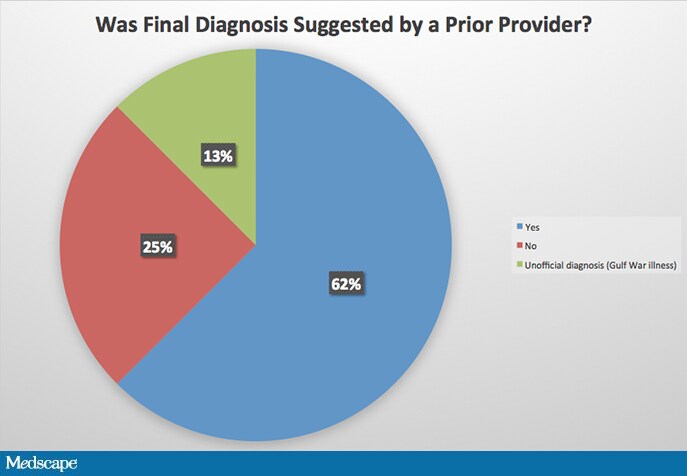
Where Diagnosis becomes problematic, however, is in its portrayal of the inner workings of the medical system. The show claims to garner suggestions from a global audience to arrive at a more accurate diagnosis. By presenting itself as an opportunity for patients with chronic medical conditions to receive a new diagnosis that previous doctors did not suggest, Diagnosis implicitly conveys an image of medical practitioners as incompetent. And yet, according to my research, most cases ultimately arrive at a diagnosis that had been suggested by previous providers (Figure).

Furthermore, by operating under the premise that patients with previously undiagnosed conditions can receive a new diagnosis that might enable treatment, the show may also offer false hope to viewers with incurable medical conditions.
Diagnosis also focuses on a limited range of conditions. Human behavior, function, and consciousness are naturally interesting topics. However, the systems that underlie such conditions are also among the least understood and most limited in treatment options. Diagnosis episodes gravitate towards these less-understood conditions. In focusing on these, the program depicts an image that does not represent what the medical field is typically capable of and neglects the progress that has been made in treating conditions that were previously not understood, undiagnosable, or untreatable.
The major potential harm of Diagnosis is in instilling distrust in the healthcare system. Even as a medical student, I have already seen multiple cases in which a patient’s care was limited by skepticism toward or lack of trust in medicine and medical practitioners. By overlooking prior workups and focusing on cases that are difficult to characterize given the limits of medical knowledge, Diagnosis inherently supports misconceptions of healthcare providers as untrustworthy or potentially lacking in knowledge; this may have broader detrimental effects.
With rising distrust of the medical system, patients have become less likely to seek medical care, adhere to care plans or heed medical advice, and participate in health maintenance interventions such as vaccinations. Fortunately, the show has the opportunity to address these potential pitfalls in future seasons by doing the following:
  • Dedicate more time to outlining the previous diagnostic workup, including what tests had been done in the past, why those tests were conducted, and how the results were interpreted. This way, the conclusions of those providers could be better justified, rather than portraying them as poor or inattentive diagnosticians.
  • Involve consulting providers more in the show so that they can communicate their thought processes. Although the audience may not immediately understand the content of these discussions, witnessing the degree of knowledge and training involved in the traditional diagnostic process could instill a greater appreciation for and trust in medical providers.
  • Incorporate a historical discussion on the diagnoses suggested by the public, including their discovery and characterization and how we now diagnose, define, and understand them in the modern day.
  • Highlight conditions treated by a greater range of specialties. In doing so, the public could also learn about a wider variety of diseases and gain greater insight into more of the medical world.
Diagnosis appears to have established itself as a hit among viewers, but given the impact that the media can have on the public’s perception of medicine and the relationships that patients have with their own personal providers, the show may be harmful overall. With a greater emphasis on the diagnostic process and the mechanics of medicine, Diagnosis has an opportunity to simultaneously engage viewers in the medical process while also promoting a positive image of medicine that facilitates more productive conversation between patients and their providers.
Ramie Fathy is a third-year medical student and curriculum representative at the Perelman School of Medicine at the University of Pennsylvania. He is interested in the interaction between medicine, the media, and the public. The opinions expressed in this perspective are his own.
https://www.medscape.com/viewarticle/919202#vp_1