Search This Blog

Saturday, October 5, 2019

‘Masayoshi Son Is The Walter White Of Money Launderers’

by Scott Galloway
MDMA
The unicorn barn is on fire. Ablaze. A feckless FTC and DOJ, no longer countervailing forces to private power but co-conspirators, have enabled invasive species (Amazon, Apple, Facebook, and Google) to devastate the ecosystem. What to do? No worries, just double up on the MDMA of our economy — charismatic CEOs cut with cheap capital — and the illusion of prosperity party rocks on into the morning. Not that I’ve done a lot of drugs in my life, but they make for gangster metaphors, no?
Unfortunately, the later the lights go on, the uglier the reality. The markets have been dancing and partying with young firms with a seductive rap: “I think of myself as a tech, SaaS kind of guy.”
But as the lights come on, it’s clear he’s a rich kid exiting the bathroom with short-lived confidence from the cheap capital around his nostrils. He doesn’t have a real job (viable business model), and, worse, his parents are fed up and about to cut him off. (If I sound like someone who spent too much time at Pangea, Lotus, Rose Bar, Bungalow 8, and Butter in 2003 NYC, trust your instincts.)
The lights are on, and the market is now discerning between overvalued unicorns:
Pinterest
Snap
Twitter
Peloton
Slack
DoorDash
Lime
Palantir
Uber
Compass
And those that could lose more than 80 percent of their value or disappear:
Tesla. Dear Twitter trolls: yes … I’m an idiot, I can’t do, so I teach, and I don’t understand genius. It’s a tech/energy play. I get it… Save your breath. Yes, he is a genius, Tesla has changed the world for the better (I believe this). And … Tesla doesn’t have the scale to compete in a well-run, low-margin business — auto.
WeWork. Shared workplace concept that’s been in the news lately. Founder has great hair.
Robinhood. Until yesterday, Robinhood was a disruptor. But Schwab announced they were eliminating commissions on trades, and Robinhood’s top of the funnel (customer acquisition) collapsed. Schwab has other products/revenue streams. Robinhood’s VCs must now fund a company whose $7.6 billion valuation (see above: white powder around nostrils) was cut in half yesterday. Similar to Walmart, Schwab’s leadership will result in multiple expansion. Look for Schwab stock to recover its 8 percent one-day loss within 30 days.
Lyft. Imagine a shitty business, ride hailing, minus a global brand or Uber Eats. Lyft is all the calories of Uber, with none of the great taste.
OYO. Just like WeWork, OYO is a REIT with too much SoftBank capital. Masa owns 45 percent, and as one of the lead investors in every round since 2015, he has pushed the valuation from $400 million to $12.5 billion. Smoking their own supply.
To be fair, it’s easy to see why we continue to do this. The stable (the US information economy) produced Secretariat, Seattle Slew, Zenyatta, and Spectacular Bid (awkward equestrian metaphors for Amazon, Apple, Facebook, and Google). We also feel a sense of hope/justification, as Airbnb is just hitting its stride and could be one of the greats.
The Betty White powder was cut with a variety of things: frothy markets, idolatry of innovators/founders, and weak oversight. But the central nervous system stimulant here is cheap capital. And the substance mixed into the fine Columbian has been SoftBank, whose $100 billion Vision Fund was disruptive, on several levels.
The case study we’ll be teaching for decades in b-schools around the world about the Vision 1 disaster (not fair, it’s a total f**king disaster), writes itself. The strategy was (wait for it) capital as a strategy. Specifically, more of it, so you could win deal flow and be the fuel that helps portfolio firms make the jump to light speed, leaving competitors behind and befuddled.
Easy to see how this makes sense. But it doesn’t. Capital is in fact a weapon in private equity, where only a few firms can bid for the truly great, proven assets with enormous cash flows. However, in venture, and growth, the secret sauce is dislocation, a market ripe for disruption, and crazy genius founders who are too stupid to know they will fail. When your ability to deploy heaps of billions into a concept becomes the priority, as it does when you have $100 billion to deploy, your returns go down. This is evident across SoftBank’s portfolio.

Venture is Local
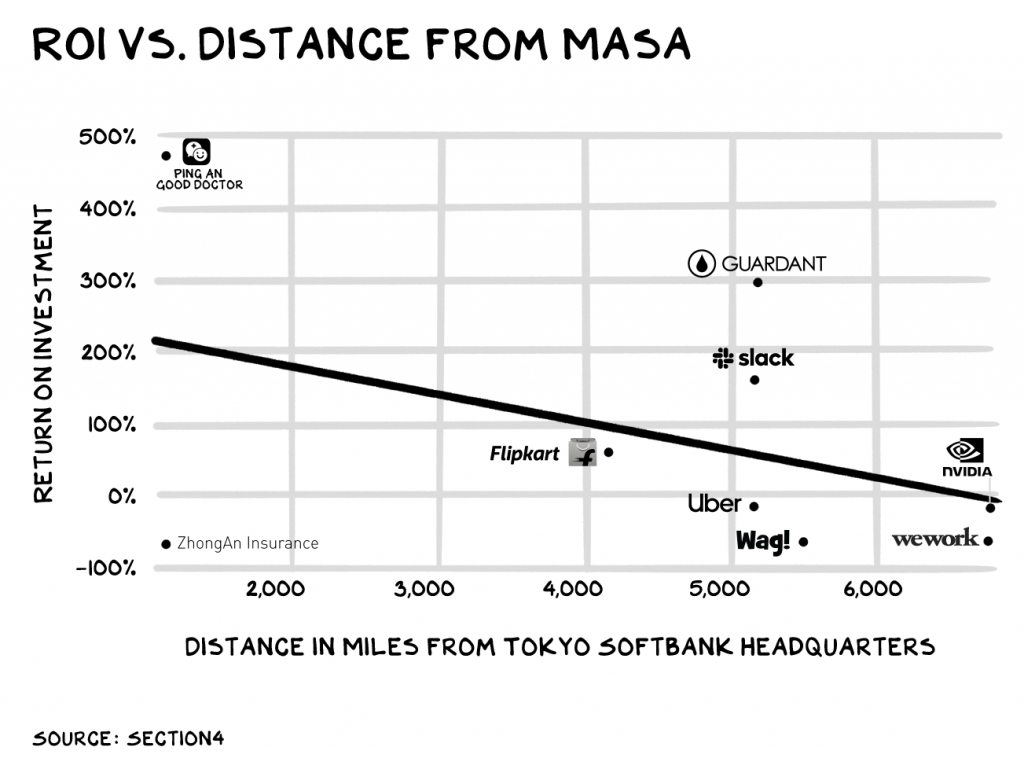
My NYU colleague Professor Pankaj Ghemawat published gangster research showing business and trade are, despite rumors of the death of distance, a function of geography. A retail store’s profitability is correlated with proximity to HQ. Sequoia Capital was the lead investor in my second firm, and the partner on our board told me a key tenet was they would not invest in a firm the partner could not drive to.
Masa and Adam would agree to meet in-between their 13 time zones (I think that’s Hawaii). Similar to when the Japanese acquired US movie studios and golf courses in the eighties, SoftBank will leave with less yen than they came with. If you found the previous sentence uncomfortable, racist even (as I initially did), you’ve fallen victim to the same monoculture PC virus infecting our universities. Japan did buy US golf courses, and their currency is in fact the yen.
Smoking Your Own Supply
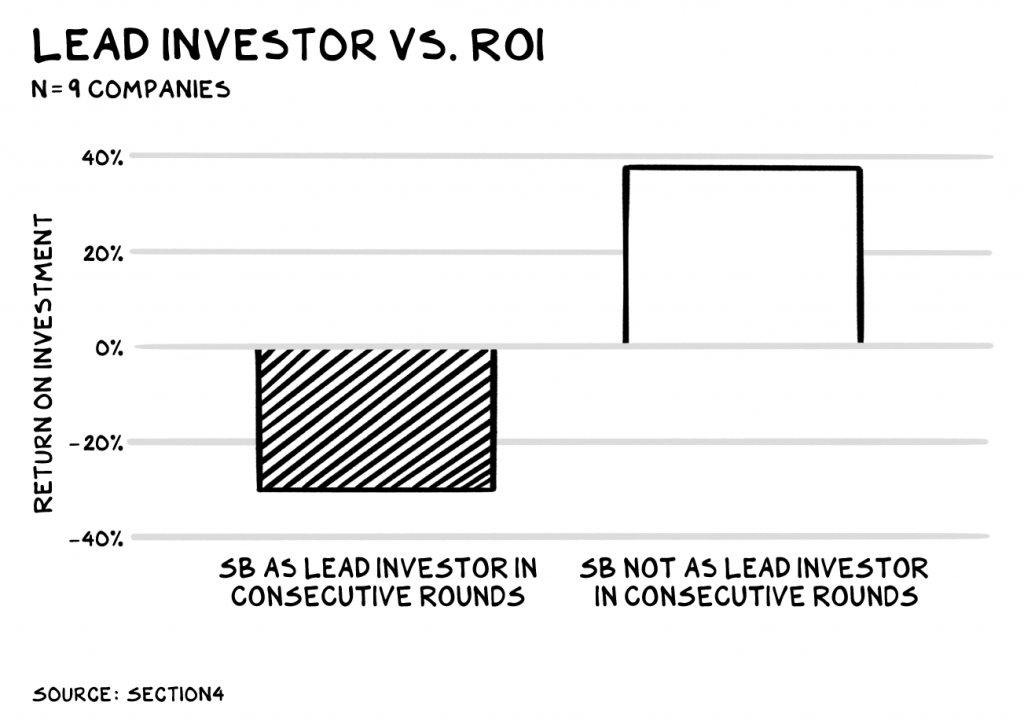
Another tenet of venture, expressed by every investor I’ve raised money from (General Catalyst, Maveron, Sequoia, Weston Presidio, JPM, Goldman, and others) is they will not lead subsequent rounds. Good investors resist the temptation to smoke their own supply and require third-party, arms-distance validation of the firm’s value here and now. SoftBank was the only lead investor in WeWork, through multiple rounds, since 2016.
Ironically, the real damage on the capital side will be on SoftBank employees, as they own common stock in Vision 1. Saudi Arabia Public Investment Fund and Mubadala own preferred stock that captures a 7 percent (preferred) return each year, sequestering returns from the few winners in the portfolio. So, Vision 1 has pneumonia, but the common equity holders in Vision 1 are on a ventilator.
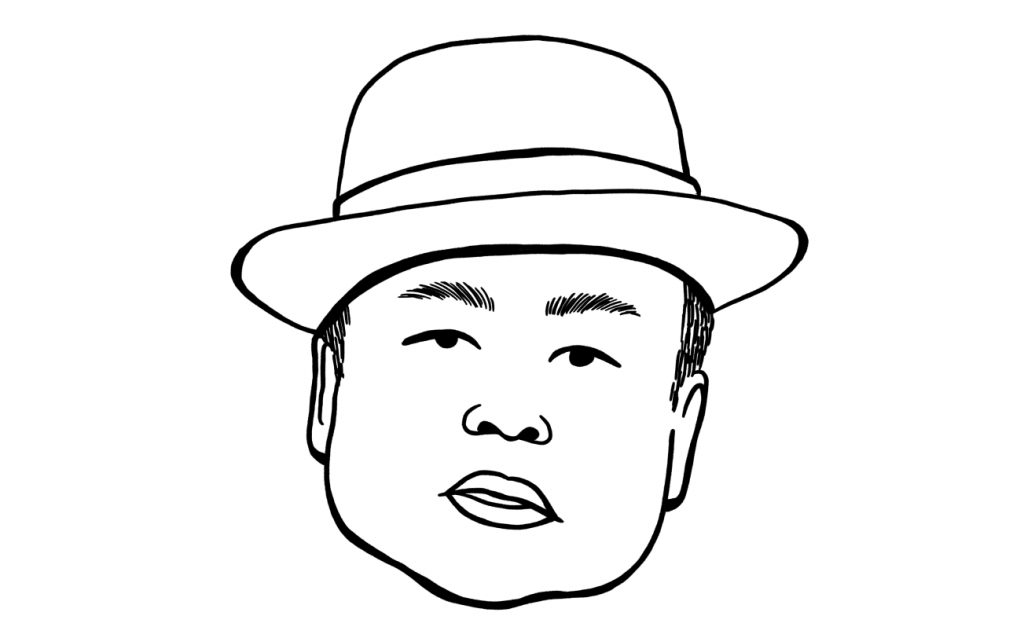
The spoon, baking soda, and heat that turns overvalued firms into crack is charisma — people who trade likability and their reputations for hundreds of millions (often billions) to wallpaper over ugly truths about a business and its impact on other people and the commonwealth. Think of it as information economy money laundering. Masayoshi Son is the Walter White of money launderers, washing dirty money and procuring his take.
A question: if the relationship between Saudi Arabia’s Public Investment Fund and SoftBank became strained — as it often does between criminals and money launderers — would Mohammad Bin Salman dispatch operatives to intercept him on foreign soil, strangle him, and then dismember him with a bone saw? And, another question, if they did … would Prime Minister Shinzo Abe do more than ask Mohammad Bin Salman to buy additional weaponry from Mitsubishi Heavy Industries?
Addiction
Addiction is the long-term inability to moderate or cease intake. Someone with an addiction will continue to misuse the substance in spite of the harmful effects. British-Venezuelan scholar Carlota Pérez has written powerfully about the link between technological innovation and extreme income inequality. We see evidence of a Hunger Games economy everywhere. Life has become harder for two of every five Americans.
However, the idolatry of winners, constantly promoted on CNBC and Instagram, creates a high we’re all chasing, the “innovator” badge. Its spoils, coupled with the false narrative that we live in a meritocracy, have dulled our sense of empathy.
We feel it in our gut. We witness immense prosperity, but little progress. A shrinking middle class, depressed teens, and fractured alliances. Still, we continue to look away. As a species, we’re easier to fool than convinced we’ve been fooled. We refuse to face the truth: The innovation industrial complex has ripped at the fabric of our democracy, fomented a caste system, and dulled our sense of empathy.
We’re lying to everyone. We’re lying to ourselves. We’ve lost sight of what’s important. We’ve lost ourselves. We’re addicted.
https://www.zerohedge.com/economics/masayoshi-son-walter-white-money-launderers

Oncology biotech Monopar Therapeutics postpones $40 million IPO

Monopar Therapeutics, which is developing therapies for chemotherapy-induced mucositis and cancers, postponed its IPO on Wednesday, citing market conditions. It had filed to raise $40 million by offering 4.4 million shares at a price range of $8 to $10.
The Wilmette, IL-based company was founded in 2014 and had planned to list on the Nasdaq under the symbol MNPR. JonesTrading, Aegis Capital Corp., and Arcadia Securities were set to be the joint bookrunners on the deal.

IPO Week Ahead: 2 billion-dollar biotechs

Two of the largest-ever biotech IPOs by market cap are scheduled for the week ahead. They are joined by an Illinois bank. The three deals plan to raise a combined $550 million.
Germany-based BioNTech (BNTX) is targeting $251 million at a fully diluted market cap of $4.45 billion. That would make it the third-largest development-stage biotech ever to list in the US, behind July’s Genmab (GMAB), and December 2018’s Moderna (MRNA). The company’s extensive pipeline includes mRNA therapeutics, engineered cell therapies, antibodies, and small molecule immunomodulators. Its lead mRNA candidate is being co-developed with Genentech in a Phase 2 trial for melanoma, with topline data expected in the 1H20. To date, BioNTech has raised $1.3 billion  privately, most recently $324 million in August 2019.
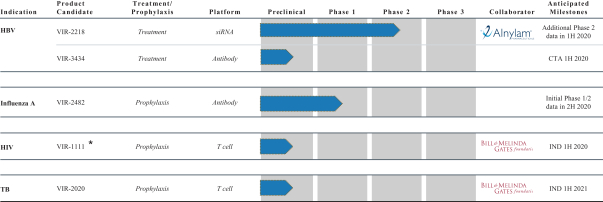
Infectious disease biotech Vir Biotechnology (VIR) plans to raise $150 million at a $2.4 billion market cap. The company’s pipeline consists of five product candidates targeting hepatitis B virus, influenza A, HIV, and tuberculosis. Backed by ARCH Venture, the company is collaborating with Alnylam Pharmaceuticals to develop siRNA candidate VIR-2218 for hep B, currently in Phase 1/2.
Bloomington, IL-based bank HBT Financial (HBT) is raising $149 million at a market cap of $474 million, in the year’s largest US-based bank by IPO proceeds. Operating as Heartland Bank, HBT has 64 branches spread across central and northeastern Illinois. The company generated adjusted net income of $25 million in the 1H19, with an ROTCE of 21.2% and an efficiency ratio of 54%; it plans $0.15 quarterly dividend (3.3% yield).
Potential launches this week include Post protein-supplement spinoff Bellring Brands (BRBR), commercial-stage biotech Innate Pharma (IPHA), and insurance distributor BRP Group (BRP).
Relevant Profiles: BNTX, VIR
https://www.renaissancecapital.com/IPO-Center/News/65311/US-IPO-Week-Ahead-2-billion-dollar-biotechs-and-a-bank

Eye disease biotech Oyster Point Pharma files for a $85 million IPO

Oyster Point Pharma, a clinical stage biotech focused on developing therapies for ocular diseases, filed on Friday with the SEC to raise up to $85 million in an initial public offering.
The Princeton, NJ-based company was founded in 2015. It plans to list on the Nasdaq under the symbol OYST. J.P. Morgan, Cowen and Piper Jaffray are the joint bookrunners on the deal. No pricing terms were disclosed.

Relatively Small Weight Loss Can Put Diabetes Into Remission

British researchers have good news for people with type 2 diabetes — you don’t need to lose a ton of weight to make a difference in your health.
In fact, they found that losing just 10% of your body weight during the first five years you have the disease can lead to remission of type 2 diabetes. That weight loss would be 18 pounds for someone who weighs 180 pounds.
It doesn’t matter what diet helps you lose the weight. And it doesn’t matter how slow or how quickly those pounds come off, the investigators found.
“Even small amounts of weight loss can help you achieve remission. Extreme dieting and exercising are not necessary,” said study author Dr. Hajira Dambha-Miller, a general practice physician and clinical lecturer at the University of Cambridge School of Clinical Medicine, in the United Kingdom.
“Type 2 diabetes should no longer be seen as a lifelong disease,” she added. The disease can essentially be cured if you lose weight and keep it off, according to Dambha-Miller.
The researchers said that type 2 diabetes affects 400 million people around the world. It’s typically considered a chronic, progressive disease. But significant weight loss through extreme dieting (less than 700 calories a day) can bring about remission in almost 90% of people with type 2 diabetes, the study authors noted. Weight-loss surgery also tends to bring on remission.
Intensive exercise coupled with a modest weight loss of 7% or less of body weight brought on remission in almost 12% of people in one study, according to the new report.
But maybe bringing on remission didn’t need to be so hard, the researchers surmised.
“The existing evidence for achieving remission suggests extreme levels of exercise and rather restrictive diets. This is simply not realistic or achievable for my patients, especially in the longer term,” Dambha-Miller said.
“It is also demotivating for my patients when they are unable to achieve large amounts of weight loss. Accordingly, we decided to look at modest weight loss over a longer period in a real-world population without any crazy diet or exercise requirements,” she explained.
For the new study, the researchers followed the health of almost 900 people newly diagnosed with type 2 diabetes for five years. The study participants, aged 40 to 69, provided information on weight, activity levels, diet and alcohol consumption.
Thirty percent of the group had achieved type 2 diabetes remission at the five-year follow-up. Those who had achieved a 10% weight loss were 77% more likely to be in remission after five years, the findings showed.
There was no specific intervention in the study. “This means there were no mandatory exercise or dietary requirements. All our participants did different things and still managed to lose weight and beat diabetes into remission,” Dambha-Miller said.
She said that experts don’t know exactly how losing weight helps, but they hypothesize that as people lose weight, the beta cells in the pancreas that produce insulin start to work again. That means the body can properly use sugar from foods instead of letting it build up in the blood.
Dr. Berhane Seyoum, chief of endocrinology at Detroit Medical Center and Wayne State University in Michigan, wasn’t involved in the current research, but said the findings are encouraging.
“People with type 2 diabetes can be encouraged to lose weight, and it doesn’t matter how. They can do whatever is convenient for them. Controlling diabetes keeps you healthy, gives you more energy and makes you feel better,” he said.
Seyoum also noted that any amount of weight loss can help the body use insulin better and will help with diabetes management.
The study was published online recently in the journal Diabetic Medicine.
More information
Read more about weight loss and diabetes from the American Diabetes Association.

SOURCES: Hajira Dambha-Miller, M.R.C.G.P., Ph.D., general practitioner and clinical lecturer, the University of Cambridge School of Clinical Medicine, United Kingdom; Berhane Seyoum, M.D., chief, endocrinology, Detroit Medical Center and Wayne State University, Detroit; Sept. 30, 2019, Diabetic Medicine, online
https://consumer.healthday.com/diabetes-information-10/type-ii-diabetes-news-183/just-a-little-weight-loss-can-put-diabetes-into-remission-750906.html

Tricare Drug Costs to Increase More Than 40% in 2020

Prescription drug costs for Tricare users are set to rise Jan. 1, some by as much as 42%.
Effective Jan. 1, 2020, a 90-day supply of generic drugs received through the program’s Express Scripts mail-order pharmacy will increase from $7 to $10. Co-pays on brand-name drugs received through the mail will go from $24 to $29; the price rises from $53 to $60 for non-formulary drugs.
Generic drug prescriptions filled at retail pharmacies will see the cost rise from $11 to $13 for a 30-day supply, while the same supply of brand-name medications will increase from $28 to $33. Non-formulary drugs — those not on Tricare’s list of fully covered medications — will go up from $53 to $60.
Prescriptions filled on base will continue to be free.

The price increases, while normal in the civilian world, are fairly new to Tricare. They were mandated by Congress as part of the 2018 National Defense Authorization Act in an effort to bring the amount users pay into line with the actual costs of prescription drugs, which have been skyrocketing in recent years.
Per that law, these annual increases will continue until at least 2027.
Out-of-network pharmacy costs are also increasing. Users who buy drugs at those pharmacies or overseas must first meet their annual deductible, which varies by Tricare plan.
Tricare Prime users pay a 50 percent cost share for the drug after their point-of-service fee. All other users, except active-duty troops, will pay 20 percent of the total cost or $29, whichever is higher, for drugs on the formulary. They will pay 20 percent of the cost or $60, whichever is higher, for off-formulary drugs. Active-duty troops will be reimbursed for any out-of-network pharmacy fees.
https://www.military.com/daily-news/2019/10/03/tricare-drug-costs-increase-more-40-2020.html

Rite Aid’s Turnaround Hinges On Health Plans, Not Amazon

Rite Aid’s relationships with health insurance plans appear to be a priority to turning around the drugstore chain rather than another attempt at a merger.
Though it’s early in the reign of Heyward Donigan, the new Rite Aid chief executive officer is sending signals that putting the drugstore chain and its pharmacists in a good spot with health insurers is critical to the company’s survival.
It’s in sharp contrast to the dream of some longtime Rite Aid shareholders who have held on to the stock hoping the pharmacy chain will become a potential acquisition target of the online retailer Amazon, which has talked about getting deeper into healthcare and the prescription business.
But selling Rite Aid didn’t go so well under Donigan’s predecessor, John Standley, who departed after two failed mergers and a plummeting stock price that drew the ire of shareholders.
“Given my background, it’s going to be obvious that health plans are going to be a key focus for this company,” Donigan told analysts on the company’s fiscal second quarter earnings call last week.
Donigan touted her past executive roles at Premera Blue Cross, ValueOptions and Sapphire Digital. And she said she will draw on that work with health insurers, medical providers and pharmacies to build and grew Rite Aid, which has watched its sales deteriorate.
“The partnership between us and health plans in the regions that we serve is going to be crucial to our future,” Donigan told analysts. “And I think we can really add a tremendous amount of value to their future.”
While she’s been CEO for less than two months, she wants to leverage Rite Aid’s thousands of pharmacists as a way to provide more healthcare services.
“Pharmacists are the ultimate physician extender, if you think about it,” Donigan said. “Our pharmacists touch probably more members on a daily basis and engage more consumers on a daily basis than any other provider in America.”
Rite Aid also plans on highlighting its pharmacy benefit manager, EnvisionRx Options, when negotiating deals with employers and health insurance companies.
Rite Aid’s PBM will remain a part of the company at a time when larger PBMs are now owned by health insurance companies, executives told analysts last week. Last year, Cigna bought the PBM Express Scripts while Anthem this year is rolling out its own PBM, IngenioRx and the nation’s largest health insurer, UnitedHealth Group, owns OptumRx.
“Our progress in attaining more lives in the health plan business is because of our position as an independent pharmacy services alternative offering of flexible models,” Ben Bulkley, who was named CEO of Rite Aid’s EnvisionRxOptions earlier this year. “Clients and prospects indeed share their support for EnvisionRx as an essential option in the marketplace.”
https://www.forbes.com/sites/brucejapsen/2019/09/30/rite-aids-turn-around-hinges-on-health-plans-not-amazon/#280c7fc6d06a