Search This Blog

Sunday, January 19, 2020

Reporter’s notebook: J.P. Morgan’s 2020 health conference

The Annual J.P. Morgan Healthcare Conference kicked off last Monday in San Francisco. Finance reporter Tara Bannow will provide updates and daily observations here throughout the conference. You can also find additional stories on ModernHealthcare.com or Twitter.
Wednesday, Jan. 15CHS rolls out its 2020 financial guidance early
For-profit hospital chain Community Health Systems unveiled its financial guidance for 2020 on Wednesday afternoon—earlier than in prior years.

Franklin, Tenn.-based CHS projects 2020 revenue between $12.4 billion and $12.8 billion, and adjusted earnings before interest, taxes, depreciation and amortization of $1.65 billion to $1.8 billion. Same-store adjusted admissions are projected to increase between 1.5% and 2.5% over the year.
“By the way, we’ve never done this before,” Wayne Smith, CHS’ CEO, told the audience. “But we feel like we’ve got pretty good insight and our metrics are good and strong.”
Smith said the company won’t release its results for the final quarter of 2019 until late February. CHS said it anticipates its adjusted EBITDA for full-year 2019 to be toward the middle portion of the company’s adjusted EBITDA guidance for 2019, which is between $1.6 billion and $1.65 billion.
CHS officials said the company is winding down its divestiture program and getting close to its core hospitals. Kevin Hammons, the company’s chief financial officer as of Jan. 1, said CHS raised a total of $1 billion from divestitures through the end of 2019 toward the company’s target of $1.3 billion, a goal it expects to hit in the first half of 2020. CHS also expects to draw $300 million in proceeds from those deals, he said.

CMS Administrator says states, not CMS, should shape their Medicaid programs
CMS Administrator Seema Verma repeatedly harped on the added costs and stifled innovation that comes with government bureaucracy before an audience gathered for a salmon lunch during the J.P. Morgan Healthcare Conference on Wednesday.
Verma said she thinks even more states will choose to relinquish their federal Medicaid match in favor of block grants and waivers. The focus of Medicaid should be on getting people out of poverty and focusing on specific outcome measures.
“For this able-bodied population, it’s not enough to just hand out a Medicaid card,” she said. “We should be able to do more.”
The same is true for states trying to implement Medicaid work requirements, which have been under threat by lawsuits. The focus there is on “community engagement,” she said. At a time when employers are struggling to find enough workers, Verma said states should be helping Medicaid beneficiaries get training and land jobs. She said she also worries legal challenges to the work requirements stifle state innovation.
Verma said the CMS is working to close the time gap between when the FDA approves a drug and the Medicare program begins paying for it.
“The ultimate goal is we want to make sure that Medicare patients have access to the latest technology and not having the government bureaucracy slow down the pace of innovation,” she said.
Centene CEO has big ambitions for Medicare Advantage business
Centene’s CEO told J.P Morgan conference attendees he is “very unhappy” with the company’s performance in its Medicare Advantage business, and that he plans to turn WellCare Health Plans to a Medicare brand once the merger is approved.
In an interview Wednesday morning on the sidelines of the conference, Michael Neidorff said that he switched up Centene’s Medicare Advantage leadership after he wasn’t seeing the desired membership growth. Although annual membership was increasing at about the same rate as Centene’s competitors—7%—he said Centene’s competitors have larger membership bases.
“We just want to be perfectionists,” he said. “We expect all things to perform well.”
Centene currently has roughly 500,000 Medicare Advantage members, a number that’s set to double once the WellCare deal goes through. After that, Neidorff said he wants to compete with the likes of Humana to be number two or three in that business.
The Department of Justice is still investigating the proposed merger, and Neidorff said it’s down to a few technical issues. He expects the deal to be approved before mid-year.
Tuesday, Jan. 14CVS says it wants to partner with docs, not put them out of business
Doctors tend to feel threatened by CVS Health’s foray into providing healthcare services, but the pharmacy giant says it views itself as a partner.
CVS made waves in June when the company announced it was launching a fleet of 1,500 so-called HealthHUB sites in its stores by the end of 2021. The company already runs roughly 1,100 MinuteClinic sites, which are focused on low-acuity services like colds and immunizations.
CVS acts as a strong referral source for primary-care providers, having made nearly 4 million primary-care referrals last year alone, Tom Moriarty, CVS’ chief policy and external affairs officer and general counsel, told Modern Healthcare at the J.P. Morgan conference on Tuesday. Half of the visits to MinuteClinics take place on nights and weekends, when primary-care clinics are closed, he said.
CVS finds out which doctors near its clinics are accepting referrals and adds them to lists it hands out to patients, Moriarty said. The first question CVS representatives ask patients is whether they have primary-care physicians, he said. If they already do, CVS shares the patient’s information with their provider, Moriarty said.
Through its merger with Aetna, CVS learned that roughly 34% of emergency department visits in the health insurer’s book of business did not require that more expensive level of care, Moriarty said.
CVS has opened 50 HealthHUBs so far, and plans to have 600 by year-end, or roughly two new clinics per day. Unlike MinuteClinics, HealthHUBs are more focused on chronic disease management.
UPMC says Highmark still steering patients from its facilities
It turns out the long-running feud between UPMC and insurer Highmark Health over isn’t exactly over, despite the 10-year contract the rival health systems signed in June.
UPMC Treasurer Tal Heppenstall said that hundreds of thousands of Highmark members are being excluded from visiting certain UPMC facilities. Those members are enrolled in a plan called Community Blue, which he said is designed to steer patients toward providers in Highmark’s provider arm, not-for-profit Allegheny Health Network.
Highmark spokesman Aaron Billger wrote in an email that Community Blue members do not have in-network access to a handful of UPMC facilities in the Pittsburgh area. They have in-network access to UPMC hospitals outside of Pittsburgh.
Billger said Community Blue’s in-network providers include the Allegheny Health Network. He noted that UPMC was invited to participate in the plan, but declined.
Beyond that, Heppenstall said he’s pleased with the 10-year contract to allow Highmark Blue Cross and Blue Shield patients to receive care at UPMC, although he declined to share details about what’s in it. He also said he’s looking forward to moving on to other things.
“It has taken the political pressure off of UPMC,” he said. “We’re happy with the outcomes. We’re seeing Highmark patients come back in droves.”
The legal battle was contentious and ultimately led to intervention from Pennsylvania Gov. Tom Wolf and Attorney General Josh Shapiro, who announced the negotiated deal in June.

Partners HealthCare’s secret sauce in 2020? Centers of excellence
Boston-based Partners HealthCare, after recent pushback from state regulators against its efforts to expand in New England, is aiming its growth strategy around developing center of excellence programs.
Dr. Anne Klibanski, CEO of the not-for-profit health system, told Modern Healthcare on the sidelines of the J.P. Morgan conference that she expects Partners to make announcements around center of excellence partnerships in the next four to six months.
Part of the goal is to attract patients from across the country and worldwide, she said.
“So that people nationally can say, ‘Now that you’ve put this together, this level of expertise, I’m going to come here,’ ” Klibanski said.
The strategy coincides with Partners’ recently announced rebranding, including changing its name to Mass General Brigham. The name change is part of an effort to focus more attention on the health system’s renowned academic medical centers, Massachusetts General Hospital and Brigham and Women’s Hospital. Klibanski said Partners hopes to leverage expertise in areas like neuroscience and oncology.
Partners has reentered talks with New Hampshire’s attorney general to potentially acquire Exeter Health Resources. In September, Attorney General Gordon MacDonald said the combination would violate state law requiring free and fair competition. That was just months after Partners dropped its bid to acquire Care New England in Providence, R.I., bowing to pressure from that state’s governor.
Partners Chief Financial Officer Peter Markell confirmed to Modern Healthcare that talks have restarted.
“We don’t know if we’ve changed his mind,” he said.

Tenet outsourcing business support operations to Manila
As part of an effort to hit its goal of $450 million in cost savings, Tenet Healthcare recently opened an office in the Philippines that will house a significant portion of its business functions, including payroll, accounting and legal.
Ron Rittenmeyer, Tenet’s CEO, told Modern Healthcare in an interview on the sidelines of the J.P. Morgan conference that the new unit, which occupies four floors of a building in the capital city Manila and opened within the last few months, will help the for-profit hospital chain run its business on a 24/7 basis. He declined to say how much money the company expects to save from the move, but said the office currently employs 400 to 500 people.
“Our competitors all do it, so it’s consistent with what everybody is doing,” Rittenmeyer said.
Tenet spokeswoman Lesley Bogdanow wrote in an email that does not mean Tenet will eliminate 400 to 500 positions from its U.S. operations.
Dallas-based Tenet did not relocate employees to Manila for the new office, which will support its hospitals; Conifer Health Solutions revenue-cycle subsidiary; and United Surgical Partners International ambulatory network. Rittenmeyer said the company is offering enhanced severance as well as resume and interview support for domestic jobs that will be shifted to Manila.
“So far we’ve had almost no backlash or any concern about it,” he said. “We’re out in front of it. We talked to people way in advance that it was going to happen.”
Some business operations will still take place in Tenet’s hospitals, but will be supported by the Manila center, Rittenmeyer said.
The cost savings will come from operating more efficiently, Rittenmeyer said, not as a result of tax or regulatory differences. He described Manila as a massive hub for business outsourcing, and said the population there is very “Americanized” and there are no language barriers.
“It just complements the team we already had,” he said.

Providence St. Joseph Health launches virtual, same-day visits
Providence St. Joseph Health announced Tuesday it has launched on-demand, virtual services for common health issues.
Using Providence Express Care Virtual, patients in Alaska, California, Montana, Oregon and Washington will be able to see doctors without appointments using their mobile devices or computers, the health system announced during the J.P. Morgan conference.
Not-for-profit Providence St. Joseph’s Express Care Virtual accepts most insurance plans, and most out-of-pocket expenses won’t exceed $49, according to a news release.
Dr. Sunita Mishra, chief executive of Providence Express Care, said in a statement the idea is to give patients more flexibility. “Our hope is that by making care more accessible and creating fewer barriers, more people will seek care, especially those who may not be able to leave work, those who do not have transportation, or are homebound,” she said.
Express Care Virtual treats conditions such as flu, strep throat, infections, eczema, vomiting, reproductive health and other conditions.
Ascension’s Google partnership will give “longitudinal record” on patients
Ascension’s Google partnership is designed to give providers a unified view of patients’ information, transforming the provider experience, the health system said Tuesday.
The project is led by not-for-profit Ascension’s chief nursing officer and involves redesigning care around the patient, Eduardo Conrado, Ascension’s chief strategy and innovations officer, told an audience at the J.P. Morgan conference on Tuesday. Providers will be able to use the electronic platform to quickly see a patients’ previous Ascension visits, medications, labs and other orders. Providers will also be notified of changes in patients’ acute status in real time.
“We’re trying to give clinicians access to a longitudinal record,” Conrado said.
The health system is testing the platform at one of its Florida hospitals, and it has reduced length of stay and improved satisfaction scores there, he said.
Ascension sustained significant blowback—and even a federal probe—when news of its Google partnership first surfaced in November. Conrado did not mention that during his presentation.
UPMC will spend $1 billion on bioscience development by 2024
UPMC announced Tuesday—the second day of the J.P. Morgan Healthcare Conference in San Francisco—that its Enterprises arm will spend $1 billion on new drug, diagnostics and device development by 2024.
The Pittsburgh-based integrated academic health system said it’s looking to make investments that complement the scientific and commercial work it already has underway.
The $1 billion is on top of the more than $800 million UPMC has invested in its entrepreneurial efforts to date, primarily in digital solutions, which the health system says have returned more than $1.5 billion.
UPMC Enterprises, UPMC’s innovation, venture capital and commercialization arm, has formed five transactional sciences companies in the past two years and launched more than 30 research projects. The organization has expanded its focus to include retinal and respiratory disease, autoimmune diseases and neuroinflammation. Its initial focus was immunotherapies for cancer, transplantation and age-related diseases.
The J.P. Morgan conference is a popular venue for health systems to drop such news. At last year’s event, Providence St. Joseph Health announced the launch of its second, $150 million healthcare venture fund. UPMC’s leaders are not presenting during this year’s conference, although a team from the health system is attending the event.
Each of UPMC Enterprises’ investments will have a “direct and powerful impact” on how UPMC cares for patients, while also generating a “significant financial return,” Jeanne Cunicelli, UPMC Enterprises executive vice president, said in a statement.
UPMC Enterprises has funded startups like Generian, a company striving to tackle diseases related to aging, and BlueSphere Bio, which strives to develop personalized T-cell therapies for cancer.
Monday, Jan. 13ProMedica pulling out of managed Medicaid in southeast Ohio
Not-for-profit ProMedica is pulling its insurance arm, Paramount, out of managed Medicaid in southeast Ohio after experiencing significant losses due to what the system said were inadequate rates and enrollment errors.
The change affects about 30,000 members who will be shifted onto one of the state’s four other managed Medicaid providers, Steve Cavanaugh, ProMedica’s chief financial officer, told Modern Healthcare at the J.P. Morgan conference. Paramount, which covers more than 237,000 Medicaid members in Ohio, will remain in Medicaid managed care in the northeast and western parts of the state.
“It wasn’t an easy decision to leave even part of the state, but we think it was the right one in the short run,” Cavanaugh said.
Paramount attributed its $102.8 million operating loss in the nine months ending Sept. 30 to managed Medicaid. The plan had already implemented a freeze on new Medicaid patients.
Cavanaugh said he doesn’t think ProMedica will pull the health plan out of managed Medicaid in the state entirely. It’s possible Paramount will reenter southeast Ohio in the future. He said the system will consider that move when the state issues a request for information in 2021.
Advocate Aurora’s lofty goal: Double revenue by 2025
Advocate Aurora Health has set a number of ambitious goals to hit by 2025, including more than doubling its revenue, which currently stands around $12 billion.
The not-for-profit system’s CEO, Jim Skogsbergh, announced to an audience at the J.P. Morgan conference Monday morning its Transformation 2025 initiative, which includes growing revenue to $27 billion and serving 10 million patients.
Advocate Aurora, with headquarters in Downers Grove, Ill., and Milwaukee, also strives to grow its operating margin to 4.7%—it was 4.6% in the third quarter of fiscal 2019—and cut costs by $1.1 billion in that time.
The system will rely in part on a strong drive to become more consumer-focused, he said.
“That requires a herculean effort, pivoting to where the industry is going and making sure that we get really, really intimate with the consumer in ways that we haven’t in healthcare before,” he said. “We admire so many organizations that are doing that.”
Among other 2025 goals: to serve 10 million people and derive 10% of revenue from new businesses that have a consumer focus, Skogsbergh said.
He closed by refuting recent research that challenged the assertion that health system mergers improve outcomes.
“Ours have,” he said. “They’re demonstrable and measurable. So we believe in it.”
Baylor Scott & White wants $1 billion in cost savings over five years
Baylor Scott & White Health is plowing ahead with a second aggressive cost savings target since its 2013 formation.
The Dallas-based health system is working toward a new goal of $1 billion in cost savings over five years, Chief Financial Officer Penny Cermak said. The system has arrived at $200 million in annual improvements to its cost structure in the second year of a new savings program, she said.
“If we want to make the cost of healthcare more affordable for our patients, the only way to get there is to first be lean and efficient ourselves so we can pass along savings to our customers and our members,” Cermak said.
Following the merger that formed Baylor Scott & White, the system achieved its goal of $1.5 billion in merger-related savings over five years, Cermak said.
“We did that and then some,” she said.
After that, the cost savings slowed to a crawl. That’s when, two years ago, the system launched a new program called REACH, which stands for realizing efficiencies through achieving cost effective healthcare.
Bon Secours Mercy Health touts merger savings
Bon Secours Mercy Health locked in $160 million in merger-related savings in 2019, significant progress toward its overall savings goal.
The not-for-profit health system, formed through the September 2018 merger between Mercy Health and Bon Secours, identified $280 million in merger-related synergies, CEO John Starcher said on Monday morning.
On July 1, 2019, the 51-hospital system became the largest private provider in Ireland with the purchase of five hospitals with roughly $320 million in annual revenue.
“We’re excited about this,” Starcher said.
Cincinnati-based Bon Secours Mercy’s EBITDA margin is projected to have fallen to 9.2% in 2019 from 10% in 2018 on a pro forma basis. Its operating margin shrunk from 3.4% in to 3% in that time. Meanwhile, the system’s initial 2019 forecast shows $8.7 billion in revenue last year, up from $8.1 billion in 2018 on a pro forma basis.
On the bright side, Bon Secours Mercy CFO Deborah Bloomfield said employment expenses fell 2% year-over-year as a percentage of revenue. Admissions grew 6% in that time, and days cash on hand improved from 183 to 253 on a pro forma basis. The system’s debt to capitalization improved from 41% to 31% year-over-year.
Lowering patients’ costs takes $100 million from Intermountain’s margin
Intermountain Healthcare has been vocal about its effort to lower its patients’ out-of-pocket costs—at the expense of the health system itself.
Salt Lake City-based Intermountain’s efforts to bring down costs for patients and members of its health plan have shaved $100 million off its margin in the past two years, Bert Zimmerli, the system’s CFO, told a packed audience during the conference’s kickoff session Monday.
Nonetheless, Zimmerli said it’s “absolutely” the right thing to do.
“You hear all the time at this conference: Healthcare is becoming unaffordable,” he said. “I don’t agree with that. It’s already unaffordable.”
To compensate, Intermountain has had to double down on its efficiency efforts, Zimmerli said.
One example of cost savings is bringing the cost of a normal, vaginal delivery with a plan available for uninsured patients that reduced the cost from approximately $6,000 to $4,150.
Intermountain has created a platform of 60 such shoppable procedures, Zimmerli said.
“We make a lot of money on those,” he said.
The system’s finances remain strong, however. Intermountain has 367 days cash on hand, Zimmerli said, attributing the metric to strong collections under its revenue-cycle vendor, Chicago-based R1 RCM.
Northwell to implement “self-service” price estimator
Hospitals that don’t offer patients financial estimates ahead of scheduled visits are falling behind in an area that’s now dominating the industry: consumerism.
Not-for-profit Northwell Health has offered a price estimator for a while, but it relies on employees calling the patients’ health insurance company, which takes up a lot of time. By the end of the year, Northwell plans to implement a major upgrade. Patients will be able to get price estimates on their own through the health system’s website.
“We have to be able to give our consumers a better out-of-pocket cost estimate,” Rich Miller, Northwell’s chief business strategy officer, told Modern Healthcare in San Francisco on Sunday ahead of the J.P. Morgan conference. “To the degree technology can make that easier and more accurate, we feel it’s the right thing to do for consumers.”
New Hyde Park, N.Y.-based Northwell is working with credit-reporting company Experian to implement technology that will electronically submit the relevant information to a patient’s insurer and determine their out-of-pocket costs for certain procedures automatically.
Currently, that’s a manual process that “takes quite a bit of time,” he said. It’s also rudimentary and creates estimates using prior patients with the same insurance and procedure, he said. As time went on, Miller said the health system realized it had to improve its offerings.
The new price estimator tool will be up and running for Northwell’s medical group in April and for its hospitals in July. The self-service website function will be ready by year-end, Miller said.
While hospitals are happy to share individual patients’ price estimates, they vigorously protested a CMS rule that would require hospitals to publish payer-negotiated prices for various services. The rule is set to go into effect on Jan. 1, 2021.

Kaiser, Blue Shield pledge $45M to California housing fund

Hospital giant Kaiser Permanente and insurer Blue Shield of California on Friday pledged $45 million to a new state fund aimed at getting people off the streets.
Gov. Gavin Newsom signed an executive order last week creating what he proposes to be a $750 million fund that providers could use to pay rents, subsidize affordable housing or help board and care homes.
Kaiser is contributing $25 million and Blue Shield of California is contributing $20 million.
“Chronic homelessness has been shown to cut 27 years from the average lifespan and is associated with communicable diseases such as hepatitis and typhus, increased hospitalizations, and frequent readmissions,” said Greg Adams, CEO of the Oakland-based nonprofit healthcare company.
Paul Markovich, president and CEO of Blue Shield of California, said “addressing homelessness is a key step in ensuring health and wellness for individuals and families.”
The governor applauded the rapid response from both companies for his initiative.
Newsom has just wrapped up a statewide tour promoting his plan to combat spiking homelessness. Last week he declared himself California’s “homeless czar,” after promising a year ago to appoint one.
California is in the grip of a housing and homelessness crisis. There’s too little housing that workers can afford, and the number of people who are living in their cars, temporary shelters and out in the open increased 16% over two years.
On Tuesday, Alameda County deputies evicted homeless mothers who had taken over a vacant house to protest the lack of housing for families.
The California Access to Housing and Services Fund is a major part of Newsom’s budget proposal that allocates more than $1 billion to address homelessness.
He is seeking another $695 million in state and federal matching funds for preventive health care, but some of that money could also go to helping people find housing.
Newsom has ordered state agencies to free surplus state property to house homeless people at sites along highways and at unused health care facilities, state fairgrounds and elsewhere.
Thursday, state officials delivered 15 trailers and a medical services tent to a vacant, city-owned lot in Oakland. The trailers can house up to 70 homeless people.
“No one is naive that 15 former FEMA trailers … is going to ‘solve’ the crisis,” Newsom said, according to the San Francisco Chronicle. “It’s about catalyzing a focus.”
He’s also seeking nearly $25 million for three counties to experiment with putting those who are deemed mentally incompetent to stand trial into community programs instead of state psychiatric hospitals.
Kaiser Permanente is based in Oakland, where it has teamed with the group Bay Area Community Services to house more than 500 homeless adults over 50 who are battling chronic health conditions.
Blue Shield also is headquartered in Oakland.

Saturday, January 18, 2020

Notable Insider Buys Last Week: Small-Cap Biotechs

Insider buying can be an encouraging signal for potential investors.
Insiders at some small-cap biotechs have made notable share purchases.
At two of them, the shares were sold in recent secondary offerings.
Conventional wisdom says that insiders and 10% owners really only buy shares of a company for one reason — they believe the stock price will rise and they want to profit. So insider buying can be an encouraging signal for potential investors, particularly with markets near all-time highs and during periods of uncertainty.
The following are a few of significant insider purchases reported last week, all small-cap biotechs. Also note that with earnings season in full swing, buy windows for many insiders are closed.

Aptinyx

A director at Aptinyx Inc APTX 27.78% purchased over 3.33 million shares of this clinical-stage biopharmaceutical company focused on brain and nervous system disorders. At $3 per share, that totaled just shy of $10 million and far outstripped the prior week’s insider purchases in the same common stock offering.
Aptinyx stock saw about a 9% gain in the past week, and shares were last seen trading at $4.60 apiece, above the director’s purchase price and a multimonth high.
The stock still is down more than 12% year-over-year. The consensus analyst recommendation is to buy the shares, and on average they see the share price going to $11.

La Jolla Pharmaceutical

La Jolla Pharmaceutical Company LJPC 2.21% director stepped up to the buy window last week and picked up more than 1.25 million shares of this San Diego-based biopharma company at between $6.01 and $7 each. An executive also purchased 3,000 shares at about $8.23 each. Altogether, that totaled more than $8.37 million.
Kevin Tang of Tang Capital Management recently disclosed a more than 30% stake in La Jolla. The stock closed most recently at $7.73 a share, after starting the year at $3.93. Analysts currently anticipate the share price will go to $12.50 and recommend buying La Jolla stock.

Osmotica Pharmaceuticals

Osmotica Pharmaceuticals PLC OSMT 4.37% reported that two directors and three 10% owners each purchased 1.25 million shares in a public offering of ordinary shares. At $5 per share, that cost each of them $6.25 million. Shares surged on the news of the purchases.
The fourth-quarter earnings report is scheduled for Feb. 13. The shares of this New Jersey-based integrated biopharma company were trading at $5.85 each on last look, above the secondary offering purchase price. The stock has traded as high as $8.45 in the past year, and the consensus price target is $8.25.

The making of Mojo, AR contact lenses that give your eyes superpowers

When I looked into the user interface of Mojo Vision’s augmented reality contact lenses, I didn’t see anything at first except the real world in front of me. Only when I peeked over toward the periphery did a small yellow weather icon appear. When I examined it more closely, I could see the local temperature, the current weather, and some forecast information. I looked over to the 9 o’clock position and saw a traffic icon that gave way to a frontal graphic showing potential driving routes on a simple map. At 12 o’clock, I found my calendar and to-do information. At the bottom of my view was a simple music controller.
Rather than wearing Mojo’s contact lenses—which aren’t yet ready to demo—I was looking at a mock-up of a future, consumer version of their interface through a VR headset. But the point was made. Instead of offering the pretty holograms of the Magic Leap and HoloLens headsets, Mojo aims to place useful data and imagery over your world—and boost your natural vision—using tech that can barely be seen. The startup named the lenses “Mojo” because it wants to build something that’s like getting superpowers for your eyes.
Mojo’s display is designed to be useful, not flashy. [Photos: courtesy of Mojo]
This audacious idea is part of a much larger trend. In the coming decade, it’s likely that our computing devices will become more personal and reside closer to—or even inside—our bodies. Our eyes are the logical next stop on the journey. Tech giants such as Apple and Facebook are just now trying to build AR glasses that are svelte enough to wear for extended periods. But Mojo is skipping over the glasses idea entirely, opting for the much more daunting goal of fitting the necessary microcomponents into contact lenses.The company’s been at this since 2015, based on research dating back to 2008. And while it doesn’t expect to bring a finished product to market for another two or three years, some smart people in Silicon Valley venture-capital circles are betting it’ll all work. Mojo Vision has attracted $108 million in venture capital investments from Google’s Gradient Ventures, Stanford’s StartX fund, Khosla Ventures, and New Enterprise Associates (NEA), among others.
Saratoga, Calif.-based Mojo has kept its plans for an AR contact lens under wraps for more than three years. I began meeting with its key executives a year ago, keeping tabs on the evolution of the company’s product and its strategy for bringing it to the world.
Though Mojo still has challenges ahead, it says that it’s already figured out the parts of its creation that might sound, at first blush, most like science fiction. “We’re really confident about this working,” said VP of product and marketing Steve Sinclair, who previously spent seven years at Apple doing product planning for the iPhone. “That’s why we’ve come out of stealth, because we’re seeing all the pieces coming together into a product that does everything we want it to do.”

BAD VISION, BIG IDEA

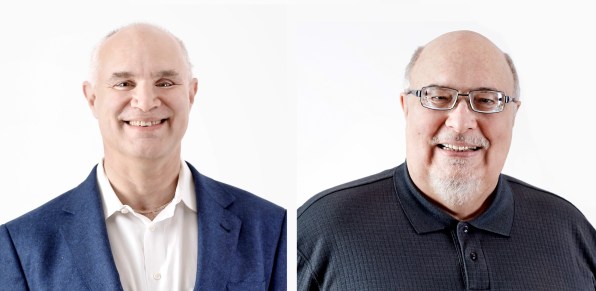
Mojo Vision was born of the ideas of two men, both Valley veterans who share a deep interest in eye-based tech—and who also both happen to have poor eyesight.
Cofounder and CEO Drew Perkins had already cofounded the optical networking company Infinera, which went public in 2007. He also cofounded and sold three other companies, including a cable network architecture company called Gainspeed. In 2012, when he was Gainspeed’s CEO, he developed cataracts, a common vision ailment where the cornea becomes clouded. Surgery fixed his far-field and near-field vision, but left him with significantly limited midrange vision.
THERE’S GOT TO BE A WAY TO GIVE PEOPLE ADVANCED OR ELEVATED VISION WITHOUT SURGERY.”
The experience got him thinking about using optical technology to correct vision problems, or even to push a person’s sight beyond 20/20. It also led him to muse about how he was investing his time. On the day Perkins dropped his son off for his first year of college in San Diego, he decided to pivot his professional life toward finding out if the “bionic eye” concept might really be possible. He initiated the sale of Gainspeed (it was eventually bought by Nokia) and took a year off.“I thought, ‘How can I give people this kind of super-vision?’” he told me. “There’s got to be a way to give people advanced or elevated vision without surgery.” And the entrepreneurial part of his mind began wondering if there might be a way to make money providing such technology.
Perkins didn’t know it at the time, but an ex-Sun Microsystems senior engineer, Michael Deering, had been thinking about some of the same issues. Before leaving Sun in 2001, Deering had built a reputation as an expert in artificial intelligence, computer vision, 3D graphics, and virtual reality. And he too had poor vision. After Sun, Deering spent a decade working out all the problems of focusing a micro-display—either within a contact lens or implanted in the eye—at the retina. Through his research and simulations, he was able to find answers to the most significant problems—work that was reflected in a steady stream of patents since 2008.
For much of that time, Deering had been consulting with ex-Sun CTO Greg Papadopoulos, who was now a venture capitalist at NEA, on ways to make a product and a business out of his work. NEA had also invested in Gainspeed, and when Perkins came to Papadopoulos in October 2015 to talk about the possibilities of the bionic eye concept, Papadopoulos was interested. At the end of the meeting, he told Perkins about Deering. Since there was obviously some potential synchronicity, the three men met.
Drew Perkins (left) and Michael Deering [Photos: courtesy of Mojo]
After Deering explained the work he’d been doing, Perkins felt energized. “I remember saying, ‘Wow, he’s figured it out,’” Perkins says. “He was able to unlock the tech that would need to exist for this to work.” Deering would become Mojo Vision’s chief science officer.
With Deering’s decade of science and Perkins’s experience in building optical technology products, the idea now had the critical mass to become a company. Mike Wiemer, a Stanford PhD who had earlier founded a solar cell company, joined as a third cofounder and CTO.
By the fall of 2015, Perkins, Deering, and Wiemer had validated their idea: “We said, ‘Hey, this could work,’” Perkins says. They incorporated under the name “Tectus,” a moniker they would use while in stealth mode. For the next few months, they fleshed out the business plan. When they presented it to NEA, the firm invested $750,000 in seed money. Perkins put in $750,000 of his own.
Papadopoulos told me that until that point, the whole idea of an eye-mounted LED was mostly theoretical. Deering had worked out the mathematical problems and had done some simulations, but building a real product was another story. It would take some special talents to do that. Perkins says he found the first “couple dozen” recruits at places like Apple, Amazon, HP, and Google. They’d be asked to invent something that had never been built before, using technology that Papadopoulos said would have to be “called in from the future.”

WHAT’S IN THE LENS

I had no idea that displays not much bigger than a grain of sand even existed. But there it was, under the view of a microscope, displaying an image of Albert Einstein sticking his tongue out at me. Mojo’s newest and smallest display, it squeezes 70,000 pixels into a space that’s less than half a millimeter across.
This display is the centerpiece of the Mojo lens. It’s positioned directly in front of the pupil, so that it projects and focuses light toward a specific area of the retina at the back of the eye. The display is so small and so close that the eye can scarcely see it. At least in the beginning, its quality will be more utilitarian than aesthetically pleasing—you don’t need stunning quality to perform tasks such as display weather information.
Albert Einstein makes a guest appearance on Mojo’s tiny display. [Photo: courtesy of Mojo]
The display focuses its light on a tiny indented area of the retina at the back of the eye called the fovea, which we use to detect the fine details of objects right in front of us. This little indention takes up only about 4% to 5% of the area of the retina, but it contains the vast majority of its nerve endings. It’s thick with photoreceptors that convert light into electrochemical signals, which are then transferred through the optical nerve to various vision centers in the brain. Moving outward from the fovea, the number and density of these photoreceptors decrease rapidly and steadily. We use these lower resolution areas of the retina for our peripheral vision.
All of this ocular science explains why Mojo’s display is practical. It mainlines light directly to the tiny portion of the retina that can see it best. And because there are so many photoreceptors in the fovea, the display needs less power and less light to transmit images.
Along with the display, the Mojo lens will contain a supporting cast of microcomponents. The first versions will include a tiny single-core ARM-based processor and an image sensor. Later versions will add an eye-tracking sensor and a communications chip. At first the lenses will be powered by a tiny thin-film, solid-state battery within the lens. Sinclair says the battery is meant to last all day and will charge in a small case that’s something like an AirPods case. Eventually, the lenses might get their power wirelessly from a thin device that hangs loosely around the neck like a necklace. The lenses will also rely on an internet connection provided by a smartphone or other device for some of their functions, such as sending and receiving data.

PUTTING AR TO WORK

Like any form of augmented reality, what Mojo is working on is only partly about technology. It’s also about finding valuable applications for AR. During a November visit to the company’s offices, I saw something the company is developing for a very specific set of customers: firefighters.
Wearing a VR headset to watch an early prototype demo of this lens experience, I saw a floor plan of the burning building I had just entered. Yellow lines began to form the outlines of tables and chairs within the smoky room. Graphical symbols marked the locations of other firefighters, even when they were separated from me by a wall. Numbers at the top of my view showed my oxygen tank level, communications signal strength, and other data. An alert began flashing, instructing me to get out of the structure.
Steve Sinclair [Photo: courtesy of Mojo]
This AR interface “allows a firefighter to see situational things while they’re holding an axe or a hose or some other piece of equipment, and they don’t have time to pull out their phone,” Sinclair told me.Mojo’s interest in building AR contact lenses for first responders grew when it began talking with Motorola Solutions, the dominant provider of communications technology for that market. Mojo has been collaborating with Motorola to define a set of features that might bring crucial information to firefighters and other responders at just the right times. Motorola’s venture fund also invested in Mojo. Sinclair told me that Mojo is talking to the U.S. Department of Defense about some similar scenarios for the military, but didn’t go into details.
Mojo also wants to make lenses for people in service industries. Sinclair describes a use case where a hotel concierge can seamlessly identify and greet incoming guests based on data called up from a database and displayed within the lenses.
But the first version of the Mojo lens, which the company says will ship in two to three years, will most likely be a base model containing a core set of features for people with vision impairments. There are 285 million of them worldwide, according to the World Health Organization.
These lenses could be used by people with various kinds of degeneration of the retina—the light-sensitive layer at the back of the eye—and by people experiencing presbyopia, the normal loss of ability to focus the lens of the eye on small objects that comes with aging. The Mojo lenses, for example, can detect the text on a road sign in the distance and display it clearly. They can magnify objects or project them onto the part of the person’s retina that can still see well. The lenses can help people detect objects in front of them by increasing the contrast between the shades or colors of the objects. The lenses can also superimpose graphic lines over the hard-to-see edges of objects within the wearer’s view.
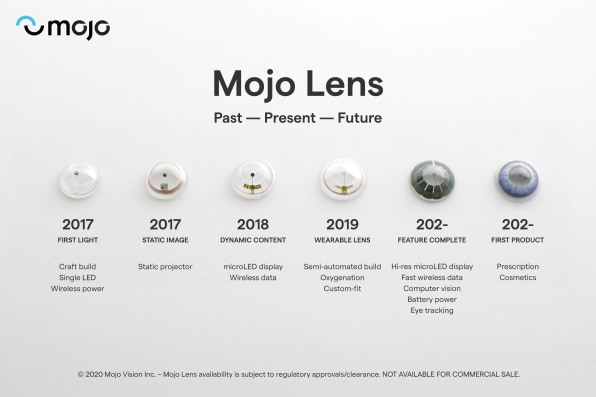
A timeline of Mojo’s progress so far, and what it plans to accomplish next. [Image: courtesy of Mojo]
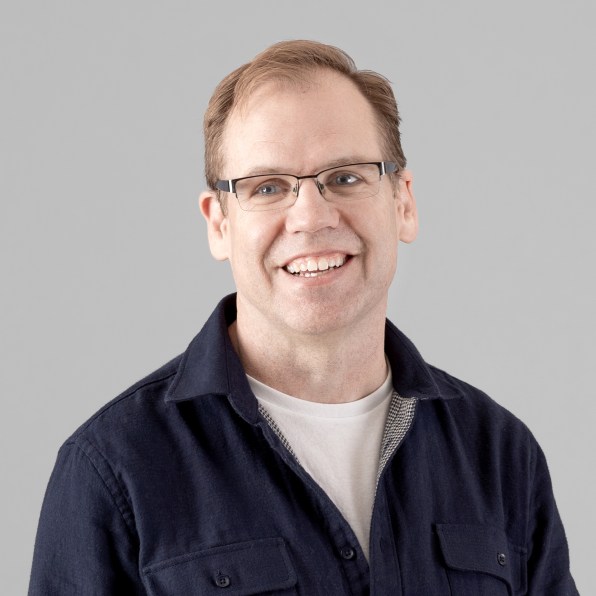
For some people, this could be life-changing. “We can give them the essential tools they need for mobility,” says Ashley Tuan, Mojo’s VP of medical devices and one of four optometrists working at the company. “They just want to feel that they are normal. They don’t want people to feel pity for them or take advantage of them.”Sinclair told me every pair of Mojo lenses will offer vision-enhancement features, with sets of custom AR features added on to serve the needs of specific vertical markets.
When I first met with Mojo a year ago, it was still very focused on developing the technology in the lenses, and its plans for matching that product with specific markets seemed somewhat fluid. Since then, the company has become more focused on developing the vision assistance features, for good reason: It says that when it presented the lenses to the Food and Drug Administration, it got a warm reception. Because the FDA was excited about the product’s potential for helping the visually impaired, it admitted Mojo into its Breakthrough Devices Program, which offers a development roadmap designed to get the lenses approved as a medical device.
As of now, Mojo still has a long way to go in its process of getting that certification. It’s already begun some of the studies it’ll need to prove the lenses’ safety and effectiveness, but it still needs to test them in real clinical trials. Sinclair says that those tests won’t begin for another couple of years. When I visited the company’s offices in early December, the company had only recently been granted its Institutional Review Board certification, allowing its employees to test the Mojo lenses with their own eyes—so it wasn’t a shocker that it wasn’t ready to let me try them for myself.

LENSES FOR CONSUMERS, EVENTUALLY

Only after Mojo has begun marketing its vision assistance and vertical market lenses does it plan on making lenses for regular consumers. Like the other versions of the lenses, the consumer incarnation will put helpful digital information within the wearer’s view to help them get things done. But the information will be more about life than work. For example, if you’re leaving the airport—perhaps with your hands full of luggage—the lenses might display arrows pointing the way to your car in the parking lot. They might put a pointer over your Uber ride as it arrives, and display the license plate number and other information. If someone rings your doorbell at home, the lenses might display a video of the person standing on the porch.
Whatever the primary purpose for wearing Mojo’s lenses, optometrists will play a key role as a distributor and gatekeeper. They’ll need to measure a would-be wearer’s visual acuity and the shape of their eyeballs, then send the information to Mojo, which will create custom lenses.
IT HAS TO MAINTAIN YOUR PRIVACY, IT NEEDS TO BE SAFE, AND IT NEEDS TO BE TRUSTWORTHY.”
An optometrist’s involvement also helps engender trust in Mojo and the safety of its product, which will be crucial. Mojo, after all, will be asking people to put a technology-laden piece of plastic directly against their eyeballs. An FDA stamp of approval should also go a long way toward that same end.Users will not only be asked to trust Mojo with their eyeballs, but with their data. People will soon realize the lenses potential for collecting information about all the things their eyes rest on, including products, places, political ads, and people. It’ll be on Mojo to assure them that the lenses don’t record that data and share it with advertisers or governments. Sinclair says the only thing the lenses will remember will be human faces they may have to recognize again, but even that data will be stored only for a short time.
Perhaps more problematic is that it’s not just the wearer that needs to be convinced about the privacy of the technology. People with whom the wearer comes in contact may be concerned that they’re being recorded. That was an issue with Google Glass—which other folks could tell you were wearing—and could be even more nettlesome with a technology as invisible as contact lenses.
The public’s opinion on the reasonable expectation of privacy in the digital age is evolving, but Mojo will have a lot of educating and assuring to do when its product finally reaches consumers. Sinclair is keenly aware of this, especially with his background at privacy-obsessed Apple. In fact he was talking about privacy the first time I met him a year ago. “It has to maintain your privacy, it needs to be safe, and it needs to be trustworthy,” he emphasizes.

ENGINEERING HEROICS

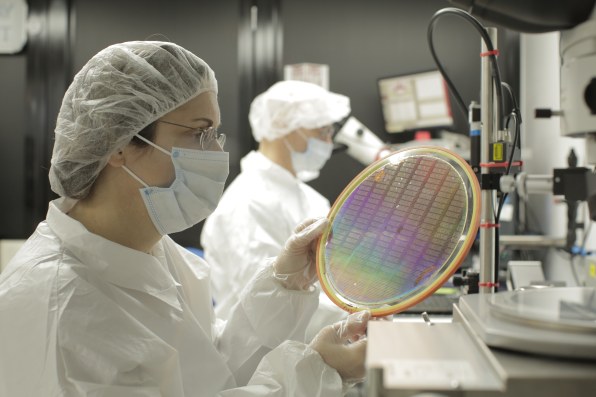
Mojo has spent the last three years turning Deering’s foundational work—his mathematical proofs and simulations—into a real physical product. And NEA’s Papadopoulos told me that it took a lot of long days and some real “engineering heroics” to overcome the technical barriers the Mojo people encountered along the way—barriers that could have stopped the development of the lenses cold.
Mojo clean room techs at work. [Photo: courtesy of Mojo]
According to Papadopoulos, early employees struggled to avoid thinking about all the reasons an AR contact lens was impossible and just get to work building it. He now believes that Mojo has emerged from that period and entered one where the road ahead is at least somewhat less treacherous. “It looks locked and loaded,” he says. “You know what you have to do, and there’s really nothing that seems scary.”The main thrust of the engineering effort is now uniting, integrating, and orchestrating the various microcomponents. “We’ve tested pretty much everything outside the lens, and now it’s all getting pulled together in the lens,” says Sinclair.
With the help of the FDA, Mojo’s lenses could become a visual assistance tool that helps a lot of people. But their future as a mainstream AR product may be less certain. Virtually every company building AR or mixed reality hardware is looking to the commercial market—rather than consumers—for early revenue streams. How many of those business customers will see contact lenses as a superior solution to AR glasses remains an unknown. And while consumer AR could end up being the next great personal computing interface after the smartphone, nobody really knows how it will play out.All of which means that Mojo—for all the progress its creators have already made—remains a moonshot. “The fact that a lot of companies are still struggling to do all that in a headset, and that these guys are at least talking about doing it in a contact lens is super interesting,” says IDG analyst Tom Mainelli. “Color me skeptical, but we don’t make leaps without people taking chances like this.” For those who doubt that Mojo can turn its bold concept into reality, only seeing will be believing—once the company is ready to project the proof right onto their retinas.

New FDA cleared wearables for nausea displayed at CES 2020

Wearables player Reliefband Technologies, has announced the unveiling of its new travel and sport therapeutic devices.
The company specialises in technology that aims to prevent and treat nausea and vomiting symptoms, and has received have received U.S. Food and Drug Administration (FDA) expanded indication clearance.
Both of the new devices, which are on show at CES 2020, offer user-controlled therapy for the prevention and treatment of nausea and vomiting associated with anxiety, hangovers, and physician-diagnosed migraines, as well as motion sickness, chemotherapy, morning sickness, and as an adjunct to antiemetics for postoperative surgery.
The over-the-counter transdermal neuromodulation devices are applied to the underside of the wrist. Reliefband works by emitting electrical pulses that stimulate the underlying median nerve. The signals generated on the underside of the wrist then flow to the central nervous system where they work, via the vagus nerve, to normalise stomach rhythms that cause nausea and prevent it.
Rich Ransom, president and CEO of Reliefband Technologies, said: “There are more than 38 million people in the U.S. who suffer migraines and the most common associated symptoms are nausea and vomiting. These newly-cleared indications mark an important step in our mission to mitigate the serious health issues and utter misery associated with nausea. We will continue to innovate our Reliefband technology, providing relief to those who suffer debilitating symptoms stemming from migraines, hangovers, anxiety and more.”
The devices can be used either before or after nausea and vomiting symptoms start and can be left on as long as symptoms subsist.
Reliefband Travel is a limited use wearable device designed for casual travellers who deal with nausea symptoms on a sporadic basis. There are three single-use models which work at a moderate level of intensity for 48 hours, 72 hours, or seven days and can be turned on and off as needs arise. These devices function with an included set of non-replaceable batteries and will be popular options for unsteady flyers, cruise vacationers or others who suffer from motion sickness or travel-related anxiety.
Reliefband Sport is a waterproof device, which includes a built-in rechargeable battery that, when fully charged, will last an extended period of time on the medium intensity level. Six intensity levels can be toggled allowing users to find the precise setting that’s optimal for their needs at any moment.

Verrica: Positive Data from Phase 3 CAMP Trials of VP-102 for Skin Virus

– Analysis suggested statistically significantly higher lesion clearance with VP-102 compared to vehicle in all regions of the body, including those deemed most sensitive –
– If approved, VP-102 will be marketed in the United States as YCANTH™ (cantharidin 0.7% Topical Solution), and would be the first FDA-approved treatment for molluscum –
Verrica Pharmaceuticals Inc. (“Verrica”) (Nasdaq: VRCA), a dermatology therapeutics company developing medications for viral skin diseases requiring medical interventions, today announced the presentation of positive data from a post-hoc pooled analysis of the pivotal Phase 3 CAMP trials evaluating the safety and efficacy of VP-102 (cantharidin 0.7% topical solution), Verrica’s lead product candidate for the treatment of molluscum contagiosum (molluscum). The new analysis showed that the percentage of patients with complete clearance of all lesions was statistically significantly higher in the VP-102 group than vehicle, across all body regions. Results from this analysis are being presented in a poster on January 18th-22nd at the 17th Annual Winter Clinical Dermatology Conference in Kohala Coast, Hawaii.
“The results of this study are important, as they suggest that this investigational molluscum treatment can potentially bring about complete clearance, regardless of where on the body the lesion is located,” said Lawrence Eichenfield, MD, Chief of Pediatric and Adolescent Dermatology, Rady Children’s Hospital, San Diego, CA, and principal investigator of the VP-102 Phase 3 molluscum program. “If approved, VP-102 may potentially be an important option for physicians, as they can have the option to treat even the most sensitive areas, including the groin, head, and neck.”

‘Donation after cardiac death’: 1st US test of new heart transplant method

More than 250,000 people in the U.S. are currently at the end stages of heart failure, up to 15% of whom are in desperate need of a transplant. A new method of “reanimating” donor hearts from those who have died from cardiac failure is currently being tested in the U.S., and may soon ease that burden.
As part of the new procedure, known as “donation after cardiac death,” or DCD, transplants, organs are retrieved from those who have died because their heart stopped — either naturally or because physicians discontinued life support. That work is made possible by a machine that allows the heart to not only be perfused with warm blood after it has been removed from the donor, keeping the heart functional and “alive” enough to be transported and transplanted several hours after retrieval, but also allows surgeons to assess the heart’s functionality in a way that wasn’t previously possible.
Last month, a team at Duke University was the first in the U.S. to perform the procedure in an adult as part of a multicenter clinical trial. And just last week, Massachusetts General Hospital in Boston and the University of Wisconsin in Madison, which are also a part of the trial, reported their first such transplant.
There are strict rules on how and when organs can be retrieved for transplantation — in the U.S., heart transplant donors can’t have died of circulatory death in some form.
“There’s a tremendous disconnect between people who need a transplant, and the number who actually get it,” said Dr. Jacob Schroder, a thoracic and cardiovascular surgeon who is a part of Duke’s DCD heart transplant team. “[DCD heart transplants] will expand the donor pool by 30%, or 3,400.”
“If proven successful and safe through this study, transplanting DCD hearts on a wider basis would be another great tool in our arsenal to utilize more organs and increase the number of lives saved through transplantation,” said Dr. David Klassen, chief medical officer of the United Network for Organ Sharing, the nonprofit that manages organ transplantation in the U.S.
Ten such heart transplants have already been performed among the three centers in the past month since the trial was initiated. Three other research centers — Vanderbilt, Stanford University, and Emory University — will soon be joining the trial, which is scheduled to run until 2021. In all, 15 sites across the U.S. will be involved.
“If done correctly, a DCD donor heart may outperform a brain dead donor heart [because] the effects of prolonged brain death on the heart is quite jarring,” said Dr. Mandeep Mehra, an advanced cardiovascular specialist at Brigham and Women’s Hospital in Boston, who is not involved in the trial. “This is a necessary addition to our armamentarium for organ donor recovery.”
For years, DCD transplants in U.S. adults have been done with other organs, including the lungs, kidney, and liver. And the very first heart transplant in 1967 could very well have been a DCD transplant, Mehra pointed out, because there was no legal definition of brain death at the time. And at least one team in Colorado has performed a small number of DCD heart transplants in pediatric patients in the U.S., according to Mehra.
But in recent years, and for adults, the heart has been a major exception for DCD transplants because its inability to pump oxygenated blood after death has meant a higher risk for damage, in which heart tissue begins to die or otherwise deteriorate. Traditional cold storage has also not allowed physicians to assess the heart’s function for any signs of damage, since a heart that is injured is less likely to help a prospective transplant recipient. As the need for heart transplants has risen, physicians have looked for ways to overcome the barriers to using DCD hearts.
Other countries, including the U.K. and Australia, have been performing DCD heart transplants for several years now. The procedure was first performed by a group in Sydney’s St. Vincent’s Hospital in July 2014. The Royal Papworth Hospital in the U.K. followed soon after in February 2015. There have been over 100 DCD heart transplants combined at the two locations.
Five of the six hospitals that do heart transplants in the U.K. have used the DCD method, according to Dr. Pedro Catarino, who is part of the DCD heart transplant team at Royal Papworth Hospital. He added that in the next six months, the U.K. will have a national retrieval system for DCD hearts. In contrast, physicians in Australia can perform the procedure, but it’s not covered by the government, said Dr. Kumud Dhital, who performed the first DCD transplant and who is now director of cardiothoracic surgery and transplantation at the Alfred Hospital in Melbourne. Transplants there have thus far have been paid for by philanthropic donations.
The Australia and U.K. groups, like Schroder’s at Duke, have relied on the TransMedics Organ Care System to reanimate the heart and assess its function after it has been removed from a donor.
“With the Organ Care System, time is no longer a limitation,” said Dr. Waleed Hassanein, CEO of TransMedics. “The OCS is always supplied with oxygenated blood and we’ve transplanted organs 21 hours after [they have been placed in the machine],” a feat that he said is not possible with traditional cold storage used to preserve organs. The system has been used for nearly 170 DCD heart transplants worldwide, Hassanein said.
The time it takes to remove the organ from the body, before it’s placed in the TransMedics machine, can be a limiting factor, as is this is the time that can lead to the most injury to the heart. “The longest we have heard of is 40-45 minutes, but we usually expect that time to be around 30 minutes,” Hassanein said. “Even with that limit of 30-45 minutes, you can triple or quadruple the number of heart transplants,” he added.
Importantly, the organ care system also allows transplant surgeons to measure the function of the heart before they transplant it to a recipient, allowing them to assess the organ’s viability. The system “replenishes the energy stores and you can see the heart beating,” Catarino said. “It’s not doing work, but you can measure the heart’s metabolic consumption, if it’s stressed or had coronary artery disease.”
The next step in the U.S. is for the TransMedics system to gain Food and Drug Administration approval for heart preservation — the agency has only signed off so far on its use in lung transplants. Though the company, which is sponsoring the multicenter trial, has worked with the FDA to develop the trial protocol: For every three patients who receive a heart transplant through the current standard for the procedure, one person will receive a DCD heart. The hope, according to Schroder, is to have completed around 50 DCD heart transplants by the end of the trial in 2021, at which point TransMedics will also look to file an application for FDA approval.
The procedure does have risks, including that some patients need to be connected to an external machine that pumps oxygenated blood to the body until the heart recovers its full function. But Hassanein said the company hasn’t heard of risks other than what’s expected with regular transplants, like organ rejection and death.
The results from elsewhere in the world are already promising. The recipient of the first-ever DCD heart in 2014 is “still doing extremely well,” Dhital said. A study published by the Australia group in April 2019 found that the survival rate among DCD heart transplant recipients was the same — or even higher in some cases — than those who received hearts removed from donors who suffered brain deaths.
2017 study from the U.K. group compared survival rates of 26 DCD heart recipients to an equal number of patients who received heart transplants via conventional methods. After 90 days, 92% of those who received DCD hearts were still alive, compared to 96% of those who received hearts after donors had died of neurological failure. After one year, those figures were 86% and 88%, respectively.
The teams in the U.S. are hopeful that the trial underway will yield similar results and spur FDA approval.
“Organ transplantation is the most cost-effective treatment for end-stage disease,” Hassanein said. “The DCD heart trial is a big deal and it’s very exciting for the field. It could make heart transplantation more of a reality for all those patients who are on the waiting list.”