Search This Blog

Sunday, January 19, 2020

China reports 17 new cases of mystery virus

China reported 17 new cases of the mysterious SARS-like virus on Sunday, including three people in serious condition, heightening fears ahead of China’s Lunar New Year holiday when hundreds of millions of people move around the country.
The new coronavirus strain has caused alarm because of its connection to Severe Acute Respiratory Syndrome, which killed nearly 650 people across mainland China and Hong Kong in 2002-2003.
Of the 17 new cases in the central city of Wuhan—believed to be the epicentre of the outbreak—three were described as “severe”, of which two patients were too critical to be moved, authorities said.
Those infected range from 30 to 79 years old.
The virus has now infected 62 people in Wuhan, city authorities said, with eight in a severe condition, 19 recovered and discharged from hospital, and the rest in isolation receiving treatment.
Two people have died so far from the virus, including a 69-year-old man on Wednesday after the disease caused pulmonary tuberculosis and damaged multiple organ functions.
Authorities said they had begun “optimised” testing of pneumonia cases across the city to identify those infected, and would begin “detection work… towards suspected cases in the city” as a next step, as well as carrying out “sampling tests”.
Scientists with the MRC Centre for Global Infectious Disease Analysis at Imperial College in London warned in a paper published Friday that the number of cases in the city was likely to be closer to 1,700, much higher than the number officially identified.
Authorities said Sunday that some of the cases had “no history of contact” with the seafood market believed to be the centre of the outbreak.
No human-to-human transmission has been confirmed so far, but Wuhan’s health commission has previously said the possibility “cannot be excluded”.
Three cases have also been reported overseas—two in Thailand and one in Japan.
-Rumour quashing-
Though China has not yet reported cases outside of Wuhan, discussion about the coronavirus spreading to other Chinese cities has swelled on social media.
On Sunday evening there were more than 400 million views of the hashtag “Shanghai pneumonia” on Weibo, China’s Twitter-like  site, while “Shenzhen pneumonia” garnered at least 340 million views.
China’s centre for  moved to quash speculation about the mysterious disease on Saturday, publishing a flyer that dismissed “five big rumours”.
One of them included claims about the coronavirus spreading, which China’s disease control authority dismissed by saying all cases were being treated in Wuhan.
A hospital in Guangzhou, a city in southern China, also moved to dispel rumours about suspected cases of the Wuhan pneumonia, reported state-run Global Times on Sunday.
The original post, which was published through the hospital’s official Weibo account on Saturday, has since been deleted.
Screening measures
Although there has been no official announcement of screening measures on the mainland, Wuhan deputy mayor Chen Xiexin said on state broadcaster CCTV that infrared thermometers had been installed at airports, railway stations and coach stations across the city.
Chen said passengers with fevers were being registered, given masks and taken to medical institutions. Nearly 300,000 body temperature tests had been carried out, according to CCTV.
Authorities in Hong Kong have stepped up detection measures, including rigorous temperature checkpoints for inbound travellers from the Chinese mainland.
The US said from Friday it would begin screening direct flights arriving from Wuhan at San Francisco airport and New York’s JFK, as well as Los Angeles, where many flights connect.
Thailand said it was already screening passengers arriving in Bangkok, Chiang Mai and Phuket, and would soon introduce similar controls in the beach resort of Krabi.
Wuhan is a  of 11 million inhabitants that serves as a major transport hub, including during the annual Lunar New Year holiday when hundreds of millions of Chinese people travel across the country to visit family.

Explore further

Creating living robots out of stem cells

Scientists have created a new life form that’s something between a frog and a robot. Using stem cells scraped from frog embryos, researchers from the University of Vermont (UVM) and Tufts University assembled “xenobots.” The millimeter-wide blobs act like living, self-healing robots. They can walk, swim and work cooperatively. Refined, they could be used inside the human body to reprogram tumors, deliver drugs or scrape plaque out of arteries.
“These are novel living machines,” says Joshua Bongard, a computer scientist and robotics expert at UVM who co-led the new research. “They’re neither a traditional robot nor a known species of animal. It’s a new class of artifact: a living, programmable organism.”
To determine the best design for this new life form, researchers from UVM ran an evolutionary algorithm through a supercomputer. Then, the Tufts team assembled and tested the design using stem cells from the African frog species Xenopus laevis — the xenobot name comes from this frog, not the Greek prefix meaning other or stranger.
What the team created is a body form never seen in nature. The cells work together, allowing the robots to move on their own in watery environments. They even spontaneously cooperated to move around in circles, pushing pellets into a central location.
The researchers point to the advantages of these “biological machines.” Unlike robots made with steel or plastic, these would simply decompose after use. When sliced, they are able to regenerate and stitch themselves back together, something few other robots can do, and in addition to medical purposes, they could be put to use cleaning up radioactive waste or microplastics.
If you’re starting to panic at the idea of supercomputers designing living robots, you’re not alone. “That fear is not unreasonable,” Levin says. “When we start to mess around with complex systems that we don’t understand, we’re going to get unintended consequences.”
The researchers hope that the more we understand this technology and capability, the better off we’ll be. Plus, the xenobots come preloaded with their own food source, which should run out in about a week, unless they’re in a nutrient-rich environment. Don’t worry though, these little guys can’t reproduce or evolve — at least not yet.

2020 brings new ways to upgrade your hearing

If your peepers are letting you down, you have an endless choice of ways to frame that physical defect as a style statement. If you have hearing loss, not so much. Even the term “cool hearing aid” feels like an oxymoron. It’s not for lack of trying; companies have attempted to deviate from the “pink plastic blob” for years now — the result is usually something like a silver, or black plastic blob instead.
Why does that matter? Because for whatever reason, there’s still a stigma attached to wearing a hearing aid. If companies start making products that are as stylish as they are functional we all win. Fortunately, that’s starting to happen, and here are four new ways to upgrade your hearing without it feeling like a penance.

Best hearing tech 2020
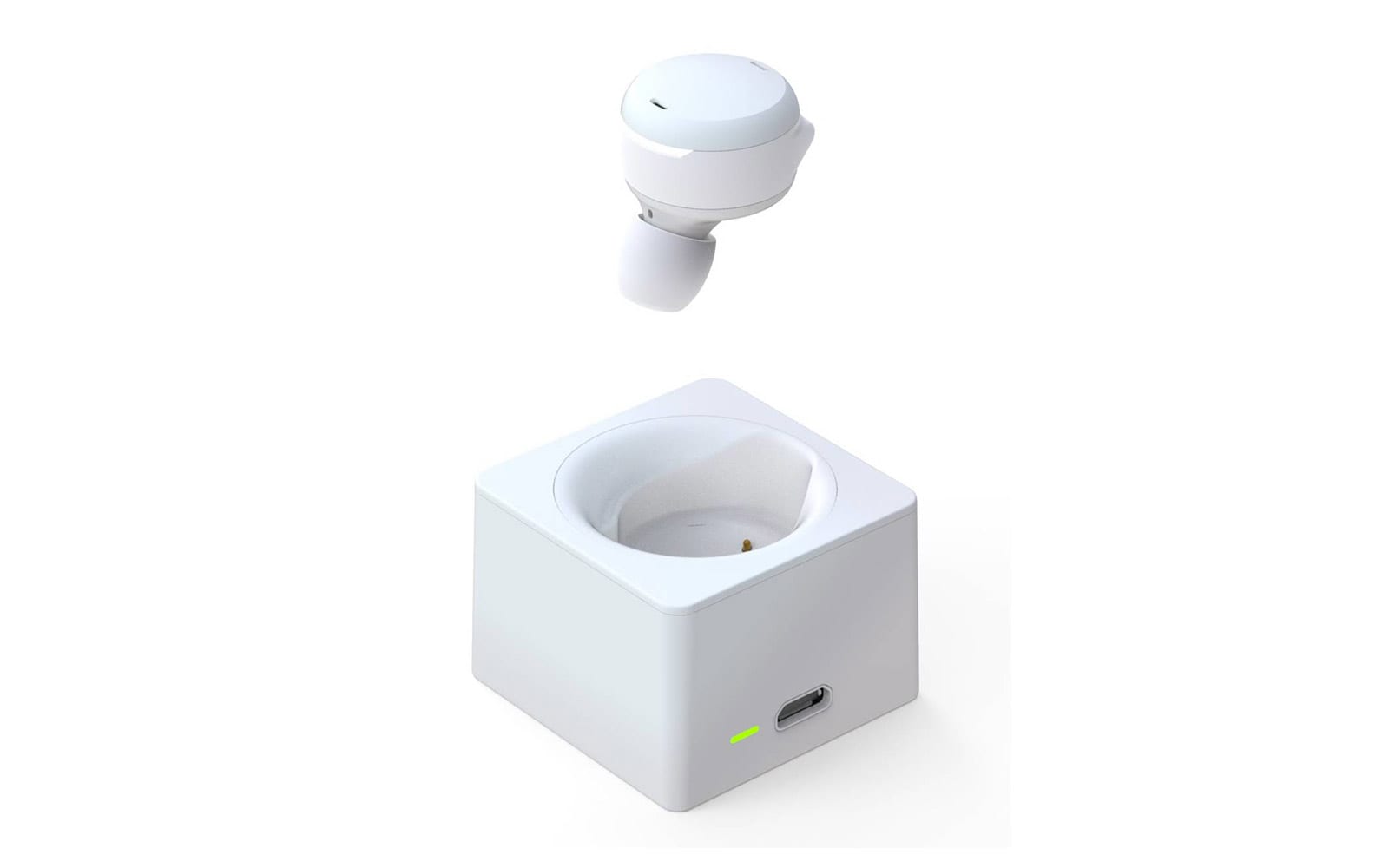
If you have mild hearing loss in just one ear, a pair of hearing aids might not make sense (or fit your budget). Olive’s Smart Ear aims to bring consumer headphone style to an assisted hearing device. It’s not a “hearing aid” instead it’s an amplifier (think reading glasses, but for ears). It’s primarily a solution for those who find themselves only speaking to the person on their “good side” at dinner parties, but has a few other tricks up its sleeve.
The bud looks just like any of the (many) TWS headphones on the market today. Rightly or wrongly, some people still feel self-conscious wearing a “classic” hearing aid, so the Olive’s design might make you feel more like you’re sporting a funky wearable than a miniature ear trumpet. Most hearing amplifiers simply mimic the design of a hearing aid, and rarely the smaller, sleeker ones. More and more companies are taking the bud-like approach, but Olive Union is going all in.
The Smart Ear’s focus is on boosting your one bad ear when you need it most: during a conversation. I’ll admit, I’ve used my own one-sided hearing loss to my strategic advantage at the dinner table (“sorry, this is my bad side, I can’t really hear you”), but the Olive would definitely help me out when I actually do want to converse with the person to my left. It’s comfortable, tailored to your hearing through a simple hearing test, and offers up to seven hours of listening time.
Unlike many TWS headphones, the Olive doesn’t come with a charging case. Instead, there’s a simple cradle that connects to any microUSB power source. I also found that if you don’t get a good fit, the bud can gently work its way out of your ear and start creating feedback. The companion app has an option to reduce this, but it still comes and goes.
As for the actual hearing assistance, I found it to be adequate for my level of (conductive) hearing loss, but it tends to amplify most sounds equally, like the clink of plates or the clatter of cutlery in a restaurant as well as your table mate’s retelling of their recent meditation retreat in Peru.
While the Olive isn’t quite right for me, I can see it being an inexpensive solution for those who need a bit of a boost from time to time. It’s certainly small enough and durable enough to live in your bag or pocket for those times you need it. The fact it looks more like a headphone makes it less discreet, but also less drab.
Best hearing tech 2020
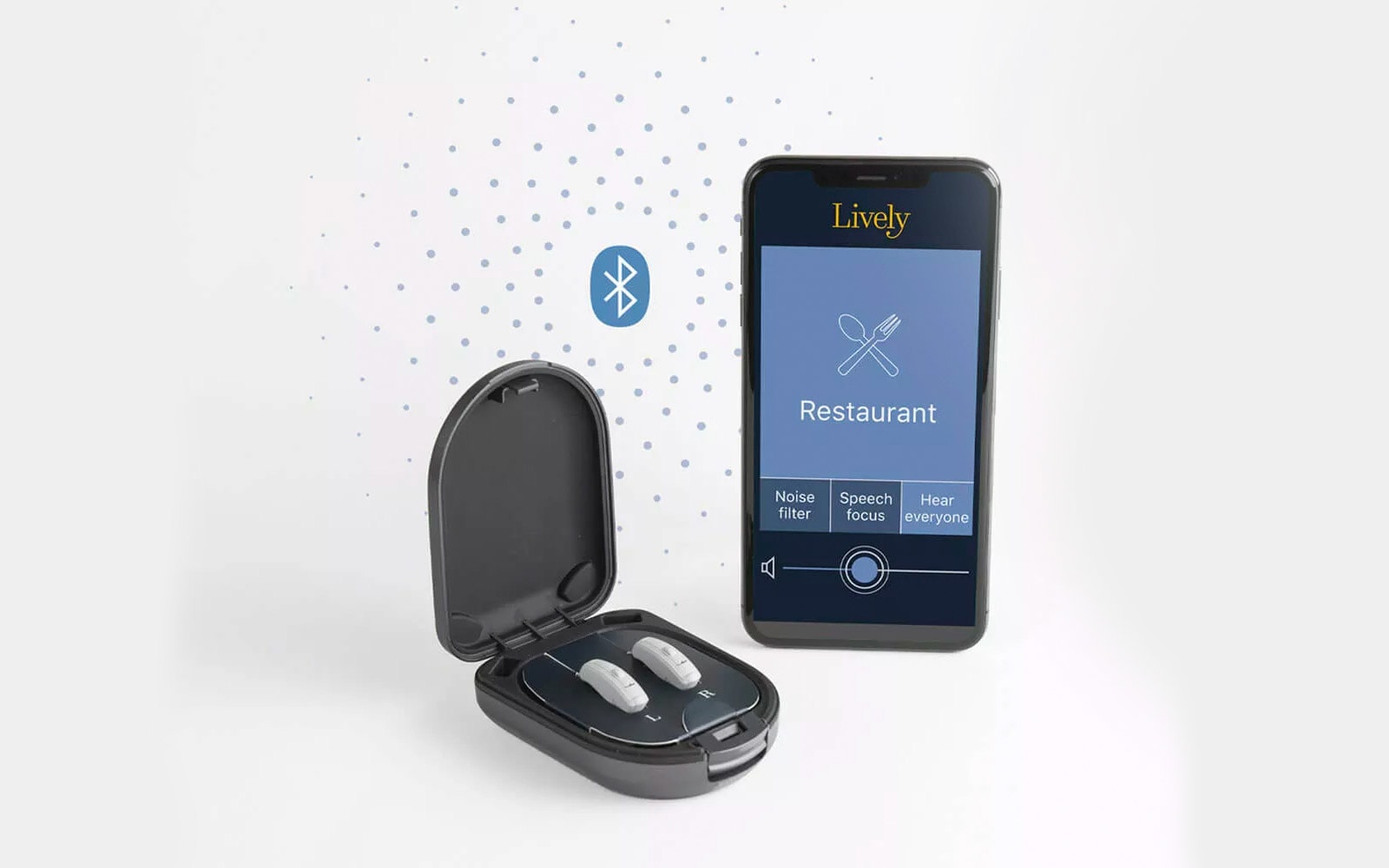
Technically, Lively doesn’t “make” hearing aids, instead, it’s an all-in-one audiologist for the modern age. Instead of traipsing to get a hearing test in some dated, dusty high street store, simply take the company’s online test and they’ll ship your hearing aids directly to you.
The experience brings shopping for a hearing aid more in line with well, anything else you’d want to buy online. Of course, you can still speak with an audiologist about your personal needs, or visit one of their premises if you prefer.
With Lively, it’s more about streamlining the whole experience so that it feels like a convenient service, rather than a dreaded trip to the docs. The hearing aids Lively sells are of the same quality you’d expect from your regular provider, but the savings of being online mean they don’t cost as much. Lively’s hearing aids cost $1,650 a pair which is lower than many rivals of similar quality.
I visited their New York office for the “in-person” experience, and it was about as nice as any visit to the hearing specialist as I could have hoped for. The hearing aids are small, discreet and — for my hearing loss — worked remarkably well. The sound enhancement was more natural than some rival products I’ve tried, and the companion app makes customizing your settings a breeze. There’s music streaming here too, but only for iOS users.
One issue I tend to find with hearing aids is that the volume isn’t quite set loud enough, something that only becomes apparent once you’ve left the clinic and had a chance to use them in the real world. Typically, this would mean booking a return visit for an adjustment. With Lively, you can request assistance via the company’s app. Simply tell them the problem your experiencing, and receive help remotely. For me, that was an update sent to my phone, which boosted the volume of my hearing aid to a far more satisfactory level. All of this without moving from my chair.
Best hearing tech 2020
Despite the name (and the marketing images), the Neo HiFi isn’t a music streaming device. Instead, it’s an incredibly small hearing aid, by far the smallest on this list. Its diminutive form means it’s practically invisible once you’ve placed it in your ear (don’t worry, there’s a small tab for removing it easily). This makes it a great choice for those who really don’t want people to know they’re wearing a hearing aid.
Beyond its tiny size, another selling point for the Eargo, is the whole user experience. Unlike most hearing aids that maybe have a carry case for the device and spare batteries, Eargo’s products all have the battery built-in. The case for the Neo HiFi not only stores the buds, but charges them at the same time (you then charge the case once a week or so).
As the Neo HiFi is so small, there’s no Bluetooth onboard, but once again, that case comes to the rescue. Place the buds in that, and you can connect to them via the companion app to adjust settings and more.
Another factor to consider is also related to its size. As discreet as they are, the more space a hearing aid has, the louder and clearer the audio tends to be. This means the Eargo might not be quite as impactful, sonically, as other options on this list. The company has engineered the Neo HiFi to get the most out of the real-estate is does have, and the clever tip design does mean there’s a good amount of isolation, but I found them to be less suitable for my hearing loss than other options on this list.
The Eargo Neo HiFi is the middle ground between form and function. They are easily the “coolest” hearing aids on this list, with a product that really feels like it was designed for the young as well as the more senior user. The trade-off might be the audio, which is no small thing for a hearing gadget, obviously. But it still delivers a solid boost for its size, you just need to make sure it’s appropriate for your hearing first.
Best hearing tech 2020
Unlike the other companies we’ve discussed so far, Phonak is a classic hearing aid manufacturer, not a disruptive newcomer. That means its new Virto Black device has decades of experience behind it, and it shows.
The Virto Black is, in many ways, the yin to the Eargo’s yang. It’s a more traditional company that’s trying to appeal to a broader audience with a few slick tricks. But first and foremost it’s a very capable hearing aid. For me, it’s the device that helped most with my conductive hearing loss, to the point where I almost felt like I had “normal” hearing again, no small feat.
When it comes to sensors and software, the Virto Black is a powerhouse. According to the company, it 16 different hearing performance features, five different wireless technologies and will analyze 1,600 data points to calibrate the sound to your needs. All you need to know is that it’s smart enough to adapt its sound on the fly depending on your surroundings, though there are presets (which you can manually configure) too, if you want a little more control.
As the name suggests, the hearing aids are black, and they sit in the ear, rather than behind it. This might seem like an unusual color choice at first, but it actually makes them look more like wireless headphones than your grandpa’s beige hearing aid. It’s a weird world where we’re more okay with black buds in the ear rather than something discreet behind it, but here we are.
Where the Phonak gets more interesting are the additional features. For one, there’s Bluetooth music streaming. This might seem like an obvious addition, but it’s not as common as you think. And for a variety of reasons, when it is present, it’s often iOS only. The Virto Black will stream music from any Bluetooth source, be it your phone, laptop or even a television. This connectivity also means you can take calls through the hearing aids too. For calls, the sound is fine, but don’t expect the buds to sound anywhere near as good as dedicated headphones. This is a bonus feature more than a headliner.
Perhaps my favorite thing about the Virto Black, after its solid performance at helping me hear, is the “Roger” accessory. It’s a small disc laden with microphones. Place Roger anywhere (within about 30 feet of you) and it’ll beam whatever it hears right into the Virto Black. You can even control which direction it “listens” and there’s a lanyard mount so you can have one person in a crowded room have a direct line to your ears. It feels like having hearing superpowers and makes the Virto Black feel a lot more versatile. Note, your audiologist might charge extra for Roger, but it’s both good fun and actually useful.
All this technology doesn’t come cheap. At around $6,000 the Virto Black is pitched as a premium option. Unfortunately, the economics of hearing aids hasn’t benefited from masses of competition, so prices remain high if you want the good stuff. If you don’t need any of the bells and whistles and don’t mind a behind-the-ear device, you don’t need to spend this much, but if you like the style, and some of the more gadgety features, paying up for good hearing shouldn’t feel frivolous.

Joe Biden’s Obamacare Retread

Watching the Democratic Presidential candidates debate the best way to fix health care, it’s difficult to escape the impression that they suffer from collective amnesia. Their party had its shot at reforming the system a decade ago and blew it by passing a slapdash “reform” program that clashed so violently with the laws of economics that it became a symbol of big government overreach, bureaucratic ineptitude, and broken campaign promises. Ten years on, two of the top contenders for the Democratic presidential nomination have tacitly admitted this by pledging to replace it with some version of single-payer. The leading candidate in that contest, however, wants to retread Obamacare.
Former Vice President Joe Biden describes this plan as “moderate” because it doesn’t call for the immediate introduction of “Medicare for All,” as does Senator Bernie Sanders, or the two-phase transition to single payer favored by Senator Elizabeth Warren. Yet his plan to “build on the progress” of the “Affordable Care Act” includes a variety of false claims about its achievements. In a recent opinion piece in the Concord Monitor, one of New Hampshire’s most influential newspapers, Biden wrote: “Obamacare protected more than 100 million people with preexisting conditions.” This is a wild exaggeration according to a report issued by the Democrats themselves after PPACA was signed into law:
From 2007 through 2009, the four largest for-profit health insurance companies, Aetna, Humana, UnitedHealth Group, and WellPoint, refused to issue health insurance coverage to more than 651,000 people based on their prior medical history.… From 2007 through 2009, Aetna, Humana, UnitedHealth Group, and WellPoint refused to pay 212,800 claims for medical treatment due to pre-existing conditions.
During the period discussed, an average of 217,000 individuals were denied coverage annually, while an average of 70,933 claims per year were denied. No honest extrapolation of these figures across the insurance industry will get you to 100 million. But where Biden really insults our intelligence is his claim that Obamacare will save us money with a combination of new subsidies and price controls. If this doesn’t set off your BS detector, consider the last time we were told the “Affordable Care Act” would to save us money. Precisely the reverse occurred. During the first three years the law was in effect, insurance premiums doubled across the entire health insurance market, including employer-based plans.
Yet Biden would have us believe Obamacare was an unqualified success, and he’s not content to merely perpetuate it. He wants to expand it to include an exceptionally bad idea that even the Democrats rejected during the 2009 health care reform debate — the public option. This is how he describes it in his column for the Concord Monitor: “We cannot rest until every American can access quality, affordable care.… That’s why my plan starts by giving Americans a choice to either stick with their private plan or get covered by a Medicare-like public option.” Biden claims this will keep insurers honest by forcing them to compete for the first time. This is nonsense, as the editors of the Wall Street Journal explain:
Mr. Biden supports a new government insurance plan that would “compete” with private insurance. We use quotation marks since a government insurer with zero cost of capital and political backing starts with an unbeatable advantage. The public option would undercut competitors on price, stiff providers with low reimbursement rates, and crowd out private insurance over time.
Despite Biden’s claim that he objects to the elimination of private insurance, a stated goal of “Medicare for All,” the addition of a public option to Obamacare would inevitably drive private insurers out of the health care market. Biden, however, claims it would merely offer more choice for consumers and wouldn’t force a change on folks who are happy with their insurance. He has even taken to repeating the most infamous whopper told by his former boss about Obamacare. In late October Biden actually pledged, “Under my plan, if you negotiated an agreement for health care with your employer, union, or otherwise, and you like it because you’ve given up wages to get it, you can keep it.”
That whopper is no truer today than it was in 2013, when it earned erstwhile President Obama the “Lie of Year Award” from PolitiFact. When the public option obliterates private health insurance, it won’t matter whether you like your current coverage or not. Unlike the federal government, an insurer can’t operate at a loss and remain viable. Faced with that situation, they will simply exit the health coverage market and invest their resources in a line of business that promises a decent return on investment. Eventually, this will also drive up the cost of providing care. Sally Pipes, the Thomas W. Smith fellow in healthcare policy at the Pacific Research Institute, puts it as follows:
If a public option’s artificially low premiums entice the privately insured away, then [health care] providers will have to raise rates for those remaining on private insurance. That would drive yet more privately insured to the public option. The cycle would continue until there were no private insurers left.… Joe Biden wants voters to believe his health proposal offers choice. It doesn’t.
Former Vice President Biden’s health plan isn’t a moderate proposal. It’s just as radical as anything proposed by Bernie Sanders or Elizabeth Warren — only less honest. As Seema Verma, the administrator of the Centers for Medicare & Medicaid Services, wrote last July in the Washington Post, “Whether conceived as an expansion of Medicare or the creation of a government health care option, the public option is a Trojan horse with single-payer hiding inside.” “Good Ole Joe” knows that, of course. Even if he can’t always figure out exactly which state he’s in, he’s still sentient enough to know a retread of Obamacare will sell better than single payer, even if the end result will be identical.

Health Insurers Level More Blows To Medicare For All

Health insurance companies are already reporting unprecedented growth in signing up seniors to their Medicare plans for 2020, which is bad news for certain Democrats pushing single payer versions of “Medicare for All.”
The nation’s largest health insurer, UnitedHealth Group, last week reported its best growth ever for enrollment in individual Medicare Advantage, the private coverage sold by health plans via contracts with the federal government. UnitedHealth’s UnitedHealthcare health insurance unit was the first of the big health insurers to report quarterly earnings and updated 2020 projections for what is expected to be a record year of growth for Medicare Advantage. Other insurers including the Aetna unit of CVS Health, Anthem, Cigna and Humana will be reporting their quarterly earnings in the next two months.
“Within our Medicare Advantage offerings including dual eligible growth, we expect to serve nearly 700,000 more people in 2020,” UnitedHealth Group chief executive David Wichmann told analysts on the company’s fourth quarter earnings call last week.
Wichmann described the most recent open enrollment period, which ended in early December for seniors to choose their Medicare health and drug coverage for 2020, as UnitedHealth’s “strongest ever” for individual Medicare Advantage.
UnitedHealth’s record Medicare Advantage enrollment comes as most Democrats running for their party’s nomination for the Presidency back off a single payer version of Medicare for All that would uproot the private insurance industry. And that would in effect end a Medicare Advantage program that has already signed up more than one in three Medicare eligible seniors and growing.
But more seniors signing up for private Medicare Advantage means it will be politically harder for it to be taken away and replaced with a government-run single-payer version of Medicare for All pushed most notably by Sen. Bernie Sanders of Vermont.
Sanders continues to push single payer Medicare and last week during a debate in Des Moines reiterated that his plan has no copayments or deductibles. Meanwhile, Democrats that include former Vice President Joe Biden and most others still in the race are touting an effort to build on existing coverage under the Affordable Care Act. Sen. Elizabeth Warren, historically a supporter of Sanders plan, has backed off moving all Americans to a government-run healthcare system in favor of first bolstering the ACA and introducing a public option.
As more baby boomers turn 65 and become eligible for Medicare, insurers and the federal government are seeing more of them sign up for private Medicare Advantage than the government-run traditional fee-for-service Medicare.
This year, Medicare Advantage plans are offering more supplement health benefits under new rules established by the Centers for Medicare & Medicaid Services, which has seen  a record number of health plans selling coverage that offers seniors the same benefits as traditional Medicare plus extras like preventative care and outpatient healthcare services.
“We are bullish obviously overall on the outlook for both Medicare Advantage, but also the dual special needs marketplace as well,” UnitedHealth’s Wichmann said. “They are both very larger today and growing in markets. MA is clearly outperforming fee-for-service in terms of overall benefit coverages and the quality of outcomes and the returns that people are getting in terms of their overall satisfaction and so no surprise that it is performing as well and seems to be gaining some momentum.”
The lack of momentum for a single payer version of Medicare for All among Democrats vying to challenge President Donald Trump should Republicans re-nominate him to run for a second term isn’t lost on health plans signing up seniors to Medicare Advantage.
The health insurance industry and its supporters say Medicare Advantage is more about “modernizing” Medicare with the help of the private sector and seniors are increasingly recognizing the difference.
“Despite the lower costs, better outcomes, and high satisfaction that defines Medicare Advantage, some would argue for policies that threaten the success of Medicare Advantage and turn back the clock on innovative care models that enable seniors to live healthier lives,” Allyson Schwartz, a former Democratic Congresswoman and president and CEO of Better Medicare Alliance wrote in an opinion column in the Jan. 7th issue of the journal Health Affairs.
“From my time leading a women’s health center, to my work as Commissioner of Health and Human Services in Philadelphia, to my service in Congress crafting health policy on the Ways and Means Committee, to my role today, I believe health care is a basic human right,” Schwartz wrote. “As we seek to address Americans’ very real concerns, we should fix what is broken in our health care system, while strengthening that which works to ensure coverage and quality at a cost we can all afford.”

Reporter’s notebook: J.P. Morgan’s 2020 health conference

The Annual J.P. Morgan Healthcare Conference kicked off last Monday in San Francisco. Finance reporter Tara Bannow will provide updates and daily observations here throughout the conference. You can also find additional stories on ModernHealthcare.com or Twitter.
Wednesday, Jan. 15CHS rolls out its 2020 financial guidance early
For-profit hospital chain Community Health Systems unveiled its financial guidance for 2020 on Wednesday afternoon—earlier than in prior years.

Franklin, Tenn.-based CHS projects 2020 revenue between $12.4 billion and $12.8 billion, and adjusted earnings before interest, taxes, depreciation and amortization of $1.65 billion to $1.8 billion. Same-store adjusted admissions are projected to increase between 1.5% and 2.5% over the year.
“By the way, we’ve never done this before,” Wayne Smith, CHS’ CEO, told the audience. “But we feel like we’ve got pretty good insight and our metrics are good and strong.”
Smith said the company won’t release its results for the final quarter of 2019 until late February. CHS said it anticipates its adjusted EBITDA for full-year 2019 to be toward the middle portion of the company’s adjusted EBITDA guidance for 2019, which is between $1.6 billion and $1.65 billion.
CHS officials said the company is winding down its divestiture program and getting close to its core hospitals. Kevin Hammons, the company’s chief financial officer as of Jan. 1, said CHS raised a total of $1 billion from divestitures through the end of 2019 toward the company’s target of $1.3 billion, a goal it expects to hit in the first half of 2020. CHS also expects to draw $300 million in proceeds from those deals, he said.

CMS Administrator says states, not CMS, should shape their Medicaid programs
CMS Administrator Seema Verma repeatedly harped on the added costs and stifled innovation that comes with government bureaucracy before an audience gathered for a salmon lunch during the J.P. Morgan Healthcare Conference on Wednesday.
Verma said she thinks even more states will choose to relinquish their federal Medicaid match in favor of block grants and waivers. The focus of Medicaid should be on getting people out of poverty and focusing on specific outcome measures.
“For this able-bodied population, it’s not enough to just hand out a Medicaid card,” she said. “We should be able to do more.”
The same is true for states trying to implement Medicaid work requirements, which have been under threat by lawsuits. The focus there is on “community engagement,” she said. At a time when employers are struggling to find enough workers, Verma said states should be helping Medicaid beneficiaries get training and land jobs. She said she also worries legal challenges to the work requirements stifle state innovation.
Verma said the CMS is working to close the time gap between when the FDA approves a drug and the Medicare program begins paying for it.
“The ultimate goal is we want to make sure that Medicare patients have access to the latest technology and not having the government bureaucracy slow down the pace of innovation,” she said.
Centene CEO has big ambitions for Medicare Advantage business
Centene’s CEO told J.P Morgan conference attendees he is “very unhappy” with the company’s performance in its Medicare Advantage business, and that he plans to turn WellCare Health Plans to a Medicare brand once the merger is approved.
In an interview Wednesday morning on the sidelines of the conference, Michael Neidorff said that he switched up Centene’s Medicare Advantage leadership after he wasn’t seeing the desired membership growth. Although annual membership was increasing at about the same rate as Centene’s competitors—7%—he said Centene’s competitors have larger membership bases.
“We just want to be perfectionists,” he said. “We expect all things to perform well.”
Centene currently has roughly 500,000 Medicare Advantage members, a number that’s set to double once the WellCare deal goes through. After that, Neidorff said he wants to compete with the likes of Humana to be number two or three in that business.
The Department of Justice is still investigating the proposed merger, and Neidorff said it’s down to a few technical issues. He expects the deal to be approved before mid-year.
Tuesday, Jan. 14CVS says it wants to partner with docs, not put them out of business
Doctors tend to feel threatened by CVS Health’s foray into providing healthcare services, but the pharmacy giant says it views itself as a partner.
CVS made waves in June when the company announced it was launching a fleet of 1,500 so-called HealthHUB sites in its stores by the end of 2021. The company already runs roughly 1,100 MinuteClinic sites, which are focused on low-acuity services like colds and immunizations.
CVS acts as a strong referral source for primary-care providers, having made nearly 4 million primary-care referrals last year alone, Tom Moriarty, CVS’ chief policy and external affairs officer and general counsel, told Modern Healthcare at the J.P. Morgan conference on Tuesday. Half of the visits to MinuteClinics take place on nights and weekends, when primary-care clinics are closed, he said.
CVS finds out which doctors near its clinics are accepting referrals and adds them to lists it hands out to patients, Moriarty said. The first question CVS representatives ask patients is whether they have primary-care physicians, he said. If they already do, CVS shares the patient’s information with their provider, Moriarty said.
Through its merger with Aetna, CVS learned that roughly 34% of emergency department visits in the health insurer’s book of business did not require that more expensive level of care, Moriarty said.
CVS has opened 50 HealthHUBs so far, and plans to have 600 by year-end, or roughly two new clinics per day. Unlike MinuteClinics, HealthHUBs are more focused on chronic disease management.
UPMC says Highmark still steering patients from its facilities
It turns out the long-running feud between UPMC and insurer Highmark Health over isn’t exactly over, despite the 10-year contract the rival health systems signed in June.
UPMC Treasurer Tal Heppenstall said that hundreds of thousands of Highmark members are being excluded from visiting certain UPMC facilities. Those members are enrolled in a plan called Community Blue, which he said is designed to steer patients toward providers in Highmark’s provider arm, not-for-profit Allegheny Health Network.
Highmark spokesman Aaron Billger wrote in an email that Community Blue members do not have in-network access to a handful of UPMC facilities in the Pittsburgh area. They have in-network access to UPMC hospitals outside of Pittsburgh.
Billger said Community Blue’s in-network providers include the Allegheny Health Network. He noted that UPMC was invited to participate in the plan, but declined.
Beyond that, Heppenstall said he’s pleased with the 10-year contract to allow Highmark Blue Cross and Blue Shield patients to receive care at UPMC, although he declined to share details about what’s in it. He also said he’s looking forward to moving on to other things.
“It has taken the political pressure off of UPMC,” he said. “We’re happy with the outcomes. We’re seeing Highmark patients come back in droves.”
The legal battle was contentious and ultimately led to intervention from Pennsylvania Gov. Tom Wolf and Attorney General Josh Shapiro, who announced the negotiated deal in June.

Partners HealthCare’s secret sauce in 2020? Centers of excellence
Boston-based Partners HealthCare, after recent pushback from state regulators against its efforts to expand in New England, is aiming its growth strategy around developing center of excellence programs.
Dr. Anne Klibanski, CEO of the not-for-profit health system, told Modern Healthcare on the sidelines of the J.P. Morgan conference that she expects Partners to make announcements around center of excellence partnerships in the next four to six months.
Part of the goal is to attract patients from across the country and worldwide, she said.
“So that people nationally can say, ‘Now that you’ve put this together, this level of expertise, I’m going to come here,’ ” Klibanski said.
The strategy coincides with Partners’ recently announced rebranding, including changing its name to Mass General Brigham. The name change is part of an effort to focus more attention on the health system’s renowned academic medical centers, Massachusetts General Hospital and Brigham and Women’s Hospital. Klibanski said Partners hopes to leverage expertise in areas like neuroscience and oncology.
Partners has reentered talks with New Hampshire’s attorney general to potentially acquire Exeter Health Resources. In September, Attorney General Gordon MacDonald said the combination would violate state law requiring free and fair competition. That was just months after Partners dropped its bid to acquire Care New England in Providence, R.I., bowing to pressure from that state’s governor.
Partners Chief Financial Officer Peter Markell confirmed to Modern Healthcare that talks have restarted.
“We don’t know if we’ve changed his mind,” he said.

Tenet outsourcing business support operations to Manila
As part of an effort to hit its goal of $450 million in cost savings, Tenet Healthcare recently opened an office in the Philippines that will house a significant portion of its business functions, including payroll, accounting and legal.
Ron Rittenmeyer, Tenet’s CEO, told Modern Healthcare in an interview on the sidelines of the J.P. Morgan conference that the new unit, which occupies four floors of a building in the capital city Manila and opened within the last few months, will help the for-profit hospital chain run its business on a 24/7 basis. He declined to say how much money the company expects to save from the move, but said the office currently employs 400 to 500 people.
“Our competitors all do it, so it’s consistent with what everybody is doing,” Rittenmeyer said.
Tenet spokeswoman Lesley Bogdanow wrote in an email that does not mean Tenet will eliminate 400 to 500 positions from its U.S. operations.
Dallas-based Tenet did not relocate employees to Manila for the new office, which will support its hospitals; Conifer Health Solutions revenue-cycle subsidiary; and United Surgical Partners International ambulatory network. Rittenmeyer said the company is offering enhanced severance as well as resume and interview support for domestic jobs that will be shifted to Manila.
“So far we’ve had almost no backlash or any concern about it,” he said. “We’re out in front of it. We talked to people way in advance that it was going to happen.”
Some business operations will still take place in Tenet’s hospitals, but will be supported by the Manila center, Rittenmeyer said.
The cost savings will come from operating more efficiently, Rittenmeyer said, not as a result of tax or regulatory differences. He described Manila as a massive hub for business outsourcing, and said the population there is very “Americanized” and there are no language barriers.
“It just complements the team we already had,” he said.

Providence St. Joseph Health launches virtual, same-day visits
Providence St. Joseph Health announced Tuesday it has launched on-demand, virtual services for common health issues.
Using Providence Express Care Virtual, patients in Alaska, California, Montana, Oregon and Washington will be able to see doctors without appointments using their mobile devices or computers, the health system announced during the J.P. Morgan conference.
Not-for-profit Providence St. Joseph’s Express Care Virtual accepts most insurance plans, and most out-of-pocket expenses won’t exceed $49, according to a news release.
Dr. Sunita Mishra, chief executive of Providence Express Care, said in a statement the idea is to give patients more flexibility. “Our hope is that by making care more accessible and creating fewer barriers, more people will seek care, especially those who may not be able to leave work, those who do not have transportation, or are homebound,” she said.
Express Care Virtual treats conditions such as flu, strep throat, infections, eczema, vomiting, reproductive health and other conditions.
Ascension’s Google partnership will give “longitudinal record” on patients
Ascension’s Google partnership is designed to give providers a unified view of patients’ information, transforming the provider experience, the health system said Tuesday.
The project is led by not-for-profit Ascension’s chief nursing officer and involves redesigning care around the patient, Eduardo Conrado, Ascension’s chief strategy and innovations officer, told an audience at the J.P. Morgan conference on Tuesday. Providers will be able to use the electronic platform to quickly see a patients’ previous Ascension visits, medications, labs and other orders. Providers will also be notified of changes in patients’ acute status in real time.
“We’re trying to give clinicians access to a longitudinal record,” Conrado said.
The health system is testing the platform at one of its Florida hospitals, and it has reduced length of stay and improved satisfaction scores there, he said.
Ascension sustained significant blowback—and even a federal probe—when news of its Google partnership first surfaced in November. Conrado did not mention that during his presentation.
UPMC will spend $1 billion on bioscience development by 2024
UPMC announced Tuesday—the second day of the J.P. Morgan Healthcare Conference in San Francisco—that its Enterprises arm will spend $1 billion on new drug, diagnostics and device development by 2024.
The Pittsburgh-based integrated academic health system said it’s looking to make investments that complement the scientific and commercial work it already has underway.
The $1 billion is on top of the more than $800 million UPMC has invested in its entrepreneurial efforts to date, primarily in digital solutions, which the health system says have returned more than $1.5 billion.
UPMC Enterprises, UPMC’s innovation, venture capital and commercialization arm, has formed five transactional sciences companies in the past two years and launched more than 30 research projects. The organization has expanded its focus to include retinal and respiratory disease, autoimmune diseases and neuroinflammation. Its initial focus was immunotherapies for cancer, transplantation and age-related diseases.
The J.P. Morgan conference is a popular venue for health systems to drop such news. At last year’s event, Providence St. Joseph Health announced the launch of its second, $150 million healthcare venture fund. UPMC’s leaders are not presenting during this year’s conference, although a team from the health system is attending the event.
Each of UPMC Enterprises’ investments will have a “direct and powerful impact” on how UPMC cares for patients, while also generating a “significant financial return,” Jeanne Cunicelli, UPMC Enterprises executive vice president, said in a statement.
UPMC Enterprises has funded startups like Generian, a company striving to tackle diseases related to aging, and BlueSphere Bio, which strives to develop personalized T-cell therapies for cancer.
Monday, Jan. 13ProMedica pulling out of managed Medicaid in southeast Ohio
Not-for-profit ProMedica is pulling its insurance arm, Paramount, out of managed Medicaid in southeast Ohio after experiencing significant losses due to what the system said were inadequate rates and enrollment errors.
The change affects about 30,000 members who will be shifted onto one of the state’s four other managed Medicaid providers, Steve Cavanaugh, ProMedica’s chief financial officer, told Modern Healthcare at the J.P. Morgan conference. Paramount, which covers more than 237,000 Medicaid members in Ohio, will remain in Medicaid managed care in the northeast and western parts of the state.
“It wasn’t an easy decision to leave even part of the state, but we think it was the right one in the short run,” Cavanaugh said.
Paramount attributed its $102.8 million operating loss in the nine months ending Sept. 30 to managed Medicaid. The plan had already implemented a freeze on new Medicaid patients.
Cavanaugh said he doesn’t think ProMedica will pull the health plan out of managed Medicaid in the state entirely. It’s possible Paramount will reenter southeast Ohio in the future. He said the system will consider that move when the state issues a request for information in 2021.
Advocate Aurora’s lofty goal: Double revenue by 2025
Advocate Aurora Health has set a number of ambitious goals to hit by 2025, including more than doubling its revenue, which currently stands around $12 billion.
The not-for-profit system’s CEO, Jim Skogsbergh, announced to an audience at the J.P. Morgan conference Monday morning its Transformation 2025 initiative, which includes growing revenue to $27 billion and serving 10 million patients.
Advocate Aurora, with headquarters in Downers Grove, Ill., and Milwaukee, also strives to grow its operating margin to 4.7%—it was 4.6% in the third quarter of fiscal 2019—and cut costs by $1.1 billion in that time.
The system will rely in part on a strong drive to become more consumer-focused, he said.
“That requires a herculean effort, pivoting to where the industry is going and making sure that we get really, really intimate with the consumer in ways that we haven’t in healthcare before,” he said. “We admire so many organizations that are doing that.”
Among other 2025 goals: to serve 10 million people and derive 10% of revenue from new businesses that have a consumer focus, Skogsbergh said.
He closed by refuting recent research that challenged the assertion that health system mergers improve outcomes.
“Ours have,” he said. “They’re demonstrable and measurable. So we believe in it.”
Baylor Scott & White wants $1 billion in cost savings over five years
Baylor Scott & White Health is plowing ahead with a second aggressive cost savings target since its 2013 formation.
The Dallas-based health system is working toward a new goal of $1 billion in cost savings over five years, Chief Financial Officer Penny Cermak said. The system has arrived at $200 million in annual improvements to its cost structure in the second year of a new savings program, she said.
“If we want to make the cost of healthcare more affordable for our patients, the only way to get there is to first be lean and efficient ourselves so we can pass along savings to our customers and our members,” Cermak said.
Following the merger that formed Baylor Scott & White, the system achieved its goal of $1.5 billion in merger-related savings over five years, Cermak said.
“We did that and then some,” she said.
After that, the cost savings slowed to a crawl. That’s when, two years ago, the system launched a new program called REACH, which stands for realizing efficiencies through achieving cost effective healthcare.
Bon Secours Mercy Health touts merger savings
Bon Secours Mercy Health locked in $160 million in merger-related savings in 2019, significant progress toward its overall savings goal.
The not-for-profit health system, formed through the September 2018 merger between Mercy Health and Bon Secours, identified $280 million in merger-related synergies, CEO John Starcher said on Monday morning.
On July 1, 2019, the 51-hospital system became the largest private provider in Ireland with the purchase of five hospitals with roughly $320 million in annual revenue.
“We’re excited about this,” Starcher said.
Cincinnati-based Bon Secours Mercy’s EBITDA margin is projected to have fallen to 9.2% in 2019 from 10% in 2018 on a pro forma basis. Its operating margin shrunk from 3.4% in to 3% in that time. Meanwhile, the system’s initial 2019 forecast shows $8.7 billion in revenue last year, up from $8.1 billion in 2018 on a pro forma basis.
On the bright side, Bon Secours Mercy CFO Deborah Bloomfield said employment expenses fell 2% year-over-year as a percentage of revenue. Admissions grew 6% in that time, and days cash on hand improved from 183 to 253 on a pro forma basis. The system’s debt to capitalization improved from 41% to 31% year-over-year.
Lowering patients’ costs takes $100 million from Intermountain’s margin
Intermountain Healthcare has been vocal about its effort to lower its patients’ out-of-pocket costs—at the expense of the health system itself.
Salt Lake City-based Intermountain’s efforts to bring down costs for patients and members of its health plan have shaved $100 million off its margin in the past two years, Bert Zimmerli, the system’s CFO, told a packed audience during the conference’s kickoff session Monday.
Nonetheless, Zimmerli said it’s “absolutely” the right thing to do.
“You hear all the time at this conference: Healthcare is becoming unaffordable,” he said. “I don’t agree with that. It’s already unaffordable.”
To compensate, Intermountain has had to double down on its efficiency efforts, Zimmerli said.
One example of cost savings is bringing the cost of a normal, vaginal delivery with a plan available for uninsured patients that reduced the cost from approximately $6,000 to $4,150.
Intermountain has created a platform of 60 such shoppable procedures, Zimmerli said.
“We make a lot of money on those,” he said.
The system’s finances remain strong, however. Intermountain has 367 days cash on hand, Zimmerli said, attributing the metric to strong collections under its revenue-cycle vendor, Chicago-based R1 RCM.
Northwell to implement “self-service” price estimator
Hospitals that don’t offer patients financial estimates ahead of scheduled visits are falling behind in an area that’s now dominating the industry: consumerism.
Not-for-profit Northwell Health has offered a price estimator for a while, but it relies on employees calling the patients’ health insurance company, which takes up a lot of time. By the end of the year, Northwell plans to implement a major upgrade. Patients will be able to get price estimates on their own through the health system’s website.
“We have to be able to give our consumers a better out-of-pocket cost estimate,” Rich Miller, Northwell’s chief business strategy officer, told Modern Healthcare in San Francisco on Sunday ahead of the J.P. Morgan conference. “To the degree technology can make that easier and more accurate, we feel it’s the right thing to do for consumers.”
New Hyde Park, N.Y.-based Northwell is working with credit-reporting company Experian to implement technology that will electronically submit the relevant information to a patient’s insurer and determine their out-of-pocket costs for certain procedures automatically.
Currently, that’s a manual process that “takes quite a bit of time,” he said. It’s also rudimentary and creates estimates using prior patients with the same insurance and procedure, he said. As time went on, Miller said the health system realized it had to improve its offerings.
The new price estimator tool will be up and running for Northwell’s medical group in April and for its hospitals in July. The self-service website function will be ready by year-end, Miller said.
While hospitals are happy to share individual patients’ price estimates, they vigorously protested a CMS rule that would require hospitals to publish payer-negotiated prices for various services. The rule is set to go into effect on Jan. 1, 2021.

Kaiser, Blue Shield pledge $45M to California housing fund

Hospital giant Kaiser Permanente and insurer Blue Shield of California on Friday pledged $45 million to a new state fund aimed at getting people off the streets.
Gov. Gavin Newsom signed an executive order last week creating what he proposes to be a $750 million fund that providers could use to pay rents, subsidize affordable housing or help board and care homes.
Kaiser is contributing $25 million and Blue Shield of California is contributing $20 million.
“Chronic homelessness has been shown to cut 27 years from the average lifespan and is associated with communicable diseases such as hepatitis and typhus, increased hospitalizations, and frequent readmissions,” said Greg Adams, CEO of the Oakland-based nonprofit healthcare company.
Paul Markovich, president and CEO of Blue Shield of California, said “addressing homelessness is a key step in ensuring health and wellness for individuals and families.”
The governor applauded the rapid response from both companies for his initiative.
Newsom has just wrapped up a statewide tour promoting his plan to combat spiking homelessness. Last week he declared himself California’s “homeless czar,” after promising a year ago to appoint one.
California is in the grip of a housing and homelessness crisis. There’s too little housing that workers can afford, and the number of people who are living in their cars, temporary shelters and out in the open increased 16% over two years.
On Tuesday, Alameda County deputies evicted homeless mothers who had taken over a vacant house to protest the lack of housing for families.
The California Access to Housing and Services Fund is a major part of Newsom’s budget proposal that allocates more than $1 billion to address homelessness.
He is seeking another $695 million in state and federal matching funds for preventive health care, but some of that money could also go to helping people find housing.
Newsom has ordered state agencies to free surplus state property to house homeless people at sites along highways and at unused health care facilities, state fairgrounds and elsewhere.
Thursday, state officials delivered 15 trailers and a medical services tent to a vacant, city-owned lot in Oakland. The trailers can house up to 70 homeless people.
“No one is naive that 15 former FEMA trailers … is going to ‘solve’ the crisis,” Newsom said, according to the San Francisco Chronicle. “It’s about catalyzing a focus.”
He’s also seeking nearly $25 million for three counties to experiment with putting those who are deemed mentally incompetent to stand trial into community programs instead of state psychiatric hospitals.
Kaiser Permanente is based in Oakland, where it has teamed with the group Bay Area Community Services to house more than 500 homeless adults over 50 who are battling chronic health conditions.
Blue Shield also is headquartered in Oakland.