Two AstraZeneca (NYSE:AZN) cancer drugs received have orphan status for treatment of liver cancer by the FDA, a designation that may eventually speed progress to approval.
The special status was granted to Imfinzi, a lung cancer treatment, and tremelimumab, which has been tested in a combination in a variety of cancers.
Lynparza, another Astra drug, was also given FDA priority review for a severe form of prostate cancer, the company said separately.
Cancer research has revealed proteins known to play a role in the disease, but with no known way of stopping what they do. In pharmaceutical parlance, they’re “undruggable.”
Revolution Medicines is trying to drug the undruggable with small molecules that block the signaling pathways these proteins use to help cancer grow and thrive. With one of its experimental therapies now in early-stage testing under a partnership with a large pharmaceutical company and more compounds in the pipeline, the Redwood City, CA, biotech is preparing to go public to finance its research.
In documents filed with securities regulators late Friday, Revolution set a preliminary $100 million target for its IPO. The company has applied for a Nasdaq listing under the stock symbol “RVMD.”
Revolution is developing drugs for what it calls “frontier targets,” proteins that support cancer but have no drug that blocks them. In cases where there is an FDA-approved drug, the therapy doesn’t fully suppress what the protein does to help cancers grow. Revolution is developing drugs to specifically target RAS and mTOR, two signaling pathways that play a role in helping tumors.
RAS proteins act like molecular switches that control the signaling systems regulating cellular growth. In normal cells, these proteins receive and obey the signals that switch them from the active state to the inactive state. But when RAS gets stuck in the active state, these proteins drive cells to become cancerous.
In order for a drug to block a protein, it needs to bind to a site somewhere on the molecule. RAS proteins pose the challenge of lacking druggable binding pockets for a drug, Revolution says in its filing. The company’s technology addresses that problem by using a second protein, which it calls a chaperone, to form a pocket. That druggable pocket is where Revolution’s small molecule drugs are intended to bind to a RAS protein.
Revolution says it is developing small molecule drugs that target multiple types of the active form of the RAS protein, which it calls RAS(ON). It expects to nominate its first RAS(ON) drug candidate this year, according to the filing. The company adds that it believes its approach could treat diverse RAS mutations encompassing colorectal, pancreatic, and non-small cell lung cancer, among others.
Revolution’s most advanced drug, RMC-4630, blocks SHP2, a protein in the RAS signaling pathway. The drug is currently in Phase 1/2 testing with partner Sanofi (NYSE: SNY), and in the IPO filing, Revolution reports preliminary data from that study. As of Nov. 6, 2019, 63 of the 66 patients enrolled in the study had received the drug. In addition to dosing data, Revolution reported early signs that RMC-4630 shows anti-tumor activity against non-small cell lung cancer that has the KRAS mutation, one of the RAS(ON) targets of the company. In one patient, the volume of tumors was reduced by 45 percent.
Sanofi is reimbursing Revolution for most of the research costs of RMC-4630. Through the end of the third quarter of 2019, Sanofi had paid Revolution $83.5 million, which includes the upfront payment to start the alliance plus R&D expenses, according to the filing. The California biotech says it will use the IPO proceeds to fund development of other RAS drugs, bringing them through the preclinical work needed to support an application to start tests of “one or more” of them in humans. The company will also use the new cash to develop RMC-5552, a preclinical compound that addresses the mTOR pathway.
Revolution launched from venture capital firm Third Rock Ventures five years ago. At that time, the startup’s focus was developing new medicines from natural products—compounds found in nature that have therapeutic properties. Revolution’s lead program was an antifungal drug.
As the company continued to work with the natural products technology it licensed from the University of Illinois at Urbana-Champaign, Revolution also made progress in cancer applications, CEO Mark Goldsmith told Xconomy in 2018. Revolution raised additional financing to continue that research and eventually returned the antifungal compound to the Illinois scientist who discovered it. In Revolution’s IPO filing, the biotech says its RAS(ON) drugs and mTORC1 inhibitors are “inspired by natural products.”
Revolution’s research is bolstered by assets from Warp Drive Bio, a biotech that it acquired in 2018. Warp Drive was also developing RAS drugs. At the time of the acquisition, executives declined to offer financial details about the all-stock deal. But Revolution’s IPO filing reveals that it offered shares valued at $69 million.
That Warp Drive deal also turned Sanofi into a Revolution shareholder. As one of Warp Drive’s shareholders, the French pharmaceutical giant was issued shares in Revolution as part of the acquisition. According to the IPO filing, Sanofi’s stake in Revolution is 7.8 percent.
Revolution has raised more than $211 million, most recently a $100.2 million Series C financing last summer. The filing shows that Third Rock Ventures is the company’s largest shareholder, owning a 28.8 percent stake, followed by The Column Group at 18.6 percent.
Chinese authorities and the World Health Organization (WHO) say a new strain of coronavirus is behind the outbreak of pneumonia in the central city of Wuhan, which has erupted just ahead of the Lunar New Year, the country’s biggest festival.
Some experts say the strain may not be as deadly as some other strains of coronavirus such as Severe Acute Respiratory Syndrome, which killed nearly 800 people worldwide during a 2002/03 outbreak that also originated from China. But little is known about the new virus, including its origin and how easily it can be transmitted between humans.
KNOWN CASES
Chinese authorities confirmed 139 new cases of the virus and a third death from the outbreak on Jan 20. The new cases include three patients outside of Wuhan, including two in Beijing, marking the first instances of the virus spreading to other Chinese cities. [nL4N29O176]
As of Jan. 20, there were more than 200 confirmed cases of patients with pneumonia caused by the new strain of coronavirus. Their symptoms included fever, coughing and difficulty breathing. [nL4N29N026]
Of the 198 patients in Wuhan itself, three have died and 25 have been cured.
Thailand has also reported two confirmed cases of the pneumonia, both of whom were Chinese tourists from Wuhan. Japan has also confirmed one case of a Japanese citizen who visited Wuhan.
LITTLE KNOWN ABOUT VIRUS ITSELF
China’s National Health Commission said in a statement on Jan. 19 the source of the virus hasn’t been found and that its transmission path has not been fully mapped.
The outbreak is strongly linked to a seafood market in Wuhan, but some patients diagnosed with the new coronavirus deny exposure to this market.
Health officials have said there is no clear evidence the virus spreads easily from one person to another, but they cannot rule out the possibility of human-to-human transmission.
Wuhan municipal authorities released information about a married couple that contracted the virus on Jan. 15. The husband, who got sick first, worked at the market but the wife denied any exposure to the market in question. [nL4N29K2A6]
The authorities did not explicitly state whether this was a case of human-to-human transmission, however.
COUNTERMEASURES
There is no vaccine for the new virus. Symptoms include fever, difficulty in breathing as well as pneumonic infiltrates in the lungs.
Chinese authorities have stepped up monitoring and disinfection efforts ahead of the Lunar New Year holiday in late January, when many of the country’s 1.4 billion people will travel domestically and overseas.
Airport authorities in the United States as well as many Asian countries, including Japan, Thailand, Singapore and South Korea, have stepped up screening of passengers from Wuhan.
The World Health Organization sent directives to hospitals around the world on infection prevention and control.
An outbreak of coronavirus in China is spreading to more cities, Chinese authorities reported on Monday, with 139 new cases found over the weekend, including a third death.
The Daxing health commission in the capital Beijing said it had confirmed two cases of coronavirus, while the southern Guangdong province’s health commission confirmed one case in Shenzhen.
The new cases, the first inside China outside the central city of Wuhan where the virus was first reported, come as the country gears up for the Lunar New Year holidays later this week, when hundreds of millions of Chinese travel domestically and abroad.
The Wuhan Municipal Health Commission said in a statement that 136 new cases of coronavirus had been discovered in the city on Saturday and Sunday.
As of late Sunday, 198 cases in total had been reported in Wuhan, including three deaths. Some 170 people were still being treated in the hospital, while 25 had been cured, it said. The statement gave no further details of the latest death toll.
Outside China, two cases have been reported in Thailand and one in Japan, all involving people from Wuhan or who recently visited the city.
Beijing said on Sunday it will increase efforts to contain the coronavirus outbreak, while health authorities around the world are working to prevent its spread.
The new virus belongs to the same family of coronaviruses that causes Severe Acute Respiratory Syndrome (SARS), which killed nearly 800 people globally during a 2002/03 outbreak that also started in China.
Some experts say the new virus may not be as deadly as SARS, but there is still little known about it including its origin and how easily it can be transmitted between humans.
As cold weather settles in across North America, some communities have already started up their snowplows, while others keep watchful eyes on the forecast. Snow and ice can wreck travel plans, but they also play important ecological roles. And frozen water can take amazing forms. For days when all talk turns to winter weather, we spotlight these five stories from our archives.
As Colorado State University atmospheric scientist Scott Denning explains, this happens because the liquid water in the lake can’t be colder than the freezing point – about 32 degrees Fahrenheit. As water evaporates from the relatively warm lake into the cold dry air, it condenses from vapor (gaseous water) to tiny droplets of water in the air, which look like steam.
When it gets extremely cold, ice can form on the ocean’s surface. Waves break it up, so the water starts to look like an undulating slurpee. “For anyone willing to brave the cold, it’s wild to stand by the shore and watch the smoking slushy sea with its slow-motion surf,” Denning writes.
2. How road salt tames ice
When a big storm is forecast, utility trucks often will head out to pre-treat streets and highways, typically spraying rock salt or saltwater solutions. But contrary to popular belief, salt doesn’t melt ice.
Water freezes at 32 degrees Fahrenheit, but mixing it with salt lowers its freezing point. “The salt impedes the ability of the water molecules to form solid ice crystals,” explains Julie Pollock, assistant professor of chemistry at the University of Richmond. “The degree of freezing point depression depends on how salty the solution is.” When dry salt is spread on ice, it relies on the sun or the friction of car tires to melt the ice, then keeps it from re-freezing.
Pulses of salt can harm plants, water bodies and aquatic organisms when it washes off of roads – especially during spring runoff, which can carry huge doses. Researchers are working to find more benign options, and are currently studying additives including molasses and beet juice.
Testing beet brine as an environmentally friendly road deicer in Canada.
3. Why trees need snow
Snow may seem like nothing but trouble, especially if you have to shovel it. But it’s also a valuable resource. In the Northeast, environmental scientists Andrew Reinmann and Pamela Templer have found that winter snow cover acts like a blanket, protecting tree roots and soil organisms from the cold.
In experimental forest plots where Reinmann and Templer removed snow from the ground, they have observed that
“…frost penetrates a foot or more down into the soil, while it rarely extends more than two inches deep in nearby reference plots with unaltered snowpack. And just as freeze-thaw cycles create potholes in city streets, soil freezing abrades and kills tree roots and damages those that survive.”
Climate change is shortening northeast winters and decreasing snowfall, with serious effects on forests. “Losing snowpack can reduce forest growth, carbon sequestration and nutrient retention, which will have important implications for climate change and air and water quality all year-round,” Reinmann and Templer predict.
4. Frozen reservoirs
Snow is even more valuable in western states, where many communities get large shares of their drinking water from snowpack that lingers at high altitudes well into the warm months. Here, too, warming winters mean less snow, and scientists are already observing “snow droughts.”
Adrienne Marshall a research fellow studying hydrology and climate change at the University of Idaho, defines a snow drought as a year with snowpack so low that historically it would only happen once every four years or less.
“Today, back-to-back snow droughts in the western U.S. occur around 7% of the time,” she writes. “By mid-century, if greenhouse gas emissions continue to increase, our results predict that multiyear snow droughts will occur in 42% of years on average.”
Snowpack is also melting earlier in the spring, which means less water is available in summer. These changes are affecting cities, farms, forests, wildlife and the outdoor recreation industry across the West year-round.
Laura Cunningham@PaleoLaura
Today’s #snowpack on Montgomery Pk in northern White Mtns CA, seen from down in Benton Valley. Very good snow for June!
If nature doesn’t deliver as much snow as we need, what about helping it along? Many western states and agencies have tried to do just that for years by cloud-seeding – adding particles to the atmosphere that are thought to serve as artificial ice crystals, promoting the formation of snow.
There’s just one hitch: No one has proved it actually works. Nonetheless, “Western states need water, and many decision-makers believe that cloud seeding can be a cost-effective way to produce it,” write atmospheric scientists Jeffrey French and Sarah Tessendorf.
In a 2018 study, French, Tessendorf and colleagues used new computer modeling tools and advanced radar to see whether they could detect ice crystals forming on silver iodide particles injected into clouds. They hung imaging probes from the wings of research planes, which flew in and out of the seeded areas of clouds. Sure enough, in those zones ice crystal formation increased by hundreds, leading to the formation of snow. No such results occurred in non-seeded regions.
More research is needed to see whether cloud seeding can change water balances over large areas. And ultimately, even if that proves to be true, another question will remain: Whether it’s worth the cost.
The rise of wearable fitness trackers has increased the number of people monitoring their heart rate, both throughout the day and during exercise.
Whether you’re an athlete trying to gain the competitive edge, a weekend warrior tracking progress or someone who is just trying to improve your health, consider heart rate a valuable tool in understanding the work of your amazing body as it achieves those first steps, that next 5K or even Olympic gold.
Heart rate is one of your body’s most basic vital signs, yet many people have questions about what heart rate really tells them. What should your target heart rate be during exercise? Does it even matter?
1. What is your heart rate?
First, the basics: Your heart rate, also sometimes called your pulse rate, is the number of times your heart contracts per minute.
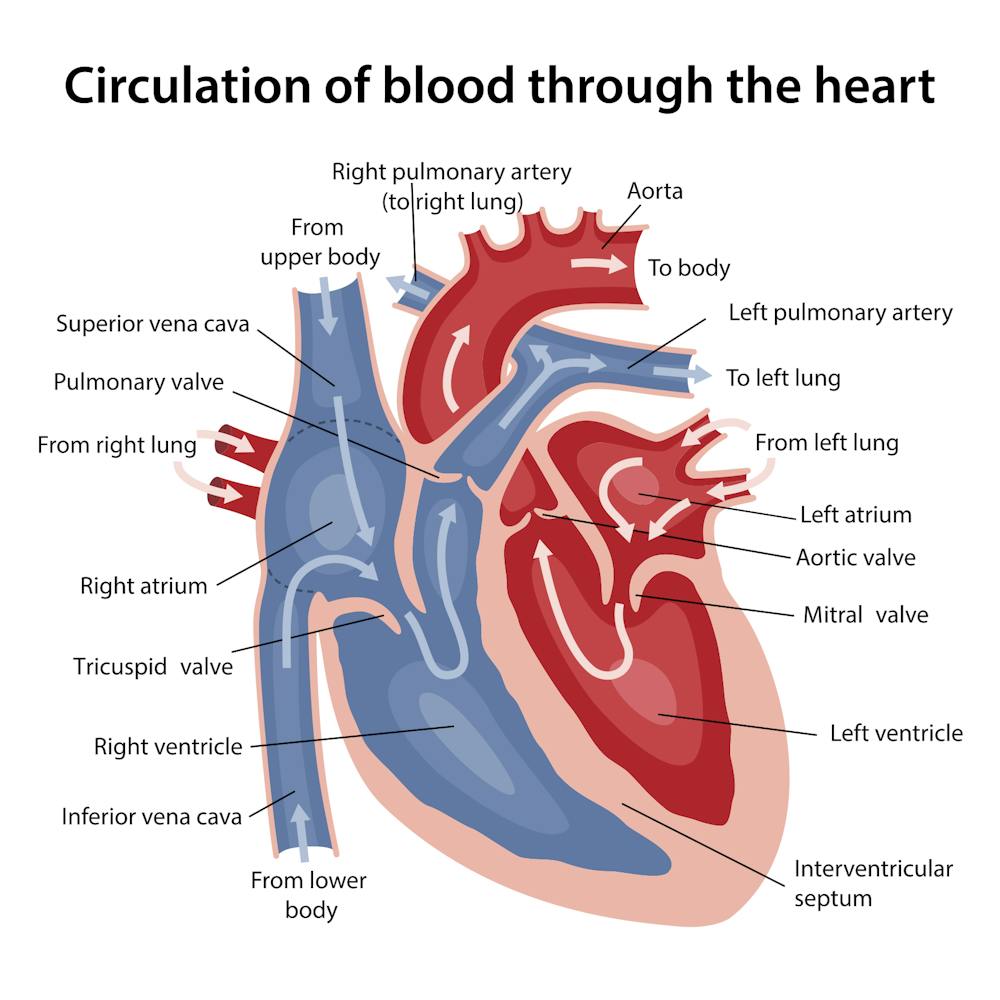
The left ventricle does the bulk of the work, pumping your blood through your aorta off to the rest of your body.Olga Bolbot/Shutterstock.com
Physiologists like me focus on the contractions of the left ventricle, the chamber of the heart that generates pressure to drive blood out through the aorta and on to the entire body. The heart’s pumping capacity directly relates to its ability to deliver oxygen to the body’s organs.
If you’re running up the stairs or hauling something heavy, your muscles and organs are going to need more oxygen to help power your actions. And so your heart beats faster.
2. How do you measure heart rate?
The easiest way to measure heart rate is to find your pulse and count the number of pulses felt over the course of one minute.
In adults, the best places to feel for a pulse are large arteries that are near the surface of the skin, such as the carotid at the side of your neck or the radial on the underside of your wrist. If feeling for the carotid pulse, don’t press hard enough to disrupt blood flow to and from the head.
More recently, watches and other wrist-based fitness monitors have incorporated optical sensors to track heart rate. These wearable devices use technology called photoplethysmography, which has been around since the mid-1970s. Each beat of your heart sends a little surge of blood through your veins. The monitor detects this by shining green light onto your skin and then analyzing the light that gets refracted back by the red blood flowing underneath.
Some exercisers rely on chest straps that measure electrical activity and then transmit that signal to a watch or other display device. This technique depends on picking up the electrical signals within your body that direct your heart to beat.
Your autonomic nervous system is mostly in charge of your heart rate. That’s the portion of the nervous system that runs without your even thinking about it.
In healthy hearts, as someone begins to exercise, the autonomic nervous system does two things. First, it removes the “brake” that keeps your heart beating slowly and steadily under normal conditions. And then it “hits the gas” to actively stimulate the heart to beat faster.
In addition, the amount of blood ejected from the left ventricle with each heart beat – called the stroke volume – increases, particularly during the initial stages of exercise.
Together, higher stroke volume and more beats per minute mean the amount of blood delivered by the heart increases to match the increased oxygen demand of exercising muscles.
4. How does heart rate relate to exercise intensity?
As your exercise session becomes more intense and more work is done, your heart beats faster and faster. This relationship means you can use heart rate as a surrogate measure for the intensity of exertion, relative to one’s maximal heart rate.
Your maximum heart rate is the fastest your heart can functionally beat. So how do you know what your number actually is?
In order to determine your maximum heart rate, you could do increasingly difficult exercise, like walking on a treadmill and increasing the grade each minute, until you can no longer keep up. But it’s much more common (and often safer!) to estimate it. Many studies have identified that maximal heart rate goes down with age, and thus age is included in all estimation equations.
The most common and simplest prediction equation is: Maximal heart rate is equal to 220 minus your age. From that number, you can calculate a percentage of maximum to provide target heart rate ranges in the moderate (50%-70%) or vigorous (70%-85%) categories of exercise, important in terms of meeting the recommended levels of exercise for overall health benefits.
As with any prediction equation, there is always some individual variability. To accurately know your max heart rate at your current age, you’d need to measure it during maximal exercise.
5. Why is exercise intensity important?
In addition to helping you to know whether you’re meeting general recommendations for exercise, knowing the intensity of a given workout session can be of benefit in other ways.
First, the body uses different primary sources of energy to fuel exercise of different relative intensities. During lower-intensity exercise, a greater proportion of the energy you’re using comes from fat sources in your body. During higher-intensity exercise, more of the energy utilized comes from carbohydrate sources.
But don’t slow that treadmill down just yet if you’re hoping to drop pounds of fat. Lower-intensity exercise also requires less energy overall. So, to burn the same amount of calories with lower-intensity exercise, you’ll need to exercise for longer than you would at a higher intensity.
Secondly, the intensity of a set amount of work – like a particular speed/grade combo on the treadmill, or a certain wattage on a rowing ergometer – reflects your overall fitness. Once you can complete the same amount of work at a lower relative intensity – like if you can run a mile in the same amount of time but with your heart beating slower than it did in the past – you know you’ve gained fitness. And increased fitness is associated with a decrease in death from any cause.
In the last few months, schools all over the country have closed because of outbreaks of norovirus. Also known as stomach flu, norovirus infections cause watery diarrhea, low-grade fever and, most alarming of all, projectile vomiting, which is an extremely effective way of spreading the virus.
Norovirus is very infectious and spreads rapidly through a confined population, such as at a school or on a cruise ship. Although most sufferers recover in 24 to 48 hours, norovirus is a leading cause of childhood illness and, in developing countries, results in about 50,000 child deaths each year.
Interestingly, not everyone is equally vulnerable to the virus, and whether you get sick or not may depend on your blood type.
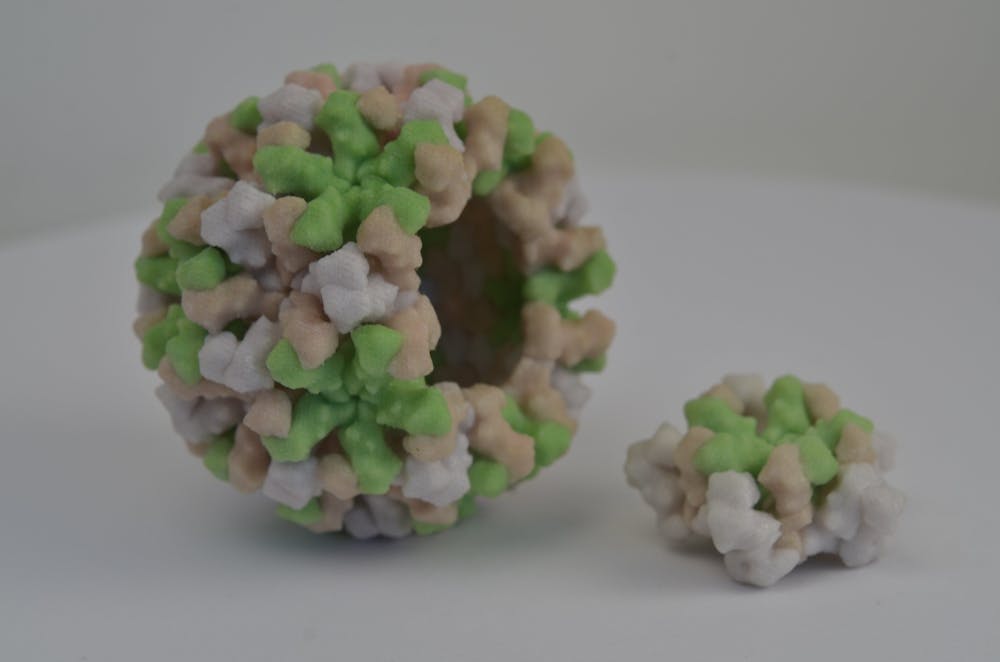
3D print of Norwalk virus, a type of norovirus. Noroviruses are the most common cause of acute gastroenteritis (infection of the stomach and intestines) in the United States.NIH
Norovirus is hard to get rid of
I am a microbiologist, and I got interested in norovirus because, while norovirus symptoms are distressing under any circumstances, my encounter with the virus was particularly inconvenient. During a seven-day rafting trip down the Grand Canyon, the illness passed through the rafters and crew, one by one. Obviously, the wilderness sanitary facilities were not the best to cope with this outbreak. Luckily, everyone, including me, recovered quickly. It turns out that norovirus outbreaks on Colorado River rafting trips are common.
As debilitating as the illness it causes can be, the norovirus particle is visually beautiful. It is a type of virus known as “non-enveloped” or “naked,” which means that it never acquires the membrane coating typical of other viruses, such as the flu virus. The norovirus surface is a protein coat, called the “capsid.” The capsid protects the norovirus’ genetic material.
The naked capsid coat is one factor that makes norovirus so difficult to control. Viruses with membrane coatings are susceptible to alcohol and detergents, but not so norovirus. Norovirus can survive temperatures from freezing to 145 degrees Fahrenheit (about the maximum water temperature in a home dishwasher), soap and mild solutions of bleach. Norovirus can persist on human hands for hours and on solid surfaces and food for days and is also resistant to alcohol-based hand sanitizers.
To make things worse, only a tiny dose of the virus – as few as 10 viral particles – is needed to cause disease. Given that an infected person can excrete many billions of viral particles, it’s very difficult to prevent the virus from spreading.
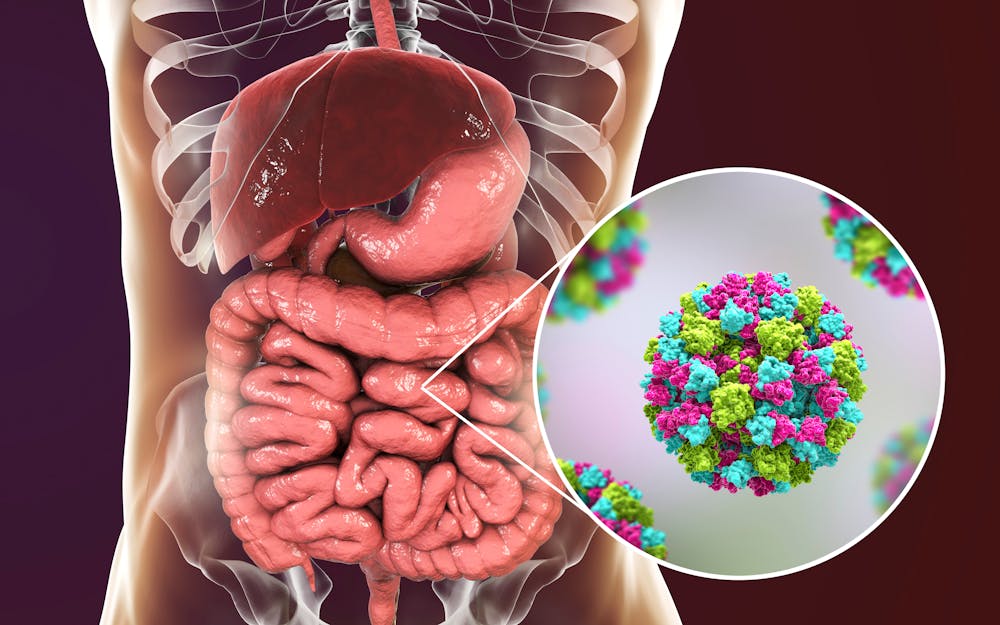
Norovirus, also called winter vomiting bug, infects cells in the human intestine causing diarrhea, vomiting and stomach pain.Kateryna Kon/Shutterstock.com
Susceptibility to norovirus depends on blood type
When norovirus is ingested, it initially infects the cells that line the small intestine. Researchers don’t know exactly how this infection then causes the symptoms of the disease. But a fascinating aspect of norovirus is that, after exposure, blood type determines, in a large part, whether a person gets sick.
Your blood type – A, B, AB or O – is dictated by genes that determine which kinds of molecules, called oligosaccharides, are found on the surface of your red blood cells. Oligosaccharides are made from different types of sugars linked together in complex ways.
The same oligosaccharides on red blood cells also appear on the surface of cells that line the small intestine. Norovirus and a few other viruses use these oligosaccharides to grab onto and infect the intestinal cells. It’s the specific structure of these oligosaccharides that determines whether a given strain of virus can attach and invade.
The presence of one oligosaccharide, called the H1-antigen, is required for attachment by many norovirus strains.
People who do not make H1-antigen in their intestinal cells make up 20% of the European-derived population and are resistant to many strains of norovirus.
More sugars can be attached to the H1-antigen to give the A, B or AB blood types. People who can’t make the A and B modifications have the O blood type.
Each blood type is distinguished by a different sugar marker on the red blood cell. Cells lining the intestine also have these sugar markers.Fernando Jose V. Soares/Shutterstock.com
Different strains of norovirus infect different people
Norovirus evolves rapidly. There are 29 different strains currently known to infect humans, and each strain has different variants. Each one has different abilities to bind to the variously shaped sugar molecules on the intestinal cell surface. These sugars are determined by blood type.
If a group of people is exposed to a strain of norovirus, who gets sick will depend on each person’s blood type. But, if the same group of people is exposed to a different strain of norovirus, different people may be resistant or susceptible. In general, those who do not make the H1-antigen and people with B blood type will tend to be resistant, whereas people with A, AB, or O blood types will tend to get sick, but the pattern will depend on the specific strain of norovirus.
This difference in susceptibility has an interesting consequence. When an outbreak occurs, for example, on a cruise ship, roughly a third of the people may escape infection. Because they do not know the underlying reason for their resistance, I think spared people engage in magical thinking – for example, “I didn’t get sick because I drank a lot of grape juice.” Of course, these mythical evasive techniques will not work if the next outbreak is a strain to which the individual is susceptible.
Immunity to norovirus is short-lived
A norovirus infection provokes a robust immune response that eliminates the virus in a few days. However, the response appears to be short-lived. Most studies have found that immunity guarding against reinfection with the same norovirus strain lasts less than six months. Also, infection with one strain of norovirus offers little protection against infection from another. Thus, you can have repeated bouts with norovirus.
The diversity of norovirus strains and the impermanence of the immune response complicates development of an effective vaccine. Currently, clinical trials are testing the effects of vaccines made from the capsid proteins of the two most prevalent norovirus strains.