Search This Blog

Saturday, January 25, 2020

Prescription-Strength Steroid Creams Sold Over-the-Counter Can Be Dangerous

Rubbing cream into your skin to calm an itchy rash may seem harmless, but not all topical anti-itch formulas are created equal.
“People don’t understand the potential dangers of prescription-strength steroid creams,” said Dr. Lawrence Green, clinical professor of dermatology at George Washington University in Washington, D.C.
Hydrocortisone — a topical steroid often used to treat a rash or allergic reaction — is not approved by the U.S. Food and Drug Administration for over-the-counter use in a potency greater than 1%. But in some stores it is easy to obtain without a prescription, a new study warns.
The researchers found illegal corticosteroid creams at dozens of stores nationwide that specialize in foreign imports.
For the study, the investigators visited 80 stores in 13 cities in nine states. Posing as customers, they asked for cream to treat an “itchy rash.” Three dozen stores sold prescription-strength creams over-the-counter without a prescription.
The creams were made in 12 countries, including China, Mexico, Kenya, Korea and Switzerland, the study authors said.
All stores visited in Chicago and San Francisco sold illegal steroid creams, as did 80% of those visited in Minneapolis, 60% of those in Washington, D.C., and 36% in New York City. Even smaller cities — including Durham, N.C. and Madison, Wisc. — had stores selling illegal creams, the findings showed.
The report was published in the February issue of the Journal of the American Academy of Dermatology.
The results came as little surprise to study co-author Dr. Sara Hylwa, a dermatologist at Hennepin Healthcare in Minneapolis.
Hylwa works in a clinic that treats many immigrants. Occasionally, patients acknowledge using prescription-strength corticosteroid creams for rashes and even as skin-lightening formulas, she said.
In many other countries, the creams are available legally over-the-counter, she said, so it wouldn’t be unusual for a newcomer to expect to purchase them without a prescription. But misuse can bring serious side effects.
Hylwa recalled one patient whose use of a skin cream containing a potent steroid resulted in severe skin thinning — a common side effect often seen in sensitive areas, such as the face and around the eyes.
Other side effects include stretch marks; easy bruising; and glaucoma, cataracts or even blindness when applied to the eye area, according to the American Academy of Dermatology.
Green said he sees patients who have misused skin creams almost every day.
“Unfortunately, they’re getting inaccurate advice from the internet, friends, or just trying to help themselves with a previous prescription cream they have in their house — one that was prescribed for something else unrelated — until they go to the doctor, or trying to avoid going to the doctor altogether,” he said.
While consumers may think liberal use of topical medications is less harmful than medicines that are swallowed, that’s a misconception, Green said.
“When you put something on a large enough surface of your skin, it can be absorbed into your bloodstream,” he warned. “You then can have all the potential permanent damage not only of putting cream too often on the same place on your skin, but also the potentially dangerous side effects of taking a pill form of the cream.”
So, what’s the safest approach to take for a skin rash that doesn’t resolve in a few days with nonprescription-strength creams?
Make an appointment with a doctor, suggested Dr. Erin Warshaw, a professor of dermatology at the University of Minnesota, who was also involved in the study.
Warshaw urged patients to take any skin creams they may be using with them to their appointment, to show the doctor. These creams may very well yield valuable clues about what’s causing a skin irritation or preventing it from healing.
More information
Learn more about proper skin care from the American Academy of Dermatology.
SOURCES: Lawrence Green, M.D., clinical professor of dermatology, George Washington University School of Medicine and Health Sciences, Washington, D.C., and medical advisory board member, National Psoriasis Foundation; Sara Hylwa, M.D., dermatologist, Hennepin Healthcare, Minneapolis, and board member, American Contact Dermatitis Society; Erin Warshaw, M.D., M.S., professor of dermatology, University of Minnesota Medical School, Minneapolis; February 2020, Journal of the American Academy of Dermatology
https://consumer.healthday.com/men-s-health-information-24/steroid-health-news-637/prescription-strength-steroid-creams-sold-over-the-counter-can-be-dangerous-754210.html

Single number helps Stanford scientists find most dangerous cancer cells

Biomedical data scientists at the Stanford University School of Medicine have shown that the number of genes a cell uses to make RNA is a reliable indicator of how developed the cell is, a finding that could make it easier to target cancer-causing genes.
Cells that initiate cancer are thought to be stem cells, which are hard-to-find cells that can reproduce themselves and develop, or differentiate, into more specialized tissue, such as skin or muscle — or, when they go bad, into cancer.
“Right now, targeted therapies are focused on specific genes or molecules, the vast majority of which may not be specific to cancer stem cells,” said Aaron Newman, PhD, assistant professor of biomedical data science and a member of the Institute for Stem Cell Biology and Regenerative Medicine. “Usually these therapies don’t work for very long. But if you can identify the least-differentiated cells and then look for markers specific to them, it’s no longer a guessing game to find the genes to target.”
The study’s finding is also significant because identifying stem cells of various tissue types is an important step toward regenerating damaged or malfunctioning tissues.
What the scientists showed is that as stem cells become more differentiated and more like adult cells, they express fewer and fewer genes. Previously, other researchers had noticed this correlation and thought it might be an interesting coincidence. But Newman and his colleagues were the first to sort through thousands of single-cell genetic tests in public databases and prove this pattern was consistent and reliable.
Newman and MD-PhD student Gunsagar Gulati combined the measurement of the number of genes expressed in a cell with the measurement of the number of RNA copies created per gene as the basis for a computer algorithm, CytoTRACE, designed to determine how developmentally advanced cells are.
A paper describing the research is being published online Jan. 24 in Science. Newman is the senior author. Gulati and Shaheen Sikandar, PhD, an instructor at the institute, share lead authorship.
Tumor cells are diverse
Cancerous tumors can contain many millions of cells, each of which may have thousands of gene mutations. The cells in a tumor are diverse. Most will be differentiated cells that die out naturally on their own, while relatively few are the more dangerous cancer stem cells, or tumor-initiating cells. These cells are hard to find and therefore hard to characterize using current methods, but far easier to find with CytoTRACE.
“As a cancer researcher, what I find most exciting is that this tool helps us find the tumor-initiating cells that have long been known to be responsible for resistance to treatment, metastasis and relapse after treatment,” Sikandar said.
Michael Clarke, MD, one of the authors of the paper, was the first researcher to identify cancer stem cells in a solid tumor. A professor of medicine at Stanford, Clarke said that CytoTRACE, which analyzes data on all the RNA created in a single cell, can quickly recapitulate research that takes years using traditional methods. “The way that we currently find cell markers for cancer stem cells is to make educated guesses about which markers will likely be important, then sort those cells and look for stem cell activity,” said Clarke, the Karel H. and Avice N. Beekhuis Professor in Cancer Biology and associate director of the Institute for Stem Cell Biology and Regenerative Medicine.
Researchers can look at relatively few markers at a time, so it takes a lot of sorting and analysis, and in the end, they will likely be only partially successful in finding good markers of the stem cells they are looking for, he said. “What CytoTRACE allows us to do is first find the stem or progenitor cells, then look at what unique markers they have on them.”
In the paper, the researchers describe using CytoTRACE to query single-cell RNA data for triple-negative breast cancer, a type of tumor that is rarer but more dangerous because tumor growth doesn’t rely on the biochemical pathways that physicians usually target to treat breast cancer. Not only did CytoTRACE identify known markers of cancer stem cells, it also spotted a marker that had not been previously been thought to be important. “This one gene looks like it has amazing potential as a therapeutic,” Clarke said.
Potential tool for hunting other disease-linked stem cells
CytoTRACE also has the potential to transform how researchers hunt for stem cells associated with other diseases, Newman said. “This tool could also be useful in finding treatments for disorders such as Alzheimer’s or other degenerative diseases where loss of stem cell function might be part of the disease process,” he said.
Regenerative medicine, in which diseased or damaged tissue is repaired through the activity of stem cells, requires the ability to isolate purified populations of stem cells specific to a given tissue. To regrow bone, the heart or the eyes, for example, researchers must first find the stem cells responsible for regrowing those organs. Finding the markers that are specific to these normal stem cells has been much like the process for finding cancer stem cell markers, the researchers say — that is, the product of educated guesses, luck and a lot of work in the lab. CytoTRACE could significantly shorten that process.
“One of the main motivations behind developing CytoTRACE was to create a tool for rapid and accurate identification of stem cells in humans,” Gulati said. “But another important question we hope to answer is how the inner workings of a cell change as the cell transforms from one state to another. This research opens up a whole new avenue of research to study how global changes in gene expression and DNA structure influence a cell’s state.”
Overall, Newman said, the study shows the power and promise of using big data to advance biology and medicine through computer research that complements discoveries made in the lab.
“It wouldn’t have been possible to gather all this data in our lab, but by using public databases and asking the right questions, it’s more and more possible to make fundamental discoveries in biology and medicine,” he said.
###
Other Stanford co-authors of the study are associate professor of surgery Frederick Dirbas, MD; research scientist Feiqiao Yu, PhD; laboratory manager Dalong Qian; former postdoctoral scholars Ferenc Sheeren, PhD, Neethan Lobo, PhD, Maider Zabala, PhD, and Shang Cai, PhD; former instructor Robert Hsieh, MD, PhD; graduate students Daniel Wesche and Anoop Manjunath; former graduate student Mark Berger; former Stanford undergraduate Francisco Lagan; and former intern Anjan Bharadwaj.
The research was supported by the National Institutes of Health (R00CA187192-03, 5R01CA100225-09, PHS-CA09302), the Stinehart-Reed Foundation, Stanford Bio-X, the Virginia and D.K. Ludwig Fund for Cancer Research, the U.S. Department of Defense, the National Science Foundation and the Stanford Medical Science Training Program.
https://www.eurekalert.org/pub_releases/2020-01/sm-asn012320.php

Blood-Based Screening Test May Aid in Detecting GI Cancers

Simultaneous specificity (>99%) of multiple cancer types, including gastrointestinal (GI) cancers across stages at high sensitivity (82%), were observed using targeted methylation analysis of cfDNA, according to an abstract published in the Journal of Clinical Oncology.1
Accurate (92%) localization of cancers to specific regions of the GI tract was also attained. Given this data, detection of multiple GI cancers from a single noninvasive blood test could be a practical method for detecting GI and other cancers, and might facilitate diagnostic workups, according to the researchers.
This blood-based screening test will be presented at the 2020 Gastrointestinal Cancers Symposium, being held from January 23-25, in San Francisco, California.
“The potential of this test is to diagnose cancer earlier, when it’s more treatable. The ability to do that across cancer types could be quite valuable. Many of the cancer types that this test detects don’t currently have screening tests that allow earlier cancer detection before the cancers cause symptoms,” lead investigator Brian M. Wolpin, MD, MPH, Director of the Gastrointestinal Cancer Center and Director of the Hale Family Center for Pancreatic Cancer Research at Dana-Farber Cancer Institute, said in a press release.2
Using the Circulating Cell-free Genome Atlas (CCGA), the researchers included noncancer controls and patients with more than 20 tumor types at all stages of disease. In the second substudy of CCGA, plasma DNA went through targeted methylation analysis to cultivate an algorithm that could pinpoint whether the patient had cancer and the tissue of origin of the cancer, including cancers of the esophagus/stomach (n = 67), pancreas/gallbladder/extrahepatic bile duct (n = 95), liver/intrahepatic bile duct (n = 29), and colon/rectum (n = 121). The data included training and validation sets.
The test had an overall sensitivity of 82% for cancer detection for the training set and 81% for the validation set, with a specificity of more than 99%. The overall accuracy for defining the GI tissue of origin among the samples in which the tissue of origin was assigned was 91% and 89% for the training and validation sets, respectively.
“The data show that evaluating methylation of cell-free DNA within a blood sample may detect a variety of gastrointestinal cancers with good sensitivity and with a low rate of false positives. If further validated with additional testing, this approach has the potential to allow us to diagnose gastrointestinal cancers earlier, when they’re more treatable,” Wolpin said.
The developers of the technology are now conducting 2 large population-based studies to further substantiate the screening potential of the test. The STRIVE study has already enrolled almost 100,000 women undergoing screening mammograms, and the SUMMIT study is in the process of enrolling 50,000 men and women without a known diagnosis of cancer.
According to the American Society of Clinical Oncology, no screening exams are currently available for cancers like gallbladder, bile duct, and pancreatic cancer. Screening tests do exist for other types of GI cancer, like colorectal and stomach cancer, however many of them are invasive. Moreover, when GI cancers are diagnosed, they are frequently at advanced stages that are more challenging to treat.
References:
1. Wolpin BM, Richards DA, Cohn AL, et al. Performance of a blood-based test for the detection of multiple cancer types. J Clin Oncol. NCT02889978.
2. Blood-Based Test Could Help Identify Hard-to-Detect Gastrointestinal Cancers [news release]. Alexandria, Virginia. Published January 21, 2020. asco.org/about-asco/press-center/news-releases/blood-based-test-could-help-identify-hard-detect. Accessed January 22, 2020.
https://www.cancernetwork.com/gastrointestinal-cancer/blood-based-screening-test-may-aid-detecting-gi-cancers

First treatment for pain using human stem cells a success

Researchers at the University of Sydney have used human stem cells to make pain-killing neurons that provide lasting relief in mice, without side effects, in a single treatment. The next step is to perform extensive safety tests in rodents and pigs, and then move to human patients suffering chronic pain within the next five years.
If the tests are successful in humans, it could be a major breakthrough in the development of new non-opioid, non-addictive pain management strategies for patients, the researchers said.
“Thanks to funding from the NSW Ministry of Health, we are already moving towards testing in humans,” said Associate Professor Greg Neely, a leader in pain research at the Charles Perkins Centre and the School of Life and Environmental Sciences.
“Nerve injury can lead to devastating and for the majority of patients there are no effective therapies. This breakthrough means for some of these patients, we could make pain-killing transplants from their own cells, and the cells can then reverse the underlying cause of pain.”
Published today in the peer-reviewed journal Pain, the team used human induced (iPSC) derived from bone marrow to make pain-killing cells in the lab, then put them into the spinal cord of mice with serious neuropathic pain. The development of iPSC won a Nobel Prize in 2012.
“Remarkably, the stem-cell neurons promoted lasting pain relief without side effects,” co-senior author Dr. Leslie Caron said. “It means transplant therapy could be an effective and long-lasting treatment for neuropathic pain. It is very exciting.”
John Manion, a Ph.D. student and lead author of the paper said: “Because we can pick where we put our pain-killing neurons, we can target only the parts of the body that are in pain. This means our approach can have fewer side effects.”
The stem cells used were derived from adult blood samples.

More information: John Manion et al. Human induced pluripotent stem cell-derived GABAergic interneuron transplants attenuate neuropathic pain, PAIN (2020). DOI: 10.1097/j.pain.0000000000001733

Preventing metastasis by stopping cancer cells from making fat

Olivier Feron, a researcher at the University of Louvain (UCLouvain) Institute of Experimental and Clinical Research, seeks to understand how metastases form from a tumor. He previously demonstrated that the most aggressive cancer cells use significant amounts of lipids as energy sources. Now, Prof. Feron has discovered that cancer cells store lipids in small intracellular vesicles called lipid droplets. Cancer cells loaded with lipids are more invasive and therefore more likely to form metastases. Prof. Feron and his team sought to identify the link between lipid storage and metastasization.
They identified a factor called TGF-beta2 as the switch responsible for both lipid storage and the aggressive nature of . Moreover, it appeared that the two processes were mutually reinforcing. In fact, by accumulating lipids—more precisely, cells build up energy reserves, which they can then use as needed throughout their metastatic course.
Researchers have known that the acidity of tumors promotes cancer cells’ invasion of healthy tissue. The process requires the detachment of the cancer cell from its original anchor site and the ability to survive under such conditions, which are fatal to healthy cells.
The UCLouvain researchers have now demonstrated that this acidity promotes, via the same TGF-beta2 switch, the invasive potential and formation of lipid droplets. These provide the invasive cells with the energy they need to move around and withstand the encountered during the metastasization process. It’s like a mountaineer who takes the food and equipment necessary to reach the summit in spite of complex weather conditions.
Concretely, this UCLouvain research opens up new therapeutic avenues thanks to the discovery of the metabolic constituents involved in metastasis. These actors can thus be targeted and combated. Prof. Feron and his team show that it is possible to reduce tumor invasiveness and prevent metastases using specific inhibitors of TGF-beta2 expression, as well as compounds capable of blocking the transport of fatty acids or the formation of triglycerides. Among the latter are new drugs that are being evaluated to treat obesity. Their indications could therefore be rapidly extended to counter the development of metastases, which is the major cause of death among cancer patients.
The findings are published in Nature Communications.
https://medicalxpress.com/news/2020-01-metastasis-cancer-cells-fat.html

Unexpected connection between gliomas, neurodegenerative diseases found

A protein typically associated with neurodegenerative diseases like Alzheimer’s might help scientists explore how gliomas, a type of cancerous brain tumor, become so aggressive.
The new study, in mouse models and human brain tissues, was published in Science Translational Medicine and found a significant expression of the protein TAU in glioma cells, especially in those patients with better prognoses.
Patients with glioma are given a better prognosis when their tumor expresses a mutation in a gene called isocitrate dehydrogenase 1 (IDH1). In this international collaborative study led by the Instituto de Salud Carlos III-UFIEC in Madrid, Spain, those IDHI mutations stimulated the expression of TAU. Then, the presence of TAU acted as a brake for the formation of new blood vessels, which are necessary for the aggressive behavior of the tumors.
“We report that the levels of microtubule-associated protein TAU, which have been associated with , are epigenetically controlled by the balance between normal and mutant IDH1/2 in mouse and human gliomas,” says co-author Maria G. Castro, Ph.D., a professor of neurosurgery and cell and at Michigan Medicine. “In IDH1/2 mutant tumors, we found that expression levels of TAU decreased with tumor progression.”
That means levels of TAU could be used as a biomarker for tumor progression in mutant IDH1/2 gliomas, Castro says.

Explore further
New research findings could be key to improving outcomes for some brain cancers

Map tracks coronavirus outbreak in near real time


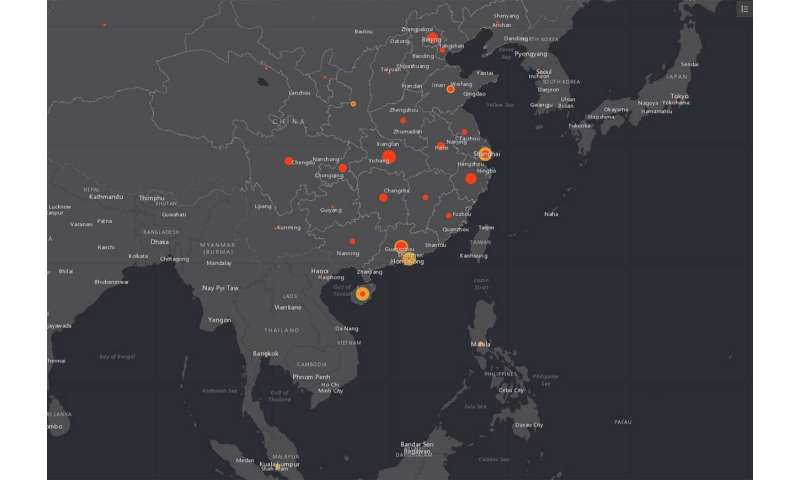
Map tracks coronavirus outbreak in near real time
Credit: Johns Hopkins Center for Systems Science and Engineering
The Johns Hopkins Center for Systems Science and Engineering has built and is regularly updating an online dashboard for tracking the worldwide spread of the coronavirus outbreak that began in the Chinese city of Wuhan.
Lauren Gardner, a civil engineering professor and CSSE’s co-director, spearheaded the effort to launch the mapping website on Wednesday. The site displays statistics about deaths and confirmed cases of coronavirus, or 2019-nCoV, across a worldwide map. It also allows visitors to download the data for free.
“We built this dashboard because we think it is important for the public to have an understanding of the outbreak situation as it unfolds with transparent data sources,” Gardner said. “For the , this data will become more valuable as we continue to collect it over time.”
Making the data available for download is “critical” for researchers, she added.
The statistics behind the data visualization are being collected from the World Health Organization, the Centers for Disease Control and Prevention, the National Health Commission of the People’s Republic of China, and Dingxiangyuan, a social networking site for that provides real-time information on cases.
Gardner said “local level case data” from Dingxiangyuan, , and the local CDC “can provide more timely assessments of the outbreak, compared to the national level reporting organizations, which take longer to filter up.”
The CSSE’s Wuhan Coronavirus Global Cases website on Thursday afternoon reported 18 related deaths and 653 confirmed cases—444 in the Chinese province of Hubei, of which Wuhan is the capital city.
The website provides a link to a downloadable Google Sheet that contains information on confirmed and suspected cases in more than 30 Chinese locations as well as for the nations of Japan, Thailand, South Korea, Vietnam, Singapore, Colombia, Brazil, Australia, Mexico, and the United States. One case has been confirmed in Washington state.
The CSSE website does not yet predict where the flu-like virus is likely to spread.
Last year, Gardner and a team of researchers identified 25 U.S. counties that were most likely to experience measles outbreaks in 2019. The predictive analysis, published in The Lancet Infectious Diseases, was based on international air travel volume, non-medical exemptions from childhood vaccinations, population data, and reported measles information.

Explore further
How the new coronavirus developed