Search This Blog

Friday, November 13, 2020

Fauci not advising Biden, sees no reason to quit Trump now

Dr. Anthony Fauci, the top U.S. infectious disease expert, said he has had no contact with President-elect Joe Biden’s coronavirus transition team and sees no reason to quit to join that effort when there is so much to do now to fight the surging pandemic.

“I stay in my lane. I’m not a politician. I do public health things,” he said in an interview on Thursday ahead of next week’s Reuters Total Health conference.

Since January, Fauci has served on President Donald Trump’s White House Coronavirus Task Force, a position that has frequently put him at odds with the president, who has sought to downplay the pandemic and focused instead on opening the economy.

“There’s absolutely no reason and no sense at all for me to stop doing something in the middle of a pandemic that is playing a major role in helping us get out of the pandemic,” Fauci said.

His advice for the president-elect, he said, is “exactly the same” as what he is recommending now - social distancing, avoiding crowds, wearing masks, washing hands. “Public health principles don’t change from one month to another or from one administration to another.”

Fauci has served six administrations and came to prominence fighting the AIDS epidemic in the 1980s under President Ronald Reagan.

His “day job” is developing vaccines and therapeutics as director of the National Institute of Allergy and Infectious Diseases, work that is starting to bear fruit.

On Monday, Pfizer Inc and German partner BioNTech SE announced that their experimental coronavirus vaccine was more than 90% effective - significantly higher than most experts had anticipated.

Moderna Inc, a company developing a similar vaccine with support from the White House’s Operation Warp Speed program, is expected to report results from their late-stage vaccine trial in the next week or so.

Both vaccines use messenger RNA (mRNA) technology, an entirely new rapid vaccine platform that uses synthetic genes to trigger an immune response. Older methods typically use some form of inactivated or killed virus particles.

“It was a home run for the Pfizer product, more than 90% - close to 95% - effective. I have every reason to believe that the Moderna product is going to be similar,” Fauci said.

“It’s an almost identical platform to the Pfizer vaccine, so I would not be surprised at all if it was highly effective,” Fauci added.

The next big question about mRNA technology is safety. Fauci took as a good sign the fact that neither the Pfizer trial, which has enrolled more than 43,000 people so far, nor the Moderna trial, which involves 30,000, had to pause to investigate safety issues.

“That’s really good news,” he said. People in both trials will be followed for two years to make sure there are no long-term side effects. Barring that, “I think that the mRNA platform is here to stay,” he predicted.

In spite of the high bar set by the Pfizer vaccine so far, Fauci said he believes there is still “plenty of room for multiple vaccines, even though there may be a modest degree of difference in total efficacy.”

https://www.reuters.com/article/us-health-coronavirus-fauci/fauci-not-advising-biden-sees-no-reason-to-quit-trump-now-reuters-interview-idUSKBN27T1J9

American to use VeriFly app for international flights

  • American Airlines Group (NASDAQ:AAL) says it will start using a mobile app on November 18 to show COVID-19 testing and documentation requirements for the destinations of passengers, particularly international locations.
  • The VeriFLY app by software firm Daon allows real-time verification of COVID-19 related credentials, such as diagnostic lab test results. The app could streamline the check-in and verification process at the airport, as well as raise confidence in travel until a vaccine is distributed.
  • "Piloting this new solution is a direct response to our customers' increasing desire to explore more international travel opportunities," says President Robert Isom.
  • Read the transcript of what AAL execs said yesterday at the Baird Industrial Conference.
  • https://seekingalpha.com/news/3636090-american-to-use-verifly-app-for-international-flights

Thursday, November 12, 2020

COVID-19 immunity may last six months or more

Around the world, coronavirus cases are surging and deaths due to the disease keep ticking up—more than 240,000 in the United States so far—but a new antibody analysis offers a hint of hope.

People who doctors consider to be recovered from the disease produce virus-fighting that rapidly evolve in the months following an infection, Howard Hughes Medical Institute Investigator Michel Nussenzweig's team reports. Six months after infection, those antibodies become both more potent and better at combating mutated versions of the virus, called SARS-CoV-2.

The work, posted as a preprint to bioRxiv.org on November 5, 2020, has not yet undergone the scientific vetting process known as peer review. But the results suggest that the immune systems of previously infected people might have defenses ready if exposed to the virus again, says Nussenzweig, an immunologist at The Rockefeller University, in New York City. "The really good news is that people who are infected are very unlikely to become sick again for at least six months."

The study is critical for scientists trying to understand just how durable people's immune responses really are, says Leo Stamatatos, an immunologist at the Fred Hutchinson Cancer Research Center, who was not involved with the work. "This work suggests that our bodies can remember SARS-CoV-2 for at least half a year—and probably longer," he says. "That's a good thing."

The long haul

Nussenzweig's team first began recruiting people who had recovered from disease, called COVID-19, in April, during the height of the pandemic in New York. At the time, the state's case count was approaching 10,000 per day, and hospitals faced a deluge of sick people being treated in intensive care units and on ventilators.

The researchers collected blood from 149 participants and combed it for that make protective antibodies—those that zero in on the virus and block its entry into cells. "Our idea was that if we're able to find such neutralizing antibodies, we would know what part of the virus vaccines have to target," Nussenzweig says. These antibodies might also serve as a blueprint for a new drug—molecules that scientists could purify, produce in mass quantities, and then give to patients to prevent or treat COVID-19.

COVID-19 immunity may last six months or more
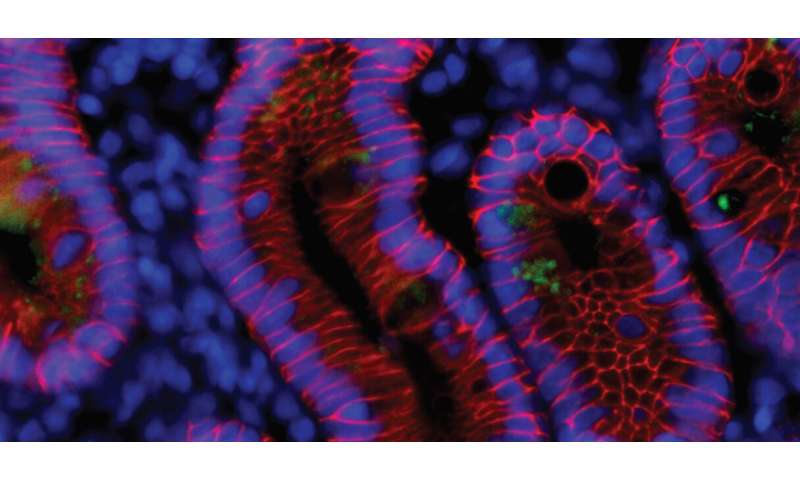
Staining for SARS-CoV-2’s shell (green) in samples of intestinal biopsies revealed that the virus (or pieces of it) may be hiding out in people’s gut. Scientists do not yet know whether these viral stowaways are infectious or produce clinical symptoms. Credit: C. Gaebler et al./bioRxiv.org 2020

Nussenzweig and his colleagues reported their first big find in the journal Nature, in June. One month after infection, all 149 participants had coronavirus-fighting antibodies. "Our results showed that it's not hard for our immune systems to make effective antibodies to SARS-CoV-2," says Christian Gaebler, a physician and immunologist in Nussenzweig's lab.

The level of these antibodies in the blood was generally low, but their presence in so many people was a bright sign for vaccine development. A vaccine that boosts production of these antibodies could be effective in a broad population of people, the team suggested.

Nussenzweig's team took a closer look at the antibodies of six participants and discovered antibodies that were especially effective. Over the last few months, his lab has worked on more than a dozen studies examining two of these exceptional antibodies. Combined in a cocktail, they can protect mice from SARS-CoV-2 infection, the researchers reported in September, in a study now accepted for publication in the Journal of Experimental Medicine. The team has also seen promising results in rhesus macaques. "These antibodies are very, very potent," Nussenzweig says. His team is planning a Phase 1 clinical trial to test the safety of the antibodies in people. But a potential therapy could still be a long way off.

In the meantime, "One of the things people worry about a lot is what's going to happen in six months or a year," Nussenzweig says. "Are individuals who've recovered from COVID-19 still going to be protected?"

A link to the gut

At the end of August, Nussenzweig's team began bringing back their study participants for a second round of investigation. Over a period of six weeks, the researchers collected blood from 87 of the original 149 volunteers. "We just wanted to take a look and see if the antibodies were still there," Gaebler says.

And they were, the team discovered, though levels had dropped—by more than 50 percent, in some cases. But that's normal for infections, he says. More promising was the participants' memory B cell levels, which stayed steady. These immune cells remember pathogens they've seen and crank out new antibodies when those pathogens come around again.

COVID-19 immunity may last six months or more
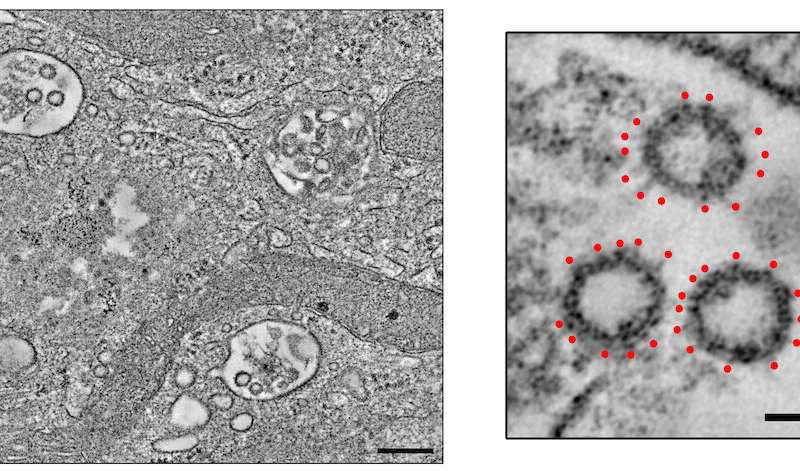
Signs of the novel coronavirus are visible in these electron microscopy images of tissue from the gut. At right, red dots indicate surface spikes on viral particles. Left scale bar equals 0.2 micrometers; right scale bar equals 0.1 micrometers. Credit: C. Gaebler et al./bioRxiv.org 2020

Each memory B cell contains genetic instructions for making antibodies. When the team examined these cells in the six participants from their earlier study, they found something remarkable. In the roughly five months since the original study, these participants' memory B cells had picked up that altered the antibodies they produced.

Some mutations led to antibodies that were better at latching on to SARS-CoV-2, or to variants of it created in the lab. "Everything about this surprised me," Nussenzweig says. "I didn't expect that we would find these mutations."

Antibodies often evolve like this when there's a chronic infection, such as with HIV or herpes, where virus lingers in a person's tissue and cells. But coronaviruses typically clear out from the body quickly after infection, Gaebler says, so he wouldn't have expected the to keep refining SARS-CoV-2 antibodies.

Maybe residual viral particles are hiding out somewhere, the team surmised. They decided to go fishing in the gut. (Like the lungs, people's intestines are carpeted with the kind of cells SARS-CoV-2 can invade, Nussenzweig explains.) They teamed up with physicians from Mount Sinai Hospital and examined biopsies from seven of 14 patients who had recovered from COVID-19. In the intestinal tissue, the researchers found viral traces, including SARS-CoV-2's telltale crown of spikes. "The images are quite striking," Gaebler says.

It's possible that antibodies mutate in response to the residual viral antigen tucked away in people's bowels, Nussenzweig says, though there may be other caches of coronavirus in the body.

What's still remains to be discovered, he says, is whether these viral stowaways have any clinical relevance—if people who carry virus in the gut, for instance, are more likely to be "long-haulers" with lingering symptoms, or if these virus particles are even infectious.

More information: Christian Gaebler et al. Evolution of Antibody Immunity to SARS-CoV-2, (2020). DOI: 10.1101/2020.11.03.367391

Alexandra Schäfer et al. Antibody potency, effector function and combinations in protection from SARS-CoV-2 infection in vivo, (2020). DOI: 10.1101/2020.09.15.298067

Davide F. Robbiani et al. Convergent antibody responses to SARS-CoV-2 in convalescent individuals, Nature (2020). DOI: 10.1038/s41586-020-2456-9

https://medicalxpress.com/news/2020-11-covid-immunity-months.html

Common SARS-CoV-2 mutation may make coronavirus more susceptible to vaccine

A new study published in Science confirms that SARS-CoV-2 has mutated in a way that's enabled it to spread quickly around the world, but the spike mutation may also make the virus more susceptible to a vaccine. 

The new strain of , called D614G, emerged in Europe and has become the most common in the world. Research at the University of North Carolina at Chapel Hill and the University of Wisconsin-Madison shows the D614G strain replicates faster and is more transmissible than the virus, originating in China, that spread in the beginning of the pandemic.

There were bright spots in the study findings: While the D614G strain spreads faster, in animal studies it was not associated with more severe disease, and the strain is slightly more sensitive to neutralization by antibody drugs.

The study published Nov. 12 provides some of the first concrete findings about how SARS-CoV-2 is evolving.

"The D614G virus outcompetes and outgrows the ancestral strain by about 10-fold and replicates extremely efficiently in primary nasal epithelial cells, which are a potentially important site for person-to-person transmission," said Ralph Baric, professor of epidemiology at the UNC-Chapel Hill Gillings School of Global Public Health and professor of microbiology and immunology at the UNC School of Medicine.

Baric has studied coronaviruses for more than three decades and was integral in the development of remdesivir, the first FDA-approved treatment for COVID-19.

Researchers believe the D614G strain of coronavirus dominates because it increases the spike protein's ability to open cells for the virus to enter. These crown-like spikes give the coronavirus its name.

The D614G mutation causes a flap on the tip of one spike to pop open, allowing the virus to infect cells more efficiently but also creating a pathway to the virus' vulnerable core.

With one flap open, it's easier for antibodies—like the ones in the vaccines currently being tested—to infiltrate and disable the virus.

For the recent study, Baric Lab researchers—including first author Yixuan J. Hou—worked in collaboration with Yoshihiro Kawaoka and Peter Halfmann, both virologists on faculty at the University of Wisconsin-Madison.

"The original spike protein had a 'D' at this position, and it was replaced by a 'G,'" Kawaoka said. "Several papers had already described that this mutation makes the protein more functional and more efficient at getting into cells."

That earlier work, however, relied on a pseudotyped virus that included the receptor-binding protein but was not authentic. Using reverse genetics, Baric's team replicated a matched pair of mutant SARS-CoV-2 viruses that encoded D or G at position 614 and compared basic property analysis using cell lines, primary human respiratory cells, and mouse and hamster cells.

Kawaoka and Halfmann contributed their unique coronavirus study model, which uses hamsters. The University of Wisconsin-Madison team—including Shiho Chiba, who ran the hamster experiments—performed replication and airborne transmission studies with both the original virus and the mutated version created by Baric and Hou.

They found that the mutated virus not only replicates about 10 times faster—it's also much more infectious.

Hamsters were inoculated with one virus or the other. The next day, eight uninfected hamsters were placed into cages next to infected hamsters. There was a divider between them so they could not touch, but air could pass between the cages.

Researchers began looking for replication of the virus in the uninfected animals on day two. Both viruses passed between animals via airborne transmission, but the timing was different.

With the mutant virus, the researchers saw transmission to six out of eight hamsters within two days, and to all the hamsters by day four. With the original virus, they saw no transmission on day two, though all of the exposed animals were infected by day four.

"We saw that the mutant virus transmits better airborne than the [original] virus, which may explain why this virus dominated in humans," Kawaoka said.

The researchers also examined the pathology of the two coronavirus . Once hamsters were infected, they presented essentially the same viral load and symptoms. (The hamsters with the mutated strain lost slightly more weight while sick.) This suggests that while the mutant is much better at infecting hosts, it doesn't cause significantly worse illness.

Researchers caution that the pathology results may not hold true in human studies.

"SARS-CoV-2 is an entirely new human pathogen and its evolution in human populations is hard to predict," Baric said. "New variants are continually emerging, like the recently discovered mink SARS-CoV-2 cluster 5 variant in Denmark that also encodes D614G.

"To maximally protect public health, we must continue to track and understand the consequences of these new mutations on disease severity, transmission, host range and vulnerability to vaccine-induced immunity." 

More information: Yixuan J. Hou et al, SARS-CoV-2 D614G variant exhibits efficient replication ex vivo and transmission in vivo, Science  12 Nov 2020:eabe8499. DOI: 10.1126/science.abe8499

https://medicalxpress.com/news/2020-11-common-sars-cov-mutation-coronavirus-susceptible.html


'Rewiring' metabolism in insulin-producing cells may aid Type 2 diabetes treatment

Researchers have discovered a previously unknown way that pancreatic cells decide how much insulin to secrete. It could provide a promising new target to develop drugs for boosting insulin production in people with Type 2 diabetes.

In a pair of papers recently published in Cell Metabolism, scientists from the University of Wisconsin-Madison and their colleagues point to an overlooked enzyme known as pyruvate kinase as the primary way pancreatic beta cells sense sugar levels and release the appropriate amount of insulin.

From several proof-of-concept experiments in rodents and on human pancreatic cells, the team found that drugs stimulating pyruvate kinase not only increase the secretion of insulin but have other metabolically protective effects in the liver, muscle and red blood cells. The findings suggest that activating pyruvate kinase could be a new way to increase insulin secretion to counter Type 2 diabetes, but more research would be required before any new treatments were available.

"Too much insulin can lower blood sugar to dangerous levels, and too little insulin can lead to diabetes," says Matthew Merrins, a professor of medicine at the UW School of Medicine and Public Health who led the work. "The question we're asking here is: How do nutrients like glucose and amino acids turn on beta cells in the pancreas to release just the right amount of insulin?"

The work was accomplished by carefully dissecting the paradoxical timing of key biochemical events in the prevailing understanding of how pancreatic beta cells respond to nutrients in the blood. The researchers point to a new, richer model to understand how this important process is controlled that resolves these inconsistencies.

For decades, scientists believed that mitochondria, the energy generators in cells, initiated insulin secretion. It was a natural explanation, because mitochondria produce the high-energy molecule ATP, in the process depleting ATP's low-energy version, ADP. The drop in ADP stimulates calcium -- the ultimate trigger to release stored insulin.

But the timing didn't make sense. Mitochondria are most active after insulin secretion has already begun, not before. Plus, mitochondria would stall out before exhausting enough ADP to trigger insulin secretion.

A clue to solving these apparent paradoxes came from studies in the 1980s on heart muscle cells. At the time, scientists found that the enzyme pyruvate kinase -- which converts sugar into energy, independently of mitochondria -- could also severely deplete ADP. This process happens near ADP-sensing proteins involved in insulin release in the pancreas. Maybe, Merrins' team thought, the pancreas took advantage of this proximity to fine-tune the release of insulin.

In initial experiments, the researchers supplied sugar and ADP to sections of pancreatic cells containing pyruvate kinase. The enzyme gobbled up both components, depleting ADP. Because pyruvate kinase was located near the ADP-sensing protein that triggers insulin secretion, it had a big effect.

"That's one of the important concepts in our paper: the location of metabolism is critical to its function," says Merrins.

Using mouse and human pancreatic islets, the clusters of cells that release insulin, the researchers tried stimulating pyruvate kinase activity. Drugs that activate the enzyme quadrupled the release of insulin, but only when there was enough sugar around -- a sign that pyruvate kinase can't be forced to release too much insulin.

"Pyruvate kinase doesn't change how much fuel comes into the cell, it just changes how that fuel is used," says Merrins. "Drugs that active pyruvate kinase strongly boost insulin secretion without causing too much insulin release that can lead to hypoglycemia."

In all, they discovered evidence of a more complex way in which pancreatic beta cells decide when and how much insulin to release, akin to a two-cycle engine. In the first cycle, blood sugar gets processed by pyruvate kinase, depleting ADP. Mitochondria keep the process going by feeding pyruvate kinase even more material, which causes ADP levels to crash, ultimately stimulating enough calcium entry into the cell to release insulin.

In the second cycle, mitochondria switch from feeding pyruvate kinase with material to producing the high-energy molecule ATP, which is needed to fully release insulin. Then the process resets.

In the companion study, led by Merrins' colleagues at Yale University, the researchers examined how pyruvate kinase activators affected metabolism in healthy and obese rats. In a series of experiments, they found that activating pyruvate kinase increased both insulin secretion and insulin sensitivity while improving sugar metabolism in liver and red blood cells. Such treatments could be helpful for people with Type 2 diabetes, who don't produce enough insulin and have dysfunctional sugar metabolism as a result.

"The therapeutic idea here is we could rewire metabolism to more efficiently trigger insulin secretion while improving the function of other organs at the same time," says Merrins.

###

This work was supported in part by the National Institutes of Health (grants R01DK092606, R01DK110181, K08DK080142, UL1RR-0024139, P30DK045735, K01DK101683, R01DK113103, R21AG050135, R01AG062328, F32DK116542, T32AG000213, T32DK007665) and the Health Resources and Services Administration (grant T32HP10010).

https://www.eurekalert.org/pub_releases/2020-11/uow-mi111220.php