Search This Blog

Friday, June 18, 2021

Danish 'meme stock' Orphazyme plunges after drug setback

 Orphazyme slashed its financial forecasts on Friday after U.S. health regulators rejected its key drug candidate, sending shares in Denmark's first so-called meme stock tumbling 75% in early trading.

Shares in the biotech company, which is yet to have a drug approved or make money, have been on a roller-coaster recently - like other "meme stocks" influenced by chatter on social media - as investors took positions ahead of the U.S. Food and Drug Administration's (FDA) decision.

Orphazyme said its application for FDA approval of arimoclomol, a treatment for genetic disorder Niemann-Pick disease type C, had not been successful.

As a result, it predicted revenue for the year would be lower than previously expected and its operating loss significantly wider, forcing the company to cut costs.

"Orphazyme has no money and no substantial projects ... Investors have put their money into a completely unrealistic scenario driven by 'meme tendencies'," broker Nordnet wrote in a note to clients.

Orphazyme, which is listed in Copenhagen and New York, now expects an operating loss of 670-700 million crowns ($107-$112 million) in 2021, against a previous forecast for a loss of 100-150 million crowns.

The company said the FDA in a letter had said additional qualitative and quantitative evidence was needed to show the drug's effectiveness.

"As representative for Orphazyme's shareholders and as a shareholder myself, I am extremely disappointed," deputy board chairman Bo Jesper Hansen said in a statement.

The drugmaker said it would remain in dialogue with the FDA and would continue to seek approval for the treatment in Europe.

https://news.yahoo.com/danish-meme-stock-orphazyme-plunges-055623044.html

Thursday, June 17, 2021

AMA Debates Value of Natural Immunity to COVID


During the American Medical Association (AMA) House of Delegates annual meeting, members debated whether natural immunity or previous infection with SARS-CoV-2 was sufficient for the merit of immunity credentials.

Gregory Pinto, MD, a delegate from New York, called for policy recommending "that vaccination credentials be provided on the basis of natural immunity or previous SARS-CoV-2 infection" during proceedings on the virtual "floor."

He argued that there "is no indication that immunity derived from prior COVID infection is in any way inferior to that derived from vaccination." Therefore, any immunity credentialing service ought to include natural immunity stemming from a prior infection, he said

Notably, Pinto introduced this policy resolution by amending a draft recommendation in the AMA's reference committee report in such a way as to directly reverse the intent of the original authors of that resolution, who sought to prevent vaccination credentials from being given to people solely based on having had a prior COVID-19 infection.

Ryan Englander, a delegate from Connecticut who spoke on behalf of the AMA's Medical Student Section, disagreed with Pinto on whether natural immunity and immunity from a vaccine were equivalent.

He noted that natural immunity is difficult to gauge and the only technologies capable of determining such immunity are antibody titers and certain assays that aren't commercially available. He also said that prior exposure to COVID is not as "robust" in protecting individuals against variants compared with vaccination.

Englander cited a clinical trial by Novavax, in which individuals with prior SARS-CoV-2 exposure were found to be just as likely to become infected with the South African variant as those who lacked such exposure.

Lastly, he pointed out that endorsing natural immunity as a substitute for vaccination sets a "bad precedent" for this and any future pandemics.

"Immunity passports that are based on natural immunity may incentivize exposure," particularly among those who are vaccine-hesitant, "and that's the opposite of what we want to do," he said.

Rose Berkun, MD, an alternate delegate from New York speaking on her own behalf, said she disagreed with the medical students. She argued that several studies have found that natural immunity provides protection that is "similar to and possibly even stronger" than that of vaccination. Berkun also noted that some patients on immunosuppressive drugs did not get a good response to the vaccine.

"So, showing proof of vaccination for those people does not mean proof of immunity," she said.

She urged the AMA to consider ways to demonstrate "alternative proof of immunity" for those who have previously had COVID-19.

Paul Friedrichs, MD, chair of the Section Council on Military Medicine, essentially argued that for the AMA, "in the house of medicine," to support issuing vaccination credentials to people who haven't been vaccinated, but have only "self-reported infections" was a bad look and "terribly confusing."

"So, let's keep this simple ... vaccine credentials should only be credentials for those who are vaccinated," he said.

If, in the future, the AMA felt the need to establish "infection credentials that say you've been infected," that could be addressed later, he added.

Multiple delegates pointed out that using natural immunity in lieu of vaccination would pit the AMA's recommendations against those of the CDC.

But Arthur Fougner, MD, who spoke on behalf of the New York delegation, scoffed at the idea of trying to align the AMA's policy with CDC recommendations.

"Their guidelines have changed faster than dietary salt guidelines have changed," Fougner said. "The pendulum in medicine swings back and forth faster than I can change channels with my remote."He also pointed to a preprint article from medRxiv that shared the results of a study from the Cleveland Clinic, which suggested that people who've been previously infected with COVID-19 are "unlikely to benefit" from COVID-19 vaccination.

To that end, Fougner called for the policy to be referred back "because we really do need to get this right."

Kevin Reilly Sr., MD, a delegate from the Radiological Society of North America, said that he had been infected with SARS-CoV-2. He chose to get vaccinated, but said he should not have felt "coerced" to do so just to be seen as "in the same class with all the rest of my fellow citizens."

As for the science on natural immunity, he quoted a professor at Albert Einstein College of Medicine in the Bronx, who often said, "'in our current state of ignorance, we believe' ... and that's what I think both people for and against [natural immunity] have said on the antibodies."

Ultimately, the House of Delegates voted down a policy resolution, 404-67, that would have placed natural immunity and vaccination on the same tier. They endorsed the opposite policy stance, in a vote of 414-56, "that vaccination credentials not be provided on the basis of natural immunity or previous SARS-CoV-2 infection."

https://www.medpagetoday.com/meetingcoverage/ama/93179

Amneal: FDA Filing of Biologics License Application (BLA) for Bevacizumab Accepted

Amneal Pharmaceuticals, Inc. (NYSE: AMRX) (“Amneal” or the “Company”) today announced the U.S. Food and Drug Administration (FDA) has accepted for review the Biologics License Application (BLA) for Bevacizumab, pursuant to Section 351(k) pathway of the Public Health Service Act, and with a standard review goal date in the second quarter of 2022 according to the BsUFA (Biosimilar User Fee Act).

The biosimilar was developed in collaboration with mAbxience, a Spain-based biotechnology company. Bevacizumab is the biosimilar version of Avastin® and when approved will be marketed under the proprietary name AlymsysTM. Alymsys was approved by the European Medicines Agency (EMA) in February 2021. Amneal and mAbxience believe that the data supports the biosimilarity of its AlymsysTM product to Avastin®.

https://www.businesswire.com/news/home/20210617005201/en/Amneal-Announces-U.S.-FDA-Filing-Acceptance-of-Biologics-License-Application-BLA-for-Bevacizumab 

Jazz Pharma Updates 2021 Financial Guidance to Include Recently Acquired GW

2021 Total Revenue Guidance Increased to a Range of $3.02 Billion to $3.18 Billion

Acquisition of GW Expected to Drive Accelerated Revenue Growth and Diversification

azz Pharmaceuticals plc (Nasdaq: JAZZ) today updated its full year 2021 financial guidance to incorporate the GW Pharmaceuticals (GW) business, which the Company acquired on May 5, 2021.

"We expect 2021 to be another exciting, productive and transformational year for Jazz and are pleased to update our guidance to include the addition of GW. Our guidance reflects strong execution across our commercial portfolio, continued investment in both our ongoing and planned launches and strategic investments in R&D to advance therapies to patients in critical need of new treatment options. These investments will support the recent successful launches of both Xywav™ and Zepzelca™, the ongoing growth of Epidiolex®, the anticipated launches of JZP458 for ALL or LBL and Xywav in idiopathic hypersomnia, and the rolling launch of Epidyolex® in Europe. As part of our continued R&D efforts we also look forward to advancing our PTSD and essential tremor programs, the nabiximols clinical trial program to support a U.S. regulatory approval, and our new cannabinoid research platform," said Renée Galá, chief financial officer of Jazz Pharmaceuticals. "We believe Epidiolex has near-term blockbuster potential and expect the addition of Epidiolex and the GW pipeline to deliver double-digit revenue growth, accelerated revenue diversification and substantial shareholder value. With the addition of GW, we are excited to transform the lives of even more patients and their families."

As a result of the acquisition, the Company expects:

  • Accelerated revenue diversification with double digit revenue growth; expect to generate 65% of 2022 revenues from products that have been launched or acquired since 20191
  • Earnings accretion, with the GW acquisition expected to be non-GAAP adjusted EPS accretive in the first full calendar year of combined operations and substantially accretive thereafter
  • Strong cash flows, which will enable rapid deleveraging, targeting less than 3.5x net leverage by the end of 2022
  • Continued investment in its broad and productive pipeline to drive long-term shareholder value
  • Additional value to be delivered through continued corporate development activity, while achieving deleveraging targets

2021 Financial Guidance2
The Company is updating its full year 2021 financial guidance for the combined organization, which includes the anticipated results of GW from May 5, 2021 to December 31, 2021.


Guidance provided as of

(In millions)

May 4, 2021

June 17, 2021

Revenues

$2,550 - $2,700

$3,020 - $3,180

Total net product sales

$2,540 - $2,685

$3,010 - $3,165

-Neuroscience

$1,785 - $1,885

$2,260 - $2,360

-Oncology

$715 - $835

$715 - $835

GAAP:


Guidance provided as of

(In millions, except per share amounts and percentages)

May 4, 2021


June 17, 2021

Gross margin %

93%


86%

SG&A expenses

$1,032 - $1,100


$1,468 - $1,560

SG&A expenses as % of total revenues

38% - 43%


46% - 52%

R&D Expenses

$365 - $410


$542 - $596

R&D expenses as % of total revenues

14% - 16%


17% - 20%

Effective tax rate

18% - 20%


18% - 21%

Net income (loss) per diluted share

$8.30 - $10.45


($4.70) – ($2.00)3

Weighted-average ordinary shares used in per share calculations

58-59


62

Non-GAAP:


Guidance provided as of

(In millions, except per share amounts and percentages)

May 4, 2021


June 17, 2021

Gross margin %

93%


93%4,8

SG&A expenses

$905 - $945


$1,120 - $1,1805,8

SG&A expenses as % of total revenues

34% - 37%


35% - 39%  

R&D Expenses

$330 - $370


$500 - $5406,8

R&D expenses as % of total revenues

12% - 15%


16% - 18%

Effective tax rate

16% - 18%


13% - 15%7,8

Net income per diluted share

$15.65 - $16.85


$13.40 - $14.703,8

Weighted-average ordinary shares used in per share calculations

58-59


62


 https://www.prnewswire.com/news-releases/jazz-pharmaceuticals-updates-2021-financial-guidance-to-include-recently-acquired-gw-pharmaceuticals-plc-301314263.html

Kite partners with Shoreline Biosciences to develop allogeneic cell therapies

 Kite – a Gilead company – has entered into a strategic partnership with Shoreline Biosciences to develop novel allogeneic cell therapies across a range of cancer targets.

Shoreline will bring its expertise in induced pluripotent stem cells (iPSC) and genetic reprogramming to the partnership, while Kite will bring its expertise in cell therapy development, commercialisation and manufacturing.

Together, the companies will work to develop novel allogeneic candidates for use in haematologic malignancies.

“The combined strength of Kite’s leadership in CAR T-cell therapies and our cutting-edge iPSC platform will potentially accelerate Shoreline’s timeline to the clinic, expand our pipeline opportunities and deliver transformational treatment options for cancer,” said Kleanthis G. Xanthopoulos, co-founder, chairman and chief executive officer of Shoreline.

Initially, the collaboration will focus on chimeric antigen receptor (CAR) natural killer (NK) targets. Kite will also retain an option to expand the collaboration to include an iPSC CAR macrophage programme for an undisclosed target, to be agreed on after completion of the deal.

Shoreline will receive an undisclosed upfront payment and will also be eligible to receive additional payments that could make the deal worth over $2.3bn. In addition, Shoreline will receive royalties based on the achievement of certain development and commercial milestones.

“As the leader in cell therapy, we are focused on investing in and delivering the most promising opportunities to further optimise the therapeutic potential of cell therapy,” said Mert Aktar, vice president of corporate development and strategy at Kite.

“We are excited about the potential of Shoreline’s next-generation approach to allogeneic development, and how our collaboration can accelerate this research across different leukaemias and lymphomas,” he added.

Earlier this year, Kite signed a research collaboration agreement with Oxford BioTherapeutics (OBT) to develop novel targets in a range of oncology indications.

The collaboration will evaluate five novel targets for a number of haematologic and solid tumour indications, according to a press release.

The novel drug targets, already identified using OBT’s OGAP discovery platform, will be validated by the Oxford, UK-based oncology specialist as part of the Kite collaboration.

As part of the agreement, Kite and Gilead will obtain an exclusive right to develop and commercialise any therapies resulting from the collaboration based on the specified targets or antibodies.

https://www.pmlive.com/pharma_news/kite_partners_with_shoreline_biosciences_to_develop_allogeneic_cell_therapies_1371795

Danaher strikes $9.6B buyout for next-gen contract manufacturer Aldevron

 Looking to make a big splash in the next-gen pharma manufacturing market, Danaher has laid out $9.6 billion to buy leading contract manufacturer Aldevron.

Aldevron, founded in 1998, is a global player in production of plasmid DNA, mRNA and recombinant proteins used in vaccines, gene and cell therapies, and more. The products have become increasingly popular in recent years, straining many segments of the global supply chain.

The Fargo, North Dakota-based company employs 600 people, and its clients range from biotechs working on early-stage research to commercial drugmakers. Aldevron has additional operations in Madison, Wisconsin.

Recently, the manufacturer completed construction and validation on a 189,000-square-foot facility in Fargo, where it added "significant" GMP manufacturing space. And the company has played a role in the COVID-19 fight by supplying plasmid DNA used to produce mRNA vaccines.


EQT Private Equity is selling Aldevron after acquiring a controlling stake in 2019. 

“Genetic medicine is the future and our field is expanding rapidly," Aldevron CEO Kevin Ballinger said in a statement. "EQT has been a great partner to us and played an important role in supporting our company as we scale. Danaher is an excellent strategic fit and new home for Aldevron, and we look forward to working with them.”


When the buyout closes pending regulatory approvals, Aldevron will operate as an independent company inside of Danaher.

https://www.fiercepharma.com/manufacturing/danaher-strikes-9-6b-buyout-for-next-gen-contract-manufacturing-player-aldevron

Ampio Provides Update on Osteoarthritis of the Knee (OAK) Program

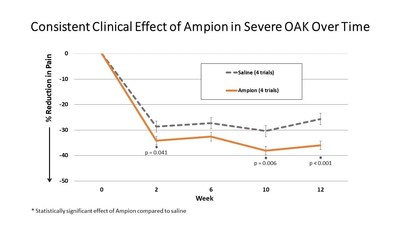
 Ampio Pharmaceuticals, Inc. (NYSE American: AMPE), a biopharmaceutical company focused on the advancement of immunology-based therapies for prevalent inflammatory conditions, today reported newly integrated data from four of its earlier clinical trials with consistent inclusion, exclusion, and demographic populations utilizing Ampion for treating osteoarthritis of the knee (OAK). Data from these 585 patients categorized as severe (i.e., Kellgren-Lawrence grade 4, or KL 4) demonstrates Ampion's consistent and statistically significant clinical effect in the reduction of pain compared to saline at two, ten, and twelve-week intervals subsequent to intra-articular injection.

"These 585 KL 4 patients in our earlier trials represent the largest available and reported dataset of severe OAK patients to date, and the data analysis clearly show Ampion as the first therapy to demonstrate clinical efficacy in patients suffering from severe OAK," said Michael Macaluso, President and CEO of Ampio. "Severe OAK remains a critical unmet medical need. We have already secured one pivotal trial that the FDA has agreed we can use to file our Biologics License Application (BLA), and, while our latest Phase III AP-013 clinical trial in OAK had to be paused because of the COVID-19 pandemic, the high degree of efficacy seen in the integrated data for KL 4 patients from the previous four trials gives us confidence to expect a positive outcome when it comes time to unblind this study."

Top-line results from Ampio's AP-003-A, AP-003-B, and AP-004 trials were previously published in Orthopedics (Orthopedics. 2018; 41(1):e77-e83), which reflected a clinically and statistically significant reduction in pain at weeks ten and twelve following a single injection, compared to saline, using the Western Ontario and McMaster Universities Osteoarthritis Index (WOMAC) scale. In addition, Ampion showed a 35.6% and 33.2% reduction in pain at weeks ten and twelve compared to baseline, while saline showed a reduction of 29% and 24.7%, with a p value of 0.04 and 0.012 comparing the two, respectively.

Today's announcement integrates data from severe OAK patients who were enrolled in Ampio's AP-003-C Phase III clinical trial with the previously published results. The pooled data show an even greater statistical significance, with a reduction in pain of 34.3% at two weeks (compared to 28.6% for saline, p value 0.041), 38.1% at ten weeks (30.4% for saline, p value 0.006) and 36% at twelve weeks (25.7% for saline, p value <0.001). See Figure 1.

Figure 1 Clinical Effect of Ampion in Severe Osteoarthritis of the Knee (OAK) Compared to Saline


Ampion has proven safe in thousands of enrolled and randomized patients, supporting repeat administration. No drug-related serious adverse events (SAEs) or treatment-related deaths have occurred, and the majority of adverse events (AEs) were unrelated to treatment. The incidence and severity of adverse events are similar for Ampion and saline, and the incidence of related AEs is far lower than that reported for existing therapies.

"Ampion is on track to become the first novel drug with unique mechanisms of action on the market for OAK in over 20 years. Ampion treatment has demonstrated consistent clinical efficacy in patients suffering from OAK across multiple trials, periods of time and clinical sites. In addition, the FDA has provided written confirmation that the AP-003-A study provides evidence of the effectiveness of Ampion" continued Macaluso. "We continue to remain confident the data from the suspended Phase III AP-013 trial will show similar safety and efficacy, but the decision whether to unblind this double masked, randomized controlled study or to continue adding patients ideally should be jointly decided with future potential partners."

https://www.biospace.com/article/releases/ampio-provides-update-on-osteoarthritis-of-the-knee-oak-program-reiterates-compelling-data-in-earlier-phase-iii-trials-of-ampion-in-severe-oak/