Search This Blog

Thursday, July 22, 2021

8-week gap seen as sweet spot for Pfizer jab antibodies

 A longer gap between first and second doses of the Pfizer-BioNTech Covid vaccine makes the body's immune system produce more infection-fighting antibodies, UK researchers have found.

Experts say the findings support the UK's decision on extending dosing intervals from the initial recommendation of three weeks.

An eight-week gap seems to be the sweet spot for tackling the Delta variant.

The UK initially extended the dosing gap to 12 weeks at the end of 2020.

But as the vaccination programme has been rolled out through the age groups - everyone over 18 has now been offered at least their first jab - people have been encouraged to seek to bring their second jab forward and get it after eight weeks.

The government-funded work is published in a pre-print paper not yet peer reviewed.

For the study, the researchers compared the immune responses of 503 NHS staff who received their two shots at different intervals in late 2020 and early 2021, when the Alpha Covid variant, first identified in Kent, was rapidly spreading.

Antibody levels in their blood were measured a month after the second vaccine dose.


The findings suggest:

  • both short and long dosing intervals of the Pfizer vaccine generated strong immune responses overall
  • a three-week schedule generated fewer of the neutralising antibodies that can bind the virus and stop it infecting cells than a 10-week interval
  • while antibody levels dipped after the first dose, levels of T-cells - a different type of immune cell - remained high
  • the longer schedule led to fewer T-cells overall but a higher proportion of a specific type or subset, called helper T-cells, which according to the researchers, supports immune memory

Prof Susanna Duanchie, the joint chief investigator in the Pitch study, at Oxford University, said two doses were better than one but the timing of the second was somewhat flexible depending on the circumstances.

For the UK's current situation, she said: "Eight weeks is about the sweet spot for me, because people do want to get the two vaccine [doses] and there is a lot of Delta out there right now.

"Unfortunately, I can't see this virus disappearing, so you want to balance that against getting the best protection that you can."

Dr Rebecca Payne, one of the study authors, from Newcastle University, said: "Our study provides reassuring evidence that both dosing schedules generate robust immune responses against Sars-CoV-2 after two doses.

"We now need to carry out more follow-up studies to understand the full clinical significance of our findings."

Real-world data from Public Health England shows the Pfizer vaccine is effective at reducing levels of serious disease, hospital admissions and death, even after one dose.

'Protect yourself'

Vaccines Minister Nadhim Zahawi said: "The findings from this latest Pitch study are hugely significant not just for the UK but for the world, helping us better understand the mechanics behind our immune response to Covid-19 and the importance of getting both doses of the vaccine.

"As we raced to offer a vaccine to all adults, we took the [Joint Committee on Vaccination and Immunisation] JCVI's advice to shorten the dosing interval from 12 to eight weeks, to help protect more people against the Delta variant.

"This latest study provides further evidence that this interval results in a strong immune response and supports our decision.

"I urge every adult to get both doses of the vaccine, protect yourself and those around you, and we are looking to offer millions of the most vulnerable a booster jab from September to ensure this protection is maintained."


https://www.bbc.com/news/health-57929953

Cyclerion to Present Clinical Trial Design for Phase 2a Study in Alzheimer's

 Research to be presented highlighting potential of neuropsychological biomarkers to guide the clinical development of Cyclerion’s investigational therapeutics

Cyclerion Therapeutics, Inc. (Nasdaq: CYCN), a clinical-stage biopharmaceutical company on a mission to develop treatments that restore cognitive function, today announced that it will present clinical trial design for a Phase 2a study of its lead development candidate, CY6463, in participants with Alzheimer’s disease with vascular pathology at the upcoming Alzheimer’s Association International Conference 2021 (AAIC). AAIC will be held July 26-30, 2021, virtually and in Denver, CO.

In addition, Anna Marin, a researcher in the laboratory of Dr. Andrew Budson and Dr. Katherine Turk in the Department of Neurology, Boston University School of Medicine and Center for Translational and Cognitive Neuroscience, VA Boston Healthcare System, will present results from the Cyclerion sponsored study on peak alpha frequency and N200 latency as predictors of neuropsychological performance in a memory disorders clinic. This pioneering work provides insights into the relationships between electrophysiological measures and cognitive performance in patients with Alzheimer’s disease and other dementias. Cyclerion identified changes in electrophysiological measures in the recent Phase 1 Translational Pharmacology study and will be evaluating electrophysiological and cognitive endpoints in the Phase 2a study in participants with Alzheimer’s disease with vascular pathology.

https://www.yahoo.com/entertainment/cyclerion-therapeutics-present-clinical-trial-203000086.html

To Pay or Not to Pay: Medicare's Big Aduhelm Decision

In June, the FDA approved aducanumab (Aduhelm) to treat patients with Alzheimer's disease using the agency's accelerated approval pathway, despite significant concerns about the evidence regarding the drug's safety and effectiveness. The agency's approval decision contradicted the recommendations of its own advisory committee, which voted overwhelmingly against the evidence presented in support of the drug. Soon after approval, three members of the committee resigned in protest. In his resignation letter, Aaron Kesselheim, MD, JD, MPH, of the Harvard School of Medicine, called the aducanumab decision "probably the worst drug approval decision in recent U.S. history." Tia Powell, MD, director of the Montefiore Einstein Center for Bioethics, called the FDA decision a "failure of scientific integrity."

Now, one of the major questions is: Will (and should) Medicare pay for the drug?

To better understand the factors at play, we offer a brief review of the drug's approval process and an examination of the potential implications of the decision.

Aducanumab's Controversial Approval

In its effort to speed the drug approval process, the FDA allowed Biogen to skip phase II clinical testing, which are often considered "learn and confirm" trials. This resulted in researchers not knowing enough information about how to dose the drug to achieve an acceptable balance between the desired clinical outcomes and safety going into phase III trials. Beyond the procedural concerns, the FDA based its approval on changes in a biomarker, rather than clear evidence of changes in clinical outcomes. There were mixed results in the phase III trials regarding reduction in cognitive decline. One study showed no change in decline, and another showed modest improvement.

Under accelerated approval, Biogen has 9 years to show evidence that aducanumab actually reduces cognitive decline. For the approval decision, the FDA focused on changes in amyloid beta plaque, which are deposits of the protein fragment beta amyloid that build up in the spaces between nerve cells. After years of efforts to establish a causal link between the presence of amyloid plaque in living brain and Alzheimer's, there is still substantial disagreement in the scientific community. The weak correlation between amyloid beta plaque and Alzheimer's disease has led many people to criticize the amyloid hypothesis on which the FDA decision rests. Along with the questions about clinical benefits, there are some clear indications of serious side effects and questions about whether the administration of the treatment, which requires that patients undergo regular MRIs, will be feasible for many of the people who might use the drug.

Medicare's Big Decision

Facing increasing criticism a month after approving aducanumab, the FDA provided new prescribing instructions designed to limit the drug's use to patients with early-stage Alzheimer's disease. Nevertheless, millions of Alzheimer's patients in the Medicare program may still be eligible to receive the drug. There are significant consequences of Medicare paying for aducanumab.

The economic consequences for federal healthcare spending are enormous. Biogen is expected to charge $56,000 a year per patient -- a lofty pricetag for taxpayers to cover. There are also consequences for patients treated with the drug. Some clinical trial participants experienced brain bleeding or brain swelling. Even if patients treated with aducanumab don't experience those side effects, there is the ethical question of whether patients should receive an expensive drug, paid for by taxpayers, for which there is limited evidence of clinical effectiveness.

But is Medicare allowed to not pay for an FDA approved service or drug?

From a legal standpoint, the Medicare program is not required to pay for all medical items and services approved by the FDA. The statute that created Medicare prohibits coverage "for any expenses incurred for items or services which ... are not reasonable and necessary for the diagnosis or treatment of illness or injury," but for the program's first few decades, the meaning of "reasonable and necessary" was unclear. Since 2000, Medicare began to raise its expectations for coverage with a focus on clinical outcomes, and this focus has sharpened in the past decade. In 2013, when Medicare updated its process for opening, deciding, or reconsidering national coverage decisions, the agency reiterated that it reviews clinical evidence to determine whether an item or service "is reasonable and necessary for the diagnosis or treatment of illness or injury or to improve the functioning of a malformed body member for the affected Medicare beneficiary population," and noted that "FDA approval or clearance alone does not entitle that technology to Medicare coverage."

In the past, Medicare has often pushed back on paying for some FDA-approved medical devices and imaging tests. Although the FDA approved the use of a radioactive pharmaceutical (florbetapir [Amyvid]) with PET imaging to identify amyloid plaque in the living brain, it determined in 2013 that FDA approval based on evidence that the test was safe and effective in identifying amyloid plaque was not sufficient to justify coverage. Medicare ruled that it would only pay for amyloid PET imaging when Medicare-eligible beneficiaries were enrolled in a clinical trial designed to determine whether information from the imaging test "potentially improves the participants' health outcomes."

Despite not paying for some FDA-approved devices and tests, Medicare nearly always pays for FDA-approved Part B drugs. In this case, FDA has come under severe criticism for approving the drug because of the contested evidence about its benefits. What's Medicare to do?

Some experts argue that Medicare should use a "coverage with evidence development" (CED) approach as a way to pay for aducanumab for eligible trial participants and collect patient outcomes data at the same time. Yet, the CED approach may not be sufficient to address the broader problem illustrated by this case: The U.S. has a drug approval system that permits some treatments to enter the market with limited evidence, and often relies on surrogate endpoints only rather than requiring evidence based on clinical outcomes. Medicare may, in this case, act as an important fail-safe against this questionable FDA approval by refusing to pay for aducanumab or paying only when Medicare beneficiaries enroll in a clinical trial to study clinical outcomes.

But a longer-term solution must involve strengthening the FDA's evidentiary standards for product approvals, for drug developers to conduct rigorous clinical trials that focus on clinical outcomes, and to accept negative findings -- and for all patients and their advocates to demand no less.

Michael K. Gusmano, PhD, MA, is a research scholar at The Hastings Center, and a professor of health policy at Rutgers University School of Public Health in New Jersey. Karen J. Maschke, PhD, is a research scholar and editor at The Hasting Center, and a co-investigator on several NIH-funded and NSF-funded projects.

https://www.medpagetoday.com/opinion/second-opinions/93704

‘Herd Immunity’ at Wall Street firms keeps return to office on track

 Despite an uptick in COVID-19 cases, Wall Street chieftains are confident they have "herd immunity" among their New York City employees.   

CEOs of Morgan Stanley, JPMorgan and Goldman Sachs, at this time, say rank and file employees, of which an estimated 90% are vaccinated, will be able to continue returning to the office, FOX Business has learned. 

Many firms started bringing employees back to the office in stages this summer. 

Their stance comes even as alarming cases of the virus are being tracked with a 53% rise, according to Dr. Rochelle Walensky, director of the Centers for Disease Control and Prevention, who delivered an update on Thursday during the White House COVID briefing. 

Hospitalizations are up 32%, deaths are 19% from the last seven-day average, she noted. Additionally, the delta variant represents 83% of the strains circulating in the U.S. 

"We are not out of the woods yet," she warned. 

States including California and Pennsylvania are pulling the trigger and imposing new mask-wearing rules

Los Angeles County on July 17 revived a requirement that masks be worn indoors, regardless of one's vaccination status, health officials said. Some exceptions will apply.

"We’re not where we need to be for the millions at risk of infection here in Los Angeles County, and waiting to do something will be too late, given what we’re seeing," L.A. County Health Officer Dr. Muntu Davis said in a virtual briefing with reporters, as reported by Fox News. 

Health officials in Philadelphia are now strongly recommending universal mask-wearing across indoor public spaces, even for those who are vaccinated. 

The potential actions of Mayor Bill de Blasio and Gov. Andrew Cuomo are being closely watched should a new lockdown mandate be called.

On Thursday, New York City Mayor Bill de Blasio was asked about the Big Apple's situation. 

"We're going to obviously keep all options on the table going forward," he said. "We would not even be saying anything about mask advisories. If everyone just got vaccinated, this ballgame would be over."


Still, public policy remains a wild card and the potential actions of de Blasio and Gov. Andrew Cuomo are being closely watched should a new lockdown mandate be called. While unlikely at this point, it is on the radar of corporate executives. 

https://www.foxbusiness.com/markets/herd-immunity-at-wall-street-firms-keeps-return-to-office-on-track

AI built to find anti-aging chemical compounds

 The University of Surrey has built an artificial intelligence (AI) model that identifies chemical compounds that promote healthy ageing -- paving the way towards pharmaceutical innovations that extend a person's lifespan.

In a paper published by Nature Communication's Scientific Reports, a team of chemists from Surrey built a machine learning model based on the information from the DrugAge database to predict whether a compound can extend the life of Caenorhabditis elegans -- a translucent worm that shares a similar metabolism to humans. The worm's shorter lifespan gave the researchers the opportunity to see the impact of the chemical compounds.

The AI singled out three compounds that have an 80 per cent chance of increasing the lifespan of elegans:

  • flavonoids (anti-oxidant pigments found in plants that promote cardiovascular health),
  • fatty acids (such as omega 3), and
  • Organooxygens (compounds that contain carbon to oxygen bonds, such as alcohol).

Sofia Kapsiani, co-author of the study and final year undergraduate student at the University of Surrey, said:

"Ageing is increasingly being recognised as a set of diseases in modern medicine, and we can apply the tools of the digital world, such as AI, to help slow down or protect against ageing and age-related diseases. Our study demonstrates the revolutionary ability of AI to aid the identification of compounds with anti-ageing properties."

Dr Brendan Howlin, lead author of the study and Senior Lecturer in Computational Chemistry at the University of Surrey, said:

"This research shows the power and potential of AI, which is a speciality of the University of Surrey, to drive significant benefits in human health."


Story Source:

Materials provided by University of SurreyNote: Content may be edited for style and length.


Journal Reference:

  1. Sofia Kapsiani, Brendan J. Howlin. Random forest classification for predicting lifespan-extending chemical compoundsScientific Reports, 2021; 11 (1) DOI: 10.1038/s41598-021-93070-6

'Superbug' fungus spread in two cities

 U.S. health officials said Thursday they now have evidence of an untreatable fungus spreading in two hospitals and a nursing home.

The "superbug" outbreaks were reported in a Washington, D.C, nursing home and at two Dallas-area hospitals, the Centers for Disease Control and Prevention reported. A handful of the patients had invasive fungal infections that were impervious to all three major classes of medications.

"This is really the first time we've started seeing clustering of resistance" in which patients seemed to be getting the infections from each other, said the CDC's Dr. Meghan Lyman.

The fungus, Candida auris, is a harmful form of yeast that is considered dangerous to  and nursing home patients with serious medical problems. It is most deadly when it enters the bloodstream, heart or brain. Outbreaks in  have been spurred when the fungus spread through patient contact or on contaminated surfaces.

Health officials have sounded alarms for years about the superbug after seeing infections in which commonly used drugs had little effect. In 2019, doctors diagnosed three cases in New York that were also resistant to a class of drugs, called echinocandins, that were considered a last line of defense.

In those cases, there was no evidence the infections had spread from patient to patient—scientists concluded the resistance to the drugs formed during treatment.

The new cases did spread, the CDC concluded.

In Washington, D.C., a cluster of 101 C. auris cases at a nursing home dedicated to very sick patients included three that were resistant to all three kinds of antifungal medications. A cluster of 22 in two Dallas-area hospitals included two with that level of resistance. The facilities weren't identified.

Those cases were seen from January to April. Of the five people who were fully resistant to treatment, three died—both Texas patients and one in Washington.

Lyman said both are ongoing outbreaks and that additional infections have been identified since April. But those added numbers were not reported.

Investigators reviewed medical records and found no evidence of previous antifungal use among the patients in those clusters. Health officials say that means they spread from person to person.


Explore further

As COVID-19 spreads, potentially deadly fungus infects LA County health care facility
https://medicalxpress.com/news/2021-07-superbug-fungus-cities-health.html

Investigational magnetic device shrinks glioblastoma in first-in-world human test

 Investigational magnetic device shrinks glioblastoma in first-in-world human test

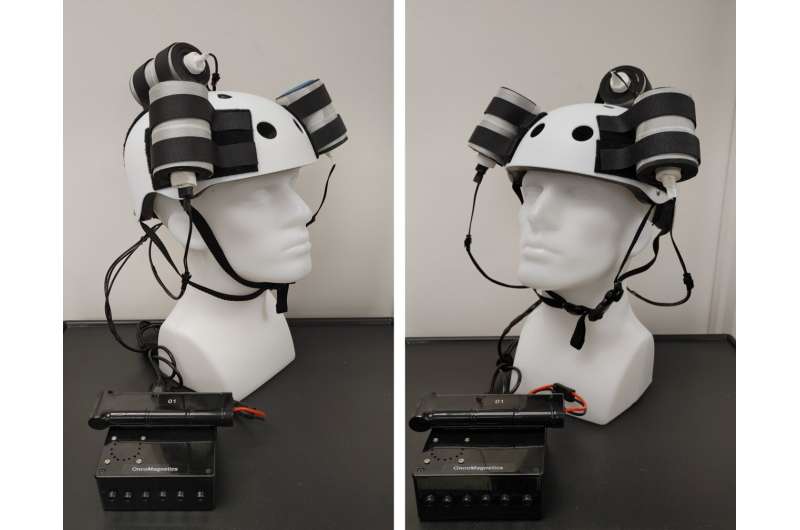
Device helmet with 3 oncoscillators securely attached. The oncoscillators are connected to a controller box powered by a rechargeable battery. Credit: Houston Methodist

Houston Methodist Neurological Institute researchers from the department of neurosurgery shrunk a deadly glioblastoma tumor by more than a third using a helmet generating a noninvasive oscillating magnetic field that the patient wore on his head while administering the therapy in his own home. The 53-year-old patient died from an unrelated injury about a month into the treatment, but during that short time, 31% of the tumor mass disappeared. The autopsy of his brain confirmed the rapid response to the treatment.

"Thanks to the courage of this patient and his family, we were able to test and verify the potential effectiveness of the first noninvasive therapy for glioblastoma in the world," said David S. Baskin, M.D., FACS, FAANS, corresponding author and director of the Kenneth R. Peak Center for Brain and Pituitary Tumor Treatment in the Department of Neurosurgery at Houston Methodist. "The family's generous agreement to allow an autopsy after their loved ones' untimely death made an invaluable contribution to the further study and development of this potentially powerful therapy."

In a  published in Frontiers in Oncology Baskin and his colleagues detailed the journey of their pioneering patient who suffered from end-stage recurrent glioblastoma, despite a radical surgical excision, chemoradiotherapy and experimental gene therapy.

Glioblastoma is the deadliest of brain cancers in adults, nearly always fatal, with a life expectancy of a few months to two years. When the patient's glioblastoma recurred in August 2019, Baskin and his team, already working on the OMF treatment in mouse models, received FDA approval for compassionate use treatment of the patient with their newly invented Oncomagnetic Device under an Expanded Access Program (EAP). The protocol also was approved by the Houston Methodist Research Institute Institutional Review Board.

The treatment consisted of intermittent application of an oscillating  generated by rotating permanent magnets in a specific frequency profile and timing pattern. First administered for two hours under supervision in the Peak Clinic, ensuing treatments were given at home with help from the patient's wife, with increasing treatment times up to a maximum of only six hours per day.

The Oncomagnetic Device looks deceptively simple: three oncoscillators securely attached to a helmet and connected to a microprocessor-based electronic controller operated by a rechargeable battery, an invention by case study co-author Dr. Santosh Helekar. During the patient's five weeks of treatment, the magnetic therapy was well-tolerated and the tumor mass and volume shrunk by nearly a third, with shrinkage appearing to correlate with the treatment dose.

Co-authored by associate professor of neurosurgery Santosh Helekar, M.D., Ph.D., research professor Martyn A. Sharpe, Ph.D., and biomedical engineer Lisa Nguyen, the case study is entitled "Case Report: End-Stage Recurrent Glioblastoma Treated with a New Noninvasive Non-Contact Oncomagnetic Device." The ongoing research is supported by the Translational Research Initiative of the Houston Methodist Research Institute, Donna and Kenneth Peak, the Kenneth R. Peak Foundation, the John S. Dunn Foundation, the Taub Foundation, the Blanche Green Fund of the Pauline Sterne Wolff Memorial Foundation, the Kelly Kicking Center Foundation, the Gary and Marlee Swarz Foundation, the Methodist Hospital Foundation and the Veralan Foundation.

"Imagine treating brain cancer without radiation therapy or chemotherapy," said Baskin. "Our results in the laboratory and with this patient open a new world of non-invasive and nontoxic  for brain cancer, with many exciting possibilities for the future."


Explore further

Experimental glioblastoma therapy shows curative powers in mice models

More information: David S. Baskin et al, Case Report: End-Stage Recurrent Glioblastoma Treated With a New Noninvasive Non-Contact Oncomagnetic Device, Frontiers in Oncology (2021). DOI: 10.3389/fonc.2021.708017
https://medicalxpress.com/news/2021-07-magnetic-device-glioblastoma-first-in-world-human.html