Takeda Pharmaceutical Co. said Thursday that it had suspended the use of 1.6 million doses of Moderna Inc.'s Covid-19 vaccine in Japan due to reports of contamination.
Takeda, which distributes the vaccine in Japan, said it has asked Moderna to investigate the issue reported at multiple vaccination sites.
Takeda said it hadn't received any reports of safety concerns linked to contamination.
South Korea’s central bankraised interest rateson Thursday in a decision that was expected as financial risks heat up despite the virus threat.
The Bank of Korea raised its policy rate by 25 basis points to 0.75% for the first time in nearly three years, becoming the first developed economy to raise interest rates during the pandemic era.
Bank of Korea Governor Lee Ju-yeol said the decision to hike rates was not unanimous, and there was a dissenting board member calling for rates to be held steady. It was also divided among analysts polled by Reuters, with only 16 out of 30 expecting the rate hike on Thursday.
One analyst, Alvin Tan, head of Asia FX strategy at RBC Capital Markets, called it a “grudging rate hike,” even though the market was “fully expecting a string of rate hikes.”
South Korea’s benchmark index Kospi fell 0.18% following the announcement. The Korean won weakened.
Most central banks globally have slashed rates to record lows in a bid to prop up their pandemic-hit economies. From the U.S. to Europe and Asia, governments around the world have been rolling out stimulus measures to support businesses.
“Admittedly, the virus remains a headwind to the recovery,” Capital Economics said in a note following the announcement.
South Korea has been grappling with high numbers of Covid cases in recent weeks, with its rolling 7-day average daily cases surging past 1,800 — compared to just over 400 in June, according to our World in Data.
“But the economy has become increasingly resilient to outbreaks and rapid progress on vaccines should help the country move to more light-touch containment measures soon,” Capital Economics said.
The research firm pointed to financial risks pressuring the economy, such as heating up house prices, which rose by 14.3% year-on-year in July. Household debt also shot up, by 10% year-on-year in the second quarter.
James Lee, chief economist of Japan and Korea at HSBC, said he wouldn’t rule out further tightening.
“Financial stability risks — household debt rising, housing prices, have been an issue not only this year, not only last year, but at least for the past five years. So when given the chance ... the Bank of Korea will continue to normalize policy rate,” he told CNBC’s “Squawk Box Asia” on Thursday.
The central bank will “keep the door open for further policy action,” he added. “But whether they actually can hike or not will heavily depend on the growth outlook going forward,” Lee said.
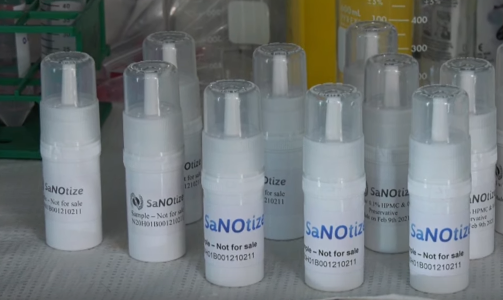
A well known antimicrobial, Nitric Oxide, has been found torapidly reduce SARS-CoV-2 viral load, knocking it down by95% within 24 hours, and 99% within 72 hours, according to arecent studyby researchers funded by England's NHS foundation trust andSaNOtizeResearch & Development Corporation - a Canadian biotech company currently conducting Phase II trials of a nitric oxide nasal spray.
A group of 80 adults (18-70 years) with confirmed (Alpha strain) Covid-19 infections were divided into two groups, with half receiving nitric oxide nasal spray (NONS) that were self-administered 5-6 times daily for 9 days.
The goal of the nasal spray is to kill the virus present in the upper airways - preventing it from incubating and making its way to the lungs.
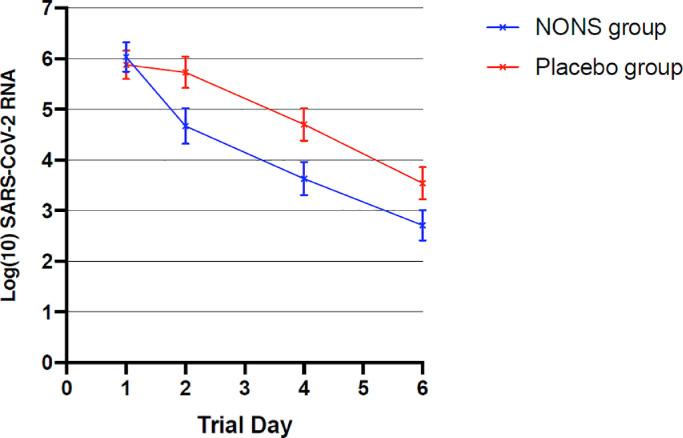
The study found that mean viral load was significantly lower in the NONS group by a factor of 16.2, in what the study's authors described as an "accelerated decrease," while nearly half of those who completed a post-study questionnaire reported feeling better vs. 8% of the placebo group.
Mean SARS-CoV-2 RNA concentration was lower on NONS by a factor of 16.2 at days 2 and 4. A rapid reduction (95%) in the SARS-CoV-2 viral load was observed within 24 hours, with a 99% reduction observed within 72 hours with NONS treatments. -Clinical efficacy of nitric oxide nasal spray (NONS) for the treatment of mild COVID-19 infection.
What's more, there were no serious adverse reactions from the nasal spray.
"Treatment with NONS in this trial was found to be effective and safe in reducing the viral load in patients with mild, symptomatic COVID-19 infection," reads the study. "Patients in the NONS treatment arm demonstrated viral loads, as determined from PCR testing of nose and throat swab sampling, that were lower at days 2 and 4 by a factor of 16.2 than those on placebo, and symptom resolution was also found to be faster on NONS treatment than on placebo in this study."
Lower SARS-CoV-2 RNA loads in patients with NONS may be beneficial in the prevention of SARS-CoV-2 transmission. It has been described that higher viral loads in patients with SARS-CoV-2 earlier than SARS-CoV may have contributed to greater difficulties in reducing the onward transmission. Furthermore, it has been observed that the risk of symptomatic COVID-19 was associated with the SARS-CoV-2 RNA levels of contacts and incubation time was shortened in a dose-dependent manner.
Accelerated SARS-CoV-2 clearance with NONS may reduce symptom duration, decrease infectivity period, reduce hospital admissions, and lower disease severity. Consequently, this study could be used as supporting evidence for emergency use of NONS for patients with mild COVID-19 infection.
According to SaNOtize, researchers from Utah State University were able to kill 99.9% of SARS-CoV-2 in a petri dish within two minutes.
The company, whose board includes Prof. Ferid Murad of Stanford University - who won the Nobel Prize in 1998 for discovering the properties of nitric oxide, signed an agreement with Indian biotech Glenmark earlier this month to manufacture, market and distribute NONS throughout Asia, including Singapore, Malaysia Hong Kong, Taiwan, Nepal, Brunei, Cambodia, Laos, Myanmar, Sri Lanka, Timor-Leste and Vietnam.
According to SaNOtize Chief Science Officer, Dr. Chris Miller, the nasal spray is a 'post-exposure' prevention akin to hand sanitizer.
"If you are outside, around people, and could be infected, you could use the spray and reduce the number of viruses in the nose, before it is becoming a full-blown infection. We have shown that even when people have a very high load of virus, the spray can significantly reduce the viral load," Miller said in May.
The SARS-CoV-2 virus has infected over 165 million people worldwide causing nearly 3.5 million deaths. Recent vaccination efforts have been hindered by multiple coronavirus variants that challenge current vaccines. While infection generally produces a mild disease, in some patients it can develop into a severe inflammatory COVID-19 requiring medical intervention.
Recently, Professor Yaakov Nahmias' team at the Hebrew University of Jerusalem (HU) reported that the new coronavirus causes abnormal accumulation of lipids, which are known to initiate severe inflammation in a process called lipotoxicity. The team identified the lipid-lowering drug TriCor (fenofibrate) as an effective antiviral last year, showing it both reduced lung cell damage and blocked virus replication in the laboratory. These results have since been confirmed by several international research teams. Anobservational studycarried out in multiple clinical centers in Israel was reported last October to support the original findings. The team then launched an interventional clinical study to treat severe COVID-19 patients at Israel's Barzilai Medical Center with support from Abbott Laboratories.
Now, the HU team is reporting promising results of an investigator-initiated interventional open-label clinical study led by Nahmias and coordinated by Prof. Shlomo Maayan, Head of Infectious Disease Unit at Barzilai. In this single-arm, open-label study, 15 severe-hospitalized COVID-19 patients with pneumonia requiring oxygen support were treated. In addition to standard of care, the patients were given 145 mg/day of TriCor (fenofibrate) for 10 days and continuously monitored for disease progression and outcomes. "The results were astounding," shared Nahmias. "Progressive inflammation markers, that are the hallmark of deteriorative COVID-19, dropped within 48 hours of treatment. Moreover, 14 of the 15 severe patients didn't require oxygen support within a week of treatment, while historical records show that the vast majority severe patients treated with the standard of care require lengthy respiratory support," he added. These results are promising as TriCor (fenofibrate) was approved by the FDA in 1975 for long-term use and has a strong safety record. "There are no silver bullets," stressed Nahmias, "but fenofibrate is far safer than other drugs proposed to date, and its mechanism of action makes is less likely to be variant-specific."
"All patients were discharged within less than a week after the treatment began and were discharged to complete the 10-day treatment at home, with no drug-related adverse events reported," noted Maayan. "Further, fewer patients reported COVID-19 side effects during their 4-week follow-up appointment," he added. These preliminary findings offer promise to relieve the substantial health burdens experienced by patients who survive the acute phase of COVID-19.
The investigators stressed that while the results were extremely promising, only randomized placebo-controlled studies can serve as basis for clinical decisions. "We entered the second phase of the study and are actively recruiting patients," explained Nahmias, noting that two Phase 3 studies are already being conducted in running South America, the United States (NCT04517396) and Israel (NCT04661930).
The findings were released on Research Square and are currently under peer review.
A new study published in the journalNatureestimates that 103 million Americans, or 31 percent of the U.S. population, had been infected with COVID-19 by the end of 2020. Columbia University researchers modeled the spread of the coronavirus, and found that fewer than one-quarter of infections—just 22 percent—were accounted for in cases confirmed through public health reports based on testing.
The study is the first to comprehensively quantify the overall burden and characteristics of COVID-19 in the U.S. during 2020. The researchers simulated the transmission of SARS-CoV-2 within and between all 3,142 U.S. counties using population, mobility and confirmed case data.
"The vast majority of infectious were not accounted for by the number of confirmed cases," said Jeffrey Shaman, a professor at the university's Mailman School of Public Health who is affiliated with the Earth Institute. "It is these undocumented cases, which are often mild or asymptomatic infectious, that allow the virus to spread quickly through the broader population."
The study found that Infections were more widespread in some areas of the country. In areas of the upper Midwest and Mississippi valley, including the Dakotas, Minnesota, Wisconsin and Iowa, more than 60 percent of the population was estimated to have been infected by the end of 2020. In five metropolitan areas the researchers examined, 48 percent of residents of Chicago, 52 percent of Los Angeles, 42 percent of Miami, 44 percent of New York City, and 27 percent of people in Phoenix were infected in the same time frame.
As time went on, increased testing picked up on a growing portion of infections, but still offered an incomplete picture, the researchers said. The portion of confirmed cases reflected in the study's estimates rose from 11 percent in March to 25 percent in December; this reflected improved testing capacity, a relaxation of initial restrictions on test usage, and increasing recognition, concern, and care-seeking among the public. However, the detection rate remained far below 100 percent, as individuals with mild or asymptomatic infections, who could still spread the virus, were less likely to be tested.
The study further found that roughly 1 in 130 Americans (0.77 percent) was contagious with the virus on December 31, 2020. A similar percentage (0.83 percent) was estimated to be infected but not yet contagious. However, in some metropolitan areas, the percentage of individuals who were contagious at year's end was much higher.
Fatality rates fell with strengthening treatments and public health measures. The percentage of people with infections who died from COVID-19 fell from 0.8 percent during the spring wave to 0.3 percent by year's end. Urban areas like New York City that peaked in the spring saw the worst numbers for reasons that include delays in testing availability and masking mandates, overwhelmed hospitals, and lack of effective treatments.
Different cities peaked at different times of the year. New York and Chicago experienced strong spring and fall/winter waves, but little activity during summer; Los Angeles and Phoenix underwent summer and fall/winter waves; and Miami experienced all three waves. Los Angeles County, the largest in the United States, with a population of more than 10 million, was particularly hard hit during fall and winter, and had a community infection rate of 2.4 percent on December 31.
Looking ahead, the authors write that several factors will alter population susceptibility to infection. The virus will continue to spread to those who haven't yet been infected. And while vaccines protect against severe and fatal disease, breakthrough infections, including those that are mild or asymptomatic, will contribute to the spread of the virus. The study does not account for possible reinfections among those who have already had the disease, although there is evidence that antibodies may wane over time, and some people have definitely been reinfected. New, more contagious variants will make reinfections and breakthrough infections more likely, the authors write.
"While the landscape has changed with the availability of vaccines and the spread of new variants, it is important to recognize just how dangerous the pandemic was in its first year," said Sen Pei, an assistant professor of environmental health sciences at Mailman.
UPS Inc. started delivering coronavirus vaccines with the use of drones as part of a new initiative announced Aug. 24.
Atrium Health Wake Forest Baptist is spearheading the project. The academic medical center and health system first launched a drone program in July 2020.
UPS, and its subsidiary UPS Flight Forward, were picked to help expand the existing drone program to deliver vaccines.
A woman handles one of the drones. (Atrium Health Wake Forest Baptist)
“The ability and ingenuity to add an innovative layer to our health care supply chain by transporting COVID-19 vaccines via drone provides us with additional rapid delivery options for these time- and temperature-sensitive vaccines,” Conrad Emmerich, senior vice president of supply chain at Atrium Health, said in a statement.
Atrium Health launched the program with its health tech business enterprise iQ Healthtech Labs. The plan is to have the drones deliver the vaccines from the main medical center in Winston-Salem, N.C., to one of the health system’s family medicine practices.
“The delivery of COVID-19 vaccines by drone is an exciting and important step for UPS as we continue our near-perfect vaccine service delivery throughout the U.S. and around the world,” said Dan Gagnon, vice president of UPS Healthcare, in a statement. “We’re providing greater flexibility in how customers, and ultimately patients, receive temperature-controlled pharmaceuticals, which will continue to provide long-term value within the health care industry.”
The Matternet M2 drone was picked for the program. It is outfitted with a special cargo box that contains Cold Chain Technologies’ customized PCM Gel solution, a temperature-sensitive packaging mixture and temperature monitoring. It also flies autonomously and produces zero operational emissions.
UPS had already been working with the medical center on vaccine distribution. Atrium Health started receiving the Pfizer COVID-19 vaccine through UPS in December.
About 15% of all Mississippi K-12 students have now been quarantined since the start of the year either for testing positive for COVID-19 or due to known exposures. That figure, based on new data from the Mississippi State Department of Health, includes 65,525 students who have been ordered to isolate in the weeks since classes began.
The latest report, which includes figures from 835 schools in 75 counties, shows that the state identified 5,763 new cases among students for the week of Aug. 16-20 and ordered 28,990 of them to quarantine for exposure, with both figures up since the prior week.
The total number of student cases identified this month so far reached 11,766 by the end of last week. At the same point in August 2020, schools had confirmed just 533 cases among students. For the entirety of the fall 2020 semester, Mississippi’s schools confirmed just 7,212 cases among students. About 443,000 students are enrolled in Mississippi’s public-school system.
At Least 3,157 School Employees Isolated
Schools have also confirmed 2,383 cases among teachers and other K-12 employees this month so far, including 945 last week. At the same point in 2020, just 364 educators had tested positive for COVID-19. By the end of the fall 2020 semester, that total would reach 3,928.
In addition to positive cases, schools have quarantined at least 3,157 school employees for exposures, bringing the total number of K-12 employee isolations for cases or exposures to 5,540—a figure that represents about 8% of all K-12 faculty and staff in the state.
The figures released yesterday do not include any data for this week. The Mississippi State Department of Health also cautions on its website that the data do not include all schools. In seven counties, no schools are yet reporting.
“Only schools which have reported weekly data to MSDH appear on each week’s report. Some schools may report data late or incompletely,” MSDH says.
It also does not include data from Mississippi’s private schools.
State Reports 704 School Outbreaks, Dozens Close
Last year, Gov. Tate Reeves issued a statewide mask mandate that included all public K-12 schools. This year, the governor, citing individual freedom and responsibility, declined to issue a mask mandate in schools despite the significantly higher transmissibility of the delta variant. While many Mississippi schools returned for fall 2021 with district-level mask mandates, most began classes with face coverings optional, but not required.
Mkayla Robinson died of COVID-related complications on Saturday, Aug. 14, 2021, her local : newspaper reported. Photo: Raleigh HS Band Facebook page
Amid the mounting cases and exposures, though, dozens of school districts statewide have reversed course and implemented mask mandates after starting the year without them; dozens of other schools have since temporarily suspended in-person learning and moved to all-virtual classes.
At least one K-12 student has died with COVID-19 this month. Mkayla Robinson, 13, died just over a week after starting 8th grade at Raleigh Junior High School within hours of rapidly developing symptoms and testing positive. She had been in school as recently as three days before her death with no apparent symptoms and no diagnosis yet, sources told the Mississippi Free Press earlier this month.
After her death, the Smith County School District (which includes schools in Raleigh, Taylorsville and Mize) announced that it would go all virtual as the district reported 107 cases and 717 quarantines among students, staff and faculty. Tuesday’s MSDH school report did not include most of those cases and quarantines, reporting only 29 confirmed cases at Raleigh High School and none for the other schools in the district. That district reports totals on its website.
During a press conference Tuesday, Gov. Reeves suggested that the explosion of cases in students may not be related to school exposures.
“I don’t think that you can necessarily make the leap from those individuals testing positive to the transmission occurring in schools,” he said. “Some of it most likely occurred in schools, some of it most likely occurred in the community, and so I think it’s important that we make sure we don’t jump to irresponsible conclusions without having the data to verify that.”
Despite the large numbers of cases and quarantines, some school districts are requiring teachers to use their regular sick-day allowances in the event of exposures or confirmed positive cases. Last week, the Mississippi State Department of Health ordered schools to “exclude all students and faculty diagnosed with COVID-19 from the school setting” during a mandatory 10-day isolation period.
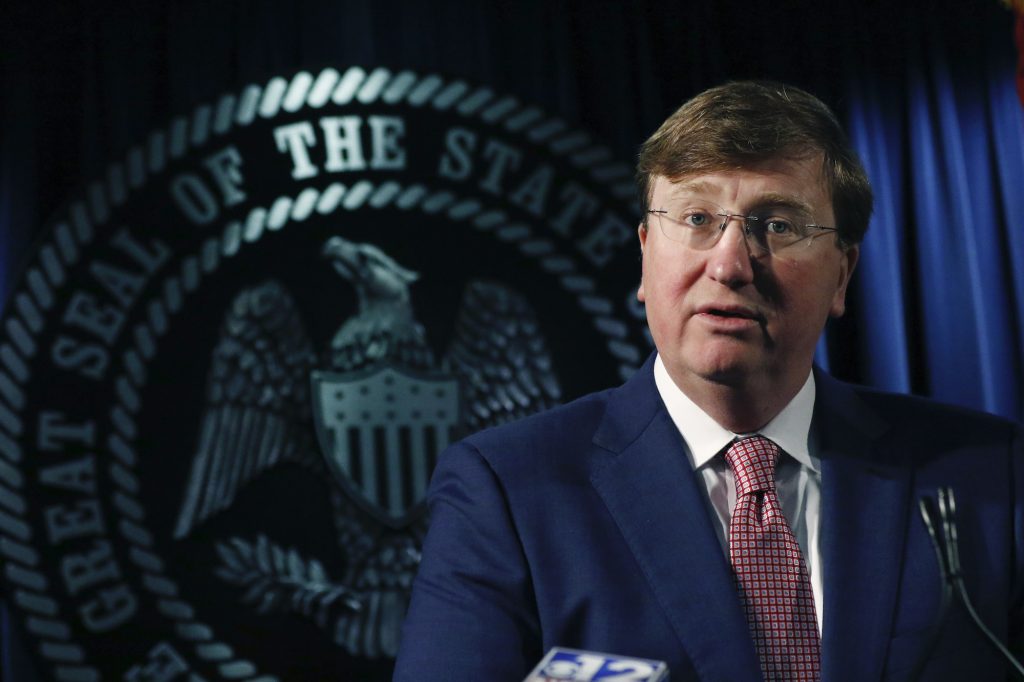
“Now if you’re a teacher or an employee, the best way for you not to have to be put in a position where you’re trying to be convinced whether you’re going to take personal leave or not is to not get COVID,” Gov. Tate Reeves said during a press conference on Tuesday, Aug. 24, 2021. AP Photo/Rogelio V. Solis
During his press conference yesterday, the governor said that the COVID-19 emergency order he extended gives local government entities the ability to let sick employees isolate without using personal leave time. But local governments and school districts are not required to take advantage of that flexibility, he said.
“Now if you’re a teacher or an employee, the best way for you not to have to be put in a position where you’re trying to be convinced whether you’re going to take personal leave or not is to not get COVID,” Reeves said. “And to be vaccinated certainly reduces your risk. It doesn’t eliminate it, but reduces your risk considerably.”
The Mississippi Association of Educators has repeatedly called on Reeves to issue a statewide mask mandate in schools this year, citing the dangers the delta variant poses to teachers and students alike, but he has continued to rebuff such requests. While not directly calling on Mississippians to get vaccinated, the governor said yesterday that he trusts it. He and his wife, Elee Reeves, are both vaccinated.
“As I have repeatedly done throughout this year, I encourage each and every one of you to consult with your doctor, study the facts and decide what is best for you and your family. I will continue to defend your right to make your own choices about your health care,” Reeves said. That statement led women on social media to point out that Reeves does not support a woman’s or family’s right to choose abortion. Reeves also supports Attorney General Lynn Fitch’s decision to ask the U.S. Supreme Court to overturn Roe v. Wade in a case the nation’s top justices will hear in October.
“That being said, the facts continue to point to the vaccine being safe and effective and the best way to prevent serious illness and death from COVID-19,” the governor said yesterday.
Free Testing Available For K-12 Students, Faculty
During Tuesday’s press conference, State Epidemiologist Dr. Paul Byers noted that MSDH has worked to make free COVID-19 testing available to K-12 students and employees.
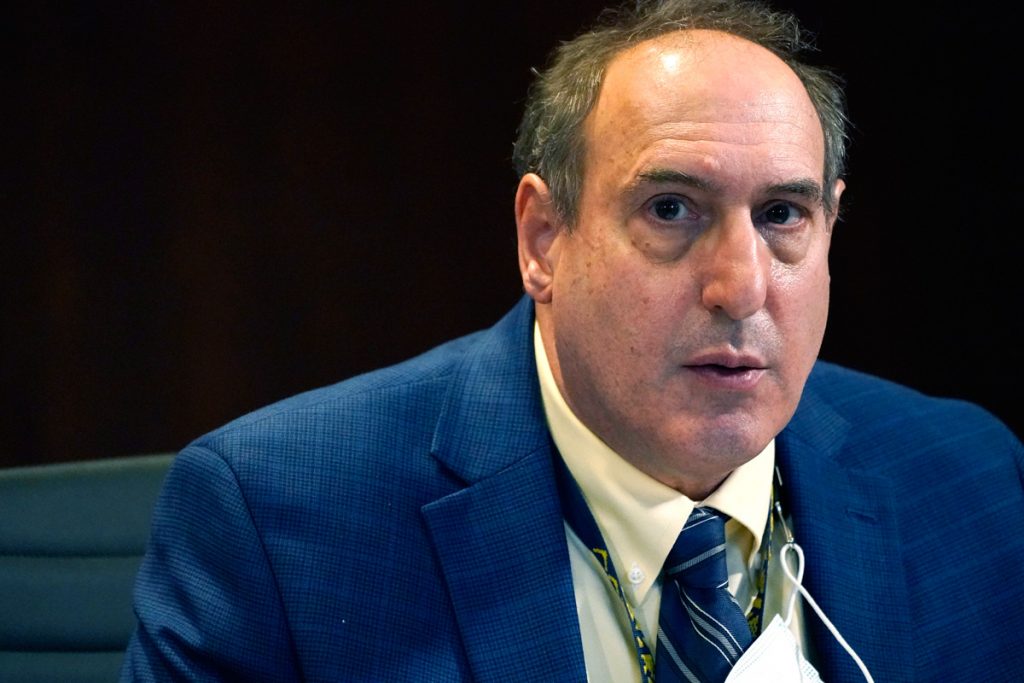
State Epidemiologist Dr. Paul Byers encouraged Mississippians to take advantage of free testing that MSDH is offering in public schools and at county health departments. AP Photo/Rogelio V. Solis
“We do have testing available for students and teachers who are exposed. Certainly one of the things that we’ve done is we’ve worked very hard to make sure that testing is available on site to schools,” he said, adding that many county health departments also have testing available.
The University of Mississippi Medical Center, which includes the state’s only pediatric hospital, reported today that it currently has 23 children in its care who have been diagnosed with COVID-19.