Search This Blog

Sunday, January 30, 2022

In US, Taiwan VP repeats accusation China blocked vaccine access

Taiwan Vice President William Lai used his final day in the United States to repeat an accusation that China blocked the island from obtaining COVID-19 vaccines last year, and to thank a US lawmaker for her role in donating the inoculations.

Last May, Taiwan President Tsai Ing-wen accused China of blocking a deal with Germany’s BioNTech SE for COVID-19 vaccines, after Beijing offered the shots to the island via a Chinese company just as Taiwan was dealing with a rise in domestic infections.

Beijing has angrily denied trying to stop Taiwan getting vaccines, and also offered Chinese-developed shots which the island rejected, citing safety concerns. China claims Taiwan as its own territory.

Less than two weeks after Tsai’s comments, Senator Tammy Duckworth, visiting Taipei with two other US lawmakers, said the United States would donate 750,000 vaccine doses to Taiwan.

Speaking to the Illinois Democrat during a stop over in San Francisco while on the way back to Taiwan from Honduras, Lai offered his thanks.

Lai said he was “especially grateful to her last year when Taiwan was unable to obtain vaccines due to the China factor,” Taiwan’s presidential office said, citing the de facto US ambassador to Washington Hsiao Bi-khim, who is accompanying Lai.

“She not only actively advocated that the Biden administration should provide vaccines to Taiwan, but also personally went to Taiwan to announce that the United States would donate Taiwan vaccines.”

In Beijing, China’s foreign ministry said Lai’s accusation was “total fiction”, calling it a “malicious slandering and smearing of the true face of the mainland.”

Taiwan eventually began receiving the BioNTech vaccines, jointly developed with Pfizer Inc, in September.

But that was only after Taiwan’s government allowed major Apple Inc supplier Foxconn, as well as its high-profile billionaire founder, Terry Gou, along with Taiwan Semiconductor Manufacturing Co Ltd and a Taiwanese Buddhist group to negotiate on its behalf for the doses.

While Lai, a possible presidential candidate in 2024, was ostensibly abroad for the new Honduran president’s inauguration, he made good use of his time to engage in diplomacy with the United States, Taiwan’s most important international backer and arms supplier.

He briefly talked to US Vice President Kamala Harris while in Honduras, drawing Chinese anger, and on Friday had a virtual meeting with US House of Representatives Speaker Nancy Pelosi.

On Saturday, Lai also spoke to three former members of the Trump administration, including former national security adviser H.R. McMaster and Matt Pottinger, Trump’s then-senior Asia adviser, Taiwan’s presidential office said.

That hour-long discussion focussed on military issues including “the proper preparations Taiwan” should have to maintain security and stability in the Taiwan Strait, the statement said.

China has never renounced the use of force to bring Taiwan under its control. 

https://www.rappler.com/world/asia-pacific/us-taiwan-vp-repeats-accusation-china-blocked-vaccine-access/

NYC to offer free, COVID antiviral home delivery as vax mandates remain in place

 New York City will offer free, same-day home delivery of COVID-19 antiviral medications, Mayor Eric Adams said Sunday — while dodging the question of when he might revoke the Big Apple’s various vax mandates.

Adams said the oral antiviral pills are “proven to keep people out of the hospital, particularly whose who are at-risk or seriously ill.

“We’re going to do it with the magic New York word. We’re going to do it for ‘free,’ ” Adams said of the giveaway program during a COVID briefing at Jacobi Hospital in The Bronx.

“We want to make sure that no one with COVID has to move throughout the city, especially for those who have immune compromise or our elderly,” the mayor said. “We want to bring it to you, and we want you to take advantage of this. This is a great deal and a great program we’ve put together.”

The Big Apple also will provide monoclonal antibody infusions “for patients who have mild to moderate symptoms for 10 days or less but are at high risk for severe illness,” City Hall said in a statement.

Mayor Adam, New York City holds a news conference at Jacobi Medical Center in the Bronx.
Mayor Eric Adams announced NYC will offer free, same-day home delivery of COVID-19 antiviral medications.
G.N.Miller/NYPost

Hizzoner — asked at what point he might consider revoking the city’s various vaccination requirements — only said he’d defer to local health officials and that any changes would be “balanced” with the Apple’s economic needs.

“I’ve stated this from the beginning: I’m going to go based on advice of my medical experts,” he said, before adding that the city’s economy would factor “a lot” into the decision.

“I must take my medical advice with the economic advice,” Adams said. “Just as I’m sitting down with my doctors and medical professionals, I’m sitting down with my economists.

Mayor Adam, New York City holds a news conference at Jacobi Medical Center in the Bronx.
The Big Apple also will provide monoclonal antibody infusions for certain patients.
G.N.Miller/NYPost

“We have to have that right balance. It can’t be just one way or the other.”

Reported COVID-19 cases have dropped 80 percent in the city since early January, according to health officials.

Seven-five percent of New Yorkers are now “fully vaccinated,” meaning they have received either two doses of the Pfizer or Moderna vaccines or one dose of the Johnson & Johnson vaccine.

Mayor Adam, New York City holds a news conference at Jacobi Medical Center in the Bronx.
Seven-five percent of New Yorkers are now “fully vaccinated.”
G.N.Miller/NYPost

Adams praised his predecessor Bill de Blasio for instituting vaccine mandates for city employees, businesses and indoor venues such as restaurants and concert halls — and added that he planned to call the former mayor himself later Sunday to thank him.

“I want to take my hat off to the de Blasio administration for putting in place some very tough decisions around mandates and around how do we ensure that we can make our city a safe place, and I just want to commend them for what they have done,” he said. “

I’m going to call the mayor later today and just tell him that, you know, we were able to build on what he put in place already.”

https://nypost.com/2022/01/30/nyc-to-offer-free-home-delivery-of-covid-antiviral-meds/

End the Healthcare CON Once and For All

 Across the country, certificate of need (CON) laws force healthcare providers to obtain permission from state regulators before they are allowed to expand current facilities, build new ones, or add new equipment. This outdated requirement is often unfairly stacked against providers seeking to expand, reducing competition and access to care services, and driving up costs for consumers.

CON laws are not about patient health and safety. “Unlike other varieties of regulation, the CON process is not supposed to assess a provider’s qualifications, safety record, or the adequacy of their facility. Instead, the entire process is geared toward second-guessing the provider’s belief that their community would benefit from the service they would like to offer,” wrote Matthew D. Mitchell in Don’t Wait for Washington: How States Can Reform Healthcare Today, published by the Paragon Health Institute. (Mitchell is a senior research fellow and director of the Equal Liberty Initiative at the Mercatus Center at George Mason University.)

ON laws have their roots in 1970s federal legislation that was designed to counter the inflationary effects of increased government spending on the cost of health services. Like many government programs, CON regulations did not deliver as promised.

“One study found that hospitals anticipated CON and actually increased their investments before it took effect,” wrote Mitchell. “Another found that while the regulation did change the composition of investments, ‘retarding expansion in bed supplies but increasing investment in new services and equipment,’ it had no effect on the total dollar volume of investment. As a result, early evaluations found that limited CON programs had no effect on total expenditures per patient, while comprehensive programs were associated with higher spending.”

In 1987, Congress did away with the federal CON mandate and 12 states eliminated their CON programs, according to Mitchell.

Despite the evidence of failure, 39 states and the District of Columbia continue to have CON laws for at least one medical service.

CON application fees range from $100 to $250,000, with some states charging a percentage of the capital expenditure, says Mitchell. “There is no systematic data on compliance costs, but we know that providers can spend months or years preparing their applications and waiting to hear from the regulator,” he wrote. “Because the process can be cumbersome, providers often hire boutique consulting firms to help them navigate it.”

In addition to compliance costs and revenue losses during the application process, the deck can be stacked against applicants, as the decision-makers are often employees of existing healthcare providers whose businesses could be impacted by new competition if CON applications were to be approved.

Healthcare providers wishing to expand services are not the only ones suffering under CON. So too are consumers being denied the benefits of competition in the healthcare market. With CON laws, power is in the hands of government regulators and special interests. Without CON laws and the health services monopolies they foster, healthcare providers would be forced to compete for consumers, offering better, more convenient, and more affordable care.

In some states, for example, care options for expectant mothers are restricted by CON laws that limit the supply of freestanding birthing centers that are usually non-profits or small businesses run by midwives that are unable to afford the costs and other regulatory requirements. New York Gov. Kathy Hochul recently signed legislation that is expected to remove obstacles to clear the way for midwife-run birth centers.

The COVID-19 pandemic has forced states to look for ways to better deliver and ensure healthcare services—and sacred cows such as CON have come under scrutiny.  In fact, as of January 2021, 24 states have eased CON requirements, giving healthcare providers greater flexibility to respond to the crisis.

CON reforms were necessary to respond to the COVID crisis. But reforms to eliminate these absurd policies were also necessary before COVID. Governors and state legislators should act to get rid of them once and for all. Consumers in every state deserve a healthcare market that competes for their business and seeks new ways to provide wide-ranging, innovative services at lower costs. Getting rid of archaic CON laws – and proving to the healthcare crony-cartel that the market is changing- will help create that market.

Dr. G. Keith Smith is a board certified anesthesiologist and co-founder of The Surgery Center of Oklahoma.

https://www.realclearhealth.com/articles/2022/01/19/end_the_healthcare_con_once_and_for_all_111297.html

Anti-COVID ‘Smart Bomb’ Could Protect You for a Year

 “Antimicrobials really aren’t getting the love lately,” said Dr. Vu Truong, CEO of Aridis Pharmaceuticals (Nasdaq: ARDS) as he reviewed the latest data on his own company’s antimicrobial treatment for COVID-19. “But COVID may wind up changing that.”  ­­

Truong’s viewpoint reflects a variety of trends currently seen in the treatment of infectious diseases. Key among these is antibiotic resistance – in which some bacteria can naturally resist certain kinds of antibiotics or become resistant if their genes change or they acquire drug-resistant genes from other bacteria. The unfortunate result is that the longer and more often antibiotics are used, the less effective they are against those bacteria.

But COVID has brought antimicrobials – specifically, the antibodies our bodies use to fight COVID – back into the spotlight, and Dr. Truong’s company is doubling down on their potential by innovating a new antimicrobial treatment that may prove to be as effective as a vaccine in preventing COVID infections and serious symptoms.

“The idea that antimicrobial monoclonal antibodies are effective in fighting COVID is not new,” he added. “They were given to former President Trump after he was diagnosed with COVID and have been promoted by physicians and politicians alike as we’ve continued to learn more about how effectively they fight the virus.”

Both AstraZeneca’s and Regeneron’s anti-COVID antibody cocktails are also showing preventative value against the viruses, both companies announced in late 2021. AstraZeneca revealed recent data showing the potential for 6 months of protection against COVID, while Regeneron reported about 8 months of protection.

“But what if I told you that a more refined antibody treatment could extend that protection for upwards of one or even two years?” asked Truong. “Because that’s what we believe is possible with Ardis’s antibody treatment, AR-701.”

“It’s like an anti-COVID smart bomb that keeps working for up to a year or more,” he added. “While typical antibody treatments have a half-life of three to four weeks, AR-701 has a half-life of three to four months, which accounts for the prolonged timeframe for antiviral protection and begins to overlap with the dosing timeframe of vaccines.”

This kind of protection could not only help protect those with COVID, but also help close the gap with regard to those who are vaccine-hesitant.

“The vaccines have been freely available for more than a year,” Truong said. “It’s clear that those who were inclined to receive a vaccine have received it, and those who are not inclined – for whatever reason – aren’t being swayed to reverse their choice. Compounding this challenge is Omicron and future variants prompting additional burdensome vaccine booster shots. That said, many of those who have rejected the vaccine have accepted antibody treatments. Our attitude is that protection is protection, and we are in the business of providing people with more choices with regard to COVID prevention and treatments.”

The AR-701 antibody cocktail treatment will be in testing and human clinical trials for another 12 months, but when it’s market-ready, Truong hopes that some people will consider it as a substitute for a vaccine if they remain vaccine-hesitant or as a way to better manage and recover if they suffer a breakthrough infection.

Gary S. Goldman is the nationally recognized host of “Business, Politics, & Lifestyles” a weekly talk show airing on WPRO in Providence RI. Learn more at garyonbpl.com  

https://www.realclearhealth.com/articles/2022/01/28/anti-covid_smart_bomb_could_protect_you_for_a_year__111304.html

Don’t forget the immunocompromised

 Much of the national discussion on COVID has revolved around the vaccinated versus the unvaccinated, and what that distinction means for rates of infection, hospitalization, and death. But there is a third group, made up of those who follow the rules, but still face a threat: the immunocompromised. 

I am one of them, and I faced some important decisions last spring when I learned that the new COVID-19 vaccines did not work for more than half of organ transplant recipients such as myself. The problem is that the medications we take to avert organ rejection can also suppress our antibody-producing cells. 

Sure enough, testing showed that my first and second vaccine doses produced no detectable antibodies. I got boosted anyway given the chance that the vaccine might strengthen T-cell mediated immunity, another component of the immune system.

Despite my vulnerability, I decided to live as normally as possible. Not that I was reckless. I wore a mask indoors, observed the same maniacal hand hygiene I have followed since my first kidney transplant in 2006, and socialized only with people who were vaccinated. 

I understood, however, why others in my situation chose to stay closer to home. Being immunocompromised not only makes one more vulnerable to infection with SARS-CoV-2, but also more likely to develop severe symptoms if infected.

Nonetheless, on a recent Sunday, my birthday, I took Amtrak from my home in Washington, D.C, to New York City for a small celebration … and I got COVID. By Tuesday afternoon my throat was on fire; I felt as if I were gagging on a molten lump. The first home test was negative, but two days later, Friday, it was positive. 

I emailed my doctor at 9 a.m. and, after a few phone calls with a treatment coordinator, I was racing up I-95 to a clinic in a Baltimore suburb to get a 30-minute intravenous infusion of a precious treatment called sotrovimab, the only monoclonal with an excellent track record against the Omicron variant.

The FDA issued an emergency use authorization for the drug last May expressly for the 7 million Americans whose immune systems are impaired, either by cancer or other disease or by the drugs they take, and who are “are at high risk for progression to severe COVID-19, including hospitalization or death.” 

Within a day, the inferno in my pharynx subsided. Nine days after exposure (five days after the infusion), I tested negative. Because sotrovimab is likely to prevent reinfection (which is not uncommon for Omicron) for three to six months, I have some real security for a while. 

Unfortunately, the resounding medical success that I enjoyed is pretty rare. Profound sotrovimab shortages exist; some medical centers have no supply at all and others dole out the meager allotment the state sends them. Nor does the new anti-viral pill Paxlovid, which is also in short supply, work for immunocompromised people—it interacts dangerously with our anti-rejection drugs. 

Prevention is the best solution for immunocompromised people. And now this comes in the form of Evusheld, authorized for emergency use by the FDA early in December. Evusheld takes the place of a vaccine for those who don’t mount adequate immune response to COVID-19 vaccination or, for some reason, cannot tolerate it. It is emphatically not intended for otherwise healthy people who refuse vaccination. 

A “cocktail” of two antibodies, tixagevimab and cilgavimab, Evusheld is delivered as two consecutive jabs and confers protection from infection for up to six months

But Evusheld, too, is scarce. The University of Pittsburgh Medical Center, for example, is allocating the drug through a lottery until it gets enough to treat all eligible patients, which hospital officials believe is a long way off.

As transplant recipients, we are no strangers to scarcity. Many of us waited years for a new kidney, liver, heart, or lungs. Some, like me, were blessed with friends or family who could donate their kidney or part of their liver, but most endured agonized waiting for an organ that might never arrive in time. 

Thankfully, COVID therapies are not like organs, which must be given as gifts. We can buy more. According to GlaxoSmithKline and Vir, makers of sotrovimab, “the US government will have the option to purchase additional doses through March 2022.” Evusheld is available, too. “The US government could purchase more doses if they wanted to,” said an Astra-Zeneca spokesperson. “We already hold inventory of finished product that exceeds near-term forecast demand.” 

Unfortunately, the government contracted for only 1.2 million doses, a fraction of what will be needed to protect the millions of immune-compromised people in the country, especially as many of them will require treatment every six months. (Dosages can’t be sold independently to private entities because they are authorized only for emergency use.)

The government has fulfilled its promise to make vaccines available to everyone whose bodies can make good use of them. But now it must also cover everyone who cannot benefit from the vaccines.

As for me, I’ll be more cautious in the future. I am chastened by the thought of how easily I could have missed out on a priceless treatment—and anguished by the thought of those who will.

Sally Satel is a senior fellow at the American Enterprise Institute and a visiting professor of psychiatry at Columbia University’s Vagelos School of Physicians and Surgeons.

https://www.aei.org/op-eds/dont-forget-the-immunocompromised/

The Pandemic Has Made Americans Even Lazier

 When the pandemic started, many hoped it might rally Americans to confront a grandiose global challenge, a kind unseen since the end of WWII. Instead, it just made them even lazier.

New data from the CDC showed that a quarter of American adults aren't even active enough to protect their health. For all the Pelotons sold in the last two years, millions of Americans are apparently still living a sedentary lifestyle that's believed to be even more harmful to a person's health than smoking.

The greatest concentrations of lazy adults are found in the Southern US and Puerto Rico (areas that are also the poorest per capita in the US).

While a renaissance of

Here's more from Bloomberg:

Two years into a pandemic that has normalized work-from-home and moved many social gatherings online, new data from the Centers for Disease Control show that many Americans were couch potatoes long before Covid-19. 

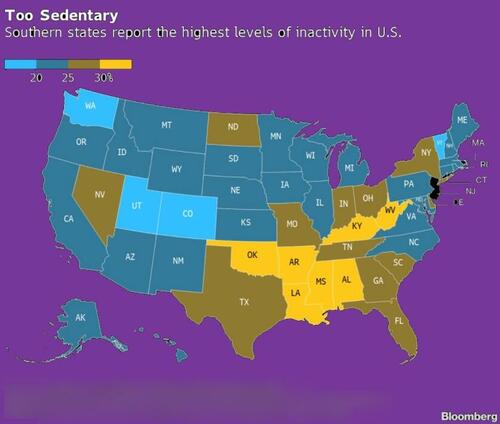
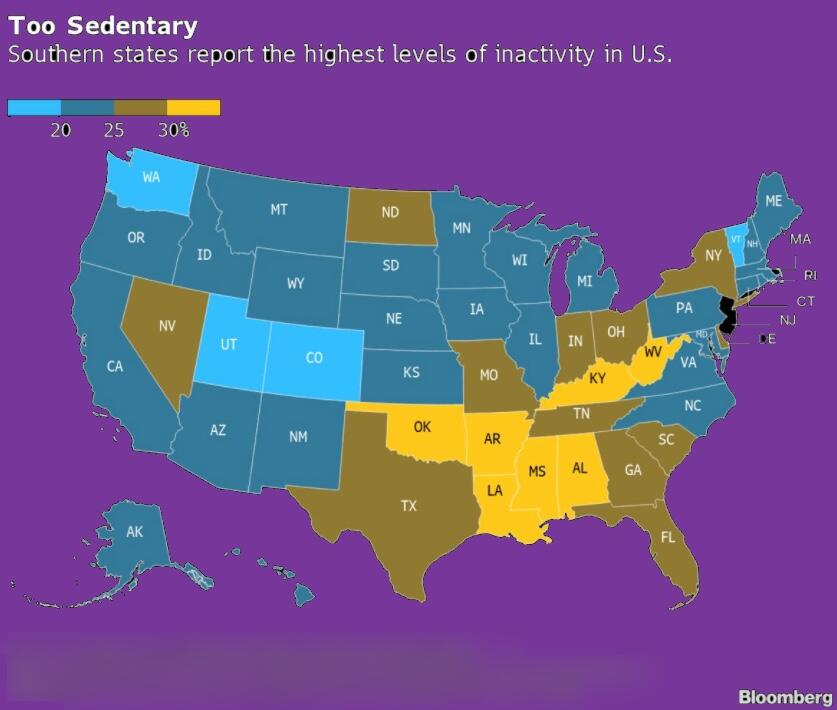
A quarter of U.S. adults aren’t active enough to protect their health, according to a CDC study conducted from 2017-2020. The agency released a map on Thursday showing that Puerto Rico and states in the South had the highest prevalence of inactivity, followed by the Midwest, Northeast and the West. Colorado, Utah, Washington and Vermont were the most-active states.

"Getting enough physical activity could prevent 1 in 10 premature deaths," said Ruth Petersen, director of the CDC's Division of Nutrition, Physical Activity, and Obesity, in a statement. The health benefits include better sleep, lower blood pressure and anxiety, and reduced risk for heart disease and several cancers.

Using the CDC data, BBG created a map showing the percentage of the population classified as "sedentary".

Source: Bloomberg

The CDC gathered its data via a (still ongoing) telephone survey called the Behavioral Risk Factor Surveillance System. New data are reported on a routine basis. The interviewers have been trained to classify any activity - even walking to work or on the golf course - as qualified physical activity.

As for what might be causing the regional disparities in the above map, the CDC guessed that "disparities...exacerbated by a lack of "safe and convenient" places for physical activity in some neighborhoods....research has shown that income, education and race are correlated with access to green space in US metro areas."

https://www.zerohedge.com/political/pandemic-has-made-americans-even-lazier

Recent Data Bring COVID's Gastrointestinal Tolls Into Focus

 Hello. I'm Dr David Johnson, professor of medicine and chief of gastroenterology at Eastern Virginia Medical School in Norfolk, Virginia.

COVID-19 has been with us for 2 years now, with 300 million people infected and a resulting 3.5 million deaths worldwide at the time of this recording. In the United States, COVID-19 has infected 60 million citizens and caused 850,000 deaths. These are undoubtedly catastrophic consequences.

During this time, we've also come to learn that COVID-19 infects — and has clear implications upon — the gastrointestinal (GI) tract.

With that in mind, I wanted to update you on some of the more recent studies in this area, which I think you'll find applicable to your clinical practice.

A Look at Some of the Latest Data

GI symptoms resulting from COVID-19 can persist from anywhere out to approximately 6 months or longer. Changes evident in the gut biome indicate that its effects are apparent well after the virus is cleared.

A recent study from China showed that there is diminished diversity in those who have had COVID-19, in the form of depleted short-chain fatty acids and L-isoleucine biosynthesis that promote gut integrity. This can go on for months after the clearance of the virus.

The implications for the GI tract after infectious enteritis include [intestinal disorders] like irritable bowel syndrome (IBS). Approximately 10% of patients with postinfectious enteritis develop IBS. Because the median duration of COVID-19 is 12 days, it is estimated that it may increase the likelihood of these postinfectious IBS-type symptoms by 10 times.

There are also now data suggesting that if patients have a preexisting mental health disparity, in particular anxiety or depression, they're twice as likely to develop more GI symptoms during the course of the virus and four times more likely after they've had the virus. This serves as a reminder to take a good mental health history, because it may prove meaningful to how you mitigate treatment.

COVID-19 also has a variety of implications relating to malnutrition. A retrospective analysis looked at 17,000 patients hospitalized with COVID-19 in a New York health system. It showed that malnutrition may be a very significant consequence of this disease and durable for up to 6 months. The median weight loss at 6 months in these patients was over 17 pounds. Over 50% of patients were unable to gain weight at 3 and 6 months. It's clear from these results that we need to focus on malnutrition and use that as a benchmark for assessing these patients during follow-up.

Varying Responses to Vaccination

There are also new data relating to vaccinations in patients with inflammatory bowel disease (IBD), particularly those who are on biologic therapies.

A provocative study led by investigators at Washington University in St. Louis looked at the protection against COVID variants, including Delta, after the second dose of the vaccine.

Three months after the second dose of the vaccine, only 8% of healthy volunteers fell below the proposed protective threshold of neutralizing antibodies for the Delta variant. However, 36% of immunocompromised patients with IBD and 67% of those on anti-tumor necrosis factor (TNF) inhibitors fell below this threshold.

More worrisome was the observation that, when assessing these patients out to 6 months beyond the second dose, only 17% of the healthy patients dropped below the estimated protection threshold, compared with 58% of the immunocompromised patients and 100% of those on TNF inhibitors.

Once again, the reminder here is to vaccinate, vaccinate, vaccinate. These patients must get their booster shots, in particular prioritized for those at risk of reduced protection. You really need to push them on this.

It's estimated that [approximately 4%] of patients can't take the COVID vaccines or booster shot because they have some type of intolerance or allergy or an immunologic nonresponse. There's good news for these patients too, with the recent authorization by the US Food and Drug Administration of a long-acting monoclonal antibody cocktail: tixagevimab co-packaged with cilgavimab and administered together. This is a one-shot booster that lasts for up to 6 months and may be a viable option for your patients going forward.

Hopefully, some of these new GI-related COVID-19 data updates will have a meaningful impact on your discussions with your patients.

I'm Dr David Johnson. Thanks for listening.

David A. Johnson, MD, a regular contributor to Medscape, is professor of medicine and chief of gastroenterology at Eastern Virginia Medical School in Norfolk, Virginia, and a past president of the American College of Gastroenterology. His primary focus is the clinical practice of gastroenterology. He has published extensively in the internal medicine/gastroenterology literature, with principal research interests in esophageal and colon disease, and more recently in sleep and microbiome effects on gastrointestinal health and disease.

https://www.medscape.com/viewarticle/966735