Search This Blog

Monday, January 31, 2022

Label Update for Gilead CAR T-Cell Therapy Yescarta, Improves Management of Cytokine Release Syndrome

 Kite, a Gilead Company (Nasdaq: GILD), today announced the U.S. Food and Drug Administration (FDA) has approved an update to the prescribing information for Yescarta® (axicabtagene ciloleucel) to include use of prophylactic corticosteroids across all approved indications. Yescarta is now the first and only chimeric antigen receptor (CAR) T-cell therapy with information in the label to help physicians manage, and potentially prevent, treatment side effects.

The label update is based on the results of a new safety management cohort (Cohort 6) of the pivotal ZUMA-1 study, which was designed to assess the impact of prophylactic use of corticosteroids and earlier treatment with corticosteroids and/or tocilizumab and prophylactic levetiracetam on the incidence and severity of cytokine release syndrome (CRS) and neurologic events. In the cohort, no Grade ≥3 CRS events occurred [0% (0/39) of patients in Cohort 6 compared to 13% (14/108) in the pivotal Cohorts 1/2]. Grade ≥3 neurologic events occurred in 13% of patients at the time of data cut-off, and one patient experienced a late onset Grade 5 event following the data cut-off [13% (5/39) of patients in Cohort 6 compared to 31% (33/108) in the pivotal Cohorts 1/2]. Cohort 6 shows CRS median time to onset of five days with a range from 1-15 days, and neurotoxicity median time to onset of six days with a range from 1-274 days in patients that experienced these complications.

Additional data recently published shows 68% of patients had no CRS or neurologic events within 72 hours of Yescarta infusion (27/40).1 Helping to address the potential concern that steroid use might impact efficacy, the Cohort 6 one-year update presented at the American Society of Hematology (ASH) in December 2021 suggest that Cohort 6 toxicity management strategy can improve certain adverse events without compromising the activity of Yescarta.2 Patients in Cohort 4 and Cohort 6 were found to have received median cumulative steroid doses that were lower than those used in matched Cohorts 1/2 who received steroids to manage CRS or neurologic events when they occurred.3 [1Oluwole OO, et al. Br J Haematol. 2021;194:690-700 and 2Oluwole OO, et al. 2021 ASH Annual Meeting and Exposition; December 11-14, 2021; Atlanta, GA. Abstract 2832 and 3Topp et al. Br J Haematol. 2021;195(3):388-398.]

“These new data will enable doctors to more easily and confidently manage treatment for patients,” said Frank Neumann, MD, PhD, Kite’s Global Head of Clinical Development. “Since the first approval of Yescarta, Kite has worked closely with physicians to optimize all aspects of CAR T-cell therapy to enable as many patients as possible to have the chance to benefit from this treatment. Our responsibility includes research to expand into new diseases and earlier lines of treatment, but also continuously improving the efficacy and safety of our existing CAR T therapies.”


https://www.streetinsider.com/Business+Wire/U.S.+FDA+Approves+New+Label+Update+for+CAR+T-Cell+Therapy+Yescarta%C2%AE+Showing+Prophylactic+Steriod+Use+Improves+Management+of+Cytokine+Release+Syndrome/19528516.html

Public comments to CMS on Biogen Aduhelm

Monoclonal Antibodies Directed Against Amyloid for the Treatment of Alzheimer’s Disease


Public Comments

CommenterComment Information
Nafe, FhelicaDate: 01/31/2022
Comment:
This dryg should be covered by Medicare.
Popowski, ChristineOrganization: TerrariumTreasures
Date: 01/31/2022
Comment:

The approval of Aduhelm was based on seriously flawed post hoc analyses of two identical phase 3 trials that were stopped early because a preliminary review of the data found that the trials if continued to completion, were unlikely to show the drug benefitted Alzheimer’s disease patients. Moreover, the integrity of the FDA’s review of the marketing application for Aduhelm was dangerously corrupted by the unprecedented and inappropriately close collaboration between Biogen and the FDA

More

Doresy, AnnDate: 01/31/2022
Comment:

The Food and Drug Administration’s (FDA’s) decision to approve Aduhelm for treatment of Alzheimer’s disease showed a stunning disregard for science and eviscerated the agency’s standards for approving new drugs. Because of this reckless action, the agency’s credibility has been irreparably damaged.

The approval of Aduhelm was based on seriously flawed post hoc analyses of two identical phase 3 trials that were stopped early because a preliminary review of the data found that the

More

Greeley, DavidTitle: MD
Organization: Northwest Neurological, PLLC
Date: 01/30/2022
Comment:

I write today as a third-generation physician and a clinical neurologist and researcher for almost thirty years. With over fifty people enrolled at my clinic I was one of the top investigators for the EMERGE trial — and I still have over twenty in EMBARK — the open-label extension of that trial. I also now have an additional twenty plus patients on Aduhelm® — who started it after it was FDA-approved — and another fifty plus waiting for CMS (and/or a Medicare Advantage plans) to make a

More

Reynolds, DianaDate: 01/30/2022
Comment:

The Food and Drug Administration’s (FDA’s) decision to approve Aduhelm for treatment of Alzheimer’s disease showed a stunning disregard for science and eviscerated the agency’s standards for approving new drugs. Because of this reckless action, the agency’s credibility has been irreparably damaged.

The approval of Aduhelm was based on seriously flawed post hoc analyses of two identical phase 3 trials that were stopped early because a preliminary review of the data found that the

More

McGinley, MeganDate: 01/30/2022
Comment:

The Food and Drug Administration’s (FDA’s) decision to approve Aduhelm for treatment of Alzheimer’s disease showed a stunning disregard for science and eviscerated the agency’s standards for approving new drugs. Because of this reckless action, the agency’s credibility has been irreparably damaged.

The approval of Aduhelm was based on seriously flawed post hoc analyses of two identical phase 3 trials that were stopped early because a preliminary review of the data found that the

More

Maniex, NicholasDate: 01/30/2022
Comment:

The Food and Drug Administration’s (FDA’s) decision to approve Aduhelm for treatment of Alzheimer’s disease showed a stunning disregard for science and eviscerated the agency’s standards for approving new drugs. Because of this reckless action, the agency’s credibility has been irreparably damaged.

The approval of Aduhelm was based on seriously flawed post hoc analyses of two identical phase 3 trials that were stopped early because a preliminary review of the data found that the

More

Maniex, AshleyDate: 01/30/2022
Comment:

The Food and Drug Administration’s (FDA’s) decision to approve Aduhelm for treatment of Alzheimer’s disease showed a stunning disregard for science and eviscerated the agency’s standards for approving new drugs. Because of this reckless action, the agency’s credibility has been irreparably damaged.

The approval of Aduhelm was based on seriously flawed post hoc analyses of two identical phase 3 trials that were stopped early because a preliminary review of the data found that the

More

[MORE]

How to Change Your Life


An important key to psychological change is turning desired patterns of thought, feeling, and action into positive habit patterns.  We don't do this through motivation.  We do this by finding ways of being who we want to be every single day, with each day building on the next.  Over time, we internalize those changes:  they become natural parts of us.

In short, paraphrasing Aristotle, we become what we consistently do.

If I want to become a more caring, less self-centered person, I will perform an act of caring each day.  If I want to become a more disciplined trader, I will carefully plan my next trade and make sure it is grounded in sound research and understanding.  If I want to become a more energized person, I will incorporate into my morning routine something stimulating and meaningful.

We climb the ladder of our ideals one rung at a time. 

In what way will you be your best self today?

What will you do today that you'll be proud of as you get ready for bed?

You're writing your own life story day by day.  Be the heroine or hero of that story, not an incidental character.

To achieve greatness in life, we must do something greatly each day.

What are you doing greatly today?

N-Acetylcysteine at high doses as an oral treatment for patients hospitalized with COVID-19


Show all authors


PDF: https://journals.sagepub.com/doi/pdf/10.1177/00368504221074574

Infection by SARS-CoV-2 causing coronavirus disease 2019 (COVID-19) can be associated with serious and life-threatening conditions, including acute respiratory distress syndrome (ARDS). Severity and mortality have been related to a cytokine storm, an imbalance of oxidative stress, and a pro-thrombotic state.

We conducted an observational retrospective cohort study from a community-based large population of hospitalized COVID-19 PCR + patients admitted from March 01, 2020, to January 24, 2021, with integrated primary to tertiary care information in Castilla la Mancha, Spain. We explored the potential benefits of the antioxidant, anti-inflammatory and anti-thrombotic drug N-acetylcysteine (NAC) administered orally in high doses (600 mg every 8 h), added to standard of care in COVID-19 patients by using the free text information contained in their electronic health records (EHRs).

Out of 19,208 patients with a diagnosis of COVID-19 hospitalized, we studied 2071 (10.8%) users of oral NAC at high doses. COVID-19 patients treated with NAC were older, predominantly male, and with more comorbidities such as hypertension, dyslipidemia, diabetes, and COPD when compared with those not on NAC (all p < 0.05). Despite greater baseline risk, use of NAC in COVID-19 patients was associated with significantly lower mortality (OR 0.56; 95%CI 0.47–0.67), a finding that remained significant in a multivariate analysis adjusting by baseline characteristics and concomitant use of corticosteroids. There were no significant differences with the use of NAC on the mean duration of hospitalization, admission to the intensive care unit or use of invasive mechanical ventilation. The observed association signaling to better relevant outcomes in COVID-19 patients treated with NAC at high doses should be further explored in other settings and populations and in randomized controlled trials.

https://journals.sagepub.com/doi/10.1177/00368504221074574

Inspira Signs $212M 7-Yeat Distribution Pact

 Inspira Technologies OXY B.H.N. Ltd. (Nasdaq: IINN) (Nasdaq: IINNW) (the "Company" or "Inspira Technologies"), a groundbreaking respiratory support technology company, announced today that it has signed an exclusive summary distribution agreement with Glo-Med Networks Inc. ("Glo-Med"), for distribution across 6 states in the United States (TexasNew JerseyNew YorkFlorida, North Carlina and South Carolina).

Glo-Med targets to meet the growing demand for innovative medical devices and related products in domestic and international markets. Glo-Med maintains extensive access to next generation medical products globally via long-term partnerships and relationships with medical providers, as well as through their sister company, Med-Stat Consulting Services, Inc.

The summary distribution agreement will be followed by a more comprehensive agreement. The agreement with Glo-Med follows the distribution agreements signed in the last quarter of 2021 targeting approximately $174 million in Europe (SpainPortugalPolandCzech Republic and Slovakia) subject to regulatory approvals. The agreement with Glo-Med has an initial term of 7 years, subject to the completion of product development and relevant regulatory approval. The parties will collaborate on the marketing and deployment of the ART system, designed to treat deteriorating respiratory failure patients, while they are awake and spontaneously breathing. The ART, an early extracorporeal respiratory support system, has the potential to minimize the need for invasive mechanical ventilation.

Pursuant to the agreement, and in order to maintain exclusivity in the territory, Glo-Med Networks has committed to purchase a minimum order of 2,121 ART systems and 131,413 disposable units for deployment at hospitals and medical centers, subject to regulatory approvals for the sale and marketing of the ART systems in the 6 states in the United States as mentioned above.

https://finance.yahoo.com/news/inspira-technologies-signs-strategic-agreement-141500648.html

Sunday, January 30, 2022

China’s Covid lockdown rules are sending prices higher

 Covid-related restrictions have increased production costs for Chinese electric car start-up WM Motor, even as existing chip and battery shortages are driving up costs, CEO Freeman Shen told CNBC.

“Adding all these things together, this industry is a fast-growing industry, but the cost part of the equation is also going to be a challenge,” Shen, also founder and chairman of WM Motor, said Wednesday.

Sales of new energy vehicles — which include battery-only and hybrid-powered cars — more than doubled last year in China, the world’s largest automobile market. The country has become a hotbed for electric car start-ups and a launch pad for many traditional auto giants making the shift to electric.

China quickly controlled the local spread of the coronavirus in 2020 by imposing swift lockdowns on cities and neighborhoods. But after the emergence of the highly transmissible omicron variant, some analysts started to question whether the costs of the zero-Covid policy now outweigh the benefits.

The impact is already being felt by factories. A Chinese ministry overseeing manufacturing said this month the lockdowns would be a drag on industrial production in the first quarter.

Shen laid out the impact of Covid-related restrictions on his start-up:

  • A chip manufacturer in Malaysia had production problems and stopped delivering to Bosch China, which then stopped delivering to WM Motor.
  • Within China, after Covid cases emerged in Nanjing, one of WM Motor’s battery cell suppliers stopped deliveries.
  • In the last few months, similar disruptions affected two of the company’s suppliers in the Shangyu district of Shaoxing city, near Hangzhou.
  • Covid-related restrictions on the Ningbo port area also stopped delivery from three suppliers there.

“So, all these things were killing us,” Shen told CNBC.

Automakers around the world have cut production due to a shortage of semiconductors. Geopolitical tensions and overwhelming demand for chips in the wake of the pandemic contributed to a shortfall in supply that has lasted for more than a year.

Shen said he expects the chip shortage to improve in the second half of this year, based on conversations with his start-up’s 11 chip suppliers.

Electric car battery shortage

However, he pointed to another looming problem that could get worse: Rising raw materials costs for batteries.

Battery-grade lithium carbonate prices were up more than 500% year-on-year as of earlier this month, according to S&P Global Platts. The firm’s survey of industry insiders released this week found that 80% of respondents expect those lithium prices to remain high this year — about four times higher than the start of 2021.

The battery shortage will likely worsen as demand for electric cars in China picks up in the second quarter, Shen said. For 2022, he expects electric car sales in the country to nearly double from last year to about 5 million vehicles.

The surge in electric car sales comes despite an overall decline in passenger car sales in the last several months as China’s consumer spending slumped.

WM Motor said it delivered a quarterly record of 15,114 vehicles in the last three months of 2021, bringing cumulative deliveries to 88,686 since the start-up handed over its first car to a customer in 2018.

In terms of deliveries, other Chinese electric car start-ups are ahead of WM Motor.

NioXpeng and Li Auto all announcing their 100,000th delivery last year.

The companies are still far smaller than Tesla, which in China sells two of the market’s five best-selling electric cars. Elon Musk said in a tweet the automaker reached the far higher milestone of producing 1 million cars in March 2020.

Shen said supply chain challenges affected the company’s delivery volumes last year more than consumer interest. Tesla also blamed supply chain issues for its 2021 performance in its earnings release this week.

Reassessing a Japanese manufacturing model

One of the reasons the pandemic disrupted the supply chain is that factories have historically used a longstanding Japanese model of “just-in-time” or lean manufacturing, in which factories only purchase parts as needed to reduce costs and increase efficiency, Shen pointed out.

But now, the strategy is changing.

“In order to make sure you can deliver your car, you probably will start thinking: We have to waste some of our money to keep some stock,” he said. “For a car company, the biggest loss would be losing the sales to your customer.”

Part of WM Motor’s sales strategy is to work with property developers to open test drive sites in more residential neighborhoods, while building up the cars’ autonomous driving capabilities such as in parking, Shen said.

He said the company will need to raise prices to cope with rising costs, as others in the industry already have.

For one, Tesla raised the price for its Model Y in China by 21,088 yuan ($3,300) in December to 301,840 yuan ($47,450), after subsidies. WM Motor’s cars are about half that price.

Travel restrictions affect business

Economists say China’s Covid-related travel restrictions affect consumer spending more than factories.

Cities frequently change Covid testing requirements for travel, while flights and train tickets can get cancelled based on newly reported Covid cases.

These restrictions have also affected WM Motor, Shen said. The company has research and development, factory and other business-side operations in Shanghai, Chengdu, Zhejiang province and Hubei province, in addition to about 500 brick-and-mortar stores across the country.\He said the company has had to use more technologies like virtual reality and augmented reality to help employees and customers communicate despite travel restrictions.

“We have to use this kind of technology, because if not, the user experience is going to be terrible, and the efficiency is going to be very bad. And we sometimes cannot even get things done,” Shen said.

Asked if he had any IPO plans, Shen said there was no news to announce on the listing front, and cited the pressing delivery issues.

“Obviously people had a lot of expectation, our investor had a lot of expectation, but we are very busy these days to deliver our product,” he said. “Hopefully we can get something to announce in the near future.”

https://www.cnbc.com/2022/01/31/ev-start-up-wm-motor-chinas-covid-lockdown-rules-send-prices-higher.html

Taiwan invents chip able to identify asymptomatic COVID cases rapidly

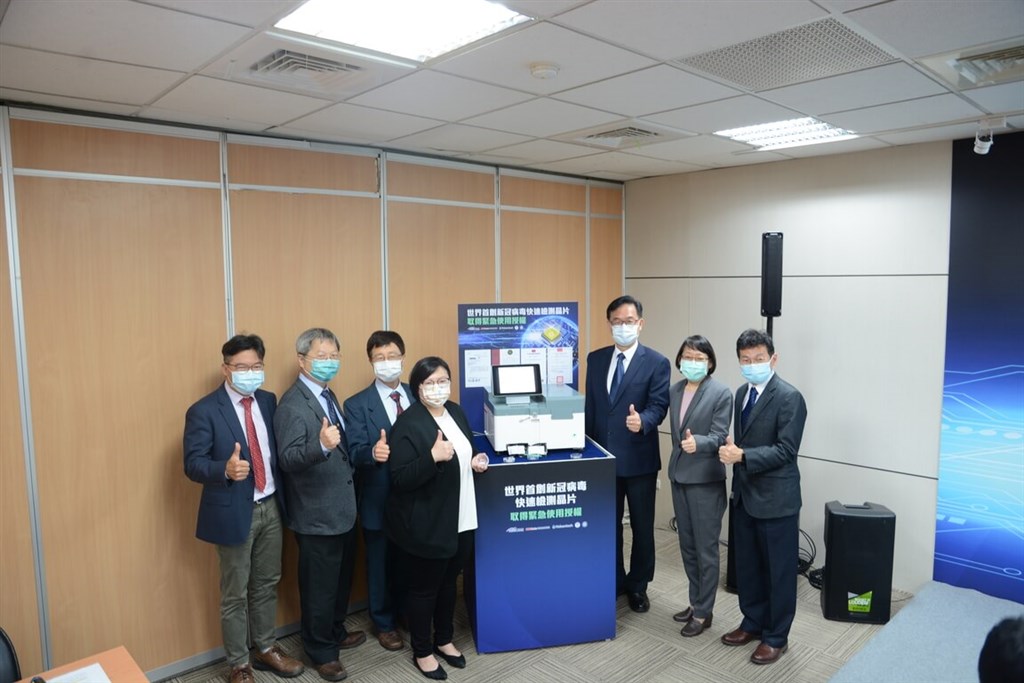
 A collaboration project led by Taiwan's Ministry of Science and Technology (MOST) has produced a new chip device that is capable of detecting COVID-19 cases with a very low viral load, as well as those who are asymptomatic, in three minutes.

The rapid testing chip received an Emergency Use Authorization (EUA) from Taiwan's Food and Drug Administration (TFDA) at the end of 2021, following the completion of clinical trials on 142 cases at Kaohsiung Veterans General Hospital (KSVGH), MOST said at a press conference held Tuesday.

The ministry added that the innovative semiconductor product is expected to go to market as soon as February, with planned EUA applications in the United States and Japan in the works.

During the press event, it was revealed that MOST had funded the project between Academia Sinica, the National Applied Research Laboratories (NARLabs), and Taipei-based Molecular Sensoring Technology Co., Ltd. (Molsentech).

According to the NARLabs, there are currently two kinds of rapid tests -- antibody and antigen -- for SARS-CoV-2, the virus that causes COVID-19, and a polymerase chain reaction (PCR) test available on the market.

Though the rapid tests yield results in 15 minutes, the tests can sometimes provide false negatives and positives, while polymerase chain reaction (PCR) tests take at least 90 minutes to reveal a result even though these are more accurate as they examine cycle threshold (CT) values, NARLabs explained.

KSVGH vice superintendent Chen Yao-sheng (陳垚生) said at the news event that the results of clinical trials with the new computer chip in COVID-19 rapid testing indicated the device had a 96.8-percent accuracy rate in sensitivity and a 95.1-percent rate in specificity.

Moreover, the chip was 100-percent consistent in identifying COVID-19 positive samples with a CT value below 35, Chen said.

In other words, the chip can detect the virus when the viral load is very low and in the incubation period, Chen said, noting that this feature can help epidemic control significantly.

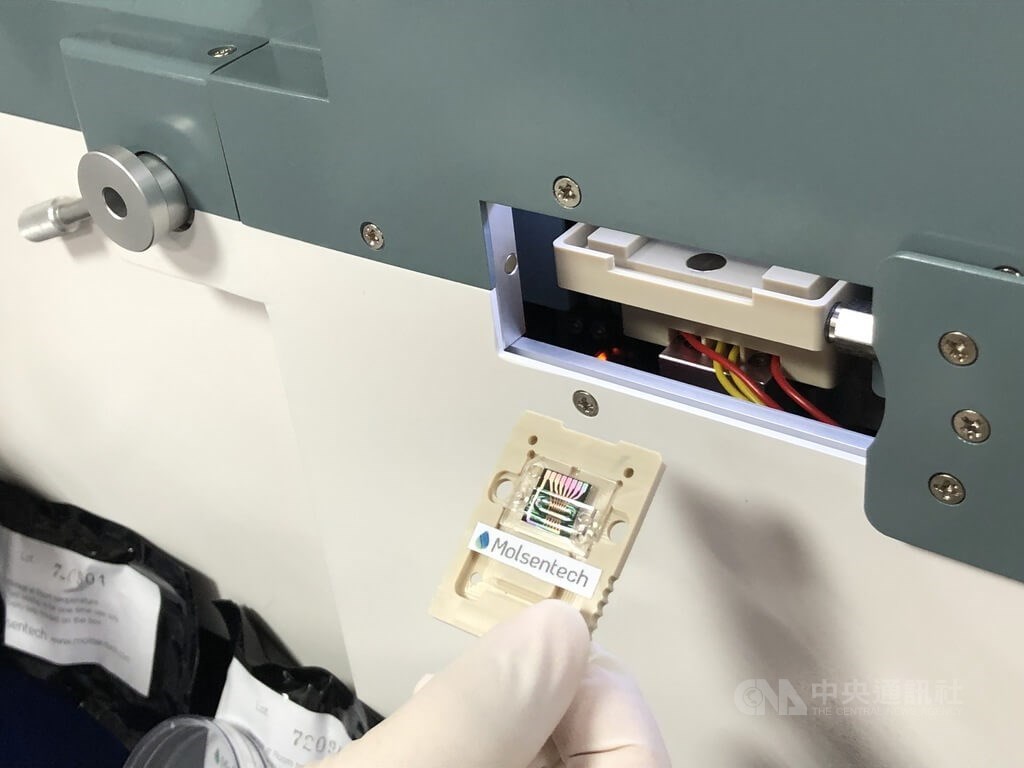
The chip device was developed based on the field-effect transistor biosensor (Bio-FET) developed by Academia Sinica's Quantum Electronics Laboratory, according to Molsentech.

CNA photo Jan. 25, 2022

The company applied the ultra-high sensitivity biomedical detection technology to COVID-19 testing with the support of NARLab's Taiwan Instrument Research Institute in regulatory certification to create the computer chip.

According to Molsentech CEO Chu Chia-jung (褚家容), the chip has more than 10,000 testing points, which means it has a super high sensitivity so the process of amplifying nucleic acid is no longer needed.

As a result, the device has a 95-percent accuracy rate in testing samples taken from the nose and throat, Chu said, adding that the company is looking to improve it to the point where saliva samples could replace the current nasal swabs.

The CEO also said while the device was developed using older strains of the virus, it is still capable of detecting the Delta and Omicron variants. Moreover, the chip can be adjusted within a week to enable it to detect new variants, he added.

The cost of a COVID-19 test using the chip device is between that for PCR and rapid testing, being currently priced at NT$3,000 (US$107.74) per person, said Chu.

Photo courtesy of the Ministry of Science and Technology

The company hopes the device can be introduced to the market as soon as possible through the government's epidemic control program so that people can benefit from the new tech, Chu said.

https://focustaiwan.tw/sci-tech/202201280013