Search This Blog

Tuesday, September 13, 2022

Not Just Nancy: Lawmakers Have Been Trading Like Drunken Insider Sailors

Approximately 3,700 stock trades reported by 97 current lawmakers posed potential conflicts of interest, as their financial dealings intersected with the work of committees on which they serve, according to an extensive analysis by the New York Times of trades spanning a two year period (2019 - 2021).

To examine the potential for conflicts, The Times used a comprehensive database called Capitol Trades, which was compiled from congressional trading disclosures by the German financial data firm 2iQ Research.

The Times then matched the trades against committee assignments, hearings and investigations to construct a picture of how members’ congressional work and their personal financial transactions could potentially intersect. -NYT

In just one example, Rep. Alan Lowenthal (D-CA) reported that his wife sold shares in Boeing on March 5, 2020, the day before a House committee on which he sits released a scathing report on the company's handling of its 737 Max jet, which had been involved in two fatal crashes.
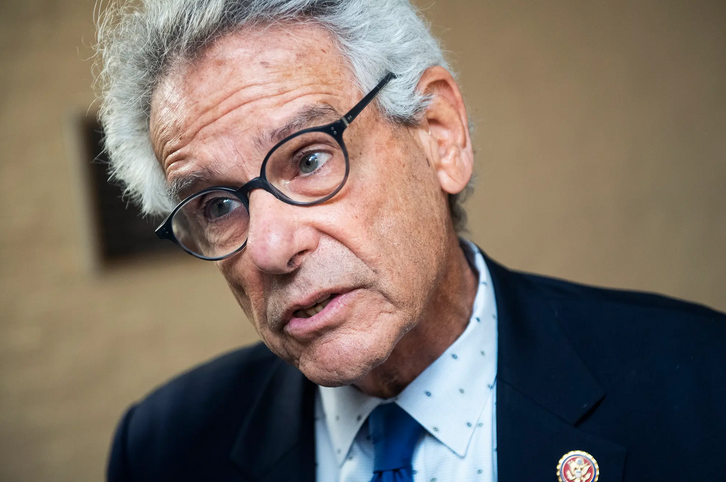
Rep. Alan Lowenthal (D-Calif.), whose wife sold Boeing shares in March 2020 — just a day before a committee her husband sat on released a bombshell report.

In another case, Ohio Republican Bob Gibbs, who sits on the House Oversight Committee, bought shares in pharmaceutical company AbbVie in 2020 and 2021 while the committee was investigating the company and five rivals over high drug prices.
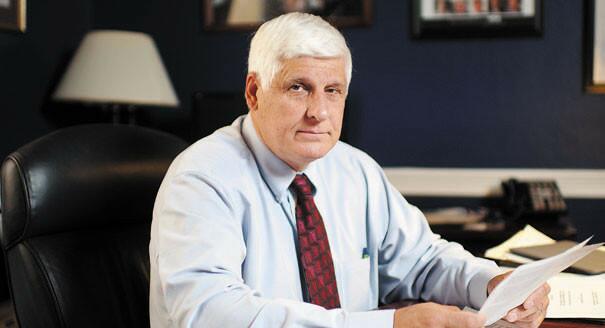
Outgoing GOP Rep. Bob Gibbs

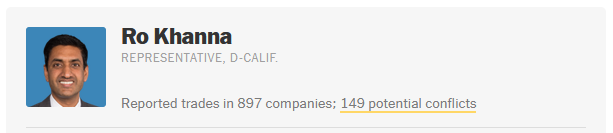
Democratic Rep. Ro Khanna of California's filings show that his family members bought or sold shares in AbbVie during the committee's review, as well as seven other companies under scrutiny by the oversight panel on which Khanna sat.
According to the report, "many instances show how legislative work and investment decisions can overlap in ways that at a minimum can leave the appearance of a conflict and that sometimes form a troubling pattern — even if they technically fall within the rules.

13 lawmakers were found to have traded in companies that were under investigation by committees they werved on.

"The American people don’t want us day trading for profit, and engaging in active trading of the very equities that are connected to the policies that we are deciding on and voting on every day," said Rep. Chip Roy (R-TX), who is co-sponsoring a bill in the House that would require members to put investments in a blind trust - a portfolio managed by an outside adviser who takes no input from the owner.

The 3,700 potentially conflicted trades constitute over 10% of transactions by members of Congress over the period in question.

44 of the 50 members of Congress who were most active in the markets bought or sold securities in companies over which their committee assignments could give them some degree of knowledge or influence. -NYT

Under the 2012 STOCK Act - the sole piece of legislation designed to rein in lawmakers' trades, most members of Congress are still allowed to make trades that could conflict with their legislative duties - as long as a disclosure is made within 45 days.

"You’re not getting members of Congress to self-regulate the money they can or can’t make," one DC insider told the NY Post. "Why would they do something that doesn’t benefit them?"

Hilariously, Nancy Pelosi isn't mentioned in the report, because she does not sit on any legislative committees.

It's good to be queen...

GE, Lantheus Say Heart Disease Tracer Trial Met Key Endpoints

 General Electric Co.'s healthcare business and Lantheus Holdings Inc. said Tuesday that the Phase 3 clinical trial for their investigational radiotracer met co-primary endpoints in the detection of coronary artery disease.

The companies said the trial for the radiotracer, dubbed [18F]flurpiridaz, met the co-primary endpoints of exceeding a 60% threshold for both sensitivity and specificity for detecting heart disease.

The trial also met its first key secondary endpoint by demonstrating that [18F]flurpiridaz Positron Emission Tomography has higher diagnostic efficacy for patients with suspected coronary artery disease when compared with the predominant procedure used in nuclear cardiology today.

GE Healthcare has led the funding and development of the investigational agent and will have global commercialization rights to the imaging agent if it is approved. Lantheus has collaborated on the development and will work with GE on a potential commercialization through a joint steering committee, with entitlement to royalties based on commercial sales.

https://www.marketscreener.com/quote/stock/LANTHEUS-HOLDINGS-INC-17053982/news/GE-Lantheus-Say-Heart-Disease-Tracer-Trial-Met-Key-Endpoints-41762306/

Transcript : Cigna Corporation Presents at Morgan Stanley 20th Annual Global Healthcare Conference

 https://www.marketscreener.com/quote/stock/CIGNA-CORPORATION-49690049/news/Transcript-Cigna-Corporation-Presents-at-Morgan-Stanley-20th-Annual-Global-Healthcare-Conference-41763016/

Transcript : CVS Health Corporation Presents at Morgan Stanley 20th Annual Global Healthcare Conference

 https://www.marketscreener.com/quote/stock/CVS-HEALTH-CORPORATION-12230/news/Transcript-CVS-Health-Corporation-Presents-at-Morgan-Stanley-20th-Annual-Global-Healthcare-Confere-41762784/

CDC warns of 'rise in child respiratory illness that can lead to polio-like muscle weakness'

 Doctors across the U.S. have seen an increase among children of a respiratory virus that can cause polio-like muscle weakness.

In most cases, enterovirus D68 (EV-D68) causes a respiratory illness with mild symptoms. It can, however, result in a condition called acute flaccid myelitis (AFM) that can cause inflammation of the spinal cord. Those suffering from AFM can have trouble moving their arms while others experience muscle weakness. In severe cases, it can lead to respiratory failure or life-threatening neurologic complications.

According to an alert issued by the Centers for Disease Control and Prevention last week, pediatric hospitalizations are on the rise among patients with severe respiratory illness who tested positive for rhinovirus (RV) and/or enterovirus (EV). Some of the patients have also tested positive for EV-D68 — and hospital sites are reporting a higher proportion of EV-D68 patients compared to previous years.

This isn’t the first time EV-D68 has caused problems. In 2014, an outbreak of enterovirus D68 was reported in multiple states. The outbreak involved nearly 1,400 people, although an undercount is very likely because many who experienced mild symptoms didn’t get tested.

Increased activity was also reported in 2016 and 2018, with lower circulation in 2020 likely due to COVID-19 mitigation measures.

Between July 2022 and August 2022, the number of detected EV-D68 cases was greater than the period from the three previous years (2019, 2020 and 2021). While the CDC hasn’t seen increased reports of AFM, an increase in AFM cases generally follows an increase in EV-D68 cases, the agency said.

The CDC alert asks providers to consider EV-D68 as a possible cause of respiratory illnesses among children and warns of a potential increase in cases in the weeks to come. Common symptoms for EV-D68 include cough, shortness of breath and wheezing. Fever is present in about half of known cases.

“On rare occasions, EV-D68 may cause AFM,” the CDC noted in its alert. “This rare but serious neurologic condition primarily affects children and typically presents with sudden limb weakness.”

According to the CDC, signs of AFM include:

  • arm or leg weakness
  • pain in the neck, back, arms, or legs
  • difficulty swallowing or slurred speech
  • difficulty moving the eyes or drooping eyelids
  • facial droop or weakness

The agency noted that there are no available vaccines or specific treatments.

Infants, children and teenagers are most likely to get infected. Those who suffer from asthma may be at greater risk for severe cases of EV-D68.

The CDC urges the public to follow typical prevention measures:

  • Wash your hands often with soap and water for 20 seconds
  • Avoid touching your eyes, nose and mouth with unwashed hands
  • Avoid close contact such as kissing, hugging, and sharing cups or eating utensils with people who are sick, and when you are sick
  • Cover your coughs and sneezes with a tissue or your upper shirt sleeve, not your hands
  • Clean and disinfect frequently touched surfaces, such as toys and doorknobs, especially if someone is sick
  • Stay home when you are sick
  • Consider wearing a mask around other people if you have respiratory symptoms
  • Contact a healthcare provider immediately if you or your child has trouble breathing or has a sudden onset of limb weakness
  • Ensure you or your child are following an up-to-date asthma action plan if you or your child have asthma
  • Stay up-to-date with all recommended vaccines

DHS Chief: 'Biggest Terror Threat Is Americans Radicalized By Online Narratives"

 by Paul Joseph Watson via Summit News,

The demonization of Americans continued on the anniversary of 9/11, when DHS chief Alejandro Mayorkas suggested the biggest terror threat was ‘domestic extremists’ radicalized by “false narratives propagated on online platforms.”

The Homeland Security Secretary made the comments during an appearance on MSNBC.

Speaking from ground zero in New York, Mayorkas said “the threat landscape has evolved considerably over the last 20 years,” and that foreign terrorism has now taken a back seat to domestic extremism.

“We are seeing an emerging threat, of course, over the last several years of the domestic violent extremist,” said the DHS chief.

“The individual here in the United States radicalized to violence by a foreign terrorist ideology, but also an ideology of hate, anti-government sentiment, false narratives propagated on online platforms, even personal grievances,” he added.

As Chris Menahan highlights, Mayorkas has wielded a pretty broad brush when it comes to defining what behavior qualifies as ‘domestic extremism’.

“Mayorkas said last year that white extremists are the greatest threat to America and put out terror alerts painting opponents of covid lockdowns and people who don’t trust the Biden regime as potential domestic terrorists.”

As we previously highlighted, Democratic Senator Mark Warner used the 21st anniversary of 9/11 to absurdly compare the terrorists who attacked the twin towers and the Pentagon to “insurgents” who entered the Capitol on January 6.

Perhaps Alejandro Mayorkas has a bad memory.

In the mid to late 90’s, the Clinton administration became obsessed with domestic extremism and routinely hyped its threat as a way to demonize conservatives. Then 9/11 happened.

Not much has changed, has it?

https://www.zerohedge.com/political/dhs-chief-says-biggest-terror-threat-americans-radicalized-online-narratives

Atea To Advance Global Late-Stage COVID-19 Study of Bemnifosbuvir


  • Atea Pharmaceuticals Inc  announced additional details on its clinical development plans for bemnifosbuvir for COVID-19. 
  • Following meetings with the FDA and the European Medicines Agency Emergency Task Force, Atea plans to initiate a global Phase 3 trial of bemnifosbuvir for COVID-19 in the fourth quarter of 2022. 
  • The trial will evaluate bemnifosbuvir as both monotherapy and combination antiviral therapy in outpatients (non-hospitalized) with COVID-19 who are at the highest risk of disease progression, regardless of vaccination status.
  • The study is designed to enroll at least 1,500 high-risk non-hospitalized patients with mild or moderate COVID-19.
  • In May, Atea reported a topline analysis of data from the MORNINGSKY trial in which the primary endpoint, time to symptom alleviation, was not achieved. 
  • However, a 71% reduction in hospitalization (2.9% versus 10%) was observed in the bemnifosbuvir arm (n=137) versus placebo. In a subgroup analysis, patients > 40 years old had an 82% reduction in hospitalization.
  • New data showed that bemnifosbuvir retained antiviral activity against omicron subvariant lab studies.