Search This Blog

Wednesday, October 19, 2022

Evidence for possible animal origin of the COVID-19 omicron variant

 In a new study published in Proceedings of National Academy of Sciences researchers from the University of Minnesota Medical School and College of Biological Sciences provided new insights into the evolutionary origins of the COVID-19 omicron variant. Their findings suggest the omicron variant may have been transmitted from an animal species to humans.

An essential step in coronavirus infection occurs when spike protein binds to the host's receptor. After establishing consistent infections in the host, the spike protein becomes adapted to the host's receptor.

Through detailed structural biology analysis, researchers identified several mutations in the omicron spike protein that were uniquely adapted to the mouse receptor and incompatible with the human receptor. This suggests the omicron variant might not have originated from humans directly, and instead may have been transmitted from other  to humans.

"These omicron mutations are evolutionary traces left by the virus during its transmission from one animal species to another," said lead author Fang Li, Ph.D., an endowed professor of pharmacology at the U of M Medical School and director of the Center for Coronavirus Research. "Our detailed structural biology approach has successfully recovered these subtle yet unique evolutionary traces."

Researchers say the COVID-19 virus is capable of infecting many animal species—which is one of the main reasons why variants keep emerging. These findings also suggest that epidemic surveillance of rodents may be important for stopping new COVID-19 variants from emerging in the future.

"Animal to human transmission of coronaviruses will likely continue to threaten global health. It has been suggested that all coronaviruses circulating in humans came from animals," said Dr. Li. "I'm working with my colleagues to address current and potential future coronavirus pandemics by developing therapeutics targeting both human coronaviruses and animal coronaviruses."


Explore further

Promising developments in pursuit to design pan-coronavirus vaccine

More information: Wei Zhang et al, Structural basis for mouse receptor recognition by SARS-CoV-2 omicron variant, Proceedings of the National Academy of Sciences (2022). DOI: 10.1073/pnas.2206509119
https://medicalxpress.com/news/2022-10-evidence-animal-covid-omicron-variant.html

Two drugs reverse a key pancreatic cancer step in the lab

 Pancreatic cancer often lurks as a silent disease. With no known symptoms, it can progress undetected and spread to other organs.

According to the National Cancer Institute, more than 60,000 Americans will be diagnosed with  this year, and only about 1 in 10 of those diagnosed will survive the next five years. The disease ranks as the third leading cause of  deaths in the U.S. because it is rarely detected in the early stages when treatment options are most effective.

Pancreatic cancer's stealth-like nature has the attention of University of Florida scientists, who have discovered a way to reverse a key cellular process involved in its progression. Their study, "Pharmacological Inhibition and Reversal of Pancreatic Acinar Ductal Metaplasia," was published in the journal Cell Death Discovery.

The UF researchers identified two  that inhibit precancerous cell progression. The molecules also reversed a process known as acinar ductal metaplasia, or ADM, which precedes pancreatic cancer.

"To our knowledge, this is the first time researchers have been able to pharmacologically reverse ADM," said Tom Schmittgen, Ph.D., the study's senior author and chair of the department of pharmaceutics in the UF College of Pharmacy, part of UF Health, the university's academic health center. "With these compounds, we could potentially treat a pancreatic cancer patient at an earlier stage of the disease and hopefully improve the treatment options available."

ADM often occurs when  is present. It is a defense mechanism to avoid having the pancreas make too many digestive enzymes and destroy itself. During ADM, stable, enzyme-making  turn into protective ductal  that line the pancreatic duct. If certain genes mutate during the transition, then the cells can become precancerous and eventually develop into cancer.

To study ADM, UF scientists built a laboratory model using  with pancreatic cancer and tissue from a healthy human. They introduced the cells to two compounds—one of which was developed by Chenglong Li, Ph.D., the Nicholas Bodor Professor in Drug Discovery in the UF College of Pharmacy. The ductal cells responded by changing back to acinar cells. Pancreatic cancer can be prevented when acinar cells are maintained in their natural state.

"The findings are significant because we have now demonstrated that ADM can be reversed using drugs," said Schmittgen, who also serves as the V. Ravi Chandran Professor of Pharmaceutical Sciences in the UF College of Pharmacy. "This research may lead to developing treatments for patients who are at a high risk for pancreatic cancer development."

Schmittgen hopes this discovery will encourage scientists to think about new ways to treat pancreatic cancer by manipulating ADM. Future research will involve testing other compounds in collaboration with Hendrik Luesch, Ph.D., a co-author of the study and a professor and chair of medicinal chemistry and the Debbie and Sylvia DeSantis Chair in Natural Products Drug Discovery and Development in the UF College of Pharmacy. These compounds may prove to be more effective, as scientists seek new treatments for a disease with very few treatment options.


Explore further

Pancreatic cancer clue

More information: Lais da Silva et al, Pharmacological inhibition and reversal of pancreatic acinar ductal metaplasia, Cell Death Discovery (2022). DOI: 10.1038/s41420-022-01165-4
https://medicalxpress.com/news/2022-10-drugs-reverse-key-pancreatic-cancer.html

Electroshock therapy is more successful for treating depression than ketamine

 An analysis of six studies has found that electroconvulsive therapy (ECT) is better at quickly relieving major depression than ketamine, a team of researchers reports in JAMA Psychiatry on October 19.

Depression is a common illness affecting about 5% of adults worldwide, according to the World Health Organization (WHO). Feeling sad, irritable, losing pleasure in activities that used to be enjoyable, and sometimes experiencing unexplained pain or fatigue for weeks at a time are all symptoms of depression. Most people diagnosed with depression are offered an oral antidepressant (in combination with psychotherapy) as a first-line treatment option. But if oral antidepressants don't help, or if the person is at imminent risk of hurting themselves, there are other, more rapid treatment options: ECT, and more recently  or esketamine.

Esketamine, a nasal spray approved by the Food and Drug Administration to treat depression, is more commonly used in the US than ketamine. But there are no studies comparing esketamine's effectiveness with ECT. There are studies done with ketamine, a sister drug to . Ketamine is commonly used in medicine as an injected anesthetic but has recently been tested as a fast-acting intervention to help people with major depression.

UConn School of Medicine Psychiatric Epidemiologist T. Greg Rhee and colleagues from Harvard University, Kyungnam University in Korea, McLean Hospital in Belmont, Massachusetts and Massachusetts General Hospital in Boston, University of Toronto, VA New England Mental Illness in West Haven, and Yale University analyzed six clinical trial studies from around the world comparing ketamine with ECT for major depression. The studies looked at 340 patients in total, and were conducted in hospitals in Sweden, Germany, Iran and India.

All five of the studies independently found that ECT was more effective than ketamine at relieving severe depression symptoms.

"ECT is consistently more successful than ketamine [at helping patients with serious depression]," says Rhee. "We found no differences by age, sex, or geographic location. So we could say anyone who is ECT-eligible will benefit."

Although ketamine did generally help patients, ECT had better results overall. Ketamine could be a viable treatment for people who cannot undergo ECT. The side effect profiles of the two treatments differed, with ECT more likely to cause headaches, muscle pain and memory loss, while ketamine was more likely to cause dissociative symptoms, vertigo and double vision.

There are two additional ongoing studies comparing ECT and ketamine, and Rhee hopes to add their data to the analysis when they are available.

"Every single study directly reports ECT works better than ketamine. But people are still skeptical of ECT, perhaps because of stigma," Rhee says, or negative depictions in films such as "One Flew Over the Cuckoo's Nest" and shows such as "Stranger Things," adding, "We need to improve public awareness of ECT for treatment-resistant ."


Explore further

ECT more effective than ketamine in severe depression

More information: Taeho Greg Rhee et al, Efficacy and Safety of Ketamine vs Electroconvulsive Therapy Among Patients With Major Depressive Episode, JAMA Psychiatry (2022). DOI: 10.1001/jamapsychiatry.2022.3352
https://medicalxpress.com/news/2022-10-electroshock-therapy-successful-depression-ketamine.html

Uninsured kids will still receive Covid vaccines for free after shots move to commercial market

 The Centers for Disease Control and Prevention took a major step Wednesday toward ensuring that kids who are uninsured can receive Covid-19 vaccines for free after the federal government shifts its immunization program to the commercial market.

The CDC’s independent advisors voted unanimously on Wednesday to include Covid shots authorized for kids by the Food and Drug Administration in the federal government’s Vaccines For Children program.

The Vaccines for Children program provides vaccines to kids under age 19 whose families cannot afford them. Children are eligible for the program if they qualify for Medicaid or are uninsured, underinsured or Native American.

Including Covid shots in the program does not make them a routine childhood vaccination for school, said Dr. Jose Romero, director of the National Center for Immunization and Respiratory Diseases.

The U.S. government has been providing Covid vaccines to everyone in the U.S. for free during the pandemic. But the Biden administration is working on a plan to transition the vaccination program to the commercial market as soon as 2023, which means people will have to start paying for the shots.

Dr. Jeanne Santoli, a CDC official, said the public health agency will start awarding contracts for healthcare providers to give the Covid shots for free to uninsured kids.

Currently, children as young as six months old are eligible for Pfizer’s and Moderna’s two-dose primary series with the first-generation shots that target the original Covid strain. Kids as young as age 5 are eligible for the new booster shots that target the dominant omicron BA.5 subvariant.

The decision to include Covid shots in the free vaccine program will prove crucial to maintaining access for many children. As many as 5.3 million kids are expected to lose health insurance through Medicaid or the Children’s Health Insurance Program whenever the Biden administration decides to end the Covid public health emergency, according to the Health and Human Services Department.

“This is an access issue. This is an issue to allow children that don’t have insurance to gain access to this vaccine,” said Romero.

Although Covid is generally less severe in kids than adults, more than 162,000 children under age 18 have been hospitalized with Covid since August 2020, according to data from the CDC. More than 1,800 children have died from Covid since the pandemic began, according to the data.

Public health officials are also worried about kids developing long Covid even after a mild infection.

https://www.cnbc.com/2022/10/19/cdc-to-ensure-uninsured-kids-can-get-covid-vaccines-for-free-.html

Bristol: Opdivo Reduced Risk of Recurrence or Death 58% Versus Placebo in Melanoma


Results from CheckMate -76K Demonstrate Statistically Significant and Clinically Meaningful Improvement in Recurrence-Free Survival

Data reinforce the benefits of Opdivo in earlier stages of melanoma

Bristol Myers Squibb (NYSE: BMY) today announced results from the Phase 3 CheckMate -76K trial, in which Opdivo (nivolumab) as an adjuvant therapy demonstrated a statistically significant and clinically meaningful benefit in recurrence-free survival (RFS) versus placebo in patients with completely resected stage IIB or IIC melanoma. At a pre-specified interim analysis, the trial met its primary endpoint of recurrence-free survival (RFS); Opdivo reduced the risk of recurrence or death by 58% versus placebo (hazard ratio [HR] 0.42; 95% CI 0.30-0.59; p < 0.0001). Twelve-month RFS rates for Opdivo were 89% (95% CI: 86-92) versus 79% (95% CI: 74-84) for placebo. The RFS benefit was observed across predefined subgroups in the trial, including T category and disease stage. These results are being presented as late-breaking data at the 2022 Society for Melanoma Research (SMR) Annual Meeting taking place October 17-20, 2022, during a plenary session on October 19 in Edinburgh, Scotland.

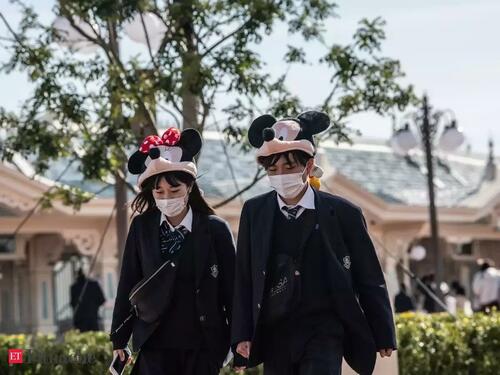
Disney To Charge Unvaccinated Customers Extra At Tokyo Theme Park

 Even though the general narrative around the covid “threat” has fallen apart and the majority of western nations have mostly abandoned their attempts to institute mandates and restrictions, in many parts of Asia the fear mongering continues.  Disney appears to be taking full advantage of the lingering hype in Japan and is using it to impose their own politically motivated mandates.

Tokyo Disney theme park will now be offering 20% cheaper rates for customers with proof of vaccination or a negative PCR test taken within 3 days of admission.  Unvaccinated customers get the old rates.

The move is a remnant of policy initiatives designed by government and corporate partnerships in 2020 – A collusion of big government and big business as a means to encourage or force the public to comply with vaccination demands (or any other demands).  The carrot and stick approach is outlined in documents published by globalists at the Imperial College of London at the very beginning of the pandemic in 2020.

Specifically, government officials and corporations invented a series of incentives for vaxxed and punishments for the unvaxxed, mostly using denial of service measures such as exclusion from public places or even exclusion from economic participation.  Corporations would work hand-in-hand with government as enforcers, using private property arguments as a means to oppress unvaccinated people and refuse them access to goods and services.

In this way, governments could get around constitutional protections of individual liberties.  They could claim they were not violating anyone's rights, and that corporate businesses had the right to refuse service to people they deemed a danger.  It's a con game, but legally effective.     

The problem was that smaller businesses could still serve the unvaxxed, so, the Biden White House sought to slowly whittle down competition with large corporations and remove public options by instituting vaccine mandates for employees through executive order.  The order started with companies that had 100 employees or more, but the clear intent was that ALL businesses would eventually be included.

If Biden and his handlers had been successful, the majority of small business owners that refused to comply would now be out of business, leaving only corporate chains as the source for commerce.  Without any other choices, the American public would have to take the vaccines and boosters just to purchase necessities and keep their jobs, or seek out black markets.

Luckily, enough conservative states refused to submit and stood against the mandates, proving that they could function better than states implementing restrictions and vax requirements.  This led directly to the implosion of vaccination claims and  a realization in western countries that there was a superior way to handle the covid event.  

Asian countries have not had the same kind of rebellion and so many mandates persist.  China is continuing its “Zero Covid” measures despite all evidence that they are pointless.  The Japanese government relied less on mandates and never actually required masks, but instead used a campaign of “public shaming” and peer pressure as a tool to get compliance.  Given the collectivism inherent in Japanese culture, this method has made the population incredibly subservient.      
It is important to examine the stark difference between Asia and the west when it comes to the outcomes of pandemic bureaucracy because we can now see what the establishment wanted to do here in the US or in Europe.  We can see what corporations like Disney would have been doing had there not been a massive push-back against the mandates.

The end game was rewards for compliance and punishments for refusal in everything from regular commerce to recreation.  The strategy was openly admitted over and over again – Make life as hard as possible in every way conceivable for the unvaccinated as they watch their vaccinated friends and family enjoys gifts and benefits.  It seems Disney still wishes for this outcome though the pandemic is long over.  

https://www.zerohedge.com/covid-19/disney-charge-unvaccinated-customers-extra-tokyo-theme-park

Where BQ.1 is most prevalent

 CDC estimates indicate a new omicron variant, BQ.1, and its descendent BQ.1.1 account for 11.4 percent of cases nationwide. The pair have been dubbed "escape variants" for their ability to escape immunity and are currently most prevalent in New York and New Jersey, where they account for nearly 20 percent of new infections.

BA.5 remains dominant in the U.S., though its prevalence is quickly falling. For the week ending Oct. 15, BA.5 accounted for about 68 percent of cases while a slew of other omicron variants have gained traction. Nationwide, cases and hospitalizations are still down, but there are growing signs the U.S. will face a surge in the coming weeks and months. In the Northeast, where BQ.1 and BQ.1.1 are most prevalent, hospitalizations have ticked up in recent weeks, according to HHS data compiled by The New York Times. 

Here are four more things to know about BQ.1 and BQ.1.1: 

1. Disease experts have described the strains as "the most evasive" yet, pointing to their ability to completely resist existing monoclonal antibody drugs. In an Oct. 14 report,  Anthony Fauci, MD, director of the National Institute for Allergy and Infectious Diseases, told CBS News that this is one of the key reasons experts are so concerned about BQ.1, along with its "pretty troublesome doubling time." A spokesperson for AstraZeneca, the maker of the antibody drug Evusheld, told the news outlet they didn't yet have data on how the BQ.1 pair may affect the drug's efficacy.

2. While the pair has a number of mutations that indicate they can dodge immunity from prior infections, vaccinations or both, scientists are still trying to learn more about how they may affect disease severity, according to CBS

3. BQ.1 and BQ.1.1 appear to be on track to overtake BA.4.6, which currently accounts for about 12.2 percent of cases nationwide. 

4. Experts are optimistic that the bivalent omicron boosters will offer protection against BQ.1 and BQ.1.1 since they're descendants of BA.5. (Updated boosters are designed to target the original SARS-CoV-2 strain, BA.4 and BA.5.)

"The bad news is that there's a new variant that's emerging and that has qualities or characteristics that could evade some of the interventions we have. But, the somewhat encouraging news is that it's a BA.5 sublineage, so there are almost certainly going to be some cross protection that you can boost up," Dr. Fauci said. 

https://www.beckershospitalreview.com/public-health/where-bq-1-is-most-prevalent-5-notes-on-the-new-covid-19-variant.html