Search This Blog

Tuesday, October 25, 2022

CDC's Child Vaccine Move Puts Dem Candidates On The Hot Seat

 by Steve Cortes via RealClear Wire,

The CDC just made the closing weeks of 2022 campaigns a lot more volatile for some shaky Democrat candidates, especially for incumbent, pro-mandate Democrat governors like JB Pritzker, Kathy Hochul, and Gretchen Whitmer.

Why?

Well, the Centers for Disease Control and Prevention just delivered a stark rebuke to America’s parents. In a unanimous decision, its Committee on Immunization Practices voted to add COVID-19 vaccines to the regular immunization schedule for all children, starting at the age of 6 months old.

Clearly, American parents do not concur, as a mere 3.5% of parents have injected their babies and toddlers, aged 6 months to 5 years old. For school age children, a recent Kaiser Family Foundation study shows that only one-third of children aged 5-11 have received at least one shot.

Contravening the CDC, The Florida Department of Health issued guidance that the data suggest that “healthy children from ages 5 to 17 may not benefit from receiving the currently available COVID-19 vaccine.” For young people of more advanced age, Florida’s Surgeon General Dr. Joseph Ladapo went further, announcing that he “recommends against the COVID-19 mRNA vaccines” for young men starting at age 18, due to myocarditis risks.

The analysis of Dr. Ladapo, a scientist with two separate doctorates from Harvard, proves that science is, indeed, never “settled.” Moreover, the prevailing majority of American parents clearly agree with Florida’s skeptical approach on child vaccinations, and for valid data-based reasons. For example, after reviewing the relevant evidence, some European countries now actually forbid the injections for young people. Denmark’s Health Authority determined that because “children and adolescents rarely become severely ill from the Omicron variant of covid-19,” that child COVID  vaccination is no longer possible except for “a very limited number of children at particularly higher risk.”

Despite such appropriate concerns about vaccinating children who remain overwhelmingly invulnerable to dire effects of the virus, the CDC presses on with onerous guidance, pretending that these new Big Pharma injections carry the same risk/reward profile as the established, required childhood vaccinations that have been tested and used for decades. No wonder an NBC News poll from earlier this year found that a scant 37% of independent voters trust the CDC. For context on the marked decline in trust toward public health authorities: In the early days of the pandemic in the spring of 2020, a Pew Research survey found that 79% of Americans then had a very favorable view of the CDC.

So, there is presently a contentious scientific debate over child COVID vaccinations, combined with wholesale rejection of child injections by parents, added to a public trust meltdown for Anthony Fauci and the CDC. This confluence of factors creates a huge political opening in the closing days of this election for incumbents and challengers willing to pledge to protect parents and children against public health bureaucrats forcing injections into the arms of children as a precondition for school and sports.

Though the CDC itself cannot mandate such shots, states and local authorities can, and some will clearly use the approval of the CDC as cover to inflict such medical tyranny. One such vulnerable Governor is JB Pritzker of Illinois. Pritzker was so strident in his lockdown and mandate measures that Joe Biden chose to travel to Illinois last year to announce his vax mandate policy for every medium- and large-size employer in America. Thankfully, that draconian and illegal mandate was struck down by the Supreme Court, but Pritzker supported it and there is little doubt that a second term for him would mean a vaccine mandate for all school children in Illinois.

Reassuringly, his opponent, State Sen. Darren Bailey, issued a strong statement that as governor of Illinois, he would stop any COVID vaccine mandates to attend school, explaining that “we all know the mandate candidate, J.B. Pritzker, will force it on your kids because he thinks the government knows better than parents.” That race is already tight, with the latest Osage Research poll finding Pritzker up by only 2%, with higher unfavorable ratings than Darren Bailey as well.

With compulsory childhood vaccinations now clearly on the ballot, Pritzker and other pro-lockdown, pro-mandate Democrats face political peril, especially among the supermajority of mothers who have clearly opted out of vaccinating their children. Similar scenarios play out in New York, where Rep. Lee Zeldin remains locked in a tight race with Gov. Kathy Hochul. There, Zeldin smartly promised to protect New York parents from such intrusion: “As governor, I will oppose mandating the COVID vaccine.”

Republican incumbents up for reelection also pledged protection to parents. In Florida, America’s best governor, Ron DeSantis, told citizens that “as long as I am Governor, in Florida there will not be a COVID-19 vaccine mandate for children in our schools.” Similarly, Tennessee Gov. Bill Lee tweeted: “TN families won’t be impacted by today’s CDC vote. We'll continue to stand for TN children.”

So, the CDC unwittingly opens the door to significant political gains for parent-protecting candidates on the right, who can now appeal to constituencies who may not lean conservative generally but want to protect children from this cruel mandate. Conversely, political payback looms for some of the tyrannical Democrats who inflicted harsh and unscientific lockdowns and mandates … and it will be delicious.

https://www.zerohedge.com/political/cdcs-child-vaccine-move-puts-dem-candidates-hot-seat

Recession And Mass Layoffs Imminent, Dems Throw Fed's Powell Under-The-Bus

 Who could have seen this coming?

In July, we saw the seeds of the Democrats plan begin to take hold as several politicians took aim at Fed Chair Jerome Powell as poll numbers started to slide and the Midterms looked like being a disaster:

“It is important for the Fed not to overreach and trigger a recession unnecessarily, as part of its effort to bring inflation down,” said Representative Hakeem Jeffries of New York, the No. 5-ranked House Democratic leader.

“Inflation is a global problem, and is actually not as bad in America as it is in almost every other developed economy in the world,” he told Bloomberg.

Then, in September, none other than Senator Elizabeth Warren unleashed hell on Mr.Powell, tweeting that:

"Chair Powell just announced another extreme interest rate hike while forecasting higher unemployment. I’ve been warning that Chair Powell’s Fed would throw millions of Americans out of work — and I fear he’s already on the path to doing so."

Interestingly, we noted at the time that  Senate Baking Committee Chair Sherrod Brown, an Ohio Democrat, defended Powell during an interview on Bloomberg Television

Well that has all changed now...

In a sternly-worded letter (see full letter below), Brown makes it clear what he would like Powell to do (nothing more)...

"As you know, the Federal Reserve is charged with the dual mandate of promoting maximum employment, stable prices, and moderate long-term interest rates in the U.S. economy. It is your job to combat inflation, but at the same time, you must not lose sight of your responsibility to ensure that we have full employment.

For the first time in decades, we have seen historic job growth, and workers have begun to see wage gains, gains that your prior actions to stabilize the economy helped achieve. Yet, many workers and their families are struggling under the weight of inflation."

So nothing particularly new there aside from the clear tone biased towards not breaking anything... except that's all The Fed has...

Then Brown utters the following, exposing his utter cluelessness as to the pernicious effects of inflation:

"However, a family’s “pocketbook” needs have little to do with interest rates, and potential job losses brought about by monetary over-tightening will only worsen these matters for the working class. "

Sadly, if The Fed just folds in its inflation fight now that pocketbook will become a toilet-paper holder.

Brown goes on, seemingly clear that one side of the dual mandate is far more important right now (cough Midterms collapse cough):

"We must stay focused on addressing the root causes of inflation without putting workers’ livelihoods at risk"

...

"Monetary policy tools take time to reduce inflation by constraining demand until supply catches up – time that working-class families don’t have"

...

"We must avoid having our short-term advances and strong labor market overwhelmed by the consequences of aggressive monetary actions to decrease inflation, especially when the Fed’s actions do not address its main drivers."

Then the piéce de resistance of doublespeak:

"For working Americans who already feel the crush of inflation, job losses will make it much worse. We can’t risk the livelihoods of millions of Americans who can’t afford it. I ask that you don’t forget your responsibility to promote maximum employment and that the decisions you make at the next FOMC meeting reflect your commitment to the dual mandate."

But hey, remember The Fed is apolitical and independent and anyone who tries to sway them is a treasonous traitor.

When President Trump publicly spoke about The Fed cutting rates, some former Fed officials were not happy"

“I am not pleased,” said Carl Tannenbaum, a former Chicago Fed official and chief economist at Northern Trust.

“The remarks certainly aren’t an immediate threat to Fed independence, but they break with the tradition of respectful distance.”

Randall Kroszner, a former Fed governor, said the central bank has withstood political pressure before and will continue to do so under Mr. Powell’s leadership.

“The Fed has often faced political pressures — from Congress, presidents, Treasury secretaries and innumerable outside groups,” said Mr. Kroszner, an economics professor at the University of Chicago.

“My experience at the Fed is consistent with what Jay Powell recently said — being non-political is deep in the Fed’s DNA — and I believe that Jay will keep it that way.”

As a reminder, here are President Biden's words from June:

“My plan is to address inflation. That starts with a simple proposition: respect the Fed, respect the Fed’s independence, which I have done and will continue to do,” Biden said.

It appears that has changed.

And all this despite the economy being "strong as hell"...

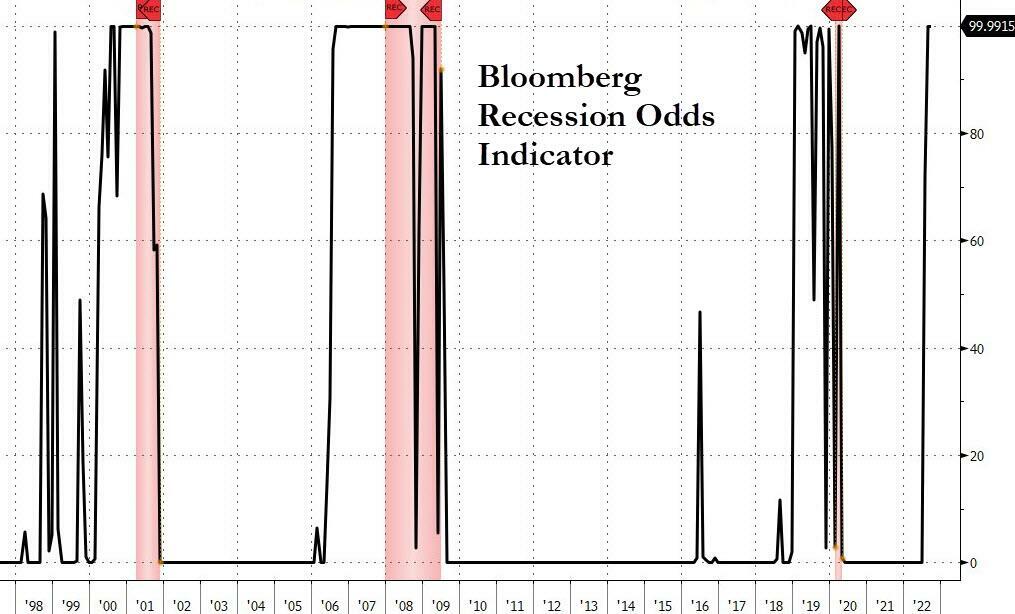
As a reminder, the odds of a recession within the next 12 months are now 100%...

Finally, will Brainard be the one to save America? Judging by Brown's letter, he seems to like her messaging:

As Vice Chair Brainard indicated, in some sectors, increased margins exceed wages paid to workers, and there is “ample room for margin recompression to help reduce goods inflation as demand cools, supply constraints ease, and inventories ease.”

Higher interest rates and borrowing costs have not led companies to bring down prices.

Translation: don't over-do it on the inflation fight because corporate greed is to blame. Now that's a narrative the left can get behind!

*  *  *

Read the full letter below:

https://www.zerohedge.com/political/recession-and-mass-layoffs-imminent-dems-throw-feds-powell-under-bus-risking-millions

Novartis Axes NSCLC, Liver Transplant Programs in Q3 Report

 Novartis' positive-third quarter growth report Tuesday was marred slightly by several clinical setbacks that resulted in the termination of studies in liver transplant and non-small cell lung cancer. 

In NSCLC, the company posted another setback with canakinumab, which was being assessed as an adjuvant. Novartis noted that canakinumab failed to meet its primary endpoint of disease-free survival in the Phase III CANOPY-A trial. As a result, Novartis noted it would discontinue the program. 

Canakinumab is a human monoclonal antibody that targets interleukin-1β with high affinity and selectivity. Sold under the brand name Ilaris, it has been approved to treat cryopyrin-associated periodic syndromes and systemic juvenile idiopathic arthritis.

Despite these wins, the development program of canakinumab has also seen several clinical failures. Last year, the drug failed to meet its overall survival endpoint in the Phase III CANOPY-2 trial. In that clinical program, canakinumab was being assessed as a potential treatment for adult patients with locally advanced or metastatic NSCLC. 

Months later, data from the CANOPY-1 trial showed canakinumab combined with Keytruda and chemotherapy failed to meet its OS endpoints in NSCLC.

It did, however, demonstrate potentially clinically meaningful improvements in progression-free survival and OS in pre-specified subgroups, Novartis reported at the time. This was based on the baseline inflammatory biomarker, he-CRP, and other biomarker-defined subgroups.

Liver Transplantation Study Axed

In addition to the canakinumab program, Novartis is discontinuing a liver transplantation study with iscalimab. The company noted that study data revealed iscalimab has a less favorable benefit/risk profile than the immunosuppressant drug tacrolimus.

Last year, iscalimab missed the mark in another kidney transplant study. Novartis pulled the plug on the CIRRUS-1 trial assessing iscalimab in kidney transplant patients.

The company made the decision following an interim analysis of data that suggested iscalimab was not as effective as tacrolimus at preventing organ rejection in kidney transplant patients when both were added to standard immunosuppressive therapies.

Cosentyx Pulled in Lichen Planus

Novartis is also discontinuing a study with Cosentyx. The powerhouse drug was being assessed in a Phase II trial in lichen planus, an autoimmune condition that can cause the body's immune system to attack cells in the skin or mucus membranes, resulting in swelling and irritation in those areas.

Cosentyx failed to meet its primary endpoint at 16 weeks in the mid-stage study. Because of that, the company opted to discontinue the research. 

Another Phase II study also failed to meet endpoints during the quarter. The study assessed UNR844 as a potential treatment for presbyopia, the hardening of the eye's lens that causes an inability to focus on nearby objects. After missing its endpoints, Novartis said the trial had been discontinued. 

In the third quarter, Novartis' saw 4% global growth driven by sales of powerhouse drugs, such as Entresto, Kesimpta, Kisqali, Cosentyx and the recently-launched Pluvicto. In all, the company saw a 23% boost in quarterly revenue from its core in-market branded drugs.

In an investor call Monday morning, Novartis CEO Vas Narasimhan noted that the company's transformation to a pure-play innovative medicines company remains on track. 

"We remain confident in this pure-play strategy," he said.

Narasimhan also pointed to the spin-off its generics unit Sandoz into a standalone company. He said the business unit posted positive growth for the fourth consecutive quarter, with a 5% increase in revenue.

https://www.biospace.com/article/novartis-cuts-liver-transplant-lung-cancer-programs/

AstraZeneca Sees Mixed Results in Phase III EoE Trial

 AstraZeneca's Phase III MESSINA trial evaluating Fasenra (benralizumab) in eosinophilic esophagitis (EoE) hit one primary endpoint but missed the other, the company reported Tuesday. 

EoE is a rare, progressive, chronic inflammatory disease of the esophagus. It is marked by the abnormal presence of a type of white blood cell, eosinophils, in the inner lining of the esophagus. 

The two primary endpoints of the trial at Week 24 were the percentage of patients with histologic response and mean changes from baseline in Dysphagia Symptom Questionnaire (DSQ).

The drug showed a statistically significant improvement in histological disease remission. However, the endpoint involving change in dysphagia symptoms compared to placebo was not met.

The results confirm Fasenra achieved "near complete depletion of tissue eosinophils, consistent with its mechanism of action," Mene Pangalos, EVP, biopharmaceuticals R&D at AstraZeneca stated while conceding the failure in the second endpoint. 

The company continues to analyze the completed data.

Histological disease remission was evaluated via the proportion of patients with less than or equal to six eosinophils per high power field at Week 24. The study included 210 patients who received Fasenra or a placebo at four-week intervals.

Fasenra is a monoclonal antibody that binds directly to IL-5 receptor alpha on eosinophils. This attracts natural killer (NK) cells which causes rapid and near-complete depletion of blood and tissue eosinophils in most patients by way of programmed cell death.

The drug is currently approved for add-on maintenance treatment for severe eosinophilic asthma in the United States, Europe, Japan and elsewhere. 

It is also being developed for other eosinophilic diseases including bullous pemphigoid, chronic obstructive pulmonary disease and chronic rhinosinusitis with nasal polyps. 

In March, the FDA issued a Complete Response Letter regarding a supplemental Biologics License Application for Fasenra for patients with inadequately controlled chronic rhinosinusitis with nasal polyps. The CRL asked for more clinical data.

The drug brought in sales of $1.26 billion in 2021.

In May, the FDA approved Sanofi and Regeneron’s Dupixent to treat EoE. It is the first treatment approved that targets the disease’s underlying cause. Otherwise, treatment involves corticosteroids and dietary changes to alleviate symptoms. 

Although Dupixent has not been evaluated in a head-to-head trial with Fasenra for EoE, the lack of positive DSQ results for Fasenra will likely be a sticking point for AstraZeneca getting the drug approved for this indication.

BioSpace has reached out to AstraZeneca for comment but had not heard as of press time. 

https://www.biospace.com/article/astrazeneca-s-fasenra-has-mixed-results-in-phase-iii-eosinophilic-esophagitis-trial/

Ipsen's FOP Saga Continues as FDA Postpones Oct. 31 Adcom

Ipsen's fibrodysplasia ossificans progressiva (FOP) odyssey continues as the FDA's Endocrinologic and Metabolic Drugs Advisory Committee postponed its adcom meeting on the NDA for palovarotene capsules.

The FDA has requested additional information on clinical trial data that “does not relate to the safety profile of palovarotene," Ipsen stated Tuesday. The meeting was previously scheduled for Oct. 31, and the new date has not yet been confirmed. 

In the press release, Ipsen stated it is currently working to fulfill the agency’s request for new information. 

“We will work expediently with the FDA as we remain committed to bringing innovative treatment options to the fibrodysplasia ossificans progressiva community,” the company stated. 

Ipsen submitted the NDA for palovarotene for the prevention of heterotopic ossification in females eight years and older and males 10 years and older with FOP. 

Palovarotene is an oral investigational, selective retinoic-acid receptor gamma (RARγ) agonist. FOP is an ultra-rare genetic disorder that causes heterotopic ossification (HO). HO occurs when bone forms in places it shouldn’t, such as outside of the skeleton.

A Rocky Road for Ipsen

As BioSpace previously reported, the FDA originally accepted Ipsen’s NDA for priority review on May 28, 2021. Three months later, Ipsen withdrew the application, stating in a press release that after talks with the FDA, “it was recognized that additional analyses and evaluation of data collected from [the] Phase III MOVE and FOP program would be required to progress and complete the review process.”

Ipsen stated it would not be able to provide this additional information within the time frame of the review cycle, leading to the withdrawal of the application.

It then resubmitted the application, and on June 29, announced the FDA had again accepted the NDA for priority review. In the June announcement, the company listed a target action date of Dec. 29 for the application. 

Ipsen originally acquired Palovarotene through the acquisition of Clementia Pharmaceuticals in April 2019.

The drug was approved in Canada in January. Health Canada was the first regulatory authority to approve Sohonos (palovarotene capsules) to reduce the formation of HO in adults and children aged 8 years and above for females and 10 years and above for males with FOP.

Ipsen stated it also filed a Marketing Authorization Application for palovarotene in the E.U. in 2021. It then submitted responses to questions raised by the European Medicines Agency in June 2022.

https://www.biospace.com/article/fda-postpones-meeting-to-discuss-ipsen-s-nda-for-fop-treatment-requests-additional-info/

GSK Abandons Cell Therapy Collaboration with Lyell

 After three years, GSK terminated its cell therapy pact with Lyell Immunopharma. Instead, it is opting to advance its own programs without the use of Lyell’s T-cell modulating technologies that were at the center of the partnership.

GSK ended the agreement following a strategic review of its own pipeline, Lyell reported in a filing with the U.S. Securities and Exchange Commission Tuesday.

However, the termination was not a surprise to the South San Francisco-based company.

Lyell disclosed in its August quarterly report uncertainty existed regarding the further development of the product candidates covered by the collaboration.

Some of this was likely due to GSK’s split into two entities earlier this year which resulted in a re-evaluation of its own assets, as well as preliminary clinical data GSK received from a study of its first-generation Letetresgene Autoleucel (lete-cel) product candidate in NSCLC.

At this time, lete-cel does not incorporate any of Lyell’s reprogramming technologies, that company noted in its announcement.

Following the SEC filing, shares of Lyell fell nearly 10% in early trading Tuesday. As of 11 a.m. EST, the stock was trading at $5.82 per share.

The Backstory

In 2019, GSK and Lyell entered into a five-year research and development collaboration to discover and develop potential T-cell therapies that harnessed Lyell’s technologies and cell therapy innovations for CAR or TCR targets. When GSK announced the deal, company representatives said they intended to use Lyell’s technologies to strengthen GSK's own cell therapy line.

In particular, the U.K.-based company hoped to bolster development of lete-cel, which targets the NY-ESO-1 antigen expressed across multiple cancer types.

The termination of the collaboration will not have significant impact on its operations, with the exception of the development of LYL132, a second-generation program covered under the agreement, according to Lyell.

That asset, which was cleared for clinical trials earlier this year, incorporates Lyell’s proprietary Epi-R manufacturing protocol. LYL132 was going to be evaluated in a Phase I study as a potential treatment for patients with NY-ESO-1+ advanced synovial sarcoma or myxoid/round cell liposarcoma. GSK saw the asset as a potential enhancement for the lete-cel program.

The trial for LYL132 was being run by GSK, according to the company. It didn’t get too far. Earlier this year there was a stop in enrollment before any patients were treated with the investigational asset.

Another investigational asset, LYL331, was also included in the agreement. Lyell noted an Investigational New Drug Application for LYL331 has not yet been submitted to the FDA.

Lyell will discontinue any further work on both of these programs.

“Given the early stage of these second-generation programs, the termination is not based on any clinical efficacy or safety data from these programs,” Lyell representatives wrote in their filing.

When GSK forged the agreement with Lyell, it paid the company $250 million in the form of a combined upfront payment and equity investment. Had the program gone further, Lyell would have been eligible for additional milestone payments, as well as royalties on potential commercial products.

https://www.biospace.com/article/gsk-terminates-cell-therapy-collaboration-with-lyell/

Gritstone: Positive results in Phase 1 for Self-amplifying mRNA (samRNA) in Infectious Diseases

 New data from CORAL-BOOST study demonstrate broad and durable immune response; high neutralizing antibody and T cell responses at 6 months post-boost vaccination --

-- Interim results from CORAL-CEPI show good tolerability and immunogenicity in all vaccine-naïve subjects dosed --

-- Data provide further support of Gritstone’s self-amplifying mRNA (samRNA) as platform for infectious disease vaccines --

https://finance.yahoo.com/news/gritstone-presents-positive-results-two-110000906.html