Search This Blog

Saturday, February 11, 2023

How Government Insulated Big Pharma from Liability

 On February 24, 1985, The New York Times published “Glory Days End for Pharmaceuticals.” The article cited growing competition and legal liabilities as signs that “the big drug companies have suddenly found themselves mired in the same sort of troubles that have plagued less-glamorous industries for years.” 

“Inevitably some [companies] will face staggering liabilities and lengthy court cases on approved drugs that later turn into flops,” journalist Winston Williams wrote.

Of course, the glory days did not end for Big Pharma. 

From 2000 to 2018, 35 pharmaceutical companies reported cumulative revenue of $11.5 trillion. A study found that this was “significantly greater than other larger, public companies in the same time frame.” 

Pfizer’s annual revenue jumped from $3.8 billion in 1984 to a record $100 billion in 2022. The company’s Covid products, including its vaccine and Paxlovid accounted for $57 billion of that income.

The US Government provided a steady stream of taxpayer dollars for Big Pharma’s revenue and shielded the benefiting companies from the cost of litigation. 

Federal purchases of Pfizer and Moderna’s mRNA Covid vaccines have totalled more than $25 billion. The government paid Moderna $2.5 billion of taxpayer funds to develop the vaccine, and President Biden called on local leaders to use public money to bribe citizens to get the shots.

These new glory days lack the “staggering liabilities” that formerly held private companies accountable. Citizens cannot sue vaccine manufacturers – including Pfizer, Moderna, and Johnson & Johnson – for any harms resulting from the Covid shots. 

In February 2020, Secretary of Health and Human Services Alex Azar invoked his powers under the Public Readiness and Emergency Preparedness (PREP) Act to provide liability immunity for medical companies in response to Covid.

Azar repeatedly amended the order to continue providing liability immunity for pharmaceutical companies. A Congressional report explains that this means that the corporations “cannot be sued for money damages in court” if they fall under the protection of Azar’s orders. 

Americans bore costs related to producing the company’s products and purchasing the inventory of vaccines. In return, they faced mandates to take the mRNA shots, and they lost their right to hold commercial powers accountable for malfeasance. 

This process subverted the purpose of the Seventh Amendment and created a new system of “glory days” for Big Pharma. 

Subverting the Seventh Amendment 

The Seventh Amendment guarantees the right to a jury trial in civil cases. At the time of its ratification in 1791, advocates of the amendment sought to protect the rights of common citizens against commercial powers that would otherwise corrupt the judicial system for their own benefit. 

In Federal Farmer IV (1787), the author, writing under a pseudonym, argued that the jury system was “essential in every free country” to maintain the independence of the judiciary. Without the protection of the Seventh Amendment, hegemonic forces – “the well born” – would wield the power of the judiciary, and they would be “generally disposed, and very naturally too, to favour those of their own description.”

Sir William Blackstone called jury trials “the glory of the English law.” Like Federal Farmer IV, he wrote that the absence of a jury would result in a judicial system run by men with “an involuntary bias towards those of their own rank and dignity.”

The Declaration of Independence listed King George III’s denial of “the benefits of trial by jury” to colonists as a grievance that led to the American Revolution.

Centuries later, we have returned to a system that denies citizens the right to jury trials for the benefit of commercial interests. 

The revolving door between Big Pharma and government, coupled with the denial of trial by jury, threatens that those who control the regulation and litigation process will favor “those of their own rank and dignity.”

Alex Azar, the HHS Secretary responsible for enacting the PREP Act, was president of the US division of Eli Lilly from 2012 to 2017. There, he oversaw significant price increases for drugs. For example, Eli Lilly doubled the price of its insulin medicine from 2011 to 2016. 

In 2018, Kaiser Health News found “Nearly 340 former congressional staffers now work for pharmaceutical companies or their lobbying firms.” 

Scott Gottlieb resigned as Commissioner of the FDA in 2019 to join Pfizer’s Board of Directors, a position that pays $365,000 per year. Gottlieb went on to advocate for lockdowns and censorship during Covid, even encouraging Twitter to suppress pro-vaccine doctors who discussed natural immunity. 

White House Counselor Steve Richetti worked as a lobbyist for twenty years before joining the Biden administration. His clients included Novartis, Eli Lilly, and Pfizer. The New York Times described him as “one of [Biden’s] most loyal advisers, and someone Mr. Biden will almost certainly turn to in times of crisis or in stressful moments.”

Just as Blackstone warned, this system allows the powerful to insulate those of their “own rank and dignity” from the accountability of jury trials. 

Law Professor Suja Thomas writes that “the jury is effectively a ‘branch’ of government — similar to the executive, the legislature, and the judiciary — that has not been recognized and protected” by legal elites and corporations.

But the federal government and Big Pharma have usurped the jury’s role as a “branch” of government. The result – the most powerful forces in our society warping the legal system to protect their interests – is in part what the Framers designed the Seventh Amendment to oppose. 

The Best Legal Defense Money Can Buy

Pfizer and Big Pharma purchased this liability shield through effective marketing campaigns and lobbying.

Pharmaceutical Research and Manufacturers of America (PRMA) is a trade group that lobbies on behalf of Big Pharma. Its members include Pfizer, Johnson & Johnson, and AstraZeneca. 

The group spent $85 million on lobbying from 2020 to 2022 and nearly $250 million over the last decade.

This is only a fraction of Big Pharma’s overall spending on government influence. From 2020 to 2022, the pharmaceutical and health products industry spent $1 billion on lobbying

For context, this was more than five times as much as the commercial banking industry spent on lobbying during the same time period. In those three years, Big Pharma spent more on lobbying than the oil, gasalcoholgamblingfarming, and defense industries combined. 

In addition to purchasing the support of government officials, Big Pharma dedicates even more resources to buying the hearts and minds of the American people and their media outlets. 

Pharmaceutical companies spent significantly more money on advertising and marketing than research and development (R&D) during Covid.

In 2020, Pfizer spent $12 billion on sales and marketing and $9 billion on R&D. That year, Johnson & Johnson devoted $22 billion to sales and marketing and $12 billion to R&D. 

The industry’s efforts were rewarded. Billions of dollars in advertising resulted in millions of Americans tuning into programming sponsored by Pfizer. The press promoted their products and seldom mentioned Big Pharma’s history of unjust enrichmentfraud, and criminal pleas.

Upon the release of Pfizer’s 2022 Annual Report, CEO Albert Bourla stressed the importance of customer’s “positive perception” of the pharmaceutical giant. 

“2022 was a record-breaking year for Pfizer, not only in terms of revenue and earnings per share, which were the highest in our long history,” Bourla noted. “But more importantly, in terms of the percentage of patients who have a positive perception of Pfizer and the work we do.”

The industry dedicated billions of dollars to manipulating Americans into taking its products while their government stripped them of their right to legal action; citizens, devoid of the ability to hold the companies accountable in the court of law, continue to subsidize the federal-pharmaceutical hegemon with their tax dollars. 

In effect, the federal government sold the Seventh Amendment to the largest lobbying force in the country. This transferred power from the citizenry to the nation’s ruling class and exchanged a constitutional right for a corporate liability shield. 

William Spruance is a practicing attorney and a graduate of Georgetown University Law Center. 

https://brownstone.org/articles/how-government-insulated-big-pharma-from-liability/

Veterans Affairs Made $307M in Duplicate Payments

 From Jan. 1, 2017 to March 31, 2021, the Veterans Heath Administration, under the control of the Department of Veterans Affairs, made more than 425,000 duplicate payments that cost taxpayers more than $307 million, according to a VA Department Inspector General report.

According to the report, the Veterans Health Administration oversees veterans’ healthcare for the VA. When it authorizes community care for a veteran who is eligible for both VHA and Medicare benefits, VHA is responsible for paying for that care even when Medicare also covers the same service, which has lead to the duplicate payments.

Typically, Medicare is the agency that can recover these payments since it’s primarily the VHA’s responsibility to pay for the care.

These duplicate payments added up quickly, and over a span of 4 years, the VA made close to half a million duplicate payments worth more than $307 million in claims for community care.

The Inspector General report notes that the VA did not have a process in place to identify or manage these duplicate payments. It has also never conducted a review to identify past instances of duplicate payments.

These problems could have been avoided if the agency, which receives $52.9 billion in funding, had simply implemented the accounting controls that any private sector business would have in place.

In response, the Inspector General recommended the VA work with Medicare to share data about payments, as well as identify payments that are likely to be duplicated, and clean up administrative processes before care is provided.

Our veterans deserve better than an agency that can’t bother to implement basic accounting controls.

The #WasteOfTheDay is brought to you by the forensic auditors at OpenTheBooks.com

https://www.realclearinvestigations.com/articles/2023/02/10/veterans_affairs_made_307m_in_duplicate_payments_879687.html

FDA Warns on Use of Hospira Drug in Kids Due to 'Unsafe' Aluminum Level

 Healthcare workers and pharmacies should stop using unapproved potassium phosphates drug products from Hospira in pediatric patients due to unsafe levels of aluminum, the FDA warned on Thursday

opens in a new tab or window.

Providers should instead turn to approved options indicated for pediatric patients, the agency recommended.

Potassium phosphates drug products are used in intravenous fluids, usually to replace phosphorus for patients with hypophosphatemia and for adults and children getting parenteral nutrition. Those on long-term parenteral nutritional support have the highest risk for aluminum toxicity, which can cause osteomalacia, neurological issues, and cholestasis, along with reduced bone mineralization and microcytic hypochromic anemia, according to the FDA.

Hospira's product alone "may produce daily aluminum exposures of up to twice the FDA-recommended limit for parenteral nutrition, with additional aluminum exposure expected from the other components of parenteral nutrition," the agency said in its warning.

FDA requested that the sponsor of the unapproved product (parent company Pfizer), "revise its labelingopens in a new tab or window to reflect that use of the product in pediatric patients is not recommended because of the risk of aluminum toxicity."

The agency recommended using approved potassium phosphates injection products with "aluminum content level considered acceptable" for patients based on age, weight, and dosing. These include:

  • Fresenius Kabi's product for all ages
  • CMP Pharma's product for pediatric patients 12 and up weighing at least 88 lb and adults weighing at least 99 lb

New guidance from the FDA recommends that patients with renal impairment, including preterm infants, are exposed to no more than 5 mcg/kg of aluminum per day.

Parenteral drug or pharmacy bulk packages can become contaminated with aluminum "in raw materials as well as through byproducts from the manufacturing process and packaging system, during which aluminum may leach from the manufacturing equipment and/or container closure components (e.g., glass vials, stoppers) during autoclave terminal sterilization and shelf-life storage," according to the new guidance document

opens in a new tab or window.

https://www.medpagetoday.com/pediatrics/generalpediatrics/103053

1 Paid Med Mal Claim For Docs May Signal More to Come

 Physicians who had a prior paid medical malpractice claim were three to four times more likely to have future claims, according to a retrospective case-control study, challenging the commonly held notion among physicians that medical malpractice claims are simply bad luck or random events.

Among every physician licensed to practice in the U.S. at the time of the study, one prior-period (2009-2013) claim was associated with a 3.1 times higher likelihood of a future-period (2014-2018) claim for high-risk specialties (95% CI 2.8-3.4) and a 4.2 times higher likelihood for lower-risk specialties (95% CI 3.8-4.6), reported David A. Hyman, JD, MD, of Georgetown University Law Center in Washington, D.C., and colleagues in JAMA Health Forumopens in a new tab or window.

"A fourfold increase in risk, whether you're a high-risk specialty or a low-risk specialty, based on having just one prior claim -- that indicates this is a long way from random," Hyman told MedPage Today.

Overall, 3.3% of the 841,961 physicians with zero paid claims in the prior period had one or more claims in the future period compared with 12.4% of the 34,512 physicians with one paid claim in the prior period, 22.4% of the 4,189 with two paid claims in the prior period, and 37% of the 1,214 with three paid claims in the prior period.

Relative to physicians with no prior-period claims, the risk of a future-period claim was 3.7 times higher for physicians with one prior-period claim (95% CI 3.3-4.4), 6.7 times higher for those with two prior-period claims (95% CI 5.9-7.9), and 11.2 times higher for those with three or more prior-period claims (95% CI 9.8-13.1).

Hyman and team also compared ratios of actual-to-predicted future-period claims, with the "predicted" claims based on a simulated "random" claim distribution among doctors. The ratio grew larger with more prior-paid claims, and also with more actual future-paid claims. For example, physicians with one prior-period paid claim were 16 times (95% CI 12.5-19.3) more likely than with random claim distribution to have two future-period claims.

"The magnitude of the increase in risk was pretty striking," Hyman noted.

The researchers also looked at whether the risk for more future paid claims increased for physicians in higher-risk specialties, including obstetrics and gynecology, surgery, urology, and otolaryngology. Though the absolute risk for future-period paid claims was higher for high malpractice-risk specialties, the relative increase in risk between physicians who did versus those who didn't have a prior-period paid malpractice claim was similar for high- and low-risk specialties.

Of note, public disclosure of claims in 19 states did not affect the likelihood of having future claims, when comparing physicians with no prior paid claims and those with one prior paid claim. This finding counters what's known as the "blood in the water" effect, wherein plaintiff's lawyers that can access prior claim information might be more likely to bring a claim against physicians with prior paid claims.

hough prior studies have examined the relationship between past and future malpractice claims, Hyman said this study was the first to bring in physicians with zero paid malpractice claims and compare them to physicians with one or more in the prior period.

The association between past and future malpractice claims isn't necessarily a reflection of physician technical skill, Hyman noted. It could be due to other factors, like poor communication or bedside manner, which might make a doctor more claim-prone. ("When I teach medical students, I tell them, there's a four-letter word that predicts whether you'll be sued: it's J-E-R-K," he added.)

However, he said it is something that should be paid attention to instead of dismissed.

"This indicates that we should take seriously the signal that's being provided by the malpractice system, rather than just saying, 'Oh, it's just garbage, we should ignore it,'" Hyman said.

He and his team proposed combining their findings with data on unpaid medical malpractice claims, specialty, disciplinary actions by state medical boards, loss of hospital privileges, and other adverse events. If the pattern is skill-related, interventions could include continuing medical education on error avoidance, closer supervision, counseling, and refresher training, among others.

Hyman said that while disciplinary boards have a framework for addressing problems with individual physicians, "when that happens, it's usually not because of a quality of care issue. It's because of what I call 'character issues' -- sex, drugs, and rock & roll."

He pointed to high rates of substance abuse among doctors, who work in high-stress environments, and around drugs. "We ought to be equally concerned with doctors who have quality of care difficulties that are unconnected to 'character issues,'" he said.

For this study, the researchers used the National Practitioner Data Bank, which documents all paid medical malpractice claims since 1992. They obtained counts of practicing physicians in every state from the Area Health Resource File, totaling 881,876 licensed MDs.

Hyman and team noted that they did not have data on the number of patients each physician sees, and could not determine whether some physicians were willing to treat riskier patients, which could expose them to more malpractice suits. They also didn't have data on unpaid claims, and assumed no physician entry or exit during the prior and future periods.

Disclosures

Hyman and co-authors reported no conflicts of interest.

Primary Source

JAMA Health Forum

Source Reference: opens in a new tab or windowHyman DA, et al "Association of past and future paid medical malpractice claims" JAMA Health Forum 2023; DOI: 10.1001/jamahealthforum.2022.5436.


https://www.medpagetoday.com/practicemanagement/medicolegal/103067

AI in Healthcare: Meeting HIPAA Standards With ChatGPT

 New technologies are introduced to enhance the quality of care and make the work of healthcare professionals more efficient. ChatGPT is one such technology; it is a robust artificial intelligence (AI)-based language model that can comprehend and respond to input in natural language. ChatGPT has the potential to significantly enhance the work of healthcare professionals and improve patient care, even though some may be concerned that the use of such technology in healthcare may lead to job loss.

In healthcare, AI is already utilized in several ways, including machine learning for analyzing medical images, natural language processing for extracting information from electronic medical records, chatbots and virtual assistants for providing medical information to patients, robotics for performing surgeries, predictive analytics for identifying high-risk patients, and reinforcement learning for drug discovery and personalized medicine. Additionally, AI can assist in these areas by automating tedious tasks, helping with medical research and treatment plans, and enhancing communication between healthcare professionals and patients.

AI's ability to assist with repetitive and time-consuming tasks, such as data entry and appointment scheduling, is one of its primary advantages in healthcare. This allows healthcare professionals to concentrate on more crucial tasks, such as diagnosing and treating patients. Additionally, ChatGPT can assist with language translation, facilitating communication between healthcare professionals and patients from diverse backgrounds.

It is essential to note that ChatGPT is not a replacement for healthcare professionals but rather a tool that facilitates their work. Still, healthcare professionals must interpret the information provided by ChatGPT and make decisions based on this data. This indicates that using ChatGPT in healthcare is not likely to result in a substantial loss of employment.

In addition, ChatGPT can help expand healthcare access in underserved communities. It can facilitate telemedicine, enabling patients in remote regions to receive medical care without traveling to a hospital or clinic. AI can also create virtual medical assistants that allow patients to access medical information and schedule appointments from the comfort of their homes.

AI and ChatGPT, like any other technology used in the healthcare industry, must be used in compliance with the Health Insurance Portability and Accountability Act (HIPAA). This includes ensuring the confidentiality, integrity, and availability of protected health information (PHI) as it is collected, stored, and shared.

One way to comply with HIPAA regulations is to implement strict security measures for storing and transmitting PHI, such as encryption and secure authentication protocols. It is also crucial to have proper training and protocols for authorized personnel who access and use PHI.

In addition, ChatGPT should be programmed to only access and use PHI for specific, authorized purposes and to automatically de-identify any PHI it generates or shares. Regular risk assessments and audits should also be conducted to ensure that the organization's AI and ChatGPT systems comply with HIPAA regulations.

Overall, utilizing AI and ChatGPT in healthcare requires a solid commitment to protecting PHI and ensuring compliance with HIPAA regulations to ensure patient privacy and trust.

Harvey Castro, MD, MBA, is a physician, healthcare consultant, and serial entrepreneur with extensive experience in the healthcare industry.

https://www.medpagetoday.com/opinion/kevinmd/103049

Whitney: Setting The Record Straight - Stuff You Should Know About Ukraine

 by Mike Whitney,

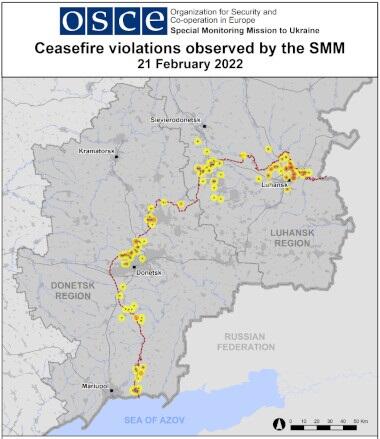
On February 16, 2022, a full week before Putin sent combat troops into Ukraine, the Ukrainian Army began the heavy bombardment of the area (in east Ukraine) occupied by mainly ethnic Russians

Officials from the Observer Mission of the Organization for Security and Co-operation in Europe (OSCE) were located in the vicinity at the time and kept a record of the shelling as it took place. What the OSCE discovered was that the bombardment dramatically intensified as the week went on until it reached a peak on February 19, when a total of 2,026 artillery strikes were recorded. Keep in mind, the Ukrainian Army was, in fact, shelling civilian areas along the Line of Contact that were occupied by other Ukrainians.

We want to emphasize that the officials from the OSCE were operating in their professional capacity gathering first-hand evidence of shelling in the area. What their data shows is that Ukrainian Forces were bombing and killing their own people. This has all been documented and has not been challenged.

So, the question we must all ask ourselves is this: Is the bombardment and slaughter of one’s own people an ‘act of war’?


We think it is. And if we are right, then we must logically assume that the war began before the Russian invasion (which was launched a full week later) We must also assume that Russia’s alleged “unprovoked aggression” was not unprovoked at all but was the appropriate humanitarian response to the deliberate killing of civilians. In order to argue that the Russian invasion was ‘not provoked’, we would have to say that firing over 4,000 artillery shells into towns and neighborhoods where women and children live, is not a provocation? Who will defend that point of view?

No one, because it’s absurd. The killing of civilians in the Donbas was a clear provocation, a provocation that was aimed at goading Russia into a war. And –as we said earlier– the OSCE had monitors on the ground who provided full documentation of the shelling as it took place, which is as close to ironclad, eyewitness testimony as you’re going to get.

This, of course, is a major break with the “official narrative” which identifies Russia as the perpetrator of hostilities. But, as we’ve shown, that simply isn’t the case. The official narrative is wrong. Even so, it might not surprise you to know that most of the mainstream media completely omitted any coverage of the OSCE’s fact-finding activities in east Ukraine. The one exception to was Reuters that published a deliberately opaque account published on February 18 titled “Russia voices alarm over sharp increase of Donbass shelling”. Here’s an excerpt:

Russian Foreign Minister Sergei Lavrov voiced alarm on Friday over a sharp increase in shelling in eastern Ukraine and accused the OSCE special monitoring mission of glossing over what he said were Ukrainian violations of the peace process….

Washington and its allies have raised fears that the upsurge in violence in the Donbass could form part of a Russian pretext to invade Ukraine. Tensions are already high over a Russian military buildup to the north, east and south of Ukraine.

“We are very concerned by the reports of recent days – yesterday and the day before there was a sharp increase in shelling using weapons that are prohibited under the Minsk agreements,” Lavrov said, referring to peace accords aimed at ending the conflict. “So far we are seeing the special monitoring mission is doing its best to smooth over all questions that point to the blame of Ukraine’s armed forces,” he told a news conference.

Ukraine’s military on Friday denied violating the Minsk peace process and accused Moscow of waging an information war to say that Kyiv was shelling civilians, allegations it said were lies and designed to provoke it.” (Russia voices alarm over sharp increase of Donbass shelling, Reuters)

Notice the clever way that Reuters frames its coverage so that the claims of the Ukrainian military are given as much credibility as the claims of the Russian Foreign Minister. What Reuters fails to point out is that the OSCE’s report verifies Lavrov’s version of events while disproving the claims of the Ukrainians. It is the job of a journalist to make the distinction between fact and fiction but, once again, we see how agenda-driven news is not meant to inform but to mislead.

Quote: Larry C. Johnson, A Son of a New Revolution

The point we are trying to make is simple: The war in Ukraine was not launched by a tyrannical Russian leader (Putin) bent on rebuilding the Soviet Empire. That narrative is a fraud that was cobbled together by neocon spin-meisters trying to build public support for a war with Russia. The facts I am presenting here can be identified on a map where the actual explosions took place and were then recorded by officials whose job was to fulfill that very task. Can you see the difference between the two? In one case, the storyline rests on speculation, conjecture and psychobabble; while in the other, the storyline is linked to actual events that took place on the ground and were catalogued by trained professionals in the field. In which version of events do you have more confidence?

Bottom line: Russia did not start the war in Ukraine. That is a fake narrative. The responsibility lies with the Ukrainian Army and their leaders in Kiev.

And here’s something else that is typically excluded in the media’s selective coverage. Before Putin sent his tanks across the border into Ukraine, he invoked United Nations Article 51 which provides a legal justification for military intervention. Of course, the United States has done this numerous times to provide a fig leaf of legitimacy to its numerous military interventions. But, in this case, you can see where the so-called Responsibility To Protect (R2P) could actually be justified, after all, by most estimates, the Ukrainian army has killed over 14,000 ethnic Russians since the US-backed coup 8 years ago. If ever there was a situation in which a defensive military operation could be justified, this was it. But that still doesn’t fully explain why Putin invoked UN Article 51. For that, we turn to former weapons inspector Scott Ritter, who explained it like this:

Russian President Vladimir Putin, citing Article 51 as his authority, ordered what he called a 'special military operation'….
under Article 51, there can be no doubt as to the legitimacy of Russia’s contention that the Russian-speaking population of the Donbass had been subjected to a brutal eight-year-long bombardment that had killed thousands of people.… Moreover, Russia claims to have documentary proof that the Ukrainian Army was preparing for a massive military incursion into the Donbass which was pre-empted by the Russian-led 'special military operation.' [OSCE figures show an increase of government shelling of the area in the days before Russia moved in.]

..The bottom line is that Russia has set forth a cognizable claim under the doctrine of anticipatory collective self-defense, devised originally by the US and NATO, as it applies to Article 51 which is predicated on fact, not fiction.

While it might be in vogue for people, organizations, and governments in the West to embrace the knee-jerk conclusion that Russia’s military intervention constitutes a wanton violation of the United Nations Charter and, as such, constitutes an illegal war of aggression, the uncomfortable truth is that, of all the claims made regarding the legality of pre-emption under Article 51 of the United Nations Charter, Russia’s justification for invading Ukraine is on solid legal ground. (“Russia, Ukraine & the Law of War: Crime of Aggression”, Consortium News)

Here’s a bit more background from an article by foreign policy analyst Danial Kovalik:

One must begin this discussion by accepting the fact that there was already a war happening in Ukraine for the eight years preceding the Russian military incursion in February 2022. And, this war by the government in Kiev… claimed the lives of around 14,000 people, many of them children, and displaced around 1.5 million more … The government in Kiev, and especially its neo-Nazi battalions, carried out attacks against these peoples … precisely because of their ethnicity. ..

While the UN Charter prohibits unilateral acts of war, it also provides, in Article 51, that 'nothing in the present Charter shall impair the inherent right of individual or collective self-defense… ' And this right of self-defense has been interpreted to permit countries to respond, not only to actual armed attacks, but also to the threat of imminent attack.

In light of the above, it is my assessment.. that Russia had a right to act in its own self-defense by intervening in Ukraine, which had become a proxy of the US and NATO for an assault – not only on Russian ethnics within Ukraine – but also upon Russia itself. (“Why Russia’s intervention in Ukraine is legal under international law”, RT)

So, has anyone in the western media reported on the fact that Putin invoked UN Article 51 before he launched the Special Military Operation?

No, they haven’t, because to do so, would be an admission that Putin’s military operation complies with international law. Instead, the media continues to spread the fiction that ‘Hitler-Putin is trying to rebuild the Soviet empire’, a claim for which there is not a scintilla of evidence. Keep in mind, Putin’s operation does not involve the toppling of a foreign government to install a Moscow-backed stooge, or the arming and training a foreign military that will be used as proxies to fight a geopolitical rival, or the stuffing a country with state-of-the-art weaponry to achieve his own narrow strategic objectives, or perpetrating terrorist acts of industrial sabotage (Nord-Stream 2) to prevent the economic integration of Asia and Europe. No, Putin hasn’t engaged in any of these things. But Washington certainly has, because Washington isn’t constrained by international law. In Washington’s eyes, international law is merely an inconvenience that is dismissively shrugged off whenever unilateral action is required. But Putin is not nearly as cavalier about such matters, in fact, he has a long history of playing by the rules because he believes the rules help to strengthen everyone’s security. And, he’s right; they do.

And that’s why he invoked Article 51 before he sent the troops to help the people in the Donbas. He felt he had a moral obligation to lend them his assistance but wanted his actions to comply with international law. We think he achieved both.

Here’s something else you will never see in the western media. You’ll never see the actual text of Putin’s security demands that were made a full two months before the war broke out. And, the reason you won’t see them, is because his demands were legitimate, reasonable and necessary. All Putin wanted was basic assurances that NATO was not planning to put its bases, armies and missile sites on Russia’s border. In other words, he was doing the same thing that all responsible leaders do to defend the safety and security of their own people.

Here are a few critical excerpts from the text of Putin’s proposal to the US and NATO:

Article 1

The Parties shall cooperate on the basis of principles of indivisible, equal and undiminished security and to these ends:

shall not undertake actions nor participate in or support activities that affect the security of the other Party;
shall not implement security measures adopted by each Party individually or in the framework of an international organization, military alliance or coalition that could undermine core security interests of the other Party.

Article 3

The Parties shall not use the territories of other States with a view to preparing or carrying out an armed attack against the other Party or other actions affecting core security interests of the other Party.

Article 4

The United States of America shall undertake to prevent further eastward expansion of the North Atlantic Treaty Organization and deny accession to the Alliance to the States of the former Union of Soviet Socialist Republics.

The United States of America shall not establish military bases in the territory of the States of the former Union of Soviet Socialist Republics that are not members of the North Atlantic Treaty Organization, use their infrastructure for any military activities or develop bilateral military cooperation with them.

Article 5

The Parties shall refrain from deploying their armed forces and armaments, including in the framework of international organizations, military alliances or coalitions, in the areas where such deployment could be perceived by the other Party as a threat to its national security, with the exception of such deployment within the national territories of the Parties.

The Parties shall refrain from flying heavy bombers equipped for nuclear or non-nuclear armaments or deploying surface warships of any type, including in the framework of international organizations, military alliances or coalitions, in the areas outside national airspace and national territorial waters respectively, from where they can attack targets in the territory of the other Party.

The Parties shall maintain dialogue and cooperate to improve mechanisms to prevent dangerous military activities on and over the high seas, including agreeing on the maximum approach distance between warships and aircraft.

Article 6

The Parties shall undertake not to deploy ground-launched intermediate-range and shorter-range missiles outside their national territories, as well as in the areas of their national territories, from which such weapons can attack targets in the national territory of the other Party.

Article 7

The Parties shall refrain from deploying nuclear weapons outside their national territories and return such weapons already deployed outside their national territories at the time of the entry into force of the Treaty to their national territories. The Parties shall eliminate all existing infrastructure for deployment of nuclear weapons outside their national territories.

The Parties shall not train military and civilian personnel from non-nuclear countries to use nuclear weapons. The Parties shall not conduct exercises or training for general-purpose forces, that include scenarios involving the use of nuclear weapons.” (“To Make Sense of War”, Israel Shamir, Unz Review)

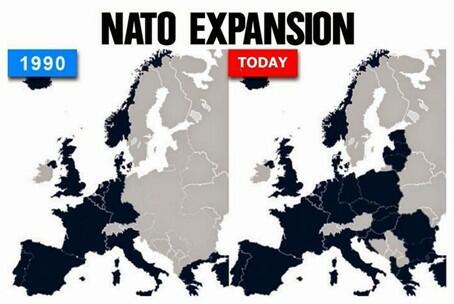
It doesn’t take a genius to figure out what Putin was worried about. He was worried about NATO expansion and, in particular, the emergence of a hostile military alliance backed by Washington-groomed Nazis occupying territory on his western flank. Was that unreasonable of him? Should he have embraced these US-backed Russophobes and allowed them to place their missiles on his border? Would that have been the prudent thing to do?

So, what can we deduce from Putin’s list of demands?

First, we can deduce that he is not trying to reconstruct the Soviet empire as the MSM relentlessly insists. The list focuses exclusively on security-related demands, nothing else.

Second, it proves that the war could have easily been avoided had Zelensky simply maintained the status quo and formally announced that Ukraine would remain neutral. In fact, Zelensky actually agreed to neutrality in negotiations with Moscow in March, but Washington prevented the Ukrainian president from going through with the deal which means that the Biden administration is largely responsible for the ongoing conflict. (RT published an article stating clearly that an agreement had been reached between Russia and Ukraine in March but the deal was intentionally scuttled by the US and UK. Washington wanted a war.)

Third, it shows that Putin is a reasonable leader whose demands should have been eagerly accepted. Was it unreasonable of Putin to ask that “The Parties shall refrain from deploying their armed forces and… military alliances.. in the areas where such deployment could be perceived by the other Party as a threat to its national security”? Was it unreasonable for him the ask that “The Parties shall eliminate all existing infrastructure for deployment of nuclear weapons outside their national territories”?

Where exactly are the “unreasonable demands” that Putin supposedly made?

There aren’t any. Putin made no demands that the US wouldn’t have made if ‘the shoe was on the other foot.’

Fourth, it proves that the war is not a struggle for Ukrainian liberation or democracy. That’s hogwash. It is a war that is aimed at “weakening” Russia and eventually removing Putin from power. Those are the overriding goals. What that means is that Ukrainian soldiers are not dying for their country, they are dying for an elitist dream to expand NATO, crush Russia, encircle China, and extend US hegemony for another century. Ukraine is merely the battlefield on which the Great Power struggle is being fought.

There are number points we are trying to make in this article:

1) Who started the war?
Answer– Ukraine started the war

2) Was the Russian invasion a violation of international law?
Answer– No, the Russian invasion should be approved under United Nations Article 51

3) Could the war have been avoided if Ukraine declared neutrality and met Putin’s reasonable demands?
Answer– Yes, the war could have been avoided

4) The last point deals with the Minsk Treaty and how the dishonesty of western leaders is going to effect the final settlement in Ukraine. I am convinced that neither Washington nor the NATO allies have any idea of how severely international relations have been decimated by the Minsk betrayal. In a world where legally binding agreements can be breezily discarded in the name of political expediency, the only way to settle disputes is through brute force. Did anyone in Germany, France or Washington think about this before they acted? (But, first, some background on Minsk.)

The aim of the Minsk agreement was to end the fighting between the Ukrainian army and ethnic Russians in the Donbas region of Ukraine. It was the responsibility of the four participants in the treaty– Germany, France, Russia and Ukraine– to ensure that both sides followed the terms of the deal. But in December, former German Chancellor Angela Merkel said in an interview with a German magazine, that there was never any intention of implementing the deal, instead, the plan was to use the time to make Ukraine stronger in order to prepare for a war with Russia. So, clearly, from the very beginning, the United States intended to provoke a war with Russia.

On September 5, 2014, Germany, France, Ukraine and Russia all signed Minsk, but the treaty failed and the fighting resumed. On February 12, 2015, Minsk 2 was signed, but that failed, as well. Please, watch this short segment on You Tube by Amit Sengupta who gives a brief rundown of Minsk and its implications: (I transcribed the piece myself and any mistakes are mine.)

(11:40 minute) “In 2015, Germany and France were supposed to play a neutral role.They were supposed to make Ukraine and Russia follow the rules. But they didn’t do that, and the reason they didn’t do that is what Angela Merkel revealed in her interview on December 7. Merkel said, “The 2014 Minsk agreement was an attempt to give time to Ukraine. It also gave time to become stronger as can be seen today. The Ukraine of 2014 and 2015 is not the modern Ukraine.” 

Basically, all three partners of the Minsk Agreement lied and betrayed Russia. Even Putin said, “One day Russia will have to reach an agreement with Ukraine, but Germany and France betrayed Russia, and now they are helping Ukraine with weapons.”… It is a shame that western political leaders engage in negotiations that they do not intend to honor or enforce…(Ukrainian President Petro Poroshenko has admitted the same as Merkel and Hollande)….Now even Putin has acknowledged that it was a mistake to agree to the Minsk Accords

He even said that the Donbas problem should have been resolved by force-of-arms at the time. (2015) Russia waited 8 years to recognize Donbas’s independence, and then launched a full-scale attack this year. But then Putin was under the impression that the Minsk Accords–guaranteed by Germany and France and endorsed unanimously by the UN Security Council including the United States– would resolve the crisis and would give the Donbas autonomy while remaining part of Ukraine. Germany and France were supposed to make sure the Minsk accords were implemented from 2015 to 2022. The collective west always knew that war was the only solution. They never wanted peace, they just played along in the name of Minsk agreement. So, you can see, it is a diplomatic “win” for the west……

France and Germany appeased Russia with the Minsk agreement and gave false hopes of a peaceful settlement. But, in reality, they were buying time for Ukraine to build its military. There was never a diplomatic solution; the collective west –which includes the United States, NATO, the European Union and the G-7– fooled Russia into believing there was a diplomatic solution to the Donbas conflict (but) instead, they were preparing Ukraine for a full-fledged war against Russia

So, either way, this war was meant to happen. There was never a diplomatic solution…. This is what Angela Merkel wanted to convey: “The Cold War never ended”. She was the German Chancellor when the coup took place in Ukraine in 2014 and the Minsk Accords were signed. Therefore her contribution to this duplicitous game along with Germany, France, Ukraine and US– has led to this war. And she very well knows it. But, either way, it is not going to end well for Germany or France whose economies have been badly hurt. Ukraine has been completely destroyed. It has become the Afghanistan of Europe. It is the western political leaders that are guilty of the murder of Ukraine.

As it has been since 2014, the Ukrainian government has been launching vicious military attacks against Russian-speaking Ukrainian civilians in the Donbas region. Thousands of Russian speaking civilians have been killed. Russia should have taken back the territory in 2014 along with Crimea. But, then, Russia fell into the trap of the western countries’ Minsk Agreement. … It is not Russia that started this war, it is the United States that started this war. Ukraine is just a pawn that is supported by the US and the other european governments. And, it is a pity that the Ukrainian government serves the interests of the United States and not the Ukrainian people.” (“Angela Merkel’s revelation about Minsk Agreements | Russia Ukraine war“, Amit Sengupta, You Tube)

There’s no way to overstate the importance of the Minsk betrayal or the impact it’s going to have on the final settlement in Ukraine. When trust is lost, nations can only ensure their security through brute force. What that means is that Russia must expand its perimeter as far as is necessary to ensure that it will remain beyond the enemy’s range of fire. (Putin, Lavrov and Medvedev have already indicated that they plan to do just that.) Second, the new perimeter must be permanently fortified with combat troops and lethal weaponry that are kept on hairtrigger alert. When treaties become vehicles for political opportunism, then nations must accept a permanent state of war. This is the world that Merkel, Hollande, Poroshenko and the US created by opting to use ‘the cornerstone of international relations’ (Treaties) to advance their own narrow warmongering objectives.

We just wonder if anyone in Washington realizes whet the fu** they’ve done?

https://www.zerohedge.com/geopolitical/whitney-setting-record-straight-stuff-you-should-know-about-ukraine

Gaetz Files 'Ukraine Fatigue Resolution' To Stop Funding Proxy War

 Rep. Matt Gaetz (R-FL) filed a resolution on Thursday to end all US aid to Ukraine for war with Russia, while at the same time seeking a peace settlement between the two nations.

Co-sponsored by 10 House members, the "Ukraine Fatigue Resolution," cites the enormous US support to Ukraine, noting that America is the "top contributor of military aid to Ukraine compared to its counterparts," having "appropriated more than $110,000,000,000 of military, financial, and humanitarian aid to Ukraine."

The resolution adds that "on February 3, 2023, the Department of Defense announced $2,000,000,000 in additional security assistance for Ukraine."

As of that announcement, the US has committed more than $32 billion in "security assistance" to Ukraine since 2014, with $30 billion of that pledged since the start of the Biden administration, and $29.3 billion "since the beginning of Russia’s unprovoked, full-scale invasion on February 24, 2022."

Gaetz' resolution includes itemized descriptions of weapons and material support.

"Joe Biden, and even some who have taken this stage, say defending freedom in Ukraine has costs for America," Gaetz said in a speech just two days after Russia invaded Ukraine. "Why should Americans have to pay the costs for freedom elsewhere when our own leaders won’t stand up for our freedom here?"

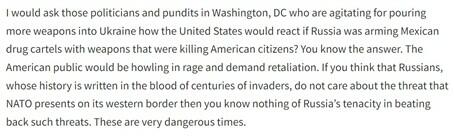
Testifying on the House floor on Feb. 6, Gaetz compared threats to U.S. citizens posed by drug outlaws in Mexico to those of Russian soldiers, and, what he believes, is an overeagerness to back a conflict that does not present serious and imminent peril to the United States. -Epoch Times

"As the war slogs on in Ukraine, the benefits to Americans are unclear," said Gaetz. "Bandits in the Sinaloa Mountains hurt more Americans than the men in Crimea. But foreigners come to Washington to lecture us about spending our constituents’ money on a conflict thousands of miles away, and my colleagues are eager to oblige."

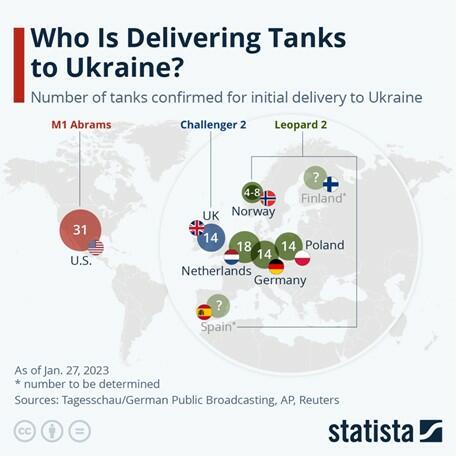
"On this floor, [Ukraine President Volodymyr] Zelenskyy’s demands got bipartisan standing ovations, from most. Stingers, HIMARS, tanks. At first, we said no to all of these things. President Biden even said that some of these things might lead to World War III. And then … we sent all of them."

https://www.zerohedge.com/geopolitical/gaetz-files-ukraine-fatigue-resolution-stop-funding-proxy-war