Search This Blog

Saturday, August 12, 2023

Judge Compares Biden Regime To Mafia For 'Strong-Arming' Social Media Companies

 A three-judge panel excoriated the 'mob-like' Biden administration over its 'strong-arm' tactics to bully social media companies into complying with censorship requests, which "time and time again" prove to be true.

The judicial smackdown took place during a Thursday hearing in front of the Fifth Circuit Federal Court of Appeals, which heard oral arguments over the administration's appeal of an injunction barring the US government from communication with social media giants in order to censor protected speech.

Representing the government was attorney Daniel Tenny - who had quite the trio of pissed off judges on his hands. At one point, Judge Jennifer Walker Elrod compared the Biden administration to the mafia before walking it back.

"In these movies that we see with the mob … they don’t say and spell out things, but they have these ongoing relationships," she said, adding "They never actually say ‘go do this or else you’re going to have this consequence.’ But everybody just knows."

"I’m certainly not equating the federal government with anybody in illegal organized crime but there are certain relationships that people know things without always saying the ‘or else,'" Elrod continued.

She had earlier noted that the Biden administration had a "very close working relationship" with social media giants, and browbeated them like "a supervisor complaining about a worker" until they got their way.

"What appears to be in the record are these irate messages from time to time from high ranking government officials that say, ‘You didn’t do this yet!’ — and that’s my toning down the language— ‘Why haven’t you done this yet?'” she said. “It’s like ‘jump’ and ‘how high?'" said Elrod.

Judges Edith Brown Clement and Don R. Willett were also obviously perturbed by the government's behavior - with Willett noting that the government operated "out of the public eye" via "unsubtle strong-arming and veiled or not-so-veiled threats."

"That’s a really nice social media platform you’ve got there, it would be a shame if something happened to it," he summarized, according to the Daily Caller.

Tenney goes on defense

Clearly sensing the judges' hostility, Daniel Tenny attempted to tap-dance his way out of claims of government overreach - saying: "The government is generically going to be angry" when companies refuse to take action, but that the communications show federal officials and social media giants alternating between "friendly" and "testy," as opposed to giving specific orders to comply "or else."

Judge Elrod wasn't buying it, calling the government's messages "irate" at times, and saying that they actually show high-ranking officials badgering counterparts about why they hadn't censored the material they wanted censored.

Elrod asked Tenney if high-level government officials had asked companies "in a coercive manner to propagate certain things that the government knew were untrue, and to deamplify certain things that it knew were true … but didn't fit its message, would that be able to be enjoined?"

To which Tenney said the question presumes that the government acted coercively - for which he says they had no factual evidence, and claimed that the Biden administration knows it can't unilaterally sidestep legal liability protections under Section 230 of the Communications Decency Act.

Elrod fired back, saying "Time and time again," what the government considers mis-, dis- and malinformation, "always with great fervor," turn out to be true. For example, the government's attempts by National Institutes of Health Director Francis Collins' attempts to issue a published takedown of the Great Barrington Declaration - an open letter by Sunetra Gupta of Oxford University, Jay Bhattacharya of Stanford, and Martin Kulldorff of Harvard - which challenged government lockdowns during the pandemic.

Tenney argued that the judges also couldn't consider a 'friend of the court' briefing by leading House Republicans - which includes members of the Judiciary and Weaponization of the Federal Government committees - which lays out how much of the "[v]ery recent evidence' their committees had obtained 'further corroborates' the basis for the injunction.

Tenney also argued that the plaintiffs don't have legal standing to bring the case, because conservative officials who claim that their own posts were censored didn't argue that they plan to make similar posts in the future - which would create "ongoing injury" from the censorship.

When asked by Judge Edith Brown Clement if the Biden administration is still communicating with social media giants, he admitted that they hadn't "entirely stopped," but dodged a question over whether they maintained "day-to-day involvement," according to Just the News.

Attorney John Sauer, representing the State of Louisiana, asked the judges what they would think of a senior White House staffer contacting Amazon, Barnes & Noble and other booksellers to participate in a "book-burning program" focused on authors who criticize the administration, with the companies only giving in after months of escalating White House rhetoric. 

That's exactly what the White House did to compel platforms to remove and throttle the "most persuasive speakers" critical of its policies, such as former New York Times drug industry reporter Alex Berenson and former Fox News host Tucker Carlson, Sauer said.

Sauer added that the appellate court should indeed take "judicial notice" of the congressional amicus brief because there's no dispute on the authenticity of the newly identified communications and it "powerfully reinforces" the alleged coercion, such as a Facebook official suggesting the company back down because of "bigger fish we have to fry" with the administration. -JTN

According to Sauer, one of the individual plaintiffs, Health Freedom Louisiana co-director Jill Hines, claimed as recently as May that Facebook continues to remove groups she's created to protest COVID policies.

"This notion that COVID censorship is over is completely unsupportable," said Sauer.

https://www.zerohedge.com/political/not-so-veiled-threats-compares-biden-regime-mafia-strong-arming-social-media-companies

NCAA withheld safety info that would ‘destroy football’ — and killed husband, widow says

 The NCAA withheld critical information for decades about the risks of brain damage associated with playing football, according to a grieving widow who believes she has the smoking gun document to prove it.

Kelly Merlino hit the NCAA with a wrongful death lawsuit filed in Manhattan Supreme Court last month, accusing college athletics’ top oversight organization of fraud and gross negligence in the 2021 death of her husband Gene Merlino, who died suddenly at age 55 after suffering at least 14 concussions as a fullback for the Army in the mid-1980s.

A key piece of evidence she hopes will be a game-changer is a 50-year-old letter sent by an NCAA lawyer to college football’s then-top rules maker, advising him to blow off warnings by medical experts to stop permitting helmet-first tackling in games and practice.

“In my opinion, any heed paid to their suggestions will destroy present day football as we know it,” NCAA lawyer Donald Wilson writes to David Nelson, head of the organization’s Football Rules Committee in the March 13,1973 letter.

gene merlino
Gene Merlino’s widow, Kelly Merlino hit the NCAA with a wrongful death lawsuit, accusing college athletics’ top oversight organization of fraud and gross negligence in his 2021 death.
dignitymemorial.com

“They will not be satisfied in their suggested changes in the rules but will thereafter concentrate on arms, shoulders, knees, etc., all of which we readily understand are susceptible to injury in a game that the dangers of which are readily apparent and willingly accepted by those who participate and teach this beautiful Spartan game,” Wilson continued.

Wilson feared if such concerns were raised to the NCAA Football Rules Committee, they would be used as fodder for future lawsuits by injured players and their families — and potentially jeopardize the future of became NCAA’s biggest moneymaking sport.

“Kindly bear in mind that if any of their letter, speeches and/or reports are published in any periodicals, this will form the basis of devastating cross-examination of football coaches at all levels in the future,” he wrote.

Kelly Merlino and her husband.
“It is clear to me from the letter that the primary concern of the NCAA was protecting the game — not the individuals playing the game,” said Kelly Merlino.

Wilson wrote the letter nine years before Gene Merlino first suited up for Army, where he played from 1984 through 1986 —  and more than four decades before the NCAA instituted concussion protocols to protect players in 2015.

“It is clear to me from the letter that the primary concern of the NCAA was protecting the game — not the individuals playing the game,” said Kelly Merlino, 55. “The consequences have been devastating to the players and their families.”

Her lawsuit contends playing football without proper medical protocols in place caused Gene to develop the “neurodegenerative brain disease” which led to his death. She also alleges the NCAA knew about the fatal link between football and brain disease since at least the early 1930s.

Prior to his death, Gene Merlino frequently spoke out about what he said were the dangers associated with college football.

Merlino's football portrait.
Merlino suffered at least 14 concussions during his football career at Army.

Wilson’s warning was sparked by the legal team for Steven Mark, a Colgate University halfback paralyzed from the waist down due to injuries sustained in a 1965 freshman football scrimmage. Mark later filed a $3 million lawsuit against Colgate, leading his lawyers to express their concerns about “head tackling” in football and seek rule changes to make the sport safer.

Mark contended he was taught to tackle head-first at Colgate, but a 1972 jury ultimately found the university and its coaches weren’t at fault.

“The Wilson letter shows that lawyers for the NCAA influenced whether the NCAA would protect the game or protect the players,” said medical historian Stephen Casper, who is currently a professor of science history at Clarkson University in Potsdam, New York.

“The NCAA protected the game,” Casper continued. “It turned a blind eye to what it was supposed to do, which was to protect the players. Now, the NCAA is on the wrong end of 400 brain injury lawsuits in state courts around the country and many more aggregated in the federal district court in Chicago.”  

Kelly Merlino is seeking unspecified damages.

The NCAA did not return messages.

https://nypost.com/2023/08/12/ncaa-had-brain-damage-information-that-would-destroy-football-docs/

New California Gas Czar Will Boost Prices Even Higher

 by John Seiler via The Epoch Times,

Ouch. The price of gas where I usually fill up has soared above $5 for the first time in months. I keep track of my spending, and it was $4.29 just a month ago.

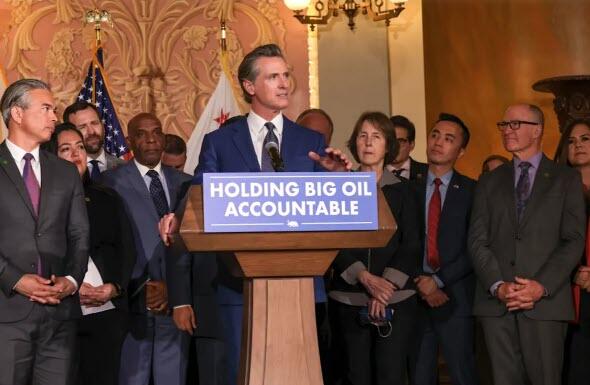
In a case of really bad journalism, the Sacramento Bee recently ran this headline of the state’s new gas price czar, Tai Milder, “‘Sense of mission.’ California’s new gas price watchdog known for taking on economic crimes.” It wrote he is “leading a new state agency that will watch over oil markets for possible illegal activity that drives up costs for Californians.” That agency is the Division of Petroleum Market Oversight, a new bureaucracy set up by Senate Bill X1-2 and signed into law last March by Gov. Gavin Newsom.

The governor’s office announced Mr. Milder “has successfully investigated and prosecuted companies and individuals that tried to rip off consumers by engaging in price-fixing, bid-rigging, and bribery. Milder also worked at California’s Department of Justice enforcing state antitrust laws against oil and gas companies.

“The new oil watchdog office is a key part of Gov. Newsom’s gas price gouging law.”

Actually, it’s a key strategy in deflecting attention from California’s high gas prices should the governor run for president. The topic could come up in the governor’s planned debate with Republican Gov. Ron DeSantis of Florida, possibly set for Nov. 8 in Georgia, although both camps are haggling over the details.

Highest Gas Prices

According to AAA Gas Prices, California currently suffers the highest gas prices in the country, averaging $5.11 a gallon for regular. The lowest is Mississippi at $3.32. For our neighbors, Nevada is $4.36 and Arizona is $4.01. There’s no reason why California can’t have prices that low.

California Governor Gavin Newsom speaks in the rotunda of the California State Capitol in Sacramento on March 28, 2023. (Courtesy of the Office of Governor Gavin Newsom)

The main effect of the Division of Petroleum Market Oversight and Milder’s actions in fact will be to raise prices even higher. At the time he signed the bill, Gov. Newsom said to oil companies, “Prove you’re not price gouging.” But how do you prove a negative? In America, isn’t the accused innocent until proven guilty? The new edict only will increase compliance costs. Instead of investing in new equipment at refineries and gas stations, the companies will hire more lawyers and regulation experts to make sure no one goes to one of the state’s hellhole jails.

The new bureaucracy is piled on top of numerous existing state bureaucracies regulating the oil industry. These include the California Energy Commission, the Department of Toxic Substances Control, the California Environmental Protection Agency, and the ultra-powerful California Air Resources Board, which is dedicated to destroying the petroleum industry by switching everyone to electric vehicles.

It wouldn’t even surprise me if some oil companies, despite the large consumer base, just pulled out of the state entirely. Why bother? Why risk getting sent to jail for doing your business as you do in the other 49 states?

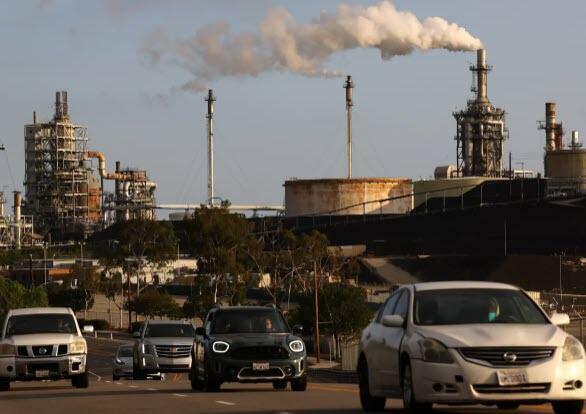
Vehicles pass the Phillips 66 Los Angeles Refinery Wilmington Plant in Wilmington, Calif., on Nov. 28, 2022. (Mario Tama/Getty Images)

Here are the real main reasons California consistently ranks highest in gas prices:

State-Level Reasons

Special Blends

California requires unique special blends of gasoline, in particular a more expensive summer blend. When it runs low of its special blends, it can’t just import more from other states. Special markets commonly cost more than general markets, where there’s more overall competition.

Old Refineries

The state’s creaking old oil refineries break down more often than new facilities in other states. That’s because California’s regulations—now made more onerous with the new Division of Petroleum Market Oversight—make it prohibitively costly to build new refineries. When a refinery is taken off line, supply obviously is cut. That increases scarcity until the facilities are repaired, which increases prices.

2017 Gas Tax Increase of $5 Billion a Year

With a 4 cent increase last month from an inflation adjustment, the tax now hits at 58 cents per gallon. ABC 10 broke down the full gouging taxpayers at the pump:

  • 54 cents in state excise tax: among the highest in the nation

  • 18.4 cents in federal excise tax

  • 23 cents for California's cap-and-trade program to lower greenhouse gas emissions

  • 18 cents for the state's low-carbon fuel programs

  • 2 cents for underground gas storage fees

  • An average of 3.7 percent in state and local sales taxes

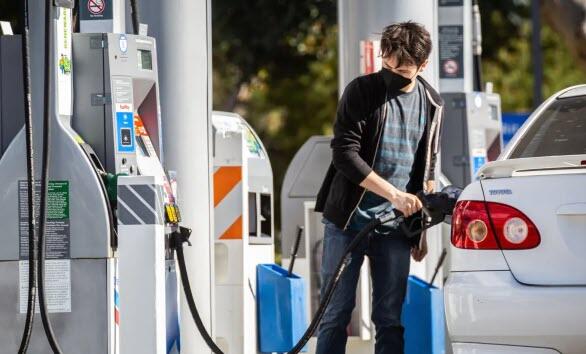
A customer pumps gas in Irvine, Calif., on Feb. 23, 2022. (John Fredricks/The Epoch Times)

National and Global Reasons

Despite all the bragging about California being the world’s “fourth largest economy,” it’s really but a drop in the global energy market. Some recent events pushing up global oil and gasoline prices:

KeystoneXL Pipeline

Early in his administration, President Biden canceled the KeystoneXL pipeline. In January this year, reported Fox News, “The Biden administration published a congressionally mandated report highlighting the positive economic benefits the Keystone XL Pipeline would have had if President Biden didn't revoke its federal permits.

“The report, which the Department of Energy (DOE) completed in late December without any public announcement, says the Keystone XL project would have created between 16,149 and 59,000 jobs and would have had a positive economic impact of between $3.4-9.6 billion, citing various studies.”

The Ukraine War

Boycotts of Russian oil after its invasion of Ukraine disrupted what for decades had been a placid, smooth-functioning global oil market. Then the market adjusted until recently. On Aug. 4, reported CNN, “One of Russia’s biggest oil tankers was struck by a maritime drone, the latest salvo in a Ukrainian military campaign employing unmanned vehicles to attack far-away Russian targets by air and by sea.” That and other disruptions have boosted the global price of oil from $63 a barrel in early May to $83 on Aug. 10—a 32 percent increase in just three months.

General Global Uncertainty

In addition to the Ukraine war, the past two years under Biden have seen global crises multiply. The latest is the coup in the country of Niger in Africa, a key uranium source, especially for France’s large nuclear-power industry.

But the main other problem remains tensions with Communist China over Taiwan. This past week China and Russia sent 11 navy vessels near Alaska. “It is a historical first,” Brent Sadler, a senior research fellow at the Heritage Foundation and a retired Navy captain, told the Wall Street Journal. “Given the context of the war in Ukraine and tensions around Taiwan, this move is highly provocative.”

Most global oil trade rides on giant oil tankers, which are protected mostly by the U.S. Navy. If its global supremacy on the sea is threatened, as now is happening, that protection is called into question.

A gas pump is inserted inside an Audi vehicle at a Mobil gas station in Beverly Boulevard in West Hollywood, Calif., on March 10, 2022. (Bing Guan/Reuters)

Gas Prices Only Will Keep Rising

The great economist Ludwig von Mises liked to say government intervention in a free economy only begets more intervention. And here’s a quote from him, from his book “Interventionism: An Economic Analysis”:

“As a rule, capitalism is blamed for the undesired effects of a policy directed at its elimination. The man who sips his morning coffee does not say, ‘Capitalism has brought this beverage to my breakfast table.’ But when he reads in the papers that the government of Brazil has ordered part of the coffee crop destroyed, he does not say, ‘That is government for you’; he exclaims, ‘That is capitalism for you.’”

For “coffee,” substitute “gasoline.”

Finally, one result of pushing gas prices even higher—the real result of the new bureaucracy headed by Gas Czar Tai Milder—will be further to encourage people to buy electric cars ahead of the total ban on gas- and diesel-powered cars by 2035. It’s funny how those things happen.

https://www.zerohedge.com/political/new-california-gas-czar-will-boost-prices-even-higher

'Risky Drinking Behavior Common Among Cancer Survivors, Even During Treatment'

 Nearly four in 10 cancer survivors who drank alcohol engaged in risky drinking behaviors, a large retrospective study showed.

Overall, 38.3% of survivors who reported current alcohol use met validated criteria for hazardous drinking. The data also showed that almost 15% of the patients exceeded an accepted definition of moderate alcohol consumption, and almost a fourth acknowledged binge drinking. Patients who had a cancer diagnosis before age 18 and those who had ever smoked were more likely to report hazardous drinking.

"This cross-sectional study of a diverse U.S. cohort suggests that alcohol consumption and risky drinking were common among cancer survivors, even among individuals receiving treatment," wrote Yin Cao, ScD, MPH, of Washington University in St. Louis, and co-authors in JAMA Network Open

opens in a new tab or window. "Given the short- and long-term adverse treatment and oncologic outcomes associated with alcohol consumption, additional research and implementation studies are critical to address this emerging concern among cancer survivors."

Alcohol consumption has a causal relationship with multiple types of cancer and is associated with adverse outcomes in patients with cancer. In 2017, the American Society of Clinical Oncology cited a need to prioritize alcohol consumption as a key modifiable behavioral risk factoropens in a new tab or window for cancer control research. Nonetheless, no specific guidelines for surveillance and counseling about alcohol use have been developed for cancer survivors, the authors noted.

Understanding alcohol use among cancer survivors remains limited by lack of evidence. One recent studyopens in a new tab or window showed that 35% of cancer survivors who reported current drinking exceeded moderate drinking limits (more than one drink per day for women and more than two for men), and 21% engaged in binge drinking (five or more drinks on one or more occasions in the past year).

"However, to our knowledge, patterns of drinking, including frequency as well as the co-occurrence of multiple risky drinking behaviors, have not been described," the authors continued.

To gain more insight into alcohol consumption behavior among cancer survivors, Cao and colleagues queried the NIH All of Us Research Programopens in a new tab or window database, a diverse U.S. cohort with electronic health record (EHR) linkage, for data collected from May 2018 to January 2022. The cohort included 15,199 participants who reported a cancer diagnosis, including a subgroup of 1,839 with EHR data relative to cancer treatment within the past year.

The primary outcomes were prevalence of current drinking and risky drinking behaviors, defined as:

  • Exceeding moderate drinking: more than two drinks on a typical drinking day
  • Binge drinking: six or more drinks on at least one occasion
  • Hazardous drinking: Alcohol Use Disorders Identification Test-Concise (AUDIT-C) score ≥3 for women, ≥4 for men

The study population had a mean age of 63.1, and women accounted for 62.6% of the participants with a cancer diagnosis. The data showed that 77.7% of participants were current drinkers. Among those, 13% exceeded moderate drinking, 23.8% reported binge drinking, and 38.3% met AUDIT-C criteria for hazardous drinking.

Multivariable analysis yielded higher odds ratios for exceeding moderate drinking among patients with the following characteristics: age <65 (OR 1.84-2.90), male sex (OR 2.38), Hispanic ethnicity (OR 1.31), age <18 at cancer diagnosis (OR 1.52), former smoking (OR 2.46), and current smoking (OR 4.14). Binge drinking was more common among the same subgroups: age <65 (OR 2.15-4.46), men (OR 2.10), Hispanic ethnicity (OR 1.31), age <18 at cancer diagnosis (OR 1.71), former smokers (OR 1.69), and current smokers (OR 2.13).

The numbers were similar in the subgroup of patients currently receiving treatment for cancer.

"Our study extends the scope of prior understanding through using a diverse U.S. cohort to characterize risky drinking behaviors comprehensively among cancer survivors," Cao and team wrote. "More important, by linking with EHR data to annotate treatment information, we found that drinking and risky drinking behaviors are prevalent even among individuals concurrently receiving treatment for cancer."

"Alcohol consumption and risky drinking behaviors among cancer survivors are associated with various adverse long-term outcomes, including higher risk of recurrence, secondary primary tumors, and increased mortality," they added. "More studies are warranted to elucidate the role of each risky drinking behavior and the overall pattern in long-term outcomes."

Disclosures

The study was supported by the NIH and the Foundation for Barnes-Jewish Hospital.

Cao disclosed a relationship with Geneoscopy. A co-author reported relationships with AbbVie, PGDX, and Exact Sciences.

Primary Source

JAMA Network Open

Source Reference: opens in a new tab or windowShi M, et al "Alcohol consumption among adults with a cancer diagnosis in the All of Us Research Program" JAMA Netw Open 2023; DOI: 10.1001/jamanetworkopen.2023.28328.


https://www.medpagetoday.com/hematologyoncology/othercancers/105842

TX AG Civ­il Med­ic­aid Fraud Divi­sion Recov­ers $42.7 M

 The Office of the Attorney General’s (“OAG”) Civil Medicaid Fraud Division settled an enforcement action brought under the Texas Medicaid Fraud Prevention Act (“TMFPA”) against pharmaceutical drug manufacturers Shire PLC, Baxter International Inc., Baxalta Inc., Viropharma Inc., Takeda Pharmaceuticals U.S.A., Inc., and Takeda Pharmaceuticals America. 

The settlement resolves allegations that the drug manufacturers violated the TMFPA by providing, directly or indirectly, nursing and reimbursement services to Texas Medicaid providers for certain pharmaceutical drugs, as well as by paying clinical nurse educators to refer or recommend the drug Vyvanse to providers from January 2014 to December 2015. Under the agreement, the drug manufacturers will pay more than $42 million to settle the claims against the companies.   

The alleged TMFPA violations were originally brought in a lawsuit filed by a whistleblower under the qui tam provisions of the TMFPA, which allow a whistleblower to bring a lawsuit on Texas’s behalf for violations of the TMFPA.  

https://www.texasattorneygeneral.gov/news/releases/office-attorney-generals-civil-medicaid-fraud-division-recovers-427-million-taxpayer-funds

COVID-19 took toll on heart health; docs still grappling with how to help

 Firefighter and paramedic Mike Camilleri once had no trouble hauling heavy gear up ladders. Now battling long COVID, he gingerly steps onto a treadmill to learn how his heart handles a simple walk.

“This is, like, not a tough-guy test so don’t fake it,” warned Beth Hughes, a physical therapist at Washington University in St. Louis.

Somehow, a mild case of COVID-19 set off a chain reaction that eventually left Camilleri with dangerous blood pressure spikes, a heartbeat that raced with slight exertion, and episodes of intense chest pain.

He’s far from alone. How profound a toll COVID-19 has taken on the nation’s heart health is only starting to emerge, years into the pandemic.

“We are seeing effects on the heart and the vascular system that really outnumber, unfortunately, effects on other organ systems,” said Dr. Susan Cheng, a cardiologist at Cedars-Sinai Medical Center in Los Angeles.

It’s not only an issue for long COVID patients like Camilleri. For up to a year after a case of COVID-19, people may be at increased risk of developing a new heart-related problem, anything from blood clots and irregular heartbeats to a heart attack –- even if they initially seem to recover just fine.

Among the unknowns: Who’s most likely to experience these aftereffects? Are they reversible — or a warning sign of more heart disease later in life?

“We’re about to exit this pandemic as even a sicker nation” because of virus-related heart trouble, said Washington University’s Dr. Ziyad Al-Aly, who helped sound the alarm about lingering health problems. The consequences, he added, “will likely reverberate for generations.”

___

Heart disease has long been the top killer in the nation and the world. But in the U.S., heart-related death rates had fallen to record lows in 2019, just before the pandemic struck.

COVID-19 erased a decade of that progress, Cheng said.

Heart attack-caused deaths rose during every virus surge. Worse, young people aren’t supposed to have heart attacks but Cheng’s research documented a nearly 30% increase in heart attack deaths among 25- to 44-year-olds in the pandemic’s first two years.

An ominous sign the trouble may continue: High blood pressure is one of the biggest risks for heart disease and “people’s blood pressure has actually measurably gone up over the course of the pandemic,” she said.

Cardiovascular symptoms are part of what’s known as long COVID, the catchall term for dozens of health issues including fatigue and brain fog. The National Institutes of Health is beginning small studies of a few possible treatments for certain long COVID symptoms, including a heartbeat problem.

But Cheng said patients and doctors alike need to know that sometimes, cardiovascular trouble is the first or main symptom of damage the coronavirus left behind.

“These are individuals who wouldn’t necessarily come to their doctor and say, ‘I have long COVID,’” she said.

___

In St. Louis, Camilleri first developed shortness of breath and later a string of heart-related and other symptoms after a late 2020 bout of COVID-19. He tried different treatments from multiple doctors to no avail, until winding up at Washington University’s long COVID clinic.

“Finally a turn in the right direction,” said the 43-year-old Camilleri.

There, he saw Dr. Amanda Verma for worsening trouble with his blood pressure and heart rate. Verma is part of a cardiology team that studied a small group of patients with perplexing heart symptoms like Camilleri’s, and found abnormalities in blood flow may be part of the problem.

How? Blood flow jumps when people move around and subsides during rest. But some long COVID patients don’t get enough of a drop during rest because the fight-or-flight system that controls stress reactions stays activated, Verma said.

Some also have trouble with the lining of their small blood vessels not dilating and constricting properly to move blood through, she added.

Hoping that helped explain some of Camilleri’s symptoms, Verma prescribed some heart medicines that dilate blood vessels and others to dampen that fight-or-flight response.

Back in the gym, Hughes, a physical therapist who works with long COVID patients, came up with a careful rehab plan after the treadmill test exposed erratic jumps in Camilleri’s heart rate.

“We’d see it worse if you were not on Dr. Verma’s meds,” Hughes said, showing Camilleri exercises to do while lying down and monitoring his heart rate. “We need to rewire your system” to normalize that fight-or-flight response.

Camilleri said he noticed some improvement as Verma mixed and matched prescriptions based on his reactions. But then a second bout with COVID-19 in the spring caused even more health problems, a disability that forced him to retire.

___

How big is the post-COVID heart risk? To find out, Al-Aly analyzed medical records from a massive Veterans Administration database. People who’d survived COVID-19 early in the pandemic were more likely to experience abnormal heartbeats, blood clots, chest pain and palpitations, even heart attacks and strokes up to a year later compared to the uninfected. That includes even middle-aged people without prior signs of heart disease

Based on those findings, Al-Aly estimated 4 of every 100 people need care for some kind of heart-related symptom in the year after recovering from COVID-19.

Per person, that’s a small risk. But he said the pandemic’s sheer enormity means it added up to millions left with at least some cardiovascular symptom. While a reinfection might still cause trouble, Al-Aly’s now studying whether that overall risk dropped thanks to vaccination and milder coronavirus strains.

More recent research confirms the need to better understand and address these cardiac aftershocks. An analysis this spring of a large U.S. insurance database found long COVID patients were about twice as likely to seek care for cardiovascular problems including blood clots, abnormal heartbeats or stroke in the year after infection, compared to similar patients who’d avoided COVID-19.

A post-infection link to heart damage isn’t that surprising, Verma noted. She pointed to rheumatic fever, an inflammatory reaction to untreated strep throat –- especially before antibiotics were common -- that scars the heart’s valves.

“Is this going to become the next rheumatic heart disease? We don’t know,” she said.

But Al-Aly says there’s a simple take-home message: You can’t change your history of COVID-19 infections but if you’ve ignored other heart risks –- like high cholesterol or blood pressure, poorly controlled diabetes or smoking -– now’s the time to change that.

“These are the ones we can do something about. And I think they’re more important now than they were in 2019,” he said.

The Associated Press Health and Science Department receives support from the Howard Hughes Medical Institute’s Science and Educational Media Group. The AP is solely responsible for all content.

https://apnews.com/article/covid19-long-covid-heart-3dd8f26c663e96bffcc2980830626153