Search This Blog

Saturday, August 12, 2023

Insurers won’t cover new Alzheimer’s treatment for some customers

 Some private insurers are balking at paying for the first drug fully approved to slow mental decline in Alzheimer’s patients.

Insurers selling coverage in North Carolina, Pennsylvania and New York, among other states, told The Associated Press they won’t cover Leqembi with insurance offered on the individual market and through employers because they still see the $26,000-a-year drug as experimental.

Their decision stands in contrast to Medicare, which will wind up covering most patients who take the drug. The federal coverage program mainly for people ages 65 and older announced shortly after Leqembi received full approval last month that it will cover the treatment while still tracking its safety and effectiveness.

Leqembi is the first medicine that’s been convincingly shown to slow the cognitive decline caused by Alzheimer’s disease, though only modestly. The U.S. Food and Drug Administration approved the IV drug for patients with mild dementia and other symptoms caused by early Alzheimer’s.

That approval came after regulators reviewed data from a large study in which the drug slowed memory and thinking decline by about five months in those who got the treatment compared with those who got a dummy drug. Some Alzheimer’s experts say the delay is likely too subtle for patients or their families to notice.

Alzheimer’s mainly affects the elderly. About 76% of the people taking Leqembi will be covered by Medicare, according to the Japanese drugmaker Eisai, which developed the drug and is co-marketing it with Cambridge, Massachusetts-based Biogen Inc.

But people under 65 — even, rarely, as young as their 30s — also can get diagnosed. They are more likely to have commercial coverage.

“That’s why we’re just dumbfounded that commercial plans are not covering it,” said Christine Mann, chief operating officer of the Buffalo, N.Y.-area Dent Neurologic Institute, which will provide the IV drug to patients. “It’s almost like discrimination against these patients.”

The full picture on commercial insurance is still emerging in the patchwork U.S. system of coverage.

Companies saying no so far include Highmark, which provides Blue Cross and Blue Shield coverage in New York, Pennsylvania, Delaware and West Virginia; Blue Cross and Blue Shield of North Carolina, which has about 1.8 million commercial customers; and Philadelphia-based Independence Blue Cross.

Highmark and the North Carolina plan say they are still monitoring Leqembi and could re-evaluate their decision.

Independence Blue Cross made its decision after reviewing published, peer-reviewed studies and publicly available FDA materials.

“That re-evaluation made it clear to us that the existing evidence does not allow for conclusions to be drawn about the safety and effectiveness of Leqembi,” said Dr. Heidi Syropoulos, a medical director with the insurer.

A Highmark spokesman said that company made its decision after also consulting with specialists to determine if the drug’s benefit outweighs its side effects, which include brain bleeding and swelling.

Prominent insurers that will cover the drug for commercial plans include Kaiser Permanente and Elevance Health, the largest provider of Blue Cross-Blue Shield plans in the United States. A spokesman for another big health insurer, UnitedHealthcare, declined to comment when contacted by AP.

Because Medicare covers the drug, patients with privately run Medicare Advantage plans will receive coverage, said Juliette Cubanski, of the non-profit KFF, which researches health care issues.

Many other insurers say they have yet to make a decision.

Most insurers will probably cover the drug but heavily restrict its use through things like requiring pre-approval, said Greg Warren, a health actuary and member of the Society of Actuaries.

For commercial coverage, insurers often pay for treatments that have full FDA approval. But that is not guaranteed.

Tufts Medical Center in Boston maintain a database that includes more than 11,000 commercial insurance coverage decisions on specialty drugs. In 2% of the decisions, insurers did not cover the FDA-approved use, said researcher James Chambers.

Chambers said they have found that the decision to not cover a drug largely happens when the evidence supporting the drug is considered questionable.

The denials for Leqembi don’t surprise Jack Hoadley, a health policy researcher with Georgetown University’s Center on Health Insurance Reforms.

He noted Leqembi’s serious side effects and high cost. The price doesn’t include the cost for repeated brain scans patients need to check for side effects.

But Hoadley said insurers also may have a hard time explaining themselves.

“It’s going to be a harder-to-justify decision for them if they know that Medicare has made a decision to cover it,” he said.

Patients who don’t get coverage through a commercial plan may eventually receive it through Medicare or state- and federally funded Medicaid programs.

But waiting is risky. Those who advance out of early-stage Alzheimer’s may no longer qualify for Leqembi.

Bonnie Bortz has been caring for her 38-year-old daughter, Jaime, who has early-onset Alzheimer’s like her father did.

Bortz, who lives in the Buffalo suburb of Cheektowaga, is confident Jaime will get help paying for Leqembi because she will soon start on Medicare, which is available to some people under 65 with Alzheimer’s. Still, that hasn’t happened yet, and Bortz is anxious for treatment to begin.

She’s watched Jaime progress from repeatedly losing her phone and keys to struggling to help her 7-year-old daughter with homework.

“I don’t want to get to the next stages of all this,” Bonnie Bortz said. “I want more time.”

___

The Associated Press Health and Science Department receives support from the Howard Hughes Medical Institute’s Science and Educational Media Group. The AP is solely responsible for all content.

https://apnews.com/article/leqembi-insurance-coverage-alzheimer-ec7fcdf99ceaaa60ad1cee737c0b7ecb

Scary Math Behind the World’s Safest Assets

 “Bizarre” was the word Biden administration officials used to describe the timing of Fitch’s downgrade of America’s credit rating.

Yet we might look back at 2023 as a pivotal year and the agency’s move as a wake-up call. The Federal Reserve’s fight against inflation has amplified the risk of an unthinkable fiscal crisis made possible by decades of Washington dysfunction. As a result, the investments that stand the best chance of providing shelter from that storm also happen to be unusually attractive right now.

Investors have historically paid a steep penalty to hunker down in supersafe short-term government securities. For example, $100 invested in three-month Treasury bills in 1928 grew to only $2,141 by the end of last year while it became $46,379 invested in medium-grade corporate bonds and a whopping $624,534 if invested in stocks, according to data from New York University finance professor Aswath Damodaran. Especially in the years following the financial crisis, anything short-term and safe paid next to nothing. 

Ray Dalio, founder of the world’s largest hedge fund, Bridgewater Associates, didn’t coin it, but he became perhaps most-associated with the phrase “cash is trash” during that period. He changed his tune in a CNBC interview early this year: “Cash used to be trashy. Cash is pretty attractive now. It’s attractive in relation to bonds. It’s actually attractive in relation to stocks.”

T-bills not only pay more than they have since before the financial crisis but also more than longer-term notes or bonds. The latter also would suffer much larger paper losses if interest rates kept heading higher. And, as Dalio suggested, frothy stock valuations make a guaranteed 5%-plus return on bills tempting.

But there is a more disturbing reason cash might be king: Although they were called “certificates of confiscation” in the inflationary 1970s, longer-term Treasurys have been the go-to asset in times of crisis. The 10-year note’s yield is literally the risk-free rate used to value all other securities. 

Now, though, the government’s pile of debt has swelled following the War on Terror, the global financial crisis and the Covid-19 pandemic. Low interest rates and Fed bond buying masked the strain: Interest costs recently were no higher than in the early 1990s as a share of federal spending. But the Treasury barely seized the opportunity to lock in rock-bottom rates by issuing more long-term notes and bonds.

Now it is too late. The Congressional Budget Office regularly updates its long-term budget forecasts and says that U.S. debt held by the public will surpass gross domestic product this fiscal year and that interest on that debt will equal about three-quarters of discretionary, nondefense spending. By 2031, it will be as large. 

Medicare, Social Security and, of course, interest are legally nonnegotiable. Military spending isn’t really optional either. No wonder the federal government is described as “an insurance company with an army.”

Yet the CBO’s forecast actually looks too optimistic. It envisions the net interest rate paid on that debt barely topping 3% in coming years even though short-term bills and notes yield more than 5% today. The swelling pile of debt means minor changes in assumptions now have major consequences.

Consider that around three-quarters of Treasurys must be rolled over within five years. Say you added just 1 percentage point to the average interest rate in the CBO’s forecast and kept every other number unchanged. That would result in an additional $3.5 trillion in federal debt by 2033. The government’s annual interest bill alone would then be about $2 trillion. For perspective, individual income taxes are set to bring in only $2.5 trillion this year.

Compound interest has a way of quickly making a bad situation worse—the sort of vicious spiral that has caused investors to flee countries such as Argentina and Russia. Having the world’s reserve currency and a printing press that allows it to never actually default makes America’s situation far better, though not consequence-free. 

Just letting rates rise high enough to attract more and more of the world’s savings might work for a while, but not without crushing the stock and housing markets. Or the Fed could step in and buy enough bonds to lower rates, rekindling inflation and depressing real returns on bonds.

A harder-to-quantify complication of a future fiscal squeeze would be Washington’s limited room to maneuver as interest costs become uncomfortable. The ability to do things such as bail out banks, underwrite lifesaving vaccines, subsidize cutting-edge technologies or even fight a war would be curtailed. An America with tight purse strings would be one with a more volatile economy, diminished international prestige and, ultimately, less-attractive assets.

Predicting when markets get seriously concerned about that is hard—budget scolds have raised countless false alarms over the years. For now, though, playing it safe in cash is a lot more appealing than it used to be.

https://www.wsj.com/articles/the-scary-math-behind-the-worlds-safest-assets-a22069f9

The Dark Side Of Bidenomics: 16.2% Bidenflation

 You can't make this up. Whoever coined the term "Bidenomics" is clearly out of touch. It's disheartening to see the octogenarian President touring cities across the nation, taking credit for the success of the Bidenomics economy while many Americans are enduring profound hardships.

Americans are grappling with skyrocketing prices. Nowadays, you need $1,000 in earnings to purchase what $862 could buy when Biden assumed office. Alternatively, if you used to require $50,000 annually to cover household expenses before Biden's presidency, you now need $58,000.

How do you address the shortfall?

Take on two jobs, reduce expenses, skip meals, use credit cards, or dip into retirement savings. There's evidence that all these strategies are being employed in Biden's America.

The dark shadow of Bidenomics is 16.2% inflation under Biden’s watch. It is a complete and utter failure that has led to stagflation in the United States. No amount of sugarcoating can hide the truth.

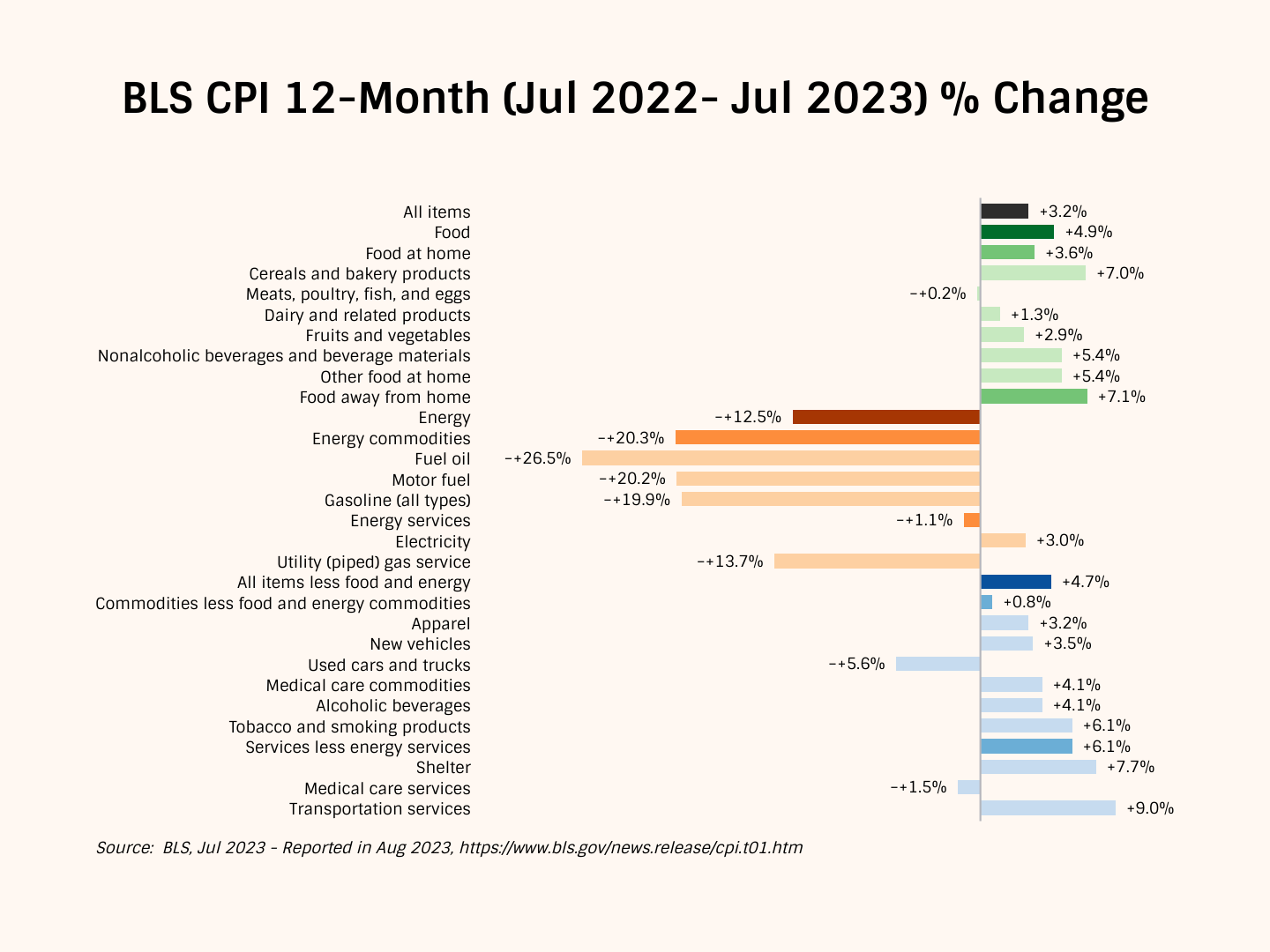
The Consumer Price Index (CPI) released by the government on Thursday showed a 3.2% year-over-year increase in prices from July 2022 to July 2023.

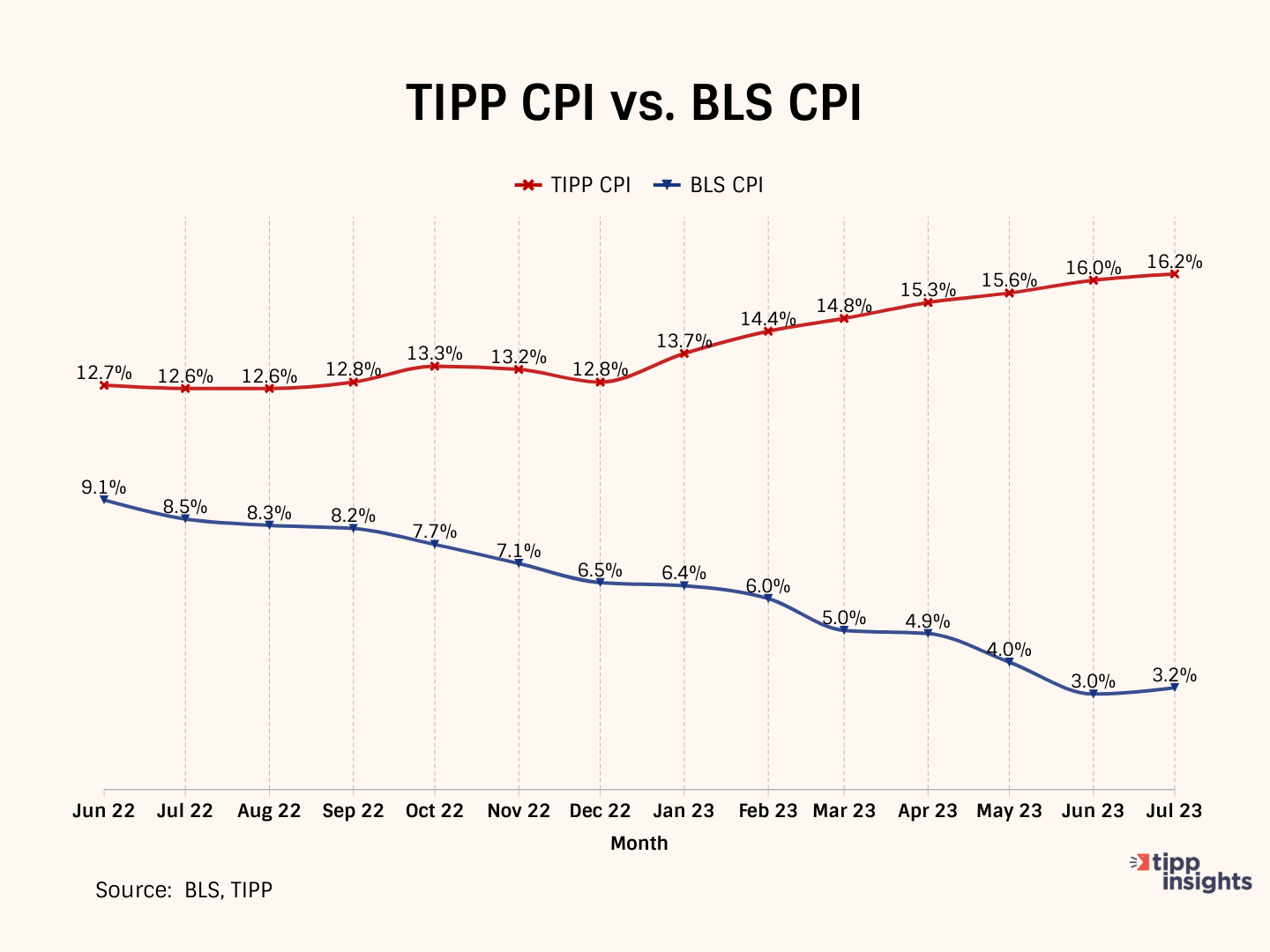
The CPI rate had declined steadily from a 40-year high of 9.1% in June 2022 to 3.0% in June 2023 for 12 consecutive months. The latest reading broke that run by increasing to 3.2% in July.

The CPI rose 0.2% between June 2023 and July 2023 after adjusting for seasonality and by the same amount of 0.2% on an unadjusted basis.

Last month, the White House press release stated: The June Consumer Price Index: Disinflation, Deflation, and Buying Power in the U.S. Economy.

In contrast, this month was more somber: Statement from President Joe Biden on July Consumer Price Inflation Report. Yet, it could not resist talking up Bidenomics:

We’re growing the economy from the middle out and bottom up, lowering costs for hardworking families, and making smart investments in America: that’s Bidenomics.

The Biden economy continues to be the worst-performing going back to President Carter. Since February 2021, the first full month of President Biden's term, the prices of various commodities, including food, gasoline, used cars, and air tickets, have consistently increased. Although the rate of increase has slowed, prices are still rising monthly.

As we have noted numerous times, President Biden's reckless spending has resulted in inflation levels not seen in 40 years. The U.S. economy will experience an extended period of stagflation characterized by a recession and inflation.

TIPP CPI

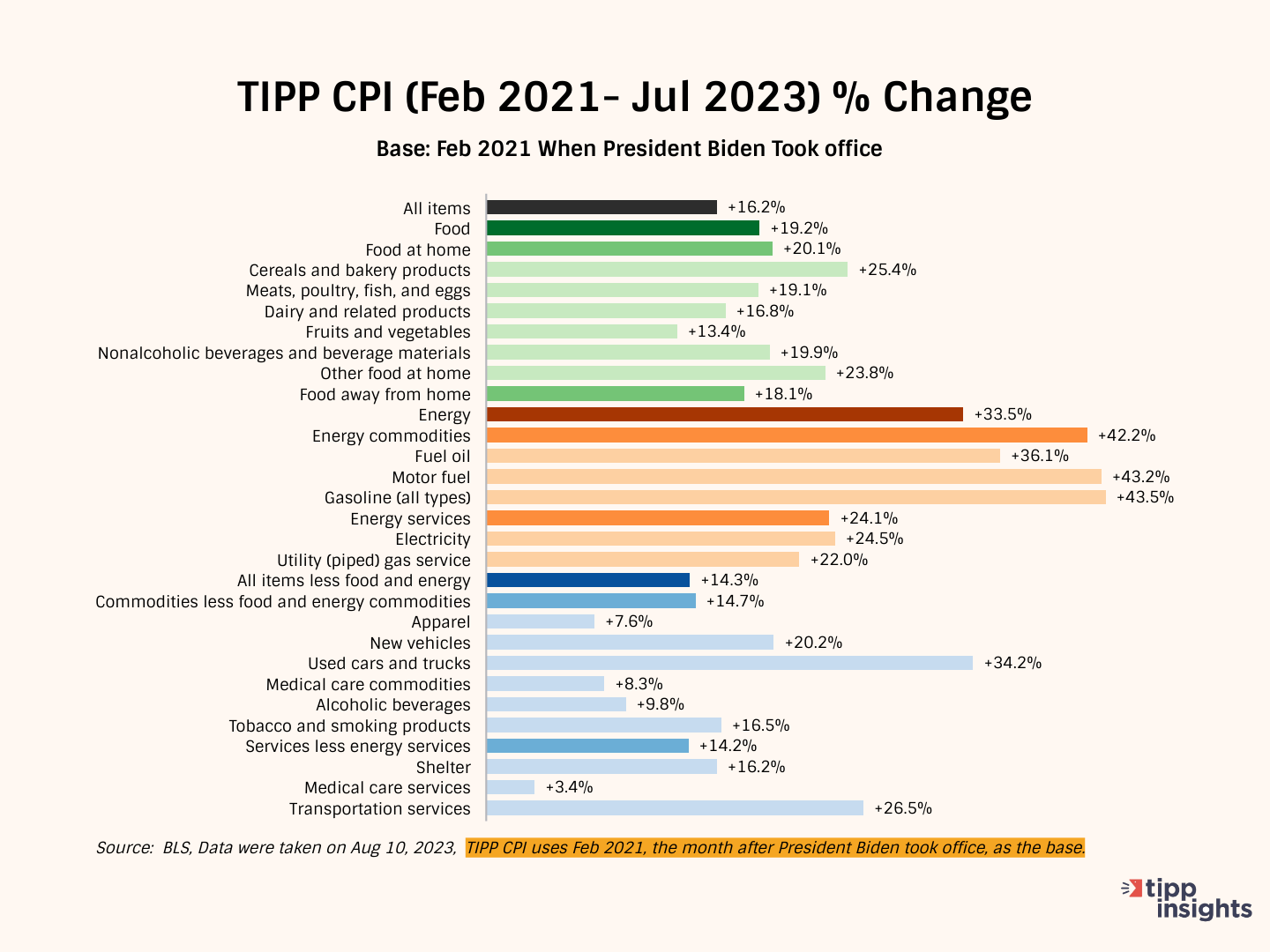
We developed the TIPP CPI, a metric that uses February 2021, the month after President Biden's inauguration, as its base. All TIPP CPI measures are anchored to the base month of February 2021, making it exclusive to the economy under President Biden's watch.

We use the relevant data from the Bureau of Labor Statistics (BLS) to calculate the TIPP CPI, but we adjust the period to Biden's tenure. CPIs are like index numbers that show how prices affect people's lives, similar to how the Dow Jones Industrial Average reflects the stock market.

When discussing the TIPP CPI and the BLS CPI, we convert the index numbers into percentage changes to better understand and compare them.

Bidenflation, measured by the TIPP CPI using the same underlying data, reached 16.2% in July. It was 16.0% in June, 15.9% in May, and 15.3% in April.

By the middle of 2022, significant inflation had already taken hold. In July 2022, CPI inflation stood at 8.5 percent. While the official BLS CPI year-over-year increases will compare prices to already inflated bases in the coming months, these statistics might mask the full impact.

TIPP CPI vs. BLS CPI

The following four charts present details about the new metric.

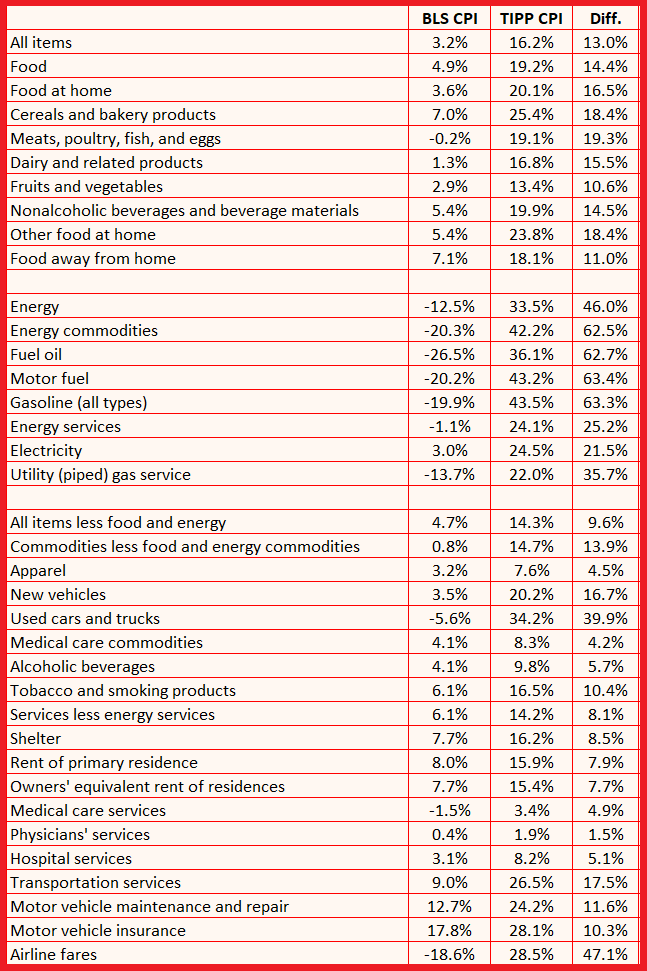
The annual CPI increase reported by BLS is 3.2% for July 2023. Compare this to the TIPP CPI of 16.2%, a 13.0-point difference. Prices have increased by 16.2% since President Biden took office. On an annualized basis, TIPP CPI is 6.4%.

Food prices increased by 19.2% under Biden compared to only 4.9% as per BLS CPI, a difference of 14.4 points.

TIPP CPI data show that Energy prices increased by 33.5%. But, according to the BLS CPI, energy prices declined by 12.5%. The difference between the two is a whopping 46.0 points.

The Core CPI is the price increase for all items, excluding food and energy. The Core TIPP CPI was 14.3% compared to 4.7% BLS CPI in the year-over-year measure, a 9.6-point difference.

Further, Gasoline prices have increased by 43.5% since President Biden took office, whereas the BLS CPI shows that gasoline price has improved by 19.9%, a difference of 63.3 points.

TIPP CPI finds that Used car prices have risen by 34.2% during President Biden's term. The BLS CPI shows that the prices have dropped by 5.6%, a difference of 39.9 points.

Inflation for air tickets under President Biden is 28.5% compared to the BLS CPI’s finding of an improvement of 18.6%, a difference of 47.1 points.

Americans' Concerns

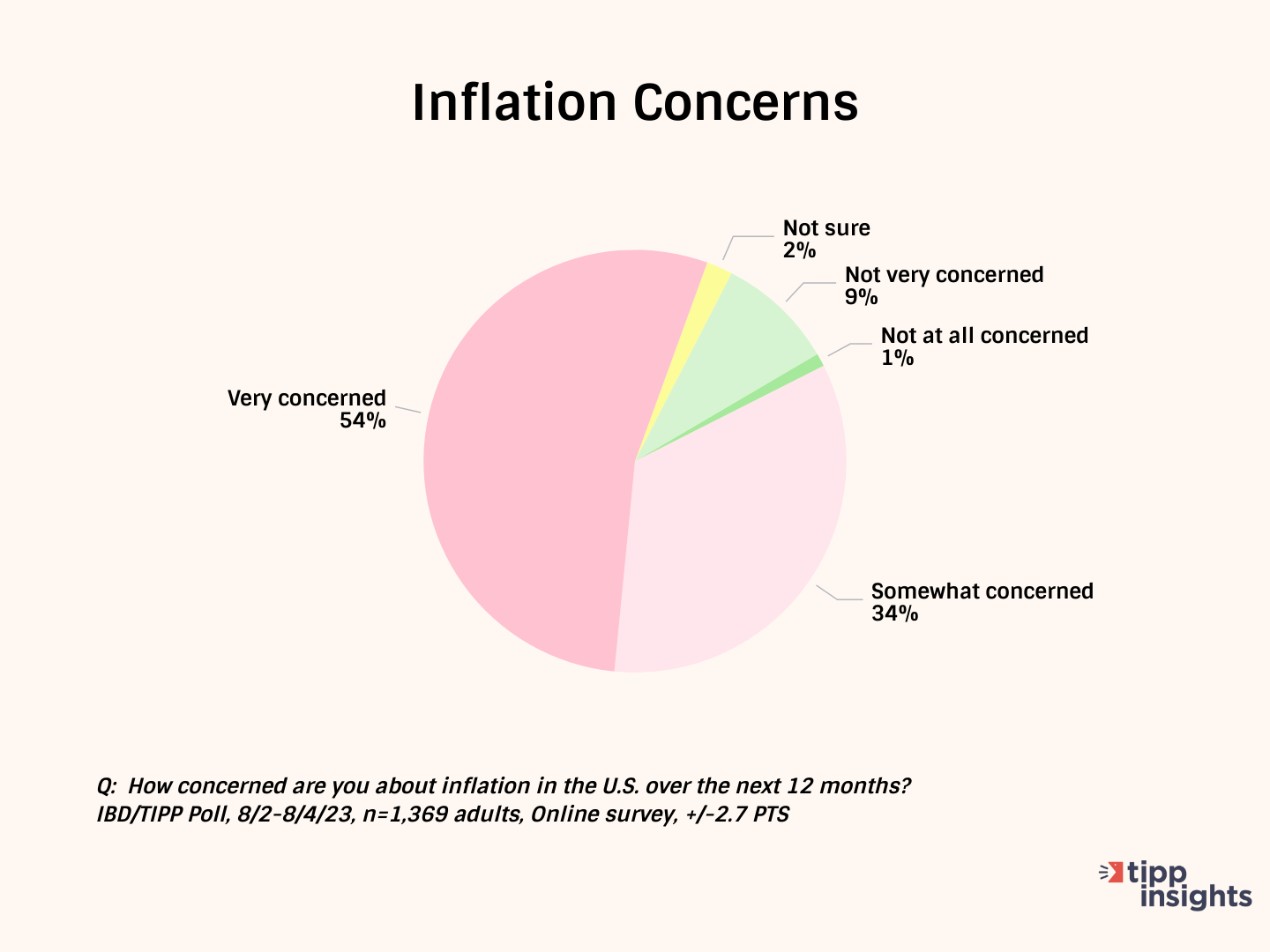
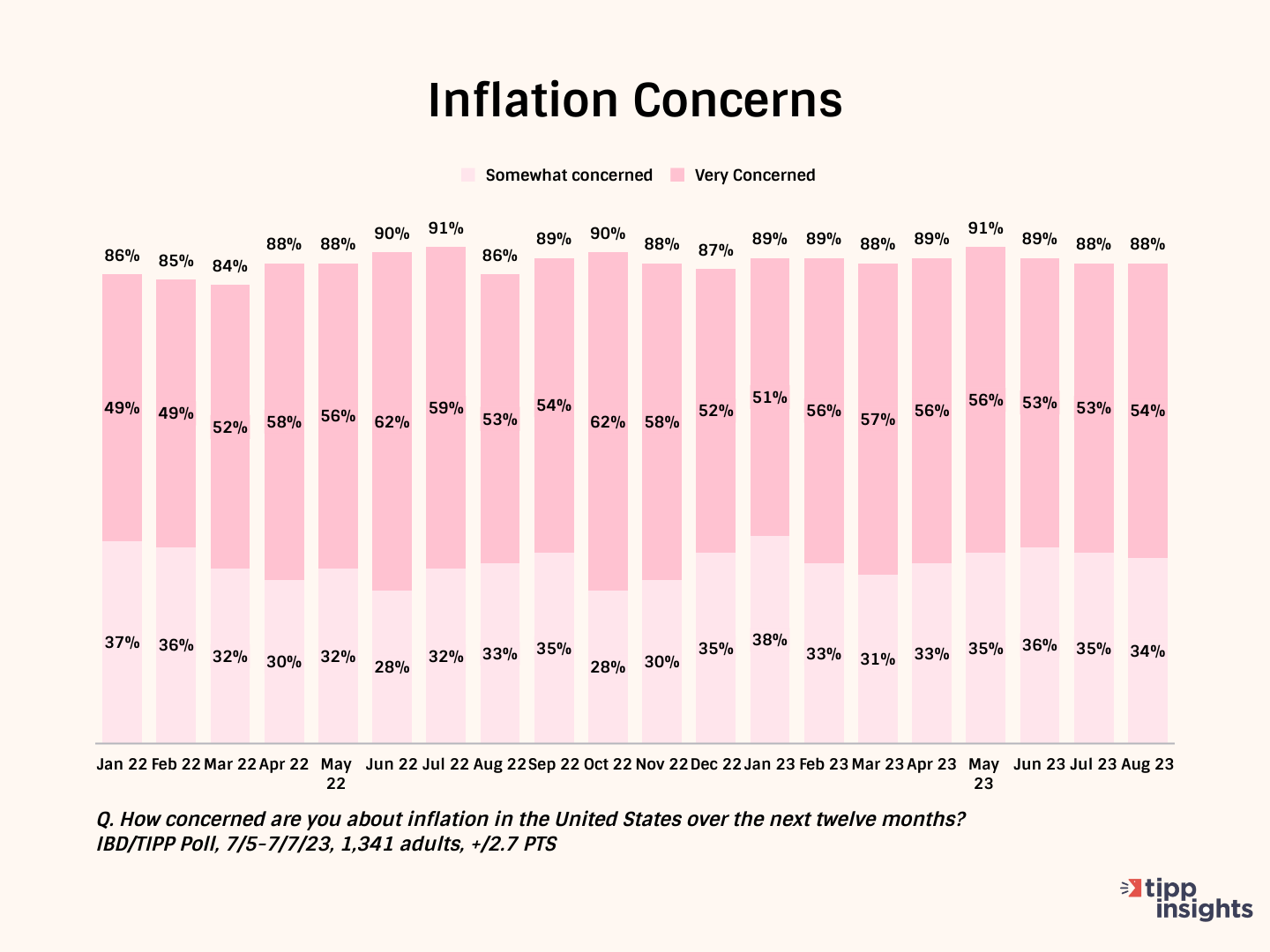
The latest Investor's Business Daily/TIPP Poll, completed earlier this month, shows nine in ten (88% in August and July) survey respondents are concerned about inflation. Throughout the past year, inflation concerns have stayed above 85%. The "very concerned" share has been over 50% for eighteen months.

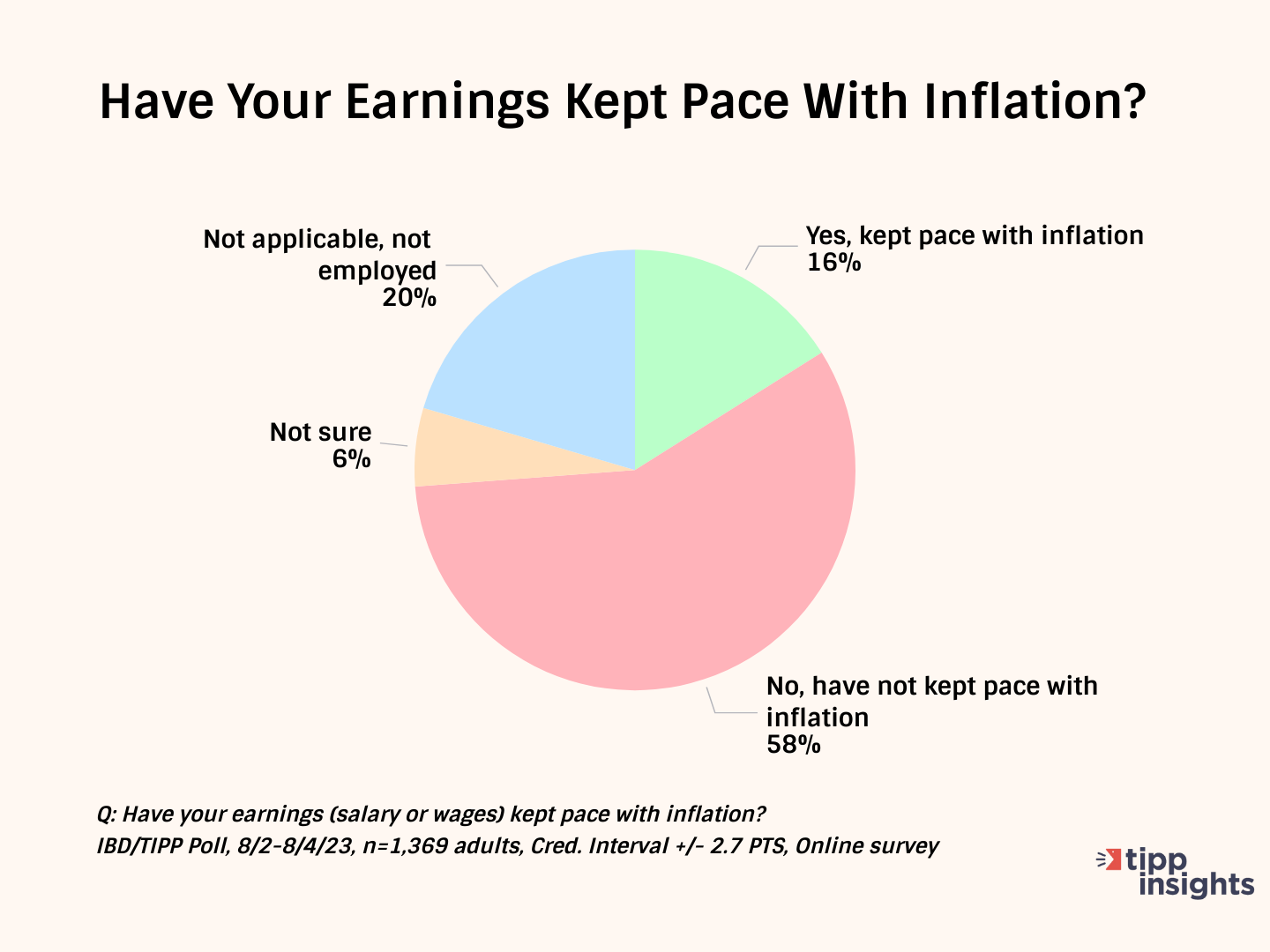
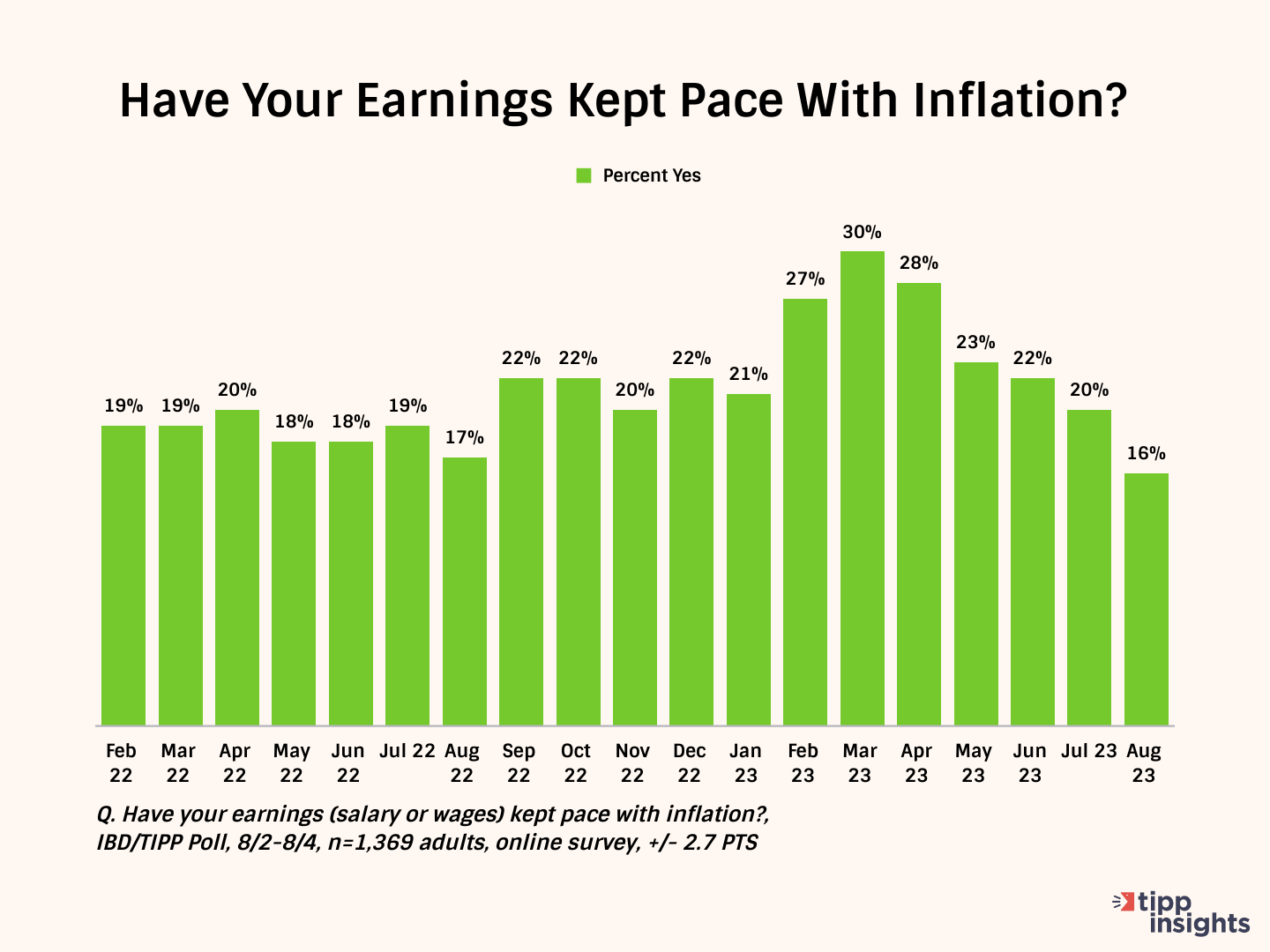
Over half (58%) say their wages have not kept up with inflation. Only 16% say their income has kept pace with inflation.

This statistic hovered in the low twenties for most of the last year. The positive change between January and March has petered. Notice the steady descent from March 2023.

Nominal wages represent the amount of money one earns without considering changes in the cost of living. On the other hand, real wages consider inflation and measure the wages' purchasing power. Real wages provide a more accurate reflection of what is affordable with the income earned by factoring in the changes in the cost of living.

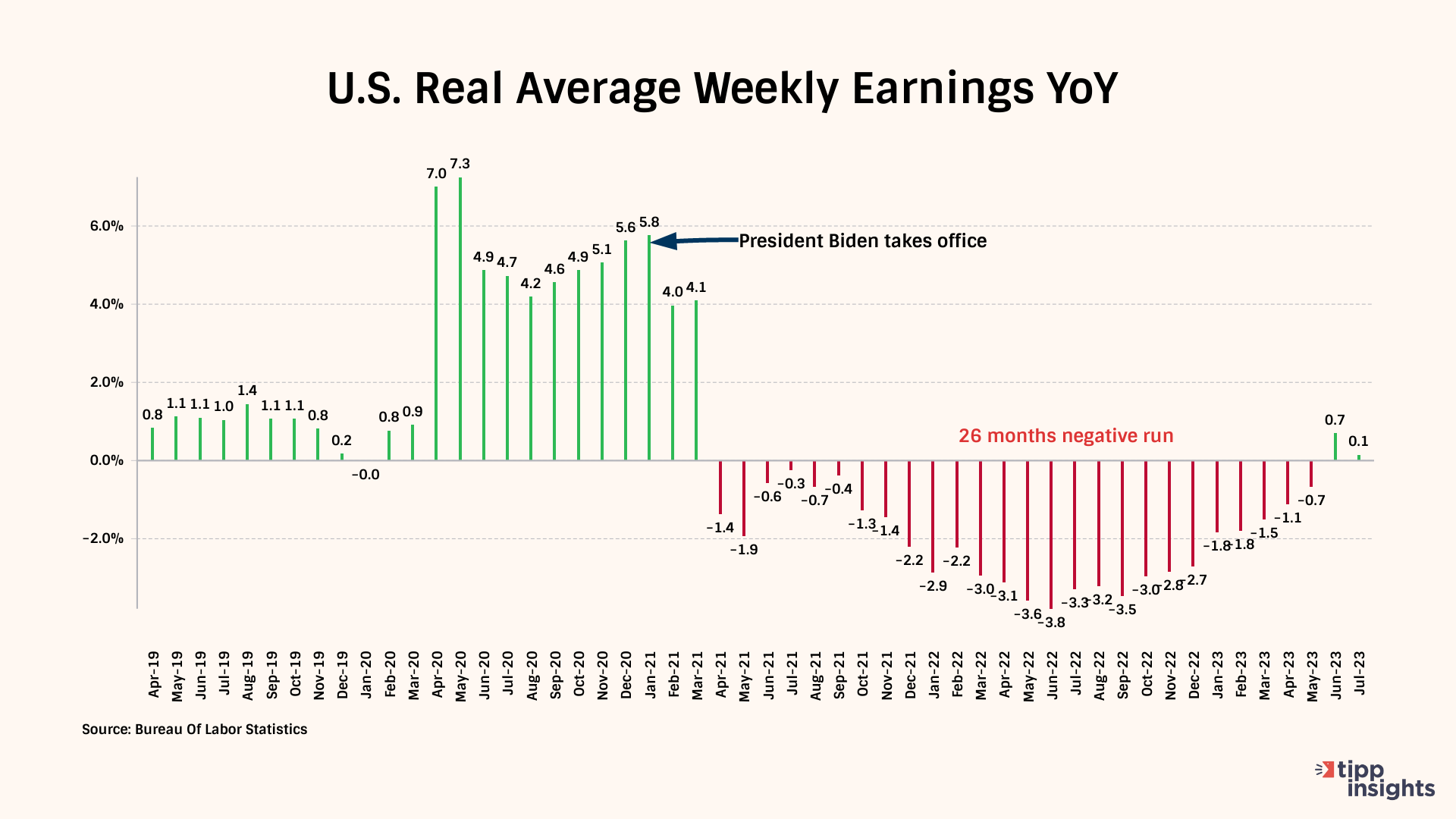
Real weekly wages measured year-over-year have dropped for 26 of the 30 months of the Biden presidency. On a positive note, it broke a 26-month negative run in June.

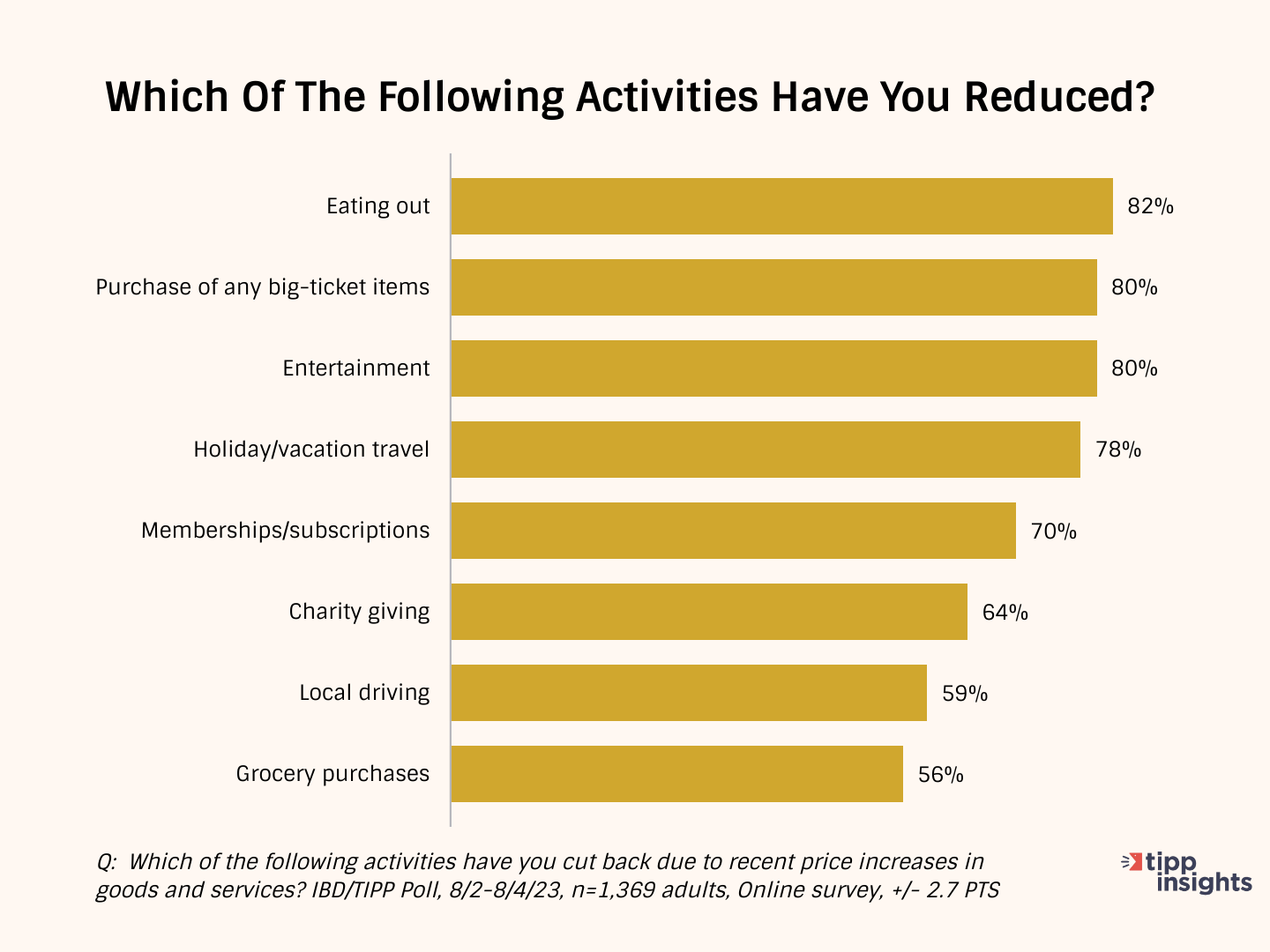
As a result of inflation, Americans are cutting back on household spending.

They are cutting back on eating out (82%), purchasing big-ticket items (80%), entertainment (80%), holiday/vacation travel (78%), and memberships/subscriptions (70%).

Many (64%) are cutting back on even good causes such as charity giving. Over one in two (56%) households spend less on groceries. The high gasoline prices forced 59% to cut back on local driving.

Inflation Direction

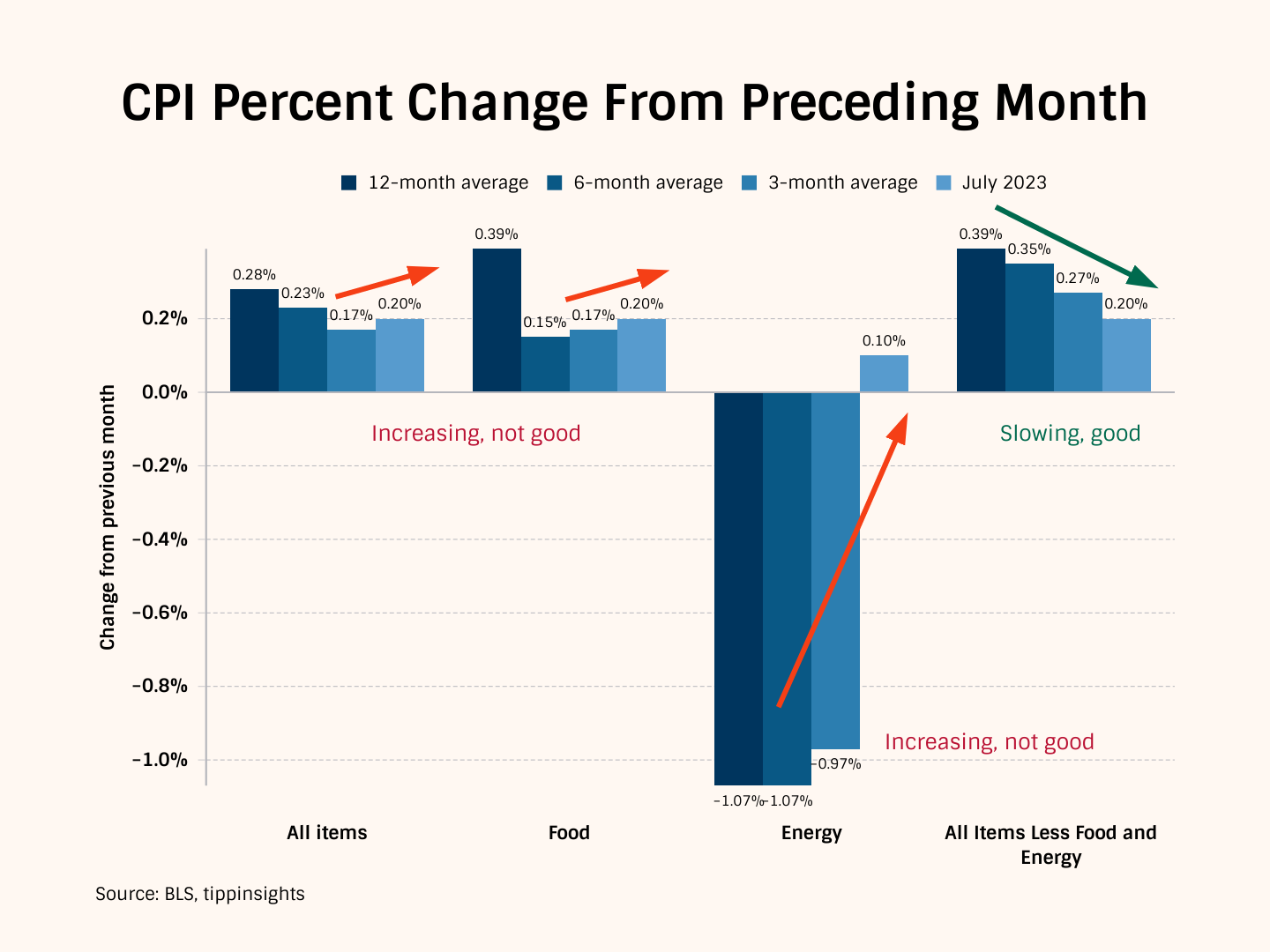
The chart below compares the 12-month average of monthly changes against the 6-month and the 3-month averages. We also show the reading for July 2023.

The 12-month average considers 12 data points and presents a long-term reference, while the six-month and three-month averages consider recent data points.

Typically, we compare the three-month average to the data from July 2023 to get a clearer picture. In July 2023, the price increase for 'All items' was 0.20%. However, the three-month average was lower at 0.17%. This means that the current reading is higher than the average of the past three months, indicating an acceleration in price increases.

The twelve-month long-term average of 0.28% is higher than the six-month average of 0.23%, which shows an improvement in the recent six months. Furthermore, the three-month average of 0.17% is lower than the six-month average of 0.23%.

In conclusion, this pattern suggests that while price increases have slowed down in the long term, there was a noticeable pickup in July.

In July, the price increase for Food was 0.20%, higher than the 3-month average of 0.17%. This indicates that food prices have increased. Further, when we compare the three-month average of 0.17% to the average of the past six months, which was 0.15%, we can see that the recent 3-month period had a slightly higher price increase.

The twelve-month average was 0.39%, much higher than the six-month (0.15%) and three-month (0.17%) averages. The data confirms the improvement relative to the past long-term 12-month average. However, the recent increase is worrisome.

The Energy situation sharply deteriorated last month, with a spike of 0.1%. This increase in July 2023 (0.10%) is worse than the three-month moving average of -0.97%, indicating deterioration.

"All items less food and energy" is called "core inflation," i.e., after removing volatile food and energy components. The core inflation reading in July was 0.20%, lower than the three-month average of 0.27%. This indicates that there was improvement during that period.

Meanwhile, the three-month average of 0.27% is lower than the six-month average of 0.35%, suggesting a slowdown in inflation. Additionally, the six-month average of 0.35% is lower than the 12-month average of 0.39%.

The downward stair is the “perfect” pattern. These numbers indicate a positive situation where the core inflation rate has improved.

In summary, things look good directionally except for Food and Energy.

Inverted Yield Curve

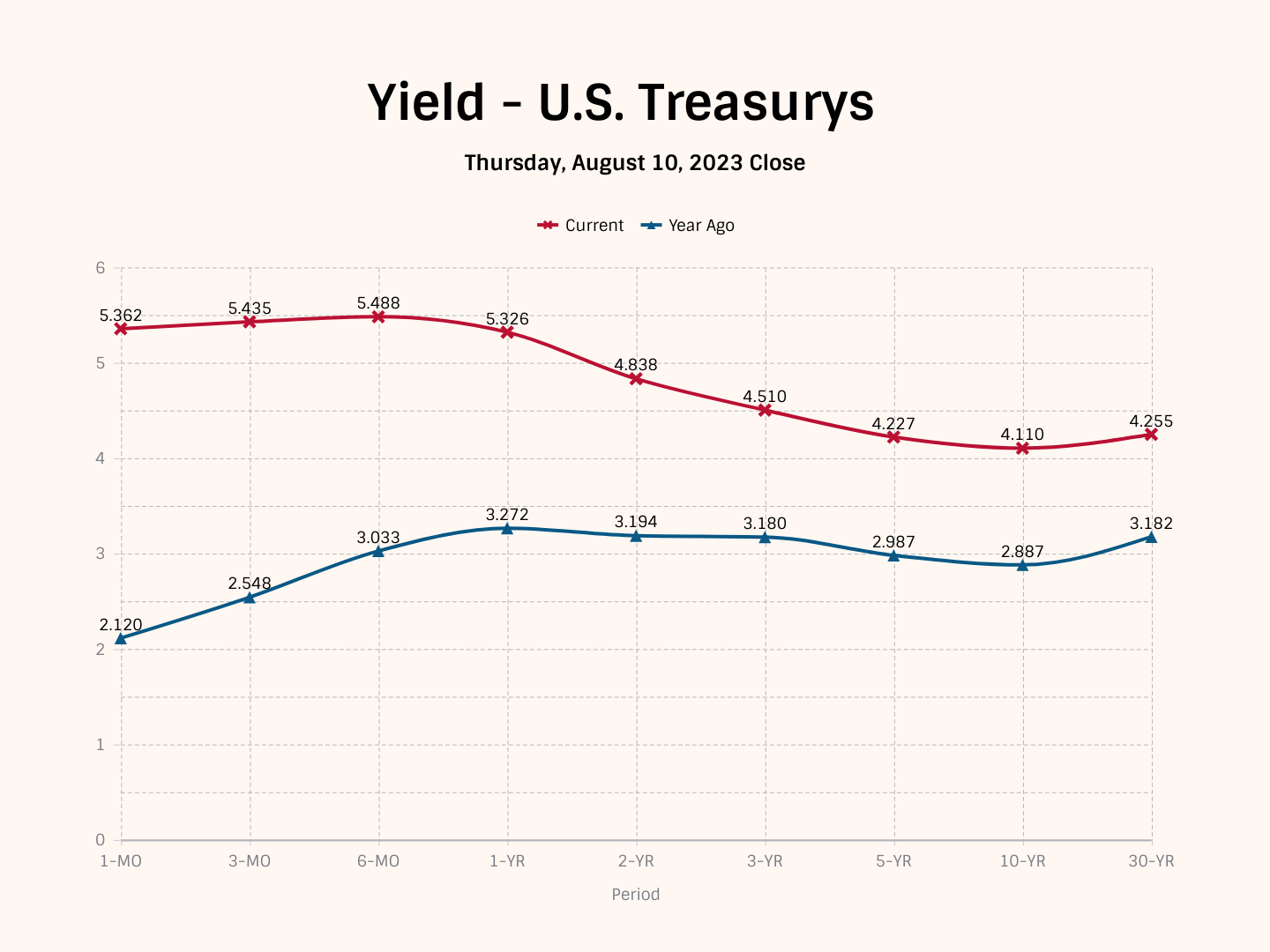
In normal circumstances, longer-term investments offer higher yields than shorter-term investments due to the higher risk associated with longer durations. However, an inverted yield curve can occur during periods of economic turbulence, such as the current times. This happens because investors expect higher yields in the short term to compensate for the potential short-term uncertainties in the economy. As a result, the yields on shorter-term bonds become higher than those on longer-term bonds of the same credit quality.

The presence of an inverted yield curve is an indication that investors anticipate economic instability or a possible economic downturn. The inverted yield curve is a leading indicator of lower inflation and recession. It has a strong track record of accurately predicting the last ten recessions since 1955, with only one incorrect signal in the mid-1960s.

The closing yields on Thursday were:

  • 5.362% for the 1-month Treasury bill
  • 5.435% for the 3-month Treasury bill
  • 5.488% for the 6-month Treasury bill
  • 5.326% for the 1-year Treasury bill
  • 4.838% for the 2-year Treasury note
  • 4.510% for the 3-year Treasury note
  • 4.110% for the 10-year Treasury note
  • 4.255% for the 30-year Treasury bond

Stagflation

Most Americans struggle, challenged by the high core inflation rate of 4.70%. Stagflation refers to a combination of stagnant economic growth and high inflation.

Since March 2022, the Fed has raised interest rates by 5.25 percentage points. High-interest rates are likely to slow down the economy further.

Each time the Federal Reserve increases interest rates to contain inflation, the U.S. government must pay higher interest rates to service its ballooning debt. A rising debt-to-GDP ratio limits the ability to fund essential government services.

The August IBD/TIPP Poll revealed that most Americans view the economy negatively. Nearly half (49%) believe we are in a recession, and six in ten (61%) feel that the economy is not improving.

Considering these factors and the numbers, we predict that the U.S. economy will face an extended period of stagflation characterized by a recession and inflation.


https://tippinsights.com/the-dark-side-of-bidenomics-16-2-bidenflation/

'Dems: It'll Take A Lot More Than Eyewitnesses, Bank Records, Audio, Video, & Confessions To Believe Biden Did Wrong'

 Via Babylon Bee,

As evidence of bribery and corruption by the Biden family continues to mount, Democrat lawmakers in the nation's capital have expressed heavy skepticism, saying they will need a lot more than just eyewitnesses, financial records, audio and video recordings, and admissions of guilt from parties involved for them to believe any of it.

"Nah, I'm not buying it," said California Congressman Eric Swalwell.

"If you're wanting me to believe President Biden and his family have been involved in a far-reaching money-for-favors scheme for years, you'll need to show me a lot more than rock-solid, irrefutable evidence. If the Biden family was corrupt, I think I would have heard about it from my Chinese spy girlfriend."

The Biden administration maintains absolute innocence, despite an ever-growing collection of evidence that would indicate otherwise.

"The President and his family have done nothing wrong," said White House Press Secretary Karine Jean-Pierre, who is a woman and also black and also gay.

"It's completely normal for families to enrich themselves by selling political influence to foreign corporations and governments. Any assertion to the contrary is simply Republicans grasping at straws. Also, I will not be taking any more questions regarding bribery allegations."

As rumors swirled that additional audio recordings of President Biden accepting bribes may soon be released, Democrats continued to brush them off.

"I see nothing wrong here," said Senate Majority Leader Chuck Schumer.

"So he's on tape taking bribes. It's not like it proves he took bribes or something."

At publishing time, Republicans in Congress said they were waiting on several more truckloads of evidence before beginning impeachment proceedings.

https://www.zerohedge.com/political/democrats-say-itll-take-lot-more-eyewitness-testimony-bank-records-audio-video-complete

Cash-strapped Kiora sharpens focus on rare retinal diseases, looks to partner off other assets

 Kiora Pharmaceuticals is narrowing its line of sight to only two assets that tackle rare retinal diseases, while two other programs will be handed off to prospective partners.

The biotech is prioritizing small-molecule therapy KIO-301 in several indications, according to second-quarter earnings documents shared Aug. 8. The asset is designed to restore vision for individuals with genetic or age-related retinal degeneration and is currently being studied in a phase 1b clinical trial for retinitis pigmentosa called ABACUS.

Based on early data that found the lowest dose of KIO-301 safe and tolerable, Kiora hopes to expand the candidate into other orphan retinal disease programs, such as the genetic disorders choroideremia and Stargardt disease. There currently aren’t treatments available for any of the three diseases, according to Kiora.  

The biotech believes KIO-301’s mechanism of action should be applicable in choroideremia and Stargardt disease because there’s significant overlap with the pathology of retinitis pigmentosa, according to an Aug. 8 letter to investors. The biotech also recently partnered with the Choroideremia Research Foundation—a nonprofit patient advocacy group—to help advance KIO-301 in the indication.

Kiora only has the one KIO-301 trial at the moment and expects to complete all patient dosing for the phase 1b in the third quarter of this year, with top-line results forecast for the fourth quarter.

The biotech cited the initial trial findings as a major reason for sharpening its clinical focus to rare retinal diseases, a shift that means only one other asset—known as KIO-104—will remain on board. The therapy is designed to treat posterior noninfectious uveitis, a rare intraocular inflammatory disease.

Kiora intends to funnel the resources previously allocated to KIO-101, a midstage small molecule designed to treat the ocular presentation of rheumatoid arthritis, to KIO-104. That therapy uses the same active ingredient as KIO-101 but is formulated for intravitreal delivery. The California biotech said any further development of KIO-101 and KIO-201—a form of hyaluronic acid made to speed up corneal wound healing—is dependent on potential partners who have the resources to pick up the therapies. 

At the end of the second quarter, Kiora had $8 million in cash and cash equivalents on hand.  

https://www.fiercebiotech.com/biotech/cash-strapped-kiora-sharpens-focus-rare-retinal-diseases-looks-partner-other-assets


Endo sues Zydus in attempt to block its generic version of Chantix

 Since Pfizer’s smoking cessation drug Chantix was recalled in 2021, Endo's subsidiary Par Pharmaceuticals has been the only one to market the product. Now, the generics subsidiary is attempting to ward off fellow generic makers who want in on the drug.

Endo's lawsuit alleges that Zydus launched its Chantix generic, which was FDA approved in June, after Endo alerted it of a new patent but before it could file a patent infringement claim. The new patent covers the method Endo uses to manufacture the drug without the impurities that took down Pfizer's original product. 

Chantix was originally approved in 2006. The drug was flying high with $1.1 billion in peak sales until impurities found in the product brought it crashing down. Pfizer threw in the towel and recalled all lots in September 2021, a month after the FDA cleared Endo's generic ahead of schedule.

Now, the FDA will only accept submissions for products based on Chantix’s active ingredient, varenicline tartrate, if the drugs meet the acceptable intake limit for nitrosamine impurities. That’s what Endo did, where Pfizer and others could not, according to the Aug. 8 lawsuit filed in Delaware federal court.

“Making varenicline tartrate tablets with the low levels of nitrosamine required by the FDA is difficult to do, as evidenced by the fact that Pfizer has been unable to reformulate its Chantix product to meet those requirements despite the huge incentive it has had to do so,” reads the complaint. 

Endo alleges Zydus used the methods listed in its recent patent because those are “the only commercially viable methods” that it’s aware of for ensuring low levels of nitrosamine impurities.

Zydus launched its drug instead of replying to notices sent by Endo, leaving Endo unable to verify if the two companies use the same manufacturing method but finding it "highly likely," according to the complaint. 

It’s likely that Endo can’t afford the generic competition after filing for bankruptcy last August due to the weight of multiple massive opioid-related settlements and $8 billion in debt. The company planned to sell itself to its senior lender group, which would then fund Endo’s opioid settlements.

The U.S. Department of Justice recently shot down that plan on the grounds of bankruptcy law violation because it would pay some creditors while others, including government agencies, would get nothing, Reuters reported.

https://www.fiercepharma.com/pharma/endo-accuses-fellow-generic-maker-zydus-stepping-its-generic-smoking-cessation-drug-chantix

Amylyx's ALS drug Relyvrio gets off the ground as company eyes new brain disorder

 Amylyx Pharmaceuticals’ amyotrophic lateral sclerosis (ALS) drug Relyvrio continues to wow Wall Street.

Approved in the U.S. as Relyvrio and in Canada under a different brand name, the drug brought in $98.2 million in revenue during the second quarter, Amylyx said Thursday. The haul topped analysts’ consensus estimates of below $92 million, according to Mizuho Securities.

Having annual revenue now tracking at $400 million after just four quarters of commercialization is no easy feat, Mizuho analyst Graig Suvannavejh, Ph.D., said in a Friday note. Besides, a strong balance sheet—Amylyx had $357 million cash as of June—means the company “faces no existential need to raise capital—an increasingly daunting challenge given a difficult equity capital markets environment,” he said.

The beat was fueled by better-than-expected pricing discounts, according to Suvannavejh.

New patient starts actually slowed. By the end of June, Relyvrio added 800 more patients compared with the end of March, bringing the total tally to 3,800, Amylyx’s co-CEO Justin Klee told investors during a call Thursday. That’s compared with a gain of 1,700 new patients reported in the first quarter. The decline in starts, as Suvannavejh noted, was expected.

These patients are staying on treatment, too. About 70% of patients remained on the drug after treatment, which is similar to that observed in Relyvrio’s phase 2 clinical trial, Klee said. People may stop treatment because of death or disease progression, he added.

Almost all patients living with ALS have an insurance policy covering Relyvrio, Klee said. Around 75% of the top 500 prescribers and almost all top ALS treatment centers in the U.S. have prescribed the drug, Amylyx’s commercial chief Margaret Olinger said. The turnaround time between prescription and product shipment has also improved to about 25 days from around 30 days in the first quarter.

But given that Amylyx didn’t provide sales guidance, debates will likely continue about the drug’s future performance and its momentum in bringing on new patients, Suvannavejh said.

Outside North America, Amylyx is fighting a negative opinion from drug reviewers at the European Medicines Agency. The EU regulator is expected to make a final decision this fall.

Relyvrio’s FDA approval in ALS was a hard-fought one with questions still lingering about its efficacy. Suvannavejh also acknowledged that uncertainty exists around whether Relyvrio wil succeed in the confirmatory phase 3 Phoenix trial, which is expected to read out in the first half of 2024. But he argued that Relyvrio, also known as AMX0035, is set to become a “foundational standard of care” in ALS, with “little near-term, mid-term and likely longer-term threat.” 

The FDA in April approved Biogen and Ionis’ Qalsody to treat ALS associated with a mutation in the SOD1 gene which represents a meager 2% of the entire ALS population. Earlier this year, Apellis and Sobi called it quits on the development of their C3 inhibitor pegcetacoplan—sold as Empaveli and Syfovre in other diseases—for ALS.

As Amylyx awaits the phase 3 ALS readout, the company expects to launch a new phase 3 trial called Orion, for the drug to treat another rare neurological disorder called progressive supranuclear palsy (PSP) by year-end. The plan is to enroll 600 patients for a disease that affects seven in 100,000 people worldwide.

https://www.fiercepharma.com/pharma/amylyxs-als-drug-relyvrio-gets-ground-company-eyes-new-brain-disorder